Bootstrap
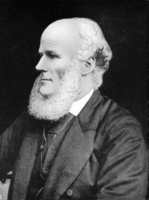
C.H. Mackintosh

Saved By Christ

C.H. Mackintosh 1 min read
#Soteriology #Justification #Faith Alone
2 Articles
0 Comments
C.H. Mackintosh
C.H. Mackintosh 1 min read
2 articles
What does the Bible say about salvation by grace?

The Bible teaches that salvation is entirely based on Christ's work, not our own efforts.

The fundamental principle of the Gospel is that salvation is entirely the work of Christ, which is made clear throughout Scripture. It emphasizes that if salvation depended on anything we do, we would inevitably be lost. Instead, the peace of the Gospel rests wholly upon His perfect work, rendering all who trust in Him as perfect as Himself. This is supported by verses that affirm salvation is a gift from God, received by faith alone, highlighting the sufficiency of Christ's atonement.

Ephesians 2:8-9, Hebrews 10:14

How do we know the doctrine of justification by faith is true?

The doctrine of justification by faith is affirmed in Scripture, emphasizing that Christ's righteousness is imputed to believers.

Justification by faith is a core doctrine rooted in the belief that Christ's sacrificial work completely satisfies the demands of God's justice. By faith, believers receive His righteousness, which means they are seen as perfect in the eyes of God. This doctrine is not based on personal merit but solely on the grace of God through faith in Jesus Christ. Romans 5:1 states, 'Therefore being justified by faith, we have peace with God through our Lord Jesus Christ,' showcasing the transformative power of faith in accepting this gift of justification.

Romans 5:1, Philippians 3:9

Why is the concept of total depravity important for Christians?

Total depravity highlights humanity's inability to save itself and the need for divine grace.

The concept of total depravity is critical for understanding the human condition and God's grace. It teaches that as fallen creatures, humans are incapable of seeking God or achieving salvation on their own. Acknowledging total depravity clarifies that every part of our being is affected by sin, which underscores the necessity of divine intervention for salvation. Without recognizing our inherent inability, we might underestimate the magnitude of Christ's sacrifice and the depth of God's grace. The recognition of our total need for a Savior leads to a profound dependence on Christ alone for salvation.

Romans 3:10-12, Ephesians 2:1-3

    If salvation depends upon our being or doing anything, we shall inevitably be lost. Thank God, it does not; for the great fundamental principle of the Gospel is that Christ is all; man is nothing. It is not a mixture of Christ and man – it is all of Christ. 

    The peace of the Gospel does not rest in part on Christ’s work and in part on man’s work; it rests wholly on Christ’s work, because that work is perfect – perfect forever, and it renders all who put their trust in Him as perfect as Himself! Christ must either be a whole Saviour or no saviour at all. The moment a man says,  “Except you be this or that, you cannot be saved,” he totally subverts the Gospel; for in the Gospel I find Christ coming down to me just as I am – a lost, guilty, self-destroyed sinner; and coming, moreover, with a full remission of all my sins, and a full salvation from my lost estate, all perfectly wrought by Himself on the cross. 

Comments

0 / 2000 characters
Comments are moderated before appearing.

Be the first to comment!

Joshua

Joshua

Shall we play a game? Ask me about articles, sermons, or theology from our library. I can also help you navigate the site.