Bootstrap
William Cowper

The Partition Wall Between Christians

William Cowper 2 min read
#The Church #The Five Solas #Soteriology
2 Articles
0 Comments
William Cowper
William Cowper 2 min read
2 articles
What does the Bible say about unity among Christians?

The Bible emphasizes unity among believers as a reflection of Christ’s love and purpose (John 17:21).

The concept of unity among Christians is deeply rooted in Scripture, particularly illustrated in Jesus’ prayer for his disciples in John 17:21, where He implores the Father that all believers may be one, just as He and the Father are one. This unity is not merely superficial but is a genuine reflection of the intimate relationship between Father and Son, meant to manifest the same in the body of Christ. The Apostle Paul further reinforces this theme in Ephesians 4:3, urging believers to maintain the unity of the Spirit in the bond of peace. The call for unity serves not only as a testament to the authenticity of our faith but also as a missional aspect that demonstrates to the world the love of Christ operating in and through us.

John 17:21, Ephesians 4:3

Why is it important for Christians to be unified?

Christian unity is vital as it displays the love of Christ and strengthens the testimony of the Gospel (Ephesians 4:1-3).

Unity among Christians is crucial because it mirrors the essential truth of the Gospel, which reveals that through Christ, all believers are adopted into one family regardless of their denominational differences. This unity emphasizes the church's collective identity in Christ, grounding believers in a shared calling to live out their faith. As expressed in Romans 12:4-5, believers are many members of one body, highlighting the importance of collaboration and mutual support within the body of Christ. Moreover, a united church presents a powerful testimony to the world, demonstrating the transformative nature of the Gospel and inviting others to experience the same grace that has united them. Therefore, striving for unity is not merely a theological concern but a practical one that aligns with the heart of Christ's mission.

Ephesians 4:1-3, Romans 12:4-5

How do we know the doctrine of grace is true?

The doctrine of grace is affirmed through Scripture, emphasizing salvation as a gift from God, not by works (Ephesians 2:8-9).

The doctrine of grace stands central to Reformed theology, affirmed by multiple passages throughout the Bible. Ephesians 2:8-9 clearly articulates that salvation is by grace through faith, emphasizing that it is not of works lest anyone should boast. This foundational truth is echoed in Romans 3:24, where Paul proclaims that believers are justified freely by His grace through the redemption that is in Christ Jesus. Moreover, the assurance of God's grace is not based upon humanity’s merit but upon the character of God Himself, who is rich in mercy. The certainty of grace is grounded in the certainty of God’s promises, ensuring that believers can be wholly confident in their salvation. Thus, the doctrine of grace is not just a theological abstraction but a profound reality rooted in Scripture and manifested in the lives of those who believe.

Ephesians 2:8-9, Romans 3:24

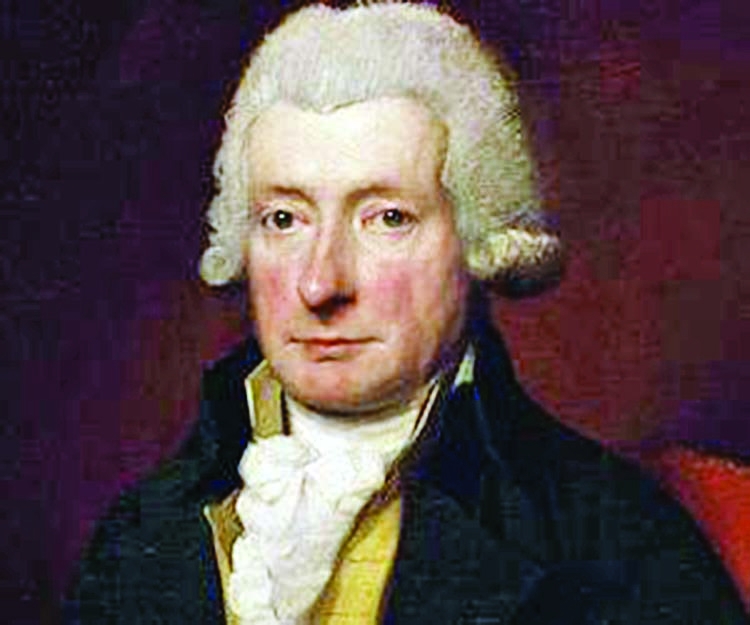
One of William Cowper’s earliest letters from Olney shows how the various denominations in the town could live peacefully together sharing a great oneness in Christ. Cowper, writing to Mrs Madan, says:

    We have had a Holiday Week at Olney. The Association of Baptist Ministers met here on Wednesday. We had three Sermons from them that day, and One on Thursday, besides Mr. Newton’s (Anglican minister) in the Evening. One of the Preachers was Mr. Booth, (Abraham Booth (1734-1806) was to become the pastor of a Calvinistic Baptist Church at Little Prescot Street, Goodman’s Fields  some seven months later.) who has lately published an excellent Work called the Reign of Grace. He was bred a Weaver, and has been forced to work with his Hands hitherto for the Maintenance of himself and a large Family. But the Lord who has given him excellent Endowments, has now called him from the small Congregation he minister’d to in Nottinghamshire, to supply Mr. Burford’s Place in London (Samuel Burford  was pastor of a  Calvinistic Baptist Church at Currier’s Hall, Cripplegate).

    It was a comfortable Sight to see thirteen Gospel Ministers together. Most of them either Preach’d or Pray’d and All that did so approved themselves sound in the Word and Doctrine, whence a good Presumption arises in favour of the rest. I should be glad if the Partition Wall between Christians of different Denominations would every where fall down flat as it has done at Olney. The Dissenters here, most of them at least who are serious, forget that our Meeting House has a Steeple to it, and we that theirs has none. This shall be the Case universally, may the Lord hasten it in his time!

    I am my dear Aunt your very affectionate Nephew

    Wm Cowper  (18th June, 1768.)

Editor's Note: Thanks to George Ella for providing this letter...

Comments

0 / 2000 characters
Comments are moderated before appearing.

Be the first to comment!

Joshua

Joshua

Shall we play a game? Ask me about articles, sermons, or theology from our library. I can also help you navigate the site.