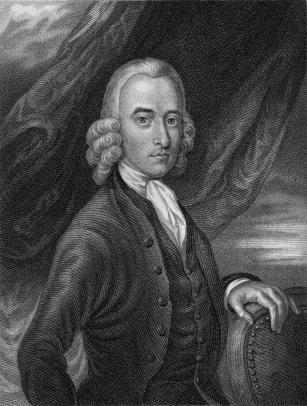
Sandeman argues that attempts to achieve salvation through works—whether through moral duty, sincere repentance, or partial obedience—inevitably fail because God demands perfect righteousness that fallen humans cannot produce. He contends that the Law exposes human inability and despair, which prepares the soul to receive the Gospel's proclamation that Christ has already accomplished perfect obedience on behalf of the ungodly. True faith, therefore, is not a work or effort demanded by God but rather the divinely-commanded persuasion of the heart that receives the news of Christ's completed righteousness as sufficient justification.
What does the Bible say about faith and righteousness?
The Bible emphasizes that true righteousness comes from faith in Christ, not from our own works.
Furthermore, Galatians 2:16 affirms that 'a person is not justified by works of the law but through faith in Jesus Christ.' This emphasizes that our justification is a gift of grace, rooted in faith, as opposed to any self-reliance on our moral achievements. The realization that all that is needed for our acceptance before God is accomplished by Christ provides profound comfort and assurance, underscoring the significance of grace and the call to believe in the finished work of Christ.
Romans 3:21-22, Galatians 2:16
How do we know the doctrine of grace is true?
The doctrine of grace is supported by Scripture and the historic confessions of the church, affirming that salvation is entirely God's work.
Historical confessions of the church, such as the Westminster Confession of Faith and the Canons of Dordrecht, consistently uphold the principles of sovereign grace and the total depravity of man, emphasizing that God’s grace is necessary for any response to Him. These theological foundations serve to affirm that the doctrine of grace is not just a theological assertion but a biblical truth that has been upheld throughout church history, providing believers with assurance of their salvation in Christ alone.
Ephesians 2:8-9
Why is believing in Christ important for Christians?
Believing in Christ is essential for salvation and for living a life that reflects God's righteousness.
Moreover, belief in Christ inherently leads to a life governed by God’s righteousness. As believers, we are called to live not according to our own works but to reflect the character of Christ in our actions and decisions. Romans 1:17 affirms, 'For in it the righteousness of God is revealed from faith for faith; as it is written, “The righteous shall live by faith.”' This indicates that our faith in Christ impacts every aspect of our lives, drawing us closer to God and enabling us to fulfill our purpose in glorifying Him.
John 3:16, Romans 1:17
Many, despising disputes about faith, take a pleasure in saying, “if we do as we would be done by, we hope God will not condemn us, or make any inquiry about what was our faith.” Agreed; do this, and you shall live. If you hope then to live by doing your duty, take care henceforth to do it perfectly. If you have already sinned, hope to live by your repentance, take care that your repentance be sincere, uniform, effectual, and permanent. Let your repentance be such an effectual turning away from all sin, as to admit of no return in any one instance. Let it be such a turning to righteousness as to admit of no failure. For the moment you fail in any one instance, all your former righteousness goes for nothing. Hearken not to the teachers, who would persuade you to compromise or abridge your duty into one or more acts of faith, contrition, or repentance. This would be making void; yea, mocking both the Law and the Gospel, for neither of these acknowledge that for righteousness which comes short of perfection. Do not then imagine that God will accept of any righteousness short of perfection, be it called sincerity or by any other name. If you pretend then to do anything less or more in order to acceptance with God, you must do everything. God is not mocked. Go not about to impose on yourselves, by substituting, instead of the perfect obedience that God’s Law requires, any ambiguous, equivocal acts or motions of the heart. For you cannot do your duty to purpose, unless in plain terms, and in good earnest, you obey every Divine precept, performing everything required, and avoiding everything forbidden by the Divine Law. On the other hand, if there be any of you who, after many repeated trials, have found all your most serious endeavors to do your duty to prove in the issue both unsuccessful and deceitful, and have accordingly been brought to despair of so much as thinking one good thought, if it could save your souls forever, then certainly you have great reason to bless God for that Gospel, which evinces, with the highest kind of demonstration, that all is already done; {accomplished by Christ, for that which Christ did long before we were born is alone sufficient to justify us as we presently stand;} for - the Gospel is called the ministration of righteousness, as it brings the glad tidings that a perfect righteousness is already wrought for the ungodly. The Law came demanding righteousness; the Gospel brings you the good news, that its demand is fully answered. Are you persuaded of this; or does this stand true in your consciences? Then you have found an answer to that most pinching of all questions, “wherewith shall I come before the Lord?” And now you can understand the nature of the command to believe, that it is not a command calling you to do anything, or any new law of works, but the gracious voice of God willing you to know, that everything required is already done, even a gracious proclamation, stamped with the highest proofs of Divine Authority, approaching you with all the force of a Divine Law, and carrying in itself evidence all sufficient to command the belief or persuasion of your hearts. For how vain, how absurd is it to talk of a command to believe, that carries not along with it evidence sufficient to command persuasion, or to produce belief in the heart.
Excerpt from Essay on Preaching, 1763

Comments
Your comment has been submitted and is awaiting moderation. Once approved, it will appear on this page.
Be the first to comment!