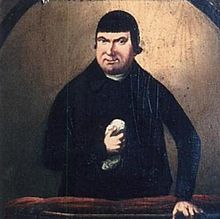
William Huntington contrasts two approaches to the Christian life: legalism (relying on the law as the sole rule for holiness and obedience) versus grace-centered faith (depending on Christ's righteousness and the Holy Spirit's power). He argues that attempting to achieve holiness through law-keeping inevitably fails because the law demands perfection in thought, word, and deed—an impossible standard for fallen humanity—and produces only external conformity without true spiritual transformation, love for God, or genuine righteousness. Drawing on passages like Galatians 2:20 and Romans 6:9-10, Huntington advocates for believers to abandon self-effort and trust instead in God's promises, the indwelling Spirit, and Christ's finished work, which alone produces the spiritual fruit of genuine holiness, peace, joy, and power in Christian living.
What does the Bible say about the law and grace?
The Bible teaches that the law is perfect but condemning, while grace through faith in Jesus Christ provides the means of salvation.
Romans 3:20, Ephesians 2:8-9
How do we know God's promises are true?
We know God's promises are true because they are founded in His unchanging nature and Word, which never fails.
Hebrews 6:18, Philippians 1:6
Why is understanding the difference between law and gospel important for Christians?
Understanding the difference between law and gospel is essential for discerning how to pursue holiness and maintain a proper relationship with God.
Romans 3:20
I received my sister's kind epistle; and have considered her numberless complaints, and the difficulty of her way. "That which is crooked cannot be made straight, and that which is wanting cannot be numbered," says Solomon.
If thou aim at holiness by the law, remember thou must be perfect in the flesh as well as spirit. The law is perfect; it will allow of no infirmities, no evil thoughts, no adulterous looks, no anger nor evil tempers, no fire to be kindled on the Sabbath day; not speaking thy own words, nor thinking of thy own thoughts on that day; thy neighbour must be loved as thyself; half thy goods must be given to the poor; one coat of the two must go to them that have none; and then there is no getting to heaven but by taking up the cross, and following Jesus. No man shall ever stand the test of that law without a pure love to God, divine life in Christ, holiness by the Spirit, and an everlasting righteousness from the God of his salvation.
When you come to London again we will compare notes together, and see which has gained most by trading; until which time, pursue your present path, and I will pursue mine. Make the law your only rule of life; read it, keep your eyes upon it, and live by it; and I will pray that I may be kept dead to the law, and alive unto God; that I may be crucified with Christ, and yet live; yet not I, but that Christ may live in me. If you make the law your rule of life, you are alive to the law, and walk in the law. And if Christ lives in me, I shall be kept alive unto God, and walk in newness of life.
Go you on with the commandments, and I will go on with the promises. Make the law your rule of walk, and I will pray God to perform His promise in me; for God hath said, "I will dwell in them, and walk in them." Thus you go on by the law, and I by the gospel. Do you perform your duty, and I will plead my privileges. Act thou as an industrious servant, and by God's grace, I will act an affectionate son. Be thou obedient to the law, and I will pray for grace for obedience to the faith. Live thou in the fear of thy master, and I will endeavour to honour my heavenly Father.
Make the law thy only rule of action, and act accordingly; and I will depend upon God to work in me both to will and to do of His own good pleasure; yea, to fulfill all the good pleasure of His will in me, and the work of faith with power.
Make the law your only rule of conversation. Speak of the commandments "when thou sittest in thine house, and when thou walkest by the way! when thou liest down and when thou risest up. And thou shalt write them upon the door-posts of thine heart, and upon thy gates; that your days may be multiplied, and the days of your children; in the land which the Lord sware unto your fathers to give them as the days of heaven upon the earth." And I will pray God to create the fruit of my lips; to give me a mouth and wisdom that all my enemies shall not be able to gainsay or resist; and that it may not be me that speaks, but that the Spirit of my heavenly Father may speak in me and then my conversation will be with power, and my words seasoned with salt, ministering grace. Thus runs the promise, and the excellency and the power is of God; and, if God performs His promises to me He will have all the glory; and, thou perform thy task, thou hast whereof to glory, but not before God, wherever thou dost before men.
Let the ministers of the letter bind the grievous burdens upon your shoulders that you cannot possibly bear, and I will cast my burdens on the Lord, who has promised to sustain me. Be thou careful to observe all the grievousness which they prescribe, and I will cast all my care upon Him that careth for me. Walk thou by sight, and I by faith; walk thou in the letter, and I in the Spirit. Look thou to the commandments, and I will look to Jesus.
They that say this doctrine opens a door to all licentiousness know not what they say. You saw nothing like that in me; and those that are setting the law perpetually before your eyes, and enforcing holiness from that, in order to blind your mind, and prejudice your soul against the truth and the preachers of it, give you no other proof of their superior holiness than what you hear from their mouth. There is no more power in their discourses, no more savor in their conversation, no more knowledge of the word, no more experience of grace, no more prevalency with God in prayer, no more circumspection before men, nor conscientiousness toward God, than appears in some that are called Antinomians; nor half so much. Men who have nothing to recommend them either in heart or life, must do all by the sound of a trumpet. He that laboured more abundantly than they all, and much more to the purpose, said, "It is not I but the grace of God that was with me." But we have some in our day who tell us they fetch all their comfort from their holiness, and their holiness from the law; and I believe them, for they seem to have no fellowship with the God of comfort, nor experience of the Holy Ghost.
Cleave thou to the Savior, and depend on His grace; and when these fail, then try the law. The way to Sinai is broader than the way to Zion; the path is the most beaten, and there are the greatest number of travelers. It is easier to get law than gospel; and a throne of judgment is more accessible than a throne of grace. We have legions of unconverted preachers of the letter, for that is all their stock. With the letter, a great noise, and a fair show in the flesh, they deceive the simple. The mystery of faith is a puzzling thing to an unexperienced heart and an unenlightened head; when they attempt this they only betray their ignorance. The gentleman was right; "And without holiness no man shall see the Lord;" and if he has no holiness but what he gets from the law, he will never see the Lord with acceptance; for "Except a man be born again (of the Holy Spirit) he cannot see (much less enter) the kingdom of God." The kingdom of God is in power: regeneration enlightens us into it, and gives us a sensible enjoyment of it; for it stands in righteousness, peace, and joy, in the Holy Ghost; nothing of which comes to us from the law.
If enforcing the law as the only rule of life, and setting it before thee as the only standard of holiness, be accompanied with power; if it produce love to God and man; if it promotes true holiness; if it refreshes the new man, and clothes the soul with humility and self-loathing; if it endears Christ, and strengthens faith; if it produces spiritual life and peace; if it enlightens the eyes, enlarges the heart; weans from the world, purifies the soul, encourages diligence, and makes God, His way and worship, the delight of thy soul,-thou mayest well bear with them; for these things come from God, and do accompany salivation. But I know there is nothing of all this attends such preaching; and this letter of yours is a sufficient proof of it. I have set before my sister the law and the gospel, commandments and promises, life and death, a blessing and a curse. If ,thou cleave to the letter of the law, and make that thy rule of life, walk, and action, and conversation; then thy obedience will be the obedience of the law, not of faith; they will be thy fruits, not the fruits of the Spirit.

Comments
Your comment has been submitted and is awaiting moderation. Once approved, it will appear on this page.
Be the first to comment!