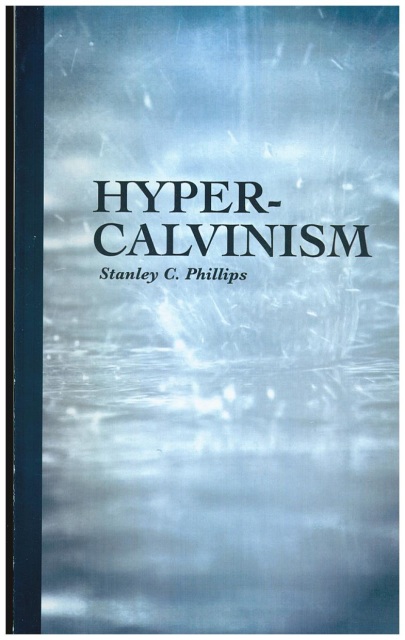
Stanley C. Phillips argues that predestinarian Baptists must maintain both the preservation and perseverance of the saints, grounding eternal security in God's sovereign grace rather than mere human decision. He critiques "decisionism"—the view that a single decision for Christ guarantees salvation regardless of subsequent rebellion—as a dangerous half-truth that divorces preservation from God's active, ongoing work of sanctification through the Holy Spirit. Phillips contends that true biblical balance requires affirming God's sovereign initiation and completion of salvation (Philippians 1:6, Ephesians 2:10) while also maintaining that genuine believers will be kept by God's power unto faith and good works (1 Peter 1:5, Philippians 2:13), rejecting both Arminian freewillism and nominal decisionism.
What does the Bible say about the preservation of the saints?
The Bible teaches that all the elect are preserved in Christ and kept by God's power for salvation (1 Peter 1:5).
Jude 1, 2 Timothy 1:9, 1 Peter 1:5
How do we know the perseverance of the saints is true?
The perseverance of the saints is affirmed by Scripture, which teaches that those truly saved will continue in faith (Philippians 1:6).
Philippians 1:6
Why is the concept of perseverance important for Christians?
Perseverance is important because it assures Christians of their salvation and encourages them to live faithfully (Romans 9:23).
Romans 9:23
Among the peoples called “Baptists” many issues conflict in a manner to produce great diversity. Obviously, there is an unbridgeable gap between the doctrinal views of the Predestinarians and the theory of absolute freewillism held by most modern Baptists. Since the entirety of this magazine is predestinarian in contrast to that general theory, there is no need for a specific article refuting the whole scheme of freewillism.
Predestinarian Baptists hold to both the perseverance and preservation of the saints of God. This is the historic and Biblical position of the Christian faith, and the doctrinal foundation of the old Baptist Church. Concisely stated, We believe that all the elect of God are “preserved in Christ Jesus, and called Saints” (Jude 1). This preservation is IN Christ, in His Person and Representation from all eternity so the apostle could declare: “Who hath saved us, and called us with a holy calling’’ — putting the ‘‘saving” prior to the “calling” — and this “according to His purpose and grace, which was given us iii Christ Jesus BEFORE the world began.” (II Timothy 1:9)
Not only are they PRESERVED in the Covenant of Grace in Christ before the, foundation of the world, but they are also “KEPT by the power of God through faith unto salvation ready to be revealed in the last day” (I Pet. 1:5) and as such the elect are “ordained unto eternal life” (Acts 13:48); are “ordained to good works”, (Eph. 2:10) and God Himself “works mightily in them that believe” (Eph. 1:19). To assure this sanctification, God “works in them both to will and to do of His own good pleasure” (Phil. 2:13) and it is His good pleasure to sanctify them (1 Thess. 4:3) and “present them holy” to His heavenly Father.
Thus, in accord with the London Baptist Confession, or faith today echoes the same as those early Baptists who express the same experience of this internal instruction and holiness by their sovereign God.
Herein lies the difference upon this subject between Predestinarian Baptists and other kinds of Baptists. In general, most Missionary Baptists hold with us the doctrine of the Eternal Security of the believer. As often stated by others, they believe, as we, that “once in grace, always in grace” or “once saved, always saved”. But there is a difference between the two positions held by each of us. Our faith is founded upon the Sovereignty of God, the quickening of the Holy Spirit, the effectual active obedience of Christ, and His finished atonement for our sins as the solid foundation for the doctrine of eternal security. On the other hand, others often base the eternal security of members upon mere nominal decisionism, and then such actively oppose the golden foundation of all the precious doctrines of grace which rationally support the hope of eternal salvation. To put it briefly, they deny the preservation of the saints, in preference for the perseverance of the believer. That is, they deny that God Himself KEEPS the saints, or works WITHIN them of His own good pleasure. As they express it, the saints keep themselves, or indeed, may never walk in good works at all and yet be saved. In a word, they do not need be concerned with persevering in the faith. The decision alone is all sufficient for their eternal security.
To predestinarian believers, this view is indeed a dangerous and complacent doctrine. In effect, a person may join a church for whatever carnal, familiel, or prestigious motive, and once he has made this “decision for Christ” can never be lost regardless of all his rebellion, faithlessness, and sinfulness notwithstanding. “Once saved, always saved” in this connotation of decisionism would appear to led to a life of careless indifference and result in dangerous delusion. Evidence seems to support this assumption, for while Baptists outnumber any other single denomination in America, in general, their lives give no God-honoring evidence of a transformation of life and morality greater than that of the “scribes and Pharisees” The large number of Baptists in America has not significantly altered the foundations of the American culture toward godliness and morality. Sadly, it appears the world has merely joined the Baptists as readily as the Baptists have joined the world. Preservation in the ABSENCE of God’s persevering and effectual grace is indeed a dangerous half-truth.
One could expect that if a part of Baptists held to preservation and denied perseverance, then some Baptists must take the other dilemma and hold to perseverance and deny preservation! And, indeed, it is correct.
When Robert Randall was excluded from Welsh Tract Church for Arminianism (freewillism), he migrated to New Hampshire. There he laid the foundation of that body of Baptists known as Freewill Baptists. He greatly influenced the Baptists of New Hampshire to such an extent they were forced to revise the London Baptist Confession (Philadelphia Baptist Confession) which produced the hybrid confession known as the New Hampshire Baptist Confession. This revised confession coincided with the rise of the Modern Missionary Movement among Baptist innovators. This in part, explains the reason many Freewill Baptists (as in Georgia), along with most Missionary Baptist groups, subscribe to the New Hampshire Confession of 1833.
The Freewill Baptists and many Northern Baptists, along with the new Charismatic Baptists, insist upon the “perseverance” of the saints. “He that endureth unto the end shall be saved” is their motto. One must “accept” Christ, believe, repent, and hold on for dear life unto the end. Sounds O.K. to most —but this “accepting Christ”, believing, repenting, and holding on, is left to the volition of the man’s natural will and ability. All that God has to do, according to this view, is to honor the continued obedience of the decider at the end of a faithful, falterless life. Thus, they insist that the saints can “fall from grace” and eventually perish. Whether he stands or falls is left sovereignly to the freewill of man.
To be consistent with the Scriptures and experience of grace, balance must be maintained in Biblical doctrine. God does NOT begin a good work, and then wait to see how it will turn out in the end. He is not a mere spectator to the events of His creation. Neither does He allow man to begin the good work, and then rush in at the end and claim credit for it. Rather, “He that hath BEGUN a good work in you WILL PERFORM it” so that it redounds faithfully to His honor and glory, excluding boastfulness. (Phil. 1:6)
The greatest display of the sovereign power of God is that gracious work whereby HE radically changes the heart, mind, and affections of corrupt man. This He does by quickening them to spiritual life while they are DEAD in trespasses and sins” (Eph.2:1) by the sovereign and independent operation of the Holy Spirit “who quickeneth whom He will”. Thus, it is God Himself who BEGINS the work of grace in a poor sinner’s life. The greatest display of man s submission to the Lord as His Sovereign God is a life .of obedience to that sovereign. God surely will not allow His own glorious work to be subverted by the acts of the creature. Rather, He will display His “workmanship” in directing the life and work of His saints to fulfill His ordination to good works. (Eph. 2:10). But it WILL BE GOD who does this in that man — NOT the man “lest he have whereof to boast”.
There is found in the doctrine of God’s sovereign grace an apparent (but not real) paradox. To any true believer, God is and must be absolutely sovereign. His will must invariably be fulfilled or else He either lacks the POWER or else the WISDOM to bring to pass His own good pleasure. Evangelical faith CANNOT lay hold upon those two attributes as being faulty characteristics in the God who is the object of such faith. Yet, it is a fact of nature and observation that Man, too, has a will. Man’s will by nature is in opposition to God’s will. Indeed, the “carnal mind is enmity against God, it is NOT subject to the law of God, neither indeed can be; so then they that are in the flesh CANNOT please God” (Romans 7:8). It stands to reason that if God and Man wills mutually exclusive things (which they must), then one or the other must fail to accomplish his will. To a true believer then, man’s corrupt will must, always yield to the secret and/or determinate counsel of God’s will, “for who hast resisted His will?”. Otherwise, man is the sovereign and God is the beggar! God’s will must over-ride, or over-power, the will of man in all conflicting desires. How does God do this? The everlasting covenant with Christ promised “Thy people SHALL BE WILLING in the day of THY power” (Psa. 110:3).
It is in the balanced doctrine of the perseverance and preservation of the saints that this harmony is gloriously displayed to the glory and honor of our sovereign God. In preservation, the Wisdom and purpose of God to glorify the riches of His grace in the election of grace shines in excellency. In perseverance, God’s POWER over sin and loving protection of ‘His precious people in keeping them as living demonstrators or witnesses of grace before this ungodly and corrupt world is magnified. The “vessells of mercy afore prepared unto glory” (Romans 9:23) are “lights that cannot be put under a bushel” and as “cities that cannot be hid”. The entire work of God in their behalf, and within them personally, is “to the praise of the glory of His grace.” (Eph.1 :6) Thus, it behooves all saints to walk as saints; and if they do not, where then is any evidence that their works “are wrought in God”? (John 3:21)
This is one reason Predestinarian Old School Baptists vigorously deny any false accusation that they believe that “God is the author of sin”. It is not true to our experience, for we believe and experience the truth of both preservation and perseverance of the saints. It is God who has begun the good work in them; and it is GOD who continues to work IN them both to will and to do of His own good pleasure” which is “even their sanctification”.
Occasionally we run up with those who boast and brag of their ungodliness, saying they are “Can’t-Help-It-Baptists”. Meaning, we assume, that they cannot help sinning; that some way God makes them do it against their will. We too, in a rather sharp different way, are Can’t-Help-It-Baptists — we can’t help doing good works ordained of God.— S.C.P.

Comments
Your comment has been submitted and is awaiting moderation. Once approved, it will appear on this page.
Be the first to comment!