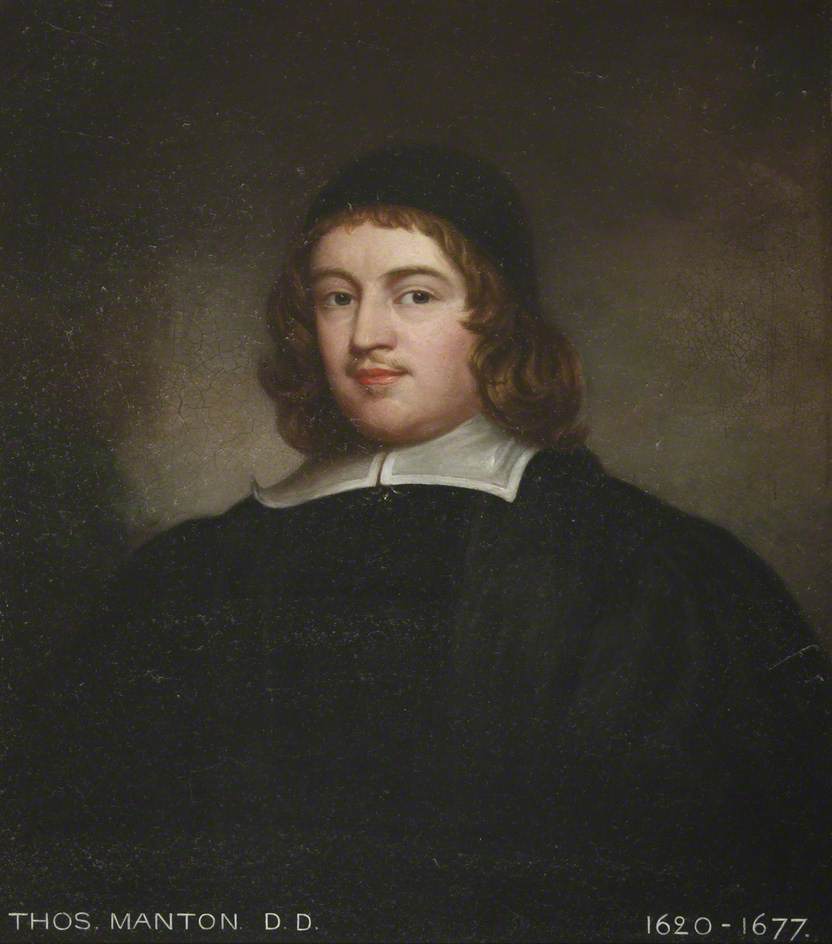
In "Sermon XVI - John III. 16," Thomas Manton emphasizes God's immense love as the foundational doctrine of the Gospel, particularly as expressed in John 3:16. Manton argues that God's love is the source of salvation, which is demonstrated through the giving of His only Son, Jesus Christ, for a sinful humanity. He highlights the distinction between God’s love of benevolence and His love of complacence, illustrating that God loves humanity despite their sinful nature. Manton references scriptural texts such as Romans 5:8, 1 John 4:10, and Deuteronomy 7:7-8 to assert that God's love is both the cause and effect of Christ's redemptive work, underscoring that salvation is entirely based on grace—not merit. The practical significance of this sermon lies in its invitation to believers to recognize and respond to God’s love, promoting deeper faith and heartfelt obedience in light of such grace.
Key Quotes
“The beginning and first cause of our salvation is the mere love of God.”
“Love is at the bottom of all; we may give a reason of other things, but we cannot give a reason of his love.”
“The greatest manifestation of God's love to the sons of men is the giving his only-begotten Son to be their Redeemer and Saviour.”
“Christ is the principal means whereby God carrieth on the purposes of his grace.”
What does the Bible say about God's love for the world?
The Bible teaches that God so loved the world that He gave His only Son, so that whoever believes in Him shall have eternal life (John 3:16).
John 3:16, Romans 5:8
How do we know God's love is true?
We know God's love is true because He demonstrated it by sending His Son to die for our sins while we were still sinners (Romans 5:8).
Romans 5:8, 1 John 4:10
Why is the concept of God's grace important for Christians?
God's grace is vital for Christians as it reveals His unearned favor, allowing for forgiveness and salvation through faith in Christ.
Ephesians 2:8-9, 2 Corinthians 5:14-15
Godsolovedtheworld,thathegavehisonly-begottenSon,thatwhosoeverbelievethinhim should not perish, but have everlasting life.—John III. 16.
N these words you have the sum and substance of the gospel. In them observe:—
1. The fountain and original of all that grace and salvation which is brought unto us, God’s unspeakable love to mankind: God so loved the world.
2. The way which God took to recover our lapsed condition, or the effect and fruit which flows from this fountain: that he gave his only-begotten Son.
3. The end of it.: thatwhosoeverbelievethinhimshouldnotperish,buthaveeverlasting life; where take notice of—
[1.] The qualification, or the free and easy condition put upon men in the gospel: that whosoever believeth in him.
[2.] The benefit that resulteth to us, expressed negatively and affirmatively: shouldnot perish, but have everlasting life.
First, The rise and beginning of all is God’s inconceivable love: ‘God so loved the world.’ Where observe:—
1. The object: the world.
2. The act: loved.
3. The degree: so loved.
1. The word by which the object is expressed is ‘the world,’ which noteth mankind in its corrupt and miserable state: 1 John v. 19, ‘The whole world lies in sin.’ The world is a heap of men who had broken .God’s law, forfeited his love and favour; they neither loved nor feared God, but were unthankful and unholy; yet this world God loved.
2. The act: ‘he loved.’ The love of God is twofold—the love of benevolence and the love of complacence.
[1.] The love of benevolence is the pity and compassion of God towards man lying in sin and misery. This is understood in this place, as also in Titus iii. 4, ‘The kindness and love of God our Saviour towards man appeared.’
[2,] The love of complacence. So he loveth us when he hath made us lovely. In which sense it is said, Ps. xi. 7, ‘The righteous God loveth righteousness;’ John xvi. 27, ‘The Father himself loveth you, because ye loved me.’ This belongeth not to this place.
3. The degree: ‘so loved.’ He doth not tell you how much, but leaveth it to your most solemn, raised thoughts. It is rather to be conceived than spoken of, and admired rather than conceived.
Observe from the words:—
That the beginning .and first cause of our salvation is the mere love of God. The outward occasion was our misery, the inward moving cause was God’s love.
[1.] Love is at the bottom of all. We may give a reason of other things, but we cannot give a reason of his love. God showed his wisdom, power, justice, and holiness in our redemption by Christ. If you ask, Why he made so much ado about a worthless creature, raised out of the dust of the ground at first, and had now disordered himself, and could be of no use to him? We have an answer at hand, Because he loved us. If you continue to ask, But why did he love us? We have no other answer but because he loved us; for beyond the first rise of things we cannot go. And the same reason is given by Moses, Deut. vii. 7, 8, ‘The Lord did not set his love upon you, nor choose you, because you were more in number than any people, for ye were the fewest of all people; but because the Lord loved you;’ that is, in short, he loved you because he loved you. The same reason is given by our Lord Jesus Christ, Mat. xi. 26, ‘Even so, Father, for so it seemed good in thy sight.’ All came from his free and undeserved mercy; higher we cannot go in seeking after the causes of what is done for our salvation.
[2.] The most remarkable thing that is visible in the progress and perfection of our salvation by Christ is love. And it is meet that the beginning, middle, and end should suit. Nay, if love be so conspicuous in the whole design and carrying on of this blessed work, it is much more in the rise and fountain. God’s great end in our redemption was the demonstration of his love and mercy to mankind; yea, not only the demonstration, but the commendation of it. That is the apostle’s word, Rom. v. 8, ‘God commendeth his love to us, in that while we were yet sinners, Christ died for us.’ A thing may be demonstrated as real that is not commended or set forth as great. God’s design was that we should not only believe the reality, but admire the greatness of his love. Now, from first to last love is so conspicuous that we cannot overlook it. Light is not more conspicuous in the sun than the love of God in our redemption; by Christ.
[3.] If there were any other cause, it must be either the merit of Christ, or some worthiness on our part.
(1.) The merit of Christ was not the first cause of God’s love, but the manifestation, fruit, and effect of it. The text telleth, he first ‘loved the world,’ and then ‘gave his only-begotten Son.’ It is said, 1 John iii. 16, ‘Hereby perceive we the love of God, because he laid down his life for us.’ Look, as we perceive and find out causes by their proper effects, so we perceive the love of God by the death of Christ. Christ is the principal means whereby God carrieth on the purposes of his grace, and therefore is represented in scripture as the servant of his decrees.
(2.) No worthiness in us; for when his love moved him to give Christ for us, he had all mankind in his prospect and view, as lying in the polluted mass, or in a state of sin and misery, and then provided a Redeemer for them. God at first made a perfect law, which forbade all sin upon pain of death. Man did break this law, and still we break it day by day in every sin. Now when men lived, and went on in sin and hostility against God, he was pleased then to send his Son to assume our nature, and die for our transgressions. Therefore the giving of a Redeemer was the work of his free mercy. Man loved not God, yea, was an enemy to God, when Christ came to make the atonement: 1 John iv. 10, ‘Herein is love, not that we loved God, but that he loved us, and sent his Son to be the propitiation for our sins;’ Col. i. 21, ‘And you that were sometimes alienated, and enemies in your minds by wicked works, yet now hath he reconciled.’ We were senseless of our misery, careless of our remedy; so far from deserving, that we desired no such matter. God’s love was at the beginning, not ours.
Use 1. Is to confute all misapprehensions of God. It is the grand design of Satan to lessen our opinion of God’s goodness. So he assaulted our first parents, as if God (notwithstanding all his goodness in their creation) was envious of man’s felicity and happiness. And he hath not left off his old wont. He seeketh to hide God’s goodness, and to represent him as a God that delighteth in our destruction and damnation, rather than in our salvation; as if he were inexorable, and hardly entreated to do us good. And why? That we may stand aloof from God, and apprehend him as unlovely. Or if he cannot prevail so far, he tempteth us to poor, unworthy, mean thoughts of his goodness and mercy. Now we cannot obviate the temptation better than by due reflections on his love in giving his Son for the world. This showeth that he is fuller of mercy and goodness than the sun is of light or the sea of water. So great an effect shows the greatness of the cause. Wherefore did he express his love in such a wonderful, astonishing way, but that we might have higher and larger thoughts of his goodness and mercy? By other effects we easily collect the perfection of his attributes; that his power is omnipotent, Rom. i. 20; that his knowledge is omniscient, Heb. iv. 12, 13. And by this effect it is easy to conceive that his love is infinite, or that ‘God is love.’
Use 2. Is to quicken us to admire the love of God in Christ.
There are three things which commend any favour done unto us;—(1.) The good will of him that giveth; (2.) The greatness of the gift; (3.) The unworthiness of him that receiveth. All concur here.
1. The good will of him that giveth. Nothing moved God to do this but his own love. It was from the free motion of his own heart, without our thought .and asking. No other reason is given or can be given. We made no suit for any such thing; it could not enter into our minds and hearts; into our minds to conceive, or into our hearts to desire, such a remedy to recover the lapsed estate of mankind. Not into our minds, for it is a great mystery: 1 Tim.
iii. 16, ‘And without controversy, great is the mystery of godliness,’ &c. Not into our hearts to ask or desire; for it would have seemed a strange request that we should ask that the eternal Son of God should assume our flesh, and be made sin and a curse for us. But grace hath wrought ‘exceeding abundantly, above all that we can ask or think,’ Eph. iii. 20; above what we can imagine, and above what we can pray for to him.
2. The greatness of the gift. Great things do even force their way into our minds, whether we will or no. The gift of Jesus Christ is so great, that the love of God is gone to the uttermost in it. He hath not a better Christ, nor a more worthy Redeemer, nor another Son to die for us; nor could the Son of God suffer greater indignities than he hath suffered for our sakes. God said to Abraham, Gen. xxii. 12, ‘Now I know that thou fearest God, since thou hast not withheld thy son, thine only son, from me,’ God was not ignorant before, but the meaning is, this is an apparent proof and instance of it. So now we may know God loveth us; here is the manifest token and sign of it.
3. The unworthiness of him that receiveth; this is also in the case. We were altogether unworthy that the Son of God should be incarnate, and die for our sakes. This is notably improved by the apostle, Rom. v. 7, 8, ‘For scarcely for a righteous man will one die, but for a good man some would even dare to die: but God commendeth his love to us, in that while we were yet sinners, Christ died for us.’ The apostle alludeth to the distinction familiar among the Jews: they had their good men, or bountiful; their righteous men, zealous for the law; and their wicked men, obnoxious to judgment. Peradventure one would venture his life for a very merciful person, but you shall hardly find any to be so liberal and friendly as to venture his life for a righteous and just man, or a man of rigid innocence. But mark, there are abating terms—scarcely and perhaps. The case is rare that one should die for another, be he never so good and righteous. But God’s expression of mercy was infinitely above the proportion of any the most friendly man ever showed. There was nothing in the object to move him to it, when we were neither good nor just, but wicked. Without respect to any worth in us, for we were all in a damnable estate, he sent his Son to die for us, to rescue and free us from eternal death, and to make us partakers of eternal life. God so loved the world, when we had so sinned, and wilfully plunged ourselves into an estate of damnation.
But you will say, If this mercy be so great, why are men no more affected with it? I answer:—
1. Because of their stupid carelessness; they do not see the need of this mercy, and therefore do not prize the worth of it. If they were sensible that there is an avenger of blood at their heels, or God’s wrath making inquisition for sinners, they would more earnestly run into the city of refuge, Heb. vi. 18.
2. They do not truly believe this mystery of grace, but speak of it by rote and hearsay, after others. All affections follow faith: 1 Peter ii. 7, ‘Unto you therefore which believe, he is precious.’
3. They do not seriously consider the importance of it, therefore the weightiest objects do not stir us; our minds are taken up about toys and trifles.
4. They have not the lively light of the Spirit: Rom. v. 5, ‘The love of God is shed abroad in our hearts by the Holy Ghost which is given unto us.’ It is not our dry thoughts and doctrinal knowledge that will affect and change our heart, till the Spirit turneth our light into love and our knowledge into taste.
Use 3. Is to exhort us:—
1. To improve this love. It is an invitation to seek after God; for see what preparations his love hath made to recover you to himself and will not you be recovered? God doth not hate you, and therefore you need not flee from him as a revenging God: He ‘so loved the world, that he gave his only-begotten Son.’ In that capacious expression you are not excluded, therefore exclude not yourselves. And such a broad foundation of his mercy being laid, what may you not expect from it? 2 Cor. v. 19. He hath procured a remedy and ransom; as soon as you repent and believe, you shall have the comfort of it.
2. It exhorteth us also to answer it with a fervent love to him that hath given such a signal demonstration of his love to us: 1 John iv. 19, ‘We love him, because he first loved us.’ Men always expect to be loved there where they love, and think it hard dealing if it be not so.
3. Let your love to God be like his love to you. Love was at the bottom of all this grace; let it be at the bottom of all your duties: ‘Let all your things be done in love,’ 1 Cor. xvi. 14. Let your carriage apparently be a life of love: 2 Cor. v. 14, 15, ‘For the love of Christ constraineth us; because we thus judge, that if one died for all, then were all dead: and that he died for all, that they which live should not live unto themselves, but unto him that died for them, and rose again.’
II. I come now to the second branch of the text—the way God took to express his love to us: He ‘gave his only-begotten Son,’ Jesus Christ is so called to distinguish him from the adopted children, and to show his personal subsistence, which is by way of filiation, or being eternally begotten in the divine essence. So great was our misery, that no less remedy would serve the turn; and so great God’s mercy, that he with held him not from us.
Doct. The greatest manifestation of God’s love to the sons of men is the giving his onlybegotten Son to be their Redeemer and Saviour.
There is a twofold giving of Christ:—
1. He is given for us.
2. He is given to us.
1. He was given for us when he was sent into the world to be come bone of our bone and flesh of our flesh, and to die for our sins. This is spoken of, Rom. viii. 32, ‘God spared not his Son, but delivered him up for us all.’
2. He is given to us, when we have a special interest in him, and a participation of his benefits: 1 Cor. i. 30, ‘Christ Jesus is made of God to us wisdom, righteousness, sanctification, and redemption.’
He is given for us, as he took our nature; he is given to us, as he dwelleth in our hearts by faith. He is given for us, as he undertook the work of our redemption; he is given to us, as he accomplished! and brings about our conversion to God, and applying to us the benefits of his purchase. I shall speak of both.
I. As he is given for us, it mightily bespeaketh the love of God, and his care of our salvation. In creation, God made us after his own image and likeness; in redemption, his Son came in the similitude and likeness of sinful flesh. In creation, the angels were dignified above us, but not in redemption, Heb. ii. 16. He did not redeem the apostate angels. In short, this was the most convenient way for God to bring about the purposes of his grace towards man, for these reasons:—
1. That our faith might be more certain, by the appearing of the Son of God in our nature, by his dying, rising again from the dead, and ascending into heaven, and so giving a sensible proof of our whole religion.
[1.] By appearing in human nature he had opportunity of conversing with men, to convince them of the gracious will of God, and teach them obedience to him, not only by his doctrine, but his example, and securing the truth of both by the many miracles which he wrought in the days of his flesh: John vi. 27, ‘Him hath the Father sealed;’ that is, owned, acknowledged, demonstrated, that whatever he did or said was the will and good pleasure of God.
[2.] By his dying he satisfied the justice of God, and so maketh a way for the course of his mercy to us, that we might obtain release and pardon of all our sins and transgressions against the law of God: Rom. iii. 25, 26, ‘Whom God hath set forth to be a propitiation through faith in his blood, to declare his righteousness, for the remission of sins that are past, through the forbearance of God,’ &c.
[3.] His rising again from the dead was a visible satisfaction to the world that his sacrifice was accepted: Rom. iv. 25, ‘Who was delivered for our offences, and raised again for our justification.’ The unbelieving world by that supreme act of power have no reason to stand out against his faith and doctrine.
[4.] By his ascending into heaven, the truth of eternal life was more confirmed, for thereby he gave us a real demonstration of that glory which he spoke of and promised to his disciples and followers: 1 Peter i. 21, ‘God raised him from the dead, and gave him glory, that your faith and hope might be in God.’ He himself is entered into that happiness, and we shall follow him.
2. That our hope might be more strong and lively, being built upon the example of Christ and his promises to us. The example of Christ is of great support to us in all our troubles, for if we fare as he fared in this world, we shall fare as he fareth in the world to come. Therefore we are said to be ‘begotten to a lively hope by the resurrection of Jesus Christ from the dead,’ 1 Peter i. 3; that is, have a ground of hope and cheerful assurance, as he by his sufferings came to his reward and crown, so shall we obtain the matter of his promises: 1 John ii. 25, ‘And this is the promise which he hath promised, even eternal life;’ John xii. 26, ‘If any man serve me, let him follow me; and where I am, there shall also my servant be: if any man serve me, him will my Father honour.’
3. That our love to God may be more fervent. If God had saved us some other way, the salvation had been something less; for according to the degrees of the gift, so is our obligation. Now God would oblige us at the highest rate, and therefore he gave his only-begotten Son to die for us. It is said, he ‘spared not his own Son,’ Rom. viii. 32. There is a twofold not sparing—either in a way of impartial justice, or in a way of transcendent bounty; the last is chiefly intended in that place, though the other is not altogether excluded. He delivered him up to die for our sakes. Now surely this should gain much upon us, when God thought nothing too good to part with for our salvation.
4. It makes our obedience more ready, for Jesus Christ came to live by the same law that we were bound to: Gal. iv. 4, ‘When the fulness of time was come, God sent forth his Son, made of a woman, made under the law.’ Yea, to obey God at the dearest rates: Heb. v. 8, 9, ‘Though he were a son, yet learned he obedience by the things which he suffered: and being made perfect, he became the author of eternal salvation unto all them that obey him.’ He submitted unto and performed the whole law: his obedience cost him dear, since an ignominious and shameful death was a part of it.
II. God, that gave Christ for us, giveth him also to us, and with him the benefits of pardon, reconciliation, adoption, and right to eternal life, if we be duly qualified. The offer is made in the gospel: on our part there is required only a thankful acceptance of Christ on his own terms. This also is the greatest gift, for the other is in order to this, and this is the completing of it, and applying it for our comfort. I shall prove it by three reasons:—
1. Without Christ there is no recovery of what we lost.
2. No removal of that misery we incurred.

Comments
Your comment has been submitted and is awaiting moderation. Once approved, it will appear on this page.
Be the first to comment!