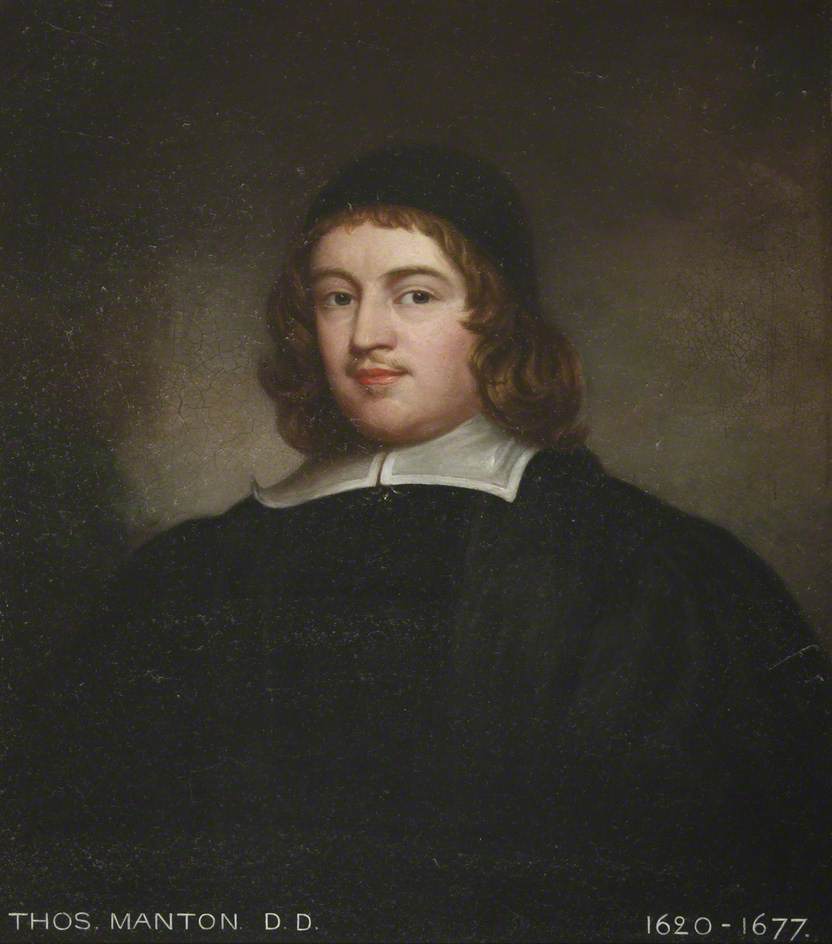
In "Sermon XIX. - Eph. II. 10," Thomas Manton addresses the Reformed doctrine of salvation by grace, emphasizing that while good works are necessary, they are not the means of salvation but rather the result of it. He argues that believers are God's workmanship, created anew in Christ Jesus for good works, as outlined in Ephesians 2:10. Manton posits that this new creation involves a profound transformation, distinguishing between mere moral changes and a true spiritual regeneration, as seen in passages like 2 Corinthians 5:17. The significance of this teaching lies in its affirmation of God's sovereignty in salvation, underscoring that good works stem from divine regeneration, ensuring that grace alone is the source of salvation.
Key Quotes
“That which is the effect of salvation cannot be the cause of it.”
“As 2 Cor v 17 'If any man be in Christ he is a new creature' a new creation hath passed upon him.”
“Holiness is a thing of God's making; we are regenerated and sanctified by his grace.”
“Better thou hadst been a beast yea a toad or serpent than a man for when the beasts die death puts an end to their pains and pleasures at once.”
What does the Bible say about being created in Christ Jesus?
The Bible teaches that believers are God's workmanship, created in Christ Jesus for good works (Ephesians 2:10).
In the context of salvation, good works are not the cause of salvation; rather, they are the evidence and fruit of it. This underscores that while we perform good works, they stem from the transformational work that God has already accomplished in the hearts of believers. The change wrought in us is so profound that we become fundamentally different beings, moving from a state of spiritual death to one of life in Christ, which reflects God's indescribable power and grace. Thus, being created in Christ denotes our new identity and purpose, steering our lives towards His glory.
Ephesians 2:10, 2 Corinthians 5:17
How do we know regeneration is true?
Regeneration is affirmed through Scripture, which teaches that believers are made new creations in Christ (2 Corinthians 5:17).
The biblical narrative shows that regeneration is not merely a moral shift or a change of behavior; it is a complete transformation of one's nature and identity. Through regeneration, the Spirit creates new inclinations and desires in the believer, enabling them to pursue holiness and a relationship with God. This new birth is solely the work of God, evidencing His sovereign grace, which assures us that regeneration is true and necessary for salvation. Thus, we can trust in the promise of Scripture that underscores the reality of our new life in Christ and the accompanying changes in our thoughts, desires, and actions.
2 Corinthians 5:17, John 3:3, Ephesians 2:1-5
Why is good works important for Christians?
Good works are essential as they are the fruit of salvation, demonstrating faith in action (James 2:26).
Good works are not the means to earn salvation; rather, they are the outcome of a heart changed by grace. Ephesians 2:10 clarifies this relationship by stating that we are created in Christ Jesus for good works that God has prepared for us. These works glorify God and bear witness to His grace at work in us, thus fulfilling the purpose for which we were created. In essence, they fulfill the believer's calling to reflect Christ's love and righteousness to the world, making good works an integral aspect of the Christian life.
James 2:26, Ephesians 2:10, Matthew 5:16
Forwearehisworkmanship,createdinChristJesusuntogoodworks,whichGodhathbefore ordained that we should walk in them.—Eph. II. 10.
HE apostle in the context asserteth that our whole salvation is of grace, not of works; he now proveth it. That which is the effect of salvation cannot be the cause of it. But our well-doing is the effect of salvation, if you take it for our first recovery to God; but if you take it for full salvation, or our final deliverance from all evil, works go before it indeed, but in a way of order, not meritorious influence. To think them altogether unnecessary, would too much depreciate and lessen their presence or concurrence; to think they deserve it would as much exalt them, and advance them beyond the line of their due worth and value. The apostle steereth a middle course between both extremes. They are necessary, not meritorious. They go before eternal life, not as a cause but a way; for they are wrought in us by God, and are effects of the begun salvation; so that the good that we do is a part of the grace that we have received, a fruit of regeneration: ‘For we are his workmanship,’ &c.
In the words are two things:—
I. The state of believers: for we, are his workmanship, created in Christ Jesus.
II. The end why we are brought into this estate: unto good works, which, &c. I begin with the former, and there note:—
1. God’s efficiency: ποίημα αὐτοῦ, his workmanship.
2. The manner of his efficiency: κτισθεντες, created; all proceedeth from the infinite creating power of God.
3. The meritorious cause: ἐν Χριστῷ, created in Christ Jesus. From the whole observe:—
Doct. That those that are renewed and recovered out of the apostasy of mankind, are, as it were, created anew through the power of God and grace of the Redeemer.
I. Let us explain the words of the text
II. Prove it.
I. For explication of what is here asserted, three things must be explained:—
1. Our relation to God.
2. His way of concurrence to establish this relation.
3. How far the mediation of Christ is concerned in this effect.
First, Our relation to God: ‘We are his workmanship.’ We are so two ways;—(1.) By natural creation; (2.) By supernatural renovation.
1. By natural creation, which giveth us some kind of interest in him, and hope of grace from him. As Ps. cxix. 73. ‘Thy hands have made me and fashioned me; give me understanding that I may learn thy commandments,’ God is our Creator, and the end of our creation is to serve God; therefore he gives some kind of encouragement to ask the grace whereby we may serve him. But the apostle speaketh here not of the first creation, but
2. Of regeneration or renovation, which is called a second or new creation. As 2 Cor. v. 17, ‘If any man be in Christ, he is a new creature,’ καίνη κτίσις; a new creation hath passed upon him. By the first creation we are made men; by the second, holy men. Holiness is a thing of God’s making; we are regenerated and sanctified by his grace, and made capable of doing good by his Spirit. Now this new workmanship bestowed on us implieth:—
[1.] A change wrought in us, so that we are other persons than we were before, as if another kind of soul came to dwell in our bodies. This change is represented in scripture in such terms as do imply a broad and sensible difference between the two states—that wherein we were before, and that into which we are translated; such a difference as is between light and darkness, Eph. v. 8; life and death, 1 John iii. 14; the new man and the old, Eph. iv. 22,
24. We seem to be, as it were, creatures transformed out of beasts into men. Instead of being governed by sense and appetite, we are led by reason; and reason is not only put into dominion, but grace, which is reason sanctified, directing and inclining us to live unto God.
[2.] This change is such as must amount to a new creation. There are some changes which go not so far, as—
(1.) A moral change, from profaneness and gross sins to a more sober course of life; for there are some sins which nature discovereth, and may be prevented by such reasons and arguments as nature suggesteth, Rom. ii. 14. This may be done by ordinary discretion and advisement. But the new creature signifies such a change, whereby not only of vicious we become virtuous, but of carnal we become spiritual, John iii. 6. Man naturally inclineth to things pleasing to the flesh, and only seeketh, savoureth, and affecteth these things; but in this change the Spirit interposeth and maketh him spirit. Before, man only lived as a nobler and better-natured animal or living creature, and pleased himself, that is, his flesh, either in a grosser or more cleanly manner, being ignorant, mindless of God and another world; but new creatures become spirit, have a spiritual inclination, cannot content themselves with a happiness on this side God and heaven. Mere human nature can never bring men to this, but only the power of God.
(2.) A temporary change, as to fall into a sudden religious frame, which is soon worn off; as Ahab’s humiliation, 1 Kings xxi. 27; or those that howled on their beds, &c., Hosea vii. 14, frighted into a little religiousness in their straits and deep necessities, like ice in thawing weather, soft at top and hard at bottom; or those the prophet speaketh of, Jer. xxxiv. 15, ‘Ye were turned to-day and had done right, but ye returned again and polluted my name.’ They seemed to be changed awhile from evil to good, and then they change again from good to evil This will not amount to the new creature, for that is a durable thing: 1 John iii. 9, Σπέρμα μένει, ‘His seed remains.’
(3.) A change of outward form, without a change of heart; as when a man changeth parties in religion, and from an oppressor becomes a professor of a stricter way. No; the scripture opposeth this to the new creature, Gal. vi. 15. The new creature lieth more in a new mind, new will and affection, than in a new form of religion. Lead is lead still, whatever stamp it beareth.
(4.) A partial change. Men are altered in some things, but the old nature still remaineth; their religion is but like a new piece in an old garment; the heart is not new moulded, so as to leave an impression upon all our actions. The renewed are ‘holy in all manner of conversation,’ ἐν πάσῃ ἀναστροφῇ, 1 Peter i. 15; 2 Peter iii. 11; 2 Cor. v. 17. They drive a new trade for another world, and set upon another work to which they were strangers before; must have new solaces, new comforts, new motives. The new creature is entire, not half new half old; but with many the heart is like ‘a cake not turned.’
[3.] When thus new framed and fashioned, it belongeth to God, it hath special relation to him, James i. 18. It must needs be so; they have God’s nature and life. (1.) Nature, 2 Peter i. 4. They are made like God, bear his image and superscription; it is a curious piece of workmanship, in which God hath showed his wisdom, goodness, and power; and so they are sealed and marked out for his peculiar ones. (2.) The life of God, that came from him, and tendeth to him. Others are ‘alienated from the life of God,’ Eph, iv. 18. They recover it, 1 Pet. iv. 6. His spirit is a principle of life in them, so that they are really alive to God, and dead to sin and the world.
[4.] This workmanship on us as new creatures far surpasseth that which maketh us creatures only. That came from his general goodness, this from his peculiar love; there it is goodness, here it is grace: 2 Tim. i. 9, ‘He hath called us with an holy calling, according to his own purpose and grace.’ Creatures are sustained by his common providence, but new creatures by his special care and covenant: ‘He openeth his hand, and satisfieth the desire of every living thing,’ Ps. cxlv, 16. But he especially preserveth and supplieth believers, 1 Tim. iv. 10. He giveth others bodily comforts; but these, soul-refreshings and spiritual graces, Eph. i. 3. There is vestigium, a tract or footprint of God in all the creation; these have his image restored in them: Eph. iv. 24, ‘The new man is created after God.’ Well, then, this is that we should look after, that we may be his workmanship made again. It is a woful thing to be God’s workmanship by creation and not by renovation. It is better never to have been God’s creature in the first making, if not his creature in the second making. Better thou hadst been a beast, yea, a toad or serpent, than a man; for when the beasts die, death puts an end to their pains and pleasures at once, but all thy comforts end with death, and then thy pains begin: the beasts have no remorse to sour their pleasures, but man hath conscience, and therefore can have no rest till he return to God.
Secondly, God’s way of concurrence to establish this relation. It is a creation. The phrase is often used: Eph. iv. 24, ‘The new man is created after God.’ No other hand could finish this piece of workman ship. God often sets it forth by this term: Isa. xliii. 7, ‘I have created him for my glory, I have formed him, yea, I have made him.’ So ver. 21, ‘This people have I formed for myself; they shall show forth my praise.’ So in other places. Now, creation is a work of omnipotency, and proper to God. There is a twofold creation. In the beginning God made some things out of nothing, and some things ex inhabili materia, out of foregoing matter, but such as was wholly unfit for such things as were made of it; as when God made Adam out of the dust of the ground, and Eve out of the rib of man. Take the notion in the former or latter sense, and it will suit with the matter in hand. (1.) We are formed anew of God, as it were out of a state of nothing, and get a new being and a new life. To this there are frequent allusions in scripture; as Rom. iv. 17, ‘He calleth the things that are not as though they were;’ 2 Cor. iv. 6, ‘Who speaketh (Ὁ ἔρνη) light out of darkness,’ he bringeth. life out of death, something out of nothing. Now there is such a distance between these two terms that the work can only be accomplished by a divine power. (2.) Creation out of unfit matter. We were wholly indisposed, averse from good, perverse resisters of it. Now, to bring us to love God and holiness, to restore God’s lost image to us, it is a new forming or making of us, and must be looked upon, not as a low, natural, or common thing, but as the work of him who gave us his image at first: Col. iii. 10, ‘The new man is renewed after the image of him that created him.’ To turn a heart of stone into a heart of flesh, God challengeth it to himself, Ezek. xxxvi. 26. This creation showeth two things:—
1. The greatness of the disease; that is clearly seen in the difficulty of the remedy. Nothing doth make a man so sensible of the corruptness of his nature, as when we hear by what terms our recovery or restitution by grace is set forth. It is a second creation, a new birth, a resurrection, a raising up of stones to be children to Abraham; yea, in a sort, beasts are turned into angels. From these things we may a little conceive of the greatness of that disease which all mankind were sick of. Every faculty of our souls was both weakened and corrupted, and God only by his divine power can restore us; for to be cured we must be wholly new made, and who can make or create but God? Surely we contributed nothing to it. What enemies were we to our own mercies! It is no small matter for darkness to become light in the Lord; for a rugged, stubborn creature to be mollified, and submissive to the Spirit’s discipline; for a slave of the devil to become the subject of Christ; that a heap of rubbish should be erected into a temple of God, and a dunghill turned into a bed of spices.

Comments
Your comment has been submitted and is awaiting moderation. Once approved, it will appear on this page.
Be the first to comment!