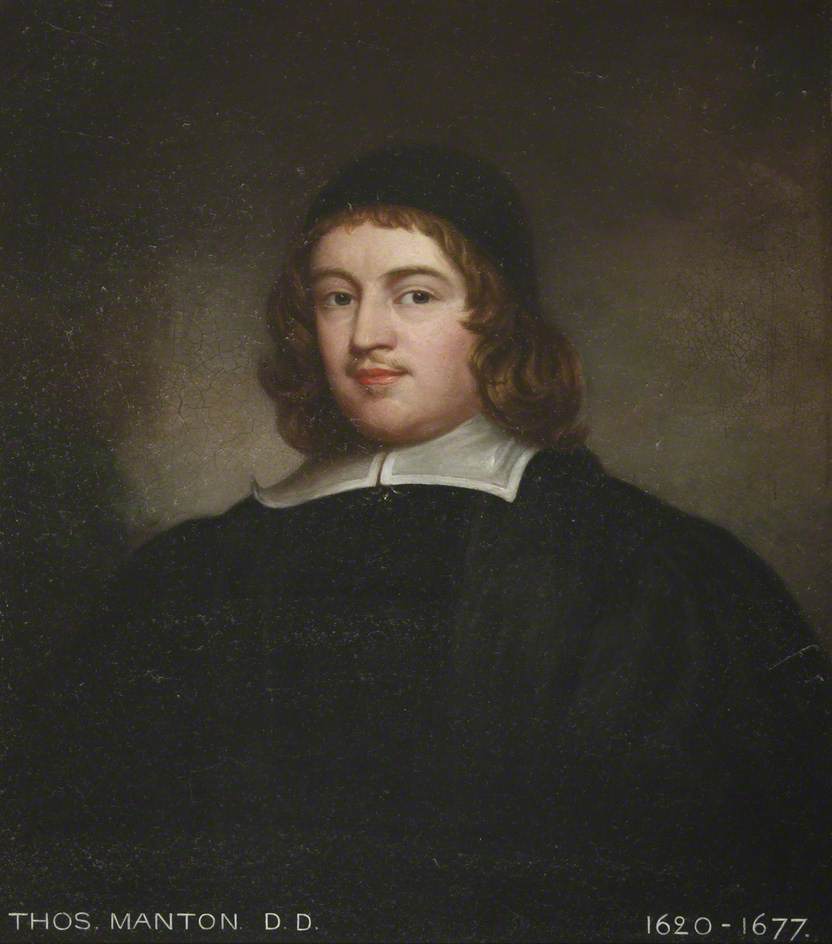
In "Isaiah 53 — The Sixth Verse," Thomas Manton examines the profound theological distinctions surrounding sin and redemption as expressed in Isaiah 53:6, highlighting humanity's collective straying from God and the divine remedy provided through Christ. Manton articulates the dual themes of human misery due to original sin, portrayed vividly through the metaphor of sheep gone astray, and the divine resolution where the Lord lays humanity's iniquities upon Christ. Key scripture references, such as Romans 3:12 and Luke 15:18, are employed to reinforce the argument of every individual’s sinful condition and their ensuing need for redemption. The significance of this doctrine is multifaceted, emphasizing both the universality of sin and the necessity for a Savior, ultimately presenting a clear call for personal reflection on one's condition before God and the transformative power of Christ’s atonement.
Key Quotes
“Our sin is charged upon us collectively in common; we have all gone astray.”
“The burden of sin that would otherwise have ruined us is cast upon Christ.”
“All are included under a necessity of looking after a remedy if all be sick; they must all seek to the physician or perish.”
“This should be minded by us: Nothing inferreth so much a contradiction to God as our being sinners by nature.”
What does the Bible say about our need for a Savior?
The Bible shows that all have sinned and need a Savior for redemption from sin, as emphasized in Isaiah 53:6.
Isaiah 53:6, Romans 3:23
How do we know that Christ's sacrifice is sufficient for our sins?
Christ's sacrifice is sufficient because He bore the iniquities of us all, fulfilling the requirement for atonement.
Isaiah 53:6, 1 Peter 2:24
Why is understanding sin important for Christians?
Understanding sin is crucial for acknowledging our need for God's grace and the true nature of Christ's redemption.
Isaiah 53:6, Romans 6:23
Allwe,likesheep,havegoneastray;wehaveturnedeveryonetohisownway;andtheLord hath laid upon him the iniquities of us all.
IN this verse we have two things which ought to be matter of continual meditation to us all our days, to wit, our misery by sin, and our remedy by Christ.
1. Our misery in the former clause; where—
[1.] Our sin is charged upon us collectively in common: we have all gone astray.
[2.] Distributively: everyonetohisownway. We all agree in turning aside from the right way of pleasing and enjoying of God; and we disagree, as each one hath a by-path of his own, some running after this lust, some after that, and so are not only divided from God, but divided from one another, while every one maketh his will his law. Vellesuumcuique est, nec voto vivitur uno: several desires breed difference.
2. The remedy provided against this misery: andtheLordhathlaiduponhimthe iniquitiesofusall. The burden of sin, that would otherwise have ruined us, is cast upon Christ. The sheep wander and the shepherd is slain. He is the good shepherd that layeth down his life for the sheep. David saith, 2 Sam. xxiv. 17, ‘These sheep, what have they done?’ David was more tender of his people than of himself, yet David was guilty. But here it is otherwise, for our iniquities were laid upon Christ. Here we may observe:—
[1.] The author of this benefit, or who it was that provided this remedy for us: theLord. [2.] The nature of the benefit: he laid our iniquities on him; that is, on Christ.
[3.] The persons concerned: the iniquities of usall; all those that are at length gained to believe in him, and return to him, as the bishop and shepherd of their souls.
First, I begin with the misery or the woeful case wherein all those for whom Christ died were in before conversion.
1. They wandered in their ignorance and sinful ways to their own destruction, set forth by the going astray of sheep: ‘All we, like sheep, are gone astray.’ It is a usual similitude, which is not put here by way of extenuation, as in some scriptures, as ‘I send you forth as sheep among wolves;’ but in a way of aggravation, not to extenuate the sin, but to set it out the more. It is to show the folly of man. Sheep, of all creatures, are most apt to stray without a shepherd. They are apt either to be driven out of the fold as a dog or wolf scattereth the sheep, or to wander of their own accord, a fit emblem of our folly, who love to depart from God, and go astray from the way of life: Rom. iii. 12, ‘They are all gone out of the way;’ that is, the way to true happiness.
2. They were unable to bring themselves into the right way: Luke xv. 18, ‘I will arise and go to my father, and will say unto him, Father, I have sinned against heaven, and before thee.’ St Austin saith, Domine,errarepermepotui,redirenonpotui—Lord, I could go astray of my own accord, but could not return by myself.
3. In hazard to be preyed upon by the roaring lion, and the dogs and wolves that are abroad: 1 Peter v. 8, ‘Be sober, be vigilant, because your adversary the devil, as a roaring lion, walketh about seeking whom he may devour.’ Our misery is mentioned to show the necessity of a Saviour; and this misery is made to consist in sin or straying from God; the sense of which is our first motive to make us look after Christ, that we by him may return again to our own happiness, even to God, who is the refuge of our souls, and the centre of our rest. But let us more nearly observe how our misery is described. And first of the universal particle, all we; and then of the distributive particle, every one.
First, From the universal particle all, we may observe:—
Doct. 1. That no son of Adam can exempt himself from the number of those that are gone astray from God and the way of true happiness. I shall explain the point in these considerations:—
First, All are sinners by nature. There are three branches of original sin:—
1. The communication of Adam’s guilt.
2. The want of original righteousness.
3. The corruption or pollution of nature. These are derived from Adam to all his children, and in respect of these they are all out of the way.
1. Because the guilt of Adam’s sin is imputed to us; his guilt we receive as children do the brand of their ancestors, that are tainted in blood and forfeited in law. Look, as Reuben’s act in defiling his father’s bed was a stain to all his posterity, and they lost the sovereignty by it, Gen. xlix. 4, so all mankind, being in Adam, as they descended from him, and were in him as in a common person, they sinned in him, so that what Adam did we did. Thus it is said, Heb. vii. 9, ‘Levi, who received tithes, paid tithes in Abraham.’ There is ground you see in nature for the imputation of the father’s deed to those that descend of him: and God may as justly impute to us Adam’s sin as to Levi Abraham’s paying of tithes. When Abraham did it, it was as if Levi did it; and when Adam sinned, it was as if you sinned. We were all in his loins at that time; and, if it had been our personal case, we should have done so. Now this answer may satisfy as to the angels, that do not beget one another, and, therefore, sustain not the person of one another; their sins do not take hold of one another; they, being all immediately begotten by God, are not guilty of each others’ sins, unless it be by consent and mutual agreement; therefore, those only fell that combined to follow one as the ringleader of the faction. Hence it is said, Mat. xxv. 41, ‘The devil and his angels;’ not as if begotten by him, but adhering to him. But to return, in pursuance of the former matter, note, the scripture looketh upon parents as sustaining a common person, and, therefore, what injury is done to the father, is spoken of as done to his seed; and many families suffer for the miscarriages of their progenitors: Gen. iv. 10. ‘Thy brother’s blood crieth unto me:’ thou hast shed the blood of his offspring in spilling his, and, therefore, it is bloods, in the plural number. And so for Jacob and Esau, God elected them as sustaining the common persons of their posterity, and so likewise in many places. Now this holdeth good in man’s justice, for treason in the father taints the blood of the son.
2. The want of original righteousness, which cometh upon us thus. As poor and ignoble parents convey their poverty and want to their children, and none can give what he hath not. A bankrupt father must needs leave his family poor; so Adam, having lost his righteousness, he could not bequeath it as a legacy to his children.
3. As to the corruption and pollution of nature, that is conveyed as a leprosy is propagated to the children of lepers: 2 Kings v. 27, ‘The leprosy of Naaman shall cleave unto thee and to thy seed for ever;’ so that every child born of that line was born a leper. Thus men be get children like themselves, corrupt and sinful; the copy answereth the original—the blood resembleth the kind. Of vipers there cometh nothing but vipers, and sinners produce sinners after their kind. If the immediate parent be sanctified, yet, that being not natural, doth not alter the case; from a circumcised father there doth not come a circumcised child,—threshed corn doth not produce threshed corn. But let us consider these branches a little more particularly.
1. All men are sinners as they partake of Adam’s guilt in being descended of him. As they sprang from him, they were in him as in a common person, and sinned in him; as Levi paid tithes in Abraham, as aforesaid, Heb. vii. 9. To be sure, sin and death came upon him and upon all: Rom. v. 12, ‘Wherefore as by one man sin entered into the world, and death by sin, so that death passed upon all men, for that all have sinned.’ If death, as is visible, then sin, even upon children: ver. 14, ‘Death reigned from Adam to Moses, even over them that had not sinned after the similitude of Adam’s transgression.’ Otherwise the apostle’s reason would not be good and cogent, and there would be a punishment without a guilt: but ubipoena,ibiculpa. Yea, Rom. v. 19, ‘For as by one man’s disobedience many were made sinners, so by the obedience of one shall many be made righteous.’ Madesinners is meant sensuforensi, in a law or court sense, by the imputation of Adam’s guilt, as appeareth by the opposition. In short, those things are said to be imputed to us which are reckoned ours to all intents and purposes, as much as if they were our own. As another man’s debt, taken on upon my score and account, is really and truly mine: so Adam’s disobedience, and Christ’s righteousness are imputed to all those whom they represented.
2. They are sinners as they want original righteousness: Rom. iii. 23, ‘For all have sinned, and come short of the glory of God.’ By ‘the glory of God ‘may be meant his glorious recompenses, or his glorious image. The latter, questionless, is meant: 1 Cor. xi. 7, ‘A man ought not to cover his head, forasmuch as he is the image and glory of God; but the woman is the glory of man.’ See also 2 Cor. iii. 18, ‘But we all with open face, beholding as in a glass the glory of the Lord, are changed into the same image from glory to glory.’ This necessarily maketh them sinners: for the soul being destitute of a principle to incline it to God, wholly accommodateth itself to the interests of the flesh, and is only employed to cater for the body and the bodily life; for, though it be created by God, yet being created destitute of grace and original righteousness, and put into the body, it soon forgets its divine original, and that region of spirits from whence it came, and conformeth itself to the body; as water put into a round or square vessel, taketh form from the vessel into which it is put. The soul doth only affect things present and known, having no other principle to guide it. Now things present and known are the delights of the body and bodily life, such as meat, drink, natural generation, sports, wealth, honour, and pomp of living. And the soul is turned from the love and study of better things. That self-love that carrieth us to these things is naturally good but morally evil, as it destroys the love of God, and the care of pleasing and enjoying him. There is a conversion from God to the creature, a falling off from our last end.
3. There is pollution or corruption of nature, the stock of sin which we have inbred in us, consisting in a blind mind, perverse will, disorderly affections, an unruly appetite, and evil inclinations to sensual things. This corruption is often spoken of in scripture: Ps. li. 5, ‘Behold I was shapen in iniquity, and in sin did my mother conceive me;’ John iii. 6, ‘That which is born of the flesh is flesh.’ We all partake of the same carnal nature, the dunghill of corruption, which wreaketh out in the mind by vain thoughts, in the heart by carnal desires, and constantly discovereth itself by a proneness to all evil: Gen. vi. 5, the imaginations and ‘the thoughts of his heart are evil, and that continually.’ An aversion from and enmity to all that is good: Rom. viii. 7, ‘The carnal mind is enmity against God, and is not subject to the law, neither indeed can be.’ Man, in respect to that which is good, is described not only by terms that imply weakness, but hostility and opposition, as unfit for every good work, and so opposite to it: Col. i. 21, ‘Alienated and enemies in your minds by wicked works.’ If a man were indifferent to good and evil, a neuter and not a rebel, the case were the less; but the bent of his heart is against it, as appeareth not only by scripture but experience. There is a proneness, and a greater inclination to evil than to good. Now, from whence should it come? Not by example, for then this inclination would not discover itself so early, and children would be as capable of good as evil. We catch a disease from the sick, but not health from the sound. We find a manifest disproportion in all our faculties. In the understanding, a sharpness of apprehension in carnal things, but a dulness and slowness to conceive of what is spiritual—the will is backward and slow to what is good, but there is a strong bent and urging in it to what is evil. We need a bridle to curb and restrain us from evil, and a spur to excite and quicken us to good. Evil things persevere and continue with us. Oh, but how fickle and changeable are we in any holy matter! The memory is slippery in what is good, firm and strong in what is evil, the affections quick, and easily stirred; like fire in tinder, they catch presently what is evil, but are cold and dead, like fire in wet or green wood, to anything that is good. The body is unwieldy for any holy use, but ready to execute any carnal purpose. In short, there is the seed of all actual transgressions before it break forth; so that we are gone astray and out of the way indeed. This should be minded by us. Nothing inferreth so much a contra diction to God as our being sinners by nature. This is a standing enmity; actual sin is a blow and away, a fit of anger, this a state of malice. Surely, we had need look to a redeemer and a change by regeneration, that are so corrupt and fleshly in all the powers and faculties both of soul and body. This secludeth us from any possibility of attaining heaven and true happiness.
Secondly, All that come to the use of reason have actually sinned against God. The bad: 1 Kings viii. 46, ‘For there is no man that sinneth not.’ The good: Eccles. vii. 20, ‘For there is not a just man upon earth, that doeth good and sinneth not.’ Our nature, being unsubdued, discovereth itself in acts suitable: Gen. viii. 21, ‘For the imagination of man’s heart is evil from his youth, and that continually.’ Though there be mixtures and intermissions, and though this corruption be in part broken, yet it is not wholly vanquished; as cloth dyed in the wool doth not easily leave its first mixture. Principles in the best are mixed, so are their operations, like fair water passing through a dirty sink. Bonumnonestnisiexintegro—not so purely good, as merely evil before. The best are either overtaken, Gal. vi. 1, or over borne, Rom. vii. The saints in heaven are called ‘spirits made perfect.’ Heb. xii. 23. They sin no more; but here we come very short of that exact obedience which the law requireth: Prov. xx. 9, ‘Who can say, I have made my heart clean, I am pure from my sin?’ They have entered upon the work of cleansing their hearts, but cannot get them quite clean, but still go on with the work, and make use of the blood of Christ. Though none accuse them, yet God and their own hearts may justly condemn them for many sinful swervings from their duty.
Thirdly, This departing from God and his ways is fitly represented by the straying of sheep: ‘All we like sheep have gone astray.’
In the general it implieth:—
1. That we are brutish in our sin and defection from God: it could not be expressed but by a comparison fetched from the beasts; we were like sheep led aside in a sensual way. Man aimed at being equal with God, and he was made beneath himself: Ps. xlix. 12, ‘Nevertheless, man being in honour, abideth not; he is like the beasts that perish.’ He continued not in the honour of his creation, and in that excellency and dignity wherein God had set him; but became like a beast, governed by his senses and lower appetite. It is true of all men, they do not continue in the excellency of their being, they have lost much of the dignity of their reason, and are more led by sense, as the brute creatures are. And therefore you have the saints often complaining: Ps. lxxiii. 22, ‘So foolish was I and ignorant, I was as a beast before thee.’ I was as behemoth, a great beast. Sometimes they have no command of their affections, but are merely led by the unruliness of appetite or passions: so Prov. xxx. 2, ‘I was more brutish than any man;’ that is, he was no more able to gain heavenly knowledge, whereby to be wise for heaven and salvation, than brute creatures are able to wield man’s reason, whereby to apply themselves to the affairs of this life. Therefore man is often compared to beasts for fierceness and cruelty, as the prophet calleth the proud oppressors cows: Amos iv. 3, ‘And ye shall go out of the breaches, every cow at that which is before her.’ So for their rude wanton simplicity, they are compared to ‘a wild ass’s colt,’ Job xi. 12. And here to a sheep in decay of knowledge and government. In the general, then, it implieth something brutish in us, and that through the fall we have slipped beneath the excellency of our rank and being.
2. Proneness to err. No creature is more prone to wander and lose his way than a sheep without a shepherd, which is easily seduced. So are we apt to transgress the bounds whereby God hath hedged up our way: Jer. xiv. 10, ‘Thus saith the Lord unto this people, thus have they loved to wander.’ They loved to try experiments in a way of sin. Man indeed would fain transmit the fault from himself, as Adam doth obliquely upon God: ‘The woman which thou gavest me to be with me, she gave me of the tree, and I did eat,’ Gen. iii. 12. It may not be the shepherd’s fault if the sheep wander, but their own nature, their aptness to wander. When we bring ourselves into inconveniences, we are apt to murmur, and secretly to accuse God in our thoughts, as if he did not sufficiently provide for us. Solomon saith, Prov. xix. 3, ‘The foolishness of man perverteth his way, and his heart fretteth against the Lord.’ It is our own folly, and we blame our own fate, our evil destiny, and those unlucky stars that shone at our birth; and in these things we blame God himself. The saints themselves have been guilty of this evil, fretting at God for what inconvenience comes to pass through their own sin and folly. 2 Sam. vi. 8, it is said, ‘David was displeased, because the Lord had made a breach upon Uzzah.’ He should have been displeased with himself and his own ignorance, to order the ark to be carried upon a cart, when it should have been carried upon the priests’
shoulders. Thus, as sheep, it noteth to us self-abasement, because of our own proneness: we did it as sheep, and they are apt to wander.
3. Our inability to return, or to bring ourselves into the right way again. It is like a sheep, not like a swine or a dog; these creatures will find the way home again, but a sheep is irrecoverably lost without the shepherd’s diligence and care: Jer. 1. 6, ‘My people have been lost sheep, their shepherds have caused them to go astray; they have turned them away on the mountains, they have gone from mountain to hill, they have forgotten their resting-place.’ The farther they go the farther they will be from the flock, and in a very sad condition. It holdeth good too here; for we do not know the way back again to God. Austin saith, I could wander by myself, and could not return by myself. And God saith as much, Hosea xiii. 9, ‘O Israel, thou hast destroyed thyself, but in me is thy help.’ That is done in a moment which we cannot help to all eternity. Our destruction is from ourselves, but our reparation from God. The good shepherd bringeth home the lost sheep upon his shoulders, Luke xv. 5.
4. It noteth our readiness to follow evil example. A sheep is animalsequax, they run one after another, and one straggler draweth away the whole flock: Eph. ii. 2, 3, ‘Wherein in times past ye walked, according to the course of this world, according to the prince of the power of the air, that now worketh in the children of disobedience: among whom also we had our conversation in times past, in the lust of our flesh, fulfilling the desires of the flesh and of the mind, and were by nature the children of wrath even as others.’ There is Satan, corrupt examples, and evil inclinations, the world and the flesh, all concurring to ruin man. We easily swim with the stream and current of others’ examples, and do as they do; and even so men take and do a great deal of hurt by evil examples. Thus sins are propagated, and we live by imitation; like sheep, we draw others out of the pasture together with ourselves. Sheep go by troops, and so do men follow the multitude to do evil; and what is common passeth into our practice without observance.
5. The danger of straying sheep, which when out of the pasture, are often in harm’s way, and exposed to a thousand dangers: Jer. l. 6, 7, ‘My people have been like lost sheep; all that have found them have devoured them.’ So are we in danger to be preyed upon by the roaring lion, and the dogs and wolves that are abroad. In our sinful estate we are as sheep whom no man taketh up, being out of God’s protection, and so a ready prey for Satan. See how pathetically the prophet describeth the misery of Israel: Hosea iv, 16, ‘Now the Lord will feed them as a lamb in a large place.’ Oh, consider what it is for a poor solitary lamb to wander through the mountains, where, it may be, some hungry lion and ravenous wolf looketh for such a prey. Even so it is with straying men, their judgment sleepeth not; it may be the next hour they will be delivered over to destruction: Rom. iii. 16, ‘Destruction and misery is in their way, and the way of peace they have not known.’
Use 1. Is to show us the necessity of a Redeemer. All are included under a necessity of looking after a remedy; if all be sick, they must all seek to the physician or perish. And therefore it concerneth every one to see what they have done for the saving of their lost souls. ‘All the world is become guilty before God,’ as the apostle saith, Rom. iii. 19. Guilty you are, but have you sued out your discharge? By nature you lost the glory of God, but are you changed into the image and likeness of Christ from glory to glory? You were polluted in your first birth, but are you born again of water and the Spirit? Are you saved by being washed in the laver of regeneration and renewing of the Holy Ghost, which he hath shed on us abundantly through Jesus Christ our Saviour? You are sinners by practice, but are you washed in the blood of the Lamb, and reconciled to God? You have gone astray, but is the case altered with you? 1 Peter ii. 25, ‘For ye were as sheep going astray, but are now returned unto the shepherd and bishop of your souls.’ Do you use Christ as a mediator to seek the favour of God by him? Do you put yourselves into his hands as your Shepherd, and resign and give up yourselves to be governed by him as your bishop and overseer? As the misery involveth all, so doth the care and necessity of looking after a remedy concern all. In the first Adam we contracted guilt, and became liable to the wrath of God; in the second, we have righteousness, which is a pledge of God’s favour. In the first Adam we lost the image of God; by the second, we are made partakers of the divine nature. In the first, we lost paradise; but by the second, are restored to a better paradise, heaven itself.
But let us not reflect only upon this common necessity, but our own personal necessity, what need we have to look after a Redeemer, and to get an interest in him, and that his redeeming grace may become glorious in our eyes.
1. In your natural estate you were every one of you as lost sheep, fugitives, and strangers, and enemies to him. Thy way was lost, thy God lost, thy happiness lost, thy soul lost; so it was, for Christ ‘came to seek and to save that which was lost.’ Then the devil was thy shepherd, then thou didst put thyself under his conduct, and God was looked upon as thy enemy. Oh, think of it; at a day old thou wert sinful, even to the death, and worthy of God’s hatred: Col. i. 21, ‘You were sometimes alienated, and enemies in your minds by wicked works.’ And his wrath remaineth on you, till application be made of the blood of Christ upon gospel terms: John iii. 36, ‘He that believeth not the Son, shall not see life, but the wrath of God abideth on him.’ These terms are repentance and turning to God. Now dost thou believe that thou wert a child of wrath by nature, a firebrand of hell? and canst thou be secure, and desirest thou not to be freed from so great a danger?
2. In practice. How didst thou wander and depart from God throughout the whole course of thy life? The stragglings of thy youth, how canst thou look back upon them without shame and blushing? Cry out then, Ps. xxv. 7, ‘Remember not the sins of my youth, nor my transgressions: according to thy mercy remember thou me, for thy goodness’ sake, O Lord.’ And in thy riper years how shamefully didst thou stray from God, even since thou begannest to have more of conscience, and a greater use of reason? It were end less to trace us in all our by-paths: ‘Who can understand his errors?’ Ps. xix. 12. In every age, in every condition, in every business, we have been wandering from God.
3. Since grace received we have had our deviations: Ps. cxix. 176, ‘I have gone astray like a lost sheep: seek thy servant, for I do not forget thy commandments.’ Though our hearts be set to walk with God in the main, yet we are ever and anon swerving from the rule, either neglecting our duty to God, or transgressing against the holy commandment. Oh, therefore eat your passover with sour herbs, and bless the Lord for finding you out in your wanderings, and following you with the tenders of his grace in Christ.
Use 2. If the Spirit of God sets forth our natural estate by the straying or wandering of sheep, see if this disposition be still in you, yea or no. Are you not apt to go astray from God and from his ways?
1. From God. Every sin is a departing from him, but especially unbelief: Heb. iii. 12, ‘Take heed, brethren, lest there be in any of you an evil heart of unbelief, in departing from the living God.’ Adam thought to find much happiness in forbidden fruit, to mend and better his condition, but was miserably disappointed. So when we do not believe God in his word, we will be trying our fortunes and taking our own swing and course. But I speak of a more general disposition. There are some whose main care it is to be getting away from God; as the prodigal went into a far country, Luke xv. 11. They think to be better anywhere than at home under God’s eye and presence. This appeareth by the care they take to keep God out of their thoughts: Ps. x. 4, ‘God is not in all his thoughts.’ A thought of God rushing into their mind is very unwelcome and unpleasant to them; they are backward and hang off from communion with God, and the duties of religion are looked upon as a melancholy interruption.
2. From the ways of God. Though they are the only ways of peace and life, and will surely make us happy in the end, yet naturally we are of a libertine and yokeless spirit. Sinners looking upon all things through the spectacles of the flesh, count them harsh and unequal, and a strict confinement: Mat. vii. 14, ‘Because strait is the gate, and narrow is the way which leadeth unto life, and few there be that find it.’ They cannot endure God’s restraint: Prov.
xiv. 12, ‘There is a way that seemeth right unto a man, but the end thereof are the ways of death.’ The broad and easy ways of sin are pleasing to flesh and blood, but destructive to the soul. Well, then, he that counteth the company of God or the ways of God irksome, hath this wandering disposition still remaining with him; and if it be not checked it will prove his eternal destruction. The sheep do not fare the better for going out of the pasture. We leave all good in leaving the chiefest good; and in departing from God you turn your back upon your own happiness; as beasts put into a good pasture will yet seek out some gap that they may range abroad.
I come now to observe from the distribution of this common error: everymantohis own way:—
Doct. 2. That there are many several ways of sinning; or thus, though there be one path to heaven, yet there are several ways of sinning and going to hell.
Every man hath his several course. And as the channel is cut, so his corrupt nature findeth an issue and passage: Eccles. vii. 29, ‘God hath made man upright, but they have sought out many inventions.’ One hath one invention, and another, wherein he imagineth to find contentment and happiness, but findeth none. Man swerving from the state of happiness and sufficiency wherein God had created him, thinketh to better his condition, and therefore hath many devices and inventions, which indeed make it worse. So 1 John ii. 16, ‘For all that is in the world is the lust of the flesh, the lust of the eye, and the pride of life.’ Though no sin cometh amiss to a carnal heart, yet some are more kindly and suitable to that particular humour. One’s notorious blemish is the lust of the eyes, worldliness; another, sensuality; another, pride; one this sin, another that. Hence the psalmist saith, Ps. xviii. 23, ‘I kept myself from mine iniquity.’ That which most urgeth us, and prevaileth with us, we should endeavour to mortify.
The reasons how this cometh to pass are:—
1. Because of the activeness of man’s spirit. It is always a-devising wickedness, which as it is true most especially of the malicious musing mind, so of all evil hearts: Ps. lxiv. 6, ‘They search out iniquities, they accomplish a diligent search; both the inward thought of every one of them, and the heart, is deep.’ A wicked spirit is a searching spirit; they contrive new ways; they are always finding out new inventions and devices; they are not contented with the way God hath set them, and therefore will try others.
2. It happeneth through diversity of constitutions. Amoresanimisequunturhumores corporis—the conditions of the mind follow the constitution of the body. The matter of some men’s bodies is more viciously disposed than others are. We plainly see the body hath some indirect operation upon the soul; the affections, in their work and exercise, depend upon the body; and these corrupt affections meeting with a disposed body for them, by a violent sway carry the whole man with them. And this reason is the stronger, because the devil joineth with our tempers to help on those sins to which we are naturally disposed, as wantonness, drunkenness, gluttony; or if of a better constitution, to pride and vainglory. As when the devil observeth a lustful man, he helpeth forward the temptation, and offereth occasions, stirring up raging and immoderate desires, until at length, forgetting all shame and modesty, or the danger of punishments, he does most foully pollute himself. So if to luxury and gluttony, he presents sweet baits till the soul is drowned and drenched in meats and drinks, and there be no sense of piety, and the heart is made unwieldy to prayer or any good duty. So for contentious or furious persons; whatever the constitution be, he ‘worketh mightily in the children of disobedience.’ Eph. ii. 2. Godly men find least hurt by him, as being led by the Spirit, and avoid the occasions and snares, and strive against evil suggestions, and yet they smart too much under his malice many times, through the advantage he hath over them by their constitutions.

Comments
Your comment has been submitted and is awaiting moderation. Once approved, it will appear on this page.
Be the first to comment!