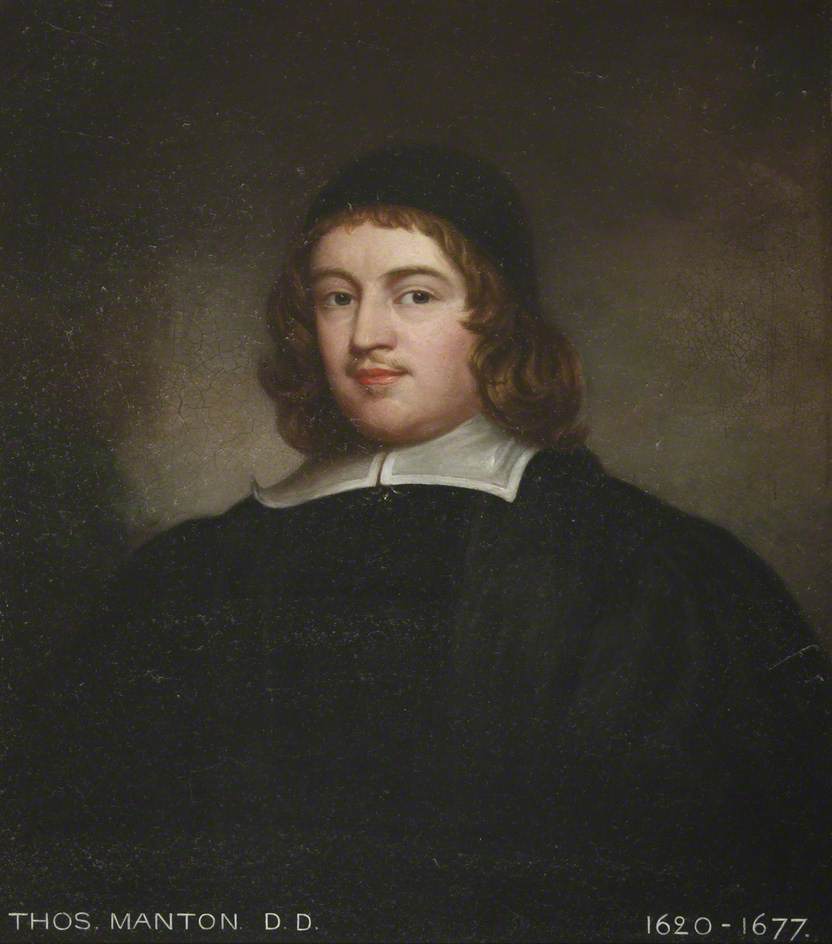
The main theological topic addressed in Thomas Manton's article, "Isaiah 53 — The Tenth Verse," is the nature and purpose of Christ's suffering as foretold in Isaiah 53:10. Manton argues that the suffering of Christ was not a result of divine negligence but rather was ordained by God for the redemption of His people, emphasizing God's sovereignty in this process. He supports this argument with various Scripture references, notably Isaiah 53:10, Romans 3:26, and Acts 2:23, illustrating how Christ's bruising and grief were part of God's deliberate design for salvation. The doctrinal significance of this perspective rests in affirming God's justice and love, showcasing that Christ's suffering was both a fulfillment of prophecy and a means by which believers obtain redemption and reconciliation with God.
Key Quotes
“It pleased the Lord to bruise him; he hath put him to grief.”
“The will of God... that is the cause of his sufferings.”
“When thou shalt make his soul an offering for sin.”
“God’s decrees are immanent in himself, working nothing that is evil in the creatures.”
What does the Bible say about Christ's suffering in Isaiah 53?
Isaiah 53 reveals that it pleased the Lord to bruise Christ, who was made an offering for sin to fulfill God's redemptive plan.
Isaiah 53:10, Romans 3:26, Galatians 2:20
How do we know that Christ's sufferings were part of God's plan?
The Scriptures assert that Christ’s sufferings were determined by God's counsel, fulfilling His redemptive purpose.
Acts 2:23, Matthew 26:54
Why is the concept of substitutionary atonement important for Christians?
Substitutionary atonement is crucial as it reveals how Christ bears our sins, satisfying God's justice for our redemption.
Isaiah 53:5, Romans 3:26
What does it mean that Christ shall see His seed?
Christ seeing His seed means that through His suffering and death, He will bring forth many spiritual children—believers in His name.
Isaiah 53:10, John 12:24
YetitpleasedtheLordtobruisehim;hehathputhimtogrief:whenthoushallmakehissoul an offering for sin, he shall see his seed, he shall prolong his days, and the pleasure of the Lord shall prosper in his hand.
THE prophet is still dealing with the Jews’ scandals. Unbelief will easily take up any pretence to justify itself. And therefore when there was so much ground for their prejudice against Christ, as such meanness and so many sufferings, these vain pleas could not easily be removed out of their minds; and that is the reason why he speaketh to it again in this verse, that he might further discover their folly, because they would suffer their thoughts to stay in the outward appearance of things, not considering how God bringeth about many times his greatest designs in a riddle and mystery, and wraps up the good and salvation of his people under a veil of contradictions. God the Father is the wronged party, and he that hath to do with pardon: Rom. iii. 26, He is ‘the justifier of them that believe in Jesus.’ The prophet telleth them in this verse that Christ should live by dying, gain by his bruises and sufferings;. that which was likely to disaffect the world against him, should draw them into his obedience. Where the work of the Lord seemed to miscarry, there it should prosper in his hands. The great expectation was that the Lord should bruise the head of the serpent; yet it pleased the Lord to bruise Christ. Look to the design of God, and you shall see sufferings are not matter of scandal, but admiration. It is no good rule to measure the in tents of God by the looks and face of things. Whilst you look only to the outward meanness and sufferings of Christ, you overlook the design of God in him. ‘It pleased the Lord to bruise him; he hath put him to grief,’ &c. The words contain divers arguments and defences against the scandals taken up against Christ by the Jews.
1. The will of God: itpleasedtheLordtobruisehim,hehathputhimtogrief; that is the cause of his sufferings.
2. The nature of his suffering: when thou shalt make his soul an offering for sin.
3. The fruits of his suffering, and they are three:—
[1.] The propagation of his spiritual seed: he shall see his seed.
!2.] The prolongation of his life: he shall prolong his days.
[3.] The promulgation of the will of God in his hands: thepleasureoftheLordshall prosper in his hands. This will be clear to you by going over the phrases.
Tremellius has it, Delectatus est Dominus, the Lord delighted to bruise him. The Seventy, to mend the harshness of the phrase, render it, ‘It pleased the Lord to cleanse him;’ but that is a mistake of the word, which among the Chaldees signifieth to cleanse; and there is no reason why we should fear to say that the Lord designed to subject his Son to bruisings and to grief, since the great comfort of Christians dependeth upon it. That these things did not happen by chance, or against the will of God, as something that he did not care for, or would abhor. The Lord’s pleasure was fulfilled in all these sufferings, though these wicked men that brought them upon Christ had other intentions. And that decision of Lombard and other school men is very derogatory to the truth of the gospel and the comfort of believers, when they say, God would only discover the virtues of Christ, and the fruits of his sufferings, and the malice of the Jews; as if the sufferings of Christ were beside God’s intention and design. But the acts of their malice are ascribed to the ordination of God: ‘It pleased the Lord to bruise him and to put him to grief.’ And suit able to this, it is very observable in the New Testament, that those words which imply their malice do also imply God’s appointment. Pilate delivered him, Judas delivered him, and God delivered him: Mat. xxvii. 2, παρέδωκεν, ‘And delivered him to Pontius Pilate the governor.’ And then it is said of Pilate, in the 26th verse, that he ‘loosed ‘or ‘released Barabbas,’ παρέδωκεν, and delivered Christ to be crucified. And Judas delivered him: Mat. xxvi. 15, ‘I will deliver him to you.’ And Christ, speaking of Judas, says, John xix. 11, ‘Therefore he that delivered me unto thee hath the greater sin.’ And the same word is used of God’s disposal of Christ, Rom. viii. 32, ‘He spared not his own Son, but delivered him up for us all.’ And again, of the Jews, Acts iii. 13, παρέδωκκατε, ‘Whom ye delivered up.’ The priests for envy, Judas for gain, the people in blind zeal, and Pilate to keep up his esteem among the Jews, but God to make out his own ends for the salvation of his people. And always delivered or betrayed is expressed by the same word, which is the rather to be noted, because the scriptures, riot in one place only, but in many, use the same action and expression. And therefore, without any stain or blot upon divine justice, we may say, ‘The Lord delighted to bruise him and to put him to grief;’ for he had a great hand in all that was done to Christ. It followeth:—
‘When thou shalt make his soul an offering for sin;’ or, as it is more properly in the margin, ‘When his soul shall make an offering for sin: ‘this clause being to be referred to God the Son; for the Lord Christ was not unwillingly subjected to bruises and griefs, but voluntarily submitted himself to the pleasure of his Father’s will, and gave himself to die for us: Gal. ii. 20, ‘He made his soul (ascham), sin,’ as it is in the Hebrew, it being a usual property of scripture-phrase to call the sin-offering sin. Thus it is said, 2 Cor. v. 21, ‘For he hath made him to be sin for us;’ that is, a sin-offering. And thus you may understand that of the apostle, Rom. viii. 3, ‘God sending his own Son in the likeness of sinful flesh, and for sin condemned sin in the flesh.’ By a sin-offering, which was Christ, he abolished and took away sin. I should pass over this phrase, but that I cannot choose but note to you the conditionality of this expression, ‘When he shall make his soul an offering for sin.’ Erab some read it—if thou wilt do thus and thus. It implieth the covenant between God and Christ.
There is not only a covenant between God and believers, but between God and Christ; as I shall show more fully hereafter, when I observe the abundant usefulness of that consideration. But it followeth in the text:—
Heshallseehisseed. This is the third reason why the death of Christ should not be accounted infamous and ignominious to him. The meaning is, he shall beget to himself a great many children by the immortal seed of the word and the power of his Spirit, which are called his seed; and it is said he shall see them, he shall live to see how the word is propagated throughout all ages. I conceive in this expression the prophet alludeth to the desire of the Hebrew fathers, who were for living so long as they might see a numerous issue come from their loins. And therefore it is spoken of as a very desirable blessing: Ps. cxxviii. 6, ‘Thou shalt see thy children’s children, and peace upon Israel.’ Or, if you will, this expression may refer to Isaac, who, though God commanded to be offered, yet he promised that ‘his seed should be multiplied as the stars of heaven and the sand on the sea-shore;’ and all this upon his death. That which seemed to cut off other men’s hopes should increase Christ’s. As he saith himself, John xii. 24, ‘Except a corn of wheat fall into the ground and die, it abideth alone; but if it die, it bringeth forth much fruit.’ So Christ by his death, like the root in the ground, perisheth, that he may bring forth fruit. But it is added:—
Heshallprolonghisdays; that is, he shall live for ever. Some refer it to his seed,—he shall prolong the days of his seed: so the Seventy. But probably it is to be referred to Christ, though the comfort also belongeth to the faithful; their days shall be prolonged in the life of Christ, and they shall be eternal in his eternity.
ThepleasureoftheLordshallprosperinhishands; that is, the will of the Lord. The will of the Lord for your redemption, justification, sanctification, the conversion of the world, the collection of a church, whatever you may call the will of God. Any design of his shall prosper in the hand of Christ; anything in the grand design of reconciliation; that is, by his strength, or by his ministry and dispensation: both these are called a hand in scripture; as it is said, Num. xxxvi. 13, God published the law by the hand of Moses; ‘These are the commandments and judgments which the Lord commanded by the hand of Moses unto the children of Israel.’ So ‘prosper in his hand;’ that is, by his ministry and dispensation.
Thus I have gone through the phrases. I have been the larger, because I shall a little stay upon this text. I do not find a verse in the scriptures that doth yield more consolation and comfort to Christians than this doth. Here is the Father’s ordination, the Son’s voluntary susception, God’s covenant with Christ; Christ is a sacrifice for sin. Here is the promulgation of the gospel, the life of Christ, and the pleasure of the Lord. Oh, what a heap of sweetness is here, if we had the skill to draw out the comfort of it!
I begin with the first: ‘Yet it pleased the Lord to bruise him; he hath put him to grief.’ The point is, that all the sufferings of Jesus Christ were laid on him by the ordination and appointment of God the Father.
It was the Lord bruised him, and put him to grief; that is, it was by the Lord’s appointment and decree. This appears by scripture, which asserts—
1. The choice of Christ’s person, and the designation and deputation of him to the office of Mediator. As Isa. xlii. 1, ‘Behold my servant whom I uphold, mine elect in whom my soul delighteth; I have put my Spirit upon him.’ God would show election in Christ first: the cause of his appearing in our salvation was God’s choice: John vi. 27, ‘Him hath God the Father sealed;’ that is, expressly appointed, marked out for such a design. So it is set forth, Rom. iii. 25, ‘Whom God hath set forth to be a propitiation for our sins.’ So 1 Peter i. 20, ‘Who verily was fore-ordained before the foundation of the world, but was manifest in these last times for you.’ The plot of the gospel was long since drawn in heaven, and lay hid in God’s breast, till he was pleased to copy out his eternal thoughts, and give the world a draught of them.
2. The bestowing the person of Christ upon us, so that he was made ours, as it were; which is expressed in scripture by God’s sending his Son: John iii. 16, ‘God so loved the world that he gave his only-begotten Son.’ He disposed of his person, to be handled so as might make most for your good. And, therefore, in other places he is said to send his Son: 1 John iv. 10, ‘He sent his Son to be the propitiation for our sins.’ God despatched him on that great errand. And in this sense is the apostle’s phrase, Rom. viii. 32, He ‘spared not his own Son.’ He would not dismiss him from serving his design, though it rendered him liable to wrath and sufferings. Gave,sent,wouldnotspare; all these words imply the execution of the decree according to the design of God.
3. The determining of all the sufferings of Christ; not a sorrow, but God had it in his thoughts before all worlds. Every bruise and stroke was a further discovery of his eternal counsel: Acts ii. 23, ‘Him, being delivered by the determinate counsel and fore-knowledge of God, ye have taken, and by wicked hands have crucified and slain.’ Mark it, ὡρισμένῃ βουλῃ καὶ προγνώσει. There was an express counsel for that, even the greatest mischief their wickedness could execute upon Christ; they had other thoughts than to conform to God’s will, yet they did but discover it, and draw it out to the world: Luke xxii. 22, ‘The Son of man goeth as it was determined.’ Which checketh our laziness, that we do no more consider the several actions of Christ, they being all appointed and ordered in much counsel by the Father: Acts iv. 27, 28, ‘Of a truth against thy holy child Jesus, whom thou hast anointed, both Herod and Pontius Pilate, with the Gentiles and the people of Israel, were gathered together, for to do whatsoever thy hand and thy counsel determined before to be done.’ What Herod and the Jews, and Pontius Pilate and the Gentiles did, was all that God would have to be done. Every particular was conceived and devised in the decree of God, and so necessary to be fulfilled; ‘For who hath resisted his will?’ Rom. ix. 19. God will cause the decree to bring forth, and the world shall see what is conceived in the womb of his counsels.
4. There are some expressions which seem to imply as if there were more than a bare knowledge and permission in this great affair, as if there were some kind of action in Christ’s sufferings. As here, ‘It pleased the Lord to bruise him, and to put him to grief;’ Zech. xiii. 7, ‘Awake, O sword, against my shepherd, and against the man that is my fellow, saith the Lord of hosts; smite the shepherd, and the sheep shall be scattered.’ God is said to awake and stir up the sword against Christ, which implieth more than a bare suffering, some kind of efficiency and concurrent act of God to the bruising and grief of Christ. For that place is meant of Christ, my shepherd and my fellow; there is no shepherd that is God’s fellow but Christ. Besides, Christ applieth it to himself: Mat. xxvi. 31, ‘For it is written, I will smite the shepherd, and the sheep of the flock shall be scattered.’ It will be worthy the inquiring, then, what acts of God, what efficiency there was from him towards the sufferings of Christ?
1. Thus far God concurred, by a withdrawing of his presence and the sight of his favour; so God might be said to put him to grief indeed, for so Christ complaineth, Mat. xxvii. 46, ‘My God, my God, why hast thou forsaken me?’ That was the greatest torment that could be upon Christ’s spirit. His humanity would not have been sensible of all the other sorrows, if there were not a suspension of that joy and comfort which otherwise he might have taken in the union of the Godhead. I say, in this sense God may be said to put him to grief, by the withdrawing of his love and presence of grace from his apprehension.
2. By sustaining the wicked instruments in their natures, beings, and actings, whilst they were drawing out their spite and violence against Christ: Acts xvii. 28, ‘In him we live, and move, and have our beings.’ It is by his concurrence the action is brought forth. God could have blasted the hand of violence, blown them all into nothing, even in the heat of their fury against his Son; but the Lord upheld them in their beings and actings. As Christ said to Pilate, John xix. 11, ‘Thou couldst have no power at all against me, except it were given thee from above.’ If there were not some leave and concession from heaven, they could do nothing. God can suspend the actions of the creature at his pleasure, as he did the fire from burning when the three children were in it. And therefore so far God concurred to the supporting of the creature in acts of violence and sin against Christ: men have not a power of themselves, separate from a providential assistance, to operate or exercise any power in them. Though God doth not take away their power, yet if he doth not co operate with their power, nothing will be done; as the beasts stood still when the wheels stood still, Ezek. i. 21. When God stands still, all second causes are silent, and move not at that time. And though he does not dissolve their beings, he can suspend their motion, if he will not work with them. There is his concurrence to the action, though not to the pravity and wickedness of it. I conceive that is dangerous and unsafe to say.
3. By serving his love and glory by their wickedness, that bruised and afflicted Christ. God would not have permitted it if he did not know how to make good use of it, and how he might reduce it by his goodness and wisdom to his glory. So far he would uphold them in their actings as to serve his purposes of salvation, and to cause his pleasure to prosper. It pleased the Lord to bruise Christ, that he might bruise the serpent. His aim was at his head, though Christ’s heel was bruised in the enterprise: Gen. iii. 15, ‘It shall bruise thy head, and thou shalt bruise his heel.’ God doth make sin itself to turn to his own glory. As Gregory said of Adam’s fall, it was foelixculpa, because it made way for such a Redeemer as Christ, because it made way for his redemption; as the apostle said, Rom. iii. 5, ‘Our unrighteousness commendeth the righteousness of God.’ And such efficiency there was about evil, though not of evil, that God might bring good out of it, and dispose of it for the advantage of his own counsels and intents. And so he may be said to awake the sword against the shepherd that was his fellow, as justly pursuing the effect of his own decrees.
The reasons of this point are:—
1. Because all things fall under his decrees and the care of his providence, and therefore certainly this matter of Christ does. See that place, Eph. i. 11, he ‘worketh all things after the counsel of his own will;’ the meaning is, there is nothing done in the world but God may be said to work it; he doth it by counsel and by the counsel of his own will, in a wise order and freely, as God pleaseth and as he seeth best. God’s will and counsel is the ground of all things. Mark the generality of the expression, all things; nothing so low and frivolous but God’s will taketh cognisance of it; nothing so wicked but God will order and dispose it for good: Mat. x. 29, ‘Not a sparrow shall fall upon the ground without your Father; and every hair of your head is numbered.’ Nothing so sinful as Judas’s act and Pilate’s, yet it was determined; God’s hand and counsel intended it. Whatever is done is done in reference to some foregoing decree.
2. Because this was the special design and contrivance of heaven to bring forth Christ into the world; all other dispensations looked this way. Adam’s fall, God’s providence through so many ages, did but tend to help on this great birth, and therefore this design of Christ is called by the apostle, Eph. iii. 10, ‘The manifold wisdom of God.’ All that variety and intermixture of providences was but in pursuance of his design: 1 Tim. iii. 16, ‘Without controversy great is the mystery of godliness, God manifest in the flesh.’ This was the great contrivance, the masterpiece of heaven, that discovered most of God to the creatures. It was much when God made man after his own image and likeness, the wonder of nature; yet it was more when God made himself after our image. That is a wonder indeed. The apostle would have it carried above all exception by all Christians. Therefore, it was especially in heaven designed by God.
Object. How is the creature to blame, then, for smiting and bruising of Christ? Or if to blame, how is God clear? It was by his ordination and appointment.
Ans. 1. For the creatures’ blame; they are faulty:—
[1.] Because God’s secret thoughts and intents are not their rule. Hidden things belong to God; and it is he that worketh according to the counsel of his own will. You must look to the counsel of his word. Though God got a great deal of glory, yet that was no thanks to them that crucified Christ; for because they crucified him, the wrath of God came upon them to the uttermost, to their ruin and desolation, 1 Thes. ii. 16.
[2.] They had other ends, though God turned it for good: Acts ii., ‘With wicked hands ye have taken, and crucified, and slain;’ Isa. x. 7, ‘Howbeit he meaneth not so, neither doth his heart think so; but it is in his heart to destroy and cut off nations not a few,’ Judas’s end was gain, Pilate’s to please the people, the high priests’ to wreak their malice; but God had other ends in it, the salvation of fallen man.
[3.] God’s decrees did not compel them to evil; it implieth things will be, though it doth not effect them—there is no necessity of constraint and compulsion, though there be of infallibility. God taketh not liberty from the creatures, nor contingency from the second causes; they act their own way, though God turneth it to his own ends; they were carried to it by their wickedness. This is the plain decision of the matter.
2. For the justifying of God when he judgeth. His justice cannot be impeached, because he infuseth no evil, enforceth to no evil, only ordaineth what shall be; his goodness cannot be impeached for suffering things which he can turn to such advantage for his own glory and the creature’s good. And, therefore, as the sun shineth upon a dung hill without having his beams polluted by it, so God’s ordination taketh in the sin of the creatures without any blemish to itself. God’s decrees are immanent in himself, working nothing that is evil in the creatures. Other things might be said, but I would not perplex the matter.
APPLICATION.
Use 1. It serveth to give check to curiosity. Men are bold in their inquiries, and cavil at such dispensations. Though you cannot see the reason of them, yet rest in God’s appointment: ‘It pleased the Father to bruise him.’ You shall find in scripture this is made to be the last result of all difficulty, the pleasure and will of God: Col. i. 19, ‘It pleased the Father that in him should all fulness dwell.’ If you would know the reason why the second person should be chosen, and enriched with the fulness of the Godhead, it pleased the Father. So for God’s liberty in dispensing mercies to babes, passing by wise men: Mat. xi. 26, ‘Even so, Father, because it pleaseth thee.’
Use 2. Is consolation to believers. Here is ample encouragement for your faith: every grain in the life of Christ should be weighed. Now this is a material consideration, that he was ordained by God the Father.
1. That the offended party beginneth first to think of a remedy: 1 John iv. 19, ‘He loved us first.’ Certainly it is a great relief and support to our thoughts; God thinketh of a pardon before we could think of the sin. It pleased the Father to take the sufferings of Christ into his eternal thoughts. Oh, then, when you have offended the Father, think you have a Christ to present to him, one that he thought of before all worlds.
2. Here is encouragement. Christ is a sacrifice of the Father’s ordaining. He was pleased to bruise him. Therefore, rejoice and triumph in believing. You have found him who is acceptable to God the Father. This is the great inquiry of men, how to appease God. When they are filled with fears, and a sense of divine wrath, what would they give to redeem their souls from guilt? You shall see the offers of the creature are very large: Micah vi. 6, 7, ‘Wherewith shall I come before the Lord, and bow myself before the high God? Shall I come before him with burnt-offerings and calves of a year old? Will the Lord be pleased with thousands of rams, and ten thousands of rivers of oil? Shall I give my first-born for my transgression, and the fruit of my body for the sin of my soul?’ Thus, you see, they bid high. Oh, this will be your disposition when you are scorched with God’s wrath. Anything for a pardon, for a testimony of his love. How shall you please him? Though he will not accept of thy first-born, yet he will of his own Son, whom himself hath given thee. It is not the creature’s shift, but the Lord’s appointment. You may be sure here is somewhat will please the Father; you have it from heaven: ‘This is my beloved Son, in whom I am well pleased.’ But God will have all believers know it. Oh, say with joy then, Job xxxiii. 20, ‘I have found a ransom.’ God will say so too: it was his ordination for reconciliation.
3. Here is comfort against sins of deliberation. It may be you have catered for your lusts, and devised wickedness upon your beds. It is sad when so much of your hearts hath gone out to the ways of sin. Sins of counsel and premeditation do most sadly wound the Spirit; but here is your balm and comfort. Christ was the result of God’s eternal thoughts. The Lord was devising the remedy as well as we the sin.
Use 3. Is information. It informeth us of divers things.
1. The greatness of God’s love: John iii. 16, ‘God so loved the world, that he gave his only-begotten Son.’ Christ himself speaketh of it with admiration. So loved! as if there were not an expression great enough to show how much: 1 John iv. 10, ‘Herein is love, not that we loved God, but that he loved us, and sent his Son to be a propitiation for our sins.’ If you speak of love, this is love indeed. When Abraham offered Isaac, and would part with his son, how doth the Lord make him promises upon it? Oh, then, consider what it was for God, of all persons, to choose the second person in the Godhead, his Son, and to give him up for you—to determine so great sufferings against him, to awaken the sword against the shepherd his fellow—and all for your sakes. Consider of it in your thoughts, and let these thoughts of God be sweet and endearing to you. He was not bound to it; you could oblige him by no merits, by no satisfaction you could make him,—only it pleased him. Oh, study this his love, the dying love of our dear Redeemer.

Comments
Your comment has been submitted and is awaiting moderation. Once approved, it will appear on this page.
Be the first to comment!