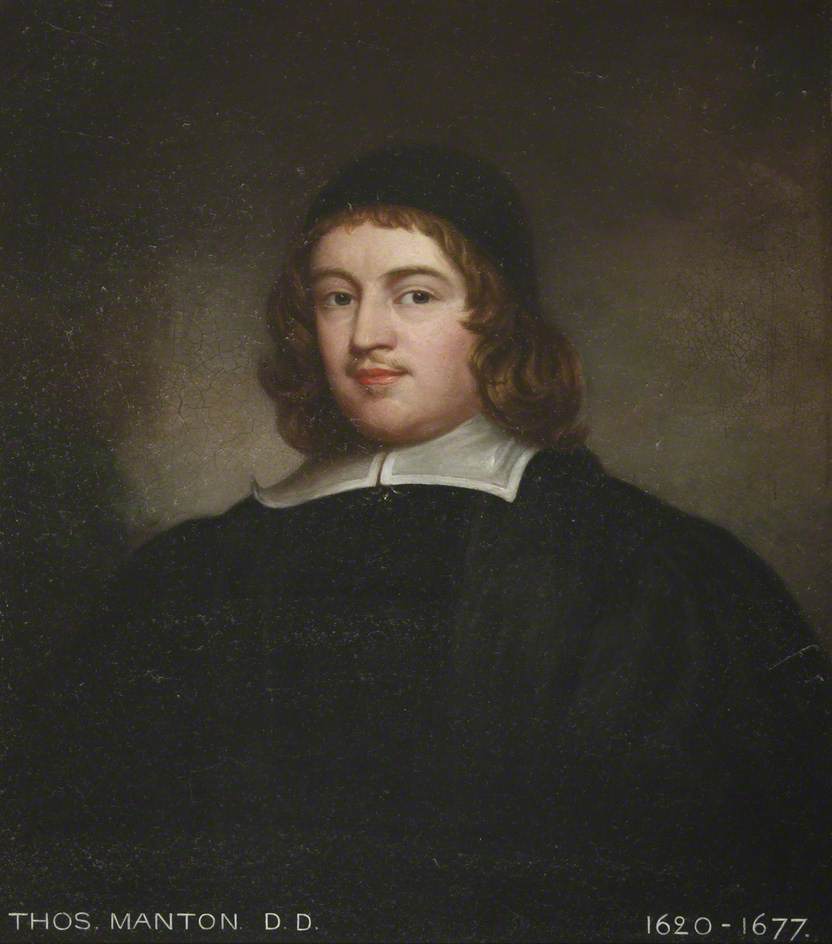
In his exposition of Isaiah 53:12, Thomas Manton addresses the crucial theological theme of Christ's suffering and subsequent triumph, emphasizing how Jesus’ death and humiliation serve as the precondition for His glorification and intercession for sinners. Manton articulates that this passage unveils both the conflict and conquest of Christ, notably highlighting His sacrificial death, bearing the sins of many, and making intercession for transgressors (Isa. 53:12). He substantiates his points with multiple Scripture references, notably John 18:6, Colossians 2:15, and Philippians 2:9-10, to illustrate how Christ's suffering led to His exaltation and ultimate victory over sin and death. The practical significance of Manton's insights underscores the comfort believers can find in Christ’s merited triumph; their spiritual victories and redemption are assured through His completed work, encouraging them not to despair in their own sufferings but to look forward to the glory that follows.
Key Quotes
“The conflict is last in the order of the words but first in order of nature and time.”
“Great abasements often go before glory; this was the dispensation God used to Christ.”
“Your abasement is your preferment and exaltation.”
“Christ's humiliation and exaltation was not only an antecedent and consequent but as a cause and effect.”
What does the Bible say about Christ's suffering and triumph?
Isaiah 53 highlights Christ's suffering as essential to His victory over sin and death.
Isaiah 53:12, John 18:6
How do we know the doctrine of Christ's intercession is true?
Scripture affirms that Christ made intercession for transgressors, as shown in Isaiah 53:12.
Isaiah 53:12, Romans 8:34
Why is Christ's conquest over sin important for Christians?
Christ's conquest over sin reassures believers of their victory and salvation.
Colossians 2:15, 1 Corinthians 15:54
What does Isaiah 53 teach about the nature of Christ's suffering?
Isaiah 53 depicts Christ's suffering as a substitutionary sacrifice for our sins.
Isaiah 53:5, Isaiah 53:12
ThereforewillIdividehimaportionwiththegreat,andheshalldividethespoilwiththe strong;becausehehathpouredouthissouluntodeath:andhewasnumberedwiththe transgressors; and he bare the sin of many, and made intercession for the transgressors.
IN this last verse, as in most of the former, you may observe a scandal, and a provision against it; for the prophet still continueth his method. As in the life of Christ, there was no passage or occurrence that did deject him to such a degree of abasement but that he showed forth some glimpse of his power and Godhead; as when they came to take him, he forced them to go backward and fall to the ground, John xviii. 6. So here, the prophet never giveth a single scandal, but addeth some glorious event and effect of it. Observe, then, two parts:—
First, Christ’s conflict.
Secondly, Christ’s conquest. The conflict is last in the order of the words, but first in order of nature and time.
There observe that the scandal of Christ’s conflict is reduced to four heads:—
1. His death: he poured out Ms soul unto death.
2. The ignominy of it: he was numbered with the transgressors.
3. The cause of it, both of his death and ignominy: he bore the sins of many.
4. The prayer, meekness, and patience of Christ, together with his desire of the application of this remedy: he made intercession for the transgressors.
Secondly, For the conquest; there it is first hinted in the promise of the Father: Iwill divide him a portion with the great.
2. The possession and enjoyment of the Son, what the Father would give, and what the Son shall enjoy: Iwillgivehimaportionwiththegreat,andheshalldividethespoilwiththe strong. Or, if you will have it more particularly, you may consider it thus:—
1. The ground of the conquest, implied in the causal particle, therefore.
2. The donor or author of it, God the Father: I will divide.
3. The reality of it, it was done; God the Son shall find this promise accomplished: he shall divide the spoil with the strong.
4. The nature of the conquest; it is expressed by aportionwiththegreat, and by dividing the spoil.
5. From whom he shall take them: from the great and the strong.
6. Others add the persons whom he shall admit into co-partnership in the conquest and spoils, as implied in that word, withthestrong; how justly, we shall see by and by. Though you may now guess at the sense of the words by this explication of them into their parts, yet I shall give you some better satisfaction about the phrases before I let them pass.
At this time, I shall insist upon the conquest, which, as I have observed, is last in nature and time, yet first in the order of the words. I shall pitch upon that now; and my first endeavour shall be to open it to you; for indeed, though most interpretations in their result and effect come to the same thing, yet I find they do not make it out one and the same way; so that the phrases need a vindication. Consider, then, that the intent of the prophet here is to set out the victory and triumph of the Messiah, which victory and triumph is here set out by terms proper to the triumphs of man. A general, when he hath scattered the enemies and driven them out of the field, securely seizeth upon the prey, and divideth it amongst his followers. The dividing of the spoils is a sign of conquest. Pharaoh, when he promised himself success, Exod. xv. 9, you know what he saith there: ‘I will pursue, I will overtake, I will divide the spoil.’ That is the custom of conquerors. So one of Sisera’s mother’s ladies: ‘Have they not sped? have they not divided the prey?’ As soon as they had borne down the enemies, and had any leisure, they were for distributing the booty. So the prophet Isaiah, speaking of the glad tidings of the gospel, saith to those that hear them, Isa. ix. 3, ‘They joy before God according to the joy in harvest, and as men rejoice when they divide the spoil.’ So Christ is here set forth as a conqueror, taking his portion, and dividing the spoil.
I confess there is some difference in reading the words. Junius reads it, Partemeidabo, utcumrobustispartiaturpraedam—‘that he may divide the spoil with the strong.’ Others, ‘I will give him the part of many, and he shall divide the spoil of the strong.’ Others, in, many, and over the strong, as a great man, or as a strong man useth to do after battle. I shall not intricate the discourse with these things, but by going over word by word make all plain; though for my part I conceive the phrases are put here as common and in general, and only implying a triumph. ‘I will divide him a portion with the great, and divide the spoil with the strong;’ that you shall see him as a great conqueror, and like the kings and potentates, and the great and strong ones of the earth, having a part in dividing the spoil.
But it may be better to go over the text more particularly. ‘I will divide him a portion with the great.’ He is spoken of in the former verses, I will divide him a portion, or give him a part with the great, barabim, with many; so it may signify, and implieth the numerousness of those that Christ shall gain to himself among the nations; or the great, that is the powerful, whose power ruled the world. Not as if Christ and they should divide the world between them; that they should have a part and Christ should have a part: as some think, it implieth that Christ should have the elect, and Satan the rest. No, that is not the force of the word; but that Christ should come to parting; that is, to spoil Satan, for he is intended by ‘the great ‘and ‘the strong,’ though it also noteth and implieth all his instruments, who usually have the dignities and pomp of the world. Therefore, it is said, Col. ii. 14, 15, that ‘he spoiled principalities and powers;’ Eph. iv. 8, ‘He led captivity captive;’ and Luke xi. 21, ‘He disarmeth the strong man, and divideth the spoils.’ I cannot conceal from you that some by this latter sentence, ‘divide the spoil with the strong,’ understand the godly, those that are called the violent, Mat. xi. 12, that with a great deal of fervour of spirit follow him, love him, confess him, and cleave to him, and will not give over for any dangers, lets, and difficulties. But, for method’s sake, and reverence to those learned men that affect that sense, I shall take in that in the last place.
The points, then, are:—
1. From the causal particle, therefore. Observe—
That the ground of Christ’s triumph was his sufferings. Therefore—why? Because he laid down his soul an offering for sin, and hath borne our iniquities, as in the former verse; and it is again amplified in the latter end of this verse. And it is worth our observation, that always the sufferings and exaltation of Christ, when spoken of together, are expressed causally; as Ps. cx. 7, ‘He shall drink of the brook in the way, therefore he shall lift up the head;’ that is, drink up the lake of curses that divide between God and the elect. Mark the particle therefore. So John x. 17, ‘Therefore doth my Father love me, because I lay down my life.’ Therefore prevail: mark the inference, because. Phil. ii. 9, 10, ‘He became obedient to death, even the death of the cross: wherefore God hath highly exalted him.’ And John xii. 32, it is there expressed conditionally and federally: ‘If I be lifted up from the earth, I will draw all men unto me;’ that is, if I be lifted up upon the cross, then I shall have power to work the hearts of men to my obedience. So that you see Christ’s exaltation did not only imply his humiliation, as in some places it only doth; as Eph. iv. 9, ‘Now that he ascended, what is it but that he also descended first into the lower parts of the earth?’ It not only necessarily implieth and presupposeth it, but was caused by it, and merited by it. So Rev. v. 9, ‘Thou art worthy to take the book, and to open the seals thereof; for thou wast slain, and hast redeemed us to God by thy blood.’ To open the seals; that is, to open dark promises, and to do what was necessary for the illuminating of the church. Christ’s humiliation and exaltation was not only an antecedent and a consequent, as some divines expound these places, and I myself formerly have done among you, but as a cause and effect, as merit and reward. Calvin indeed judgeth it a curious question whether Christ merited his conquest and trial; and his reasons were, because there is no express scripture for it. But what shall we say then to those causal particles? But this he saith is a great derogation to the love of Christ, to make him eye himself in his sufferings; since it is said, ‘The Messiah shall be cut off, but not for himself;’ he eyed our good in it, and not his own.
I answer, it maketh much for our comfort, that Christ had his conquests, and the privileges of his mediatorship in a way of justice and merit; that though all things are dispensed to us freely, yet to Christ justly. It is true, as it hath been handled by divers schoolmen, and as it is referred merely to the glorification of Christ’s humanity, so it is a curious question; but as it importeth the carriage of all things appertaining to our comfort and salvation between God and Christ in a way of rigour and justice, so it maketh much for our comfort and consolation.
Use 1. Here is a sealing of your comfort, it was merited by Christ: you can do nothing to merit it, but Christ did. What is free grace to you is due debt to Christ. Alas! what can you do to find so much grace with God as to prevail over Satan or your own spirit, to lift up the head in triumph, so as to be raised to glory? Though you cannot tell how, yet Christ did. God is bound in justice to Christ to do all these things for you. You have a double claim in God; you can lay hold of his mercies engaged by his promises to you, and of his justice engaged by the merits of Christ for you. Things are not now uncertain; Christ hath merited such a capacity as to bestow grace and glory and every good thing upon you. You cannot hope to prevail over Satan, but God hath indented with Christ; ‘Therefore he shall divide a portion with the great, and divide the spoil with the strong.’ You cannot hope for glorious privileges; alas! you are poor, vile, worthless creatures: but ‘He drank of the brook in the way, therefore he shall lift up the head,’ and your head too. You cannot look for the power of the Spirit to draw you to Christ; these are great comforts, but not for you: ‘But if I be lifted up, I will draw all men after me.’ Christ merited that privilege by his sufferings. You cannot open the book, neither can you find anything in yourselves to encourage you to hope for such a privilege; no more indeed you should not find any merit in yourselves, but seek it in another. Christ was worthy, for he was slain; and if you are Christ’s, and Christ be yours, you are worthy, for you Lave his merit, though none of your own.
2. If the ground of Christ’s triumph were his death and sufferings, then here is great comfort to you in all your inward and outward abasements. Here is a double comfort, one to allay fear, and the other to encourage hope. To allay fear: be not dismayed, great abasements usually go before glory. And then to encourage hope; the greatest abasements will turn to the greatest glory. Christ’s death and sufferings were not only the antecedent, but the cause of his conquest and exaltation. ‘Therefore I will divide him a portion with the great.’ Consider with yourselves:—
[1.] Great abasements often go before glory. This was the dispensation God used to Christ: Luke xxiv. 26, ‘Ought not Christ to suffer these things, and then to enter into glory?’ and will not you take it well at the hands of God to drink of Christ’s cup, to be first crowned with thorns before you be crowned with glory, to be humbled before converted; to be slurred with the bishop’s coal-dust before you be shining platters upon God’s shelf, as that martyr said; to be full of wants before you be full of Christ? What is your abasement? If you look inward, you have a vile heart, a destitute, naked soul, no grace, but much corruption; therefore there are some hopes of crumbs when you find yourself a dog; as the woman of Canaan maketh it a motive, Mat. xv. 27. Oh, be not discouraged! Blessed be God, he that humbleth himself shall be exalted. There is no sentence repeated so often in the New Testament as that, Prov. xv. 33, ‘Before honour is humility.’ This is the Lord’s course, to make us poor in spirit, and then rich in grace. But is the trouble outward? Are you low in the world, of base account and esteem? Oh, remember, Jesus Christ was first accounted a glutton, a wine-bibber, one that had a devil in the eye of the world, and then had a name above all names. Mordecai was first envied for sitting at the king’s gate, and then honoured by his adversary with sitting upon the king’s horse. Job was brought from a large estate to the very dust, because God would bless his latter end more than his beginning, Job xlii. 12. As Samuel saith to Saul, 1 Sam. xv. 17, ‘When thou wast little in thine own sight, wast thou not made the head of the tribes of Israel?’ It may be God hath more eminent providences for you after your great abasement.
[2.] This should be so far from being a discouragement, that it is a ground of hope. Usually we get great advantage by our sufferings. Consider the conflict of Christ upon the cross, his cross was his triumph; like Sampson, he destroyed more enemies at his death than in all his life; his cross was his chariot of triumph: Col. ii. 15, ‘And having spoiled principalities and powers, he made a show of them openly, triumphing over them in it.’ ‘Therefore I will divide him a portion with the great,’ because made so small: James i. 9, ‘Let the brother of low degree rejoice in that he is exalted.’ Your abasement is your preferment and exaltation: 2 Cor. i. 5, ‘As the sufferings of Christ abound in us, so our consolation aboundeth in Christ.’ The greatest grace meets with the greatest conflicts, because it is the greatest grace. This is so sure a truth, that even their spiritual abasements, their falls, their sins, do work for their good; the soul groweth the more humble, holy and watchful. Paul was the more fervent and frequent with God in prayer because of the messenger of Satan, 2 Cor. xii. 10. David came to number the people, and by that means came to know where the temple should be built, which he so earnestly desired to know. Hezekiah was the more humble for his fall, 2 Chron. xxxii. 31; he knew all that was in his heart. But especially it holdeth good in outward abasements; they are cause of more good to their souls. The setting of the day-star maketh way for the sun-rising, and the loss of some petty comfort for their abundant consolation in Jesus Christ.
I shall now come to the author and donor, God the Father: ‘I will divide a portion with the great, and divide the spoil with the strong.’
Doct. That the power and majesty whereby Jesus Christ overcame his enemies was by the gift and appointment of the Father: Ps. cx. 1, ‘The Lord said unto my Lord, Sit thou at my right hand until I have made thine enemies thy footstool;’ that is, God the Father said to Christ. And Ps. ii. 6, ‘I have set my king upon my holy hill of Zion.’ Christ was a king of God’s making. So the Father hath committed all judgment to the Son, John v. 22. All the supremacy, power, and majesty that Christ had as Mediator was derived from the Father. So Mat. xxviii. 18, ‘All power is given to me both in heaven and earth.’ Christ’s power was given to him, and it was meet it should be so.
The condition on God the Father’s part was to honour the Son for the elect’s sake; and the Son had glorified the Father, John xvii. 4, by virtue of the compact and agreement between them. And besides, we could not take so much comfort in the advancement of Christ unless we had the consent of the Father. The love of every person was to appear to the creature, especially the love of the offended person; sin in its last result being against the Father: hence it is so often said that he hath ‘given him a name above all names;’ that he hath ‘put all things in subjection.’ And therefore it is a mighty pledge of God’s love to the creature, and of what God will do for us, now our nature is advanced to such high and glorious privileges. Not only God the Son was willing, who assumed our nature in his own person, but God the Father was willing to do it.
Use 1. To direct us to stick to God’s choice and appointment. He hath honoured Jesus Christ to be the king of his church: Luke xxii. 29, ‘I appoint unto you a kingdom, as my Father hath appointed unto me a kingdom.’ And therefore we should honour him, and acknowledge no other. God chose Adam a wife in paradise, and he chose a husband to the church, who is bone of our bone: and therefore we should honour him as the captain of our salvation. Now God hath honoured him, and put all things in subjection to him: Hosea i. 11, it is said, ‘They shall appoint themselves one head;’ Eph. i. 22, ‘And gave him to be head over all things to the church.’ Thus shall it be done to them whom the king delighteth to honour. Thus shall it be done to the person whom God will honour, that has such faith, dependence, reverence, and confidence. They appoint him whom God hath appointed. You do as it were anew honour Jesus Christ, when your dependence on him is according to the honour the Father hath put upon him. 2 Sam. xvi. 18, as Hushai said, ‘Whom the Lord shall choose, his will I be, and with him will I abide.’ God the Father hath chosen him; look to him as your head, king, and husband, as the captain of your salvation, the author and finisher of your faith. God hath divided him a portion with the great.
2. It teacheth us to glorify the Father in our thoughts, expressions, and affections, for the honour that he hath put upon Jesus Christ. The person that is most in our eye usually intercepts all the love and praise of the creature. Though you can never enough honour and magnify the person of Jesus Christ, yet do not exclude the person of the Father. The persons in the Trinity mutually glorify one another, and why should not we? In every glorious manifestation of the power of Christ, send up a thankful thought, some acknowledgment of love and praise to the Father. As Paul: Rom. vii. 24, 25, ‘Who shall deliver me from the body of this death? I thank God through Jesus Christ our Lord.’ It is accomplished by the power God hath put upon Jesus Christ. Look upon what terms the scriptures do pitch all comfort and expectation upon the person of Christ: 2 Cor. i. 20, ‘For all the promises of God in him are yea, and in him amen, unto the glory of God by us.’ There is the end why all is in Christ. So Phil. ii. 11: ‘And that every tongue should confess that Jesus Christ is Lord, to the glory of God the Father.’ Mark, the person of Christ can never be enough in our thoughts, nor mentioned in our mouths, for he is the Lord; but it is to the glory of the Father. As often as you remember the work of your redemption, remember the work of the Father, and then you will find your hearts raised in thankfulness and love to him. Christ himself, when he saw poor souls receive the gospel, though he saith there the power of dispensing was committed to him, Mat. xi. 25, compared with 27, yet he saith, ‘Father, I thank thee that thou hast revealed it to them.’ See if your hearts be raised and ravished within you with this eternal and free love of God to the glory of the Father.
3. It is a great ground of trust and confidence, when you go to God in prayer to turn your captivity, for power against your spiritual adversaries, as sin, Satan, fears of death, and hell; or earthly ones, as unjust and tyrannous encroachments without. Urge it to God, did not he divide Christ a portion with the great? You desire but to exalt the king of his own making, a king upon his holy hill. Was it not thine own grant and donation? When we come and urge God’s own acts upon him, and he urgeth it to God, you shall see he will own them. The apostle alludeth to that of the Psalms, in Heb. ii. 8, ‘Thou didst set him over the work of thine hands; thou hast put all things in subjection under his feet.’ And why not my sins and mine enemies? But alas! ‘We see not yet all things put under him;’ it is not yet made good to our sense and experience. Lusts are stirring and Satan busy. Lord, didst thou not say, that all things should be put under him? Go to God, and do but press him with his own appointment.
I now come to the third particular, and that is the reality of this conquest. It was not only promised by God the Father, but God the Son was possessed of it: ‘He shall divide the spoil with the strong.’
Doct. That the Lord Jesus was a glorious conqueror.
Dividing of the spoil is the effect of a sure and a great conquest. You may perceive that in all respects it maketh a victory glorious. You know the eminency of it lieth in these four things:—
1. Either in the power of the adversaries. There is no triumph in prevailing over weak things: 1 Sam. xxvi. 20, ‘For the king of Israel is come out to seek a flea, as one doth hunt a partridge in the mountains.’ What honour could Saul get to seek a flea, or hunt a partridge in the mountains,—to chase hares or harts?
2. By the unlikelihood of the means. A thousand men were slain by the jaw-bone of an ass by the hands of Sampson; and a numerous host discomfited by Gideon’s pitchers and three hundred lamps. Such things as these make the success memorable.
3. The manner or nature of the victory. Total defeats are most noted. A slight hurt, or some petty brush is nothing, as Amalek’s falling upon the weak rear, and putting the hindermost stragglers to shame; what is that? The conquest is not complete till there be a dissipation and dissolution of the whole force that is against us.
4. A conquest is glorious in the effects or result of it. If it be of great importance and consequence to the good of a people, when fears are removed, and privileges are granted and enlarged, spoilers taken, a kingdom subdued,—these things make for the glory of the victory. And, therefore, let us see if such things be not found in the conquest of Christ. There are strong adversaries and weak means, glorious achievements and great effects and fruits of this conquest, for the benefit of the faithful; and therefore he was a glorious conqueror.
First, The adversaries; they are mighty. They are always expressed by such notions as do imply great strength and power: Col. ii. 15, it is said, ‘He spoiled principalities and powers.’ The evil angels, by reason of their power and prevalency in and with the world, are expressed by that name, ‘principalities and powers.’ So Eph. iv. 8, ‘He led captivity captive;’ that is, he captivated enemies such as are apt to bring us into bondage. It is as much as if it were said, he prevailed over victory,—he led captivity itself captive. And he is called the strong man, Luke xi. 21.
But let us a little more particularly consider the enemies, and then we shall see how much they add to the glory and renown of the conquest.
1. There is the devil, who is a powerful adversary. He causeth great disturbance to the people of God, either to the called or uncalled. He either accuseth us, or soliciteth us to evil. He accuseth the called and converted, and so filleth their souls with disquieting, doubtful thoughts. Ay! but ‘the prince of this world is judged,’ John xvi. 11. God hath condemned him for an accuser; God hath condemned him for condemning you: and when he cometh to resist you at the time you are about the work of God, judgment is passed upon the liar who would cause you to misjudge yourselves. Sometimes he soliciteth to evil; injects carnal and provoking thoughts. Ay! but Satan is rebuked: Zech. iii. 2, ‘And the Lord said unto Satan, The Lord rebuke thee.’ There is grace to check and oppose him. But Satan chiefly worketh upon the uncalled people of God—men in their unregeneracy and sinful estate; he possesseth their hearts, and ‘worketh in the children of disobedience,’ Eph. ii. 3, detaining them in blindness, captivates and subjects them to the power of their lusts, and so by this means possesseth the most part of the world by ignorance and superstition, or else causeth them to hold the truth in unrighteousness; and erects strongholds, partly by ignorance, partly by error and superstition, and partly by lusts and violent temptations, which he darts forth that he may keep the world in his obedience. But now ‘the prince of this world is cast out,’ John xii. 31. Satan is dispossessed, and his power vacated, his rule disannulled. Great Pan is dead, being like Dagon brought upon his face in the presence of the ark. And so, some stories say, the idols were overturned at the time of Christ’s birth. Certain we are, spiritually it is true, if not fulfilled in a literal miracle. Thus Satan is an enemy.
2. The law, that was an enemy, as it condemns us; the law of ordinances was against us. Now Christ hath abolished it, so far as it was contrary and prejudicial to our acceptance with God, as it made for our discomfort and condemnation, and bound us to wrath, and to such obedience as could not be fulfilled by us: Col. ii. 14, ‘Blotting out the handwriting of ordinances that was against us, which was contrary to us, and took it out of the way, nailing it to his cross.’ Christ contended with the law, and took us out of the hands of it, abrogated the curse and rigour of it. Alas! we were all a prey to the law, till Christ did arise and plead our cause, and removed the curse and the difficulties of obedience, and made the craggy hill to become a plain to us. He ‘slew the enmity by his cross.’ Eph. ii. 16. Now, as great an enemy as the law was to us, it was by God’s appointment, and it may be thought much that God should abrogate his own law. Christ was not only to deal with rebels, but with his Father’s appointments, that he might abolish them so far as there was any enmity and contrariety in them, to our good.
3. Death and hell. I join them both together, because the scripture doth so often. Of all enemies, these are the most potent and severe, yet are overcome by Christ. Christ, conquering the law, must needs conquer death: ‘The sting of death is sin, and the strength of sin is the law.’ By Christ death is made a friend, as Haman served Mordecai. It doth but help us to honour and advancement: 1 Cor. xv. 54, ‘Death is swallowed up in victory,’—destroyed and brought to nothing. We may outdare death, it cannot harm us, it doth but midwife us into glory. And then for hell, the mouth of it is shut up, so that it serveth only as an aggravation of our mercies: Rev. xx. 6, ‘Blessed and holy is he that hath part in the first resurrection; over such the second death hath no power;’ 2 Tim. i. 10, ‘He hath abolished death,’—overthrew it. When the fears of death encroach upon our spirits, you may see a stone rolled upon the mouth of hell by Jesus Christ: Rev. i. 18, ‘I am alive for evermore, and have the keys of death and hell;’ and Rev. xx. 14, ‘Death and hell are cast into the lake of fire.’ What comfort is this for those that have an interest in Christ, that Christ hath the keys of death and hell!
4. The flesh. Corruption is a bosom-enemy, that insinuates with us, and worketh upon us in our most pleasing desires: Rom. viii. 7, ‘The carnal mind is enmity to God;’ and Gal. v. 17, ‘The flesh lusteth against the spirit.’ It is a great trouble to a gracious heart. Though it be flesh, as dear to us as our own skin, yet it is a thorn in the flesh, a great cumber to a gracious heart. Nehemiah was very much troubled with his adversaries, because divers about him that abode with him held secret correspondence with his enemies, Neh. viii. 18. So we carry somewhat about us that complies with Satan. Rebellious lusts, and vicious affections, and proud thoughts swarm in our hearts, to the disdain of the yoke of Christ: 2 Cor. x. 5, ‘Casting down imaginations, and every high thing that exalteth itself against the knowledge of God, and bringing into captivity every thought to the obedience of Christ.’ But it is said, Rom. viii. 3, ‘God sending his own Son in the likeness of sinful flesh, and for sin condemned sin in the flesh.’ O beloved! sin in your flesh is rooted in your corrupt desires; but it is a condemned thing, and it will be executed. Mat. xii. 20, ‘A bruised reed shall he not break, and smoking flax shall he not quench, till he bring forth judgment unto victory.’ He will make the cross triumphant.
5. The world,—take it either for the baits and allurements, or the concernments and interests of it, anything that may be dangerous to us in the work of our salvation. But Christ hath overcome the malignity of it. Christ would put all out of doubt and danger: John xvi. 33, ‘Be of good cheer, I have overcome the world.’ Height shall not separate no more than depth, neither favour nor frowns. Christ hath taken away the noxiousness and harm of everything that may be propounded to us.
6. All the adverse powers in the world. Stubborn enemies are sometimes armed with power: Rev. xvii. 14, ‘These shall make war with the Lamb;’ that is, the kings of the earth. This is a great terror, when a man seeth all the combined force of a nation, all the force, authority, and strength combined against Christ: Ps. cx. 6, ‘He shall wound the heads over many countries, and strike through kings in the day of his wrath;’ and Ps. ii. 10-12, ‘Be wise now, therefore, O ye kings; be instructed, ye judges of the earth: serve the Lord with fear, and rejoice with trembling. Kiss the Son, lest he be angry, and ye perish from the way, when his wrath is kindled but a little. Blessed are all they that put their trust in him.’ A little wrath will destroy a great person. Sometimes our enemies are enraged with malice. Herod being vexed at the wise men’s words, he vowed revenge; but, alas! he could not overcome Christ in his cradle. What will they do now he is in heaven, out of their reach? Ps. cxxiv. 3, ‘They had swallowed us up quick, when their wrath was kindled against us;’ that is, when their courage is heightened by wrath. Ps. lxxvi. 10, ‘Surely the wrath of man shall praise thee;’ i.e., shall keep an holyday. This wrath shall serve the design of Christ, for God will make every stiff knee to bow, Phil. ii. 10. Alas! fear surpriseth us when a provoked enemy cometh with rage and fury, as if like a flood he would bear all before him. But this may occasion a day of praise to God. And then sometimes your enemies are advantaged with wit, wealth, and all outward sufficiencies and supplies: Luke xvi. 8, ‘The children of this world are wiser in their generation than the children of light;’ that is, more dexterous in the course of their affairs. And Mat. xi. 26, the things of Christianity are ‘hidden from the wise and prudent, and revealed unto babes.’ So Ps. lxiv. 6, ‘They search out iniquity, they accomplish a diligent search; but the inward thought of every one of them and the heart is deep.’ They may be men of great parts, pregnant invention, full of politic enterprises; ay! but all this is nothing: Job v. 13, ‘He taketh the wise in their own craftiness.’ Christ hath died to recover the truth, and to free the souls of his servants from such kinds of assaults as these. These are the enemies that are most stubborn, but they are forced to stoop, though they are advantaged with power, armed with malice, and stored with all outward sufficiencies.
Thus you see the enemies whose opposition adds to the glory of the conquest: the devil, the law, death and hell, the flesh and the world, and all the adverse powers and dominations that are combined against Christ. Christ can have no spoil, no prey, no kingdom, no saints, till he had combated with these enemies; their opposition addeth to the renown of the conquest.
Secondly, Let us look to the means. The weapons of this warfare are not carnal; that is, there is little pomp and appearance in them. Look upon them, and the matter will be the more wonderful.
1. As to his death. His very conflict was his triumph. The Lamb overcometh, and Christ conquered Satan, and sin, and the law, when they seemed to have most power upon him; like angry bees that sting others and disarm themselves. When Satan had the greatest hand over Christ, Christ overcame him: Heb. ii. 14, ‘That through death he might destroy him that had the power of death, that is, the devil.’ Satan lost his life in his sting. It is observable, that the scripture twice or thrice mentioneth it as a remarkable circumstance that Christ triumphed in his cross: Col. ii. 15, ‘Triumphing over them in it.’ So Eph. ii. 16, ‘Having slain enmity thereby;’ that is, the cross spoken of before, when he was slain himself. His cross is in two places expressed by lifting up: John iii. 14, ‘Even so the Son of man shall be lifted up;’ and John xii. 32, ‘And I, if I be lifted up from the earth.’ Indeed it was his preferment and exaltation.
2. By the word of the cross, called the foolishness of preaching: Ps. viii. 2, ‘Out of the mouths of babes and sucklings thou hast ordained strength.’ Weak men, whose strength is in their Messiah, may bring men upon their faces by a sermon: 1 Cor. xiv. 25, ‘And thus are the secrets of his heart made manifest; and falling down upon his face, he will worship God, and report, saying, God is in you of a truth.’ And recover the world unto his obedience by these arts: Mat. iv. 23, ‘Jesus went about preaching the gospel of the kingdom.’ And his kingdom is gained by that, and it maketh much for the heightening of the conquest.
3. By his Spirit: Zech. iv. 6, ‘Not by might, nor by power, but by my Spirit, saith the Lord of hosts.’ A great force, but secret and undiscerned; mighty to humble, mighty to comfort, mighty to convert and save. The little finger of the Spirit is heavier than the loins of our reasoning, and debates with our souls. Jerusalem is purged by the Spirit: Jer. iv. 4, ‘Circumcise yourselves to the Lord, and take away the foreskins of your heart, ye men of Judah, and inhabitants of Jerusalem, lest my fury come forth like fire.’

Comments
Your comment has been submitted and is awaiting moderation. Once approved, it will appear on this page.
Be the first to comment!