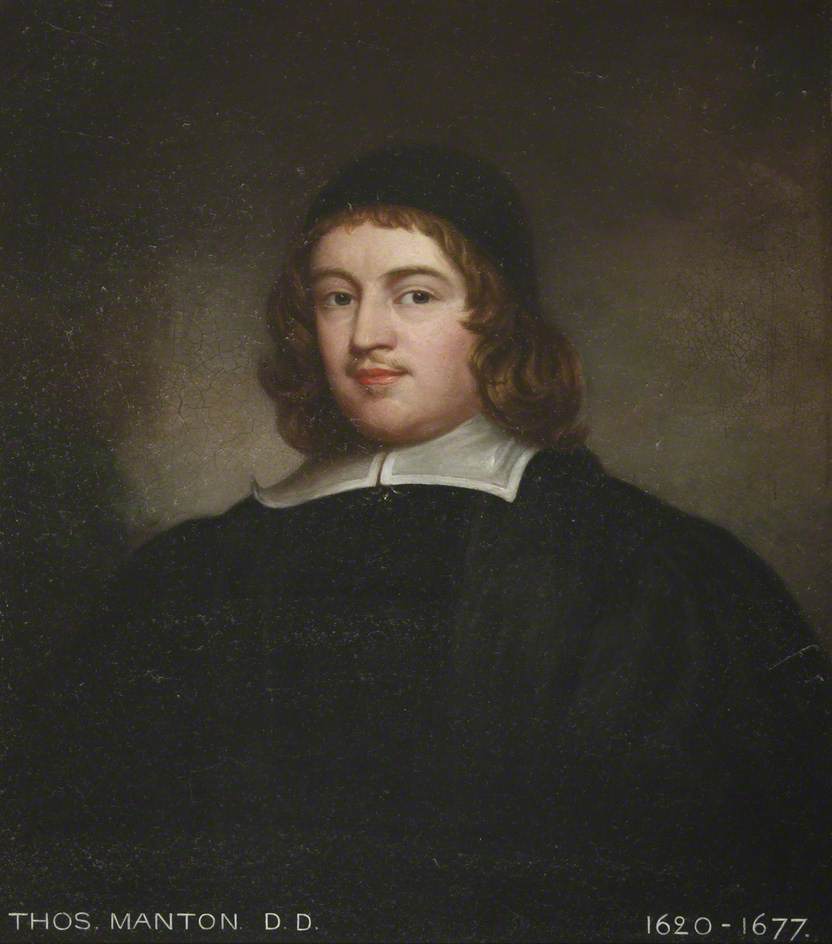
Thomas Manton's commentary on James 1:15 addresses the progressive nature of sin and its ultimate consequence—death. He argues that sin begins with evil desires that, when fully conceived, lead to actual sin and, ultimately, spiritual death. Manton cites Matthew 5:28 to illustrate that even initial inclinations are sinful and emphasizes that death is not merely physical but represents both spiritual and eternal separation from God, as supported by Romans 6:21 and Ezekiel 18:4. The significance of this commentary lies in its warning to Christians to be vigilant against even small sins, highlighting the importance of resisting evil desires to prevent their growth and ultimate destructive consequences.
Key Quotes
“Evil desire is the mother of sin but sin deserves death.”
“Sin takes over the spirit gradually; first it is wicked then sinners then mockers.”
“Either sin dies or the sinner dies. The life of sin and the life of a sinner are like two buckets in a well—if the one goes up, the other must come down.”
“Bless God who has delivered you from a state of sin; your soul has escaped a death-trap.”
What does the Bible say about sin and its consequences?
The Bible teaches that sin, born from evil desires, leads ultimately to death and separation from God.
James 1:15, Romans 6:21, Ezekiel 18:4
How do we know that small sins are dangerous?
Small sins can lead us to larger transgressions and spiritual destruction if left unchecked.
Psalm 1:1
Why is it important for Christians to guard their hearts against desires?
Guarding our hearts is vital to prevent sinful desires from leading us into sin and death.
1 Peter 2:11
What does the Bible say about escaping spiritual death?
The Bible assures that through Christ, believers transition from death to life and are spared from spiritual death.
Romans 7:9, Psalm 16:7
Then,afterdesirehasconceived,itgivesbirthtosin;andsin,whenitisfull-grown,givesbirthto death.
Then, after desire. James goes on to describe the progress of sin: after birth comes death.
Hasconceived—that is, as soon as sin begins to stimulate desires. Sin, or the corrupt nature, having inclined the soul to an ungodly object, works to set the soul in an evil frame of mind.
It gives birth to. That is, it completes sin and brings it to effect in us.
Sin. That is, actual sin. Our Saviour says that our first inclinations are sinful: see Matthew 5:28.
Andsin,whenitisfull-grown. That is, settled into a habit. But why does the apostle say, whenitisfull-grown? (1) The apostle does not distinguish between sins. Every sin is mortal in its own nature and hands over the sinner to death and punishment. (2) Death is the result of all sin. Death may be laid not only at sin’s door, but also at the door of evil desires.
Givesbirthto. That is, hands the soul over to death. Evil desire is the mother of sin, but sin deserves death.
Death. This is but a euphemism for damnation; the first and second death are both implied.
The apostle shows that the supreme cause of sin is lust, and its result is death.
Notes on Verse 15
Note1. Sin takes over the spirit gradually. Evil desire leads to delightful thoughts, which lead the mind astray; then sin is born, disclosed, and strengthened; and then the person is destroyed. Sin is progressive, as David noted: “Blessed is the main who does not walk in the counsel of the wicked or stand in the way of sinners or sit in the seat of mockers” (Psalm 1:1). Sin is never stationary: first, it is wicked, then sinners, then mockers; first counsel, then way, then seat.
Application1. Oh, that we were wise enough to resist sin! A Christian’s life should be spent watching out for evil desire. It is dangerous to give way to Satan (see Ephesians 4:27).
Application2. This warns us about the danger of “small” sins. Consider how dangerous they are. It is not only great faults that ruin the soul, but small ones as well; dallying with temptations has serious consequences.
Note2. Evil desires are fully conceived and formed in the soul when the will is drawn and gives its consent. So then, if evil desires have penetrated your thoughts, keep them from controlling your will.
Note3. What is conceived in the heart usually comes out in life and conversation. That is the reason why the apostle Peter tells Christians to take care about the heart: “Abstain from sinful desires” (1 Peter 2:11).
(1) Learn that the hypocrite cannot always be hidden. God says that “his wickedness will be exposed in the assembly” (Proverbs 26:26).
(2) Learn the danger of neglecting evil desires and evil thoughts. If they are not suppressed, they will flower into sins. Permitted thoughts bring the mind and temptation together. David thought about Bathsheba’s beauty, and so was all on fire. It is wrong to toy with thoughts.
(3) Learn what a mercy it is when sinful conceptions are stillborn. Restraints are a blessing. We are not as evil as we would have been otherwise. Take note of when your sinful ways are hedged around by providence (see Hosea 2:6).
Note4. The result of sin is death; the apostle Paul says, “Those things result in death” (Romans 6:21). Sin comes with a pleasing and delightful sweetness, promising nothing but satisfaction and contentment; but the end is death. “The soul who sins is the one who will die” (Ezekiel 18:4). This is a principle stamped on nature. The godless were aware of it (Romans 1:32).
Application 1. This teaches us to halt the progress of evil desires that end in death and damnation. Place a flaming sword in the path of your ungodly delights (see Genesis 3:24). Wake up your soul; consider what Wisdom says: “All who hate me love death” (Proverbs 8:36).
Application2. This shows us why we have to kill sin before it kills us. Either sin dies or the sinner dies. The life of sin and the life of a sinner are like two buckets in a well—if the one goes up, the other must come down. When sin lives, the sinner must die. There is an evil in sin and evil after sin. The evil in sin is breaking God’s law, and the evil after sin is its just punishment. People who are not aware of the evil in sin will become aware of the evil after sin. For the regenerate, all God’s dispensations save the person and destroy the sin: “You were to Israel a forgiving God, though you punished their misdeeds” (Psalm 99:8). God spared the sinner but punished the sin. The apostle Paul, speaking of himself when the power of the Word first came on him, says, “Sin sprang to life and I died” (Romans 7:9). So it is better that sin should be condemned than that you should be condemned. It is better that sin should die than that I should die; therefore, I should destroy my sin so that my soul escapes.
Application3. Bless God who has delivered you from a state of sin; your soul has escaped a death-trap. Never look back on Sodom except with loathing; thank God that you have escaped. “I will praise the Lord, who counsels me” (Psalm 16:7). I might have been Satan’s slave, and I deserved the reward of my own death; but God has called me to life and peace. In one place conversion is described as being called out of darkness into marvelous light; that is a great deal. But elsewhere it is described as being translated from death to life. I might have wasted my days in pleasure and vanity, and then gone to hell. Oh, blessed be the name of God forevermore, who has delivered me from so great a death!

Comments
Your comment has been submitted and is awaiting moderation. Once approved, it will appear on this page.
Be the first to comment!