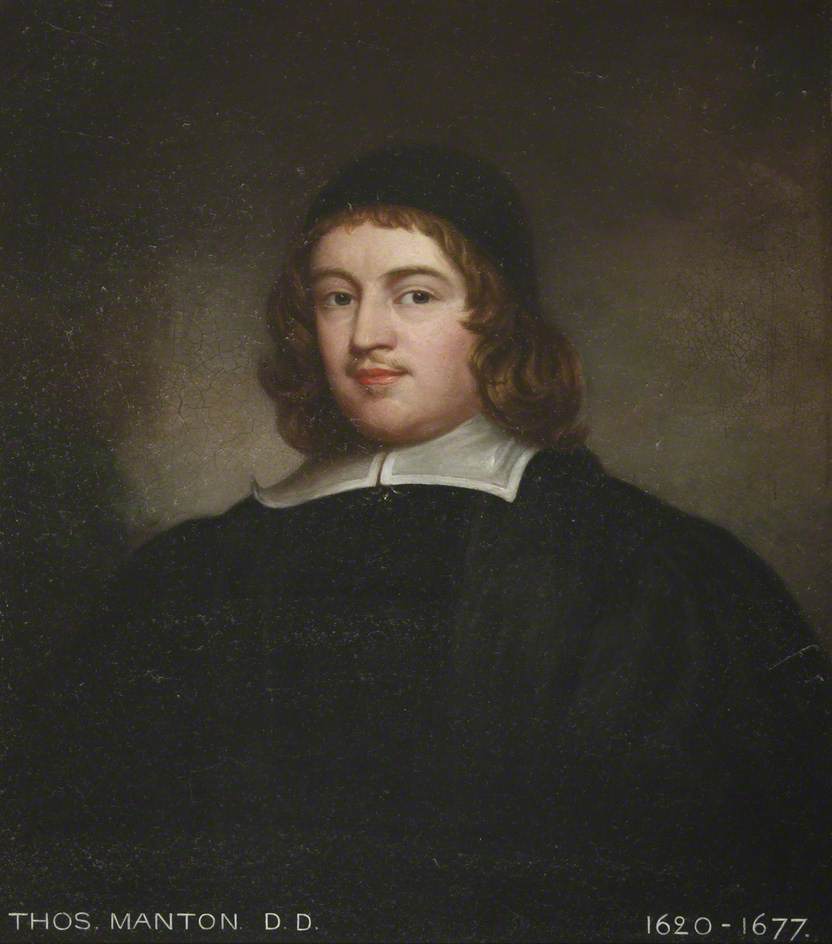
The theological topic addressed in Thomas Manton's commentary on James 2:12 revolves around the relationship between faith, the law, and the believer's conduct in anticipation of divine judgment. Manton emphasizes that both speech and actions will be assessed according to God's impartial law, which offers freedom rather than bondage, aligning with Reformed concepts of both the moral law and the gospel's grace. He cites Scripture such as Galatians 3:28 to illustrate the equality before God, while Romans 8:1 reaffirms that believers are not condemned under the law because of their union with Christ. Practically, Manton underscores the importance of living in accordance with God's commandments to ensure that one’s faith is reflected in righteous actions, enhancing both personal sanctification and witness to the world.
Key Quotes
“Speak and act as those who are going to be judged by the law that gives freedom.”
“The law in the hands of Christ is a law of freedom.”
“Our consciences would soon be offended at teaching that said murder incest or adultery were not sins.”
“Idle words weigh heavy in God’s balance.”
What does the Bible say about judgment?
The Bible reveals that all will be judged according to their actions, either by the law or through Christ's righteousness.
James 2:12, Romans 2:12
How do we know that the law gives freedom?
The law gives freedom by guiding believers to live righteously without the fear of condemnation through Christ's sacrifice.
James 2:12, Galatians 2:19-20
Why is it important for Christians to obey God's law?
Obeying God's law is vital for Christians as it reflects their love for God and evidences their faith in Him.
Romans 7:12, Philippians 3:1-11
Speak and act as those who are going to be judged by the law that gives freedom.
Out of the whole discourse James infers a timely exhortation that they should order their speech and actions so as to endure the test and trial of thelaw, especially because this is commanded by an impartial law. This is the reason for this: those who want to be judged by thelaw should not forget the least part of it.
Speakandact. This links up with 1:27 and also with the topic of showing favoritism in this chapter. Not only actions but words fall under God’s judgment and the law.
Asthosewhoaregoingtobejudged. Some read this “as those that will judge” and apply it to the context. They give it the following sense: in the Old Testament, distinctions between people were not so expressly forbidden, but now they are taken away by the law of freedom; slave and free are all one in Christ (see Galatians 3:28). Therefore you are to judge without showing any favoritism. But I prefer the reading, asthosewhoaregoingtobejudged—that is, either in conscience here or at the judgment-seat of God hereafter.
Bythelawthatgivesfreedom. The same expression is used in 1:25. But what does it mean here? The basic reason may link up with the servile attention they gave to rich people. The apostle agrees that there was freedom but not license; for there is still a law, though to the elect it is a law offreedom. To wicked people this is still a slavery and a hard yoke. Therefore, walk so that you may not be judged according to the law. Behave in a way that demonstrates you have come under the banner of love and the privileges of the Gospel; and then, when you come to be judged, you will be judged according to the Gospel. Otherwise there is no freedom for any who break the smallest law; they may expect judgment without mercy (verse 13).
Notes on Verse 12
Note 1. The law in the hands of Christ is a law of freedom.
It is a law: “I am not free from God’s law but am under Christ’s law” (1 Corinthians 9:21). There is a yoke, though not an insupportable burden. “He has showed you, O man, what is good” (Micah 6:8). The acceptable will of God is revealed in the law of ten rules, and the moral part of the Scripture is a commentary on that. This is also an imperative. It is not up to us whether we obey or not. Laws are obligatory. The Creator’s will is seen in the law, and we are under its command. Morality is binding on us permanently: “The law is holy, and the commandment holy, righteous and good” (Romans 7:12). Our consciences would soon be offended at teaching that said murder, incest, or adultery were not sins. Only the pride of ungodly people thinks the Gospel frees us from the obligation of the law because it frees us from its curse.
Note2. It is a lawthatgivesfreedom, for there is a great deal of freedom purchased by Christ.
(1) We are freed from the law as a covenant of works. We are not absolutely bound to such rigor on such strict terms. We should aim at complete obedience but not despair if we cannot reach it. A gracious heart cannot offend a good God without sadness. Sin is still damning in its own nature, still a violation of a righteous law, still an affront to God. You have more reason to be strict, because you have more help. We have more advantages, and therefore we should pay more attention to duty: see Philippians 3:1-11. People who are content with little grace have no grace. We must obey as children, not as servants: “I will spare them, just as in compassion a man spares his son” (Malachi 3:17).
(2) We are freed from being condemned. The law may condemn the actions, but it cannot condemn the person. So we have “died to the law” (Galatians 2:19) and the law to us (Romans 7:6), and therefore the apostle says, “Therefore, there is now no condemnation for those who are in Christ Jesus” (Romans 8:1).
(3) We are freed from the curse of the law. Ungodly hearts grow worse under restraint, just as water swells when the flow is stopped. A prohibition to a gracious heart is reason enough to carry out a duty, because God wills it.
(4) We are freed from slavery. By nature people carry out duties from slavish principles: “For you did not receive a spirit that makes you a slave again to fear” (Romans 8:15). The great principle in the Old Testament was fear. Therefore it was said, “The fear of the Lord is the beginning of wisdom” (Proverbs 9:10); and, “Fear God and keep his commandments, for this is the whole duty of man” (Ecclesiastes 12:13). Fear is represented as the great principle of duty and worship in the Old Testament and suited that dispensation. But in the New Testament we read that “love compels us” (2 Corinthians 5:14).
Application. This shows us the happiness of those who are in Christ. The law to a believer is a law of freedom; to someone else it is the law of slavery and death. We may “serve him without fear” (Luke 1:74)—that is, without slavish fear. Beasts are urged on with goads; but Christians are led by sanctified affections, motives of grace, and considerations of gratitude. Look to yourselves, then, to see whether you are in Christ or not. The same apostle who groaned under the body of death delighted in the law of the Lord in the inward man: see Romans 7. God’s restraints do not enslave us; only our own corruptions enslave us.
Note3. We shall be judged by thelaw on the last day; see Romans 2:12. The apostle argues that all who are not in Christ are under condemnation. This was either a law written on tables of stone, as for the Jews, or on tables of the heart, as with Gentiles. All are judged according to the declarations of God’s will. However their actions are scanned by a law, their faith will be judged and approved by their works, which, though they are not the causes of glory, yet are evidence for it. That works are brought into judgment is seen from Matthew 25:34-39. Also, Revelation 20:12 says, “The dead were judged according to what they had done.” The Judge of the world will show that he acts rightly.
Again, if we are to be judged according to the measure of light and knowledge that we have of thelaw, we must bring forth fruits appropriate to God’s dispensation. It is sad that after thelaw is written on the heart, it should be broken.
Note4. It is a great help in our Christian life to think about the day of judgment. There are evangelical reflections that make the spirit strict but not servile. The apostle Paul makes the doctrine of judgment part of the Gospel: “God will judge men’s secrets through Jesus Christ, as my gospel declares” (Romans 2:16)—that is, as I have taught in the dispensation of the Gospel. Christ’s judgment is the highest act of his kingly office. It is most important to invite wicked people to repent, and therefore Paul chose this argument at Athens: “He commands all people everywhere to repent. For he has set a day when he will judge the world with justice” (Acts 17:30-31). There are three reasons why he used that motive. One is intimated in the text—because it is a pressing motive for repentance; and the other two may be easily derived from the context.
Secondly, Paul uses this argument to counter their plea that if they had been in the wrong they had found it a happy way, for no judgment or plague had struck them. The apostle anticipates this objection by telling them, “In the past God overlooked such ignorance” (Acts 17:30) but now takes notice. If they did not repent now, even if they escaped here, they would definitely meet with judgment later.
And, thirdly, Paul uses this argument because the pagans themselves had some kind of dread and expectation of such a day. Therefore, when Paul spoke about “the judgment to come, Felix was afraid,” though he was a pagan (Acts 24:25). There cannot be a greater argument in favor of praise than when we consider our deliverance from wrath. We can look Christ in the face with comfort (see 1 John 2:28); and we may begin our triumph when others are overwhelmed with terror. So the apostle says, in effect, “In this way love is made complete among us, so that we will have confidence on the day of judgment.” That is, here is the height of divine love, that when others call on mountains to cover them, we may lift up our heads with comfort and call the world’s Judge our friend and father.
This awakens our souls to earnestly desire Christ’s return. The good servant watches out for his master’s coming (Matthew 24:44); and “the Spirit and the bride say, ‘Come’” (Revelation 22:17). The day of judgment is the day of Christ’s royalty and our marriage; here we are engaged, not married. When Christ left the world, there were mutual pledges of love and affection. He left us the pledge of his Spirit, just as Elijah ascending left his mantle; he took from us the pledge of our faithfulness. So everyone who has an interest in Christ must “long for his appearing” (2 Timothy 4:8).
Application. So then, reflect on this matter. Think of the Judge, of his majesty and the glory of his appearance. Think about when the graves are opened, rocks split, and Christ’s unimaginable glory breaks forth with light like lightning through the heavens, when he comes riding on the clouds with flames of fire, attended with all the host of the elect angels, and the great shout and trump will summon all before the royal throne of Christ’s judgment. Consider also his purity and holiness. When God revealed himself in a particular judgment, people said, “Who can stand in the presence of the Lord, this holy God?” (1 Samuel 6:20). But when Christ comes to judge all the world, with clothing “as white as snow” and the hair of his head “white like wool” (see Daniel 7:9), how will guilty creatures appear in his presence? No one can have confidence on that day except those who have unblemished innocence such as the angels or those who are washed in Christ’s blood—the saints.
Consider his strict justice. Idle words weigh heavy in God’s balance (Matthew 12:36). A man should never think of the severity of that day without crying out, “If you, O LORD, kept a record of sins, O Lord, who could stand?” (Psalm 130:3). “Stand”—that is, be able to make a strong defense on that day. Think about these things, so that you may trust in nothing but Christ’s righteousness against Christ’s judgment.
Note5. Speakandact. Not only our actions, but our words, about which we are less careful, are judged by God and the Word: “But I tell you that men will have to give account on the day of judgment for every careless word they have spoken. For by your words you will be acquitted, and by your words you will be condemned” (Matthew 12:36-37). Usually we forget ourselves as we speak; but for careless words, not only evil but careless, we shall be judged on the last day. Evil words show a wicked heart, and careless words a vain mind. People think their talking should excuse their walking. Xenophon and Plato gave rules that men’s speeches at meals should be written down so that they might be more serious. When Paul, in Romans 3:13-14, analyzes the natural man, he emphasizes the speech organs more than all the other parts: “‘Their throats are open graves; their tongues practice deceit.’ ‘The poison of vipers is on their lips.’ ‘Their mouths are full of cursing and bitterness.’”

Comments
Your comment has been submitted and is awaiting moderation. Once approved, it will appear on this page.
Be the first to comment!