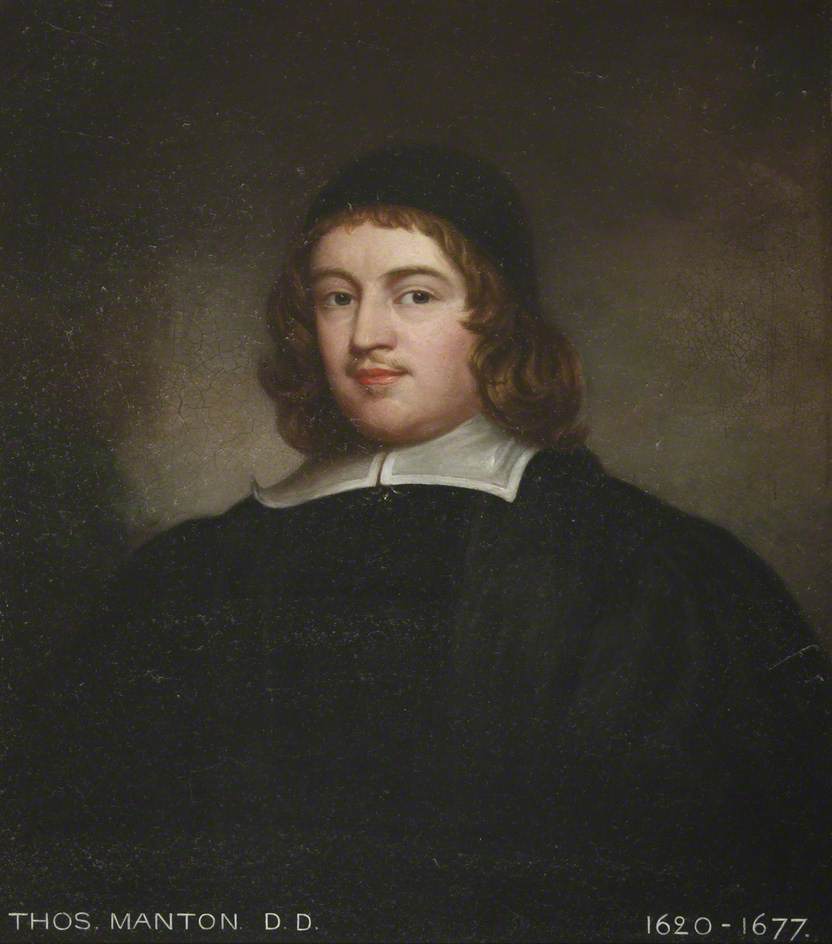
In his commentary on James 4:6, Thomas Manton expounds on the theological implications of the statement "God opposes the proud but gives grace to the humble." The primary argument illustrates the contrast between human envy and God's generous grace, emphasizing how pride is fundamentally opposed to divine nature. Manton supports his points with Scripture such as Proverbs 3:34 and 1 Peter 5:5, showing that pride leads to God's opposition, while humility attracts His grace. The practical significance lies in understanding that humility is essential for receiving God's blessings and that true grace transforms a believer's disposition away from envy towards a Christ-centered character. Manton ultimately reinforces that the recognition of one's own weaknesses should lead to a reliance on God’s grace rather than self-sufficiency.
Key Quotes
“Our spirit envies intensely but he gives us more grace. That is, we are envious but God is bountiful.”
“Grace lies in conformity to God... introducing the virtues of God into our soul.”
“There is enough in God to check the strongest sins; there is enough in God to help the creature in its sorest conflicts.”
“God loves to make all his works creations and grace works most freely when it works upon nothing.”
What does the Bible say about God's grace?
God's grace is abundant, especially towards the humble, contrasting with His opposition to the proud (James 4:6).
James 4:6, Proverbs 3:34, Romans 5:20
Why is humility important for Christians?
Humility is vital for receiving God's grace and is contrasted with pride, which God opposes (James 4:6).
James 4:6, Psalm 18:27, Proverbs 16:5
How do we know God's grace is sufficient for our struggles?
God's grace is sufficient, as shown in 2 Corinthians 12:9, where His power is made perfect in our weakness.
2 Corinthians 12:9, Romans 5:20
Why does God oppose the proud?
God opposes the proud because their arrogance is against His nature and sovereignty (James 4:6).
James 4:6, Proverbs 16:5, 1 Peter 5:5
…buthegivesusmoregrace?ThatiswhyScripturesays:“Godopposestheproudbutgivesgrace to the humble.”
Buthegivesusmoregrace. Some read this as “it gives,” applying it to Scripture. It gives grace because it offers it and is a means in God’s hand of bringing it about. But I prefer to apply this to God, for it is said in contrast to thespirithecausedtoliveinustendstowardenvy; and so it suits the context, which is to show that a worldly spirit is contrary to God. This clause, understood in this way, has been expounded in several ways; but the difference is mostly in the form of the expression, and the senses are all pious and subordinate to one another.
(1) You may refer it to the context thus: “Our spirit envies intensely, but he gives us more grace.” That is, we are envious, but God is bountiful. It is common in Scripture to contrast God’s liberality with our envy, his good hand with our evil eye (see Matthew 20:15). John Damascene calls God “one without envy” because he is most liberal or generous. Note that an envious disposition is very contrary to God. God wants sharing, but we want to keep things to ourselves. We want all blessings to be for us. We malign the good in others, but God delights in it. This may make envy odious to us; we all pretend to be like God. We want a cursed self-sufficiency; why can we not want holy conformity?
a. God has no need to give us his blessings; we need one another and the highest monarch. For us to want all good things fenced in, when our happiness is dependent and consists in mutual sharing, must be exceedingly vile.
b. This is not only unlike God but hurtful to him; we want him to be less good, and so we not only question the wisdom of his gifts but want to restrict the goodness of his nature.
Certainly, then, there is little of the Spirit of God where there is such an envious spirit. Grace lies in conformity to God; that is why it is described as participating in “the divine nature” (2 Peter 1:4). Grace is nothing but introducing the virtues of God into our soul. Now, God delights in giving us more grace, and so those who do not share their good with others or are all for keeping their blessings to themselves or cannot rejoice in the excellencies of other people have nothing at all, or very little, of the nature of God in them.
(2) Our spirit is strongly given to envy, but God gives us more grace. That is, there is enough in him to check the strongest sins; there is enough in God to help the creature in its sorest conflicts. “For a rich man to enter the kingdom of heaven … is impossible, but with God all things are possible” (Matthew 19:23, 26). Usually we judge God by our own standard, as if what is impossible to our own efforts is also impossible for divine grace: “‘It may seem marvelous to the remnant of this people at that time, but will it seem marvelous to me?’ declares the LORD Almighty” (Zechariah 8:6). There is more in God than there can be in nature, and Satan is not so able to destroy as Christ is to save. So then, when desires are strong, think of a strong God, a mighty Christ, upon whom help is laid. You cannot cure your spirits of envy, pride, self-confidence, or vainglory; but God gives us more grace. A sense of weakness should not be a discouragement but an advantage. So it was to Paul; when he was weak in himself, he was always most strong in Christ (2 Corinthians 12:9-10). The chief thing that God requires of the creature is choice and will. All of God’s aim is to bring us to our knees and for us to receive power from the hands of his mercy.
(3) Another consideration is this: though we are wicked and sinful, God will make his grace abound all the more; our spirit envies intensely, and hegivesusmoregrace. Note that God often makes our sinfulness an occasion to reveal more grace. “Where sin increased, grace increased all the more” (Romans 5:20). What a wise God we serve, who can make our sins abound to his glory! And what a good God, who will make our wickedness the occasion of more grace! If Christ died for sinners, I am sure I can plead that “I am the worst” of them (1 Timothy 1:15). If you have no other plea, offer yourselves in this way to God and take hold of the promises.
(4) It is like this with us by nature, but hegivesusmoregrace. When you are renewed and converted to faith in Christ, you have another manner of spirit; you are not carried by the old envious spirit that lives in you, but by a more gracious spirit that God has given you. Note that the old spirit and the new spirit are quite different. Through grace you will be different from what you were by nature. Conversion is revealed by a change. Oh, what a sad thing it is when Christians are what they always were! You should have more grace.
(5) But hegivesusmoregrace; here more means better, as so often in the Scriptures. If you want to seek God in a humble manner, you want to be acquainted with richer things; you do not want to envy and contend with one another about external pleasures. What the world gives is not comparable with what God gives—moregrace. “I do not give to you as the world gives” (John 14:27). More excellent blessings! Here we encumber ourselves with much serving, but God gives moregrace. Faith will show us greater things than these. The main reason why people dote on the world is because they are not acquainted with a higher glory. People ate acorns until they were acquainted with the use of corn; a candle is very helpful until the sun rises. We do not have a right apprehension of grace until we can see that it yields us more than the world can. Created things give us temporary refreshment, and the world serves its time; but grace brings full and everlasting joy.
That is whyScripturesays. What is the effect of this sentence? James applies it to his argument, which is to dissuade them from worldly pursuits and to urge them to address God humbly. Therefore it is no good leaving it out, as some people do—such as Erasmus, who thinks it started as a marginal note and was put into the text by some scribe.
Where does Scripture say this? There is some disagreement about the passage to which this refers. Some people think it was a holy proverb among the Jews. But this cannot be. The phrase seems to allude to some passage of Scripture. Some people think it is Psalm 18:27, “You save the humble but bring low those whose eyes are haughty.” But humility here does not imply a low and abject condition, but a grace and disposition of mind; and the place cited speaks only of saving the afflicted people of God. Many people refer it to other general passages, but most probably it refers to Proverbs 3:34, “He mocks proud mockers but gives grace to the humble.” Some people think James is alluding to 1 Peter 5:5-8, for this is simply a summary of that passage and was written after it, and so he may be asserting the divine authority of that letter. But I prefer to stay with the previous opinion.
“God opposes the proud.” That is, he stands in battle-array or in direct defiance and opposition against them. The proud man has his tactics, and God has his anti-tactics. The Word shows that there is a mutual opposition between God and the proud. And I note this particularly because in Proverbs it says, “He mocks proud mockers.” They mock God, and God mocks them. God still counteracts the proud, as he did Pharaoh.
Mocking is a great sign of pride; disdain of others comes from overvaluing ourselves. God has made everyone an object of respect or pity; it is pride that makes them objects of contempt, and in them their Maker (Proverbs 17:5). Wicked men “sit in the seat of mockers” (Psalm 1:1). This is a sin so hateful to God that he takes notice of disdainful gestures—“the pointing finger and malicious talk” (Isaiah 58:9).
Butgivesgrace. This is meant spiritually of the help and grace by which they may overcome their worldly desires; worldly desires cannot be overcome without the assistance of grace.
Tothehumble. This does not mean a vile and abject condition, but a holy brokenness and contrition, just as by “proud,” in a spiritual sense, is meant stiff-necked and unhumbled sinners.
Notes on Verse 6
Note1. God not only offers grace but reveals the way in which we may share it and defines the way in which we may give ourselves to him. God is in good earnest in the offers of grace; he not only offers but teaches and indeed draws us (see John 6:44-45). He is as willing to give faith as to give salvation.
Note2. Those who want to have grace must go the right way to obtain it. They must not only consider what God gives but what he says. God, who has decreed the end, has decreed the means. That is why we not only have promises in Scripture but directions; it calls to account those who want to have the blessing but do not want to use the means. Most people content themselves with lazy wishes; they want to have grace but lie on their beds of ease and expect to be snatched up to heaven in a fiery chariot, or for grace to drop on them out of the clouds. God, who says he will give grace, says something else—that you must be humble in order to receive it.
Note3. It is excellent to rank Scriptures in their order and know why everything is spoken in the Word, so that we may match absolute promises with conditional ones and put every truth in its proper place. James links the general offers of grace with another promise: God givesgracetothe humble. It is good to know truth in its framework, in which all truths are joined in natural links and connections, just as the curtains of the tabernacle were looped to one another. Vague understanding only disposes us to error or looseness. Truths awe us most when we are aware of the relationship between them. “Mary treasured up all these things and pondered them in her heart” (Luke 2:19). The word translated “pondered” means “compared them with one another.” A hint here and a hint there makes people loose and careless, as when absolute promises are not considered in the context of faith. Absolute promises may be our first encouragement, but conditional promises must be our direction; the former are a plank thrown out to save a sinking soul, but the latter show us the way to get into the ark. So then, do not be content with sermon hints until you have gotten a pattern of sound words and can discern God’s intention in the various passages of Scripture, so that you may rank them in their order. The apostle here shows the reason why God said he gives grace to the humble.
Note4. Godopposestheproud. Of all sins God sets himself to punish the sin of pride. He abhors other sinners but professes open defiance and hostility against the proud. Someone asked a philosopher what God was doing; he answered that his whole work was to lift up the humble and cast down the proud. This is the very business of providence; the Bible is full of examples. This was the sin that turned angels into devils; they wanted to be above everyone, not under anyone, and therefore God tumbled them down to hell. As someone says, “God could not endure to have pride so near him.” Then pride wrecked all mankind when it crept out of heaven into paradise on earth. You may trace the story of it all along by the ruins and falls of those who entertained it. Pharaoh, Herod, Haman, and Nebuchadnezzar are sad instances and loudly proclaim that all the world cannot keep up the person who does not keep his own spirit down. Herod merely endured the flatteries of others. He had on a suit of silver cloth, according to Josephus, and the sunbeams beat upon it, and the people cried, “This is the voice of a god, not of a man” because the angels used to appear in shining garments. Because he did not rebuke them, he was eaten up by worms (see Acts 12:21-23).
I notice too that God has punished this in his own people; there are terrible instances of his displeasure against their pride. Uzziah’s pride led to his downfall (2 Chronicles 26:16); he was smitten with leprosy and died “out of grief and sorrow,” says Josephus. David’s numbering of the people and glorying in his own greatness cost the lives of seventy thousand. Under Hezekiah, “the anger of the LORD” fell “on Judah and Jerusalem” (2 Chronicles 29:8). These judgments on pride are sure and resolved. A man’s pride will surely bring him down (Proverbs 29:23). If they do not visibly light upon the first person, they overtake their posterity: “The LORD tears down the proud man’s house” (Proverbs 15:25). All their aim is to advance their house and family, but within two or three ages they are utterly wasted and ruined. And judgments on pride are very shameful, that God may pour the more contempt on them: “When pride comes, then comes disgrace” (Proverbs 11:2)—not only ruin, but “disgrace.”
Why should God so expressly set himself against pride? Because of all sins, he hates this sin (Proverbs 16:5). Other sins are more hateful to men, because they bring disgrace and have more baseness in them, whereas pride seems to have a kind of bravery in it. But the Lord hates it because it is a sin that sets itself most against him. Other sins are against God’s laws; this is against his being and sovereignty. Pride not only withdraws the heart from God but lifts it up against God. It is a direct contention as to who shall be acknowledged as the author of blessing and excellence: “Because you think you are wise, as wise as a god …” (Ezekiel 28:6). Babylon speaks in the name and style of God, and so does Nineveh: “I am, and there is none besides me” (Zephaniah 2:15). And as pride rises against his being, so it rises against his providence.
It is also the greatest enemy to God’s law; there is pride in every sin. Sinning is a confronting of God and a despising of the Word of the Lord (2 Samuel 12:9). The will of the creature is set up against the Creator. But the sin of pride is much more against the law of God; it cannot endure the word that reproves it. Other sins disturb reason; this humors it. Drunkenness is more patient with reproof, the conscience consenting to the checks of the Word. But pride first blinds the mind, then arms the affections; it puts the judgment to sleep, and then awakens anger. Besides, pride is the cause of all other sins. Covetousness is the root of evil, and pride is the soul of it. Covetousness is just pride’s purveyor. We pursue worldly pleasures so that we may puff ourselves up in the possession of them; and usually what is pursued in desire is enjoyed in pride. It is only the soul’s complacency in an earthly excellence. “He is arrogant,” and therefore “he is as greedy as the grave” (Habakkuk 2:5).
Application1. The use of all this is, first, to caution us against pride. There are two sorts of pride, one in the mind and the other in the affections—self-conceit and an aspiring after worldly greatness. Both are natural to us, especially the former.
(1) We are amazingly apt to be puffed up with an idea of our own excellence, be it regarding riches, beauty, abilities, or grace. The apostle calls this “boasting of what he has and does” (1 John 2:16), because it spreads throughout all the activities and comforts of life. Other desires are limited either by their end (such as lusts of the flesh, to content the body) or by their instruments (such as lusts of the eyes); but pride has a universal and unlimited influence. Only the whole of life is enough scope for pride. Those who have nothing excellent cannot excuse themselves from fearing it; we often find that people who have nothing to be proud of are the most conceited. We see this in our natures: man was never more proud than since he was wretched and miserable. Pride came in by the fall, and what should bring the spirit down has raised it. But those who excel have much more reason to be suspicious of themselves. Rich men, for example, are told, “Command those who are rich in this present world not to be arrogant” (1 Timothy 6:17).
Think about God’s judgment on pride in abilities. Staupicius was proud of his memory, and God struck it. We find nothing causes madness so much as pride. Nebuchadnezzar lost his reason and turned into an animal when he grew proud. Many young men who were proud of their gifts have, by the just judgment of God, lost all their quickness and smartness and quenched their vigor in bodily and worldly delights. Remember, whatever we have was given by grace; and if we grow proud of it, it will soon be taken away by justice. Not only able men, but those of much grace and mortification may be tripped by pride; it once crept into heaven, then into paradise on earth. The best heart can have no security. Christians are not so much in danger of intemperance and sensual lusts as of pride; as other sins decrease, it grows. That is why pride is put last in 1 John 2:16, as being Satan’s last device. Those who are set on the pinnacles of the temple are in danger of being thrown down in this way. Paul was apt to grow proud of his revelations (2 Corinthians 12:7). In heaven alone we are most high and most humble. A worm may breed in manna; strong comforts, raised affections, and strange euphoria may much puff up, and by gracious enjoyments we sometimes grow proud, secure, self-sufficient, and disdainful of other people (Romans 14:10). But this will cost you sharp decay.
(2) The other sort of pride is aspiring to worldly greatness. By such foolish pursuits you simply make God oppose you. Many people mistake ambition and think that desire for position is only unlawful when it is sought by unlawful means; but to feign greatness is contrary to the rules of the Gospel. We should leave our advancement to the sweet invitation of providence and stay where we are until the master of the feast asks us to sit higher. In our private choice we should be content with a reasonable supply of necessities: “everyone who exalts himself …” (Luke 14:11), not everyone who is exalted. In the Olympic games the wrestler never put on his own crown and garland; “Christ also did not take upon himself the glory of becoming a high priest” but was “called by God, just as Aaron was” (Hebrews 5:4-5). When we do not wait for the call of providence, it is only an untimely desire for promotion, and either God prevents it or else it proves a curse and snare to us.
Application2. We should not envy a proud person any more than we would someone on a gallows; they are only lifted up in order to be cast down forever. Chrysostom notes that we are apt to pity the drunkard but envy the proud. We need to pity them too, for they are near a fall: “Better to be lowly in spirit and among the oppressed than to share plunder with the proud” (Proverbs 16:19); that is, it is better to be of the beaten party than to form a confederacy with those who grow proud of their success.
Application3. Note the instances of God’s displeasure against pride on yourselves or those who are near you. Paul took notice of the thorn that was in his flesh, “to keep me from becoming conceited,” he says (2 Corinthians 12:7). So you may often say, “This was an affliction to correct and abate my pride.”
Note5. God’s grace is given to the humble. We lay up the richest wine in the lowest cellars; in the same way God’s choicest mercies are laid in humble and lowly hearts. Christ did most for those who were most humble. There is enough excellence in God; he only requires a sense of emptiness in us. God loves to make all his works creations; and grace works most freely when it works upon nothing. It is not to God’s honor that the creatures should receive nothing from mercy until they are brought to their knees; the condition that he lays down is, “Only acknowledge your guilt” (Jeremiah 3:13). The humble are vessels of a larger size, fit to receive what grace gives. From this you may learn why humble people are most gracious, and gracious people most humble. God delights to fill up such people.

Comments
Your comment has been submitted and is awaiting moderation. Once approved, it will appear on this page.
Be the first to comment!