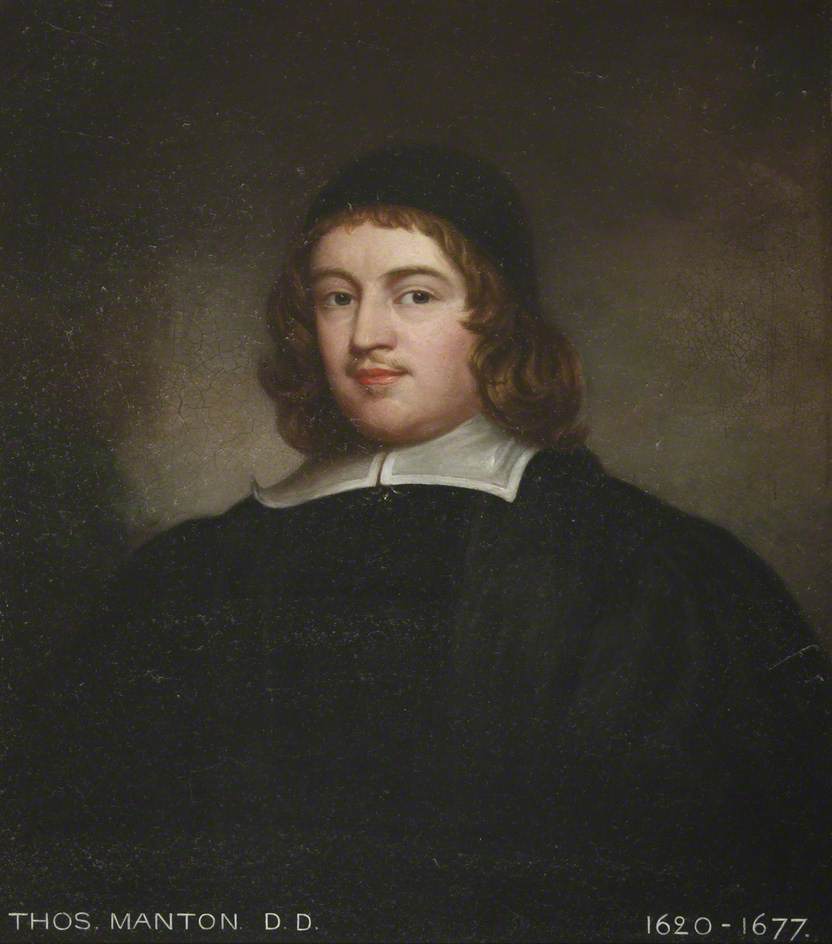
In Thomas Manton's commentary on James 4:15, the doctrine of divine providence and human frailty is primarily addressed. Manton argues that acknowledging God's will in all plans reflects a posture of reverence and dependence, suggesting that Christians should habitually incorporate phrases such as "If the Lord wills" into their speech as a reminder of God's sovereign control over life. The author supports this argument with various Scripture references, including James 4:15 itself, Proverbs 16:9, and instances from the Apostle Paul's letters, which emphasize that human intentions must align with God's providential oversight. The significance of this doctrine lies in its call for humility and recognition of the uncertainty of life, urging believers to submit their desires and plans to God's authority while fostering a proper attitude towards life's uncertainties.
Key Quotes
“If it is the Lord's will... all our undertakings must be referred to the will of God—not only religious ones but secular actions.”
“The sovereignty and dominion of providence... we make plans but their execution depends wholly on God's will and providence.”
“Common forms of words in which God's name is used are mere profanities if the heart is not reverent.”
“We are to serve the will of God until we fall asleep.”
What does the Bible say about submitting to God's will?
The Bible teaches that all actions should be referred to the Lord's will, as seen in James 4:15.
James 4:15, Proverbs 16:9
How do we know God's providence is true?
God's providence is affirmed through Scripture, which consistently illustrates His sovereignty over all aspects of life.
Romans 1:10, Ephesians 1:11
Why is acknowledging God's will important for Christians?
Acknowledging God's will is essential for Christians as it promotes humility, trust, and submission to His divine plan.
James 4:15, Matthew 26:39
Instead, you ought to say, “If it is the Lord’s will, we will live and do this or that.”
Having shown how wrong their confidence is, James proceeds to put things right by urging them to remember with reverence God’s providence and their own frailty.
Instead, you ought to say, “If it is the Lord’s will.” Here a doubt arises. Must we always of necessity use this form of speech, this explicit caveat?
(1) It is good to get in the habit of using holy forms of speech; this is a great help. The heart is best when such conditions are made explicit—“If the Lord please,” “If the Lord wants,” etc. Pure lips are appropriate for a Christian, who should be distinguished by holy forms of words just as other people are distinguished by their oaths and rotten speech. Besides, this is useful for stirring up reverence in ourselves and for others’ instruction. Such forms are confessions of divine providence and the uncertainty of human life.
(2) The children of God use these frequently: “I will come to you very soon, if the Lord is willing” (1 Corinthians 4:19); “I hope to spend some time with you, if the Lord permits” (1 Corinthians 16:7); “I pray that now at last by God’s will the way may be opened for me to come to you” (Romans 1:10); “I hope in the Lord Jesus to send Timothy to you soon” (Philippians 2:19). The children of God know that all their goings are ordered by the Lord; therefore they often use these reservations of his will and power. See also Genesis 28:20 and Hebrews 6:3.
(3) Even the pagans, by the light of nature, would use these forms with some religion and would seldom speak of any purpose of theirs without this holy parenthesis. Plato in the Timaeo brings in Alcibiades’ asking Socrates how he should speak, and he answers: “Before every work you must say, ‘If God will.’”
(4) When we use these forms, the heart must go along with the tongue; common forms of words in which God’s name is used are mere profanities if the heart is not reverent. Augustine cautions, “Do not learn to have in your hearts what everyone has in his tongue.” The words are common, but the meaning is useful.
(5) It is not always necessary to be explicit, but there must always be submission to God’s will whether implicit or explicit. The holy men of God have often expressed the intention to do things and yet not formally expressed such conditions—for example, in Romans 15:24, “I plan to do so when I go to Spain.”
Notes on Verse 15
Note 1. All our undertakings must be referred to the will of God—not only religious ones, but secular actions. Our journeys must not be undertaken without asking his leave: “O LORD, God of my master Abraham, give me success today” (Genesis 24:12; see also Genesis 28:20). If this is neglected, it is no wonder you meet with so many setbacks; they do not come from your hard luck but your profane neglect. But what does is it mean to submit all our actions to the will of God?
(1) It is measuring all our actions by his revealed will; that is the rule of duty. We can look for no blessing except on actions that are consistent with it. We must submit to his secret will and conform to his revealed will. Worldly desire has its own will (see Ephesians 2:2), but we are to serve the will of God until we fall asleep (Acts 13:36).
(2) We must undertake any action with greater peace of mind when we see God in it—as in Acts 16:10, where Paul gathered that God had called him to Macedonia. When we see God guiding and leading us by means of his providence or by inward instinct, we may walk in the way he has opened to us with all the more encouragement.
(3) In our desires and requests we must seek God’s advice: “not as I will, but as you will” (Matthew 26:39). In temporal things we must submit to God’s will—for his mercy, for the means, and for time to achieve things. Creatures, who cannot ascribe anything to themselves, must not prescribe to God and give laws to providence, but must be content to want or have as the Lord pleases. If anything does not work out well, the Lord does not wish it; that is enough to silence all discontent.
(4) We must constantly ask his leave in prayer.
(5) We must still reserve the power of God’s providence, saying, “If the Lord will,” “If the Lord permit.” God does not want us to be too confident in a worldly way; it is good to get the soul used to things changing.
There are two things we should often consider in this connection, both of them in this text:
a. The sovereignty and dominion of providence. However wise and skillful you are in your enterprise, the Lord can nip it in the bud or stop it when it is actually happening. I have noticed that God is usually very sensitive about his honor in this point and usually frustrates proud people who boast of what they will do and have unlimited plans without any thought of the constraint they may receive in providence. It is a flower of the imperial crown of heaven, and the bridle that God puts on the rational creature, to arrange what will happen to human affairs. Therefore, God wants to be acknowledged in this: “In his heart a man plans his course, but the LORD determines his steps” (Proverbs 16:9). We make plans, but their execution depends wholly on God’s will and providence. If we demand things, there is a contest between us and heaven about will and power; therefore, in such cases the answer of providence is more clearly and decisive to our loss, so that God may be acknowledged as Lord of the things that happen and the first mover in all causes and effects, without whom they have no efficacy.
b. Consider the frailty and uncertainty of your own lives; our being is as uncertain as the events of providence. In the passage, IfitistheLord’swill implies that there must be an awareness of our own frailty as well as of the sovereignty of providence, so that the heart may submit to God the better. Psalm 146:4 says, “When their spirit departs, they return to the ground; on that very day their plans come to nothing.” Certainly we will never be wise until we are able to number our days and sufficiently understand the uncertainty of our life in the world (Psalm 90:12).
Note2. “Wewillliveanddothisorthat.” Notice that it is not enough if God allows us to live; he must also by the same will allow us to act. We may live and yet not be able to do anything to carry out our plans; for if God stops agreeing, the creatures cannot act, at least not with any success. This quite contradicts the teaching of the heathen philosophers. Seneca said, “It is by the gift of the gods that we live; that we live well is our own doing.” And Cicero said: “It is the judgment of all mortals that prosperity is to be sought from God, but wisdom to be gotten by ourselves.” But in the Scriptures we are taught otherwise—to seek from God not only success but also guidance; he gives us the ability to do things and a blessing when the action is finished. His will is both efficacious and permissive, and without both aspects we can do nothing; he must give us life and all things necessary to action. We must not only look up to him as the author of the success but as the director of the action. It is by his direction and blessing that everything happens. Even our will and wisdom are subject to divine control, and he can turn them as he pleases (Proverbs 21:1). Therefore, we must not only commit our ways to his providence but commend our hearts to the instruction of his Spirit. In short, all things are done by his will and must be ascribed to his praise.

Comments
Your comment has been submitted and is awaiting moderation. Once approved, it will appear on this page.
Be the first to comment!