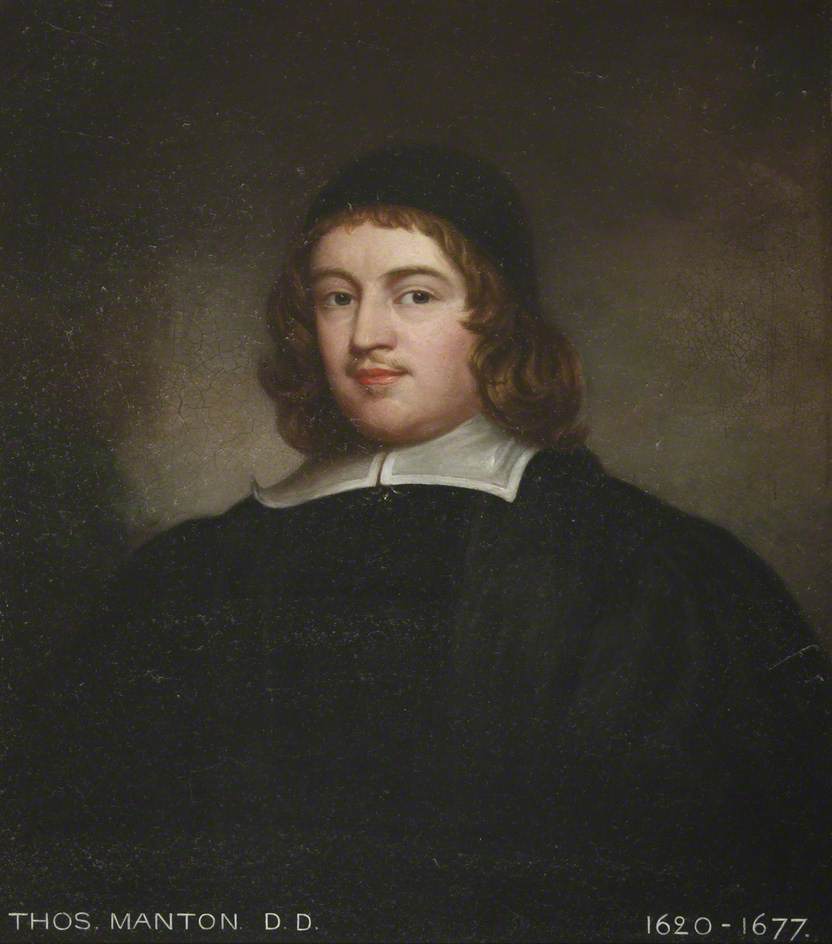
In this commentary on James 5:6, Thomas Manton addresses the sin of oppressive cruelty, particularly as it pertains to the wealthy elite who misuse their power to oppress the innocent. Manton argues that the rich, when untempered by grace, may exploit legal systems to justify their actions, illustrating this with references to ecclesiastical corruption and the execution of Christ. He cites Scripture such as Ecclesiastes 5:8 and Acts 2:23 to highlight the accountability of the oppressors and the parallels between their exploitation and the murder of innocent figures, specifically Jesus, whom Manton identifies as "the Righteous One." The practical significance of this passage serves as a warning against complacency in injustice, emphasizing the responsibility of all individuals—even those not directly executing harm—in perpetuating violence against the righteous.
Key Quotes
“The rich and the great... do not think about him who is higher than they are.”
“Any consent in the destruction of innocent people makes us guilty of their blood...”
“Wickedness knows no bounds and limits—and also to show why miseries were coming upon them.”
“Weakness is usually oppressed... the Lord of hosts is engaged in their quarrel.”
What does the Bible say about oppression of the innocent?
The Bible condemns the oppression of innocent people and highlights God's justice against such acts.
Psalm 94:20, Ecclesiastes 5:8, Matthew 27:6
How do we know Christ was innocent?
Christ’s innocence is affirmed in Scripture through the testimonies of witnesses and His fulfillment of prophecy.
Acts 3:14, 1 Peter 3:18, Matthew 27:19
Why is patience important for Christians?
Patience exemplifies Christ’s character and allows believers to endure suffering in faith.
James 5:6, Isaiah 53:7, Matthew 5:39
You have condemned and murdered innocent men, who were not opposing you.
The apostle now comes to another sin, and that is tyrannous and oppressive cruelty, which is also an effect of riches when there is no grace to sanctify their enjoyment.
From the context, note that plenty gives rise to harm; and when all things are possible, people think all things lawful. The rich and the great, if they are higher than others, do not think about him who is higher than they are: “If you see the poor oppressed in a district, and justice and rights denied, do not be surprised at such things; for one official is eyed by a higher one, and over them both are others higher still” (Ecclesiastes 5:8).
Youhavecondemned. The apostle now gives the example of their cruelty and oppression, masked with a pretense of law. Before they killed, there was some form of legal process; they condemned.
God takes notice of the injuries done to his people under the form of a legal procedure—not only through open violence, but that which is done secretly: “Can a corrupt throne be allied with you—one that brings on misery by its decrees?” (Psalm 94:20). God regards it as more heinous when public authority, which should be defending the innocent, is used as a cover for oppression. Many people are careful to observe forms of law, even if they do not mind oppressing the godly. See Matthew 27:6, “It is against the law to put this into the treasury, since it is blood money”; yet it was lawful to spill the blood of Christ, according to them.
Again, the apostle says, You have condemned and also murdered; they used their authority and wealth to do this, corrupting judgment and using evil arts to destroy innocent men.
Any consent in the destruction of innocent people makes us guilty of their blood; and sins committed at our instigation become ours by being rightly imputed to us. Christ was put to death by authority of the Roman Empire and executed by the Roman soldiers; yet it is blamed on the Jews, the whole nation, because it was done at their instigation and with their connivance: “You, with the help of wicked men, put him to death” (Acts 2:23)—“this Jesus, whom you crucified” (verse 36)—“the Jews, who killed the Lord Jesus” (1 Thessalonians 2:14-15). Do not flatter yourself because you are not the immediate executioner. Beware how you provoke others to blood; the guilt will fall on your own consciences. God looks on the instigators as the principals. Ahab “sold himself to do evil in the eyes of the LORD, urged on by Jezebel his wife” (1 Kings 21:25). It was a sorry answer that the priests gave to Judas: “That’s your responsibility” (Matthew 27:4); it was their responsibility too, since it was by their plot and conspiracy.
Andmurdered. This is added to show that oppression will go as far as death—wickedness knows no bounds and limits—and also to show why miseries were coming upon them.
Innocentmen. This may refer generally to any just person, as in Isaiah 57:1 (“The righteous perish …”); but because the apostle speaks in the singular and with an article, some people understand it to refer to John the Baptist, and others (with more probability) to Stephen, whom the Jews stoned, and others (with most probability) to our Lord Jesus Christ. Because I strongly incline to this last, I shall produce my reasons:
(1) Jesus Christ is elsewhere called “the Righteous One” for emphasis (Acts 22:14).
(2) There seems to be a direct parallel to this passage in Acts 3:14, “You disowned the Holy and Righteous One and asked that a murderer be released to you.”
(3) This was the great reason and cause of judgments on the Jews (see 1 Thessalonians 2:15-16), which is the point of this passage.
(4) The conclusion drawn by the next verse, persuading his readers to be patient in hope, arises very naturally from this thought. The former part of verse 6 shows the harm they have done and therefore the cause of their ruin; and the latter part deals with Christ’s patience, the great example and pattern for ours.
I know the great prejudice against this interpretation is that all this is supposed to be spoken to Christian Jews; but we disproved that in the first verse. Brochman asks how this could be blamed on these sensual, rich people since those who condemned and killed Christ, and the main promoters of his sufferings, were the Pharisees and chief priests, dissembling hypocrites. But this is of no weight since the guilt lay on the whole nation, and they had taken the curse of his blood upon themselves and their children. The apostle is therefore quite in order to say to them, when he assigns the cause of the approaching judgment, You have … murdered.
Do not think it strange that the apostle does not call Christ Lord or Saviour, for he is speaking to unconverted Jews, and the best way he could convict them is to declare Christ’s righteousness or innocence, as Peter and John also do: “the Holy and Righteous One” (Acts 3:14). Those who would not acknowledge him as Saviour by the plain evidence of his life might acknowledge him to have been a righteous person, as Pilate’s wife did (Matthew 27:19). However, lest this interpretation should seem too doubtful, I shall make the notes apply either way.
Note1. If you take the expression generally, as concerning any innocent person, you may observe that innocence itself cannot escape the pangs of oppression. The just are condemned and killed; thus the Scripture speaks of “the blood of righteous Abel” (Matthew 23:35). People hate what they refuse to imitate; and in the wisdom of God the worst judge their sufferings perversely: “they band together against the righteous and condemn the innocent to death” (Psalm 94:21). That is how it has been, is, and will be. Gregory says, “I would suspect him not to be Abel if he has no Cain.”
Note2. If you understand this particularly of Christ, note that Christ died not as a malefactor but as an innocent person. There were several circumstances that showed this: the disagreement of the witnesses, Pilate’s wife’s dream and testimony, Pilate’s own acknowledgment, Judas’ confession. Certainly he died not for his own sins but for ours, “the righteous for the unrighteous” (1 Peter 3:18). Our sacrifice was a lamb without spot or blemish. It is true he loved our justification better than his own reputation; and therefore when his innocence was questioned, he would not answer a word.
Whowerenotopposingyou. The present tense (see KJV) is put for the past. If you understand this generally, it is to be understood of the weakness and meekness of innocent people.
(1) Their weakness. They are not able to withstand, and therefore you oppress them.
Weakness is usually oppressed. People are all the more bold with those who lack any way of resisting or defending themselves. But remember that the less outward defense people have, the more the Lord of hosts is engaged in their quarrel; he is the patron of the orphans and widows: “The victim commits himself to you; you are the helper of the fatherless” (Psalm 10:14). Weak innocence has a strong avenger.
(2) Their meekness. It is their duty not to be revengeful: “But I tell you, Do not resist an evil person” (Matthew 5:39). They must not satisfy or carry out their own private revenge.
Meekness invites injury but always at its own cost. What was said of Publius Mimus, though spoken for evil purposes, remains true: “by bearing an injury, you invite a second.” Patience may be trampled on, but God will arrange a defense. Wicked people are mad without provocation. You have seen crows on a sheep’s back picking wool; that is a picture of oppressed innocence. Wicked people do not consider who deserves the worst but who will suffer the most.
Note3. If you understand this to refer to Christ, it is most true; he was condemned and slain without resistance. He came to suffer and therefore would not resist. He would declare his obedience to his Father by his patience before men; “he was led like a lamb to the slaughter, and as a sheep before her shearers is silent, so he did not open his mouth” (Isaiah 53:7). Pigs will howl, but the sheep is silent in the butcher’s hands. “I offered my back to those who beat me, my cheeks to those who pulled out my beard; I did not hide my face from mocking and spitting” (Isaiah 50:6). Christ, as it were, offered himself to the affronts and indignities done to his person.
It is notable that Christ uses the same severity to check the devil’s tempting him to idolatry and to Peter’s dissuading him from suffering: “Away from me, Satan!” (Matthew 4:10); “Out of my sight, Satan!” (Matthew 16:23). When Christ was about to suffer, he told the pious women not to weep (Luke 23:28). About to wipe away all tears by the benefit of his cross, he wanted no shed tears to hinder him from it. Thus our Saviour did not resist; “all the injury he did was to himself,” says Tertullian. He did not struggle when he was going to the cross; why do we struggle and find ourselves so reluctant when we are going to the throne of grace? Shall we be more unwilling to pray than Christ was to suffer?

Comments
Your comment has been submitted and is awaiting moderation. Once approved, it will appear on this page.
Be the first to comment!