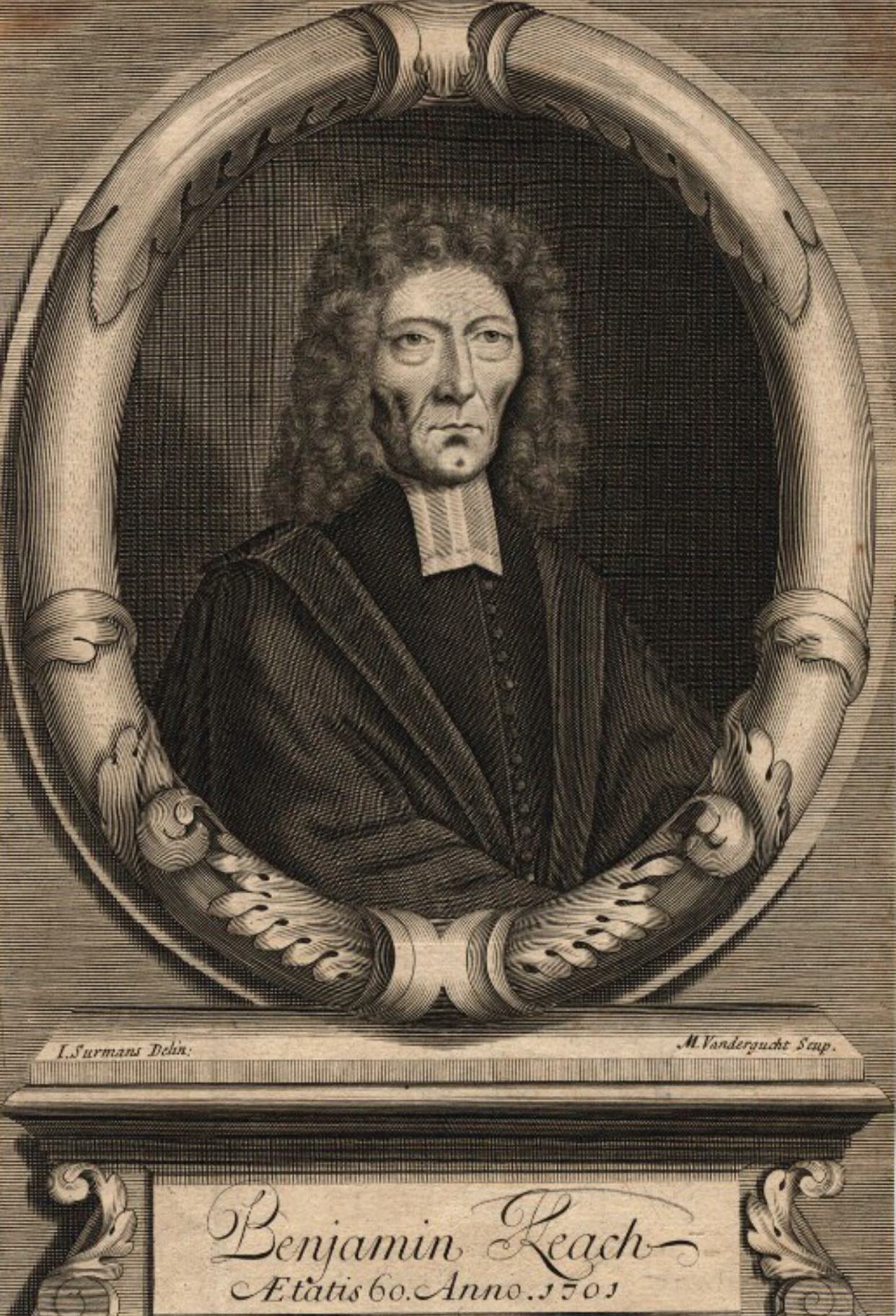
In Benjamin Keach's article "The Passover a Type of Christ," the primary theological topic centers on the Passover as a foreshadowing of Christ's sacrificial death. Keach explores several key aspects indicating how the Passover lamb embodies various elements of Christ's nature and work, including its selection as a perfect lamb (1 Peter 1:19), its preparation, the sprinkling of its blood (Exodus 12:7), and the manner of its consumption. He argues that each aspect of the Passover ritual highlights the significance of Christ's sacrifice, particularly emphasizing the redemptive power of His blood, which must be applied by faith to effect justification (Romans 5:9). The practical significance of this doctrine lies in the believer's need to remember Christ's atoning work, leading to a life marked by holiness and repentance as symbolized in the eating of unleavened bread and the removal of leaven (1 Corinthians 5:7-8).
Key Quotes
“The Passover or paschal Lamb was a most lively figure or Type of Christ, nay, as a worthy divine observes this one legal sacrament preached not obscurely to the ancient Jews the whole doctrine of the Gospel.”
“The blood of the lamb must be sprinkled...signifying that the blood of Christ must be applied by faith for our justification.”
“Every particular lamb was to be eaten in one house signifying the unity of the church of God or the spiritual conjunction and agreement of all the faithful in one bread and one body.”
“They were to eat it with bitter herbs...to signify that repentance and godly sorrow for sin ought to be in those who come to receive and partake of Jesus Christ.”
What does the Bible say about the Passover as a type of Christ?
The Passover lamb foreshadows Christ, as both are without blemish and signify salvation through sacrifice.
1 Corinthians 5:7, John 1:29, Exodus 12:5, John 19:36
How do we know that Christ's sacrifice fulfills the Passover?
Christ's sacrifice fulfills the Passover by being the ultimate sacrificial lamb, whose blood provides true salvation.
1 Corinthians 5:7, Hebrews 9:14, Exodus 12:22-23
Why is understanding the Passover important for Christians?
Understanding the Passover deepens our appreciation for Christ's redemptive work and the seriousness of sin.
1 Corinthians 10:17, Exodus 12:14, Romans 5:8
"Christ our Passover is sacrificed for us," 1Co 5:7.
THE Passover, or paschal Lamb, was a most lively figure or Type of Christ; nay as a worthy divine observes, this one legal sacrament preached, not obscurely, to the ancient Jews the whole doctrine of the Gospel. This will appear in five things: (1.) In the choice of the sacrifice. (2.) In the preparing of it. (3.) In the effusion of the blood, and actions about it. (4.) In the eating, and the conditions therein. (5.) In the fruits and use, Eph 3:21.
PARALLELS.
I. IN the choice of the sacrifice. The Lord appointed it to be a lamb: notably signifying Jesus Christ, who the Baptist called, "The Lamb of God taking away the sins of the world."
II. It was to be a lamb without blemish; signifying the most absolute perfection of Jesus Christ.
III. The paschal lamb was to be taken out of the fold; signifying that Christ should be "Taken from amongst men, or from among his brethren," De 15; one of the seed of Abraham according to the flesh.
IV. The lamb was to be a year old, and also it must be slain; signifying, that Christ in his full vigour and strength should be put to death.
V. The lamb was to be roasted with fire; which might signify the manner of Christ's death: he was crucified and pierced; he endured the fire of afflictions, and the fire of God's wrath that was due to us for our sins.
VI. The lamb was roasted whole; to signify, saith Dr. Taylor, that Christ bore the whole wrath of God, both in soul and body. Not a bone of the lamb was to be broken; to show, that not one bone of Christ should be broken, Joh 19:36.
VII. The blood of the lamb was to be saved in a bason; it must not be shed upon the ground, not trodden under foot; signifying the preciousness of Christ's blood, and that great esteem God the Father, and all true Christians have of it.
VIII. The blood of the lamb must be sprinkled upon the lintel, and sides of the doors of the Israelites: which held forth, that the blood of Christ must be applied by faith; for our justification stands not only in the shedding of Christ's blood, but also in the sprinkling of it on our consciences.
IX. It must be sprinkled upon the posts and doors, so as the Israelites could neither go out of doors, nor come in, but they must see on all sides the blood of the Lamb: signifying, that they and we should, both at home and abroad, going forth, and coming in, and on all occasions, have the passion of Jesus Christ before our eyes, in holy meditation and contemplation.
X. It was not enough for the Jews to have the lamb slain, and the blood shed within the house, but the blood must be sprinkled without doors; signifying as some observe, if Christ's blood, i. e. the merits of it, be received into our hearts for justification, the sprinkling of it will appear, and be seen outwardly in a holy life, and real sanctification.
XI. The blood of the lamb was to be sprinkled with a bunch of hyssop dipped in it, Ex 12:22, which might signify, that such who would be sprinkled with Christ's blood must obtain true faith; for hyssop bears a resemblance to faith in three things: (1.) It is a ground, low, and weak herb: faith in itself, and as it is in believers, is weak, andteacheth humility. (2.) It will grow on a rock or wall: so faith roots itself in Christ that true spiritual Puock. (3.) Hyssop hath a cleansing and healing quality: so faith purifies the heart and life of a sinner, and heals all the sores of a wounded conscience.
XII. They were to eat the flesh of the lamb: to signify, that we must spiritually feed upon Jesus Christ, viz. to believe on him, which is called an eating of his flesh, and drinking of his blood.
XIII. Every particular lamb was to be eaten in one house; signifying the unity of the church of God, or the spiritual conjunction and agreement of all the faithful, in one bread and one body, 1Co 10:17.
XIV. Only Israelites, and not strangers, were to eat of it; to show, that none but the true seed, viz. believers, have right to Christ, and the blessed rites of his house.
XV. They were to eat it with bitter herbs; to signify, that repentance and godly sorrow for sin, ought to be in those who come to receive and partake of Jesus Christ, and that they should remember with grief of soul what their sins brought upon their Saviour, and what the filthy and bitter nature of sin is.
XVI. They were to eat it with unleavened bread; to signify that those who come to the true Passover, should keep that feast with the unleavened bread of sincerity and truth, hating false doctrine, hypocrisy, and every evil work.
XVII. They must eat in remembrance of their deliverance out of Egypt: so those who come to the true passover, ought to remember how God hath by Christ's blood delivered them from wrath and hell.
XVIII. They were to eat it with their lions girt, and their staves in their hands, and their shoes on their feet; to show, that we who feed upon our Passover, should have the girdle of truth, and our feet shod with the preparation of the Gospel of peace, and that we are but strangers and pilgrims here.
XIX. They were not to eat the paschal lamb, until they had purged all leaven out of their houses; which shows what care every Christian should take, to purge out the leaven of malice and wickedness out of their hearts. The Jews were to search for leaven, and not suffer a crumb or small morsel to remain in their houses; so careful should all those be to purge out every sin, and let no iniquity remain in them, who come to the Lord's table. "Wherein the brazen serpent was a type of Christ, of also the manna, and divers other types, we have shown. And the parallels of the first and second temple we have insisted upon under the head of metaphors concerning tho church of God, to which we refer you.
And finding to what a bigness this work is swollen, I must be forced to break off, and leave these my poor labours to the blessing of God, praying they may prove to the advantage of his despised and afflicted church; desiring, what profit any Christians may receive herefrom, they would not forget to give the honour to God, who only deserves it: to whom be glory in the church, by Christ Jesus, throughout all ages, world without end. Amen.

Comments
Your comment has been submitted and is awaiting moderation. Once approved, it will appear on this page.
Be the first to comment!