Bootstrap
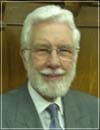
Stephen Hyde

Submissive to Gods Will

James 4:13-17
Stephen Hyde April, 3 2022 Video & Audio
0 Comments

Stephen Hyde's sermon titled "Submissive to God's Will," based on James 4:13-17, addresses the doctrine of divine sovereignty and submission to God's will. Hyde emphasizes that human plans are frail and uncertain, encapsulated in the metaphor of life as a vapor that quickly vanishes. He discusses how our intentions should be anchored in the phrase, "If the Lord wills," underscoring that God's providential guidance ultimately directs our paths. The sermon also reflects on Joseph's life as an example of unforeseen circumstances that align with God's purposes, reinforcing the need for humility and reliance on divine wisdom. This teaching highlights the practical significance of seeking God's will in daily decisions and recognizing His omnipotence in shaping our lives.

Key Quotes

“Whereas ye know not what shall be on the morrow. For what is your life? It is even a vapour that appeareth for a little time and then vanisheth away.”

“It is good to rejoice in what God has done. Because that brings honour and glory to God.”

“Therefore to him that knoweth to do good, and doeth it not, to him it is sin.”

“Not my will, but thine be done.”

Sermon Transcript

Auto-generated transcript • May contain errors

100%
May it please God to bless us
together this evening as we meditate in his word. Let's turn to the
epistle of James and chapter four and we'll read the last
five verses from verse 13 to the end. The epistle of James
chapter four and reading from verse 13 to the end. Go to now
ye that say today or tomorrow we will go into such
a city and continue there a year, buy and sell and get gain. Whereas ye know not what shall
be on the morrow. For what is your life? It is even a vapour that appeareth
for a little time and then vanisheth away. For that ye ought to say,
If the Lord will, we shall live and do this or that. But now
ye rejoice in your boastings. All such rejoicing is evil. Therefore to him that knoweth
to do good, and doeth it not, to him it is sin. Well, James is, as you are aware,
quite a short epistle. And yet it is really quite unique
in the many instructions that it gives. And we should be thankful
that those instructions are often very straightforward and very
simple. And it is good for us to read
such epistles and to take heed to the truth that it contains,
because they are words of wisdom. As we know, of course, the whole
Word of God was directed by the Holy Spirit to those that wrote
it, and although many people were used to write the Bible,
yet we know that everything was influenced by God himself. And so we should not read the
Bible and come across verses which you think, I think I'll
pass over that. I don't think that's suitable
for me. I don't think it has any reference to me. And therefore
the tendency is to just pass over and not read it. As I have
said very often, and I will say again, it's a great benefit to
read the Bible right through from the very beginning of Genesis,
right to the end of Revelation, because in so doing, we often
come across accounts in other books which give reference to
other books and describes and directs us to understand those
things which are written. There is nothing in the Word
of God which is superfluous. It is all there influenced by
the Spirit of God and we should therefore be truly thankful for
it. And so we read these verses tonight
and I hope we understand what they mean really the face of
it. It really directs us to understand
that all things are ordained by God and we should not think
well we're gonna do this and we're gonna do that and this
is the course we're going to pursue and we find that for some
reason or another things come into our lives which stop us
doing certain things. and perhaps enable us to do other
things which we never really expected to do. There are many
examples in the Word of God to confirm this. But perhaps just
to speak of one which is an eminent case, and that's the case of
Joseph. Joseph, as you know, was one
of the sons of Jacob, one of the 12 sons. He was the second,
the youngest, and he'd been wonderfully blessed really with dreams which
spoke to him and told him what God would do and he'd recited
those dreams to his brothers and to his parents and they hadn't
been very happy with what they'd heard. And so we see that Joseph
is asked by his father on one occasion to go and look for his
brothers and see how they're doing. They'd taken their flocks
to find pasture and the father told him to go and find out how
they were doing. Well, no doubt Joseph set off
thinking it was just a normal errand and he would be able to
find his brethren, find what they were doing and bring back
a report to his father and their father of the situation. But of course, the brothers saw
Joseph coming and they determined to get rid of him if they could.
Well, there were various proposals. One was to kill him. Another
was to just keep him for the moment. But eventually, they
saw some merchants coming along and they decided to sell him.
So Joseph was sold to these merchants and he was then taken into Egypt. Well, we can imagine he started
off that day probably as a relatively happy young man, everything going
forward smoothly. And then there was this dramatic
change in his life. And that dramatic change was
going to last for a good few years. And we might just sometimes
think, well, I've got this little problem to face and this little
problem to endure, and I'll get on with it. And yet, you see,
in his case, there was that situation which dramatically changed his
life. But then as we follow the life
of Joseph, and he's a wonderful example to us to realize how
God dealt with him. As most of you will know, he
was of course imprisoned in Egypt, wrongly imprisoned by Potiphar,
the man who bought him when he got into Egypt, wrongly accused
by Potiphar's wife. Potiphar believed his wife rather
than believing Joseph and therefore he was cast into prison. And he again lived in prison
for a good few years. until the occasion when there
were two of the king's servants, the butler and the baker, who
were imprisoned by Pharaoh. And they both had dreams and
they told the dreams to Joseph and Joseph was given wisdom by
God to decipher those dreams and to tell the men what would
happen. He said to the butler that he
would be restored to his position and the baker would be hung so
very different verdicts weren't they but it came to pass and
the butler was restored to his position and joseph said to the
butler now when you come back to your job remember me and tell
the king about my situation well we're told again the butler forgot
and another two years elapsed before Pharaoh had an amazing
dream and couldn't understand it didn't know what it was about
and so he asked all the magicians and the wise men to come and
tell him what it was and they couldn't do so and in the butler
suddenly remembered Joseph so Joseph was summoned before the
king and the king said well I understand you can decipher dreams Well,
Joseph very wonderfully and very wisely and honorably said, it's
not me, it's God that gives me an understanding. And God did
give him the understanding so that he deciphered the dreams
of Joseph. And he was put in charge of everything
needful. And he was next to the king in
the kingdom. So we see a dramatic change again
in Joseph's life. Well, neither of those conditions
could Joseph have ever anticipated, could never have thought would
occur. And we have those accounts really
in the Word of God to instruct us today in our little lives,
probably very different, but sometimes in our lives, Very
small things occur. You young people at school and
college and university, sometimes very small things occur in our
lives which change the direction of our life. You may have plans
of what you want to do and where you want to go and what you want
to be perhaps good at. You may find that those things
are suddenly changed sometimes with regards to getting married
as well you might think about that and you think well I fancy
this girl or you fancy this boy if you're a girl and you think
and you hope that might come to pass and it may appear to
be working out all right and then things suddenly change suddenly
change God works. And God does things that you
didn't expect. Again, in reference to that,
and indeed to all our lives, it's so very important that we
pray that God's will might be done. That's really what these
verses are about. Seeking that God's will might
be done. Because we can be sure that God's
choice for you and me is and will be a good choice for a husband
and wife. So you shouldn't be too upset
or too distressed if things don't appear to be working out as you
wanted. Because God's ways are higher
than our ways. And then you can think also of
getting married and wanting somewhere to live. And then perhaps when
you are perhaps married or you may still be perhaps single and
wanting somewhere to live and yet to think that God has a wonderful
plan in directing us into where to go and what to live and again
he can provide for us sometimes a far better thing we perhaps
at one time anticipated so we should realize that we do have
a God who is in control of our lives and that's a great and
wonderful blessing well these verses tell us really about that
and it starts off when it's verse 13 go to now ye that say today
or tomorrow we will go into such a city and continue there a year
and buy and sell and get gain so I mentioned about Our houses,
whatever it may be, flats or rooms or studios. But there's
also, of course, the situation with regard to our jobs. And
here again, you see, this picks up that really. And it directs
us when it says, today or tomorrow, we will go into such a place. You may have something lined
up and you want to do, and you want to go there, and you want
to be involved in it. And yet it's not the will of
God. and therefore the Lord tells
us very clearly whereas ye know not what shall be on the morrow
you'd plan perhaps to do something tomorrow now I don't know whether
in actual fact that is relevant whether it is tomorrow, it may
be a week, it may be a month, it may be a year's time but nonetheless
it may be tomorrow and there you have you, you've planned
to do this And yet the Lord tells us, whereas you know not what
shall be on the morrow. See, Joseph didn't know what
was going to occur, did he? And there's so many other occasions
in the Bible that you and I can read and find out that God's
ways are higher than our ways. And so the Lord says here that
whereas you know not what shall be on the morrow. And then he
asks the question, for what is your life? What is our life? Well, this verse describes what
our life is. It's like this, even a vapour
that appears for a little time and then vanishes away. Now that's
a very simple and good illustration. And when we think of a vapour,
We can think of steam perhaps from a kettle or a saucepan or
something, and when it boils you see the steam arise, but
it very quickly evaporates. Just disappears. It goes away. And it's gone. And so here the
Bible tells us what our life is like. It's just like that. It is even a vapour. But appeareth
for a little time, and then vanisheth away." Now I'm sure we all can
agree with such a statement. We see it, don't we? We see people,
you think of the atrocities in Ukraine at the present time.
You know, soldiers have got up in the morning, haven't they?
Planning what they're going to do. I never see the evening I
never see the end of that day their life has been taken away
it's been just like a vapor it's vanished away now you may say
well I don't want to listen to morbid things like that well
they're not morbid because they're there for good advice not from
me but from God who directs us in the right way that you and
I should think and the way that you and I should act and it's
good therefore that we have the Bible to read to direct us in
such things and so we have this statement here for what is your
life it is even a vapor that appeareth for a little time and
then vanishes away and you know in our lives we can classify
little time as just a year or so or perhaps many years but
in reality as I mentioned this morning even if our years are
over a hundred they are still only a little time it's not a
long time is it it's only a little time And so says James in this
letter, for that you ought to say, if the Lord will, we shall
live and do this or that. Now that's good instruction for
us. In our lives, in everything that
we intend to do or want to do, we should always come and say,
if the Lord's will. should not be left to ourselves
as it were to dictate to God if the Lord will well it's a
good word isn't it and we need to be reminded of it very often
in our little lives and James tells us here this is what we
ought to say we ought to say we ought not to give it any second
thought really We ought to always say this, if the Lord will. I don't know if anybody says
to you, well, what are you going to do tomorrow? You should say,
well, if the Lord will, I intend to do this or I intend to do
that. That's a correct way to speak. It's a correct way to think.
Even if you don't have the opportunity, to speak perhaps it's good to
think such things because the Word of God is here to guide
and direct us again you see if we committed ourselves to the
Lord in this way and said if the Lord will then if it doesn't
come to pass because the Lord has some other way for us we
won't then disappointed well we may be in some way but not
totally because we're realized that what we've done is to commit
our way unto the Lord and that's what we all need to do to commit
our way unto the Lord and if we commit our way unto the Lord
it is really so that the Lord will direct us in the right way
and there is a right way and you may say well what is that
right way well I can tell you what the right way is the right
way is the way that God will lead us in to bring us at last
safely to heaven when we die And that really is seeking God's
guidance, seeking God's direction, and in order to be found in that
way, to be able to pray that Lord will bless us in that which
is good, and ever lead us closer in that blessed knowledge of
our Saviour, the Lord Jesus Christ. So we might indeed pray well
if the Lord will lead me in that way but not if it's going to
take me away from the things of the Lord Jesus. It's a good
test you know for the reality of our religion and also the
sincerity of our desires, sincerity of our prayers. That if we come
like this, saying, if it is the will of God, if the Lord will,
that means, and if we're honest in that request, it means that
we are open-minded to God's will. And if we're open-minded to God's
will, we can be sure that the Lord will lead us in that right
way. that spiritually right way to
be with us and direct us and to set our hearts and our affections
upon things above. If we follow our own inclinations
they can often lead us away from God and not to God lead us away
from desiring the things of God rather than leading us to desire
the things of God. What a great blessing then if
you and I are led by the Spirit, the Spirit of God to seek these
things. If the Lord will, we shall live and do this or
that. Well, you young people tonight,
you've heard what I've said, well, everyone really, but perhaps
you young people more specifically. Do you say that? When you have
something you want to do, do you say, if the Lord will? Do you say, thy will be done? Now, if we want an example, this
we have a wonderful example in the Bible and that wonderful
example is the Lord Jesus Christ himself and the Lord Jesus Christ as
you know died upon that cross at Calvary to take away the sins
of all his people and in the previous evening to that time
of crucifixion he knew what was going to occur and he prayed
to his father and he said this if it be possible if it be possible
let this cup and that means that which is going to follow pass
from me nevertheless not my will but thine be done. And that's
a great and wonderful example. Now the Lord Jesus Christ knew
what was before him and he asked if it were possible he might
not have to endure it, that terrible time of trauma in that judgment
hall and then on the cross when his father hid his face from
him for those three hours. He asked if it were possible,
but it wasn't possible. Sometimes, in your life and my
life, there may be things that we look to the Lord to deliver
us from, and yet the Lord doesn't answer. He doesn't deliver us. But you see the Lord didn't leave
the Lord Jesus Christ apart from those three hours on the cross
when he had to endure hell for our sakes. The Lord was with
him and the Lord strengthened him. And that is a wonderful
blessing for us to have this example. Nevertheless not my
will but thine be done. What does it mean? It means humble
submission to the will of God. Not my will, but thine be done. What a great blessing that is,
when God, and it's only God, gives us grace to follow the
wonderful example of our Saviour, the Lord Jesus Christ. Well, says James, if the Lord
will, we shall live and do this or that. Yes, it's so true, isn't
it? It's all in accordance with God's
will for our lives. Every moment of our life, every
moment of our life is under the control of Almighty God. And then the apostle goes on to say, but now
ye rejoice in your boastings. All such rejoicing is evil."
Again, this is words of wonderful instruction for us, because sometimes
we can boast about what we're going to do, boast perhaps what
we have done, and yet here the Word tells us,
but now you rejoice in your boastings. All such rejoicing is evil. We should not therefore rejoice
in what we've done. I'll tell you what we should
rejoice in. We should rejoice in what God has done. That's
a great blessing, isn't it? If God gives us that spiritual
understanding to rejoice in what God has done for us, So when God hears and answers
our prayers, do we come and rejoice and give thanks to the Lord for
hearing and answering our prayers? Do we rejoice in what he has
done? And not what we've done. It's
so easy you'd say, well, I did this and I managed to make this
work and I managed to escape from this difficulty and I managed
to do this. And what we're doing, we're boasting
in what we've done. What we should do is to boast
in what God has done. Because that brings honour and
glory to God. It doesn't therefore bring honour
and glory to ourselves. And yet, you see, that's what
we really want. We want people to come and pat us on the back
and say, well, well done, you've really done well. And it's, we
have to be very careful what we say. Sometimes, you know,
people say, well, I've done this and I've done that. And sometimes
our reaction is, well, congratulations. Hold on a minute. May not be
anything at all that we've done. It may be what God has done.
I might just give a little word here of advice, something which
I think about sometimes, and that's when the Lord blesses
parents with a little baby. And what happens is, people come
and say, oh, congratulations. My friends, they should never
say that. It's what God has done. They should say, well, we can
thank God for perhaps a safe delivery. Thank God for blessing
you with a little boy or a little girl. Yes, not to congratulate
the parents on something that they had no control over. We
fall into a trap, don't we? And it's not good to have such
situations. And so that's why the Lord gives
us this wonderful instruction. But now you rejoice in your boastings. All such rejoicing is evil. It's not good. It's not good
to rejoice in such things. It is good to rejoice in what
God has done because that brings honor and glory to our God. And what a wonderful favor And
what a wonderful blessing if we're able, therefore, to do
that. But now you rejoice in your boastings. All such rejoicing is evil. That's very straightforward,
isn't it? And therefore, when next time
you're going to boast about something you've done, well, give the honour
and glory to God. And don't boast about what you've
done. boast about what God has done and especially my friends
with regards to his work in our souls just to remind ourselves
we have no ability to be able to do that ourselves no ability
to do it ourselves because the Word of God clearly tells us
we are dead spiritually dead in trespasses and in sins now
you know I'm sure a dead person cannot do anything can't smile
can't speak can't grumble can't curse can't bless no ability
at all and that's like we are spiritually
we are dead and therefore if the Lord has done anything In
our hearts, we haven't done it. It's God that's done it. Some
people might say, well, I turn to serve the Lord. Well, if you
have, it's because God gave you understanding. God gave you grace
so to do. And therefore it is He that receives
the honor and glory. my friends, how important it
is, especially with regards to our spiritual life. And if God
has given us life, spiritual life, whereas we are able to
say, one thing I know, whereas I was blind, but now I see, it's
because of what God has done. And it should be therefore Him,
Almighty God, that receives the honor and glory. What a blessing
it is. But now you rejoice in your boastings. All such rejoicing is evil. But my friends, if we boast of
what God has done, that brings honor and glory to Him. And you
and I will then desire not to receive any adulation, any glory
ourselves. But we would desire that God's
name receives it, that God is honoured and glorified. That's
the whole purpose of our lives on this earth, is to honour and
glorify our God. But now you rejoice in your boastings,
all such rejoicing evil well you know these statements are
very simple aren't they but very powerful and very important but
now you rejoice in your boastings all such rejoicing is evil and
then the word tells us verse 17 therefore to him that knoweth
to do good And doeth it not, to him it is sin. Now this really is quite a comprehensive
statement if you just think about it. Therefore, to him that knoweth
to do good and doeth it not. Well, we often have opportunities
in our lives to do good. and the Word of God tells us
that we are to do good unto all men especially unto the household
of faith that means especially unto believers we are to do good
and therefore if the opportunity presents itself we are therefore
to do good therefore to him that knoweth to do good and if it's
obvious what we should do And yet we turn away. We have that wonderful illustration
that the Lord Jesus gave about the parable which we refer to
as the Good Samaritan. There was that person who was
travelling from Jerusalem to Jericho and thieves set upon
him. Robbed him, beat him, and left
him as half dead. And then we have, the account
tells us, there was the priest that first of all came by. Religious
person. He looked and he didn't want
to get involved. He could have done good, but
he passed by on the other side. and then there was the Levi that
he came along and he did the same he looked didn't want to
get involved passed by on the other side and then we read there was a
Samaritan he wasn't a Jew the others were Jews and the Samaritans
normally had no dealings with the Jews And yet this Samaritan
came where this poor man was. And he did all that was necessary
for him. Bound up his wounds, pouring in oil and wine, put
him on his own beast, took him to an inn, we might think of
that as a hotel, and paid what was necessary to look after this
man. He said to the innkeeper, if
there's anything else needed, when I come again, I will pay
the bill. What a wonderful example, wasn't it? Of doing good. And we should remember that.
It's very easy for us today, you know. When we see somebody
in need, we think, phew, I'm not gonna help that person. I'm
gonna avoid them. We might cross the road so we
don't have to come in contact with somebody. Well, here we
are. Therefore to him that knoweth
to do good and doeth it not, to him it is sin. We want to realise these things
you know again. Coming back very simply, we're
not on this earth just to please ourselves. And if we have the
ability to help others when there is a need, we should do so. Sometimes of course there might
be frauds around and we have to be careful and we don't want
to be sucked into a fraudulent situation. But nonetheless if
it's obvious, and again that account of the Samaritan, a good
Samaritan, It's a good example, it's a good test for us. You
know, that man, that Samaritan, he didn't go half-heartedly,
did he? He didn't say, well, I'll just do a little help and
then I've got to get on my way. No, he did all that he had to
do and more. What a good thing then, we have
these examples for us in our lives. And we might think of
it in this way. We are needy. We might feel to
be really cast down, robbed and battered and we need help. What a blessing it is if the
Lord Jesus Christ stops where we are. Comes to us in our time
of need. and does that for us that we
need? Well we have a glorious Saviour
and because we have a glorious Saviour we have a glorious example
and we should therefore be concerned and desire us to follow the example
of our Lord and Saviour Jesus Christ. We wouldn't want to come
would we and pray to God that he will come and Help us! And
he turns a blind eye, turns his back upon us and doesn't do anything. We would want, surely, the Lord
to look upon us, the Lord to have mercy upon us, the Lord
to deal with us in love to our souls, which he does. What a glorious example, isn't
it? yes we are told in the Word of God to love our enemies love
our enemies you see the Word of God sets before us a wonderfully
high standard and it's there for our instruction as we live
in the world today. We can't say well that was written
for 2,000 years ago. It was, but it's written for
all ages. Love our enemies. Do good to
them who despitefully use us. Sometimes people may speak evil
against us, speak nasty things, horrible things, wicked things. We are to do good unto them. And then the Word of God also
tells us that if somebody smites us on the cheek, we're not to
smite them back. We're to turn the cheek, the
other cheek. These are wonderful examples
of the Word of God. Therefore, to him that knoweth
to do good, and none of us can say, well, I didn't know that.
We do know. And doeth it not, to him it is
sin. And you know, in this, these
words here, this example, really it also directs us to do that
which the Lord instructs us in. Therefore to him that knoweth
to do good, and to do good is to follow the example of the
Lord Jesus Christ. Now all of us know, I hope we
know, that we are to follow the example of the Lord Jesus Christ. The Word of God tells us as we
have the Lord's Supper tonight, do this in remembrance of me. It's not something which is to
be turned away from. We're told to take up our cross
daily and to follow the Lord Jesus Christ. Not to say, well,
I don't think that applies to me. I don't think I'm under any
obligation. The Word of God speaks to us
here. Therefore, to him that knoweth to do good, well, you
and I know whether we should do things or not. and doeth it not, to him it is
sin. So you see how clear the Word
of God is, how instructive it is, and how it directs us, and
how we fail so often. But remember, the Word of God
encourages us, He tells us, He gives us more grace, more unmerited
favour, to do that which is in accordance with His will and
to truly take up our cross and to follow Him. Now just perhaps
a couple of words in conclusion going back to this direction
that the Lord speaks to us. where he says, go to, and therefore,
whereas you know not what shall be on the morrow. Well, David
had a desire to do that which was right. And he says this,
make me to know mine end. And the measure of my days, what
it is that I may know how frail I am. All of us are frail beings. We've had here our lives as a
vapor. We're all frail beings. What a blessing it is if we have
a God who deals with us again in love to our souls. and directs
us to do that which is right and the psalmist again tells
us so teach us to number our days that we may apply our hearts
unto wisdom none of us know how many days we have left on this
earth to live what a blessing though if there are many or few
that we have this desire to follow the Word of God and to number
our days, that we may apply our hearts unto wisdom, that means
unto heavenly wisdom, to follow the blessed example of our Lord
and Saviour, Jesus Christ. We must always return to follow
the example of Jesus, to think of his great, wonderful love
to unworthy sinners. To think of the wonderful cost
that was paid to redeem our souls. The Lord Jesus willingly did
it on our behalf. What a saviour, what a glorious
saviour. So my friends tonight, may we
ponder these words in this fourth chapter in James from verse 13. And remember it starts with go
to now. Now, not tomorrow, go to now. Remember what the Lord sets before
us in these verses and they're for our instruction and for our
good and for the honour and glory of our God. Amen.
Broadcaster:

Comments

0 / 2000 characters
Comments are moderated before appearing.

Be the first to comment!

Joshua

Joshua

Shall we play a game? Ask me about articles, sermons, or theology from our library. I can also help you navigate the site.