'Wherefore seeing we also are compassed about with so great a cloud of witnesses, let us lay aside every weight, and the sin which doth so easily beset us, and let us run with patience the race that is set before us, Looking unto Jesus the author and finisher of our faith; who for the joy that was set before him endured the cross, despising the shame, and is set down at the right hand of the throne of God.' Hebrews 12:1-2
Sermon Transcript
Auto-generated transcript • May contain errors
100%
So, Lord, may you graciously
help me, I will turn your prayerful attention to the epistle to the
Hebrews, chapter 12, and read in verses 1 and 2 for our text
tonight. Hebrews, chapter 12, verses 1
and 2. Wherefore, seeing we also are
compassed about with so great a cloud of witnesses, Let us
lay aside every weight and the sin which doth so easily beset
us, and let us run with patience the race that is set before us,
looking unto Jesus, the author and finisher of our faith, who
for the joy that was set before him endured the cross, despising
the shame, and is set down at the right hand of the throne
of God." Hebrews chapter 12, verses 1 and 2. The epistle to the Hebrews is
written clearly to the Hebrews, as the name suggests, and it
was to a people who were much discouraged. The Jews who had
done away with the Lord Jesus Christ, they still had their
high priest. And the Christians that were
Jews, the Jews that had become Christians, of course they had
gone away from the temple and the high priest system. They
realized that that was done away with. And therefore the epistle
to the Hebrews is showing how much more superior the the Lord Jesus Christ as a high
priest is to all the types and shadows of the Old Testament
given on the time of Moses. And so they were persecuted,
these Hebrew Christians were being persecuted for their faith. And we see that clearly as we
picked up the reading in Hebrews chapter 10, verse 33. Partly, whilst you were amazed
But call to remembrance the former days, in the which, after you
were illuminated, after you came to be Christians, after the Lord
opened your eyes, ye endured a great fight of afflictions. partly whilst ye were made a
gazing-stock, or in the Magian, something to stare at in wonder. So they were made to, they were
ridiculed for their faith basically, both by reproaches and afflictions,
and partly whilst ye became companions of them that were so used. For
ye had compassion of me in my bonds, and took joyfully the
spoiling of your goods, knowing in yourselves that ye have in
heaven a better and an enduring substance." Clearly, the Hebrews
were suffering. They were being despised for
their faith, and they were suffering physically for their faith. They were being persecuted. And
in persecution, and in our daily lives, When difficulties come,
when the world around us is constantly trying to get us to march to
its dance, trying to get it to move to its timetable, its priorities,
its maxims, there's a danger of being overcome. Cast not away,
therefore, your confidence. which hath great recompense of
reward. Don't throw in the towel. Don't
give up. For ye have need of patience,
that after ye have done the will of God, ye might receive the
promise. For yet a little while, and he
that shall come will come. So it's an encouragement to these
Hebrew Christians, believe the word of God. Believe the word
of God. Don't give in to the pressures
around you. Don't give in to the world that's
bullying you in, bullying you and crushing you and despising
you. For yet a little while and he
that shall come will come and will not tarry. Now the just
shall live by faith. So here we have the introduction
really to chapter 11, which is that chapter that documents so
beautifully those who in the Old Testament walked by faith. And how foolish it is when some
say that today we only need the New Testament. Hebrews 11, his
focus is entirely on the Old Testament and how that those
walked by faith in the Old Testament and what they did. And clearly
this is written for our encouragement today. It's written that we look
at those. You see, who your heroes are
affects a lot how you view life. If your heroes are people that
are godless, despising the mention of his name, and seeking the
greatness and the wonders of this world, if that is your definition
of who your hero is, then it will turn you away from the things
of God. But what we're shown here in
Hebrews 11, These people in Hebrews 11 should be our heroes. These people should be our role
models. These people should be the people
that we look up to and love. I think it was Luther that made
the comment, if your best friend isn't David, he didn't think
you were a Christian. And what he meant by that, I
think he also made the statement that most of his best friends
were dead because he was referring to they were Bible characters.
But the point I'm making here is that who are we looking up
to? Are we looking to this world
to model our lives? What this person says, what this
celebrity comes out with? Are those the things that are
modelling our lives for our value sets, for our maxims in this
world? Or are we saying, my role model,
the people who I really think of as great men and women, were
not actually people that the world thought were great for
the most part. But They have the stamp of God's
approval. These all died in faith. These surely are people that
we should seek to emulate in our lives. Yes, we've all got
different pathways. We've all got different ways.
And when you go through these characters, they've got such
different pathways. Only one of them was told to
build an ark. And the very different pathways they had. Abraham, not
all of them, was called out of one city to live in another.
That was Abraham's pathway. Noah was called to build an ark.
Rahab, as we looked at this morning, was one who was from a land who
were enemies to Israel. And yet she came to love the
God of Israel. And of course, I didn't mention
this morning, but she became in the very line of Christ. Rahab
married a man called Salmon, and together they became the
father and mother of Boaz. Boaz, as you remember, married
Ruth, and so on, and she begat Obed, and Obed begat Jesse, and
Jesse begat David, the David the king. So they are part of
the line of Christ. These people who were despised
perhaps, you think they're nobodies, and yet these people, by God's
grace, were given faith because they believed the Word of God. That is what faith is, is believing
the Word of God in circumstances which were contrary, so that
everything around them was saying, don't believe the Word of God.
You think of Noah. building that great ark on dry
land. The people around him mocking
him, no doubt, for what he was doing as a preacher of righteousness.
The world around him, everything was saying, Noah, you're wasting
your time. Noah, there's no flood. Noah,
we've never had rain. Noah, what are you doing? These
all died in faith. They believed what God had said
and therefore they lived lives which were consistent with what
God had said. And therefore they did what God
told them to do. And so we have in this precious
chapter in Hebrews 11 those who who did great exploits. Moses,
well there's so many precious characters we could go through,
but how they lived their lives so opposite to what the world's
wisdom would tell them to do. Moses in Pharaoh's court, refusing
to be called the son of Pharaoh's daughter. Can you imagine something
more foolish in the eyes of the world? Refusing to be called
the son of Pharaoh's daughter. It's foolishness to the world.
These did it because they believed that the children of God, Moses,
had respect unto the recompense of the reward. He realised that
to be buried, surrounded with the gold and the riches and the
preciousness of this world, which were incredibly great, was of
no value relative to having Christ as his saviour. And he despised
the riches of the land of Egypt in preference to being amongst
the people of God. Are these people that you look
up to? Are these people that you think
are worth modelling your lives on? Do we see these as being
precious people? Yes, they were sinners. We often
read of a number of these, how they fell and came short. They
were great men and women who followed the Lord, who did great
exploits. And the purpose of giving this
is, to the Hebrew Christians, is to point to them that these
have gone before you. These have not been disappointed.
They waited for the promise. Well, in fact, at the end of
chapter 11, we read these words. chapter 11 verse 39, and these
all having obtained a good report through faith, receive not the
promise. You say, what did they not receive? Well, you see the Lord's people
looking for the Messiah. They're looking for Christ. All
these people were looking for Christ. Abraham saw my day and
was glad, we read. But they didn't receive the promise.
None of these people mentioned in Hebrews 11 saw Christ in the sense of, were
there when he came at Bethlehem. None of them. apart from you
could say that Moses met on the Mount of Transfiguration. But
the point was, in this life, they didn't obtain the coming
Messiah, and yet they look forward to it. They had to look forward
to a coming Messiah. You see, we have the advantage
of being able to not only see that he was prophesied, but we
read about when he did come. And we now look back on an event
that we know is true history as well as scriptural and spiritual. So they did not receive the promise,
but obviously they died in faith and they received the benefits
of his death, the benefits of Christ's death. So we come to the beginning of
chapter 12. We have all these line of the heroes of faith,
and I press this on you. Are these people, people you
look up to? Are these people that you think these were precious
people? They've walked through thick
and thin. Just take, sorry, I'll just mention
this one more thing about Moses. Moses told to lead the children
of Israel out of Egypt. He's told to go and speak to
the children of Israel and say that God has visited them and
is going to bring them out and show them the signs and the tokens.
And we read that the Israel elders they worshipped. Oh, it was lovely
to hear that there was deliverance on the way. But a chapter later. Oh, how the scene had changed.
Pharaoh had just upped the ante against the children of Israel.
He had made their tasks much worse. And then the elders came
to Moses and said, God's going to judge you for what you've
done. You've made our name to be abhorred in the eyes of Pharaoh. These are the men that walk by
faith. They did things because God told them to do it and they
received tremendous opposition and yet they pressed on and they
are found to be true Christians and true blessings. Hebrews 12, wherefore seeing
we also are compassed about with so great a cloud of witnesses. So this is affecting us. the
point of presenting all these characters from the Old Testament
that died in faith, that live lives that glorify God, that
please God because they had faith. Without faith, it is impossible
to please God. Wherefore, seeing we also are
compassed about or surrounded with so great a cloud of witnesses,
there's so many that have gone before us, that has proved God
to be faithful, have lived lives which are opposite to what this
world calls good or great, and they have gained the victory,
they've gained the prize, they've remained steadfast, they have
not thrown in the towel, they have not given up the faith,
they have not made shipwreck of faith, they have gone on.
Wherefore seeing we also are compassed about with so great
a cloud of witnesses, Let us, there's something for us to do
today as a result of what we have written before us. Let us
lay aside every weight and the sin that does so easily beset
us. Clearly these two points, every
weight And the sin that doth so easily beset us are two huge
things which are capable of stopping us from living lives like these
people did. It's capable, you see, of besetting
every weight. And the picture here is in the
Olympics. The picture is that the runners
are running a race. It's clear that when you see
runners running a race, you don't see them with big backpacks on.
You don't see them with big boots on. You don't see them with lots
of excess baggage upon them. They are wearing the bare minimum
for decency, but that's all. They are not overweighted with
all their clothes and baggage. Let us lay aside every weight,
and you see the things of this life can drag us down. They may
be lawful in their place, but are they expedient? Are they
really helping us on our journey? the weights. You see, it wouldn't
be wrong, would it, for a runner to run with a backpack? It wouldn't
be sinful for them to run with a backpack, but it wouldn't help
them, would it? It wouldn't help them in their
journey, it wouldn't help them run quicker, would it? And therefore
people don't do it because it's not helpful. The same argument
is here. Let us lay aside every weight."
So I think of that as more the things which are not wrong in
themselves but can just slow us down. But then the latter
thing is the sin. that doth so easily beset us.
Clearly here this is wrong things. This is things that we get entangled
with, which so easily beset us. Those things which perhaps we're
particularly prone to in our lives. And they just slow us
down. They bring a barrier between
us and God. And therefore we don't have that communion with
Him unless there is that confession. And we're exhorted here, you
see, to lay aside every weight and the sin which doth so easily
beset us and let us run with patience the race that is set
before us. The picture here then is these
runners. They've been assigned a position
in the race. They're not just turning up and
running where they want. They've been assigned for a track,
a certain track has been assigned to each one of these runners,
a certain obstacle course. And you look in Hebrews 11, the
variety of obstacle courses there were, the variety of different
circumstances that the people of God had to live under and
walk through. Let us run with patience the
race that is set before us. You see, We have a journey of
life set before us. God has appointed the bounds
of our habitation. He's set before us the way that
we should walk. And that's going to be different
for each one of us, different trials, different sorrows, different
joys. But there is a similarity that
each have to walk this way. It's interesting if you look
up the cross references to The second part of verse one, let
us lay aside every weight and the sin which doth so easily
beset us and let us run with patience the race that is set
before us, that part of the verse. And one of the cross references
is Matthew 16 verse 24. And it says, then said Jesus
unto his disciples, if any man will come after me, Let him deny
himself and take up his cross and follow me. But whosoever
shall save his life shall lose it, and whosoever shall lose
his life for my sake shall find it. So we have different imageries
for the same thing, isn't the sense? Here in this epistle where
it's being likened to running a race. In when Jesus is speaking
in Matthew 16, he's likening, he's saying, if any man will
come after me, let him deny himself and take up his cross and follow
me. So in that sense, it's pictured
as taking up a cross and following the Lord Jesus. So this is the
meaning here. We are to run in our way. And you might say, well, what
is the cross? What is the cross? We all have
a different pathway. Well, think of it like this.
What was the cross to the Lord Jesus? The cross to the Lord Jesus was
the way that his father had appointed for him. It was the way that
God had appointed that he should walk in and he should glorify
God. That was the cross for the Lord
Jesus. He cried, if it be possible,
let this cup pass from me. Nevertheless, not as I will,
but as thou wilt. And then later we read the cup
that my father giveth me, shall I not drink it? The cross. And so in that sense, it's not
just some inconvenience that just happens in our lives. It's
the way that God has appointed that we should walk to bring
glory to God and that is the way, that is the cross or the
race that we should be running or the cross that we should be
picking up. And the point is, you see, that
the cross obviously in the Lord Jesus' case was something, was
an instrument, the cruelest way they knew to put somebody to
death. And so there is, you see, going to be difficulty in our
lives. And certainly the Hebrew Christians
knew that. They knew much difficulty. They
knew much discouragement. But the epistle is written to
encourage them to go on and to say this is the way. And when
we come into difficulties then, it's very easy when we're in
difficulties to stop and say, well, I'm just not going to go
any further with this. There's difficulty on the right
and there's difficulty on the left. I think I'm going to give
up. There's no point carrying on. It doesn't seem that there's
any benefit. For ye have need of patience.
that after you have done the will of God, you might receive
the promise. You see, there's a need of patience.
And this is so much in this text, our text, let us run with patience. You see, the picture here is
not a hundred metre sprint. It's not something that's over
and done within a very short space of time. and then the run
is finished. The picture here is of a race
that is a long race, an endurance race, a cross-country race, so
that we continue. So it's not just a case of beginning
the Christian life. It's not a case of just saying,
well, I will follow thee, as some said, with us wherever thou
goest. But it's a case of daily, picking up our cross. That means
daily. dealing with all the difficulties that come into our pathway because
we are listening to what God has told us to do rather than
what we perhaps wanted to do ourselves. So we are hearing,
you see, and the Lord Jesus said, I came not to do my own will,
but the will of him that sent me. So the purpose is here that
we are to do God's will, and if we do God's will in our lives,
there will be this aspect of difficulty and pain. We're told
that you should, the Apostle Paul was told when
Ananias came to him, thou shalt show Paul what great things thou
must suffer for, for my name's sake. Paul suffered much for
the sake of Christ, we know, he documents it. He suffered
much and yet, you see, this is the way that God has said we
should walk. We're not to try and say, well,
if I deviate here at my work, and if I deviate there, if I
don't tell the truth here, and if I don't tell the truth there,
I'll have a much easier life. I'll make my money much easier.
It costs me so much more trouble. People will be so much more happy
to have me on their team if I just mould in and do what they say,
as in Rome do as Rome do. If I walk like that, it will
make my life so much easier. Let us lay aside every weight,
and the sin withdust thou easily beset us, and let us run with
patience the race that is set before us. That cause that God
has said, that we should in our lives live godly, do what God
has told us to do. And if that means ridicule, and
they were ridiculed, you see they were ridiculed. partly whilst
you are made a gazing stop, something to be stared at in wonder. We
don't like that, do we? We don't want people to stand
there and stare at us in wonder. Do you really believe that this
world is only 6,000 years old? Do you really believe that God
made everything? Do you really believe that God
upholds everything by the power of his word? Do you really believe
that this world is coming to an end? Do you really believe
these things? And do you put your faith on
them? Do you walk out them in your life? Well, there's a ridicule,
isn't there? There's a ridicule that comes
with it. Let us run. with patience the race that is
set before us. Not deviating and not trying
to avoid, or not that we should welcome, I
don't mean that we should try and make trouble, but that we
may be faithful and say, this is where I stand. This is where
I stand. Let us run with patience the
race that is set before us. But you see in Hebrews 11 we
have this line of those Old Testament saints that I believe we should
see as our role models. We should see as they follow
Christ. We should see them as being precious
and we should study their lives and gain so much help to ourselves
by their lives as they walk through impossibilities. Sarah giving
birth at the age of 90, impossible. She was barren when she was younger
in years and now at 90 she brings forth Isaac. These are impossibilities
and what should they do for us? make us put our trust in one
who is able to do far more exceeding abundantly than we can ask or
even think. The word of God then you see
becomes everything. What God has said, not what human
reason thinks, but what God has said becomes the major issue
in our lives. But Hebrews 11 focuses on those
in the Old Testament. But you see then the epistle
is bringing us from these heroes of the faith to the very centerpiece of the
gospel. In verse 2, looking unto Jesus. Yes, these are heroes. Yes, these
are great men and women of faith that we must seek to emulate
as grace is given to us. But ultimately, The Lord Jesus
is the one that we should be looking to. Looking unto Jesus. He is the one you see. And though
these great men and women of faith did so many things which
were noteworthy and well worthy of our attention and our thoughts,
yet here we have one that leaves them all standing, looking unto
Jesus, the author and the finisher of our faith, who, for the joy
that was set before him, endured the cross. the ultimate shame, ridicule
and pain that anyone has ever experienced. What the Lord experienced,
the Lord of life and glory, experienced at Calvary was beyond
what we can comprehend and yet we are encouraged to consider
it. We are encouraged to consider
him, we're to think about him. Yes, these heroes of the faith,
they did great exploits, but they were shadows of the one
that was to come, the one that we read And all these, having
obtained a good report through faith, received not the promise. The promise was coming. The promised
Messiah was on his way. He came in the fullness of time,
full of grace and truth. He came to fulfill all the Old
Testament scriptures. He came to be a fulfillment of
the ceremonial law. He came to do away with all the
high priest system, and to replace it with a great high priest in
heaven. that has now entered into glory,
that ever liveth to make intercession for his people. This is the one
that you're to focus on. Yes, these Old Testament saints
are precious, and we should use them greatly in our thoughts
and meditation, but this is the one, ultimately, that is the
one that we should look to. Looking unto Jesus, the author
and the finisher of our faith, who for the joy that was set
before him endured the cross. He had a difficult path. He had
great suffering. As we see at Calvary, we see
at Gethsemane, we read that horror came upon him in the garden. I am exceedingly troubled even
unto death. What a great load that was to
him. It was a tremendously difficult
path. And what sustained him? Who for
the joy? that was set before him. So he
looked beyond the trials to that which lay behind, a bit beyond
it. And you see, that is the key to these things. I mean, this is why faith is
just, you can't do without it. If you haven't got faith, you
don't believe what the Word of God says. And therefore you don't
believe of the joys that are talked about for the people of
God. So you have nothing really to hang your life upon. You're all at sea. But faith,
that precious gift of God, that takes the word of God and says,
this is truth. What God has said is true. He's
going to bring his people to glory. When he says, I go to
prepare a place for you, that you may be with me where I am,
that you may behold my glory. Do we take those things as the
truth? Do we feed upon them? And do
we meditate on them? And do we think that this is
actually that's really vitally important? This is the truth.
This is precious. This is what I can stay my soul
upon. And therefore, I think it was
one of the Puritans that made this comment that he who rides
to be, the idea of it It is somebody riding on horseback to get to
the capital city. He who rides to be king doesn't
worry much about a few downfalls of rain. In other words, they're
so focused on going to get the kingdom in the capital city,
If they have to go through a few showers of rain, that's of little
consequence to them. And the thought is here then,
who for the joy that was set before them endured the cross. Jesus was looking towards the
blessed end. He was looking towards what would
be accomplished at Calvary. And you see, we are to look to
the end. We are to look by faith to the
eternal blessedness of the people of God. Moses was able to do
that, you see. He was able to say, Happy art
thou, O Israel. What people is like unto thee?
Saved in the Lord with an everlasting salvation. But without faith,
it's impossible. It's impossible to put our hopes
on something future. You might say, well, it's all
just airy-fairy. There's nothing solid there is. You see this is how Hebrews 11
starts, now faith is the substance of things hoped for, the evidence
of things not seen. It's the evidence, you see. It's
a substantial thing. It enables us to put our trust
and to say, I will experience these difficulties, I will follow
my Lord here because I believe that He has a good end. He has something in store that
is worthy of my eternal praise. He is altogether lovely. He is
altogether suitable. See, just as we were reading,
I saw that through faith we understand that the worlds were framed by
the Word of God so that things which are seen are not made of
things that do appear. This world was not made of things
that do appear. It was made by the Word of God's
power. That's how it came into existence.
There's no scientific explanation that can get round it. They're flummoxed as to where
it came from. But this is where it came from.
It came from the word of God's power. And this world, when time
will be no longer, will be passing away. What manner of persons
ought we to be? Don't listen to the world. Don't
listen to its lies. Don't listen to its millions
of years. Don't listen to all these things which would lull
you to sleep to think that this life is just to be lived for
the here and now. Look for a city. whose builder
and whose maker is God. Look beyond the poor, empty,
fleeting things of this life. Be like these gracious men and
women in Hebrews 11 that look beyond the here and now, beyond
their classmates, beyond their fellow people that they talk
to. They look beyond it all and they
had respect unto the recompense of the reward. They believed
that there was an end. Like Moses did, he believed that
there was a good end. He believed, we read he had respect
unto the recompense of the reward. Esteem in the reproach of Christ,
greater riches than the treasures in Egypt. This is what these
people did because they had living faith. Looking unto Jesus, the
author and finisher of our faith. for the joy that was set before
him endured the cross. He endured it. You see, we are
to endure as Christians. We're not to give up. If any
man give up, my soul shall have no pleasure in him. There is
some stern words and we need to be encouraged to go on, to
encourage, to pick ourselves up as we fall on the track and
we're wounded and we're damaged and we're feeling like we can
give up and go on no longer. We're to get up, we're to carry
on and go on. Christian was like that in the
analogy of Pilgrim's Progress. He was overcome at times. But
then he said, Rejoice not against me, O my enemy, for when I fall
I shall arise, and when I sit in darkness the Lord shall be
a light unto me. You see, we are to go on. We
read that in Psalm 37. The steps of a good man are ordered
by the Lord, and he delighteth in his way. All sounds good,
but then the next verse, though he fall, he shall not be utterly
cast down, for the Lord upholdeth him with his power. We worship
a Saviour who is merciful, and he sees me often overcome, and
pities my distress, and bids afflictions drive me home. to
anchor on his grace, before who endured the cross, despising
the shame, is set down at the right hand of the throne of God. You see, the Lord Jesus is now
in a position that he cannot be more exhorted Every creature
is under his control. Every knee shall bow to him.
He has a more exhorted position than anybody on this earth. Any king on this earth, any businessman
on this earth, any entrepreneur on this earth is nothing compared
to this one who is eternally exhorted. So what should our role models
be? Should it be the people that this world calls good or great,
these people that are cracked up as being successful and made
millions perhaps this way and that, and many things like that? Or do we see those as precious,
who are the people of God, who have fled for refuge to lay hold
upon the hope set before them in the Gospel? Well, there's
a great encouragement here to look back at those who have gone
before, those in the Old Testament, and don't listen to those who
say the Old Testament's out of date. The Old Testament is the
contents of Hebrews 11, and it's used as an encouragement to Christians
today to press on. They pressed on, they endured,
they obtained. and we're to follow after. We
are to follow with the same faith, the same precious promises, and
we're to look for that blessed hope and the glorious appearing
of the Lord Jesus Christ. Paul, when he was in prison writing
to Timothy, he was writing as a prisoner. He was soon going
to be seen by Nero, the emperor, and as far as we know, he was
killed by Nero. He says in his epistle, I am
now ready to be offered and the time of my departure is at hand. This is what he faced as being
a faithful minister of the gospel. He writes to Timothy and he doesn't
tell him to go and get a different sort of a job. Something that
will give him more street cred. He writes to him and encourages
him in the faith. He writes to him in the most
loving encouragement. Paul does not think that he's
run in vain. He says, I have fought a good
fight. I have kept the faith. I am now
ready to be offered. This was what he gloried in.
This is what he looked forward. The dear man walked by faith.
These should be our role models. Get rid of the world as our role
model. Get rid of these people that the world calls good and
great. In that last judgement day they will be seen to be crackling
thorns under a pot. It's all going to go away. They
will stand before God and they will realise that what they called
good or great is utterly worthless. The knowledge of Christ then.
would be more precious than gold. May we then. wherefore seeing
we are compassed about with so great a cloud of witnesses, let
us lay aside every weight, and the sin which doth so easily
beset us, and let us run with patience the race that is set
before us, that God has set before us, looking unto Jesus the author,
he's the commenser and the finisher of our faith, who for the joy
that was set before him endured the cross, despising the shame
the ridicule of the world, the ridicule of our classmates, the
ridicule of our work companions, the ridicule of a mocking world,
and is set down at the right hand of God, of the throne of
God. For consider him that endured
such contradiction of sinners against himself, lest ye be wearied
and faint in your minds. May the Lord always bless him.
Amen.
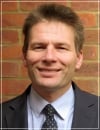
About Paul Hayden
Dr Paul Hayden is a minister of the Gospel and member of the Church at Hope Chapel Redhill in Surrey, England.
He is also a Research Fellow and EnFlo Lab Manager at the University of Surrey.
Comments
Your comment has been submitted and is awaiting moderation. Once approved, it will appear on this page.
Be the first to comment!