Joshua Lesson 42
Joshua 14
The Book of Joshua
Sermon Transcript
Auto-generated transcript • May contain errors
Heavenly Father, bless this gathering this morning. And once again,
we ask you open our eyes that we might see our Lord Jesus Christ
and all those things pertaining to him. It's in his name we pray,
amen. Now, last week we began this
lesson in which Caleb comes to Joshua to claim his inheritance
in the land of promise. Now, if you will recall, some
45 years previous to this occasion was when the Jews first came
to the edge of the promised land. They sent in 12 spies, and evidently
the spies did not all go around in a bunch. They separated because
we read here that Caleb is going to be given the portion of land
that he walked on. That is the portion that he spied
out. So evidently the 12 spies went
in different directions, but they probably talked to one another.
And where Caleb had gone, he found giants, the Anakites. Or according to the way the Hebrews
say it, and in some English translations, the Anakim. But either way, it's
just the descendants of Anak. And they were giants. When the
12 spies came back, 10 of them gave an evil report. They gave
a good report saying, yes, it's a land flowing with milk and
honey. And I mean, you know, the produce is wonderful and
all of this. But then they said, but the people
of the land are giants, and we are like grasshoppers in their
eyes. Now, not all the people in the
land were giants. evidently just the Anakim, where
Caleb had spied out. So he'd evidently told them about
this, and that's all they could see, that's all they could think
about. But now Caleb and Joshua, because Joshua had
also been one of the spies, they were the only two who gave a
good report. The other 10 gave an evil report
that led the whole House of Israel, all of the adults to, in unbelief,
refused to go in and take the land. And so, for the next 40
years about, they wandered about until all of the adults who refused
to go in died in the desert. Then they go in and it takes
them several years to conquer the land before each tribe can
go to its allotment. And now Caleb comes to Joshua
and he says in verse six, you know what the Lord said to Moses,
the man of God at Kadesh Barnea about you and me. I was 40 years
old when Moses, the servant of the Lord, sent me from Kadesh
Barnea to explore the land. And I brought him back a report
according to my convictions. But my brothers who went up with
me made the hearts of the people melt with fear. I, however, followed
the Lord my God wholeheartedly. So on that day, Moses swore to
me the land on which your feet have walked will be your inheritance
and that of your children forever because you have followed the
Lord my God wholeheartedly. And then he goes on to claim
that land, saying to Joshua that he has a rightful claim to it.
Now, last week we mainly just spoke in general of this story,
and the last comment I made was this, that the 10 spies who went
in and all they saw were normal people. They gave the evil report. The one that we know of who saw
the giants, came back with a good report, and we made this application
that whatever else these giants may represent as enemies or problems
for the believer, they certainly can represent sin. Now those
who went into the land seeing only normal-sized people, they thought We're the ones that are going
to have to overcome this. The one who saw the giants with
his own eyes realized there's no way that they would be able
to overcome the giants. Consequently, in full confidence
of faith, he did not shrink back from that task. Those who view
their sins as small things, who refuse to look at them for the
horrible things that they are. And all of us do that to some
degree. We have a certain level of sinfulness that we're content
to live with. And if you talk to people sometimes
and tell them they're a sinner, well, I may be a sinner, but
I'm not a murderer. And what they're saying is, my
sins aren't that bad. Well, those that see their sins
as not that bad are going to feel as though they are the ones
responsible for dealing with their own sin. They think it's doable. and they
are in a state of bondage because they don't see that their sins
are beyond their ability. But those who have been given
an understanding of the greatness of their sin, who realize, like
David said, against you and you alone have I sinned and done
this evil in thy sight. Now, what David was repenting
of in that particular psalm was indeed a notable sin. His adultery
with Bathsheba and then having Bathsheba's husband killed in
order to cover it up. But that's not what made it so
great in his eyes. What made his sin great in his
eyes was simply that this sin was against God. Brother Mahan
used to say there's no such thing as a small sin because there's
no small God to sin against. All of our sins are of equal
sinfulness in the sight of God as David's great sin was, not
because our sins are as destructive as David's sin was, or as, you
might say, high-handed and presumptuous as his sin was. Our sins are
every bit as great as that one, even our so-called tiny sins. They're as great as David's sin
because we're sinning against the same God that David sinned
against. He's an infinite God, and it
therefore increases the guilt of our sin, the seriousness of
our sin, to an infinite level, no matter how small it may appear
in our eyes. But if by the grace of God we
have been enabled to see that our sins are that big, we are led to the conclusion
we have no choice but to trust Him for the removal of it. And, you know, if something's too
hard for you to do, and you know it's too hard for you to do,
you give up. Well, the first part of faith
is to give up. And so when Joshua came back
and gave the report, he didn't say, We can take them. Yeah, they're giants, but we
can take them. No. He said, the Lord will. And that's the essence
of faith. Now, Caleb stands as an example
of faithfulness. And when he came to Joshua, a picture of the Lord
Jesus, He came possessed of a spirit that's not like the spirit of
the world. He came to Joshua to realize
or lay hold of the promise of God. And his words are a lesson
in faith and assurance. His first words to Joshua are
spoken in reference to the promise itself. He said to him, you know,
you know, The thing that the Lord said,
you know it. The Lord had promised him or
has promised us that whatever we ask in the name of Christ,
will be given us. Of course, that doesn't mean
that if we ask for something and then tag on that little,
we ask this in Jesus' name, that we have really asked in the name
of the Lord Jesus. A book, I didn't read it, I just saw
it somewhere, I don't know if it was in a bookstore or in somebody
else's library, but it had an interesting title, it was called
Praying Backwards. and just seeing that title, I
thought, well, I gotta find out what this book is about. And the point
of, the essential point is, he said, the writer said, we always
end our prayers with, in the name of Jesus. He said, that's
how we should begin them. And I didn't read any more, I
don't know what else he said, it may be a lousy book from there
on, but it made me think, that does change the tone or the significance
of that phrase in the name of Jesus. We toss off that little
bit of our prayers kind of as, you know, just a sign-off. Almost,
you know, sincerely, like at the end of a letter. We ask these
things in Jesus' name. But imagine if you came before
the Lord. If you came before He who sits
upon the throne and said, In the name of Jesus Christ, give
me such and such. You know, one of the things that
praying that way would probably do, it probably caused us not
to pray about a lot of the things we pray about. Because, you know,
that's a glorious name. You don't, you don't invoke that name for minor matters. You don't say in the name of
Jesus Christ I want a bicycle or a motorcycle or a car you
know that's that's not the things that we would invoke the name
of Christ for. When we are truly able to invoke
the name of Christ, one of the things we know is that it's going
to be connected to those promises which are in Christ. You can't
invoke the name of Christ based upon your own will. You invoke
the name of Christ based upon the will of God revealed in the
promises he's made in Christ. And consequently, we may go,
and when we pray in the name of Christ like that, based upon
the promises of God which are in Christ, we have this assurance
we will get what we ask for. James said, you have not because
you ask not. And he went on to say, when you
do ask, you ask for selfish motives. It's just something to consume
on your own flesh. The motives in our prayers, you
know, the Lord doesn't look on the outward appearance. He doesn't
listen to the sound of our words. He looks upon our heart. Those
things that we ask, which we're asking only out of selfishness,
they are ignored. But you know, quite often we
don't have because we didn't even bother to ask. You know,
God made promise to Israel about all that he would do for them
and restoring them after the captivity. And when he got done
making all these promises, he said, yet for all these things,
I will be inquired of, of the house of Israel. He said, I'm
going to do them. But they're going to ask for
them. They're going to ask for it. If they don't, they don't
get it. Even the things God has promised,
we are called upon to ask for them. Now, such an approach,
such a bold and confident approach, is not us claiming that we are
worthy or making some demand, some pitiful demand,
based on our ability to perform something. Now that's another
thing I've heard preachers say. You know, when you want something
from God, promise Him something. Sacrifice something. Really? Haven't we learned the Lord is
not going to be paid for His blessings? Period. There's nothing we could give
Him that He needs. You know, when we go to the store
and pay for something, the reason that we're allowed to take the
stuff out is we're giving the store owner something he needs
to keep his business going, something he needs to provide for his family
and all that. What does God need? The Lord said, if I were hungry,
would I ask you? He says, I own the cattle on a thousand hills.
and all the gold and silver in the mines, that's mine. The earth
is the Lord's and everything in it, the universe is His. He
doesn't need anything from us for us to offer something to
Him in order to butter Him up, as it were, so that He will give
us what we want. That's an insult. No. Faith believes that God will
perform everything he said he would perform. And so based on
a promise that God had made through the mouth of Moses to Caleb,
Caleb comes and calls for the fulfillment of that promise.
And all that God has promised us in Christ, we may go up and
possess it. We may claim it. Some of the health, wealth, and
prosperity preachers of our day have a so-called, you know, name
it, claim it. No. We don't get something simply
because we name it, that is, describe it, and then claim it.
God names it. God promises it. And we, it is
not presumption to believe the promise of God. The first time
I came here, I was confronted with something that I have never
experienced in all my life up to that point. and didn't understand
this aspect of the people that were trying to form this congregation
until the last night when I was talking to the man of the house
that I was staying in that weekend, and we were talking, it was after
the evening service. And of the 15 or 16 people, adults,
that were involved in trying to get this church going, As I was listening to him and
the things he said, I realized that nothing he made, or excuse
me, nothing he said made any sense unless about half the people
didn't even profess to be saved. Now where I come from, everybody's
been saved, some of them two and three times. And that there
would be a group of people wanting to start a church And only about
half of them claimed to have been saved. That was very strange
to me. And I stopped him and I said, hold on just a minute.
Are you saying that about half the folks in this group don't
even profess to be saved? And he made this statement. He
said, well, we believe the gospel. We just don't know if we've been
saved. And I said, Oh yeah, and he said,
we don't want to presume. And this is one of the times
I know that, you know, God fulfilled the promise, says don't worry
about what you're saying, what you're going to say when you're
called upon to give an answer, the Lord will give you the answer
at that hour. I just looked at him and I said, it's not presumption
to believe God. It's just unbelief not to believe
Him. Now, we've been given many exceedingly
great and precious promises in the Gospel. But we need not back
away from laying hold of them with full assurance that they
are ours to possess. We have no reason to hold back
from that because we fear it will be a presumption. It's not
a presumption if God promised it. Now, it would be a presumption. to claim something he hasn't
promised. You can hope for it if you want. You can even ask
for it. You're perfectly free to. You can't claim it unless he
promised it. But we can claim everything he
promised. Caleb is confident and even quotes
the Lord in what he said. And then we see the heart and
meat of the matter. To wholly follow the Lord is
a heart matter. Caleb claimed that he did. Now,
that does not mean that there are not times in the life of
a believer when he isn't. He was talking about with respect
to the promise. He always believed that. All the spies knew the same thing. Only Caleb came back with that report. The
good report. Caleb was claiming a promise
made to him 45 years previous. And he says in the 45 years since
then. Now he was 40 when the promise
was made to him. Consequently, he's 85 years old
now. And he makes this statement,
he says, it's now been 45 years and my strength, my vigor is
as strong as it was then. Well, now that's a remarkable
thing, isn't it? Not even Caleb, I'm assuming
not even Joshua was saying that. Yeah. Why? Why could he say this? Now, I
don't know. whether Caleb, maybe the Lord,
just like he did with Moses, who lived 120 years, and at the
end of his life, it says, his eye had never dimmed, his strength
had never failed him. And maybe the Lord had done the
same thing for Caleb. He can, can't he? I mean, it's
not like that's a difficult thing for the Lord. But maybe what
Caleb meant was this, and it's certainly true of every believer,
he was as strong in the faith as he was back then. He had as
much confidence in the Lord at 85 as he did at 40. And he never
did think that it would be by his own strength that he would
defeat the giants in that area that he was promised. And seeing
that his strength, his concept of the strength necessary to
defeat the Antichrists, way back when it was 40, that strength
was going to be the Lord. And now at 85, it's still the
Lord. And the Lord's strength never
diminishes. Consequently, at every stage
in our life, we can with full confidence lay hold of all the
promises They never did depend on our
abilities. So as we see our abilities diminish,
we need not fear that somehow or another we'll lose. We've been given the victory,
says Paul. Thanks be to God who gives us
the victory in Jesus Christ. And Caleb believed his own report.
The very thing that he had preached before, 45 years previous, the
Lord will give us the land, don't worry about the giants. He believed
that. You know that I endeavor every
week to preach Christ and his gospel. I don't want to ever
get in this pulpit and deliver a sermon to you that does not
direct you to Christ and does not instruct you at least some
aspect of his gospel. Why is that? Well, part of it's
because that's what I'm instructed in the scriptures to teach. But
also, that's what I believe. I'm not telling you things that
I do not believe. I heard recently, well, within
the last couple of years, churches whose pastors are atheists. And
they were interviewing one of these atheist pastors. He said,
no, I don't believe in God. I just realize that religion's
a good thing. It helps people. So you're preaching what you
don't believe. Joshua believed what he said
back when he was 40, he still believed it. God's Word is unchangeable as
God Himself. And then in verses 13 and 14, It says, then Joshua blessed
Caleb, son of Jephunneh, and gave him Hebron as his inheritance. So Hebron has belonged to Caleb,
son of Jephunneh the Kenizzite, ever since, because he followed
the Lord, the God of Israel, wholeheartedly. Now, why does Caleb possess this land
called Hebron? He possessed it because God had
put his name on the deed. It belonged to him by divine
appointment. Now Hebron is an important place
in the history of God's people. Sarah was buried there. Sarah,
the wife of Abraham, was buried in Hebron. It was later appointed
one of the cities of refuge and was the home of the priests. For a while, it was the royal
city of King David. Hebron is the resting place of
the spirits of just men made perfect. Sarah was a justified
woman, a justified human, and her place of rest is in Hebron. It pictures Christ because we
rest in Christ. Hebron's a city of refuge. Christ
is our refuge. Hebron is the habitation of priests. And as we saw in a message recently,
all of God's people are priests. Being a royal priesthood, we
dwell in the city of the great king. David later moved his capital
to Jerusalem. But for seven years, I believe,
it was in Hebron. And therefore, we associate it
with the city of the great king, even though at a later time that
was moved to Jerusalem. But we may claim these things
by promise. We may claim rest. refuge and
a home. Why? Because God has promised
it to us. And it's not presumption on our
part to truly rest in Christ, rest from our labors trying to
buy his promises. We have every right to seek refuge
in Christ because God has promised it. And we have every reason
to feel at home in Christ, for God has promised it. All right,
you are dismissed.
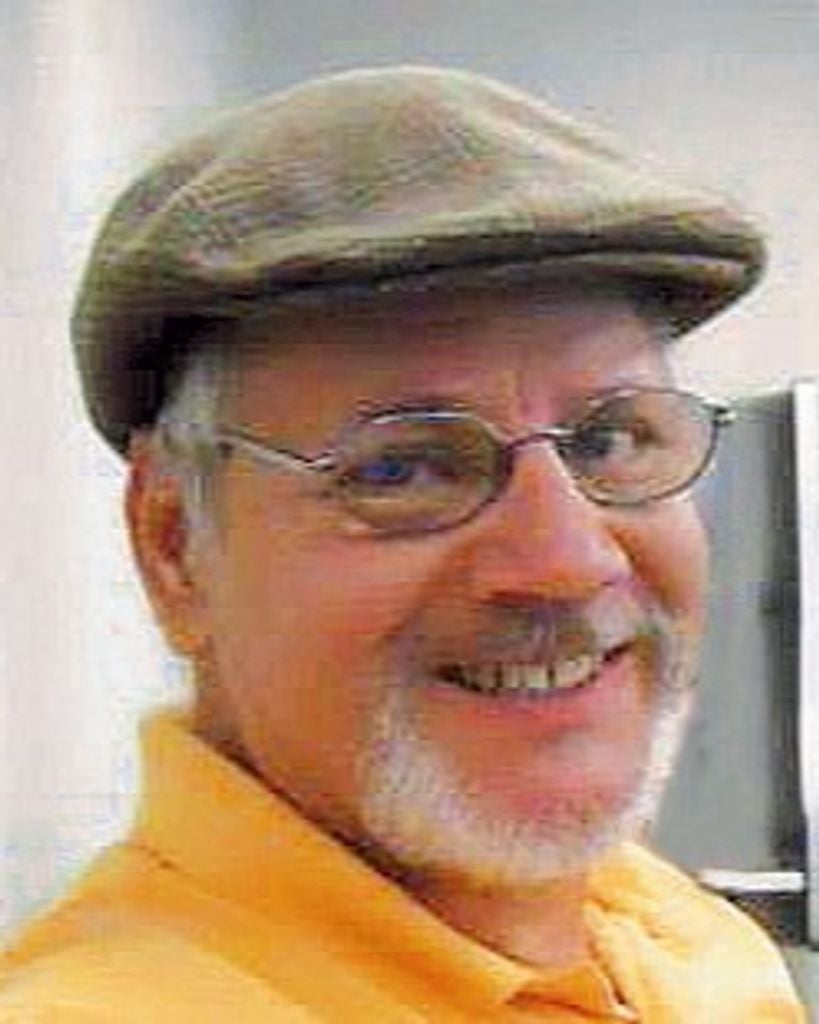
About Joe Terrell
Joe Terrell (February 28, 1955 — April 22, 2024) was pastor of Grace Community Church in Rock Valley, IA.
Broadcaster:
Comments
Your comment has been submitted and is awaiting moderation. Once approved, it will appear on this page.
Be the first to comment!