The sermon explores various approaches to Christ, illustrated through biblical accounts of David's return and the interactions of individuals like Shimei, Ziba, Mephibosheth, and Barzillai. It highlights the difference between outward displays of repentance driven by fear or self-interest, and genuine submission rooted in trust and a desire to align with God's will. The message emphasizes that true faith isn't about performing works to earn God's favor, but rather surrendering to His sovereignty and finding contentment in His grace, ultimately demonstrating a willingness to trust in His plans, even when they differ from our own desires.
Sermon Transcript
Auto-generated transcript • May contain errors
100%
I'll give it a minute here just
to make sure that my hair's right. Yeah, probably not. There's not enough of it there
to figure out whether it's right or wrong, is there? No, I was just going to give
it a minute here so we can find out if, oh, there's one person
watching. So OK, we'll figure there. They're able to watch now. OK,
now. Several people came to meet David,
and the way they approached him serves as an illustration of
how various kinds of people approach Christ. And so it says, you know,
we just read here that the men of Judah came and Shimei was
with them and Ziba and then a thousand Benjamites and Ziba's sons and
servants. Well, they've been stirred up
by the king's letter because the king had sent a letter to
the men of Judah and then some of the Israelites from the northern
tribes were already intending to go. And so these men of Judah
went to meet David. And along or in the crowd was
this Shimei and there was also Ziba. And each of those men had
their own entourage with them. So we have here an illustration,
as I said, of how people come to Christ. Now, it says when
Shimei, son of Gera, crossed the Jordan. So he got into the
spot where David was on the other side of the river. So he goes
over the side where David is. He fell prostrate before the
king and said to him, May my lord not hold me guilty. Do not
remember how your servant did wrong on the day my lord king
left Jerusalem. May the king put out of his mind,
for I your servant know that I have sinned. But today I've
come here as the first of the whole house of Joseph to come
down and meet my lord, the king. Now Shammai is the one who had
openly cursed David. as David was leaving Jerusalem.
He'd been throwing rocks at David and the people that were traveling
with him. And it said he was a man of blood and he killed
the household of Saul. And by the way, Shammai was of
Saul's clan. And, you know, called him a man
of blood and said he was getting, you know, God was paying him
back for all the blood he'd shed of Saul's household and all this. And he took special joy in David's
overthrow and humiliation. He had done that because he felt
certain that David's overthrow would be permanent. He didn't
figure David was ever coming back. But now he's terrified
because David is coming back. And he knows that apart from
David's mercy, he is a condemned man. So Shema makes a very large
show of repentance in the presence of the thousand Benjamites that
were with him. He asked for forgiveness in three
different ways. Then he makes mention of the
fact that he is the first of the tribes of Joseph to greet
the king. Now, the tribes of Joseph is
probably a reference to the ten northern tribes. Strictly speaking,
the tribes of Joseph would have been Manasseh and Ephraim, who
were named after his two sons. But it was sometimes used for
the entire Judah and Israel together, sometimes just for Israel, sometimes
just for those two tribes. But he was probably speaking
here of the 10 tribes. He was the first one of the northern
tribes who had been in rebellion. You know, they are the ones that
followed Absalom. But he said, I'm the first one
to greet the king. Now, Shemai pictures those who
come to Christ out of fear seeking his goodness on the basis of
a mixture of grace and works. He bows, which was the right
thing to do. That's the key. And we are to
bow to Christ. He asked for forgiveness. And
like I said, in three different ways. And that we're supposed
to do. But his next words prove that
his bowing and asking forgiveness was nothing but a show. for he
put some value on what he had done, that is, he was the first
to welcome the king back, as though that would make up for
his previous sin of cursing David and put David in a better frame
of mind to forgive him. Now, there are a lot of people
that say they believe grace, and they'll make a big show of
a profession and confessing their sinfulness. But there will always
be something in there of what they are doing. Even if it's, Lord, look at me,
I'm asking for forgiveness, whatever, there's always going to be some
reference to something they have done or are doing that they think
will move God to be merciful to them. And it's a very subtle
thing, because You know, a lot of people say, you know, for
by grace or you say through faith and not and that's not of yourselves. It's a gift of God. It's not
of works, you know, and they'll boldly proclaim that. And both
fully complain, declare that. Not paying attention to the following
words, not of works, lest any man should boast. The moment
we boast, it doesn't matter what we're boasting about. It's work. We've made it into a work. That's
why Paul said, God forbid that I have glory or boast in anything
other than the cross of my Lord Jesus Christ. He didn't say,
well, I boast that I believe in Christ. No. He boasted of
Christ and Him crucified. That was it. And it was, you
know, he didn't even put any value in the fact that he was
any saving merit in the fact that he boasted only in Christ.
That was just simply a matter of fact that he was declaring
to people. But he didn't come to God and say, well, you know,
I've given up on everything, but Jesus Christ and him crucified. So on account of that, you should
save me. No. You know, us making a profession
of faith does not obligate God to save us. There's nothing you
can do to obligate God. Now, you can count on his promises. No question of that. God will
always fulfill his promises, but you don't put him in a state
of obligation just because you call on his name. If you call
on his name, you only did it because he moved in you to do
it anyway. So there is no, you can't take
any credit for it. But Shabbat I believe he represents
most of Christianity. And in our flesh, he represents
us, doesn't he? We still have that tendency. Because we still have this thought,
there's something or was something different about us that caused
God to save us. I hear some of our Brethren,
you know, they'll call Arminianism a false gospel, and true Arminianism
is a false gospel. But what they end up doing is
making this very fine-structured system of theology, and unless
you believe that system of theology, you're not saved. And I look
in the Scriptures at the sermons recorded in Acts, And most of
them hardly mention anything about some of the, you know,
great deal of the things they're counting so important. But even
though these matters may be important and they should be taught and
they should be believed. Nonetheless, the fact that we
believe them is not the reason that God saved us. Rather, God
saving us is the reason we believe them. Well, after Shemai made this
big display of fealty to the king. Abishai,
verse 21, son of Uriah said, shouldn't Shimei be put to death
for this? He cursed the Lord's anointed.
Now, Shimei had said the same thing when they were leaving
Jerusalem. I'm assuming Abishai had said the same thing when
they were leaving Jerusalem and Shimei was cursing them. He said
to David, shall I go up there and you'll take off his head?
And David said, no, the Lord sent him to curse me. But Abishai
was consistent, because now that Zeib has returned and David is
victorious, you know, Abishai. And Abishai, his cousin to David,
brother to Joab, I believe. And he said, OK, we didn't go
a long way out, but now you're coming back in victory. And this
man cursed the Lord's anointed. He deserves to die. And you know
something? Abishai was correct. The law would have called for
this man's death. But David replied in verse 22,
What do you and I have in common, you sons of Zeriah? And that
would be David, excuse me, Joab and Abishai. This day you have
become my adversaries. Should anyone be put to death
in Israel today? Do I not know that today I am
king over Israel?" So the king said to Shammai, you shall not
die. And the king promised him on
oath. Now, David showed outward mercy to Shammai by promising
on oath that he would not have Shammai put to death on account
of his cursing David when David was on the way out of Jerusalem. Now, it may be that David would
move to show this mercy because of the mercy that God had shown
to him after he had taken Uriah's wife and then taken Uriah's life.
He probably said, how can I call for this man's death when I am
twice as guilty as him because I'm guilty of two capital offenses? But It may also involve this,
when he rebuked the sons of Azariah, he may have been showing one
reason he showed mercy to Shammai, is his realization Shammai's
curse accomplished nothing. Shemai, I mean, he can curse
all he wants. David is, the Lord's anointed.
He says, he says, the king said, excuse me, that should anyone
be put to death in Israel, do I not know that today I am king
over Israel? Shemai may have cursed me, but
his curse accomplished absolutely nothing. He is an insignificant
person. You know, it's easy for us to
get all wound up at those who speak ill of the Lord Jesus.
And there's a certain justification for that. I mean, we love the
Lord Jesus Christ. We don't like hearing His name
used vainly. We don't like to hear His character
impugned. But let's realize this. We know
that Jesus Christ is King. not just in Israel, everywhere.
And all the curses of these men have absolutely no effect on
the Lord Jesus Christ. He is the Lord's anointed. He
is the Lord's Messiah, the Lord's Christ. And nobody can change
that. But David's mercy, his display
of mercy, was only as sincere as Shimei's repentance. And that wasn't very sincere.
You say, how do you know? Well, David likely suspected
the sincerity of Shimei, because a few chapters, well, actually
in the second chapter of First Kings, as he's on his deathbed,
the last thing we have recorded of David saying to his son Solomon,
you watch out for Shimei. Do not hold him innocent. Use your wisdom. to find a way
to bring his gray head down to the grave in blood. David knew
what Jemi was. David or Jemi was just a man
that was scared. And you know, I don't know how
often that fear was the motivation that was used in the evangelistic
efforts of the church I grew up in, in that religion. They'd
preach a message on hell. And people would feel like they
were about to fall into the pit right then, you know, and then
they'd give an invitation. And so people would make these
big displays. And of course, they had been
told if they will ask Jesus into their heart or pray the sinner's
prayer or whatever, God has to save them. So they're doing exactly
what Shimei did. making this big display of repentance
and submission, and then doing what they've been told to do,
thinking that that puts God under obligation to save them. Do we have, or is it, I mean,
is it a valid thing to fear hell? Of course. John Chapman put it one time
when he was related about a time he was talking to somebody he
was working with, And the guy was always talking about how
afraid of hell he was. And finally John looked at him
and said, do you fear hell or do you fear God? We fear God. And that's something that doesn't
go away. Even as believers, we fear God, not in a slavish way,
but we have a reverence for him, recognizing who he is. But if
your whole motivation for calling upon the name of the Lord is
a fear of hell, In all likelihood, it was not born of God. And I
say in all likelihood. It's not my business to make
complete generalized statements. But in my experience, those conversions
born entirely out of a fear of hell don't last that long. Oh, they may keep up their religion,
but the fear of hell goes away. they don't have a whole lot of
interest in following Christ. Now, later on in 1 Kings chapter
2, we see, or excuse me, it's chapter 2 or 3, I can't
remember for sure. We see the evidence of the insincerity of
Shammai's repentance. Because here's how Solomon carried
out his father's words. He brought Shammai into his presence,
reminded him of what had been done. He said, now, you are never
to leave Jerusalem." And he didn't mean even necessarily within
the city gates. He said it the day you cross Kidron Valley. He said, you know, you'll pay
for it with your life. And so David, I mean, Solomon
put those restraints on him. Quite possibly he wanted to keep
an eye on him. you know, not keeping close. You know, somebody
say, keep your friends close, keep your enemies closer. And
maybe that was Solomon's wisdom in this thing. But Shemai agreed
that that was a reasonable restriction lay on him. Later on, a couple
of Shemai's slaves ran away and he heard that they were in Gath.
So I believe he got on his donkey and he went to Gath and he retrieved
those two slaves. and somebody told Solomon. And
so when he got back, Solomon called him in and Shumai said,
well, you know, you know, tried to explain it. He thought that
he had justification for leaving. And Solomon said, I told you.
And he ordered one of the guards to strike him down. And he did.
How do we know that he had he had no real respect for the
king, or he didn't know what the king said. All he feared was the king's
wrath. He didn't fear the king. Consequently, once there was
a promise of no wrath, he had no respect or regard for the
king. And therefore, he figured that the king's command could
be altered by his own wisdom. So Shimei, the man who approaches
God on the basis of a mixture of grace and works. Then we read
of Mephibosheth, verse 24. Mephibosheth, Saul's grandson,
also went down to meet the king. He had not taken care of his
feet or trimmed his mustache or washed his clothes from the
day the king left until the day he returned safely. I wish I
knew how long that was. But when you say all that went
on, it had to be a while. Can you imagine not washing your
feet or your clothes? I mean, you know, this guy was
a mess. When he came from Jerusalem to
meet the king, the king asked him, why didn't you go with me,
Mephibosheth? He said, my lord, the king, since
I, your servant, am lame, I said I will have my donkey saddle
and we'll ride on it so I can go with the king. But Ziba, my
servant, betrayed me. and he has slandered your servant
to my lord the king. My lord the king is like an angel
of God, so do whatever pleases you. All my grandfather's descendants
deserve nothing but death from my lord the king, but you gave
your servant a place among those who eat at your table. So what
right do I have to make any more appeals to the king? The king
said to him, why say more? I order you and Ziba to divide
the fields. Mephibosheth said to the king,
let him take everything. Now that my lord the king has
arrived home safely. Now if you remember when David
left, was leaving Jerusalem, Mephibosheth, and remember who
Mephibosheth was, he's Saul's grandson, David said, Is there
anyone left to the house of Saul that I may show goodness to for
the sake of Jonathan? The only one left was this Mephibosheth.
And he was lame in both feet. So he'd been brought to David
and probably thought, I'm being brought to David to be put to
death. But instead, David says, Um,
no, you're going to be, you're going to stay in Jerusalem. You're
going to live in the king's house and you're going to live in the
king, eat at the king's table with the king's sons. Imagine
that he went from being an enemy to being a son of the king. And
Mephibosheth's response at that point, he says, why do you look
on a dead dog like me? You don't show any kindness to
me. So David now is being chased out and Mephibosheth doesn't
follow him. But Mephibosheth had wanted to. But Ziba pulled
a trick. Mephibosheth, he said, well,
you just let me take provisions for the king. And Mephibosheth
thought that probably a good idea. Maybe Ziba can actually
be some use to the king. I can't, you know. So Ziba went
out there with a bunch of provisions and acted like Mephibosheth was
unwilling to come. But he, Ziba, you know, was the
one behind all this taking care of the king. And when Ziba did
that, David said, all right, you own all of Saul's lands now. See, Ziba had just been the steward
in Saul's household. And he wanted to take care of
that land and give the money from the upkeep of that land
to Mephibosheth. Now he says the land's yours.
That's what David told Ziba. OK, now we move up to this story. David's coming back. Ziba's there. Remember, we read he was there,
but you haven't heard him say anything yet. And I imagine this was a tense
moment for him because he got out of here. Because Mephibosheth
told David the truth of what actually happened. And you know
what? I tend to think David already
knew. And you'll see why in just a minute. But once David gets
the truthful story, he says to Mephibosheth, He don't need to
say anymore. You and Ziba, you split the land.
He can have half, Ziba can have half. And doesn't that seem kind
of odd? Doesn't it seem that the just
thing to have done would have been to give it all back to Phebosheth
and say, give me Ziba and punish him for his deceit and betrayal? That's what I believe he was
doing. He was testing Mephibosheth. After all, he just seen Shemai
put on a big show. But I think he knew Zeiba and
he knew Mephibosheth. And he was going to prove Mephibosheth. And so he says, you can have
half back. Now, if Mephibosheth had been like Shemai, He would
have said, half? Yeah. Wait a minute. I just told
you I would have gone out with you. I've been trained and all
this. And he would have started justifying himself. But he'd already look at the
things he said. He said, you're like an angel
of God. Lefebvre loved David and esteemed him highly. Shimei
neither loved him nor esteemed him. He just was afraid of him.
And then Lefebvre says, so do whatever pleases you. And then he goes on, he says,
all my grandfather's descendants deserve nothing but death from
my lord, the king. But you gave your servant a place
among those who eat at your table. What right do I have to ask for
more? That's what he's saying. And
so David gives him back half, and notice what Mephibosheth
says. Let him take everything, now that my Lord the King has
arrived home safely. What did Mephibosheth prove right
there? His interest was in David. He didn't care about what he
had from Saul. his grandfather. That inheritance
meant nothing to him. He cared only that this one who
had shown him such kindness was now returned to his rightful
place. And I think he felt free to say that because he realized he understood David's
character. I mean, David had already been
merciful to him. He had confidence in David's
mercy. He knew David wasn't going to withdraw it. And if he was
treated as a son in David's household, what need did he have of anything
from Saul, the man of the flesh? Let Ziba And those others who
still in their hearts have allegiance to Saul, let them have Saul's
things. And that's all they get. He says,
I live in the palace. I eat the king's food. What more
could an inheritance from Saul get? And you know, when we think
of it, we deserve nothing but death from the hand of the Lord
Jesus. But instead, We've been brought
into His household. We've been made His sons. We eat at His table. And if in
the process we lose everything that this world has to offer,
so what? I don't want to say that flippantly.
There's nothing wrong with enjoying what's in this world. But really
now, we're sons of the King. What does this world really have
to give us? What could it add to the unsearchable riches we
have in Christ Jesus? So, Mephibosheth's heart was
revealed. You know, when James says that
we're not justified by faith alone, but also by works, he
doesn't mean meritorious works. Our words and our works flow
from our heart. And all James is saying is, if
you really believe Christ, what you do in your approach to Christ
and to God will reveal it. Because there will be nothing
of your own works in it, nothing of your own deserving, nor will
you concern yourself over the loss, the providential loss of
the secondary blessings of this life. you'll say, it may hurt to lose
these things, but I'm still a child of the King. And what more could I ever ask
him or require of him? The next verses tell us about
a man named Barzillai. And this was a very old man,
eight years old, which was very old for that time. And, um, He
was the one who had met David at Mahanaim and brought provisions
to David and to his followers, to his men. Obviously a wealthy
man. Now, notice all of these people
that have been mentioned so far were from the Northern Ten Tribes.
None of them were from Judah, David's own tribe. And yet we have Shemai, the phony,
Ziba, the deceiver, Mephibosheth, the one whose heart has been
conquered by mercy, and then this Barzillai. And Barzillai,
to me, kind of represents the old and mature believer. Because,
you know, this by no means represents Well, he's not coming to beg
a mercy from David because he had previously been against him.
You know, this is someone who's been a supporter of David for
a long time, recognized him as the Lord's anointed and did all
he could to advance David's cause. And so David had said, says to
him, come with me across the Jordan to Jerusalem. I'll take
care of you. You will live in my house." He
says, cross over with me and stay with me in Jerusalem and
I will provide for you. But Barzillai answered, he said,
how many more years will I live that I should go up to Jerusalem
with the king? It's written in verse 35, I'm
now 80 years old. Can I tell the difference between
what is good and what is not? What are you saying here? You're
going to take me up there and give me all this fine food. I
wouldn't know the difference between that and the company that I might,
you know, I knew my sense of taste is, you know, I can't enjoy
these things anyway. He was satisfied with where he
was in life and did not feel as though he needed any advancement.
in his position. Nor did he feel that he could
be any use to the king. He felt he'd be a burden to the
king. All he did, he said, well, he said in verse 36, your servant
will cross over the Jordan with the king for a short distance.
Why? Well, he wanted everyone to know
that he was with the king, that he was on the king's side. You
know, he was no secret admirer of David. You know, people talk
about secret Christians. I don't think there is such a
thing. The Lord said, if you won't confess me in the presence
of this wicked generation, he said, neither will I confess
you in the presence of my father, in the presence of the angels.
So he was going to make sure everybody realized he was on
David's side. But he goes, well, why should
the king reward me in this way? Sherbert, okay? That'll be fine. It's hard, so... You can forgive
me. Do you want Sherbert? Okay, so
one, two, three. Sherbert, okay? Looks like four
or five of them will get us. Yeah. Okay. Okay, have a good one. Call me
if you need me, okay? Okay. And he goes on and he says in
verse 37, let your servant return that I may die in my own town
near the tomb of my father and mother. Mother, he said, just
let me live out my days. I'll be, I'm happy with that.
You know, I think of brother Henry, you know, an old warrior,
but time came when he could no longer fight. you know, when
he moved out to Virginia, where his son pastors a church, once
in a while he'd preach, you know, cover the pulpit for his son.
And then he even had a radio broadcast, but there came a point
when he could no longer do that. And so he contented himself with
just living and hearing of Christ until such time as he left this
world. But he goes on, he said, but
here's your servant, Kim Ham, let him cross over with my Lord,
the King, do for him whatever pleases you. Now, I don't know
exactly how to fit this into any kind of gospel sins, except
to say this, it's just another example of the devotion of Barzillai. He said, I can't be of use to
you, but here, this servant can. He's my servant, you can have
him. And he said, do for him whatever pleases you. Have you
noticed the two people that are sincerely followers of David
have said, do whatever pleases you? And our Lord said the same thing
to his father. He said, I thank you, Father,
Lord of heaven and earth, that you hidden these things from
the wise and prudent and revealed them unto babes. For even so,
it seemed good in your sight to do so." It's what pleased
you. And when he prayed in Gethsemane, he said, nevertheless, not my
will, your will be done. We can stand up in a pulpit,
or I can, and boldly say, we should say, whatever pleases
you, It's easy to say that in front of people. It's another
thing to say it in the presence of the one who has the power
to do whatever pleases him. And yet trust him enough that
you know whatever he does is going to be the best thing for
you. The king said, I like it, the
king, it's like David said, the king said, Kimham shall cross
over with me. and I will do for him whatever
pleases you. And anything you desire from
me, I will do for you." Maybe Kim Ham is, in a sense, representative
of Barzillai when his earthly life was over. Because he said, I will do for
him whatever pleases you. What pleases the believer more
than anything else? To be with Christ. to behold
His glory. And the King has promised us
He'll do that. And He said, anything you desire
from Me, I will do for you. Our Lord says to His disciples,
whatever you ask in My name, I will do it. Now, that doesn't
mean simply that we ask this in the name of Jesus at the end
of prayer. I can't get into all that that would signify. But
the Lord does make good on that promise. and what we truly ask
him for in his name we receive. So all the people crossed the
Jordan and then the king crossed over. The king kissed Barzillai
and gave him his blessing and Barzillai returned to his home. And that's just how we ought
to live our lives. content with the kiss of His
grace and mercy, and just go on about our lives, surrendering
them to the will of Christ, knowing that He will bless us with all
that our heart truly desires. The remainder of the chapter
is just the guys from Judah and the guy from Israel, fussing
at each other about who has the right to take the king home.
I thought, that sounds like churches. Who has the right to the king? I'll tell you who has the right
to the king. All the king's people. All the king's people. You know,
we have a local assembly and we believe some things that we
count important that distinguish us from other assemblies. But at the same time, we do not
declare that others who believe differently on some of these
things do not belong to the king and the king does not belong
to them. There shouldn't be divisions in the
body of Christ, but there are. And we recognize it and acknowledge
it. And we don't put people or consider
them not to be part of the body of Christ because they do baptism
differently, or because they have a few of the law maybe that
we don't agree with. If their heart is for the king,
then they are the king's people. And so we'll leave it there and
pick up the next time we get that point. Well, I just went back to the
screen showing it and Jim evidently responded me fixing my hair and
said, Joe, you have 1 here on top. All right.
About Joe Terrell
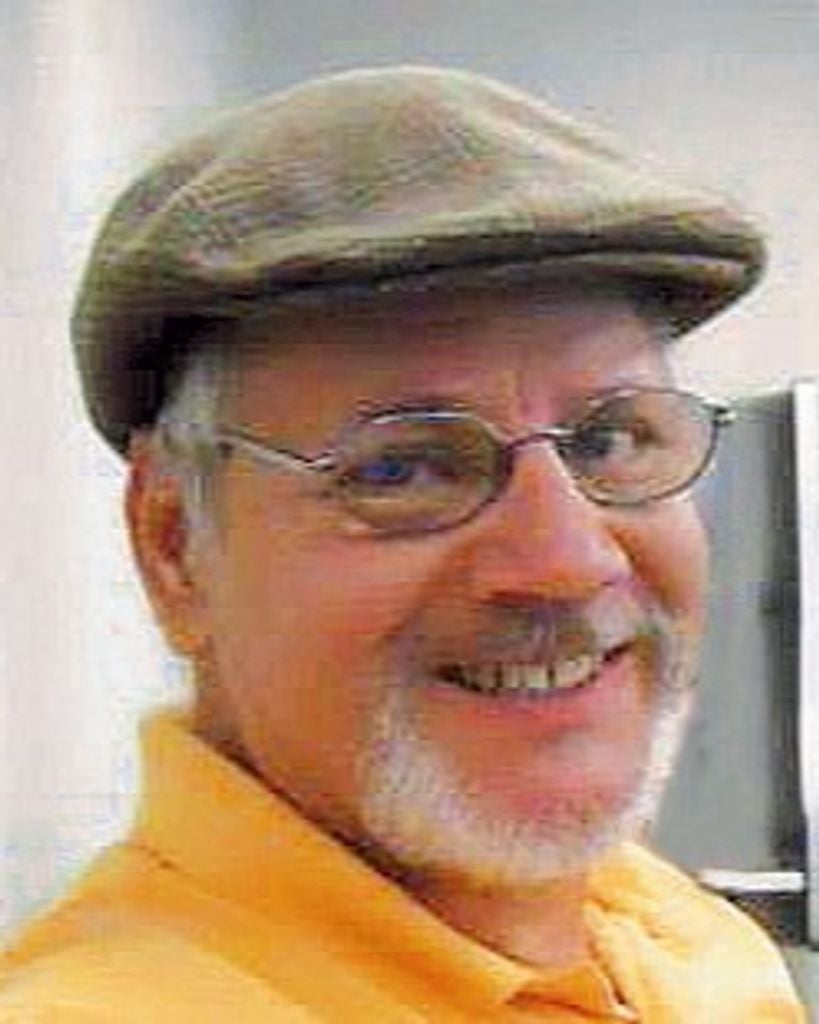
Joe Terrell (February 28, 1955 — April 22, 2024) was pastor of Grace Community Church in Rock Valley, IA.
Comments
Your comment has been submitted and is awaiting moderation. Once approved, it will appear on this page.
Be the first to comment!