If you would now open your Bibles
to the third chapter of the book of Revelation. We'll begin at
verse 1 and read the first six verses. Revelation chapter 3. To the angel of the church in
Sardis write, these are the words of him who holds the seven spirits
of God and the seven stars. I know your deeds. You have a
reputation of being alive, but you are dead. Wake up. Strengthen what remains and is
about to die. For I have not found your deeds
complete in the sight of my God. Remember therefore what you have
received and heard. Obey it and repent. But if you
do not wake up, I will come like a thief. and you will not know
at what time I will come to you. Yet you have a few people in
Sardis who have not soiled their clothes. They will walk with
me dressed in white, for they are worthy. He who overcomes
will, like them, be dressed in white. I will never blot out
his name from the book of life. but will acknowledge his name
before my Father and his angels. He who has an ear, let him hear
what the Spirit says to the churches." Now let me start by getting something
off my chest. I don't know what you call people
from Sardis. Sardines came to mind. But I
didn't think that that was going to work. So I'm just going to
have to call them the folks from Sardis, because I don't know
what you call people from the city of Sardis. Maybe Sardinians. I don't know. But that sounds
like somebody you'd run into on an episode of Star Trek. So
we'll just stick with the folks from Sardis. The Lord loves his church. And the Lord loves his churches. There can be no doubt that he
loves that singular church, which is made up of all believers from
all ages. These people are his elect. They have been chosen in Christ
before the foundation of the world. They are justified by
the Lamb slain from the foundation of the world. And in fact, the
scriptures indicate that that church is glorified. For we read in the book of Romans
chapter 8, where it speaks of God works all things together
for good to them who love Him, and so forth. It says, for those
He foreknew, He predestinated, and those He predestinated, He
called, or justified, those He, I might be getting them in the
wrong order, but justified and called and glorified. In other
words, this foreknowledge that He speaks of is something in
eternity. It's an eternal, timeless thing.
And therefore, all those other things he mentions about these
people are likewise timeless, eternal things. Now that doesn't
mean they don't also happen within the framework of time and space
where you and I live, but nonetheless, This church of which it is written,
Christ loved the church and gave himself for her. This church
has been God's elect from the beginning, has been the church
of the Lord Jesus Christ from the beginning. He has been their
Savior, their Redeemer, their sacrifice from the beginning
before they ever actually existed in the framework that you and
I live. Nonetheless, they existed in the mind and purpose of God
and there they were predestinated, they were called, they were justified,
they were glorified. And our Lord loves that church.
Our Lord loves that church. He loved that church before he
put the first star in the sky. He has loved that church ever
since he began this universe. He loves that church now. And
he will love that church when this world is gone. And you know,
the Lord also loves the churches in this world. Churches like
Grace Community Church in Rock Valley, Iowa. He loves them. They have heard the testimony. That call he issued in eternity
has invaded their lives in time and they have heard it. and they have believed to the
saving of their souls, they've called upon his name. They love
him, he loves them. But he speaks to these two churches,
shall we say, in different ways. To that pure and spotless church
of God's eternal purpose and Christ's eternal sacrifice and
the Spirit's eternal call. To that church, he says, as we
find in the book of Song of Solomon, you are altogether beautiful,
my love, there is no flaw in you. And we rejoice in that,
don't we? It does my heart good, knowing
what I am, it does my heart good to know that my God and my Savior
perceives me as one without spot, without flaw, as beautiful in
His sight. We read before the Scriptures,
it said, this one thing I ask, that I may dwell in the house
of the Lord forever, that I may gaze upon His beauty. And that
makes perfect sense to us, doesn't it? That we consider the Lord
beautiful, majestic, glorious. But when in turn we hear that
the Lord calls us beautiful, we'll understand it, because
we know we're not. But we are beautiful in his beauty. We are beautiful in his eternal
eye. And so he says, you are altogether
beautiful, my love. There is no flaw in you. But to the churches in this world,
he must often say, nevertheless, I have this against you. Nearly all these letters of the
seven have some kind of phrase like that in them. The Lord Jesus
in seeing his eternal singular church, everything's beautiful. But the Lord Jesus also looks
at churches like this one, like the one in Sardis and these other
cities, and he looks at them with a true and penetrating eye
and tells them what they are, not from the aspect of his eternal
grace, but from the reality of how they're acting. And there are some things they
do that meet with his general approval, and there are things
that don't. This church, these churches,
all churches, they need correction. Because unlike that singular
eternal church in the mind of God, which is made up of none
other than God's elect, churches on earth are made up of a mixture
of sheep and goats. Now, I know a lot of churches,
when they form a church, they agonize over how to receive a
member. Who are we going to let in? And
their concern is, they say, you know, we don't want the church
to be polluted with non-believers. Well, our Lord said, not in these
words, but with this attitude, well, get over it, it's going
to happen. He says, the Son of God, He sowed wheat, the Son
of Man sowed wheat, but while He was asleep, the enemy came
in and sowed weeds among the wheat, and they grew up together. And some of the servants said,
should we go up and pull out the weeds? He said, no, if you
pull out the weeds, you're going to pull out some wheat too. Just
let them grow together. The time will reveal which is
which. And when the harvest comes, we'll
take out the wheat and gather it into the barn, and then we'll
set the field on fire and burn the rest. That's why we don't here at this
church have a great big production. or kind of like a gauntlet that
prospective members must go through in order to become members of
this congregation. The biggest thing I've ever told
any of them, and some of you have heard it from me, sometimes
people have come and just like within a week or two, they say,
well, how do you join this church? And I usually say, well, maybe
it's best you don't, because joining a church is pretty big
business, because leaving one is really serious business. Just
like a marriage, since it's such a big deal to leave one, you
better be real careful before you enter one. And I always tell
them, I said, just give it some time. I said, there's nothing
I'll do for a member that I won't do for you. You know, I've told
them, I said, if you go to the hospital, I'll come visit you.
If you need a pastoral visit at the house, I'll be glad to
come. Somebody in your family needs married, I'll marry them.
You know, that's not a problem. I said, but give it some time.
And how often have they given it a little time and then we
don't see him anymore. You see, the gospel, generally
speaking, has the power in and of itself to purge the church
of those who don't really believe the gospel. That is, it has that
power to do it if that's what's being preached. Consequently, we don't have this
big list of things that, you know, people got to check off
to be a member. If they can sit here and listen
to this and not get upset, if they can listen to the preaching
of Christ week after week and say in their hearts and confess
to us, well, this is what I believe. Then we say, welcome, brother.
Welcome, sister. You're one of us, evidently. But the church, no matter what
we do, no matter what safeguards we put up, churches in this world,
the very best of them, have in them those who are not real believers. And therefore, that means there's
things that go on within the general congregation that need
corrected. Not only that, the Church of Eternity is made up
of those who are already glorified and perfect in Christ, and yet
even those of us who believe here in this congregation, would
any of us say we're perfect? No, we generally say quite the
opposite, don't we? Now, one thing we must do, we
must not make a righteousness out of declaring our sinfulness.
And here's how we know, or one way we can know if we're making
a righteousness out of confessing to our sinfulness. Sinful people
need correction. And if correction disturbs us,
we're not really confessing that we're sinful, are we? See, sinful
people accept correction. That is, people who understand
that they are indeed sinful, they're willing to accept correction. When we get riled up at a word
of correction from the scripture, what's it saying about us? It's
saying, we don't think that we're wrong enough that we need to
be fixed. Well, God's people need some fixing yet. In fact,
when we leave this world, we're still going to be in need of
fixing. Of course, our departure from this world will pretty much
accomplish all the fixing we need. But so long as we are drawing
breath, we are in need of the Lord's correction. And it's a
loving correction, but it's a correction. And it can be painful, just like
the correction our parents gave us when we were children. Just
like the correction maybe the policeman gives us when we get
pulled over, or whatever. But it's necessary, it's good,
and to our benefit. And that's what the Lord's doing
in these letters. Knowing this, we're not disturbed or overthrown
when we hear hard words from the Lord. Even though they are
hard words, they are words of love, but they've been attuned
to the need of the hour. They may bring harsh realities
to these mixed congregations, but they are altogether good
for his people. Now these seven churches in space
and time in the Roman province of Asia Minor received letters
which were dictated by the Lord Jesus Christ to John. And John
was to send these letters to the angels of these churches
by which we figure it's the pastors of these churches, the leadership
of these churches, who were to take those letters and read them
to the people. And not simply read them, they must read them,
but then just like I'm doing, I read them and then explain
them, what the Lord would have us to know from them. And we've
looked at them, four of them so far, now we turn our attention
to the church there at Sardis. In this letter, Christ identifies
himself this way. These are the words of him who
holds the seven spirits of God and the seven stars. Now what
is the seven spirits of God? It does not mean seven individual
spirits. We are reading a book that is
full of visions and symbols, and seven is always taken as
a symbol of fullness or perfection. Now, our Lord Jesus Christ, of
Him it is said in John chapter 3, verse 34, that God gave Him
the Spirit without measure. Now, to us, He gives the Spirit
in measure. Nobody in this world has the
Spirit of God without measure. We all just have a portion distributed
to us according to His will to do what needs to be done for
the building up of God's church in this world. But none of us
has all of it. The Lord Jesus Christ does. When
He came into the world, God anointed Him. And remember, the word Christ
means anointed one. What was He anointed with? He
was anointed with the Spirit of God without measure. I know
that as God in human flesh, He could have done anything He wanted
under His own divine steam, if we could put it that way. But
that's not how He came. He came to be one of us. And
therefore, He did not do anything from His own divine power that
we couldn't do. You know, when the devil tempted
him and said, if you're the son of God, why don't you just turn
these stones into bread and fill your belly? Because you're hungry.
You haven't eaten in 40 days and 40 nights. Now, the Lord
had every right and had the power to do it. He could have said,
all right, stones be bread. And he could have had some of
the, well, the best bread that was ever made in all the universe.
He could have had it right there. And it would not have been sin
for him to do it. But you know what it would have
done to him? It would have unchristed him in this sense. If he lived
in a way that you and I could not, he cannot be our savior. If he is to be our substitute,
he must live like we must live. And since you and I cannot turn
stone into bread to feed ourselves, he did not turn stone into bread
to feed himself. His answer to the devil was,
man does not live by bread alone, but by every word that proceeds
out of the mouth of God. And that's a good lesson from
us. Here's some words that proceed out of the mouth of our God here
in chapter three of Revelation, and we need to live upon them.
But we also have this testimony that the Lord Jesus Christ, He
came into this world and He lived as we live. Therefore, whenever
we see Him working some divine miracle, He's not doing it per
se under His own divine power. He is doing it by the power of
the Spirit of God that has been given to Him without measure. He said there in Nazareth in
the early days of his ministry they gave him the scroll of Isaiah
to read from and he went to what we would call Isaiah chapter
61 and he says the Spirit of the Lord is upon me and he lists
some things that the Spirit of the Lord enabled him to do. Heal
the sick, give sight to the blind, preach the gospel, this kind
of thing. And then he rolled up the scroll, gave it back to
the attendant, and he looked at the people and he said, this
day is this scripture fulfilled in your sight. And what was he
saying? He's saying, I'm the one that
Isaiah spoke of, and I have been given the spirit of God to do
these miraculous things. Yet for himself. We see no indication
in the scriptures that he ever did one miraculous thing for
himself. Every miraculous thing he did,
he did under the power of the Holy Spirit for the benefit of
his people. He has this seven spirits or
the sevenfold spirit or the fullness of the Spirit of God. He is the
Messiah sent from God. He is the one sent to be the
Savior of God's people. And therefore, when he comes
declaring himself to be this fully anointed Messiah Christ,
he is saying, I'm one to whom you must listen. And then it
says he has the seven stars. What's that? Well, he told us
what the stars are back in chapter one. He said the seven stars
are the seven angels of the churches. And while it spoke specifically
of these churches in Asia Minor, it also, being the number 7,
speaks of all those whom God has sent out to be preachers
and teachers of His truth, of His gospel. And He says, I've
got them in My hand. I am in the fullness of the Spirit,
and I hold within My hand all My preachers, and when I send
them to you, they come with My authority. so long as they are
bringing to you my message. This is one of those tricky things
about what or how do you esteem or how do you treat a preacher
of the gospel. But I think Paul's a perfect
example of that, as to how we are to do that. And that is we
recognize that those who are sent to us to preach In themselves
they are just men, that's all they are. And they are no more
to be followed than any other man. Their title gives them no
authority whatsoever. And that's why I resist the use
of titles. What need have we of titles for
those who preach the Word of God to us? My authority does
not come from Any degree I ever got at school, it does not come
because in a church in Tennessee, a bunch of preachers got together
and they had a service and then I came down front and they all
kind of gathered around me and prayed. Some, not in my particular
ordination, but in some styles of ordination, the preachers
actually lay hands on them. And in the official world of
religion, when they lay hands on you, that's when you get your
title reverend. You're now a reverend. What?
Those men can't give authority. Brother Spurgeon never was officially
ordained to the ministry. I like his reason for it. He
said, their empty hands on my empty head isn't going to accomplish
anything. But if a man has been sent from
God, and here's how you know he's sent from God, he comes
with the message of God found in this book. And if he comes
to you with the message of God, to reject him is to reject God.
To reject what He teaches, you're not really rejecting Him, you're
rejecting God. Samuel was a prophet and a judge
in Israel, but the people cried out for a king. Now God had told
them, He had said to the people, I'm your God and I'm your king,
that's why you don't need a king. But they cried out for one because
they wanted a king like the Gentile nations did. And so Samuel goes
to the Lord about it, upset, and the Lord said, Samuel, they're
not rejecting you, they're rejecting Me. And so when the Lord here
is speaking, He says, I am Messiah, I have the fullness of the Spirit,
and all the power and authority of God, and I hold these angels,
not by reason of their virtue, but as the general word means,
messengers, in my hand. And if I send them to you, and
they are faithful to declare what I told them to declare,
listen. Listen. Now he says, I have the sevenfold
spirit of God and I have the seven stars, the seven angels,
the seven messengers. And he goes, now I know your
deeds. Now in some of the Greek manuscripts
of the New Testament, our Lord says those words to all seven
churches. In the Greek manuscripts that
our translators relied on, he said it in five of the seven. But even in the two, where we
don't find those words, I know your deeds, he says, I know something.
And it was related to what they were experiencing or where they
were and what they faced. But here's the point. He says,
I have the sevenfold spirit, therefore I know. your deeds,
I know what you're doing. For good or bad, the Lord knows
what we do. He knows what all these churches
were doing. He knows what's going on in all the professed churches
in this town, in this county, state, United States, in the
world. Every place that says they are a church of the Lord
Jesus, no matter what denomination, the Lord knows what's going on
there. When He was here, it was said of Him, He did not have
any need that men tell Him what they were thinking, because He
knew what was in men. And that was in the days of His
flesh, but there He was once again filled with the fullness
of the Spirit of God. And now as the glorified Messiah,
how much more might we say? He knows. He says, I know your deeds. Now, if Christ says, I know your
deeds, what can we say other than this, than to note that
Christ pays attention to his churches, and he sees what happens
there, he cares about what goes on in the churches, and he reacts
to it. And you and I should be anxious
to know what he sees about us. And what he says in correction,
we should indeed learn to live by every word that proceeds from
the mouth of our God. Now he says, I know your deeds
and that you have a reputation of being alive. This church had
a reputation. Now our translators use the word
reputation, and that's the sense of what's there, but strictly
the word is name. And I want to point that out,
that he says you have a name that you're alive, because here
at the end it says that those who overcome, he says I'll never
blot his name from the book. You see, there's some people
got a name they don't deserve. This church had a name it did
not deserve. He says, you have a name. People
say good things about you. People say that's a going thing
going on over there. That church in Sardis is something
else. Other churches ought to be like that church. That's a
living, happening church. The Lord said, no you're not.
You've got that name. But you are that way in name
only. You are dead. Now it's important
to note that the Lord is not saying that the individuals within
that church were spiritually dead. You say, how can you tell
that? Well, you can't tell it from the English because we do
not differentiate between singular and plural when we use the word
you, but in the Greek it did. And it's singular. He's speaking
to the church. He's not saying the people in it don't know God.
He's not saying that the people in there don't believe the gospel
and all this. He's saying the church as a singular entity is
dead. Now what does that mean? I'm
not altogether sure. But I know this, it's not good.
Dead's never good. Living is good. But we wanna
live not in name only, we want to live in actuality. But I think
we can gain some sense of the problems that were going on there
in the church at Sardis because of what he tells them to do.
He says, wake up. Wake up, strengthen what remains
and is about to die. For I have not found your deeds
complete in the sight of my God. Now, I'm going to be honest with
you. I wrestled over this scripture a lot because it just seemed
like there were things in it that were conflicting with things
that I already believed and things that I've taught you for many
years. It almost sounds like the Lord is saying to them, you
need to wake up because you're not doing enough. Your deeds aren't complete. There's
some things you're supposed to be doing that you aren't doing.
But I got to looking into thinking about it. And you know what?
I came to this conclusion. Their deeds were incomplete because
they were doing too much. So that doesn't make sense. Can
you do too much? Oh, yes, you can. Now, he did
not mean this. He did not mean that their deeds
were incomplete with respect to righteousness. Why? Because
for every believer in the Lord Jesus Christ, he is perfectly
righteous in Christ. And God has never called upon
us to establish a righteousness. Never. He has called us to believe
for a righteousness. And if we believe we have a full
and complete righteousness, which is God has already said his approval
to God has already said, this is good enough. It's the righteousness
of his son, the Lord Jesus Christ charged us as though we did it.
So when he says your deeds are not completed in my sight, he's
not saying you're not acting righteously enough. Of course,
we're not acting righteously enough, but our righteousness
does not come from our actions. Does it? What could he possibly
mean? Well, I believe that he was saying
that their deeds were not complete because they were polluting the
deeds that they were supposed to be doing with deeds that they
shouldn't be pursuing. What do I mean by that? Well,
remember he said, you have a name, you have a reputation, that you
are alive. but you're dead. What's that
mean? It means that when men saw that
church, they were impressed. But you know what our Lord said
about the judgments of men? That which is highly esteemed
among men is an abomination to God. How many churches are striving
to impress men? How many religious organizations,
if you could really dig into what they're about, you would
find that lying at the root of all they do is an attempt to
gain the approval of men. And what things do churches and
religious organizations do in order to gain the approval of
men? Well, they follow the rules of
men. They make big displays of how righteous they are. Now,
brothers and sisters, I have no problem if somebody's in a
restaurant and from a truly thankful heart, when they get their meal,
they quietly bow their head and give thanks. I have no problem
with that. But I know a lot of people do that because they want
to be seen doing it. Say, how do you know that? Because
I did it. And I assume there's other people like me. And you
see, that's highly esteemed among men. Most religious folk, they
go in a restaurant and they look across the way and they see someone
praying and they go, now there's a real Christian. Well, maybe
it is, I don't know. But I know that the showier the display,
the less likely there is a reality to it. When I was in my first year of
Bible school, we'd go to a local pizza place. And if we were truly,
simply thankful to God for the food that we had, We could have
each one of us just quietly thanked God from our hearts, but instead,
and this was not a Christian pizza parlor, you know, it was
just a pizza place. Pizza would come and there might
be eight or 10 of us and we'd stand up and quite often I was
hanging around with other people from the choir like I was, so
we could sing reasonably well and we'd stand up and sing the
doxology. Why did we do that? Well, we
told ourselves we were making a bold witness for Christ. What
we were really doing was making a witness of how good we thought
we were to the people eating pizza. And you know, I'm thinking that's
some of what was going on in this church. They were gaudy
in their religion. They were showy. They were doing, maybe they were
trying to do what today is the big thing in conservative evangelicalism. They say, we've got to impact
the culture. Who said we have to impact the
culture? I've never seen anywhere in scripture
where the Lord Jesus Christ said, go out and change the world.
He never did. He never said, now I'm sending
you out in the world to stop people from sinning. I want you
to establish a democratic republic, because that's really what I
came for, to set up a certain kind of sociopolitical system
in this world. Our Lord did not give His life
to establish the United States of America or anything else.
He did not lay down His life so that you and I might be granted
the right of free speech or free assembly or the right to carry
a gun or anything else. That's not what the Lord came
for. He had something much more important on His agenda than
the social structure of this world. Now, I'll say this, when
the church does what it's supposed to do, it will have an impact
on the culture because it has an impact on people. And the
culture is made up of people. But when churches think that
it is their job, when religious organizations raise up with political
agendas and social agendas, and we've got to stop these people,
we've got to stop that, and we've got to get prayer back in schools
and all that. Wait a minute. God never sent
us to do that. It may look like churches that
do that are really alive and really powerful. You know what?
They're dead. They may have actual believers
in them, but their testimony is dead because they aren't testifying
of the gospel anymore. They had the reputation they
were alive, but they were dead. Maybe they were one of the bigger
churches, I don't know. But their deeds were incomplete
because they were doing deeds they had not been sent to do. And people asked our Lord when
he was here one time, they said, Master, what should we do to
do the works of God? And I mean, that's a typical
religious question. We'd have probably asked it if
we'd have been there. I mean, here comes this teacher teaching
something different than what other teachers had taught. And
so they said, okay, we've been listening to you. All right,
what's your rules? You know, you're teaching, what's
the things we're supposed to be doing so we can say we're
doing the works that God requires? And the Lord Jesus said, this
is the work that God requires, that you believe on the one whom
he sent. See, we don't have works, we
just have work, a work, believe Christ, trust him, worship him,
follow him. That's the work God has given
us to do. And if we busy ourselves with something else, our works
will not be complete. What does he say to them? Remember
therefore what you have received and heard and obey it and repent. Since he told them to remember
something, it's obviously they had forgotten something. And
maybe one thing they forgot is that everything they had, they
had received. Look back at 1 Corinthians chapter
four. 1 Corinthians 4, verse 7. He said,
Remember therefore what you have received.
Now in 1 Corinthians 4, verse 7 it says, For who makes you
different from anyone else? What do you have that you did
not receive? And if you did receive it, why
do you boast as though you did not? Maybe part of their problem,
I suspect very strongly, part of their problem was they had
this great reputation among men and they started to pat themselves
on the back and forgot that every spiritual blessing they had,
they had simply received it as a gift. They didn't earn it. They didn't scratch it out of
the ground. They didn't dig it up like a miner digs it up or
chop it down like a timber man takes down a tree. They had, as it were, spiritual
gold, but they were acting as though they had actually mined
the gold themselves. He said, remember what you received. And what you learned, well, what's
the first thing we receive? Well, it's connected with learning.
The first thing you and I ever received that was of any spiritual
benefit or value is we received the gospel. Paul says in 1 Corinthians
chapter 15, He says, now brothers, I want
to remind you of the gospel I preached to you, which you received and
on which you have taken your stand. And he goes on to say,
I delivered unto you as a first importance that which I also
received. Now, you and I didn't go out
and find the gospel, did we? Well, we were just like everybody
else, groping around in the dark in religion. We never found the
gospel. Christ came and dumped it on
us. He handed it to us. He did more than that. We were
blind. He opened our eyes. We were dead.
He gave us life that we might hear what the Spirit of God had
to say. He gave us His Spirit so that we'd know the gospel.
Brethren, do we have the gospel? Yes, thank God we do. Can we
boast in that? No, we cannot. We'll boast in
the gospel, but we can't boast in the fact we got it. Because
we didn't get it by our own efforts. God dumped it on us like rain
from heaven. We received the gospel. We received
Him. He came to us. It's written,
He came unto His own and His own received Him not, but as
many as received Him, to them gave He the power to become the
sons of God. Now why did some receive Him and some receive
Him not? Because they were given the grace to receive Him. We
receive the forgiveness of sins. I'm going to have to go through
these quickly. The time went by, I can't, I'm going to say
the time went by quickly than I suspected. It went by at the
same pace as usual. I just took more time than I
expected. We receive the forgiveness of
sins. We receive not the spirit of bondage, but the spirit of
adoption. We have received the calling.
What's my point here? We've received all these gracious
things. And he says, remember what you
received. Get back to the beginning, to
those early things. You've added on so many things
that you have quit doing that which you did at the beginning.
If you do not wake up, I will come like a thief, and you will
know not what time I will come to you. Speaking again of coming
to the church. Churches that get filled with
pride because they have gained for themselves a name, They become
dead, and if they do not repent and humble themselves in the
sight of the Lord, then the Lord will come and He will disperse
them or do whatever, and they will no longer have a good name. Yet you have a few people in
Sardis who have not soiled their clothes. They've not soiled their
clothes with the pride of thinking that what they have, they got
by their own hands. He says, they'll walk with me
dressed in white. No matter what the church does,
whether the whole church repents or continues on in its rebellion
and in self-righteousness and its self-gained name. Those who know who they are,
and who trust Christ and remember what they've received and that
they received it by grace, they will walk with me dressed in
white for they are worthy." You say, worthy? I thought we said
that people weren't worthy. They are worthy because they
have trusted the Son and the Son has made them worthy. They're
worthy in Christ. He who overcomes will alike them
be dressed in white. That's for anybody, anywhere,
anytime, who overcomes this temptation to make a name for themselves
and glorify in their name, like the church at Sardis was doing. They'll walk in white like all
the others who've done the same thing. All those others who say,
I want no other name than the name Christ upon me. Call me
nothing else than Christian, simply one who believes Christ. Here's what I like now. Well,
I like all of it, but this point was glorious to me. Remember
he says, you have a name that you're alive, and then he says,
he who overcomes will like them be dressed in white, and I will
never blot out his name from the book of life. Now, let me
ask you, what name do you want? Do you want the world's name
that you're alive? Do you want the world's approval? Even the
approval of other churches? They say, now that's some church
over there. Or do you want a name written
in the Lamb's book of life? Written with a pen that has no
eraser. I'll never blot it out. I'll
never erase it. I'll never cover it up. That name. Is there forever
I will acknowledge his name before my father Oh, we love to have
a name before the world christ says that one who trusts me completely. I mean, that's all he does He
trusts me I will mention his name before
the father We look to get our name in the
newspaper And generally the only time we get in the newspapers
when we got pulled over But you know, we like to see our name
in the newspaper. We think it'd be something if
it's some big public gathering, our name got mentioned. Here's a place to have your name
mentioned. Here's a person to mention it. Jesus Christ, the
son of God goes before his father and names our name. He said,
Father, this one belongs to us. He's dressed in white. He's worthy. Let him in. He who has an ear, let him hear
what the Spirit says to the churches. We want to have a decent reputation
among men. We don't want folks to think
we're awful, but I know this. If we follow the lamb, the world
is not going to think much of us. But that's all right. I'm not interested that the world
gives me a name that I'm alive. I want the father to assign me
a name that I'm alive. Because if he says I'm alive,
Nobody can make me dead. And that's pretty good. Oh, may
the Spirit of God give us all ears to hear.
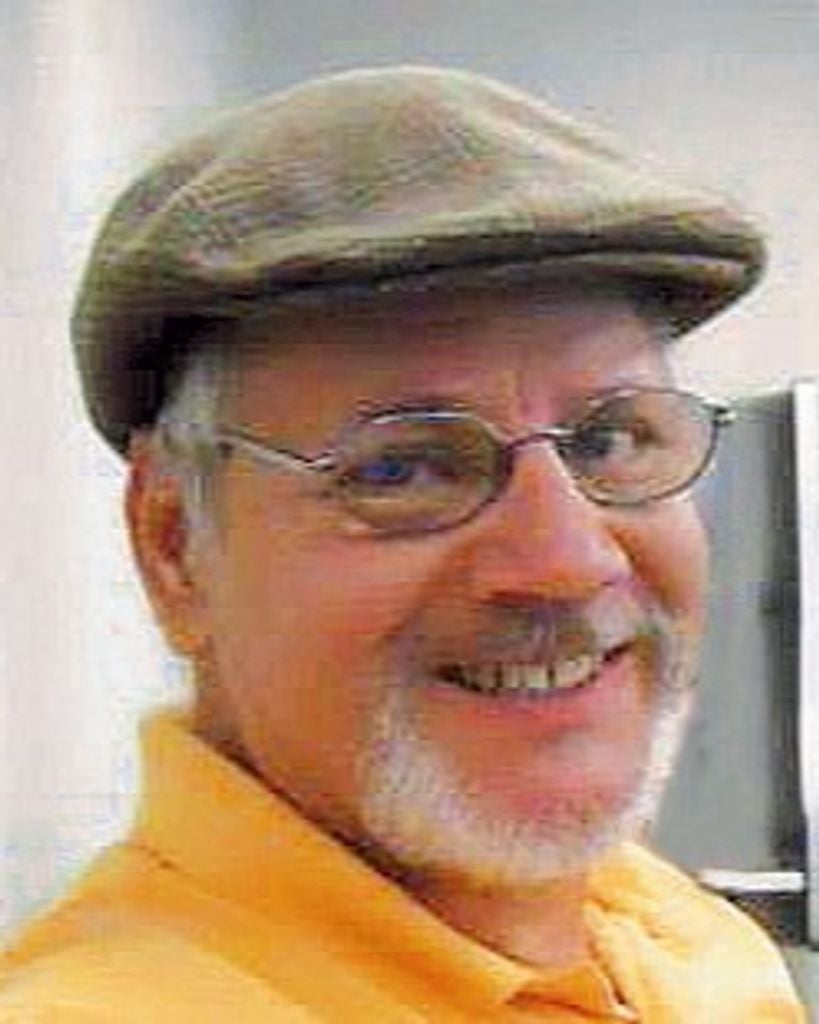
About Joe Terrell
Joe Terrell (February 28, 1955 — April 22, 2024) was pastor of Grace Community Church in Rock Valley, IA.
Comments
Your comment has been submitted and is awaiting moderation. Once approved, it will appear on this page.
Be the first to comment!