Bootstrap
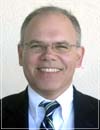
Lance Hellar

I Kept Back Nothing Profitable

Acts 20:17-38
Lance Hellar October, 6 2019 Audio
0 Comments

Sermon Transcript

Auto-generated transcript • May contain errors

100%
Well, let's see. As usual, it's really a delight
for Robin and I to be with you all. It's been a few years, and
well, probably about four years, but Robin and I were looking,
we were telling Norm and Nancy that we were just looking forward
so much to the time being here. I preached last week at a church
down in California, and I told Robin, Robin and I were talking
about it afterwards, and we said, well, we're done now. We've just
got Norm and Nancy and the folk up there in our church in Houston,
and that's like home and home. And that's how we really feel.
The Lord, I think, has just blessed our fellowship with Norm and
Nancy and with you folk over the years. And we're just so
thankful for that because we know that that's the blessing
of the Lord to us. And it's just so easy for us
to be here and visit with you all. And we're just thankful
for that. And this morning, I turned to
Acts chapter 20. You know, Norm mentioned he asked
me to take this meeting also. And I thought, What I would do
is speak about something from the Word, but about something
that is a real concern in not only missionary work, but all
gospel ministry. And I think some people tend
to, well many, don't think about this aspect of missionary work.
As the Lord, in His grace, raises up a people to Himself, as you
go forth, you know, as a missionary, you go out, you go and preach
the Gospel of God's grace, looking to the Lord to do this marvelous
work of salvation in the hearts of His people, calling them out.
And as the Lord does that, then you gather them into bodies of
believers and wherever the Lord has called them. And as you teach
them and seek to raise them up in the faith and grow them in
the fullness of Christ, well, what happens then? You look to
the Lord to raise up men to shepherd these flocks. And I'll tell you,
there is nothing more frightening for a missionary to be in this
place of considering who it is. Who is the Lord raising up? Who is the Lord appointing to
pastor, shepherd these churches? And, you know, in that first
generation, if I could put it that way, of seeing churches
established, well, that's one of the works that rests on the
missionary. Once a church is established,
a pastor is appointed, then from then on, that's in the hands
of the church. But until that happens, there's
this great responsibility, and this is what we see Paul sending
back Timothy and Titus in these churches that had been established
to do what? Appoint pastors in every church. Until that point, there's a lacking.
That's how the scripture puts it. We know the Lord wants to see
men raised up to pastor these churches. But how do we know? How do we
know who it is? Well, as always, the word is
going to tell us, isn't it? I'd like to speak a bit about
that. We can't just touch on it briefly. And I'm going to
speak from Acts 20. Let me just read that just to
bring our minds into the right channel here. And I'll try and
keep this short and finish up in time. But this is a wonderful
passage. We all know it. It's Paul as
he's about to leave that church there at Ephesus. And he knows
it's the last time he's going to see them. and he calls together
the elders of the church there in Miletus. Let's just start
from verse 17. We read, From Miletus he sent
to Ephesus and called for the elders of the church. And when
they had come to him, he said to them, You know from the first
day that I came to Asia, in what manner I always lived among you,
serving the Lord with all humility, with many tears and trials, which
happened to me by the plotting of the Jews. How I kept back
nothing that was helpful, but proclaimed it to you and taught
you publicly, and from house to house testifying to the Jews
and also to the Greeks, repentance toward God and faith toward our
Lord Jesus Christ. And see, now I go bound in the
Spirit to Jerusalem, not knowing the things that will happen to
me there, except that the Holy Spirit testifies in every city,
saying that chains and tribulations await me. But none of these things
move me, nor do I count my life dear to myself, so that I may
finish my race with joy, and the ministry which I received
from the Lord Jesus, to testify to the gospel of the grace of
God. And indeed, now I know that you
all, among whom I have gone preaching the kingdom of God, will see
my face no more. Therefore, I testify to you this
day that I am innocent of the blood of all men, For I have
not shunned to declare to you the whole counsel of God. Therefore,
take heed to yourselves and to all the flock among which the
Holy Spirit has made you overseers, to shepherd the church of God
which he purchased with his own blood. For I know this, that
after my departure savage wolves will come in among you, not sparing
the flock. Also from among yourselves men
will rise up speaking perverse things to draw away the disciples
after themselves. Therefore watch and remember
that for three years I did not cease to warn everyone night
and day with tears. So now brethren, I commend you
to God and to the word of his grace, which is able to build
you up and give you an inheritance among all those who are sanctified.
I have coveted no one's silver or gold or apparel. Yes, you
yourselves know that these hands have provided for my necessities
and for those who are with me. I have shown you in every way
by laboring like this that you must support the weak. And remember
the words of the Lord Jesus that he said, it is more blessed to
give than receive. And when he had said these things,
he knelt down and prayed with them. Then they all wept freely
and fell on Paul's neck and kissed him, sorrowing most of all for
the words which he spoke, that they would see his face no more. And they accompanied him to the
ship." Now, Paul knows, as we just heard,
that these are the last time that he's going to see these
men. And he's called them from Ephesus. and meet them there
at Miletus, for what reason? He has a great concern for that
church, for the Lord's people that have been raised up. And
he wants to speak to these men about the ministry that the Lord
has given to them, and what that ministry is, and who are the
men that the Lord has called? What is the work of the ministry?
This is what Paul is saying. In effect, he's answering all
of these questions. To what ministry have you been
appointed? Who's called you? Who's appointed
you? Well, Paul, in effect, tells them, look at
me. Look at me and consider the ministry
I've had among you in these last three years. See, let's look
in verse 18. What is he saying? And when they
had come to him, he said, you know, from the first day that
I came to you from Asia in what manner I always lived among you. See, and this is what this is
what he's saying. Now he's going to go through and he's going
to speak about the ministry that the Lord gave him among them.
And in doing that, he's saying, consider me. This is the ministry
of the gospel. This is the ministry that the
Lord has called you to. Carry out this work. As he leaves
and as he departs, he knows a whole lot of things are going to be
happening. And he's concerned for this flock of God there. Now, Paul was mindful of something. that you and I forget. It's hard
to believe that we do, but we do. Paul recognizes that this
church is the church of God. It's not his church. We go about our ministry. I go
about the ministry in New Guinea, and you're busy. You're doing
lots of things, and you're looking to see, preach the gospel, all
of these good things. See, church is established and
the same is true of here. And you begin to think of it
as your work. And when you start thinking of
it as your work, what do you start thinking about? Who do
you start depending upon? Yourself. And you start depending
upon yourself for the success of the work. And Paul, look there
in verse 28. If there's any central verse
for all that he's going to talk about, it's in verse 28, isn't
it? Here's what he tells these men, therefore take heed to yourselves
and to all the flock among which the Holy Spirit has made you
overseers to shepherd the church of God which he purchased with
his own blood. It's God's church and it's been
bought with a great price, hasn't it? It's been bought with the
blood of God is the words that Paul uses. You know, if all angels and all
men and all worlds were given, they wouldn't even approach the
worth of one drop of this precious blood of the Lord Jesus Christ.
And Paul is mindful of this. It's not his church. It's a purchase
that God has made of his people. Here, it's a distinctive purchase
too, isn't it? He didn't purchase the whole
world. He purchased his church with his own blood. And Paul
could never forget this, could he? He could never forget this. Why? Because he once persecuted
the church of God. You can see in all that Paul
writes that he never forgot this, did he? He could never forget
this. You can hardly read in any of
his epistles without him speaking of Christ. I don't know if you've
ever thought of that. Just read through any epistle
of Paul, and you can hardly go a few sentences without him speaking
about Christ, because he knows that Christ is everything, and
to Paul, Christ is everything. He goes right in the midst of
great doctrinal truth that he's laying out. He just breaks off
into wonder and praise at the magnificence of who this person
is, the Lord Jesus Christ. Here he was. What does he tell
Timothy? You remember that, don't you? He says, here I am, a blasphemer,
a persecutor, an insolent man. that God would call him, the
one who wreaked havoc among the church, that God would call him
into this glorious ministry of preaching the gospel to see churches
built up and established. And Paul wants these men to know
about this ministry. He has a deep concern about it. And you know, Let's just remind ourselves again,
too, of this work. Who does it? You know, who does
it? I was talking to Norm about this.
Turn over, keep your place here in AX, but turn over to John. John chapter 6, yeah. Turn over to John chapter 6 for
a moment. If there's anything, Mike and
I were just talking about this, both Mikes in fact, that if there's
anything that's an encouragement to a missionary, to any minister
of the gospel, here in the Dalles, it's that Christ does the work. He does. He does, you know? I want to look at these verses
in 35 on down, but let me just remind you of the context of
Christ as he speaks here. He's just performed, this is
John chapter 6 in verse 35, but Christ has performed that great
miracle of feeding the 5,000. And here, think of this, think
of this. Here he has been preaching to
these people all day, the greatest preacher the world has ever known
and ever will know. Think of that. We esteem preachers,
don't we? Well, can you imagine what it
would have been like to hear Christ preach? Every word perfect,
exactly the right tone, every word truth, not marred or tarnished
by anything, by wrong emotions or wrong thoughts or all the
things that we as His saved sinners have to struggle with, you know?
Norm would know this. I spend more time trying to take
out everything that shouldn't be there than almost that I do
in terms of what I preach. But not Christ. One who knows
the heart perfectly. And here he was preaching, and
he does this miracle, marvelous miracle, and feeding this 5,000,
and they all are fed until what? Until they're completely satisfied. And there's baskets and baskets
of abundance left over. And then he goes across the sea,
and all these people follow him. Why did they follow him? For
their bellies. if there's anything that shows
the hardness of the sinful heart of man, this is it. And they
come to him and they say, what work shall we do? He speaks to
them, seek the food that isn't, well perish, but seek the food
that will be for everlasting life. And you know, that's not
what they want to hear. Alright, well what work? What
work should we do that we would do the work of God? And he tells
him, this is the work. Believe on him whom he sent. And then what do they say? What
sign will you show us that we might believe? What sign? Can you imagine that? They've
just seen this great miracle. Beneficiaries of this marvelous
miracle that he's done Well, what sign will you show us? They
did not believe. And here is Christ. Now he says,
I am the bread of life. Oh, I am the bread of life. He who comes to me shall never
hunger. And he who believes in me shall
never thirst. What grace! What gospel! Verse 36. But I said to you that
you have seen me and yet do not believe. You know, if that's
all we knew, it would be hopeless, wouldn't it? You would think,
how can anyone believe? How can there ever be any success? Look at the hardness of the heart
of natural man. It will not believe. Will not
believe, but verse 37, now listen. The success, and this is the
confidence that we have as missionaries. This is the confidence that every
gospel minister has. All that the Father gives me
will come to me, and the one who comes to me I will by no
means cast out. All, all that the Father gives
me, not one will be lost. Why? Because this is the one
who does the work. He's the one that the father
has put the work into his hands. Not mine. Not my hands. Not Norm's
hands. Not your hands as the folk here
in the Dalles. It's in the hands of this glorious
person. And if it's in his hands, the
work is certain. It's assured. And Robin and I
are in Papua New Guinea. And we know that his work is
going to be accomplished. Why? Really, we're not doing
the work. And I mentioned this earlier,
Norman I. Fellowship, too, that all the
work that I do of myself, in my own strength, in my own wisdom,
will be burned up. It'll be burned up. But what
about Christ's work? The work that Christ does in
and through me? That work is a lasting work,
isn't it? It's a work that will never fade away. It's a work
that is everlasting. And listen, verse 38, For I have
come down from heaven, not to do my own will, but the will
of Him who sent me. And here's His will. This is
the will of the Father who sent me, that of all He has given
me, I should lose nothing, but should raise it up at the last
day. And this is the will of Him who sent me, that everyone
who sees the Son and believes in him may have everlasting life,
and I will raise him up at the last day." You know, and this
is all bound up in that, turn back to Acts chapter 20, this
is all bound up in that statement when Paul says that this is the
church of God which he purchased with his own blood. If that's
the case, then he's going to do the work, and he's going to
bring it to fruition, and nothing will be lacking. Nothing will
be left. It'll be complete, and full,
and perfect, because it's in the hands of the Lord Jesus Christ. And so, as he speaks to these
men, he wants to remind them of these things. And he wants
to remind them of something, too, that is so important. that
if he's the one who does the work, well, who is it that appoints
men to shepherd these churches? Well, it says right there, doesn't
it? Among whom the Holy Spirit has made you overseers to shepherd
the church of God, which he purchased with his own blood. And, you
know, I don't think there's hardly anything more important in the
work of the gospel than to see men appointed who God appointed,
not men appointed that we appoint, not men appointed that I appoint. And, you know, right now in the
area that we work in, in the Minyami area of Papua New Guinea,
there's 11 small churches that the Lord has raised up through
the work of our co-workers, through our work there, and there's preachers
in all of these churches. There have been for many years,
but it's just in four of these churches that I've had the privilege
of appointing men to pastor the church, to shepherd these folk. And why is that? Because if these
men or the appointment of God, then
it's not in our control, in some senses, is it? Well, in all senses,
I should say. It's not in our control who and
when men are appointed. And so you continue in the ministry,
preaching, teaching, and as time has gone on and the Lord has
raised up preachers in these churches, then I gather them
together and continue to to seek to see them grow up in the grace
of the Lord, and manifest, see evidence of the gifts that the
Lord has given them in terms of preaching and these other
things, and wait upon the Lord. And that's the hard thing, isn't
it? Because we want to just go ahead with our plan and see things
get done. And this is one of the hardest
things, is for us, it's not hard for the Lord, We're not supposed
to just sit and wait a lot of times. Work, work, but in terms
of what the Lord purposes to sit and wait upon him to make
clear who it is who he's appointed to shepherd these churches. Let me say too, see there's pastors
and preachers in all of these churches, but every pastor isn't
a preacher. is a preacher. Every pastor is
a preacher, but every preacher isn't a pastor. You know, and
this is so important. You know, and I think we would
have a lot less grief here in the States today, too, if that
was recognized. Let me say that again. Every
pastor is a preacher. Isn't that true? But there are
men who are preachers. The Lord is gifted, given a ministry. That doesn't mean, in and of
itself, that he's called them to pastor a church. And there's
There is nothing that will cause more havoc in a church than to
appoint a man that the Lord hasn't called, and how often that happens. And we've just seen that in multiple
instances, tragically, in these recent days in some of our churches
here in the States. And it's so vital that we look
to the Lord and recognize that He's the one who sets apart into
the ministry. What is it that we should be
looking for? Well, that's really what Paul is going to speak about
now to these men that the Lord has set apart. And I just want
to bring out a few things from that. He tells them, consider
my labor among you. Consider the ministry of the
gospel that I've demonstrated before your eyes. This is what
it means to shepherd the flock of God. And two, As he's doing this, he's speaking
about himself, isn't he? As I said, he's saying, in effect,
to them, look at me and consider this ministry that I've had among
you. And why can he say that? Because
he's an apostle of God. I can't say that. I can't say
that, and I never do, because I'm not an apostle. I spend most
of my time telling people, don't look at me, look at Christ. Consider his word. But Paul can
say it, can't he? He says, look at me, because
he's an apostle of God. As we consider Paul, as he says
this, as he says, look at me, Let's think about that for a
moment. Here's Paul, and he's a man of remarkable ability,
astonishing intellect, enormous reserves of strength. As we see him going about throughout
the known world in that time, suffering great persecutions. He goes, speaks about it, you
know, that in hunger, in fear of his life, in nakedness, in
peril, beaten, all of these things,
incredible reserves of strength and perseverance, and the accomplishments
that the Lord brought about at the hand of this man are staggering
in their nature. And as we consider that, how
does Paul view himself? Here he is, a man who in our
eyes is a giant, a giant in the church, isn't he? Even to this
day. But how does Paul consider himself?
Look at verse 19. He says, a servant, serving the
Lord with all humility. That's how Paul sees himself,
as a servant of the Lord. Why does he say this? This is
the first thing he says, because humility, this is one of the
greatest qualifications for a minister of the gospel. A servant of the
Lord, serving him in all humility. In Ephesians, this is what Paul
wrote, who am less than the least of
all saints." This is how Paul sees himself, this great apostle
of the gospel. To me, who am less than the least
of all saints, this grace was given that I should preach among
the Gentiles the unsearchable riches of Christ. If a man sees himself as a servant
of Christ, who will he serve? Christ. Who will he preach? Christ! That's what Paul says
to the Corinthians, doesn't he? He says, we preach not ourselves,
but Christ, and Him crucified. If a man is a servant of Christ,
serving Him in all humility, what will he do? Well, he'll
do what Christ wants, won't he? And if a man is a servant of
Christ serving Him in all humility, what will he do with this flock
of God which he's been entrusted? He'll care for them. He'll love
them. And he'll feed them, won't he?
He'll feed them not with this food that perishes, but He'll
feed them with this food which will be in them a food which
is for eternal life. Won't He? He'll feed them that
everlasting food. And what food is that? The bread
of life. The Lord Jesus Christ. That's
what He'll do. That's why it's so important,
and I think that's why this is the first thing that Paul mentions
with respect to his ministry with them. But you know, too,
I say that's one of the greatest qualifications. But what would
you say is the greatest qualification? Have you thought about that?
What would you say? Just think about that for a minute.
What would you say is the greatest qualification for a minister
of the Gospel? A man who the Lord has set apart
and appointed to shepherd his flock. Well, I would say it's love for
Christ. Love for Christ. You know, there was a period
of time where, you know, if I asked that, I was in a church many,
many, many years ago, that if I asked that question, they would
have immediately looked to the qualifications in Timothy and
Titus. And those are vital qualifications. There's no question about that.
And I'm not diminishing those or minimizing those. These are
vital. The Word of God says these are
qualifications an overseer should have. But you know what? Those
are the minimum qualifications. Those must be there. These are not the full complement
of qualifications that a man has in terms of the ministry
of the gospel. These are the basic qualifications. There are so many things that
are far, if I could put it in this way, far more important
than this. And this is what Paul is emphasizing
to these men. And here, love for Christ. is the greatest qualification. And as I said, Paul loved the
Lord Jesus Christ, didn't he? To Paul, Christ was everything.
Not only did he continually speak about him, but we know in his
own testimony, and of course there in Philippians, as he's
writing to that church there in Philippians chapter 3, see Paul speaking about the importance
that Christ is to him. What is Christ to Paul? He's
everything. This is all he desires to know.
Here is Paul and he speaks about all of his attainments as a religious
Pharisee. All the things that he cherished
and put his hope in and loved and his life was entirely directed
towards. his own wisdom, his own religion,
his own understanding, his birth, his obedience to the law, all
of these things. And not only that, his esteem
as an accomplished Pharisee. You know all these things in
life. These are what are so important to people, so precious, things
of tremendous value. And what does Paul say? But when he saw Christ, just
rubbish. just rubbish, just dung. All the things that he embraced,
cast aside, is utterly worthless, less than dung, for what reason? That he might embrace Christ,
that he might know Him, and be found in Him, not having mine
own righteousness, which is of the Lord, but that which is through
faith in Christ, the righteousness which is of God by faith. You know, you can't ever read
that passage without that resonating in your heart, can you? Where
Paul says, that I might know Him. That I might know Him. You see that throughout his whole
ministry. Why? because he had this deep
and abiding love for the Lord Jesus Christ. And that's what
drove his ministry. Is there any question about it?
That's what drove his ministry, his love for Christ. And you know, this isn't my opinion. I mean, why do I say that? Just think of Peter. Think of
the apostle Peter as well, and his denial of the Lord. What an agony it must have been
for Peter. You remember how this came about? You know, the Lord said, you'll
all leave me. You'll all leave me. And what
does Peter say? No, no, no, no. He hadn't learned
this humbleness yet, had he? All the rest can leave you, but
I won't." Here, he'd been with the Lord through his entire ministry. Under the teaching and ministry
of the Lord, he'd been sent out to do mighty wonders, healing,
casting out demons, and he'd been up on that Mount of Transfiguration
with those other two disciples, and he'd seen the wonder of the
glory of God in this Transfiguration in the face of Christ, Not me! Not me! And Christ says, you'll
deny me before the cock crows twice. And here's Peter, and
he denies the Lord. And the minute he did, he heard the
cock crow. And what did he do? He remembered,
didn't he? He remembered the words of the
Lord, and he wept bitterly. Wept bitterly. You know, and
he, from that point in time, Peter must have been in agony.
Wouldn't he? I can never serve the Lord again.
I've denied my Lord Jesus Christ. In that critical time. In that
key time. until he sees Jesus by that Sea
of Galilee. And why is he there? Because
the Lord has told him to be there. If the Lord has told him to be
there, well, that's where Peter's gonna be. And he comes and he
meets the Lord Jesus by that seashore, and Christ asked Peter
one question, three times. Peter, do you love me? Until
Peter, the third time, he just can't bear it. And he says, Lord,
you know all things. You know that I love you. And
isn't that true for each one of us, every one of the Lord's
people? We fail every minute of every
day. What's our hope? The Lord knows
that we love Him. He's put His love in our hearts,
and we're His. And we can say that same. And
Peter says, Lord, you know that I love you. Feed my sheep. Feed my sheep. how important this is. Now, we're
way out of time. I just started, but that's the
way it is. Let me just finish with, wrap
up with just one more thing that is so important. Look in verse
20. This is what Paul says. I kept
back nothing that was helpful, but proclaimed it to you and
taught you publicly from house to house, testifying to the Jews
and also to the Greeks repentance toward God and faith toward our
Lord Jesus Christ. Now, look, if there's one thing
that every gospel minister does, it's this. He does not keep back
that which is helpful. He does keep back the things
that aren't helpful. And everyone who is a false preacher
does exactly the opposite. He keeps back the things that
are helpful and gives you the things that are not helpful at
all. Now let me give you just a quick illustration of this
that was impressed upon me so profoundly after my parents left
the field a number of years ago. It was the first visit I made
back into the area of the country that they work in. In that time
after they left and before I came in, a man was trying to steal
a portion of the property, the mission property where my parents
worked. This is typical for New Guinea.
This goes on continually. Anyway, it was a great conflict. It was me and a couple of other
men. On the other side was probably
50 men. And the leader was a pastor of
the SDA church that's in that area. And this is what he said,
well, what do you need this land for? Look, your father was here
for 50 years, and there's no development. No development. So we're just going to take this
land and use it. And what was he speaking about?
Well, no development, see? No school, no hospital, no this,
no that, no headquarters buildings, all of these things, see? All
of these things that are so important to religion and the things that
men In effect, what would we say, well what does the word
say? The things made with hands, see? And none of this, right? Now, the week before, I'd gone,
I'd hiked up the valley, about three hours up, there's a church
at this village of Lukotako, and I was going up there to stay
overnight, do some preaching at the church there, and encourage
the believers You go up and then the village area is separated
by a fence. Then there is a style to go up
over the fence. As I came up, I went up over
that and went into the village area. All the church there had
been gathered. They had cooked these stone earthen to cook food and they were sitting
around on the ground as is customary for them. As I came over and
walked up, I went over to shake some of the Christians' hands
and greet them. I noticed that there were so
many of them that had tears welling up in their eyes and tears began
to run down their faces. I didn't know what was going
on. I was confused. because that's not the normal
response. Normally they'll come up to you
and hold on to your legs and greet you and that type of thing.
So I thought, what's happening? Then the pastor of the church,
Havaguli, he came and embraced me and he had tears in his eyes
also and he said he could see that I was consternation and
he said, they're crying because he said, we thought your father
had left, but now we see he hasn't. And let me explain what they
meant by that. Well, I'm the son, and there's
a cultural aspect of that too, but that's not what, you know,
that's entwined, but that's not what they were speaking about.
What were they speaking about? That for all these years, my
father had come, exactly like I did, to this village, coming
up over that fence, and what was he coming to do? To preach
the gospel of the grace of God. And the Lord, in his mercy, had
saved these people, and wow, this is, to them, was this nothing? This was everything. This was
life, that he'd brought the gospel of Christ to them, and they had
come to know their Savior, and all that he'd accomplished for
them, And this was everything, you know. And yes, the Gospel
remained with them, but it's just all of those memories came
rushing, obviously came rushing back to them at that point in
time, and it just overwhelmed them. And they spontaneously
had this reaction. And why do I say this? Because
my father had brought to them what was helpful. Yeah, he didn't
build a hospital, he didn't implement school or any of these things,
but he brought to them the things that were helpful. That's what you're doing here,
too. We're so richly blessed by that
fact as we come and visit. People are concerned about numbers
and all of these things. We're not, are we? No, we're
not. how greatly the Lord has blessed
you, that he's given you a man who gives you what is helpful,
and he holds back what's not helpful. I'm thankful for that. Amen.

Comments

0 / 2000 characters
Comments are moderated before appearing.

Be the first to comment!

Joshua

Joshua

Shall we play a game? Ask me about articles, sermons, or theology from our library. I can also help you navigate the site.