Thank you so much for that. Such a blessing. We're delighted to have with us today Jong-ho Su-yo and his wife Wendy seated over here. We've enjoyed their company since Friday evening. And we appreciated the first session. He told us about some things about the work that he is engaged in. And we're honored to have him preach for us this morning and then once again this evening at the 6.30 hour. And brother, you come and preach to us. Word of the Lord. It's certainly a pleasure, privilege to see your face once again for most of you after many years of pushing the door, but the door didn't open. But we feel we have a fellowship, deep fellowship with you. And I know that you think of us regularly. Yes, we have already enjoyed sweet fellowship with Brother Jim and Sister Nancy, but I was interested to see that he didn't say that he was looking forward to more fellowship tomorrow and the day after. Maybe he won't be so welcome. I'm so glad that Wendy was able to be with me When I was putting this trip together just before going to Africa in early, well, mid-July, she said, no, no, we've been away too long this year already. No, no, you go on your own. And then I was putting the thing together. She said, oh, where are you going to stop? So I said, well, starting in Ashland. She said, oh, you'll see so and so. I won't say names. And then say, yeah, going some, oh, oh. Well, I got to say, you come with me. To the point that one of the brothers said, oh, yeah, Wendy will come and you'll be her chauffeur. I said, OK, fair enough. But it's a joy, and it speaks to me of eternity. Everything in this world is geared to separate us, to make us different, and at odds with each other. And yet, in the fellowship of Christ, all this goes. We talked about Africa, we talked about England, French-speaking Europe, the US, What is the unifying factor? Certainly not the world, not the politics and civilization, but the Lord. So this is a time of foretaste of heaven for me. I'd like you to open the word this morning. And I feel very much kindred spirit with the Apostle Paul was come with trembling, fear and trembling. Open the word in Hebrews 12, but we're going to read a passage which will start at the end of chapter 11. We'll start to read at 11.32. This is very arbitrary because how can you cut into the word of God? And what shall I more say for the time would fail me to tell of Gideon of Barak, of Samson, of Jephthah, David also, and Samuel, and of the prophets who through faith subdued kingdoms brought righteousness, obtained promises, stopped the mass of lions, quenched the violence of fire, escaped the hedge of the sword, out of weakness were made strong, waxed valiant in fight, turned to flight the armies of the aliens. Women received their dead, raised to life again. And others were tortured, not accepting deliverance, that they might obtain a better resurrection. And others had trial, cruel mockings and scourgings. Yeah, moreover, of bonds and imprisonment. They were stoned. They were sawn asunder, were tempted, were slain with a sword. They wandered about in sheepskins and goatskins, being destitute, afflicted, tormented, of whom the world was not worthy. They wandered in desert and in mountains and in dens and caves of the earth. And these all, having obtained a good report through faith, received naught. the promise, God having provided some better things for us, that they, without us, should not be made perfect. Wherefore, seeing we also are compassed about with so great a cloud of witnesses, let us lay aside every weight and the sin which does so easily beset us, and let us run with patience the race that is set before us. Looking unto Jesus, the author and finisher of our faith, who for the joy that was set before him endured the cross, despising the shame, and is set down at the right hand of God, at the right hand of the throne of God. For consider him that endued such contradiction of sinners against himself, lest he be wearied and faint in your minds. And this is the word of God. We will look at the beginning of chapter 12. I don't know if you've ever experienced what I experienced once. I'm sure you did. Coming back home from a and then familiar place and figured out the way. I'm not too much a sat-nav person. What do you say, GPS here? Sat-nav? All these sort of things, ways. I'm not so much for that. Even for this trip, I've had my, all my directions. But I thought I'd figured out the way. And sure enough, took a wrong turn and then, It's a whole maze of going forward, stopping, reversing, and say, oh, I think this is it. And then suddenly, you come back to a place. Yes, I know. I know that place. Well, of course, that's where you got wrong. So you've come back to the first point. And all along, you You think you know the places, but you're not sure and you're trying to find it. Yes, this is the way. No, it is not the way. So you backtrack and so on until you come back. So you've wasted all this time. And the people to whom this letter is written were very much doing that in their own spirit. They had been brilliantly, gloriously converted out of their Judaism. And they suffered a lot. We tend to think of the Hebrews as people who faltered. Yes, they did. But they were mighty people, ordinary people. We don't know any names. But they suffered a lot for the Lord. But it lasted. The Lord was not coming back. The opposition from their own people was vicious and relentless. And you know what it is. After a while, you kind of are weary, are weary. I know we don't want to show that we are weary, But it is often the case. Often the case. And these people were tempted to go back. To think, well, I've taken the wrong turn. And so I'll go back. Or I'll go into this Judaism. Remember, the temple was still up. And you could see these things. They had sacrifices. Well, when you become a Christian, you don't have none of these things. And you begin to wonder, because right from their earliest age, they had things to see. That was the old covenant. And then suddenly, there's nothing to see. Well, the old covenant was not just things to see, as we will see. They were tempted. And this man who writes the letter, we don't know who it is. I think most of you think it's Paul. I just know one thing. Timothy is the only man who could not have written that letter because he's mentioned at the end. But this man loves his brethren. He's a Jew himself, converted Jew, and he shows them that a number of things. To start, it shows them that the Jewish faith, the true Jewish faith, was only a stage in the grand design of God. And maybe this is something we need to recapture. Not so much that this was just a step, a stage on the way to the end, but we need to recapture the whole panorama, the whole fresco of the covenant of God, in order to assure us, because he is bent onto reaching the goal, and he will. And he invites us, through grace, to walk with him through this. So it's just a step. And actually, this old covenant, this Jewish faith, was pointing from the beginning to the time of Pentecost, to Christ, to Christ, and to the gospel, to the good news of salvation for the whole world. So going back, retreating their steps, we just bring them back to that initial point. And when they would arrive there in the Jewish faith and look with their faith, faltering as it was, returning with their faith to that, they would see people looking to where they were, to the time when Christ and the church come into being. You see, this is how he tries to encourage them. But he shows them more practically in a way more visible in chapter 11, those who came before them. And we can say a lot of things, and you have probably heard a lot of things about these people from chapter 11, but the thing which is common to all of them, they were looking forward to the promise. And as we've read, they didn't get the promise because God has still something else to do. These heroes of faith, as they were called, were looking not like these Hebrews. They were looking forward. So if they come back to them, they'll be at variance. And this is why the author here writes to them and says in chapter 10, verse 35 to 39, all these people were turned forward. They were looking to a time. And they, the Hebrews, recipients of this letter, were actually living in that time which people were looking forward to. So going back was not the way, was not the way. And this time we are together, I'd like to look at this chapter and especially the beginning of chapter 12. In the chapter 11, we've got a portrait of faith. We tend to think that we have a portrait of the heroes of faith, but it's more a portrait of faith, the faith which gets hold of the promise. And we are still in that dynamic today. And if we think of the heroes of faith, and I'm sure you've read books, the gallery, the portraits of faith and so on. It sort of centers too much on man. Yes, we see many sort of biographies of these men, but I think the author, right from the beginning of his letter, centers everything and points to Christ, the better, The better, the better. And then afterwards, it still centers on Christ, looking unto Jesus. So in chapter 11, he's actually showing what the faith in Christ is, but incarnated in these lives, in these biographies. And you know, that's important, because the Lord has not given us just a book, but to the world he's giving the incarnation of the gospel in the people of God. How do people in your street know that there is a God, that he has sent Christ, that Christ has done the work? How? By watching you. By hearing you. The incarnation. So here we have this faith which is described in so many facets through these people from the Old Testament. And then we come to chapter 12, and we want to see the faith in the promise, the faith in the promise. The whole work of God, how he empowered these people was in the context of his purpose of grace, the purpose of salvation, all his grand plan. It's not so much. God doesn't aim at the fact that the Jewish nation would get its power once again, like in the days of David and Solomon, and then they rule over the world. That's what the Pharisees, that's what the people at the time of Christ thought, the Jews. But no, no. The grand design is his glory and the glory of his son. And our well-being and our salvation is a by-product of that. He has decided in His sovereignty that He will manifest that through the salvation of sinners. If He had decided something else, we wouldn't be saved. We wouldn't be saved. It's God-centered there. And in this great panorama. Israel is just a tool, an instrument, which God has decided to use in order to go to a higher goal, which was obviously the gospel open to all the peoples of the earth. And we're included into that by His grace. And this goal, this higher goal, is first of all the coming of the One who has been promised from the beginning and beyond the beginning, who has been already foreordained. Before there was a universe to contain an earth, to bear a man who could sin, there was already a provision for sin. Such is the grace of God, the coming of the One who is promised, and He is going to accomplish this redemption for the glory of the Father, and then to open the good news of salvation, the door to all the nations, right at the time when He will come back, because He is coming back, and give glory to His Father by bringing before Him this bride, perfect, glorious, glorious with His glory, His glory. So, in the same way as these people in the Old Covenant were looking forward and had faith in the promise, you and I, if the Lord has been gracious to us, we look forward by faith In the promise, we see much more than they did. But by faith, they saw the invisible. They could see the promise of Christ. We can see the Christ of the promise. And we're waiting for him from heaven. In Colossians 1, there's three signs of the believer. Turn away from idols. to serve the living God and wait from heaven his son. Are we in that dynamic? And all these people in chapter 11 have accomplished exploits because God gave them the faith which enabled them to get hold of the promise. These people were just as alive spiritually as people of the New Covenant, because God was at work with them. And they looked forward, and exactly the opposite of what these Hebrews were tempted to do. But the author is showing a particular aspect of it. In verse 39, he says, all these, in chapter 10, verse 39, and these all having obtained a good report, The Lord was pleased with the way they obeyed. Through faith, received not the promise. And why is that? Because God hadn't finished. It was not the end. The Jewish nation, the Jewish faith was not the end. He hadn't finished. He had something better. And that is really the word in Hebrew, better. Something better to come. something better. But not only that, my friends, he had something better for us. Now, today, you may be weighed by any kind of burden. You've come here, you try to put this Sunday face on, but inside it's different. And it may be that the trials are heavy. Don't want to make fun of that. But listen, if you are a true believer, these didn't receive the promise because of you. Because of you. Because God had better things to show through us. Is it time to walk backwards? Is it time to just not walk at all? For us, have better things. This should fire us. Christ was still to come, and the Church was still to come into existence. And that's what the people in your Covent were waiting for, expecting, looking towards, and this is what these Hebrews were living. They were post-Pentecost. They could have access, and God had access to them because the veil was torn, and he could give the Holy Spirit. The Spirit was not yet given because Christ was not glorified. Now, he's glorified. Come out of this most holy place and bless this church, wherever the church is, even among these pagans of whom we are. All these things were to come, and we live that, my friends. We live these better things, and there are still better things to come. You are weighed down by sin. You think, there are things I don't want anybody to know. Well, there is a time coming when sin will be no more. I personally believe that the memory of sin will exist still in heaven. Why? To give glory to God. Because he has redeemed us from sin. But that's only a personal conviction, don't want to impose it at all. So, because of this, what's the point of going back? Going back to this religion, even with all its rituals and so on? You're only going to find people who look forward to where you are. And they have suffered all these things so that the work could go on. The faith must always get hold of perseverance. As the author says at the end of chapter 10, you need to go on going on so that you obtain what is promised. If you look back, you'll get something. Like he said, these, talking about Abraham, Isaac, Jacob, these could have all gone back to Ur and Chaldea. Yes, they could. Why didn't they go back? Because Ur was not a kind of little village in the bush. No, it was the biggest place, the most advanced place in the world at that time. It was very modern for them. They could have gone back. They were used to it. And so why didn't they go back? By faith, looking to another city. And what is this city built perfectly, a cube? The church, the body of Christ. These people could have gone back, but no. And we need perseverance. Today, you're heavy, maybe. But it will come. You need perseverance. And that's not easy. It's not easy to turn your eyes from what you see to what is promised and get hold of the promise. Faith in the promise. Do you have faith in the promise? But then the author shifts his focus there. And he used to say, they didn't. They did, they didn't. They walked by faith, but they didn't obtain. But now look, we're foreseeing we also. Now he's looking in a different direction. The way he directs his sight is different. He's shown that in the New Covenant, which is in Christ, this New Covenant is better, is above the Old Covenant. He's also shown that this Old Covenant and the heroes, the men and women in this Old Covenant were looking forward towards this new covenant of which these Hebrews were benefited. But now it turns from them to you, we, we also, we also. These people in chapter 11 have all been exercised faith under the good hand of the Lord. And God has testified to their faith, yes, This was authentic faith. He's called them, he's transformed them, he's given them the faith which has enabled them to persevere in their own circumstances and to do exploits. And some of them sawn asunder. That's an exploit, to keep looking towards God. And what about us? Us. Have I not been called? Have I not been transformed? Am I not being transformed today from glory to glory? God has planted in my heart this seed of faith in the promise which is in Christ. Has he not done that? Am I not a Christian, one called by the name of Christ? Well, therefore, the Lord, the Lord God, calls me also. He calls me also to do what these people have done. That is, each in his own part to look forward. The author here wants to wake up his readers to the danger they're in. are in the race. They're in the race. And this race goes only one way. If you find somebody who comes the other way, he's not in the race anymore. He's not in the race anymore. You can't come back. We would if it was left to ourselves, many times a day. But by the grace of God, it's not left to ourselves. But wait a minute, this man is writing to his Hebrew brothers, but we also today and here, we read this word because God has put it in his word. We also. So it's not the Jews just of the first century. This is written to us. What are we, what am I going to do? Am I going to just be contempted to contented to live my little life, little Christian life, my salvation, my conversion, the story of my conversion, my little time in the morning, reading the Bible and all these other things? Is it really what I've been called to? Something where I'm quite comfortable? No, my friends, a race is open before you and me. And the race, I mean, you see these guys every four years. They're strained. It's not comfortable. Are we in the race? Do we call, my brother, my sister, do we hear the call of the trumpet of God? Do we hear it? And the author here gives two things, an encouragement and an exaltation. Let us start with the encouragement. So great a cloud of witnesses. Yeah, so great a cloud of witnesses. Of course, the witnesses of whom he's speaking are the people he's been quoting. In chapter 11, we've got Abraham, we've got Moses, and all these giants. And we've got also these women. who received their debt, we hear of these people. They're not even mentioned. It doesn't have time to mention all these. Yeah, all these people, the giants and others. And the author says, yeah, time, I don't have the time to list them all, talks about all these sort of things. Often people, totally unknown, we don't know their names, like you and me. Who is going to remember our names? But have you noticed what was said of them? The evaluation directly from God. Those of whom the world was not worthy. The world is very happy to have all these stars and these people, you know, in the limelight and so on. The believer's a true believer. The world doesn't have time, but he's not. The Christian, the world looked off. They're not worthy of my attention. And God says, no, no, you are not worthy of the attention of the believer. If your eyes are set on this world, you're at a very poor rate. This world's just not worth anything. It's going to be burned. Flee away. no of whom the world was not worthy. So obviously the image here the author is taking is obviously makes us think of the games in the antiquity, what we call the Olympic games. And we have them nowadays if we're interested in that sort of thing, the games. Many of the athletes have been already competing, that finished their time, and that received their crown or their medal. In those days, it was more a crown, it seems to me. And now they're finished, so they go back to the seats around. You see, it's quite different from nowadays. Nowadays, you have to pay quite a lot in order to just watch, because we're society of watching, just spectators. But in those days it was different. These people plus trainers, I guess, would just sit and watch the others compete. And now there's a new batch of people, we also, who are called to come down and compete. The race is before them, is before us. You say you're a Christian. Do you see yourself as somebody who's called today to work for the glory of the name of God and of Christ? Are you in a race? This is a question we are called to raise. Because if we are really Christian, this is exactly the situation. And I remember when you're younger, you have these giants, these mentors, people you listen to and you ask questions to. And they've been in the ministry longer than you, and they're maybe 10, 20 years older than you. And you see them, and little by little, you suddenly realize they're passing from the scene. And they're not just passing, but suddenly you find, I'm the age they were when I was looking up to them, and now I'm in the race. And I remember being struck with that and say, but they were able to. I'm not. I'm sure if I'd asked them at that time, they would have said, no, we're not. No, we're not. So we're down. We're down on the beginning of the race. We're in the race. Do we see ourselves? like this because this is a true situation. Today the Lord is calling us to run for him. And if you think that I'm beginning to preach works, I will plead guilty. Yes, those works which were prepared beforehand that we should do them. There's too much static Christianity today. How are we going to run? The Apostle Paul shows us how he ran, forgetting what's behind, which these Hebrews were tempted to do. He presses forward. And we may say, well, if one was able not to really waste himself doing that. That was Paul. With Paul, you could feel all his body was pushing towards the goal. Towards the goal. This is it. Because he's not attained perfection. No. Yes, his salvation is perfect in Christ. But he's still in the race. He's still in the race. And he has day after day to put to death that flesh which wars against our soul and against Christ. And for a long time, I was looking at the scene here, which is described, like the athletes are running, and then those who are there are finished. They're sitting there to encourage them, say, go on. Because we're surrounded with such a cloud of witnesses, and they press us forward. And in a sense, that is the true situation. But it seems to me that the author is looking in a different way here. All along, as I said, all along his letter, he directs to Christ. And here, he would direct to the witnesses. No. I don't think that is really the right focus here. No, it still focuses to Christ. It's like these people on the benches saying, come on, it's worth running. Why? Look, we've got the crown. But who gave us a crown? It's the one at the finishing line there. He's worthy. He's faithful. What he has promised, he has given us. Abraham, Moses, and so on, didn't receive the promise. But they are with Christ. Perfect. And they say, come on, it's worth it. Because He is at the end. It's not so much my efforts. It's not so much my victory. No, it's Him. So that may hold of Him. He's there. He will give me a crown. Yes. but the crown has value because he has given it to me, because he has won it for me. You see, so often our eyes are just staying at the level of men. No, Jesus Christ is worthy. Jesus Christ is faithful. He has finished his race. How can you go back? How can you stand still? There's just no way, no way. We are crowned because he gives testimony to our faith. He will give the crown. Paul said, you know, I'm sure he has a crown for me, has a crown for me. And Paul was very conscious of his imperfection. The fact that he hadn't attained either. Like Abraham, like Moses, like all the others, no. But he has it in his hands. So you see, faith in the promise still, and that is the best way to learn. His promise still holds. The testimony is less in the success of these heroes of the faith and the faithfulness of Christ and the truth of his promise. Tempted to go back or tempted to just not move, just stay where we are. No, this is dangerous. This is really terrible. And obviously, the word challenges us to test ourselves. Where do I stand in that? Am I just happy, contented? with the routine, it's very interesting. Last weekend I was preaching in a church with a totally different background, and there was a lot of liturgy. And I come here and compared to Chalon, for instance, where we are, there is a liturgy. You do things and you expect after such a thing, something else will happen. And we've got such a small group as we are, we still have a liturgy. Are we happy with just routine? Are we contented just to have things as they've always been? This is a question, isn't it? Or are we exercising the faith the Lord has given us to look the grand scheme of grace, of redemption, of the glory of God? The universe will be in awe looking at the church redeemed by Christ. to the glory of his Father. Is that the horizon we have? I hope so. So the author has given them an encouragement and now an exhortation. And that is the second verse, looking unto Jesus. With your eyes fixed on Jesus. That's the power of the word here. Having your eyes fixed on Jesus. All these people there, I encourage you. Why? Because they're looking, they've looked to Jesus, they've received the prize, now they still look to Jesus and say, look, look to him. He's on the finishing line and he will reward his people with his victory. But in the race, The one who's racing finds that there is a strength which energizes him, which is not his own strength. Yes, he has to run. And that is always the balance which we hold most of the time in the wrong way. We either fall in one way or the other way. But yes, there are efforts. Do you see an athlete and he's just running like this? Well, he wouldn't be an athlete, would he? And his name would disappear. No, actually, his name would stay as a shame. No, there are efforts to put to death what is so precious to our flesh. That's not nice. And that is hard. That is brutal, brutal. But the strength comes from him, from the presence of his Holy Spirit. Are you conscious that he has given you the Holy Spirit to fight? To fight. The Holy Spirit is not just a life eternal insurance policy. You know, recently we were burgled. We got an insurance for the house. And so the insurance we've paid for years and years and years and never used it. Well, that day, you just go to the cupboard and you bring out the sheaf of paper and you say, well, I'm going to ring them. Is the Holy Spirit just like this for you? Or is he someone who day, moment after moment, I need thee every hour? And I guess this is just because it's poetry because it should say every minute, every second, I need thee. And he's there. And I can run only because he is in me. I must run and I will run because he's with me. But sometimes we begin to forget these things. Why? We've forgotten the finishing line. The race is too hard. Our comforts becoming too interesting. And we've forgotten our eyes are not fixed on Christ anymore. They're fixed on ourselves. Why is all this happening to me? Oh, even in our success. Do you remember these disciples coming back from the mission in which Christ had sent them, say, Lord, Lord, it's marvelous. Even the demons are subject to us. And the Lord said, that's wrong. There's something there that doesn't belong. The devils, the demons, are subject. That's great. That's cause for rejoicing. To us, there's danger. There's danger. The demons were not subject to them. They were subject to the strength Christ had given to them. So, you see, we need to look to Christ continually. And this is not just a religious phrase, my friends. If I'd said, we need to look to have our eyes fixed on Christ, if it had been the tradition, everybody would have said, amen, brother. This is not just that. We need, moment by moment, to look to Him. Without that, we are lost. And I believe in the eternal security of saints. But you know what I mean. He is our strength. Outside of Him, there's no strength, period. So this is not just a game. This is not a game. Let us not turn our eyes aside. See, it's not even turn our feet, just our eyes. You turn your eyes away from Christ ever such a little, and the race, you run the race in a different way, different way. But then when we turn our eyes to you, to him, sorry, what do we see? What do we see? The author and the perfecter of our faith. I'm not any more familiar with the AV, but yeah, looking into Jesus, the author and the finisher of our faith. Well, this is a difficult passage to translate, but he's everything. He's the fullness of our faith, fullness of our faith. My friends, if you have just announced, oh, the smallest quantity of faith, as small as a little grain, says Christ, This comes to you from God. You've not produced it. And even when you exercise this faith, it's his power. It's his will. Not only has he created faith in us, but he's the object of faith. He's that to which faith is pushing for. It's in Him that we find this fullness of faith. And one day, one day, my Christian friends, you will lose your faith. It will be transformed into sight. You won't need to believe anymore. You will see Him as He is. And because you see Him as He is, you will be like Him. Can you draw back? Difficult, isn't it? All our efforts, so necessary, don't bring anything more. No, it is in this day that we will see him as he is. And we will see that everything which has enabled us to come to that day comes from him. Yes, he has run his race, he doesn't run our race. We have to run in his strength and he gives his strength. But Christ is the author and he's a goal of faith, but he's also the example of faith. He's the example of faith. For many people who say they're Christians, faith is a sort of thing you keep in a safe and just in case you need it, like I mentioned. But it's something which is inactive until I need it. But this is probably why the church in general, with the big C, is so weak and why many people turn aside. to any sorts of things. There's a lot of unbelief in the Church, generally, and maybe in our lives, unbelief towards the Word of God, that the Word of God alone can do the work of God under the power of the Spirit of God. And so we bring other things in our lives, in our worship, in all sorts of things. We've got to have other things. We need to be careful on this. And it was the temptation of these Hebrews, no more temple, no more feasts, and all these things, just the Word, just the power of the Spirit. And a lot of the times, we have to be honest, we don't see it active in our lives. It is, but we don't see it. For instance, I used to read the phrase, we're transformed from glory to glory. And in my mind, I would say, yeah, from glory, then fall, and glory again, and so on. No, no, even our falls serve His glory and bring us closer to Him. Anything which will wean me of myself, And our faults, our sins, wean us from ourselves if we are believers. When you're a young person, young Christian, you still think that you can win. You're surprised because people don't turn as soon as you speak of the Lord, don't turn to the Lord, and so on. And then the faults come in, and suddenly you realize, I can't trust myself. That is gaining, that is moving forward, isn't it? I can't trust myself. No, that is a plus because I shouldn't trust myself. And little by little. So the author here exalts his brethren. continually to put their faith, to exercise their faith, and that their faith will be rooted in Christ. Because why? That is exactly what is the case for Jesus Christ. He came. The Word shows us, says to us many times, the just will live by faith. And you know that this can be taken in the sense of the just, with a capital J, will live by his faith, or my just will live by his faith. There's a whole debate, and I personally think that this phrase is mysterious enough so that it includes all these meanings. Of course, this is about the Lord Jesus Christ. He walked into his mission and accomplished his work by faith. By faith himself. Faith in what? In the promise of his father. The father has given him this people, this promise of whom Isaiah speaks. He will be filled He will actually be full, up, like you can't eat anymore. By what his father has prepared for him, he will be full. The joy that was, he will see a posterity. That means his work will succeed. And he moved forward by faith. The joy, he had his eyes on the joy that was set before him. The joy that was set before him. The Father had said in the Word that the work will be done, the work will be successful, and this will be the result. And Christ walks into that, animated by faith. the faith in the word of his father. And he goes right to Calvary. What God has promised was more important for him that what men did to him. I know it's fashionable as a reaction against others to downplay the physical sufferings. Say, oh, but if he suffered spiritually, he did. He did. Father, may this scab pass away from me. But he suffered physically too. And there was a fact of hanging on that tree, naked for a Jew, on a tree that is separated from the covenant. He was able to do that. And the word says, despising it. That means counting it for little. Why? Because of the joy that was set before him. He went right to the end, moved by faith. Our example. Our example. But what was the joy that was set before him? Wasn't it the church? The church of the redeemed? His bride? His own body? If you are a believer this morning, you are united in such a way to Christ that no one, not even God, can disunite you. This is a Frenchman speaking. Can tear you apart from Christ. Just no way. No way. His body. Can you see the head of somebody someplace and the body someplace else and that person's still alive? No, that would be strange. And therefore, that church of which you are part, if you're a believer, true believer, if the grace of God is active in you, that church will appear before God one day. brought by Christ, this will be the honor of Christ, this will be the glory of God. It's difficult to even speak about it. Can't even imagine. Perfect. All the imperfections you see in your brothers and sisters, and all the imperfections which they can see in you, will be done away. Not by your power, not by mine. Although we have to work at it, in the power of the Spirit, but by Christ himself. Seeing him will transform us completely, definitely. My friends, can we even run slower? Oh, it may be that our energy is less as the years go by. But no, the spirit is just as young as the old days. And we will push forward. And this word encourages us to move, to come out like an army with its banner, banners floating, ready to conquer, ready to conquer. And this is not our victory. It's His victory. His victory. You know that passage when Paul says, I complete the sufferings of Christ? It brings a lot of question marks in our minds. This is it. We fight, but it's His victory. And He fights with us. May the Lord give us power. Let us not be afraid of talking about power. Some misuse it, but precisely they misuse it because there is reality. May the Lord give us power and glorify his name. Amen.
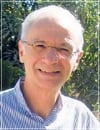
About Jean-Claude Souillot
El pastor Jean-Claude Souillot pastorea la Iglesia Evangélica de la Gracia en Chalon sur Saone, Francia. Está además comprometido con la traducción y publicación de literatura reformada en francés, difusión de programas de radio en el mundo francófono, y participa activament en la formación de pastores en países como Haití, Congo, Benin o Costa de Marfil.
Comments
Your comment has been submitted and is awaiting moderation. Once approved, it will appear on this page.
Be the first to comment!