The Shepherd and His Sheep
John 10:27-30
Sermon Transcript
Auto-generated transcript • May contain errors
in John 10, if your Bible is like mine, this portion is well-worn,
and I've often read this great chapter, and I've often preached
upon the subject of the shepherd and the sheep, and I will endeavor
to do so again this evening because to remember and to give consideration
to the fact that we have a good shepherd, we have a great shepherd,
we have a chief shepherd, the shepherd who sought us, the shepherd
who found us, the shepherd who feeds us, the shepherd who took
us up as little lambs into his arms, and he nourishes us, and
he preserves us, the shepherd who laid down his life for the
sheep, to consider him as being our shepherd, but even to consider
him as being my shepherd, like David did. That's a sweet thought. And I hope to encourage the Lord's
sheep this evening by directing your attention to this one, our
Lord Jesus Christ, who is the shepherd of his sheep. In this portion of scripture,
the Lord's people are identified as the sheep, that is the definite
article the is used, to designate a specific people Everyone does
not constitute the flock of our Lord. All men and women who have
ever lived are not the sheep of the shepherd. But there is
a group who can say, I'm among that blessed number who are referred
to in the scriptures as the sheep, the sheep of the shepherd. In this passage of scripture,
two times in John chapter 10, we're referred to as his own
sheep. We are not an unknown group,
and we're not an unowned group. We have somebody who owns us. He bought us. We're his by creation,
and we're his by redemption. We're his own sheep. And then the Savior says in this
portion of scripture, he refers to us as being my sheep. Isn't it amazing that the shepherd
is not ashamed to associate with us? And to refer to us in such
a a wonderful way by saying, my sheep, my sheep hear my voice. In Hebrews 2, it says he's not
ashamed to call us brethren. He's not ashamed to be associated
with us. He is the savior and we're the
sinners that he has saved. He is the shepherd and he is
the the one who brought us unto himself by effectual grace. He's the one who gave his life's
blood to redeem us. And he says, my sheep, you're
my sheep, my sheep. And then he says, in this passage
of scripture, he says he has other sheep. Terry read to us
down there at verse 16, other sheep I also have that are not
of this immediate fold. And we can find ourselves in
that category of other sheep because we weren't alive before
him when he said this. We're the other sheep, but we're
one redeemed flock of people in the
Lord Jesus Christ. The Lord is not ashamed to be
known as our shepherd. And when he calls us sheep, really
that is not a flattering word to refer to us because sheep
are timid, Sheep are weak. Sheep have no ability to defend
themselves. Sheep are foolish. Sheep wonder. Sheep don't come to the shepherd
except by effectual grace. The shepherd comes to the sheep.
In Luke chapter 15, in that parable with three parts, The shepherd
goes out seeking the lost sheep, that's us. We didn't know the way to God.
We weren't interested in the way to God. We didn't even know
we were his sheep. But the shepherd has always known
us. He chose us unto eternal life
before the world began. He included us in that number
known as the people of God, the church of our Lord Jesus Christ,
His sheep. When we had no knowledge of Him
and no interest in Him, He had a very intimate knowledge of
us. And He knew us. We had nothing to attract His
love. There was nothing about us that
was favorable. We had no qualities about us
that He would say, well, you're showing some interest that nobody
else is showing, so I'm going to save you. Oh no, we were wandering
away from Him. It's our Lord Jesus who sought
us and found us, and He picked us up, and He put us on His shoulders,
and He bears us all the way home. He is the one who redeemed us.
We weren't looking for redemption. We had no interest in a redeemer,
but he had that interest in us. Because you see the Lord knoweth
them that are his. We're silly, we're foolish, but
he's our wisdom. We're weak, but he's our strength. We're defenseless, but He is
our Almighty Defender. When sheep are sick, they can't
fight off the disease. We were sick with sin, but we
read that with His stripes, we were healed. When He died for
us, when He faced the justice of God for us, we were right
then and there healed. We learn of it in regeneration,
in the new birth. When the sheep are attacked,
we have no ability to defend ourselves against the attack
of Satan, the attack of the world, but we have a great defender
who is our Lord Jesus Christ. The sheep do not receive from
the Lord a very flattering title. But then again, there's nothing
about us that needs to be flattered. There's nothing good about us
at all. But while it is unflattering
to speak of us as his sheep, It's a gracious way to speak
of us. Because the only security we
have in this world and in the world that is to come is to be
found in our shepherd. How blessed we are to say with
the psalmist, Jehovah the Lord is My shepherd. We're silly and foolish, but
in our shepherd, there is to be hidden, there is hidden, all
the treasures of wisdom and knowledge. Yes, we are weak, but he is strong. Yes, we are helpless, but it
is his specialty to help We have no ability to stand against
our enemies, but he has all ability, for he
said, all power in heaven and earth has been given to me. Our shepherd is wise, good, strong,
therefore we are secure. Your salvation and my salvation
does not now nor has it ever been dependent upon us. That
responsibility for our salvation was laid upon the great shepherd
in the covenant of peace. When God chose us unto salvation
and entrusted all of his sheep, all of his family, when He entrusted
us to the great surety of the new covenant. In Him, we have
always been hidden. In Him, we have always been safe. In Him, we've always been saved. In Him, we've always been justified. He is our remedy for all of our
spiritual diseases. And when he died and shed his
blood for us, we were then and there healed of our spiritual
diseases. This passage of scripture tells
us that the sheep are safe. We have great security in the
shepherd. None of his sheep shall perish.
If one of those given to him in covenant love and grace, in
the covenant of grace, if one of his sheep were to perish,
the sheep would indeed be lost, but the shepherd would lose a
great deal more. He would lose the glory. of saving his people, he would
be going back on his covenant promise to bring all of those
that God gave him in election safely home to God. In the Old Testament, we frequently
read of the shepherds, the shepherds of Israel who were
despised by other nations, those shepherds bore the responsibility
for the safety of all the sheep and trusted to them by the owner
of the sheep. It was the shepherd's duty to
risk his own life to save the sheep from the wolves and from
the lions and from the bears, even as David did as a shepherd
boy. The shepherd bore responsibility
for the safety of the sheep and was answerable if one of the
sheep was ever lost. They often risked their very
lives, as David indicated to King Saul. He risked his life. But our Lord Jesus, the great
shepherd of the sheep, he didn't risk his life, he laid it down. He said, no man takes my life
from me. He said in this passage, I have
the power to lay it down, I have the power to take it again. That's
our great shepherd. So in these verses, John, the
dear sweet apostle, the man who leaned his head on the Savior's
breast, He speaks by divine inspiration concerning the shepherd and his
sheep. He gives us the identity of the
sheep. The sheep is God. In verse 30,
our Lord Jesus said, I and my Father are one. None less than
God himself could save us. None less than God himself could
redeem us. None but God himself could take
all of our sins upon himself and then bear them away at the
cross of Calvary. None but one equal with God could
stand as it were eye to eye with God and deal with him on the
strictest of justice. and then be made the smitten
shepherd to put our sins away. I and my Father are one, is what
he said. He's the Son of God, the Son
of God. But the passage of scripture
also calls him Jesus. He's the man Christ Jesus. who
came into this world to save his people by substitutionary
death. This is the identity of the shepherd. Do you know the shepherd? A better
question is, does the shepherd know you? Because he knows the
sheep. And He gives to His sheep a saving
knowledge of Himself. We know Him to be God, don't
we? We know Him to be the Divine
One. We know Him to be the Son of
God who came down here from glory. The Father dispatched His own
Son, one equal with Himself. Proverbs 8, one who was there
from the very beginning in creation. Himself not being created, but
he was there when all things were made. And John begins the
book by telling us, by him all things were made that were made.
He's God. And he's man. In this passage
of scripture, this God-man is the door to heaven. By him we
enter in. We have no entrance to the presence
of God except through Christ Jesus. Except through the shepherd
of the sheep. This is his identity. He's God
and man. And the thing that the people,
that the enemies of our Lord Jesus hated about him was the
things that he spoke. the words that he gave forth. After our Lord declared here
in this passage of scripture that Terry read to us, after
he said, I and my father won, they took up stones to stone
him. And he said, for which of my
works do you stone me? They said, we don't stone you
because of what you did or the things that you've done. Heal
all the sick that you want to. The reason we want to stone you
and kill you and put you permanently out of business if we can, is
because of what you teach. It's because of what you, of
the words that you speak. Look at verse 31, the Jews took
up stones again to stone him. Jesus answered them, many good
works have I showed you. The word shown, It's the I manifest
to you. I've shown you there are many
good works from my Father. For which of those works do you
stone me? Do you stone me because I raised
the dead? Do you stone me because I've
healed lepers? Do you stone me because I've
made the lame to walk? Do you stone me because I've
caused the blind to see? Do you stone me because I've
caused the deaf to hear? Why do you stone me? The Jews said in verse 33, for
a good work, we stone thee not. But for blasphemy, because that
thou being a man, You're just like us. That's what they were
saying. You're just like us. And you
make yourself to be God. You look like us, you talk like
us, you sound like us. You have to eat like we do, drink
water like we do, sleep like we do. When you get where you're
just like one of us. And yet you say God is your father. That's why we gonna stone you.
But they couldn't stone him. Because the Romans were in control.
And the death that Romans meted out to offenders was death by
crucifixion. It was his identity, his words,
identifying himself as the son of man, and the Son of God. It's His Word that was so offensive
to them. This is our Savior. He, though
He was a real man, He claimed and He was equal with God. That's the identity of the shepherd.
And then he speaks of the sacrifice of himself. The sacrifice of
the shepherd is set forth, verse 11. He said, I am the good shepherd. Listen, there's none good, but
one, that's God. He's the good shepherd. He's
pure. He's holy. He's good in all that
he is and all that he does. And the good shepherd giveth
his life for the sheep. He gives his life. He lays it
down. Nobody could take his life. This
was of his own volition. I can just imagine when it came
time for the crucifixion, of the two thieves and of our Lord
Jesus. When they laid each of those
thieves down on top of that cross, I can just see them kicking and
screaming and fighting the soldiers that have to hold them down with
all their might and then nail them to the cross. But our Lord
Jesus, they didn't take his life from him. He's the willing Savior. And when they had that cross
laid down, he just laid down on the cross and stretched his
arms out. You remember when Peter had made
that great declaration in Matthew chapter 16? Thou art the Son
of God. Just a few minutes after that,
When our Lord told his disciples that he must be betrayed and
he must be crucified, he must be killed and then raised again,
Simon Peter took him off to the side and said, this can't be. Don't talk anymore about death. But that was the purpose for
which he came into the world. So we can set forth Christ as
the example. Well, he's the perfect example.
There's no question about that. Some talk about him being the
reformer. He wasn't a reformer. Some say
he came to establish a new religion. People say many things about
the Lord Jesus Christ, but he came as the savior. That's what
Jesus means. He saves his people from their
sins. And he did that by the cross
of Calvary, his own death. And he told Peter, when Peter
said, you're not gonna go to Jerusalem, we forbid it. That's
what he said. Boy, what arrogance. We forbid
that. Our Lord said, get thee behind
me, Satan. You don't savor the things of
God. Peter didn't have a comprehension
of the reason Christ came. He came to save his sheep. He's the shepherd who's not going
to risk his life to save the sheep. He's going to give his
life to save the sheep because the justice of God required that. The sacrifice of the shepherd. That was a sacrifice ordained
for him And that was a sacrifice that he willingly came to offer
to save his people. Thirdly, we've considered the
identity of the shepherd and the sacrifice of the shepherd.
What about the identity of the sheep? They are his sheep while others
are not his sheep. Two months after our Lord spoke
to His disciples and to the Pharisees here in this chapter, two months
after that, in verse 22, He was again in Jerusalem at the Feast
of the Dedication. It was a dedication of a remodeling
of the temple that had taken place, and then the Jews just
annually celebrated that. And our Lord, having already
identified Himself as the Shepherd, He's again found in this area,
walking in the temple. And the Jews surrounded Him and
said to Him, in verse 24, they said, how long dost thou make
us to doubt? We want to hear you plainly say
who you are and what you're going to do. They said, if thou be
the Christ prophesied in the Old Testament, if you're really
the Messiah, if you're really the Son of the Highest, if you're
really Emmanuel, God with us, tell us openly and plainly. And Jesus answered and said,
I've told you, I've told you, but you believe not. He said, the works that I do
in my father's name, they bear witness of me. Back earlier,
John the Baptist, Christ said, John the Baptist bore witness
of me. He said, the Father bore witness
of me. The works that I've done bear
witness of me. And he said, the scripture bears
witness of me. He said, I've told you. I've
told you who I am. But verse 26, ye believe not,
but ye believe not. Did you know that if we had been
living back then and one man who looked just like us started
talking about being the father's son, we would not have believed
him either apart from a divine revelation. Cause he's just like
everybody, looked just like everybody else. He talked the speech of
everybody else. He didn't walk around with a
halo over his head, not when he is born, not through his days
of youth, and not through his activities that he carried out,
the life that he lived during his adult years. but some people didn't believe
Him and we wouldn't have believed Him. And if you don't agree with that,
if you say, oh, I would have believed Him, then you don't
understand the depravity of your own heart. No one knows the Son of God except
those to whom He is revealed. This is the day of decisionism. Billy Graham kept saying over
and over again in his program, The Hour of Decision, decide
for Jesus. We made our decision concerning
the Lord Jesus Christ and Adam. We sinned in His transgression. And had we lived back then in
the days of these Jews, no doubt we would have rejected Him as
well and we would have continued to reject Him were it not for
the fact that one day God sent a preacher to us who preached
the gospel of His grace, the gospel of His redeeming love,
the gospel of salvation through this substitute, this sacrifice
that God appointed. We wouldn't have believed Him
either except the Lord God sent his spirit to do a work of grace
in our hearts, and we believe him. Not due to anything we've ever
done. The only difference, and my what
a difference it is, between believers and unbelievers, is the will
and work of God I'm so thankful God didn't leave
me to my own will. I'm glad he didn't leave me to
my stubbornness. I'm glad he didn't leave me to
go through this world groping in darkness and never seeing
the light. The difference between those
who believe and those who do not believe is the sovereign
free grace of God only. Our Lord says to these people,
He said, let me tell you right now, here's the reason you do
not believe, because you're not of my sheep. You're not of my sheep. Who makes the difference? See,
this is really what it comes down to in salvation. Who makes
the difference? And whoever makes the difference
is gonna get the glory. Who makes you different from
anybody else? Who makes you different from
somebody who is a devout Catholic, Roman Catholic? Who makes the
difference between you and somebody who's trying to work their way
into heaven? Who makes the difference now? Who makes the difference
between you, who believe in salvation by grace through the redemption
that is in Christ Jesus, and another person who says, I went
into the waters of baptism and washed my sins away. Who makes
the difference? And if you think you're the difference
maker, oh, that God would reveal to
you the wonders of his mercies and grace to unworthy sinners
through the doing and the dying of the great shepherd. You see,
our Lord Jesus, he's identified as the The Father's Son. And he's identified as the man
in Christ Jesus. He is the sacrifice for sin. And we're his sheep. Chosen to be redeemed. Chosen
to be called. Chosen to be kept safe for all
eternity. And I'll tell you about the shepherd's
feelings toward the sheep. He loves the sheep. He loves the sheep. We say things like it. Someone
sent me an email today. Said, I love your brother Jim.
Well, I appreciate that. Thank you. I thanked him for
saying that. But we really don't know much
about love. But if you wanna see love, look at who bore our sins in
his own body on the tree. And then we say, herein is love,
here it is! Not that we love God, Not that
we love somebody else, but that he loved us and gave himself,
gave his son to be the propitiation for our sins. And here's the certainty of the
safety and the call of the sheep. I love this, look at verse 16.
Watch the wording now. Our Savior said, our shepherd
says, and other sheep I have which are not of this foal. I've
already said that's us. Them also I must bring and they
shall hear my voice. Oh, how precious those words.
I must and they shall. That just thrills my soul. I must, there's something He
must do, and then they shall. He must lay down His life and
take it again. Divine justice required it. God
the Father sent Him to accomplish the work of redemption. I must,
and then I must bring them. I must bring all those that the
Father gave me in covenant election. I must bring them and they shall. They shall. Hear my voice. What is the voice
of Christ? Is it not his gospel? Is it not that good news of accomplished
redemption? They shall hear my voice and
there shall be one fold. I don't like to hear people talk
about, you know, people who were saved in the Old Testament and
people who are saved in the New Testament as if, you know, the
ones in the Old Testament saved a different way than we're saved.
There's just one fold. There's just one salvation. And
there's just one shepherd. The shepherd of the sheep in
the Old Testament is the same shepherd of the sheep in the
New Testament. It's the Lord Jesus Christ. What is all of this saying? Simply put, this. Salvation is
God's work. And it's not our work. He says in verse 19, the scripture
says, John says by divine inspiration, there was a division therefore
again among the Jews for these sayings. And the words of our
Lord Jesus Christ still divide. It's no different today than
it was back then. It's his words. His words are powerful. His words
are heavenly. His words are spiritual. His
words are the words of life. His words are the words of the
shepherd, the words of the son of God, the words of Emmanuel. And some hear those words and some won't. And of those who will never hear,
The gospel of grace, the gospel of atonement, the gospel of imputed
righteousness, those who will not hear are not his sheep. Never were, never will be. And that's what he told the Jews. If you were my sheep, you'd believe
me. Say, Jim, how can I know that I'm one of the Lord's sheep?
Well, do you believe him? I can't answer that for you.
But in your heart of hearts, I mean deep within, do you believe Christ the shepherd who fully merited The praise of men and the praise
of God? And who thoroughly accomplished
salvation by his substitutionary sacrifice upon the cross of Calvary? Do you rejoice to know that he's
the triumphant, sovereign shepherd? Does your soul delight in him? Well, I tell you what, if you
delight in the shepherd, I think you can say, very safely, I'm
one of the Lord's little ones. He's my shepherd, and I'm one
of his sheep. Let's sing a closing song.
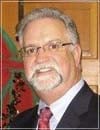
About Jim Byrd
Jim Byrd serves as a teacher and pastor of 13th Street Baptist Church in Ashland Kentucky, USA.
Broadcaster:
Comments
Your comment has been submitted and is awaiting moderation. Once approved, it will appear on this page.
Be the first to comment!