Well, I've debated the way that
I would begin this message tonight, and I'm gonna begin it this way. I'm thankful I live in America. I'm thankful that God in his
eternal purpose ordained that I would be born and raised in
Virginia. I used to have a cap. And I actually
stopped wearing it because it began to bother me a little bit,
but I had a cap that I wore for a long time. It said, American
by birth, Southern by the grace of God. And the reason that I
stopped wearing that cap, and it certainly isn't that I am
ashamed of being an American, and I'm not ashamed of being
a Southerner, But I'm not a Southerner by the grace of God. I'm a Southerner
by the mercy of God. I think we need to be very careful
how we use the word grace. I was choosing the song, the
hymns that we would sing tonight and on this coming Lord's Day.
I was picking those out this afternoon. And I got to thinking about the
patriotic song. I like patriotic song. And I
mean, I have great respect for the flag. And I'm sorry that
many people don't. But I do. And like I say, I'm
thankful to be an American. But there is something that is
more important than being an American, and that's being a
child of God. Because there are a lot of people,
there are millions and millions of people who are Americans,
but they're not children of God. But I was thinking about one
of the songs that is typically sung on Fourth of July and other
times as well. And it's about America, it's
America the beautiful. That's a pretty song. But one
of the lines on it says, America, America, God shed his grace on
thee. That's not right. He shed his mercy on us. But
he didn't shed his grace on us. Because where God sheds his grace,
his grace always abides, and his grace is forever. Now you say, why'd you say all
that to introduce my title? God shed his grace on Jacob. God shed his grace on Jacob. And if you're a believer, God
has shed his grace on you, and he continues to do that. And
that which he began will not end in this life. It will end
in eternity. The work that he began, he'll
finish it to the day of Jesus Christ. And having shown you
grace, having given you grace, having shed his grace on you,
you may rest very confidently in this, he'll never take his
grace away. He never will. The whole gospel is called the
gospel of the grace of God. Back in the office, Brother Cole
read to us from Psalm 116. And one of those verses begins
this way, Gracious is the Lord. Gracious is the Lord. You see,
there's a sense in which God's mercy is over all of His works. He sends his reign upon the just
and the unjust. That's mercy. That's mercy from
God. But his grace, it isn't shed
on everybody. It is shed on many. And that's
to the praise of the glory of his grace. We read in 2 Timothy
1 that God gave us grace in Christ Jesus. He saved us and He called
us with a holy calling, not according to our works, but according to
His purpose and grace which He gave us in Christ before the
world began. And grace which began all of
this. And this is eternal grace. because
grace is as ancient as God himself and that's forever. Grace which originated our salvation,
grace which God shed on you in old eternity in the covenant
of grace. That grace will indeed, it will
crown your ending in glory and you'll be singing grace, grace. unto God. We have no merit to draw forth
the grace of God. And we have no degree of unworthiness
to keep that grace away from us. Grace cannot be earned. Grace
cannot be bought. Grace is given. It is God's gift. And if He gave you grace in Christ
Jesus, He gave it to you from old eternity. And that grace
will never be taken away from you. For His sheep have everlasting
life. So while God did not shed His
grace on America, And I do, I really appreciate
where I live. Marty and I were talking about,
there are a lot of things wrong today. There's no question about
that. It's still the greatest nation in the world. And it is
from this nation that the gospel goes forth, primarily from this
nation. Not from other nations. God has
indeed gifted this country with preachers of the gospel. He's
gifted us with the Word of God, with the Bible. Oh, and men are
gonna be held accountable for the Word of God that he gave
them, which they neglect. That's a serious offense against
God. God's been very merciful to our
nation. And I know, by and large, everybody's
turning thumbs down on the God of the Bible. They want His name
erased from everything. But let me tell you something. When they're dead and gone, God
will still be ruling and reigning and just as glorious as He was
when they were cursing His name and blaspheming Him. Jacob, I don't have to go over his history
with you. His is the history of a conniving,
deceitful man. He is a real good example of
God shedding His grace on a sinner. but he's really no more of an
example of God shedding his grace on a sinner than me or you. Because we were just as undeserving
of God's grace as Jacob was. Grace is God's everlasting favor. Somebody says it's unmerited,
unmerited favor. That's true. I mean, you just
delve into the word grace. The depths of it have never been
fathomed. This grace, it's sovereign. This
grace, it's free. This grace that goes out to those
who are certainly undeserving of the least of His grace. And
yet those to whom God gives grace, He gives it all. He doesn't give you just a little
bit of grace. We have all grace in Christ Jesus. Let me talk about God shed his
grace on Jacob. And I'll give it to you in five
or six points. Number one, God graciously, he
graciously gave Jacob all things in Christ. Go back to chapter
33. Chapter 33. And we talked about
this last week. where earlier in chapter 33,
Esau said, I have enough. He's got enough of this world's
goods. I got enough. I don't need your
stuff. I got lots of stuff. I got a
lot of sheep. I got a lot of cattle. I got
a lot of money. Jacob had sent all these gifts
ahead of him. And Esau said, what did you send
all that for? I've got enough. Somebody said maybe he was putting
Jacob down then. I don't know. I don't know what
his attitude was. But Jacob said this, you go ahead
and take that because I have enough and I pointed this out
to you last week. What he was saying was I have
all things. And you who are the children
of God, You have all things in Christ
Jesus. You lack nothing that God can
give a sinner. Can you imagine that? You lack
nothing. He has given you the Lord Jesus,
and in Him, all spiritual blessings. He doesn't cut anybody short
on this, none of His people. We all have received all spiritual
blessings in heavenly places in Christ Jesus. He's given you
the best. He spared not His own Son, but
delivered Him up for us all. Well, then how shall He not with
Him freely give us all other things? I tell you, for a people who
have all things in Christ Jesus, we sure do mumble and grumble
a lot, don't we? And yet we're rich in grace,
we're rich in God's mercy, we're rich in His salvation. Go back
to, look what the Lord said to Jacob back in chapter 28. Look
back in chapter 28. And look at verse 15. This is
what the Lord said to him when he was at Bethel. Verse 15, chapter 28. God said,
and behold, be amazed. It's a shocking truth. Glorious. Behold, I am with thee. That's a very present promise. I am with thee. And will keep thee in all places
whither thou goest." There's his promise. You have his presence. You have his promise. And he
says, and will bring thee again into this land. And watch God's
word here. For I will not leave thee. You who are the children of God,
take these words to heart. Just like God shed his grace
on Jacob, he has shed his grace on you. And he says to you, I
will not leave you. You couldn't drive him away,
not that you'd want to. He said, I'm such a sinner. No argument there. I'm not worthy
of the Lord staying with me. You're right. It's not your worthiness
that keeps him there, it's his grace that's infinite that keeps
him there. It's his promise. It's his word,
it's his oath. I'll never leave you and I'll
never forsake you. He said, I will not leave thee
until I've done that which I've spoken to thee of. Oh, the faithfulness
of God. And these are the words that
the Lord spoke to Jacob. The Lord's grace is with us now. It's a present reality. And wherever we go in life, whatever
happens to us in life, we are assured of this. He'll go with
us. and He will fulfill His purpose
in each of us. He said, I'm not going to leave
you. You say, well, I might leave him. He won't let you leave him. He's going to keep you. It's like Spurgeon said, somebody
said, Aren't you afraid that you'll become a lost sheep again? He said, if any sheep of the
Lord's could be lost, it'd be me. But he said, he won't ever
lose me because he found me. He found me. The son of man has
come to seek and to save that which was lost. He found us when
he died for us. And he found us when he sent
the Spirit of God to effectually draw us unto himself. He found
us. He found us like he found the
lost sheep. He found us like he found the
lost coin. He found us like he found the
lost son. Here's the second thing. God was honored by Jacob who
worshiped the Lord And I'll say who, by the grace
of God, worshiped the Lord, by the appointed means, a sacrifice. God taught him the gospel. Tell you what, we read quite
often of Jacob building an altar unto the Lord. Look at chapter
33. And verse 18, and Jacob came to Shalem, a city
of Shechem, chapter 33, verse 18, which is in the land of Canaan
when he came from Padan Aram and he pitched his tent before
the city. And this is kind of amazing because
he's in the territory of the Philistines. And he bought a
parcel of a field. This is the land that God has
promised to Abraham, but it's not the time for them to get
it yet. All things in God's time. Actually,
God said, you're gonna have this land, but Jacob has to buy a
parcel of it. And that's where he spread his
tent, keep reading, at the hand of the children of Hamar, Shechem's
father. He bought it for a hundred pieces
of money and he erected there an altar. And he called it El Elohi Israel. And he did that as he remembered
that God gave him a new name, a prince with God, a prince with
God. He erected an altar. Look at
chapter 35. 35, and I've already read this to
you. In verse 1, God said unto Jacob, Arise, go up to Bethel,
and dwell there, and make there an altar unto God. Look at verse
three, let us arise and go up to Bethlehem. I'll make there
an altar unto God who answered me in the day of my distress
and was with me in the way which I went. He built an altar. He built an altar. Look at verse
seven. And he built there, because he
kept on going, verse six, so Jacob came to Luz, which is in
the land of Canaan, that is Bethel, he and all the people that were
with him, and he built there an altar. An altar, what is an
altar? It's a place of sacrifice. That's what an altar is. It's
a place of sacrifice. In other words, he knew, God
taught him, God taught him what God had taught Abraham. God taught
Jacob what God had taught Isaac. And God taught Jacob the same
thing. And God teaches this to all the
sons of Jacob, that the only way to worship God is by means
of a sacrifice. And so you find him building
an altar. There are three things, there
are three things necessary in order for there to be true
worship. Number one, and we're talking
about the altar and the sacrifice now. Number one, there had to
be somebody to offer the sacrifice. And on this occasion, it's Jacob.
When God instituted the Levitical law, it was the priest and the
high priest. There had to be somebody to offer
the sacrifice. Well, our Lord came down here
to offer a sacrifice to God. Well, who was the priest who
offered that sacrifice? Our Savior Himself. Ephesians 5 verse 2, He is the
one who offered Himself a sweet savor unto God, a sacrifice and
a sweet savor unto God. He's our priest. He's the only
one qualified to do business directly with God, our Savior. Number two, three things are
necessary. First of all, somebody to offer
the sacrifice. Number two, there's got to be
a sacrifice. Without spot, without blemish. That's always the way it was
with the law. Hebrews 8, verse 3 says this,
for every high priest is ordained to offer gifts and sacrifices. Wherefore, when it came to Christ,
our high priest, it is of necessity that this man also have, he have
somewhat to offer to God. He got to have something to offer.
Well, what was the sacrifice he offered? Now remember, he
is the priest. He's the one who offered the
sacrifice. What was the sacrifice he offered? Himself. Himself,
not an animal. He's the priest who offered himself,
the Lamb of God, who taketh away the sin of the world. He offered
himself body and soul. But number three, hang on now.
Gotta have somebody to offer the sacrifice. Christ is the
priest who offered the sacrifice. Gotta have sacrifice, of course,
if you're gonna worship God. Well, our Lord offered himself. But number three, there had to
be an altar. And here in these verses I've
read to you, Jacob said, Moses wrote that Jacob built an altar
unto God. There had to be somewhere or
some place upon which to offer the sacrifice. Well, what was
the altar that our Lord Jesus offered the sacrifice to God?
You say the cross of Calvary. No, the cross wasn't the altar. No, no, the cross wasn't the
altar. It's just a piece of wood. He had two other men who were
crucified that day. They weren't crucified on an
altar. That's crucified on a Roman tree. The altar, listen to this verse
in Matthew chapter 23, verse 19. Whither is greater the gift
or the altar that sanctifies the gift? The Lord Jesus said, it's the
altar that sanctifies the gift. Well, upon what altar did our
Lord, the priest, offer himself a sacrifice to God? The altar
was His own deity. That's the altar upon which He
offered Himself, body and soul. Remember that, body and soul. The Father made His soul an offering
for sin. That's what it says in Isaiah
chapter 53. The altar was His own deity.
You see, how could the death of one man, how could it put
away the sins of a multitude of sinful people? How could it
satisfy the divine justice of God? And how could it bring in
everlasting righteousness? Remember our Lord's words now,
it's the altar that sanctified the gift. It's because of the
altar upon which the gift was offered. His deity. His deity. He's God. That's why
His death availed to the salvation of so many. There's no ifs, ands,
or buts about salvation because of who died. You say, well, you
really can't say God died. Well, I'll tell you what you
read in Acts chapter 20. where it says God purchased the
church with His own blood. You can take issue with that
if you want to. I'm not going to do that. It
was His deity. The fact that this man who died,
He's more than a man, He's all man, no question about that.
But He's the God-man. who offered his body and soul
upon the altar of the purity of his eternal deity. And therefore God is satisfied
and we're saved. See, that's what gave infinite
value to the sacrifice of the Lord Jesus as the God man. This is why it's so blasphemous for people to say
that he was just a God or deny his deity altogether. And actually saying he's a God,
that's a denial of his deity. You deny his deity, you got no
savior. You deny his deity, you have
no redemption. You deny his deity, we have no
righteousness. Our salvation is fully dependent
upon who died on that cross. That's the God man. That's why that death was of
infinite value. Number three, here's something
else. God was continually gracious
to Jacob, even though so often he did not conduct himself as
a child of God. We saw back here in chapter 33
how that Jacob said to Esau, I have all. Oh boy, you're blessed, aren't
you, Jacob? Yes, I am. Esau said, come on
home with me. Let's go to my home. And Jacob
said, well, I'll tell you what, you go ahead and go first. You
take your group, and I've got a lot of young ones here, and
we can't travel as fast, and we'll be on directly. You ever use that word? My granddad
used to use that a lot, direct. We'll be there directly. Okay. And so he saw Lev and said, well,
we'll see you in Seir, S-E-I-R, that's what he said. So Esau,
he heads southeast to the mountains. And they get out of sight. You know what direction Jacob
goes? Northwest. He's got no intention of meeting
them in Seir, because he's still a sinner, and he's still a deceiver. He's not behaving like a child
of God. Where is that confidence? Where
is yours so often? Huh? Before you start jumping
up and down on Jacob with both feet. I mean, here's Jacob who
says, I have all. I wish I had that kind of confidence.
I wish I had that kind of assurance. And the next breath when Esau
says, come on home with me. Well, y'all go ahead. We'll follow,
we're just slow. and he heads off in one direction,
Jacob says, we're going this way. We're going this way. Oh boy. We are indeed sons of
Jacob. It's just no denying. No denying. In chapter 34, we won't take
the time to read it, but Jacob's daughter, Dinah, She was raped
by Hivite, a man by the name of Shechem. But Shechem evidently
fell in love with Dinah, and he wanted to ask for her hand
in marriage. Well, right after the rape happened
and word got to Jacob, you'd think he'd be a one-upset father. and go to deal with this guy.
You know what Jacob did? He said, well, I'm waiting for
her brothers to come home before we deal with this. And you go
all the way through chapter 34, and you know who dealt with this
guy who raped Dinah? Not Jacob. You just want to say,
don't you have any backbone? What kind of daddy are you? Your
daughter gets raped? He said, well, wait till the
brothers come back. And the brothers come back, and
they get together, and then they confront the guy who did it,
because the guy who did it actually comes to them, and he says, listen,
I want to marry your sister. I love her. Jacob has no input. No input. And the brothers say
this, well, tell you what, if you want to marry our sister,
you're going to be circumcised. And then these Hivites, Shechem
was a Hivite, they said, you know what, why don't we just
intermarry with you folks the Jewish people in us, we'll just
intermarry." And the brothers of Dinah said, well, it's a good
idea, but I'll tell you what, all you men are going to have
to be circumcised, and then we'll ease up on our restrictions. He said, okay, okay. And of course, intermarriage
with the Hivites was a recipe for trouble because they're heathen. They're
an idolatrous people. Well, the Hivite men agreed to
be circumcised and while recovering from their surgery, two of Dinah's
brothers, Simeon and Levi. They took their swords and went
into the city and they killed all the men. They got vengeance
for their sister. They killed all the men, they
captured the women, captured the children, took the sheep,
took the oxen, took the asses, took all their wealth, brought
it home. Well, you say, well, I bet you
Jacob, he was kind of, he's behind this. His brain's behind this. Oh no, he was upset. Look at verse 30 of chapter 34. Jacob said to Simeon and Levi,
you have troubled me. to make me stink among the inhabitants
of the land, among the Canaanites and the Perizzites. And I, being
few in number, they shall gather themselves together against me
and they'll kill me." Kill you? How come you didn't stand up
for your daughter? He said, and I shall be destroyed,
I and my house. And they said to him, should
he deal with our sister as with an harlot? We did what needed
to be done. And Jacob is worried. Hey, Jacob,
are you the same guy to whom the Lord said at Bethel? Just
back a few pages in Holy Scripture, the Lord said, I'm with you. And now he's all scared to death
because he said, oh boy, you're going to bring the anger of these
other nations on me now. But you know what? God never
took his grace away from him. See, though we believe not, this
is 2 Timothy 2. Though we believe not, he abiding
faithful. Aren't you glad? And we may turn
into cowards like Jacob. But the Lord says, I'm not gonna
leave you. I didn't come to you because
you was a good person. I came to you because I purposed
to save you by my grace in my son, Christ Jesus, before the
world began. I'm not gonna leave you now. Don't you ever worry about God
leaving you. He has given you his solemn promise. I'm not gonna leave you. He said,
well, you preach like that and people just go out here and live
like the devil. God's people said, the Lord loves
me that much. Oh Lord, help me to walk in paths
of righteousness. Jacob was fearful, yet God's
grace did not forsake him. In fact, This rape of Dinah would
never have taken place if Jacob had done what the Lord told him
to do, go back to Bethel. Go back to Bethel. The reason
he was in this position, the reason that Dinah was there,
the reason all of this happened is because of Jacob's disobedience. Go back to Bethel. What'd he do? Pitched his tent
in the land of the Philistines, a God-hating people. Remember the words of Solomon.
Proverbs 6.27, can a man take fire in his bosom and his clothes
not be burned? Foolish decisions often bring
us great sorrow, as it did to Jacob. And yet,
grace will never forsake us. Here's the fourth thing. God
was continually gracious to Jacob, enabling him to deal with serious
offenses against God. Look down here in chapter 35,
verse two. Jacob said to his household and
to all that were with him, put away the strange, the alien,
foreign gods that are among you. Be clean, change your garments,
let us arise and go up to Bethel. And that's where we'll worship
God. Here's several things, give them
to you quickly. Here's repentance. Put away your
strange gods. That's repentance. Of course,
Rachel had brought some of her father's idols with her, and
undoubtedly the Hivite women that were captured, that Simeon
and Levi captured, undoubtedly they brought some of their gods
with them, some of their idols. And now Jacob speaks as one who
has backbone. He didn't speak up when his daughter
was raped. But I'll tell you what, when
idolatry is discovered in the camp, he speaks up. Get rid of those idols. Bring
them over here. Put away the strange gods. Repent
of idolatry. Like the Apostle Paul said to
the people of Thessalonica, you turned from idols to serve the
true and living God. That's what repentance is, turn
from your idols. Turn from the God who's not God
to the God who is God. Turn from a false gospel that's
no gospel at all that says, if you'll do good, God will bless
you. Turn from that. Turn to this gospel of the pure
grace of God to sinners in the Lord Jesus Christ. That's repentance. And this is not really a one-time
thing either. Because you know what John says
in 1 John 5, 21? Little children. Keep yourselves
from idols. Because we all have a natural
tendency toward idolatry. And right here's the big idol. You're an idol to yourself. You
know that's true. You put yourself first. That's
the way we are. That's the reason John says,
little children, keep yourselves from idols. You've got to be
careful about this. It's an everyday thing. Just
like faith is not an isolated act, repentance is not an isolated
act either. First, here's repentance. Number
two, be clean. Wash yourselves. We need a bath
and we plunge into the crimson fountain filled with blood. The blood of Jesus Christ, God's
Son, cleanses us from all sin. Be clean, Jacob said. Number three, change your garments. Get rid of them old, tattered,
self-righteous rags. Oh, Lord, clothe me with the
garments of your Son. It's not a pasted-on righteousness
either. That's a righteousness freely
credited to our account. We're made the righteousness
of God in Christ Jesus. And number four, here's faith.
Arise! Let's go to the house of God.
Let's go to Bethel. Bethel means the gate of heaven.
Let's go to Christ. See, here's the order. This is
the order. Faith. It's like the prodigal
son after eating with the pigs. He came to himself, he said,
I will arise. I'm going home. I'm going back
to the Father. That's faith, going back to God
through Christ Jesus. And I'll tell you something,
the grace of God that saves a man teaches us how to live. Go back to Bethlehem worship. Now quickly, let me give you
these last two. The power of grace protects the
people of God. Chapter 35 and verse five. And they journeyed, so now they're
on their way. Here we go to Bethel, the house
of God, the gate of heaven. That's what Bethel means, the
house of God, the gate of heaven. And they journeyed, and the terror of God wasn't
upon Jacob. Jacob wasn't afraid, he's not
afraid anymore. The terror of God was upon the
cities round about them. They didn't pursue after the
sons of Jacob. Which two sons of Jacob specifically? Simeon and Levi. That's what
Jake was worried about. He was worried about this back
up there at the end of chapter 34. He said, you've troubled
me. You make me stink to these inhabitants. They're going to come after us.
They're going to kill us all. They're going to start with me. But lo and behold, as they began
their journey, God put terror, fear, and the minds and hearts
of the enemies of Jacob. Oh, they'd love to kill him,
ain't no doubt about that. But they were frozen with fear. I tell you what, God can make
your enemies, even your enemies, to be at peace with you and to
keep their hands off of you. And then one last thing, my time's
about gone, but one last thing. The reality of the grace of God
will not prevent troubles and sorrows. You know, in chapter
35, three deaths are mentioned. Number one, Deborah, Rebecca's
nurse, that's in verse eight. I read that to you. Jacob honored the woman who had
taken such good care of his mother. And she lived a long life, according
to Jewish historians, lived about a hundred years, taking care
of Rebekah and then no doubt taking care of Jacob and Esau
when they were little fellows. The Jews said that she helped
to raise the children of Jacob until Rebekah needed her assistance
in her old age. You know, you think of the millions
and millions and millions of people that, and great people
in the eyes of the world who have lived. And they have no place in the
word of God. But Deborah does. And you know, heaven and earth
will pass away, but the name of this dear servant, Oh God,
give us the heart of a servant. Her name's gonna be here forever.
That's something in it. She died. Secondly, Rachel died. Verse 16, and they journeyed
from Bethel. There was but a little ways to
come to Ephrath. And Rachel travailed, she had
hard labor Of course, we know earlier Jacob
loved her. She's his favorite. He served
seven years for her and it just seemed like no time to him. It
was nothing. He loved her so much. But here
she is at the end of the road, verse 17, it came to pass when
she was in hard labor that the midwife said unto her, fear not,
thou shalt have this son also. It came to pass as her soul was
departing, for she died, that she called his name Ben-Onai,
but his father called him Benjamin. Ben-Onai means the son of Masara, Benjamin means the son of my
right hand. And Rachel died and was buried
in the way to Ephrath, which is Bethlehem. She died. Spouses pass on. Hurt Jacob. See, the grace of God He still
had the grace of God, but he still knew what sorrow was. And
I tell you, the presence of the grace of God in our lives will
not prevent grief, trials, and sorrow. But God uses those things
to draw us unto himself. And then, lastly, over at verse
27, Isaac died. There are three great
deaths in this chapter. Verse 27, and Jacob, he came
unto Isaac, his father, unto Mamre, unto the city of Arba,
which is Hebron, where Abraham and Isaac sojourned. And the
days of Isaac were 104 score years, 180 years. And Isaac gave
up the ghost and died. He's gathered unto His people.
He went to glory. To be among the people of God.
He was old and full of days. Ever how old you are, child of
God, when you die, you're full of days. You've got all the days
God allotted to you. You're full of days, no matter
how long you live. You may just live a few years,
may live long, many years, but you're full of days. You're as
full as you can be of the days that God allotted for you. Nobody
gets their lives cut short. And this last statement, his
sons Esau and Jacob buried him. One a believer, the other one
an unbeliever. And somebody said this may have
been the last time an Arab and a Jew cooperated in doing something
together. I don't know about that. But
I'll tell you what, one of them was loved of God. One of them
was a vessel into which God poured forth His grace. God loved Jacob. hated Esau, gave him nothing
except what he deserved. Oh God, be gracious to us through
Christ Jesus. Lord, bless the word that's gone
forth tonight. Help us, the sons of Jacob, the
sons and daughters of Jacob. Help us in our weakness. Oh,
may we look to Christ for all things, remembering that He said
He'd never leave us and He'd never forsake us. He said, I'm
with you now and I'll be with you always. Lord, give us grace
to trust you and not to doubt. Dismiss us with the benediction
of your love and grace and mercy. May we go on our way rejoicing
in God our Savior, the Lord Jesus Christ, in His name. Amen.
About Jim Byrd
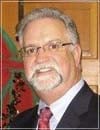
Jim Byrd serves as a teacher and pastor of 13th Street Baptist Church in Ashland Kentucky, USA.
Comments
Your comment has been submitted and is awaiting moderation. Once approved, it will appear on this page.
Be the first to comment!