If you would, go back with me
to the Gospel of John, where we were last Wednesday night,
John chapter 20. And I want to focus in on one
verse in this portion of scripture. I'll be mentioning several things
in the context. But here's my subject, and it's
in the form of a statement. I wanna talk to you about what
the disciples did not know. What the disciples did not know. Verse nine, that will be the
text. John chapter 20 and verse nine.
For as yet, they knew not the scripture. It's a sad commentary upon these
men. For as yet they knew not the
scripture that he must rise again from the dead. They did not know the script.
They did not discern the scriptures, what that means. They didn't
comprehend the scriptures. And I'm going to show you in
a little bit how our Lord Jesus often spoke to them about the
necessity of his death and his burial and his resurrection. And yet these men did not comprehend,
they couldn't take it in, that he would die. After all, they
were, like many of the Jews, most of the Jews, they were like
them in thinking that the Lord Jesus, God's Messiah, had come
into the world to establish an earthly kingdom. And yet we know
that was not the case, because our Lord said, he stood before
a pilot, and he said, my kingdom is not of this world. He didn't
come to establish an earthly kingdom. What need does He have of an
earthly throne? What need does He have of an
earthly kingdom? That kingdom that He came to
establish is a spiritual kingdom. It's a kingdom within the hearts
of men and women. He brings us out of darkness
and He translates us into the kingdom of light, into the kingdom
of God. It's a spiritual kingdom. We're
brought to rule. We're brought to be ruled over
and to be gladly ruled over by King Jesus. And we're born again
into the kingdom. Did not our Lord Jesus say to
Nicodemus, Verily, verily, I say unto you, except a man be born
again, he can't see the kingdom of God. He can't perceive the
kingdom of God. Now the disciples, these 11 men,
they were born again, and indeed they were the people of God.
They were the children of the Lord. They're the redeemed by
Christ Jesus. He has suffered, he has bled,
he has died for them to justify them before God. He has been
raised from the dead, which attests to the fact that he did the work
that God gave him to do. But still these men, their judgment
has been clouded. Very clouded. And there's much
they don't understand. For as yet they knew not the
script. There were some things they did
not know, but they did know Him. They did know Him. And I know
there's a necessity for us knowing the truths of the Word of God. Perhaps I could say it this way,
the very facts of the Word of God. But knowing the facts of
the Word of God, that's not salvation, it's knowing Him. And these men
knew Him. These men believed Him. These men loved him. We'll get
into the next chapter, and of course we know that our Lord
will quiz Simon Peter and say, Simon, son of Jonas, lovest thou
me? Do you love me? And he says,
yes, I love you. There's much I don't understand,
there's much I don't discern, there's much I don't comprehend,
but I do love and believe you. I'll tell you salvation's in
Christ Jesus and believing him. There may be several things we're
kind of fuzzy about. There may be some things we don't
understand. There may be some things the
Spirit of God hasn't been pleased to reveal to us. Because the
Spirit of God reveals things to God's children in a sovereign
manner. We must not expect all of the
people of God to know just exactly as much as we think we know. And I worded that very specifically,
as much as we think we know, because in reality, we don't
know much. We don't know much, but we know
Him. And that's what's vital. They
knew Him. Now, they came to the tomb, Peter
and John did. John outrunning Peter, but Peter
going right in and seeing that there was no body there, this
shocked them, but it ought not to have shocked them. It ought
not to have left them in a state of being perplexed because our
Savior had spoken to them about the necessity of His death, His
burial, and His resurrection. We know it's early on Sunday
morning when he arose. He died on Friday,
Friday afternoon, about three in the afternoon. And then, all
day Saturday, his body rested in the tomb. That's significant
because what was Saturday, the Sabbath, The day of, what was
that day for? Of rest. And his body rested
in the grave. He rested because he had finished
the work that God gave him to do. Even as it says in the book
of Genesis that God rested on the seventh day. God had done
the work of creation. It wasn't that God was wore out
or He needed to rest. He needed to relax. He needed
to recoup His strength. No, not that at all. But God
just ceased from His labor on the seventh day. And I heard
Lord Jesus. He has labored. He has labored
in the war for our souls. And he has won the victory. He
has defeated all of the enemies of his people. His work is done. He said, I have finished the
work you gave me to do. And in his dying breath, he said,
it is finished. The work is done. The war is
over. And he bowed his head and gave
up the ghost. So it's only fitting that his body rest on the Sabbath
day. And then, early the next morning,
he arose from the grave. Now, if you're confused, if you're
confused about how does that three days and three nights,
well, it's the way Jews compute it. their days and nights, because
any part of a day-night period was considered a whole day and
a whole night. And so that way, you get Friday,
Saturday, and Sunday, that would be three days and three nights.
He's been in the heart of the earth, and he arose. John 20 in verse one says, the
first day of the week cometh Mary Magdalene early. when it
was yet dark under the sepulcher and see if the stone rolled away
or taken away from the sepulcher. And then she ran, and then they
find out he's arisen. The Savior arose, as he said. And Luke, the angel says to those
who came looking for him, why seek ye the living among the
dead? He's not here. As he said, he's
risen, he's risen. But the disciples had difficulty
grasping this. And they miss him. I've heard a few people say that,
you know, about seeing the body of Christ Jesus, well it wouldn't
mean anything. I'd have to be honest and say
I would have loved to have seen him. I don't know if it had been
God's will for me to have lived back 2,000 years ago to have
laid eyes on Christ Jesus. and to be brought by effectual
grace to believe Him. It had been wonderful to see
Him. These men saw Him. These eleven men, they spent
so much time with Him. He called them. He loved them. He redeemed them. He had quickened
them. He had brought them to knowledge
of Himself. And they were with Him almost
every waking hour. And now, as far as they were
concerned, he's dead. They lost sight of all of his
promises about being raised from the dead. Now they don't see
him anymore and their hearts are broken. It's like in Song of Solomon,
the bride is seeking for the bridegroom. Where is he? My heart
is sick of love. Where is the bridegroom? I can't
see him. And that's the way these men
are. They're downtrodden, their spirits
are low, the women are sad, and everybody seems to have forgotten
the words that he spoke about being raised from the dead. Oh,
how quick we are to forget the Word of God that will surely
comfort us. And it shows that their faith
was rather shallow. But isn't ours just as shallow? Do we not have the Word of God?
Do we not have the promises of God? He says, I'll never leave
you, and I'll never forsake you, and then we get in a bad spot,
we get in a jam, we get in sickness, we get in a time of loneliness,
whatever it is, and then we tend to go to pieces. That's because
we're just like these men. We're sinners saved by grace. We're men and women to whom God
has been merciful and men and women who still sin and yet we're
forgiven due to the bloody sacrifice of our Lord Jesus. He had spoken to them about his
resurrection. At first he did so in a figurative
way, kind of like a veiled way. He kind of hinted at it. Go back to Matthew chapter 12.
Let me show you this. Look in Matthew chapter 12. Look at verse 39. Well, verse 38,
Matthew 12 and 38. And then certain of the scribes
and of the Pharisees, I'll wait till you get, I still
hear a page or two turning, okay. Matthew 12, 38. And then certain
of the scribes and of the Pharisees answered, saying, Master, we
would see a sign. We want to see something unusual.
We want to see a token of your power. If you say you're the
Son of God, we want to see a sign. We want to see evidence. We want
to see something very unusual. Well, they had seen all these
miracles and those didn't convince them. But he says in verse 39,
but he answered and said unto them, an evil and adulterous
generation seeketh after a sign. There shall no sign be given
it, but I'll give you one. That's what he said. I'll give
you one. You want a sign? I'll give you one. And it's the
sign of the prophet Jonas or Jonah. For as Jonah was three
days and three nights in the whale's belly, So shall the Son
of Man be three days and three nights in the heart of the earth.
Only three days and three nights. You know who's right there with
him? The disciples. It just went right over their
heads. It went right over their heads.
Look at chapter 16 in verse 4. Here's another veiled hint at
his resurrection. He says in verse three, in the
morning, well, I'll back up. Verse one, Pharisees, also with
the Sadducees, they came and tempting desired him that he
would show them a sign from heaven. One another sign, this is again.
He answered and said unto them, when it is evening, you say it
will be fair weather for the skies red. And in the morning
it will be foul weather, today, for the skies red and lowering.
O ye hypocrites, you can discern the face of the sky, but can
you not discern the signs of the times? A wicked and adulterous
generation seeketh after a sign. There shall no sign be given
it but the sign of the prophet Jonas, and he left them and departed. But then, later in this chapter,
he reveals himself to his disciples, and he does it by asking them
a question, who do men say that I, the Son of Man, am? And of
course, they gave several answers, and mercifully, they're trying
to be kind, they didn't say that some of them said he was Beelzebub.
But they were said, one of the prophets or John the Baptist.
He said, but who do you say that I am? Thou art Christ, the Son
of the living God, is what Simon Peter said. And it was a great
confession of faith. And right after that, after it
had been established who he is, and this is very important in
the context, After it had been established who He is, He then
told them what He would do, what would happen to Him. You've got
to know who He is first because who He is gives value to all
that He did. And so after commending Peter
for that statement that Christ said, upon this rock I'll build
my church, verse 21. from that time forth. Very key
words there, from that time forth. Before this, he hinted, he would
allude to it, he would speak in figurative language, but now
on the basis of having established who he is, from that time forth,
began Jesus to show, to manifest, to unveil, unto his disciples
how that he must go into Jerusalem and suffer many things of the
elders and the chief priests and scribes and be killed and
be raised again the third day. And of course, after that, Peter
pulled him aside and began to rebuke him and said, Master,
verse 22, be it far from thee, Lord, this shall not be unto
thee. This is not going to happen.
We don't want to hear, listen Lord, all of us, all 12 of us
have got together, we don't want to hear this talk about your
death. We don't want to hear any more
about that. And boy, I tell you the Lord, hey, this is the reason
He came into the world. This is His purpose for entering
here. To give His life a ransom for
many. And he turned and he said unto
Peter, Get thee behind me, Satan. Thou art an offense to me. You're
like a stumbling stone. For you don't savor the things
that be of God, but those that be of men. And so he begins to
speak to them openly about his death and his resurrection. Look
at chapter 20 and verse 17. Chapter 20 and verse 17. And
Jesus, going up to Jerusalem, took the 12 disciples apart in
the way, and said unto them, Behold, we go up to Jerusalem. And then he gives forth four
shalls. And the Son of Man shall be betrayed
unto the chief priests, and unto the scribes, and they shall condemn
him to death. And they shall deliver him to
the Gentiles to mock, and to scourge, and to crucify him.
And the third day he shall rise again. Four great shalls. It doesn't register though. And I say this, and I'm sure
none of you will misunderstand this. The Lord Jesus in giving
forth his word. Still there was the necessity
of the Spirit of God giving an understanding of what the Savior
himself said. Man can't receive anything unless
it's given to him of God. I mean, because even the Pharisees
and the scribes and the Sadducees, they heard the same word that
the disciples heard. Why is it that some understood
things and others didn't understand? Because the Spirit of God didn't
apply the words to those who didn't understand while He did
give discernment and understanding to others. And the Spirit of
God has not been pleased at this point to give them a comprehension
of the necessity of His death and His resurrection. Let me
take you to the book of Mark. Look at Mark 9. And all of this
reminds us of how much we need the Spirit of God to teach us
of the things of Christ Jesus. Look at Mark 9. Verse 30, and
they departed thence. and passed through Galilee, and
he would not that any man should know it, for he taught his disciples. And he said unto them, the Son
of Man is delivered into the hands of men, and they shall
kill him, and after that he is killed, he shall rise the third
day. But look at verse 32, but they
understood not, that say, And moreover, they were afraid to
ask. They were afraid to ask. Sort of embarrassed. I've had
people say to me, they say, let me ask you kind of a foolish
question. I said, there are no foolish
questions, just foolish answers. They wouldn't, hey, when you
ask a question, it's fearful. fearful of exposing their own
ignorance. I think that's the case with
some of the Lord's people. I would ask, but I'm afraid he'd
think I'm just stupid. I'm just ignorant. We're all
ignorant by nature, and we have to be taught. And I'll give you one more passage,
John chapter two. John chapter two. Our Lord has
gone here in this context. He's gone to Jerusalem for his
very first observance of Passover during his public ministry. He
will attend four Passovers during his public ministry. The last
one being at the time of his death. Here's his first one. And in the first one, he turns
over the tables of the money changers so forth, he makes a
scourge out of small cords, he drives the men out and he drives
the animals out. And in verse 17, after he did
that, his disciples, John 2, 17, his disciples remembered
that it was written, the zeal of thine house hath eaten me
up. Psalm 69 and verse 9. Then answered the Jews and said
unto him, what sign showest thou unto us, seeing that thou doest
these things? By whose authority do you do
this? And Jesus answered and said unto
them, destroy this temple and in three days I will raise it
up. Then said the Jews, 40 and six years was this temple in
building, and wilt thou rear it up in three days? But he spake
of the temple of his body. But as we go back to John chapter
20, it is obvious that all of these references that he made
to his death and resurrection the disciples didn't get it.
And you know, through the Old Testament, the resurrection of
our Savior was often depicted, inferred, indicated, and typified
throughout the Old Testament. For instance, a few weeks ago,
I had several messages on Noah and the ark. There, within the ark, was Noah,
his wife, his sons, and his daughters-in-law. They were in the ark, and that
ark was subjected to the wrath of God. That picture's the death of our
Savior right there. And as Noah and the rest of them
were in the ark, when that ark was subjected to, had to endure
all the vengeance of God, all the wrath of God, so we were
in the Lord Jesus. We were identified with Him.
We were put in Him by everlasting covenant grace in union with
the Savior. We were in Him when the wrath
of God fell on Him. The full vengeance of God, it
fell on the Savior. And He bore it, like the ark
bore the storm. The water came from beneath,
the water came from above. And there's the ark, enclosed
with water as it were. And that enclosure with water
pictures His burial in the grave. And we're there with Him. But
then the ark rested on dry ground. There's His resurrection. There's
the resurrection of the Savior. In fact, Peter uses the ark and
the flood to depict the death, the burial, and the resurrection
of our Lord Jesus in 1 Peter chapter three. And then his resurrection
was certainly typified by the deliverance of Isaac from the
altar after he had been given up to death three days before. It's why I read that passage
in Genesis 22 to just kind of stir up your memories, how that
God told Abraham, take your son, your only son Isaac whom you
love, and offer him up as a burnt offering on a mountain I'll show
you. Three days, three days went by. But the scriptures are very clear,
turn with me to Hebrews chapter 11, that Abraham, when he received
the command of God in his own mind and in his own heart, he
went through with killing his son. Hebrews chapter 11. And among all the evidences of
the faith of Abraham, nothing was more remarkable, nothing
was more noteworthy than the offering up of his son, Isaac. Hebrews 11, and look at verse
17. By faith Abraham, when he was
tried, offered up Isaac. And he that had received the
promises offered up his only begotten son, of whom it was
said that in Isaac shall thy seed be called. In other words,
when God told him to do it in his own mind, he did it. And he sets out. Let's go, son. Picks out two servants and says,
come on with us. Pack up the supplies because
we've got a journey to go on. But from the very moment of that
command of God to Sacrifice his son. Abraham went through with
it in his own purpose, in his own mind. And look at verse 19. After he
says in verse 18, of whom it was said that in Isaac thy seed
shall be called accounting, that God was able to raise him up
even from the dead. Accounting. That's a mathematical
term. We got an accountant over here.
and maybe I'm talking to some accountants. This is a mathematical
term, and it's also translated reckoned or imputed. It is a factual term, because
when you get into math, it's fact. It's not, well, you can
have this view, I can have, no, it's just fact. Two plus two
is four, that's just a fact. And Abraham, it says, he accounted
that God was able, he considered this fact. I'm gonna kill my
son and God's gonna raise him up. It was factual to him. See, it's just like Adam's sin
was imputed to all of his race. That's just a fact. You can't
argue with that. His sin was reckoned to all of
us. All the sins of God's people
were reckoned to the Lord Jesus, accounted to the Lord Jesus.
That's just a fact. You can't change it. They weren't
reckoned, the sins of the whole world weren't reckoned to Him,
but the sins of His people were reckoned to Him, and the righteousness
established by the death of the Lord Jesus was accounted or reckoned
or imputed or factually given to us. That's just a fact. And Abraham looked by faith,
he believed God, and he believed that God was able to raise up
his son. It was just a fact in his mind.
And so Abraham, he just went through with it. In his own mind
and heart, he killed his son. He believed. He knew. He knew. God said, in Isaac shall thy
seed be called. Well, human reasoning would say,
but if you kill Isaac, there goes the promise. Abraham believed
God. He just accounted that God was
able to raise him up. There's a picture of the resurrection
of the Lord Jesus, right there in that story of Genesis chapter
22. And then it says this, look at
verse 19, the rest, accounting that God was able to raise him
up even from the dead. From whence also he received
him in a figure. or as an example, or this word
would certainly apply here, as a parable. to teach a lesson. What is it teaching? That whole
story about Abraham offering up Isaac, what did this teach? What's the purpose for all of
it? To show us the substitutionary death of the Lord Jesus Christ
and his victory over death. He arose. He arose. But the disciples, it's like
they didn't connect the dots on this. And I'll tell you something,
none of us will ever connect the dots of spiritual things
apart from the revelation of the Spirit of God. If you can
connect the dots, if you can discern these glorious spiritual
subjects, the Lord has blessed you. And our time's gone, but
I'll give you another illustration. Israel. going through the Red
Sea. Do you know how many days it
had been when they entered into the Red Sea since they had killed
the Passover lamb? Take a wild guess. Three days. Three days. And they go into
the Red Sea. There's burial. And look a yonder
on that other side. You see all those folks coming
out? It's like a resurrection! That's the way it is. So you see, the Scriptures, they're
full of the death, the burial, and the resurrection of the Lord
Jesus Christ, because this is so critical. This is so vital. So vital. And so we read in Romans
chapter four that He was delivered for our offenses. and raised
again for our justification. And the word really there is
because of or on account of. He was raised again because he
did the work. And the Lord was patient with
these men in teaching them. And he's patient with us. Aren't
you thankful for that? And I confess to the Lord. I
mean, I've been preaching the gospel a long time, but I look
in the scriptures and I say, Lord, there's so much I don't
understand. Help me. Give me some discernment here.
How can I preach to others unless I have some amount or degree
of comprehension? Lord, let me see this. Let me understand this. Let me
believe this. and digest it and then give it
out so that the people of God will say, yes, I see. But he has to teach us, doesn't
he? And thank God he does. And may the Lord enable us to
be willing students, anxious to learn.
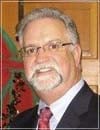
About Jim Byrd
Jim Byrd serves as a teacher and pastor of 13th Street Baptist Church in Ashland Kentucky, USA.
Comments
Your comment has been submitted and is awaiting moderation. Once approved, it will appear on this page.
Be the first to comment!