It is good to be here in the
place of worship. So thankful that God has given
us a desire to sit under the truth of the message of the Lord's
amazing grace and undeserving sinners through the Lord Jesus.
And we're very grateful to him for his mercy in revealing to
us the very gospel of his grace. Well, let me read a few verses
here from John chapter 20. And of course, I'll begin in
verse 1. John chapter 20 and verse 1. The first day of the
week cometh Mary Magdalene early. In fact, it was so early that
it was yet dark unto the sepulcher and seeth the stone taken away
from the sepulcher. And then she runneth and cometh
to Simon Peter and to the other disciple that would be, of course,
John. whom Jesus loved, and she saith
unto them, they have taken away the Lord out of the sepulcher,
and we know not where they have laid him. By the way, just kind of side
note that word we, even though John is led to focus only upon
Mary Magdalene, We know from reading there in Matthew 28,
which Joe just read to us, that Mary, the other Mary, was with
her. And so there is some of the critics
of the Bible, they try to show inconsistencies in the scripture. There is no inconsistency here. It's just that John is led to
focus in upon one of the women. But it's obvious there's more
than one there because she says, we, we know not where they have
laid him. Verse three, Peter therefore
went forth and that other disciple and they came to the sepulcher.
And so they ran both together and the other disciple did outrun
Peter. After all, we know John was the
youngest of the disciples. And so he outran Peter, and he
came first to the sepulcher. And he, stooping down and looking
in, he saw the linen clothes lying. Yet went he not in. Then cometh Simon Peter following
him. without even looking in, he immediately,
and of course this is kind of the character of Simon Peter,
he's always acting, he's always doing something, and so he following
him and he went into the sepulcher and then he see the linen clothes
lie and the napkin, which was about his head, not lying with
the linen clothes, but wrapped together, literally rolled together
is the word. Rolled together in a place by
itself. And then went in also that other
disciple which came first to the sepulcher and he saw and
believed. For as yet they knew not the
scripture that he must rise again from the dead. then the disciples
went away again under their own. But Mary stood without at the
sepulcher, weeping. And as she wept, she stooped
down and looked into the sepulcher. And she see two angels in white,
and they're sitting, one at the head and the other at the feet. where the body of Jesus had lain. And they say unto her, Woman,
why weepest thou? She saith unto them, Because
they have taken away my Lord, and I know not where they have
laid him. When she had thus said, she turned
herself back, and she saw Jesus standing. and knew not that it
was Jesus. Jesus saith unto her, Woman,
why weepest thou? Whom seekest thou? She, supposing him to be the
gardener, saith unto him, Sir, if thou hast borne him hence,
tell me where thou hast laid him, and I will take him away. Jesus saith unto her, Mary. She turned herself and said unto
him, Rabboni, which is to say, master. And Jesus saith unto
her, touch me not. That is, literally, stop holding
on to me. For I am not yet ascended to
my father. but go to my brethren and say
unto them, I ascend unto my father and your father and to my God
and your God. Mary Magdalene, she came and
told the disciples that she had seen the Lord and they had spoken
these things unto her. A sweet passage of scripture,
isn't it? Well, we'll get into a little
bit of this tonight. We won't, by any means, exhaust
this passage of scripture, but we'll see what God has in store
for us this evening as we look into this. Let's bow our heads
together, remembering, of course, these that have been mentioned
and others that God knows of. would say to you, if you feel
led, God brings him to your memory. Brother Fortner is a very ill
pastor of Grace Baptist Church in Danville, and if God gives
you, if he brings him to your memory, pray for him, pray for
his family. He just had a drainage tube inserted
in one of his lungs, and he is, a very, very sick man. Well, let's bow our heads. Lord,
it is a wonderful honor to be able to speak to you and to know that through our
Lord Jesus, our great mediator, that you hear your people You
do receive us and you receive all of our supplications and
our requests. Lord, we come to you, first of
all, to worship. We come to you in thanksgiving.
We're mindful that every good gift and every perfect gift,
they all come from your hands. Thank you, Lord, for the benevolence
that you show to us for daily mercies and kindnesses. Lord, all of us would have to
say, as did Jacob of old, I'm not worthy of the least of your
mercies. And yet, as we study the scriptures,
we find that you have given to us all spiritual blessings in
Christ Jesus. My, what a blessed people we
are. There's nothing that we lack
that you demand and require. We have been washed in the bloody
sacrifice of the Lord Jesus, and through that sacrifice, made
to be the very righteousness of a holy God. We're fit, made
fit to enter in to everlasting glory through the fitness, through
the beauties, yes, through the comeliness of our dear Savior. Oh, God, we shall thanks be found,
where shall words be found to express our thanksgiving to you? Surely we will spend eternity
blessing you and thanking you for all that you have given us
in the Lord Jesus Christ. What a great Savior He is. Oh,
how mighty He is the mighty God who took upon Himself the responsibility
of saving your people. And He did, in fact, save us. He bore our sins into a land
uninhabited. He buried them in the depths
of the deepest sea. He put them behind your back. Father, you have said of your
people that their sins and iniquities I will remember no more. Oh, blessed forgiveness. Oh,
blessed washing away of our sins through the blood of Christ.
And Lord, we thank you. Father, bless the sick ones.
of our own congregation and of others as well. Many of your
dear people suffer, unable to meet with the saints of God.
Indeed, it's one of the mysteries David himself could not understand. He saw the wicked spreading themselves
like a green bay tree, seeming not to have any difficulties.
The wicked who have no love for you, many of them enjoying very
good health. And yet, some of your people
suffer. They're sick. Their bodies, many
of them racked with pain. And they know a weakness that
many of us have never known. But if we live long enough, most
likely we will. Lord, these things are in your
hands, and we commit to you those that you love especially. And we know that you're working
all things according to your eternal purpose, and all things
will work for the good of your dear children. So bless and strengthen
and heal according to your will. And Lord, if you're not pleased
to give healing mercies, we bow to your will. Your will be done. We ask that you would give encouragement
to the heart And Lord, we pray that you'll indeed strengthen
the inner man. And for all of us, I pray that
we'll grow in grace and in the knowledge of our Lord Jesus Christ.
We pray for our missionaries, those who labor in the gospel,
so thankful for them, for their faithfulness. We pray that you'll
bless Brother Suyo as he is in Africa even now. ministering
the Gospel of the Lord Jesus. We're thankful for the doors
that you have opened for him to go and preach, and for the
gifts that you've given him to communicate the Gospel. We consider
it an honor and a privilege to support such men, and bless in
his ministry. We thank you for Brother and
Sister Heller. I pray that you'll bless them
in New Guinea. preachers that we support, Brother
Shepard, Brother Tim James, and Lord bless our efforts at getting
the gospel out here. We're thankful for the means
that you've given us and I pray that you'll continue to bless
your word as it goes forth as we endeavor to preach from this
pulpit the glorious gospel of the free grace of God to sinners. through Christ Jesus, our Lord.
Thank you for these who are here. Thank you for the faithfulness
of this congregation through many years, holding forth the
gospel light. And we're grateful, Lord, for
the way that you have used this local assembly. And we ask that
you would continue to do so. We recognize we're totally dependent,
Lord, upon you. You keep us faithful and we ask
you to provide for our needs and give us doors of opportunity
to set forth the gospel of Christ Jesus. So bless now as we look
into this portion of scripture and magnify your Son, Father,
and bless us, teach us, and save the lost. These things we ask
in the name of our Savior, the Lord Jesus Christ, and for his
sake, amen. Well, we continue our studies
tonight in the Gospel of John, and I've read to you a good portion
of John chapter 20, but I want to begin in the last two verses
of chapter 19, And then this is going to sort of be our theme,
looking in the Savior's sepulcher or in his tomb. I'm sure that
as I read these verses of scripture, you noticed that John looked
into the sepulcher, he looked into the tomb, as did Peter and
John. And then later in the passage
that I read to you, we saw that Mary Magdalene stooped down and
she also looked into the tomb of our Lord Jesus. And so, in
just a little bit, I want to direct your attention onto that
which they didn't see, but also I want to direct your attention
to that which they did see. Because it wasn't that the tomb
was totally empty. It was empty of our Lord, but
it wasn't empty. And we'll be looking at that
in just a few minutes. But I want to begin here in chapter
19, the last two verses, because it tells us here in verse 41
of John 19, now in the place where he was crucified was a
garden. And in the garden, a new sepulcher
wherein was never man yet laid. There laid Jesus, therefore,
because of the Jews' preparation day for the sepulcher or the
Savior's tomb, this tomb that belonged to Joseph of Arimathea,
that he graciously donated to the Savior. The sepulcher was
near or close or nigh at hand. Sepulchre, as you know, belonged
to Joseph of Arimathea. It was a new tomb. He provided
it for the Savior. He loved the Savior very much.
He was a member of the Sanhedrin, but he had not publicly stepped
forward and confessed the Lord Jesus Christ until the Savior
was crucified. And there we see the awesome
power of the bloody death of our Lord Jesus. It draws out
into the open. those who had previously been
what the scripture calls secret disciples, Joseph and Nicodemus. Oh, how powerful is the blood
of our Lord Jesus Christ that even his people who are hesitant
to step out and maybe fearful, and of course Joseph was and
Nicodemus was, yet such was the awesomeness and the omnipotence
of the death of the Lord Jesus that these two men step forward.
Joseph to donate his own sepulcher to the Savior and then of course
Nicodemus to bring 100 pounds and in our kind of figuring it the way we
figure weights, about 72 pounds of delightful, precious ointment
is what Nicodemus brought. And these two men, they step
up to the plate, so to speak, when their help was needed. Now, this was in a garden. In
a garden. And I did a little bit of reading
about this garden. A lovely garden it was. Flowers. You'd expect to find that in
a garden. It's not a vegetable garden.
It's a flower garden. It's blooming bushes and olive
trees. It's a garden full of life. Maybe, by the way, this is how
flowers came to be. the traditional thing to bring
to a funeral. Perhaps this is where it originated. But be that as it may, to lay
the dead among beautiful flowers is maybe man's effort to hide
the real scene, because it's a scene of death. And we may
bring gorgeous flowers, And of course today, with the dead,
taking them to an undertaker, a funeral director, they're embalmed
and made to look as much alive as they could possibly be made
to look, with all the beautiful arrangements around them. It's
still death. It's still death. In fact, even the flowers that
are brought or they've been cut and arranged in lovely arrangements,
they'll soon begin to fade. The petals will drop. The beauty departs in the end. And so, at last, all that's left
are the signs of death. Let this be made how fitting
that the Lord of life should be laid in a tomb, in a garden,
for there was in another garden that was originally beautiful,
much more beautiful than this garden, a garden that had never
been touched by sin. A garden made by the hand of
God. God planted all the flowers and
the blooming bushes and all the fruit trees and whatever was
in the Garden of Eden. God planted it and you know it
came forth from Him as being absolutely beautiful. But, that's
where death occurred. In that garden. When Adam decided
he would defy God. and he died spiritually. And
then in that garden, God killed animals. That's the first location
of death on planet Earth, was in a garden. How fitting it is
that in another garden, he who is going to be the remedy for
death, that's where his dead body will be laid. This, our Savior's tomb is in
the realm of death. Which brings to reality something
that we all know that we're gonna have to face. We're going to
have to, we'll have to give up our lives someday. And death
will manifest itself to each of us. That's just the way of
all flesh. And death leads men to ask some
questions. Go back with me to the book of
Job, please, Job chapter 14. And here's some very powerful
questions in Job chapter 14, but I'm only gonna focus in on
one of them in Job chapter 14, because there are actually five
very pertinent questions, vital questions that are asked here
in Job chapter 14. The second verse, and I'll just
give all four of them to you, Job 14. In the second verse,
here's, and dost thou open thine eyes upon such in one? That's
the first question, especially considering the fact that Man,
he flees as a shadow, he continueth not. So the question number one,
dost thou open thine eyes upon such a one? Number two, bringest
thou me into judgment with thee? Question number three, who can
bring a clean thing out of an unclean? Not one. Question number four is in verse
number 10. But man dieth and wasteth away,
yea, man giveth up the ghost. And here's an excellent question.
Where is he? Where is he? He's somewhere.
Where is he? He's either in heaven's everlasting,
wonderful, beautiful glory, or he's in hell. Where is he? And
then the fifth question is in verse 14, and this is one I'll
just focus on for a little bit. If a man die, shall he live again? Oh, that's the question. If a
man dies, shall he live again? And Job says, all the days of
my appointed time will I wait till my change come. That is,
when my body dies, my soul goes back to God, but my body will
wait. Where is it going to wait? It
will wait in the grave until a change comes. When's that going
to happen? Well, look at the next verse,
verse 15. Thou shalt call. What call is this? Here's an
effectual call. As you read through the scriptures,
there is the effectual call of grace, right? That's the effectual
call of grace, regeneration. Another call is when death comes
calling. Both calls are effectual. There's
the effectual call of grace, there's the effectual call of
death, and number three, there's the effectual call of the resurrection.
And Job says, thou shalt call in the resurrection, and I will
answer thee. For thou wilt have a desire to
the work of thine hands. And what Job is saying is, Lord,
you care not only about my soul, but my body. And so when my body
dies, it will wait. What's the body waiting for? All the millions and millions
of saints of God who have died down through the years, what
are they waiting for? They're waiting for an effectual
call. What is that effectual call? It's the call of the resurrection. When the Lord shall call these
bodies out of the grave. Now I know that to the natural
man, death is a very frightening thing. The thought of dying.
Men don't want to die. Men want to live. God has made
us in such a fashion that we want to hold on to life, even
those who are the people of God. There's a natural want to live. Now we want to see the Savior. We want to be with the Lord in
glory. We want to worship Him in the
perfection of the saints above. But we also want to live, continue
to live here if God would be pleased to continue our lives. And for those who are the people
of God, we should not fear death. We should not fear death. Look
over at Job. Hold your place there. Look over
at Job chapter 18. And my Bible's just one page
over. Look at Job chapter 18 in verse
14. Job 18 in verse 14. His confidence shall be rooted
out of his tabernacle and it shall bring him to the the king
of terrors. Here is death personified as
being the king of terrors. And it is a king. Because you
see, death reigns. Romans chapter 5 says that. Death
reigns. You know how extensive the reign
of death is? It's all across the universe.
That's the vastness of the reign of death. We read in Romans chapter
5, death reigned from Adam to Moses. And it reigned from Moses
to the days of the Lord Jesus. And it reigned from the days
of the Lord Jesus to today. Death reigns. And we know that
because all around us, people drop and die. And we're going
to die. Death reigns. It is the king
of terrors. There's nothing so terrifying,
especially to an unbeliever, a moment after death, just a
snap of your fingers after death, death will be to them terrifying. It will be terrifying because
death immediately takes them into the presence of God. God
who is holy. God who is angry with the wicked
every day. God who demands righteousness.
God who numbers all the sins of all of those who die in unbelief. It will be a terrifying day and
the terror of an unbeliever will never end. Death is the king
of terrors. But it isn't and must not be,
it should not be, the King of Terrors to the people of God. And not all people viewed death
as being the King of Terrors. It wasn't the King of Terrors
to Simeon, was it? No. Because the Lord had said
to him, you're not going to die until you see the Lord's Christ. And one day Joseph and Mary brought
in this infant, and Simeon took that infant in his arms, and
he looked in his face, and he saw the face of the God-man. He saw God's salvation. Salvation
is not a what, it's a who. It's somebody. And his work. And Simeon looked in that face
and he said, now I'm ready to depart. Why? Mine eyes have seen
thy salvation." Who's ready to die? Of whom may it be said,
death will not be a terror to you? Those who've seen God's
Christ. Those who've seen Him as the
only Savior, as their righteousness. Yeah, Simeon said, I'm ready
to go. I'll tell you another fellow,
Death wasn't a terror to the Apostle Paul. He wrote to Philippians,
for me to live is Christ, and to die is gain. He said, I'm ready, I'm willing
to depart to be with Christ, which is far better. In fact,
he said, I'm even in a straight betwixt. whether to stay here
or go home and be with the Lord. I'd rather go home and be with
the Lord. But he said, for right now it's better for me to stay
here. Death wasn't the king of terrors to him. And death need
not be terrifying to the people of God. It should not be. And
if death terrifies us, then we have the wrong... We either have
no confidence in Christ Jesus, and no confidence in salvation
by grace, or else we're looking at things solely through the
eyes of the flesh. Death will only bring us into
the presence of our Heavenly Father. At death, angels of God
come to us like they did to Lazarus in Luke chapter 16 and escort
us into the presence of our blessed Savior. It is not the King of
Terrors for the people of God. Go back to Job 14. Just turn back a page now. And just to say another thing
or two about this King of Terrors, When our body dies, it will have to be disposed of. Something will have to be done
to the body. It's like Abraham said of Sarah. He loved her in
her younger years. Yes, she was beautiful to him.
He loved her through all those years that they were married,
but she died and corruption began to set in. He said, I must bury
my dead out of my sight. And we have to do that. But, Sarah's body and Abraham's body,
and all the bodies of the saints that have died down through the
years, those bodies are watched over. You remember reading in
the book of Jude that Michael guarded the body of Moses? And
I'm telling you, wherever the bodies of the people of God are,
God knows exactly where they are. And with some of them, it's
only dust. But the Lord guards those bodies,
and one of these days He will call, and they will answer."
Now wake up! In the beauties of the life that
Christ gives them, and no more age, no more pain, no more feebleness,
no more illness, no more disease, nothing like that! to be with
Christ and like Christ. Go back here in Job 14. Look
at verse 15. He says, Thou shalt call and
I will answer thee. It's as Job likens it to the
Lord calls and Job says, my body will say, here I am. Here I am. He says, thou wilt have a desire
to the work of thine hands. In other words, Job is saying,
I am the work of your hands, Lord. Not only my salvation,
but my very body. We are His workmanship. Is it
not written in the Scriptures that we're fearfully and wonderfully
made? That's what it says, we're fearfully
and wonderfully made. And the Lord has a desire, He
has a strong desire, a desire that you cannot imagine for you
who are His people. This is an everlasting love. He even says this in verse 16. For now thou numberest my steps,
dost thou not watch over my sin? You've watched over it to make
sure it's gone. You took care of it, in other
words. You took care of it. And so he says in verse 17, my
transgression is sealed up in a bag. And thou sewest up mine
iniquity. They're all sewn up, cast in
the depths of the deepest sea. Listen, our Lord Jesus has, He's
died. In Hebrews chapter two says,
to deliver those who through fear of death were all their
lifetime subject to bondage. Our Lord told His disciples shortly
before His death, it was when He was preaching to His 11 in
John chapter 14 and verse 19, He said, because I live, you shall live also. Our bodies will live again. And
our Lord's body, though it died, it would live
again. Go back to John 14. Let me show
you this. In John 14. So we're talking about his death. and his burial and now his resurrection. And his resurrection is what
assures us of our resurrection. We need not fear death. David
said, Yea, though I walk through the valley of the shadow of death,
and I understand, and you do too, that the whole of our life
is in the valley of the shadow of death. We're always walking
in the shadow of death. We never know when death will
reach out and take us. We're always in its shadow. A shadow indicates something
that's real. It takes something real to cast
a shadow. Death is real. But he says, though
I walk in the valley of the shadow of death, I will fear no evil. No evil shall befall me. What's
the reason for that, David? He says, because thou art with
me. Thou art with me. Well, here comes Mary Magdalene early. It's still dark. She's the one out of whom the
Lord cast seven devils. Pay no attention, pay no attention
to all those that say that she was guilty of adulteries and
she broke that commandment, thou shalt not commit adultery. That's
a bunch of stuff the Catholics have thrown in. We're not told
that in the scriptures. She had seven devils cast out,
that's what the scripture says. She comes to the sepulcher when
it was dark. She sees there's no stone there. She runs to Simon Peter, she
runs to John, and she says, they have taken away the Lord out
of the sepulcher and we know not where they have laid him. She goes on the assumption that
since the stone has been rolled away, that the Lord's body has
been stolen and they did it, whoever they is, whoever they
are. But she erred in this. She hasn't looked in, she doesn't
look in to the sepulcher till further down in verse number
11. But she sees the stone rolled away and immediately jumps to
this conclusion. They've taken his body. And that's
the way we are in our negativity. We assume the worst. And you know who did it? They
did. Whoever they are, they did it. They've stolen his body. It's not they, Mary, it's the
Lord Himself who is governing this situation. And we tend to
look at the circumstances of life and the events of life and
we see something that is out of position like that stone and
we just jump to the conclusion, oh no, they stole His body away. Hang on a second. Isn't the Lord
sovereign over every situation? Doesn't he govern all things?
He governs, he was governing in this situation as well. It's like we know the Lord's
body was not there because he arose. And it's like the angel
said to them there in Luke chapter 24, why seek ye the living among
the dead? He who had died conquered death.
O death, where is thy sting? O grave, where is thy victory? The sting of sin, the sting of
death is sin. Sin is death's stinger. But our Lord Jesus has put the
sins of his people away. He's taken the stinger out. And so, She tells Peter and John,
they come running. And as I said, John outruns Peter. He's the youngest of all the
apostles and he lived to be the oldest. So verse four says they both
came together. John stoops down and he looks
in. He looks in and he sees something. There's no body there because
the Savior arose. But he looks and then Simon Peter
looks. As they look into the tomb, what
would they have seen? Well, there's some things that
are specifically mentioned, and there's some things that are
obvious. Number one, the 72 pounds of
ointment, of perfume. That would have still been there.
And when they walked in, when Simon Peter walked in, then finally
John did, well, it must have smelled wonderful. There was
no odor of death. Because you see, our Savior's
body could not see corruption. There wasn't the smell of death
in there. There was the smell, the fragrance
of lovely flowers. Perfumed, as it were. He perfumed the tomb. The spices were still there. You see, the Savior's death,
there's several things we can learn from this. The Savior's
death was a sweet-smelling savor to the Father. Everything about
it smelled sweet. It was pleasant to the Father.
It satisfied His justice, His honor, His integrity. The Savior
has borne all the wrath and the enmity of God toward the sins
of all of His people, and the Father is well pleased with His
Son. And the Father smelled, according
to Ephesians chapter 5 and verse 2, A sweet smelling savor in
the death of the Lord Jesus? And then I'll say this about
these spices, these fragrances. The Lord has made the grave to
be a fragrant smell to his people. You know what the scripture says
about the death of the saints of God? Precious in the sight
of the Lord. Precious in the sight of the
Lord is the death of his saints. It's delightful. When one of us dies, someone,
the Lord's pleased to remove one from our congregation, one
who loves the gospel. It is, it's a bitterness to it
for us. Because we miss them. But not
for that one who goes. It's delightful. It's wonderful. Because they leave here and there
in the presence of the King of glory, Christ Jesus. And it's everything about that
to be wonderful and beautiful. And it would be pleasant for
them because it's to be absent from the body and present with
the Lord. And so the first thing that they
look in, oh, the Savior's body is not there. He's gone. That body's gone. But the, oh, that fragrance is
still there. So delightful. And when you think
about the fact that He has conquered death for us, I say, breathe
that in deeply. That's just wonderful. And then
secondly, I'll tell you something else was still in there. The
linen, linen clothes. Verse 6, Then cometh Simon Peter,
following him, he went into the sceptre, and he looks, and what
does he see? There's the linen clothes. Now
if his body had been stolen by somebody, they could not have
got him out of the linen clothes and then those linen clothes
would still be in order. If they had stolen his body,
they would have taken his linen clothes and all. The linen clothes were still
there. What does that say? It says he
conquered death. Give you an illustration, John
chapter 11, Lazarus died, right? Our Lord raises him from the
dead. When he raised him from the dead, you know what he still
had bound around him? The grave clothes. And the Lord
Jesus said, loose him and let him go. But our Lord Jesus, he
left the grave clothes in the grave. That's where they'll stay.
Because he arose. He conquered death. He conquered
death. You see, Lazarus, he still has
got the grave clothes, because guess what? He's going to need
them again. because he had to die again.
But our Lord Jesus, once in the end of the world, hath he appeared
to put away our sin by the sacrifice of himself. By one death, he
satisfied the justice of God. He'll never die again. He doesn't
need those great clothes. They're still in there. Tell you something else that
was there, look at verse seven. The napkin. The napkin was still
there. What's that? It's like a handkerchief.
In fact, that's what it was. It was used to wipe sweat away. And it was used to wrap around
the head of the deceased. And here they see this napkin
or handkerchief rolled up and laid by itself. Let me hold you place there if
you would look at Psalm 56 verse 8. These handkerchiefs had several uses and one of which was to wipe
away perspiration. Another usage was to catch tears. Look at Psalm 56 in verse 8. Thou tellest my wonderings, put
thou my tears into thy bottle. Are they not in thy book? Here's
what they'd do. They'd have a handkerchief. Let
me see if I got a handkerchief in my pocket. I do. They'd have a handkerchief. The
Egyptians did this whenever they had a funeral. They'd go around
and they'd wipe the tears of all the mourners until finally
that handkerchief got wet. And then they'd take a bottle.
Squeeze those tears into that bottle and seal them up. They're not going to forget about
the tears of those who are dear to them. I'll tell you what our
Lord Jesus does. Hey, all of us who are the people
of God, we've shed tears, haven't we? We've shed tears for a multitude
of reasons. We've shed tears. The Lord takes
a handkerchief and he dabs our tears. He wipes our tears. And
David, in the Psalms, he says, and he squeezes those tears into
a bottle. You think he forgets that you
grieve and mourn. You think he's forgotten your
tears. He's touched with the feelings of our infirmity. That's
what the scripture says. He don't forget your tears. Maybe
some of us might forget your tears. In fact, some of us may
not even know that you weep. But He knows. And He's got a
handkerchief. He's got a napkin, as it were,
to wipe the tears. And you know what it says in
heaven's everlasting glory? He'll wipe away every tear from
our eyes. That's a sweet thought, isn't
it? No more weeping in heaven. You weep over your children.
You weep because you feel bad. You weep because you're hurt.
Weep over the wretchedness around you. You weep over your own sin. You weep over your own guilt.
We weep for a multitude of reasons. And God sees every tear. Every
tear. When your kids weep, that touches
your heart, doesn't it? Tell you what, to see my daughter
cry. Rare occasion to see my son cry. That gets to the heart, don't
it? And in some way, I know the Lord, He's not like we are and yet
He is like we are. And He sees us weeping and He
has feelings toward us. He has feelings toward us and
He pulls out, as it were, when we weep, He says, don't cry. I'm here. Maybe that'll help
you. Maybe that'll help you next time
you're burdened. Just remember the Lord Jesus
is there because He left that napkin behind. He left that napkin
behind to comfort you. Yeah. Tell you something else
that was there, boy, I've got to go quickly. Angels were there. Mary saw them in verses 11 and
12, but Mary stood without at the sepulcher weeping, and as
she wept, she stooped down, and then she looked in. And what did she see? Two angels. Peter and John didn't see them
because it wasn't for them to see those two angels. It was
for Mary to see them. one at the head, and one at the
feet, where the body of Jesus had lain. The Lord knows just
what His people need. He knows if you need to see an
angel. That's what she needs. She needed
to see two angels. And He provided them. There they
are. And they've got a message for
her. Woman, why are you crying? She said, because they, there's
they again, because they have taken away my Lord and I don't
know where they've laid Him. And when she had said thus, those two angels sitting there,
I can't imagine they stood up. Because looking through that
entrance, There's the Master. And I just think that she saw
them kind of looking around her. And so she just turns around
to see what they're looking at. Lo and behold, she's looking
at the Master. She didn't recognize Him. She
didn't recognize that His presence was there. But He was there. And I say to all the people of
God, there's sometimes we feel like we're the Lorded. Where is He? Where's the Lord? Just turn around. He's right
there. He said, I will never leave you. And I'll never forsake you. Angels
were there. They are ministering spirits
sent forth to those who shall be the heirs of salvation. And
I'll give you two more quickly. I'll tell you something else
that was in the tomb. A way out. An open door. There's a way out. It's called
the resurrection. And one more thing that was in
the tomb. And he wasn't in there till the
stone was rolled away. And when the sun came up, light. Light. You know what the grave
is? It's a place of darkness. Gloominess. We know. We know. We buried a bunch of people.
I buried family members. You have too. If you haven't,
you will. It's a gloomy place. But I'll tell you what, when
the Lord Jesus is around, He makes even the darkness to be
light. That's right. Ain't no darkness where He is.
And the light of His glory shines round about His people. Hope that'll help you. as you
remember these things. And next time you're weeping,
lonely, sad, facing death, it's not the king of tarot's to you.
It's your friend. Says the master says, the father
says, it's time for you to come home. And then you go. Then you go. And you smell the
fragrance of His presence.
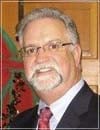
About Jim Byrd
Jim Byrd serves as a teacher and pastor of 13th Street Baptist Church in Ashland Kentucky, USA.
Comments
Your comment has been submitted and is awaiting moderation. Once approved, it will appear on this page.
Be the first to comment!