Bootstrap
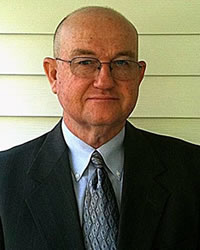
Gary Shepard

God Our Savior II

Ephesians 1:7-13
Gary Shepard October, 25 2013 Audio
0 Comments
Gary Shepard
Gary Shepard October, 25 2013

Sermon Transcript

Auto-generated transcript • May contain errors

100%
You would open your Bibles again
tonight to the book of Ephesians chapter 1. I was talking to a dear lady last
night after the service who told me about her dad who
was a preacher. And she said, he was no big preacher. And the thought came to my mind. If you knew my humble beginnings, if you knew my ignorance, If you knew the thoughts I have
sometimes, if you knew my weakness, you probably wouldn't even hear
me. It takes more than a 500-mile
drive to make a man a preacher, and I thought about the words
that were spoken to a man by the name of Amos, when the big preacher said, why don't you go preach
your message somewhere else? Don't prophesy again anymore
at Bethel, for it's the king's chapel. It's
the king's court. And then this man by the name
of Amos, he said to Amaziah, I was no prophet, neither was I a prophet's son, but I was a herdman. and a gatherer
of sycamore fruit. And the Lord took me as I followed
the flock. And the Lord said unto me, go
prophesy unto my people Israel. Well, I was not a herdman. I was not a prophet's son. I was just a floor man, son. With no qualifications and still
none. No credentials except what thus saith the Lord. If you remember last evening,
I begin by talking about God our Savior. In all of that triunity of His
glorious and sacred persons, He is God our Savior. And I tried from these verses
to set forth the acts of the Father. God the Father as God
our Savior. And tonight, I want us to look
at God the Son as our Savior. So if you'd look with me in verse
7, the apostle continues saying,
in whom We have redemption through His blood. Now, he's just talked
about God making us accepted in the beloved. And that is the well-beloved,
the only begotten Son of God, the Lord Jesus Christ, in whom
we have redemption through his blood, the forgiveness of sins
according to the riches of his grace. Wherein he hath abounded
toward us in all wisdom and prudence, having made known unto us the
mystery of his will, according to his good pleasure which he
hath purposed in himself, that in the dispensation of the fullness
of times he might gather together in one all things in Christ,
both which are in heaven and which are on earth, even in him,
in whom also we have obtained an inheritance, being predestinated
according to the purpose of him who worketh all things after
the counsel of his own will, that we should be to the praise
of his glory who first trusted in Christ. in whom ye also trusted after
that you heard the word of truth, the gospel of your salvation." You see, the Apostle Paul has
not stopped in this exalting or adoring or praising God, our
Savior. He simply moves to that next
person in the Godhead who is co-equal with the Father, co-eternal
with the Father, and he begins by thanking God and praising
God in that second person, the Lord Jesus Christ. And if there is something that
is so obvious about Jesus, simply by virtue of his very name, it
is that he is the Savior. Jehoshua, Jehovah's Savior, or
Jehovah the Savior. Jehovah Jesus. And he goes on
and he speaks of him as being, as I said, co-equal with the
father, not less than the father. You see, some people struggle
by simply these things, such places as when he says, my father
is greater than I. But when he says something like
that, he speaks there in this character or role as Jehovah's
servant in submission to the will of the Father, which is
that will whereby of all that the Father gives him, he should
lose nothing. He should accomplish this work. on their behalf. Because, if
you remember, He also says this to keep us straight on this,
to not imagine that He is some lesser God or lesser person in
the Godhead. He simply says it like this,
I and my Father are one. He is the one who thought it
not robbery to be equal with God. So the only way that you
could ever be equal with God is to be God yourself. And so in verse 7, the Apostle
continues speaking in this personal revelation of God as our Savior,
and this is what he says. This is what he says of the Beloved. He says, "...in whom we have
redemption through His blood, the forgiveness of sins according
to the riches of His grace. Now, he says that He hath redeemed
us. I know what preachers say. They
say, well, if you'll do this, or if you'll believe this, or
that, or do something else, God will redeem you. No. Redemption
is not contingent upon something the sinner does. If he could
do anything, he wouldn't have to be redeemed. So the message of the gospel
is always something about what God has done in saving his people. And so the apostle, being led
by the Spirit of God, he says, in whom we have redemption. We have it. And redemption. is simply this forgiveness of
sin, which is the same as the remission of sin. And the reason that we have it,
first of all, going back to what he's already said, is because
God determined it and because Christ accomplished it. If we don't understand anything
else about redemption, that which is essential to the glory of
the Redeemer is this, that He actually accomplished redemption. In other words, He did something
whereby His people Even before they believe, even before they're
born, they have it, not because of something they do or experience,
but because of what He accomplished. Paul says, in whom we have redemption. Christ accomplished it. Christ
finished it. Christ obtained it. And if what
we have, if what was necessary to save us, is called a redemption,
then what does that say about our natural state in fallen Adam? The very thing that is associated
as necessary to our salvation is redemption. Which means, as
we know Christ is God manifest in the flesh, we are so lost. We are such sinners. We are in
such a hopeless state in and of ourselves that it required
that God do all the saving. A lady asked me one time, a long
time ago, when she heard me first begin to preach the gospel, she
said, are you telling me that I have nothing to do with my
salvation? I said, I'm telling you this.
You did the sinning, but God had to do all the saving. Paul says, in whom we have redemption. And so awful is our state, so
necessary is this redemption, not only that it be a simple
price or a simple work, it is such. We are in such a state
and God is such a being that the only way he could redeem
us, the only way he could save us, was not simply save us as
God absolutely considered. Now you read this Bible and you'll
find out that God, sitting upon the throne of heaven, He has
done a lot of things. He created the worlds as such. And He continues to do a lot
of things, far more than you and I could ever begin to even
imagine. But the one thing that he could
not do because of who he is and us being in the state that we
are, he could not do that from heaven. He had to take upon himself a
body. And I say he could not do that
from heaven because the thing necessary to our salvation, salvation
from our sins, redemption from our sins, forgiveness from our
sins, the thing necessary to redeem us is a death, the dying
of the Lord Jesus Christ. The Bible teaches that the Lord
Jesus Christ, this eternal Son of God, this One described as
being in the bosom of the Father, the One who was with Him in all
eternity, the One who knew no beginning and no end, that One
who is the priest forever after the order of Melchizedek, He
had to take upon himself, God had to take upon himself human
flesh and come into this world to do the one thing necessary
to our salvation, which was to die as our substitute. God absolutely considered, as
we find in scripture, cannot die. Man, absolutely considered,
cannot offer such a sacrifice to God so as to make it acceptable
to God. He had to make a legal satisfaction
before the justice of God And in the person of our humanity,
sin excluded, offer up to God that sacrifice that in the Old
Testament all the way to the very book of Matthew is shown
to be the necessary sacrifice for sins. Because God said, and He didn't
change, that the soul that sinneth shall surely die. Die. You see, God the Father, he freely
gave us, as he says, all these blessings. It says here that
he gave us this eternal inheritance. But we're like men and women
who might be sitting on death row, condemned to death, or either
laying in a morgue already dead, so that it doesn't matter what
he might give us or bless us if that which he gives us does
not include that which is necessary to enable us to receive it. Him, if they condemn you to die
and you're sitting on death row, what would it matter if I gave
you a million dollars or a book deal? You see, if you can't enjoy
it. If your state is such that you
not only don't have it, but you could not, if you had it, enjoy
it, something beyond that is essential. And that's what redemption
is about. Redemption has to do not with
God purchasing some things for us. Those things are freely given
of God. But we have to be redeemed. There's no way if God gave you
the whole world in your lost and fallen state as a sinner,
there is no way in this world you could enjoy the least of
those blessings unless he brought you out in this amazing redemption. whenever Gomer was down there
on the slave market. Here is Hosea, who was already
in a relationship with her, but she had fallen into such a state
as to be brought into slavery and bondage. so that it did not
matter how much he loved her, nor did it matter how much he
gave her. He had already given her everything. What he had to do was to go down
to the slave market and pay that price and redeem her. That's what redemption is about. He says, in whom we have redemption. We who are sinners, whose sins,
if they be known, are most likely far, far greater than any such
wretched creature as Gomer was. But yet he says to us, And it
doesn't mean anything unless we're brought by this same Spirit
to know something about our state, our worthlessness, our sinfulness,
our inability. It doesn't matter until He brings
us to this state and calls us to see what it is for Him to
redeem us. He says in Christ, in the Beloved,
we have redemption. If you ask a lot of people, you
ask them, have you sinned? They'll say yes. If you ask them,
do you want forgiveness of your sin? They'll say yes. If you
were to ask them if you'd pay me $5 and do penance and all
your sins would be forgiven, they'd say yes. But our state
is such as sinners when the Word of God tells us that redemption
is Christ, redemption is a work accomplished by Christ, redemption
is a work for the glory of Christ. We say, I don't think I want
any of that. He has no helpers in redemption. He came into this world by Himself. As Paul says, this great pleasure
of God, this purpose of God, is that purpose which He hath
purposed in Himself. And it being in Himself, in the
purchase of redemption, He tells us again and again that it's
by Himself. He hath redeemed us. Because though we fell in Adam,
we did fall in Adam. Though we fell in Adam, because
of God's purpose of grace toward us in Christ, we didn't fall
out of Christ. Somebody said, well, the Bible
says that we were enemies. Christ said he laid down his
life for his friends. What does he mean by that? He
means just exactly what he says in another place when he says
that God, He doesn't change. If He loves me now, He's always
loved me. If I've been His friend now,
I've always been His friend. But God, who is unchanging, He
stays the same. We have to be reconciled to Him,
Him not to us. So here is God, unchanging, everlastingly
loving His people, loving them in Christ Jesus. The problem
is we have made ourselves enemies to Him. How enemies? Paul says enemies. in our minds by wicked works. You know what kind of wicked
works are. You know the more blatantly wicked
men and women become in our day. You keep hearing this word evil
and the word wicked. Oh, this is the most wicked generation
that ever lived. Evidently not. He hadn't rained
down fire and brimstone on them. He hadn't destroyed it with a
flood yet, has he? He hadn't even destroyed it with
that fire that he's promised will mark the second judgment
of this world. Oh, but it's wicked. But what
is wickedness before God? I think the key is right there
where Paul is talking about in Colossians, I believe. It's where
he said, you were enemies in your mind by wicked work. What is a wicked work? I can
tell you. It's any work and it's every
work other than the work of Christ. I don't care what it appears
to be to you. I don't care how sincere. I don't care how sacrificing
it is. I don't care how it's bragged
on and praised by men. Every work outside of that work
of righteousness by the Lord Jesus Christ is a wicked work. Preacher, you don't know what
I've done. I do. I've probably already done it
myself. You don't know how hard I've tried to live right and
do right. You don't know how I've sacrificed
for my family and worked my fingers to the bone and tried to be as
good a moral person as I can. What is that? Sin. You say, how can that be sin?
because a sinner did it. A sinner did it. Our works are
all sin, tainted with sin, because a sinner did it. We didn't become
sinners by doing. As sinners, all we do is sin,
because we're such. Do we understand that? What about when Paul says in
the book of Romans, while we were yet sinners, Christ died
for us? Well, wait a minute. Wasn't that
something like 2,000 years ago? I wasn't even born then, were
you? Would he be saying that even
then, before we were born into this world, we were sinners?
That's exactly what he's saying. In that garden, when Adam fell,
God had put us in such a union and relationship with that man,
that first Adam, that federal head of our race, so much so
that in Romans 5, Paul says, when he sinned, all sinned. And that's why we don't have
to wait to some so-called age of accountability. before God counts us a sinner.
We come forth from the womb speaking lies because we're sinners. You parents know you don't have
to teach your children to see. You don't have to teach them
to stand up and shake their fists and squall and scream and bite
and kick the little playmate and think. You don't have to
do that. Why? Because like begot like. A sinner begets a sinner. Adam was a sinner. He begat a
sinner who begat a sinner who begat another sinner. So everything we do. I always think about that. When
we talk about total depravity, I very seldom ever use that term
anymore. Because it really doesn't, in
the minds of men and women, it really doesn't bring out exactly
what this is all about. It simply means that we've done
the worst that we could. Thank God for His restraining
grace. It just means that sin has so permeated us, is such
a part of our being, that everything that comes forth from us is sin. I used to have an old copy machine. And the worst job imaginable
was to change that tuner cartridge. Because if you got one speck
of that little powder on it, everything you touch from then
on that day, there's your fingerprints. That's the way we are as sinners.
We're talking about doing something for God. We're talking about
doing something acceptable in the sight of God. We don't do
anything to be made acceptable in the sight of God. It says,
God hath made us accepted, graced us in the beloved. But not in some mystical sense. Because he follows that immediately,
Jim, with, in whom we have redemption. Oh, redemption. You see, redemption
involves a work and a price. necessary to deliver us from
the curse of God's judgment against us as sinners and deliver us
before God as righteous. That's redemption. My favorite thing to do to people is to say, if you really understood
one verse of Scripture, Probably most of what you believe you
would find was in error. They said, what? I said, yeah,
if you would just turn in your Bible to the first book of Matthew
and read that 21st verse, if the Lord would be pleased to
open your understanding to what is said there, you might be on
your way to knowing something about the truth. What is that? That first instruction was to call His name Jesus. And for a reason. It means Savior. Thou shalt call His name Jesus
for or because He Not a cooperative effort, but
he shall be utterly impossible for him to fail. He must, he
shall save fully, freely, finally his people from their sins. Because He's got our Savior. You see, we could know maybe
something about the greatness of redemption if we really had
something of an understanding about the awfulness of our sin. You just listen to a fellow when
he starts to describe the awfulness of our sin. He's in so far over
his head, Bill, at the very outset of that, he'll be a blubbering
idiot before it's over. Oh, we're going to just get into
this, what it is for Christ to be made sin. We've got to enter
in. How in the world could somebody
who has never known anything but sin enter into any degree
the suffering, the substitutionary death of one who had never known
any sin. We don't even come close. So
what do we do? We rejoice in the fact that God
said plainly, he was made sin for us, this one who knew no
sin. That's so easy. That's so easy. You see, the way we are enabled
to look by the Spirit of God as to the greatness of redemption
is by Him telling us something about the Redeemer. He's God in flesh. He's the Lord
of glory. He's that great mystery of godliness,
that God was manifest in the flesh. He's the Word, that's
God, that was made flesh and dwelt among us. He's sinless
humanity. He's the God-man. And He didn't just become our
Redeemer when He came to earth. It was by faith. Oh Job, you always
heard about the trials and the troubles of Job. Well, Job did,
like every believer, he had a lot of troubles. But he had a sure
confidence. He said, I know my Redeemer lives. He didn't say, I know my Redeemer
is going to live one day. He said, I know my Redeemer lives. Because the Lord Jesus Christ,
that Eternal Son, is our surety, our substitute long before He
came into this world. He stood there as that Lamb slain
from the foundation of the world, our Redeemer. Isaiah said, For thy maker is
thy husband, the Lord of hosts is his name, and thy Redeemer,
the Holy One of Israel. the God of the whole earth shall
he be called." Old Thomas found out about that. He looked him
straight in the eye when Christ revealed himself to him, and
he didn't bat an eyelash. He said, my Lord and my God. He's got our Savior. I often
hear people say this and, you know, I don't know whether to
be glad or be sad. They say, you got to remember
salvation is in a person. I believe that. But which person? I hear lots of folks talking
about the Redeemer. How do we know who the Redeemer
is? How do we know this person that
salvation is in? Because God has set forth in
His Word, in His Gospel, the details, the descriptions, the
distinguishing traits and accomplishments of our Redeemer so that it's
like a Cinderella slipper, it will only fit one. Just one. He's our Redeemer. And what a
wonderful thing it is when the Spirit of God brings us to come
to this book and hear about Him, and we can say, that's my Redeemer,
Christ. Somebody say, well, you're sure
putting all your eggs in one basket. Baskets don't have anything
to do with it. I put it all in one man. the
one mediator between God and men, the man Christ Jesus. When old Boaz went down there
to redeem Ruth, he had to be that kinsman redeemer. I could listen to Henry Mahan
preach on that kinsman redeemer until I died in my tracks, I
guess. I remember the first time I heard
it, I thought it was the most glorious thing I'd ever heard. But what he had to do, he had
to be in relationship with her, legally. He had to be able to
do what was necessary. He had to be willing to do it.
He had to do it in such a way as to meet what the requirement
of the law was to redeem. And so he went down to that gate.
He didn't say, honey, I love you and let's go down to that
gate and see if we can work this thing out. No. He went down there by himself.
Like our Lord came into this world by himself on a mission. And the thing that distinguishes
him from every false redeemer is the fact that he got the job
done. He did it not only in accomplishing
it, but he did it all the while glorifying the Godhead. You say a person, yep. Just believe
in this person. Well, listen to what Paul says
there. It's already been read tonight,
but I just want you to look at one aspect. He says, whom God,
Christ, whom God has set forth a propitiation through faith in His blood. He didn't just say through faith
in His person. He said, through faith in His blood. And when
Paul said that, it tied the man Christ Jesus to every one of
those Old Testament pictures and sacrifices and offerings
where that blood was poured out on that altar. So many nowadays, they want to
hear about Jesus. But don't talk about that blood.
You're saying I'm such a sinner that the only way I could be
redeemed was by the shedding of the blood of God? Absolutely. That's His glory. That's His
work. You see, all throughout the Old
Testament, God has been saying, without the shedding of blood,
no remission, no forgiveness. It just isn't any. You can bow
your knee and pray till you drop dead of old age. You can give
everything you've got, sell it, I don't care what you do. You
can even take your own life and shed your own blood. But God
won't accept any of those things. Because it has to be perfect
to be accepted. And there He is. Perfect Redeemer. The perfect Redeemer. So that
Paul says, being justified freely by His grace through the redemption
that is in Christ Jesus. You say, well, I don't know all
about that stuff. Believers do. Peter, when he wrote that epistle,
he said to those he wrote it to, those believers, he said,
for as much as you know. You'd think sometimes listening
to preachers that God was somehow paying a bounty on ignorance
or something. He said, you know, we know this. We know that we're
not redeemed with corruptible things as silver and of gold,
though even under that Old Testament economy, those silver coins pictured
redemption. The whole tabernacle was based
on that redeeming price from the vain, your vain conversation
received by tradition from your father. But you know. You are
redeemed with the precious blood of Christ. The precious blood of Christ. As of a lamb without blemish
and without spot. Old Robert Hawker said redemption
includes everything. in relation to the person and
the work and the offices and characters in which the Son of
God engaged when ascending our nature and when He came into
this world, our world, in this time state of the church and
accomplished redemption by His blood and righteousness. I'll tell you what I believe.
I believe that's redundancy. I believe His blood is righteousness. God did right in saving His people
by saving them through that shed blood, that substitutionary sacrifice
of the Lord Jesus Christ. That blood that is simply that
which sums up in the whole a death, a life laid down, the life is
in the blood. Pour out the blood and the life
is departed. It was voluntary. It was substitutionary. It was successful. And it was particular. You see, the glory of Christ,
the Redeemer, is not and never was to be determined by how many
he redeems, but it lays simply in the fact that he redeemed
everyone the Father gave him, everyone that he came to redeem. And I'm as sure of it. I'm not
sure of many things, especially as I get older. I'm as shaky-legged
and forgetful as anything can be. But I'm sure of this, that he did redeem, lock, stock,
and barrel, every one of God's elect. He's not out there for a turkey
shoot to see if he wins a prize. He came to redeem His bride. His death is particular. Neither
by the blood of goats and calves, but by His own blood He entered
in once into the holy place, having obtained eternal redemption
for us. I studied that word obtained
to see exactly what it meant. One aspect of it was that it
means manifested. He redeemed. He manifested divine
love and purpose in redemption. You think He left that to be
determined by the hand of a bunch of wicked rebels like us? No. Christ hath redeemed us from
the curse of the law being made a curse for us. What does it
mean to be made a curse? It means he died the death of
the cross. Well, how can you be so sure
of that? Well, because it just goes on to say, for as it is
written, curse is everyone that hangeth on the tree. He came to redeem this particular
people. Paul said, you feed, you Ephesian
elders, you feed the church of God which He purchased with His
own blood. Purchased what? Redeemed what?
The church. He said, you husbands, you love
your wives even as Christ loved the church and gave Himself for
it. The Redeemer Himself, He said,
I give my life, I lay down my life for the sheep. Somebody said, I don't believe
that. I can believe you don't believe that. But all it means is you're not
of His sheep. Because those Pharisees, they said, well, we don't believe
that. He said, like I said, you believe not because you're not
of My sheep. In Him we have the forgiveness
of sin. He forgives us, cleanses us,
justifies us from all our sins. Because that's what a Savior
does. If you give me health and wealth and everything else and
leave me in my sins, even one of them. Brother Scott Richardson said,
I'm a gone Jesse. I'm gone. I'm headed for hell
if he didn't redeem me from all my sins." When did you find that out? After I heard the word of truth.
What is the word of truth? It's the gospel of your salvation. It's the good news that God in
Christ saved you. And buddy, that's good news.
Gary Shepard
About Gary Shepard
Gary Shepard is teacher and pastor of Sovereign Grace Baptist Church in Jacksonville, North Carolina.

Comments

0 / 2000 characters
Comments are moderated before appearing.

Be the first to comment!

Joshua

Joshua

Shall we play a game? Ask me about articles, sermons, or theology from our library. I can also help you navigate the site.