Would you open your Bibles with
me to the book of Daniel, chapter 3. Daniel, chapter 3. Now tonight, the title of the
message is, The Fourth Man, the Son of God. The Fourth Man, the
Son of God. In my opening reading in Hebrews
chapter 2 and in Aaron's reading in Romans chapter 5, I chose
scriptures that seem to emphasize the humanity of Christ. Hebrews chapter 2 and verse 14
spoke of Christ being a partaker of flesh and blood." That's a
word that speaks of His entering into the fellowship of humanity,
that word partaker, of flesh and blood. He is God in human
flesh, the Word made flesh and dwelling among us. And it says
in Hebrews 2 that the reason that He had to do that is because
His children are partakers of flesh and blood. And so, to identify
with his children, to substitute himself in the place of his children,
to save his children from sin, he had to take part of the same
in order that through death, it says, he might destroy him
that had the power of death, that is, the devil. And so, he
took not on him the nature of angels. Christ was no angelic
being. He has two natures, one God,
deity, and one man, humanity, without sin. He doesn't have
an angelic nature. He took not on him the nature
of angels, verse 16, but he took on him the nature of the seed
of Abraham. And who are the seed? That's
God's elect. That's the people of God. That's
the ones whom Christ redeemed. Those who are brought by the
Holy Spirit to faith in Christ. Now, he had to assume human nature
without sin because God cannot die. You cannot kill God. And yet this person who is God
did die. He died on the cross of Calvary
to put away the sins of his people. That's what it's talking about
in that portion of scripture that Brother Aaron just read
in Romans chapter 5. It speaks of the offensive one,
that's Adam, as the representative of the whole human race. It says
judgment came upon all men to condemnation. Who are the all
men there? All whom Adam represented. Every
last one of them that Adam represented I could say back up there in
verse 12, that wherefore as by one man sin entered into the
world, and death by sin, and so death passed upon all men,
all whom Adam represented, all who are born of Adam, for that
all, and you read it correctly, all sin, that's literally what
it says, all sin, when Adam sinned, I sinned, you sinned, that's
representation. But it also says in verse 18,
even so by the righteousness of one. Who's that? That's Christ. The free gift
came upon all men. Who are the all men there? All
whom Christ represented on the cross in his obedience unto death. All for whom he was made surety
before the foundation of the world. All whom the Father gave
to him. And the proof of it is all men
to justification of life. They're justified, they have
life, spiritual life. And it says in verse 19 of Romans
5, for as by one man's disobedience many, how many, however many
Adam represented, were made sinners, so by the obedience of one shall
many, how many, however many Christ represented on the cross,
be made righteous. Now back over in Daniel chapter
3, we see one of the, what we normally
refer to as the pre-incarnate appearances of Christ in the
Old Testament. In other words, this is an appearance
of the Lord Jesus Christ, the second person of the Trinity. In some form, It's not really
described other than in many places we see Him described as
one likened to the Son of God or one likened to the Son of
Man. And He has not yet become incarnate. That happened on a
particular day. I don't know what day. But there
was a day in which the Word was actually made flesh. He was conceived
in the womb of the Virgin Mary by the power and work of the
Holy Spirit. Conceived. Not by man, but by
God. And he assumed human nature.
But I believe that the form that he appeared in had in mind and
in view the human form that he would take at his incarnation.
And this is what this picture in type is about. The Bible says
in First Timothy chapter two and verse five, for there is
one God and one mediator between God and men, the man, Christ
Jesus. And he had to be a man, but oh,
what a man. More than man. God-man. And so the Bible will stress
his humanity, but not at the expense of his deity. And the
Bible will stress his deity, but not at the expense of his
humanity. He is God-man. When the angel, the messenger
of God, came to Joseph to tell him about Mary's condition, that
she was with child, to tell Joseph not to put her away, he said,
his name shall be called Jesus, for he shall save his people
from their sins, and his name shall be called Emmanuel, which
being interpreted as God with us. And so as we look at Daniel
chapter 3, this is a story that's familiar to all of you, this
is the story of the three Hebrew children, the ones we know as
the three Hebrew children, Shadrach, Meshach, and Abednego, being
put into the fiery furnace. Now, I want to read the whole
chapter. I want you to read, as I read out loud, you follow
along. And I want to make some comments
here, but I want us to see the fourth man, the Son of God. And what's happening here is
a picture of our redemption. That's what this is. This is
a picture of the redemption of the people of God, the seed of
Abraham, for the ones whose nature he took, the seed of Abraham,
the elect of God. And the first thing you see here
is Nebuchadnezzar, the king of Babylon, he seeks to exalt himself. Listen to it. Nebuchadnezzar,
verse 1, the king, made an image of gold. whose height was threescore
cubits and the breadth thereof six cubits, and he set it up
in the plain of Dura in the province of Babylon. And you remember
that Babylon is also symbolic. It says, then Nebuchadnezzar
the king sent to gather together the princes, the governors, the
captains, judges, treasurers, the counselors, the sheriffs,
and all the rulers of the provinces. This is everybody who was anybody.
There wasn't any nobodies there. And he says, all the rulers of
the provinces to come to the dedication of the image which
Nebuchadnezzar the king had set up, man lifting himself up, man
exalting himself. That is right there, that is
a direct, that's our direct connection with Adam in the fall. When man
sought to lift himself up, what happened? He didn't get very
high. In fact, he got lower. He fell. That's the fall right
there. That's our ruination. Verse three,
then the princes, governors, captains, judges, treasurers,
counselors, sheriffs, all the rulers of the provinces were
gathered together unto the dedication of the image that Nebuchadnezzar
the king had set up, and they stood before the image that Nebuchadnezzar
had set up. Think about this. had revealed
already in chapter two, as recorded in chapter two, that Nebuchadnezzar
and Babylon represented the head of gold on that image that Nebuchadnezzar
dreamed of, that image. He said, you, Nebuchadnezzar,
Babylon, you're the head of gold. But he also revealed that that
was going to eventually fall. And Nebuchadnezzar had a real
good response to it. He fell down upon his face. It
says back here in verse 46 of chapter 2, this king of Babylon,
this heathen, idolatrous king, he fell down on his face and
worshiped Daniel. It's a natural reaction of men.
We always worship the means, don't we? That's what man by
nature does. And he even attested, he said
that the God of Daniel is a great God, he's God of gods, he's Lord
of kings, he's a revealer of secrets. He knew none of his
counselors could do it, but Daniel did. So he had some good words
there, but what did it all mean for Nebuchadnezzar? And you know, you've got to understand
something about society back then, in this culture. You know,
they were tolerant of many, many gods. In fact, it wasn't uncommon
that when they conquered a country, they'd allow to a certain degree
the conquered to continue to worship their own god or their
own gods. But sometimes they also had to
worship the god or the gods of their conquerors, but it was
all just one big hodgepodge of religion. Sounds like I'm describing
today, doesn't it? Everybody goes their own way.
You've got your way. We've got ours. Who's right?
Who's wrong? What's truth? Remember Pilate said that to
our Lord? What is truth? Christ said, I
am the way, the truth, the life. No man cometh unto the Father
but by me. Man says, well, what is truth?
You see the difference? Man doesn't like any notion of
absolute truth. Everything just black and white,
see. That just, that just, that offends
his sense of dignity. That's what Adam, when he, he
fell, again, he, he was asserting himself, his independence from
God. God says this is true, this is
right, this is wrong, this is, but I can determine those things
for myself. That's what Nebuchadnezzar's
saying. He shows three things here about fallen man, about
all of us by nature. Number one, he shows our nature
of rebellion. He's a rebel. Nebuchadnezzar
rebelled against the God of Daniel, the God of heaven, the one true
and living God, who had given him world dominion. And even
Daniel said that. You remember back over there
in verse 37 of chapter 2, Daniel said, Thou, O king, art a king
of kings, for the God of heaven hath given thee a kingdom and
power and strength and glory. What you have, O king, was given
you by the God of the Hebrews, the God of Abraham, Isaac, and
Jacob, the God of creation. Secondly, it shows his pride,
his self-deification. I'm going to ascend. Satan said
it, quoted in Isaiah 14, I will ascend unto the most high. I
will be on the throne. I'm the determiner of my own
fate, my own destiny. Don't need God. I'll figure this thing out for
myself. And thirdly, he shows his desire to unite his kingdom
under idolatry. That's man by nature. I'll guarantee
you, if Abel would have just spoken peace to Cain and said,
Cain, well, I've got my way of worship, Cain, you've got your
way of worship, let's all get along, he would have never been
murdered. But he didn't do that. There
are many people today trying to unite in one world religion,
including the denominations that call themselves Christian. They
call it the ecumenical movement. You've heard of it. You know
what the ecumenical movement is? It's the evil spirit of Babylon. Say it for what it is. Idolatry. Works, religion. Works, salvation. Free willism. It'll unite the
world but only Christ will unite his church and under the preaching
of the truth and it's the preaching of grace look at verse four it
says then in herald an announcer cried aloud listen to what he
said now listen to this he says to you it is commanded all people
nations and languages the whole empire that at what time you
hear the sound of the cornet, the flute, the harp, the sackbut,
the psaltery, the dulcimer, all kinds of music. These are all
kinds of musical instruments they used in that day. He says,
you fall down and worship the golden image that Nebuchadnezzar,
the king, hath set up, and whoso falleth not down and worshipeth
shall the same hour be cast into the midst of a burning, fiery
furnace, Therefore at that time when all the people heard the
sound of the cornet, flute, harp, sack, wood, psaltery, and all
kinds of music, all the people, the nations, the languages fell
down and worshiped the golden image that Nebuchadnezzar, the
king, had set up." Now there's man-made religion for you. How
does man-made religion operate? Two ways. Threats of punishment
and promises of earned reward. That's what this is. You see,
man's religion ends with salvation, forgiveness, and righteousness,
and blessedness based upon human will, human effort, human obedience,
human works. But the gospel of God's grace
in Christ doesn't speak that way. It begins with salvation
and the whole of it all freely given unconditionally in and
by Christ. And obedience comes by the Holy
Spirit who inspires his people by grace and love and gratitude. There was no grace, love, and
gratitude here. Here's the image, you bow down
or die. And secondly, here's forced worship. How'd King Nebuchadnezzar
get people to worship him? He forced them to. You know why
he has to force them? Because he can't change their
heart. That's man-made religion all over again. Man-made religion
can force people to worship. It can. Mentally, psychologically,
even physically. But it cannot change the heart.
Only God can change the heart. Well, somebody said, well, we're
unwilling to worship God by nature. So in a sense, God forces us,
oh no, you know what God does? He makes his people willing in
the day of his power. What Christ tell the woman at
the well? He said God desires people to worship him, not just
in truth, but also in spirit, as they're guided and motivated
by the Holy Spirit and with a willing spirit. Man's heart is evil by
nature. The man desires more than anything
else to worship himself. But God changes the hearts of
his people. That's what happens in the new
birth. That's what he means, he gives us a new heart and a
willing spirit. He said, I'll put my spirit within
you. It's not going to be like Israel under the old covenant,
a rebellious people who have to be threatened and forced.
But it's going to be a people of a changed heart with circumcised
hearts and ears who have no place to go, nowhere to go but Christ
and desire Him more than anything else in His truth. Look at verse
8. Now we come to the three Hebrew
children. What happens here? Well, they refuse to worship
the idol. They refuse to worship Nebuchadnezzar. It says in verse
8, Wherefore at that time certain Chaldeans came near and accused
the Jews. And they spake and said to King
Nebuchadnezzar, O King, live forever. There they go again
with that flattery for the king. It doesn't mean anything, it's
just empty words, O King, live forever. Life and immortality
only comes through Christ. Eternal life cannot be where
sin is charged and where sin is present, so it's just empty
words. And that's it. But it says in
verse 10, it says, thou, O king, hast made a decree. Now this
means the king has made a law. Now hold that thought, that's
important. King Nebuchadnezzar made a law. You made a decree. And he says that every man that
shall hear the sound of the cornet, flute, harp, sackbuck, psaltery,
and dulcimer, and all kinds of music, shall fall down and worship
the golden image. And whosoever falleth not down
and worshipeth, that he should be cast into the midst of a burning
fiery furnace." There's the penalty, death. He says in verse 12, look
here, he says, there are certain Jews whom thou hast set over
the affairs of the province of Babylon, Shadrach, Meshach, and
Abednego. These men, O king, have not regarded
thee. Now that was a lie. They did
regard Nebuchadnezzar in the proper place. Again, remember
what Daniel said about Nebuchadnezzar back over in chapter 2 and verse
37. He says, Thou, O king, art the
king of kings. You're in a position of authority
over nations, over men. You're only there because God
put you there. You don't see it, you don't recognize
it, but that's why you're there. And they had respect unto his
office, but they had no respect or regard unto him as God or
a god. But it says here in verse 12,
These men, O king, have not regarded thee. They serve not thy gods,
nor worship the golden image which thou hast set up. Now that's
true. You see, when man lifts himself up to be equal or higher
than God, the Bible calls that robbery. That's why it says in
Philippians chapter two, when Christ identified himself to
his generation as God in human flesh, it was not robbery for
him because he is God. Well, look here, verse 13, the
three Hebrew children declare the power of God. It says, then
Nebuchadnezzar, in his rage and fury, he commanded to bring Shadrach,
Meshach, and Abednego And then they brought these men before
the king. Brought them to face Nebuchadnezzar. Nebuchadnezzar
spoke and said unto them, Is it true, O Shadrach, Meshach,
and Abednego? Do not ye serve my gods, nor
worship the golden image which I have set up? And you understand
now, this wasn't a law before King Nebuchadnezzar made this
image now. He was okay with them worshiping
their god. You worship your god, I'll worship
mine. But now it's changed, see. Now the pride and the self-righteousness
and the self-deification comes out in him. And he says, is it
true that you don't worship the gods that I command you to worship?
The image that I've set up, you say. Look on, he says, verse
15, now, if you be ready that at what time you hear the sound
of the cornet, the flute, harp, sackbut, psaltery, and dulcimer,
and all kinds of music, You fall down and worship the image which
I made, well, that'll be well with you, that's what he's saying,
if you do that. But if you worship not, you shall be cast the same
hour, you know, we talk about swift justice, that's what he's
trying, in the same hour, into the midst of the burning fiery
furnace, and he asks this question, and who is that God that shall
deliver you out of my hands? You know who he reminds me of
there? He reminds me of old Pharaoh. You remember over in Exodus chapter
5, let me just read this to you. Moses and Aaron came to Pharaoh.
Verse 1, it says, Thus saith the Lord God of Israel. That's
how they started their message with Pharaoh. Thus saith the
Lord. I want to tell you, that's how
we're to stand against our enemies. Right there, isn't it? Start
off. Don't start off, well, my opinion
Or I think, thus saith the Lord God of Israel. That's what Moses
said. Let my people go that they may
hold a feast unto me in the wilderness, that they may worship me. Let
my people go. And verse two of Exodus five
says this, it says, here's Pharaoh's response. He said, he said, who
is the Lord that I should obey his voice to let Israel go? And you know as well as I do
that Pharaoh found out who that Lord is the hard way. Pharaoh
admitted this. He said, I know not the Lord,
neither will I let Israel go. Well, Nebuchadnezzar said the
same thing here in verse 15 of Daniel 3. Who is that God that
shall deliver you out of my hands? Who is that God, people? Who is he? He's the God-man. He's the Lord God Jehovah. He's
the God of election. He's the God who is sovereign.
He's the God who saves by power and by grace and saves people
who don't deserve to be saved in spite of ourselves. That's
who God is. He's the creator God. He's the
God who governs this world. He's in control. He's the God
who works all things after the counsel of his own will. Nebuchadnezzar
didn't know him. But look at verse 16, now listen
to Shadrach, Meshach, and Abednego. They answered and they said to
the king, O Nebuchadnezzar, we are not careful to answer thee
in this matter. Now they're not pleading the
fifth here. You know what they're actually saying? They're saying
we don't have to answer you in this matter, we're not afraid
of you, we're not even anxious over it. That's what that word
careful means. We're not even anxious over this.
We've carefully weighed the consequences of our actions, we've counted
the cost, and look at verse 17, he says, if it be so, our God,
whom we serve, is able to deliver us from the burning fiery furnace,
and he will deliver us out of thine hand, O king. Now they
didn't have a false preacher standing over there saying, now
Shadrach, Meshach, and Abednego, you've got to have enough faith
to believe. or you've got to buy our prayer
cloth here, or you've got to plant your seed of a hundred,
no sir. They just simply said, we know
who, the God you don't know, Nebuchadnezzar, we know who he
is, and you know what we know about him? He's able to deliver. He is able to deliver us. Christ
is able to save to the uttermost them that come unto the Father
by him. He's able, verse 18, but now listen to this now. This
is something. They say, but if not, if he doesn't
deliver us, be it known unto the old king that we will not
serve thy gods nor worship the golden image which thou hast
set up. You know what they're saying there? If he delivers
us, we know he's able. If he doesn't, he's still God. Now I want to tell you something.
That's grace right there, isn't it? That's not human power and
wisdom. That's not human will right there.
That's grace. It reminds me of Job. Job said,
"...Naked came I out of my mother's womb, naked shall I return thither.
The Lord gave, the Lord hath taken away. Blessed be the name
of the Lord." Whether he gives or whether he takes away, blessed
be his name. That's something, isn't it? I
want the Lord to give. I don't want him to take away.
How about you? Would you admit that? But either
way, he's still God. And you know what? Either way,
he's going to do what's right. Either way, he's going to be
gracious to his people in Christ. Either way, he's going to do
the only right thing, the only way it can be done, because he's
God. Job said one time, he said in
Job 13 and verse 15, though he slay me, yet will I trust him. That's what Shadrach, Meshach,
and Abednego are saying. Though he slay us, we're gonna
trust him. We're not gonna worship your
God. But I will maintain mine own ways before him. You know
why I read things like it makes me so ashamed? Because I mean
just the little old wrinkle in my universe, you know, causes
me to question. and say, Lord, what is, I mean,
are you really on this? And I think now when I see that
here, these men are standing there in the face of the most
powerful king in the world at that time, who was put there
by God, getting ready to face a fiery furnace. And they said,
well, if he delivers us, we know he's able to. It's like that
old leopard, Lord, if you will, you can make me clean. Let me
tell you something. If God saved one sinner in this
whole universe, he's still God. If he lets it all go to hell,
he's still God. I plead and beg for his salvation
for myself and for others, for sinners. I want to see people
say, but God is God, no matter what. No matter what. Our God is able. Our whole salvation
is conditioned only upon the ability of Christ and not our
own. And my friend don't ever doubt
that he's able. Pharaoh didn't believe he was
able. Nebuchadnezzar didn't believe he was able. And let me tell
you something, you know the majority of the Hebrew children did not
believe God was able. I think about Moses when he led
the children of Israel, the Hebrew children, out of Egypt. And they came to the shore of
the Red Sea and they began to complain and murmur. And that's
us, isn't it? You know, I guess we could look
at that and say, well, I would have been different, you know.
But I know I wouldn't have been because I complain now. And I
don't have Pharaoh's army coming behind me. But I complain now. Murmur, murmur, murmur. And here comes Pharaoh's army,
and you remember what Moses said to him? It's recorded in Exodus
14 and verse 13. He said, Moses said unto the
people, Fear ye not, stand still, and see the salvation of the
Lord, which he will show you today. For the Egyptians whom
you've seen today, you shall see them again no more forever.
The Lord shall fight for you. There's the key. My friend, that's
our only hope of salvation from sin, that the Lord God of heaven,
Jesus Christ, fight for us. That's our only victory over
the grave, over the curse, over hell. The Lord shall fight for
you and you shall hold your peace. Oh, I pray Lord, help me to hold
my peace. Cause he is my peace. Look at
verse 19 of Daniel 3. Here's the three Hebrew children
preserved in the fiery furnace. It says, then was Nebuchadnezzar
full of fury. You can imagine how this old
heathen king, I try to put myself back into this, you know, there
they are in the court, and here he is. Just imagine how angry
he got. He's full of fury. He was filled
with it. And the form of his visage was
changed. He was so angry he couldn't hide
it. His visage was changed against
Shadrach, Meshach, and Abednego. Therefore, he spake and commanded
that they should heat the furnace one seven times more than it
was wont or necessary to be heated." Now, I don't know how they did
all this, but this is what it says in the Word of God. That
furnace was hot. And he commanded the most mighty
men that were in his army to bind Shadrach and Meshach and
Abednego. Now, I want you to start seeing
the picture here. Here are men headed for death
because they broke the law of the king. Now, you can say, well,
now that was an unjust law. Maybe, but Nebuchadnezzar was
king. He made the laws. They broke
the law. Now, let me tell you something.
According to that law, they were getting what they deserved. What's
that a picture of? That's a picture of you and me
in our natural state in Adam. We've broken the law. Wherefore,
as by one man, sin entered into the world, and death by sin. Death passed through unto all
men for that all sin. We're sinners. And by nature
in our own, Even the best of us, where are we headed? We're
headed to a fiery furnace. Hotter than anything we can imagine.
And deservedly so. Why? Because we've broken the
king's law. And we're bound. Look here, it
says they bound them. They tied them up. We're bound
under that law. We're bound under the curse.
We're in bondage like the Hebrew children in Egypt. were in bondage. And it says in verse 20, "...and
to cast them into the burning fiery furnace." Verse 21, "...then
these men were bound in their coats, and their hosin, and their
hats, and their other garments, and were cast into the midst
of the burning fiery furnace." Verse 22, It says, therefore,
because the king's commandment was urgent and the furnace exceeding
hot, the flame of the fire slew those men that took up Shadrach,
Meshach, and Abednego. The ones that threw them in got
so close that the flame shot out and consumed them, these
soldiers. In verse 23, these three men,
Shadrach, Meshach, and Abednego, fell down bound in the midst
of the burning, fiery furnace, And then Nebuchadnezzar, the
king, was astonished. That means astonished. The reason
that word is astonished and the way it's translated that way
is because it's like he is so amazed he just turned to stone. That's really what it means.
It's like he couldn't move, you know, he was just fixed. And
it said, he rose up in haste and spake and said unto his counselors,
did not we cast three men bound into the midst of the fire? And
they answered and said unto the king, True, O king. And he answered
and said, Lo, look, I see four men loose, walking in the midst
of the fire, and they have no heart. And the form of the fourth
is like the Son of God. Think about this. The fourth
man. There are four men in that furnace. He saw four. The fourth man,
like the Son of God. Now let me say something about
Nebuchadnezzar. Nebuchadnezzar didn't know Christ.
And if you would translate that literally, it would read something
like this. Here's what Nebuchadnezzar said. He said, I see four men
and one like the Son of God. What he did recognize about the
fourth man is that he was more than man. And that's all he knew. He didn't know who he was, didn't
know what he was, but he knew this was someone special. This
was someone unique. This is someone who's much greater
than a mere man. He was like a son of the gods. He had no knowledge of the true
and living God, that is Nebuchadnezzar. He had no knowledge of his Christ
or Messiah, although Daniel had spoken to Nebuchadnezzar of these
things, I believe. But who was this fourth man?
Well, he was and is the true Son of God. He is the Lord Jesus
Christ. In one of his pre-incarnate appearances
in the Old Testament, And here he provides a picture, a prophetic
picture of himself as God-man going into the fire of God's
wrath himself to save and to redeem his people from their
sins. He went in this fire with his
people, with Shadrach, Meshach, and Abednego. That is, the picture
here, the lesson, the spiritual lesson is this. Christ went in,
not for himself, but for his people as our representative,
as our substitute, with all our sins charged to him. You remember, Brother Aaron,
in Romans chapter 5 there, he read this verse that says, where
there is no law, there is no sin imputed. Well, Nebuchadnezzar
made a law. Wasn't a law before, but he made
a law. We can argue about whether it was a just law or not. It
was an unjust law because it had to do with idolatry. But
it was law. And therefore, Shadrach, Meshach,
and Abednego were charged with breaking the law. But Christ
went in with them. And my friend, even though we
literally do not go under the fiery furnace of God's wrath
ourselves personally, Christ went in with us and for us as
our representative. as our substitute because the
law had been broken and sin was charged to him. This is true
substitution. This is absolute substitution. Look over at Ephesians chapter
1 with me. Let me show you a couple of verses
here. I said Ephesians chapter 1. Ephesians
chapter 2 is where I want to go. Christ went into the fiery furnace
of God's wrath on the cross, but he went in alone, but he
did it for his people. It says here in verse 4, talking
about our sin, it says, but God, Ephesians 2 and verse 4, but
God who is rich in mercy, for his great love wherewith he loved
us, even when we were dead in sins, hath quickened us together
with Christ. Now what does that mean? Quickened
to us together with Christ. When we think of quickening,
normally we think of the new birth, but that's not what he's
talking about there. We were quickened together with Christ. All of us together with Christ. How? He as our substitute and
our representative and our surety on the cross. When he died, we
all died together. Our sins were imputed to him.
When he was buried, we were all, all who are in him now, all who
he represented, all for whom he died, his church, God's elect,
we were buried with him. And when he arose again the third
day, we arose with him. Look at verse five. He says,
even when we were dead in sins, hath quickened us together with
Christ, by grace you are saved, and hath raised us up together,
and made us sit together. in heavenly places in Christ
Jesus. Now, we were not all, we who
are born again, we were not all born again together at the same
time. Some of you all were born again
years before I was. Some of you after I was. But
I'll tell you one thing that we have in common that happened
at the same time. And that is when Christ substituted
himself under the fiery furnace of God's wrath on that cross.
By his one offering, by himself alone, wherein he walked the
winepress of God's wrath alone, he did it for all of us together. Every one of his sheep. He died
for the sheep. That's true substitution. Look
at Romans chapter 6. Let me show you this one. Same
thing here. You see, He was made sin. Christ
who knew no sin. He was made sin for us. That
we might be made the righteousness of God in Him. We are a new creation
in Christ. That's talking about His church
which He built upon the foundation of His own blood and righteousness.
As our sins were charged to Him, His righteousness is charged
to us. Look at verse 5 of Romans 6, in the likeness of his day how
we planted together in the likeness of his day when he died we die
he died for us he went into the fiery furnace of the wrath of
god alone for his people we shall be also in the likeness of his
resurrection you see that that substitution And did you notice,
go back here to Daniel chapter 3, Nebuchadnezzar, in verse 25,
listen to what he said here. He answered and he said, Lo,
I see four men loose, not bound, but they're loosed, walking. You see, Christ, when He died,
He set the captives free. He broke the chains of the curse
and the bondage that were upon us because of our sin. Christ
gives life so that we walk by faith in Him. He paid our debt
in full. He made us the righteousness
of God in Him. He brought us to walk in Him
after the Spirit, bringing forth fruit unto God. We're loose,
we're set free. If the Son, therefore, set you
free or make you free, you shall be free indeed. And did you notice here that
the flames of the fiery furnace didn't even singe a hair on their
head? My friend, when Christ went under
the wrath of God for us, that wrath could not touch us. That's
right, it could not touch us. It consumed Him in His humanity,
the God-man. And He died so that we wouldn't
have to die that death. We die physically, but not that
death. Because He conquered death and
He arose from the dead. Think about it. We're brought
to the Son of God. Look at verse 26. Nebuchadnezzar
once again acknowledges some truth about God. He says, then
Nebuchadnezzar came near to the mouth of the burning fiery furnace
and he spoke and said, Shadrach, Meshach, Abednego, you servants
of the Most High God. It's no different than what Nebuchadnezzar
had said already before he ordered them to worship an idol. He says,
come forth and come hither. And then Shadrach and Meshach
and Abednego came forth of the midst of the fire and the princes
and the governors and the captains and the king's counselors being
gathered together, saw these men upon whose bodies the fire
had no power. I love that phrase, the fire
has no power over them. My friend, hell hath no power. over we who are in Christ. Sin has no power to condemn us,
and ultimately, when we go to be with the Lord, he'll have
no power to contaminate us or influence us. Death has no power
over those in Christ whose bodies the fire had no power, nor was
a hair of their heads sinned, neither was their coats changed,
That's a picture of Christ's righteousness imputed to us.
The white robe that we wear, the wrath of God cannot touch
it. The fire of God's wrath, nor the smell of fire passed
on them. Do you see that? They don't even
smell like they've been in a burning, fiery furnace. Perfectly righteous
in Jesus Christ. No condemnation in Christ. No
sin charged to those who are in Christ. No change to our perfect
garment, for it's the righteous robe of our Savior. No change.
Our sins cannot change it. Our obedience cannot improve
it. It's Christ and Him crucified and risen again. Now let me tell you something.
This fire had power. It consumed Nebuchadnezzar's soldiers, didn't
it? And it'll consume everyone who stands before God's judgment
without Christ. But look at verse 28, it says,
Then Nebuchadnezzar spoke and said, Blessed be the God of Shadrach,
Meshach, and Abednego, who hath sent his angel, his messenger,
and delivered his servants that trusted in him. You see, Nebuchadnezzar,
he wasn't a stupid man. He recognized some of these things,
he said, and have changed the king's word. You notice that?
You know, back then when the king spoke a decree, he couldn't
take it back. You're going to see that later
on when we talk about Daniel and the lion's den. But you see, God can change man's
word. Man cannot change God's word,
but God can change and does change man's word. You see? And they
trusted in Christ, and He said He yielded their bodies that
they might not serve nor worship any god except their own God.
Therefore I make a decree as big of Him, wasn't it? Now I'm
going to make another decree. That every people, nation, and
language which speak anything amiss against the God of Shadrach,
Meshach, and Abednego shall be cut in pieces, and their house
shall be made a dunghill. Because there's no other God
that can deliver after this sort. And then the king promoted Shadrach,
Meshach, and Abednego in the province of Babylon. Well, he
made the decree. And he said, no God can deliver
like that. Now, let me tell you something.
Nebuchadnezzar made that decree out of fear. It wasn't out of
faith. It wasn't out of love. It wasn't
out of him seeing himself as a sinner in need of mercy. He
did it out of fear. And he did not praise the three
Hebrew children, he praised the God of Shadrach, Meshach, and
Abednego. There's no other God that can
deliver after this sort. Well, let me conclude it with
this. I want you to listen to this. What sort of deliverance
is my salvation that I attribute unto God? This sort, deliverance
after this sort. Is it, is it, well God did his
part and now I've done my part, is that the kind of deliverance,
is that the sort of deliverance that you attribute to God? Is it this, is it God begged
and begged and I finally gave in and cooperated and gave my
heart to Jesus, is that the sort of deliverance that you attribute
unto the God of this book, made my decision? Well that's not
the sort of deliverance that the God of this book brings his
people to. Let me tell you about that deliverance. It's a sovereign
deliverance. He said, He said, I'll have mercy
upon whom I'll have mercy, and I'll be gracious to whom I'll
be gracious. And it is a gracious and merciful deliverance. It's
not of him that willeth, nor of him that runneth, but of God
that showeth mercy. He came to save sinners of whom
I am chief. Hannah knew something about that
deliverance. You know how she described it?
God raiseth up the poor out of the dust and lifteth the beggar
from off the dunghill to set them among princes. That's the
sort of deliverance that our Savior brings. It's a powerful
deliverance. Christ said, all that the Father
giveth me shall come to me and him that cometh to me I will
in no wise cast out. It's a powerful deliverance.
It's a just and righteous deliverance. The Bible says that Christ delivered
us from the curse of the law being made a curse for us. God
is just to justify the ungodly through the blood and the righteousness
of the Lord Jesus Christ. There's no other way. God must
be both a just God and a Savior. It's a complete deliverance.
The Bible says He's able to save to the uttermost That is, to
the nth degree, them that come unto the Father by Him. And it's
a sure deliverance. There's no failure here. God
delivered those three Hebrew children out of that fiery furnace.
God's gonna deliver every one of His sheep out from under the
wrath of God. He has delivered them through
Christ. David said in 2 Samuel 23 5,
although my house be not so with God, yet he hath made with me
an everlasting covenant, ordered in all things and sure. And he said, that's all my salvation
on all my desire. That's the sure mercies of David. That fourth man, the son of God
is our hope. All right.
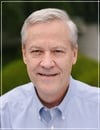
About Bill Parker
Bill Parker grew up in Kentucky and first heard the Gospel under the preaching of Henry Mahan. He has been preaching the Gospel of God's free and sovereign grace in Christ for over thirty years. After being the pastor of Eager Ave. Grace Church in Albany, Ga. for over 18 years, he accepted a call to preach at Thirteenth Street Baptist Church in Ashland, KY. He was the pastor there for over 11 years and now has returned to pastor at Eager Avenue Grace Church in Albany, GA
Comments
Your comment has been submitted and is awaiting moderation. Once approved, it will appear on this page.
Be the first to comment!