Bootstrap
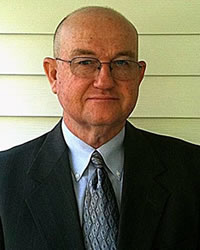
Gary Shepard

Preached Unto the Gentiles

1 Timothy 3:16
Gary Shepard June, 23 2010 Audio
0 Comments

Sermon Transcript

Auto-generated transcript • May contain errors

100%
And without controversy, great
is the mystery of godliness. God was manifest in the flesh,
justified in the spirit, seen of angels, preached unto the
Gentiles, believed on in the world, received up into glory. If you notice following that
phrase, the mystery of godliness, there is a colon which means
that whatever follows after that defines this mystery of godliness. And I thought about it when I
began to look at this, that when I came to this phrase that he
uses to define it that we're going to look at this morning,
I thought, well, that's about the least of all that might be
said. And then as I began to look at
it, I found that it's probably one of the most amazing things. about it, that this one who is
not only sent from God, but who is himself God manifest in the
flesh, the Lord Jesus Christ, he says, is preached unto the
Gentiles, or as some translations give it, proclaimed among the
nations. And in reality, what we actually
confront here in examining this and in being reminded of this,
is we are confronted with the sovereign grace and mercy of
God. We are reminded that To the Jewish
mind, this was a shocking thing. I read years ago where the Jews
of that day prayed a prayer. That is, the male Jews prayed
a prayer that went something like this, I thank you, God,
that you made me neither a woman or a Gentile. They referred to them as Gentile
dogs. You might remember, even our
Lord said it's not meek to give the children bred to dogs. This Gentile woman, she said,
but the dogs eat the crumbs that fall from the master's tables." And I think if we have some understanding
about what is represented in this, it would solve a lot of
confusion, and it would really deal with a lot of error concerning
how men view this word world in the New Testament. Places
like John 3.16 where he says, for God so loved the world. Or other places where he says
things like this, that he'd have all men to be saved. Because in those instances, he's
not talking about every person in the world. He's not talking
about all men as they are individually. But what he's doing is reminding
us that God in his grace and mercy has extended that grace,
extended that mercy beyond all natural boundaries. and even those boundaries that
God from the beginning established himself. He's talking about all
kinds of men, and he is speaking especially, I believe, in most
every one of those texts showing that God's gospel And this salvation
that is in Jesus Christ, he says, is both to Jew and Gentile. Because before the coming of
Christ, Jehovah God manifested neither
his presence nor sent any prophet to deal with any people generally
except the Jews. Now just stop and think about
that for a minute. That from the time that there
was a distinction in this world wherein a nation was called Israel
or the Hebrews from that time forth to the coming of Christ. We read nothing in the Old Testament
as far as a people or a nation is concerned of God dealing with
them in any outward manifestation except for judgment. And yet now he says this is a
part of that great mystery of godliness that Christ is preached
to the Gentiles. And God showed in a clear demonstration
of his right as God to do with his own what he will, he showed
in that one nation, Israel, amidst all the other nations, just exactly
what he told Moses, that he will have mercy on whom he will have
mercy, and he'll be gracious to whom He will be gracious. I can remember one of the first
things that I had to confront when God began to reveal the
truth of His sovereign grace to me. And that was that I had
deliberately, and obviously just about everybody else had deliberately
bypassed the fact that stood throughout all the Old Testament
history that God dealt with and showed mercy to whom He willed. And I could look back and say, as I had said, God loves everybody,
Christ died for everybody, God's trying to save everybody, and
those things were nothing but lies, and the clear evidence
of it was in history all the way down to this very day, especially
in his distinction between Jew and Gentile. But why was it that
God, throughout all this long period of time, was dealing particularly
with this nation of Israel and calling them His people and calling
His prophet from the midst of doing all these things? Well,
it was because He was using this nation not only to show us the
sovereignty of His grace and mercy, but also to show us a
type and a picture of a people that He had loved and chosen
and purposed to save spiritually. Spiritually. That is a picture,
this nation, of His elect, of that people that he chose in
Christ, and what he says of them, he says of his people spiritually. I'm sure you're familiar with
this. In Deuteronomy 7, he said of them, for thou art an holy
people. They didn't act so holy to me
by the standard we call holiness, as far as I could see. As a matter
of fact, just as Brother Richard said, every blessing that they
ever received, though they had the law, though they had the
commandments of God, though they had these covenants, every blessing
that they ever received, they received it just out of pure,
free grace. They never merited it. They kept saying to Moses, if
you'll just tell us what God wants us to do, we'll do it. He did, but they never did. And that's just the way it still
is in this world. Just tell us what God wants us
to do and we'll do it. But we never do. So when he talks
about them being a holy people, he's talking about them being
a people distinguished or set apart by his own self, a people
like no other on the face of the earth, for thou art an holy
people unto the Lord thy God. The Lord thy God hath chosen
thee to be a special people unto himself above all people that
are on the face of the earth. You see, when we tell people
about divine election, and when we speak to them about God acting
not based on anything in a center, but totally according to His
will, they say, well, God can't do
that. My land. He did it for thousands
of years. That's exactly what he's saying
here. And he goes on and he says, the
Lord did not set his love upon you nor choose you because you
were more in number than any people. There goes that notion
that we have naturally. that God blesses us because of
a reason in us or because of something that we are in ourselves. He said He didn't set His love
upon you or choose you because you were more in number than
any people, for you were the fewest of all people. Somebody says God must be blessed
in blessing us, because look how many we have in Sunday school. Almost invariably, when I run
up with somebody and there's a comparison to what I preach
and what I believe and what we stand for in the gospel, almost
invariably, like my own niece says to me, well, are you saying
that all these other people are wrong? And you're right. I said, not really. I'm saying
that we're all wrong, and God is right. In other words, because
we got security in all these numbers, we have to be doing
something right, because look at us, how many we are, and look
at you, how few you are. And yet, what does the Bible
say? He calls His people a little flock. He speaks of Noah and that salvation
that is represented by Noah and the ark, which is Christ, and
he says that fewer than eight souls were saved. And there's something you ought
to always remember, the glory of God. does not depend on how
many he saves. The glory of God rests on him
saving as many as he purposed to save, and in saving them in
a way that honors him and glorifies him in his character and attributes
as a just God and a Savior. He said, you were fewer than
all people, but because the Lord loved you. Sometimes I think about this,
and I thank God for this, that because there was not any reason
in me for Him to love me, And there has never been anything
done by me to cause him to love me. And because there is no reason
outside of myself in any other sinner like myself to either
cause him to love me or to stop him from loving me. He just retreated into his sovereignty. and said, I'll love you because
I'll love you. I'll have mercy on you because
I'll have mercy on you. And I'll be gracious to you because
I'll be gracious to you. And there is no way that I could
not love that sovereign God. He said, but because the Lord
loves you, And because he would keep the oath which he had sworn
unto your fathers, hath the Lord brought you out with a mighty
hand, and redeemed you out of the house of bondmen from the
hand of Pharaoh king of Egypt." Here are all these Gentile nations
around. They're just everywhere on every...
so many more than the nation of Israel. And yet God, because
He would, and for a reason known only to Himself, and for a reason
found only in Himself, He chose this people, this nation called
Israel. And He dealt with them for all
these hundreds of years, and it appeared like that they were
the only ones and this was the only way he would ever deal with
any person in grace. But all through the Old Testament,
all through these Old Testament prophecies, there are hints that
God's grace and mercy would extend to more than this nation. We don't have him turning to
the Gentiles in Moses' day or turning to the Gentiles in any
of the days of the prophet, but we keep getting little glimpses
of it. Listen in the prophecy of Isaiah. Behold, my servant, whom I uphold,
mine elect, in whom my soul delighteth, I have put my spirit upon him,
He shall bring forth judgment to the Gentiles." Well, that
self-righteous Jew reading that prophecy, hearing that prophecy,
they regarded that judgment in this way. Go get them, God. Serves them right. But he was talking about that
judgment that he brought forth for his people amongst the Gentiles
in Christ. All right, listen to another
one. In Isaiah again, and he said, it is a light thing that
thou shouldest be my servant to raise up the tribes of Jacob
and to restore the preserved of Israel, O, but I will also
give thee for a light to the Gentiles, that thou mayest be
my salvation unto the end of the earth." You remember that occasion when
our Lord returned back to Nazareth. And the Bible says that he went
down once again, as his custom was, to the synagogue. And you
remember, he's found reading the Scriptures, and while he
read the Scriptures, and he said, this prophecy is fulfilled in
your eyes this day. And their whole attitude was
this. Well, if he healed these folks,
in Capernaum. If He healed these folks in all
these other cities, what in the world do you reckon He'll do
amongst us? We're His own folks. It says, And he said unto them,
You will surely say unto me this proverb, Physician, heal thyself,
whatsoever we have heard done in Capernaum, do also here in
thy country. And he said, Verily I say unto
you, no prophet is accepted in his own country." And then he
tells this. I tell you of a truth." Now there
was something he said in this telling them the truth that made
them so mad that they tried to kill him. He said, but I tell you of a
truth, many widows were in Israel in the days of Eli. when the
heaven was shut up three years and six months, when great famine
was throughout all the land. But unto none of them was Eli
sent, save unto Sarepta, a city of Sidon, unto a woman that was
a widow. God didn't send the prophet and
the blessing that went with the prophet to any of these widows
in Israel, but rather a widow who was otherwise. Well, and many lepers were in Israel
in the time of Elisha the prophet, and none of them was cleansed saving Naaman the Syrian. Think of how many lepers there
were in the nation of Israel, and God sends a prophet down
to a Gentile man and cleanses him, a Syrian, by the name of
Naaman. And not only was he showing his
sovereignty and the sovereignty of his grace, which, by the way,
still to this day makes natural man in utter fury when he hears
it. But he was showing that in his
grace and in his purpose of mercy in Jesus Christ, he had a people
among the Gentiles. such as this widow and such as
this Syrian. As a matter of fact, this very
thing, this preached unto the Gentiles, this salvation among
the Gentiles, is in itself described as a mystery. You remember what
one of those definitions for a mystery was? That which heretofore
had not been revealed but is now made manifest. Well, that's
exactly what it is, this mystery. Turn, if you would, to the book
of Ephesians. Look first in that first chapter,
just the first reference to this, I believe, in Ephesians 1 and
verse 9. And you have to remember who
this is that he is writing to, this church at Ephesus made up
mostly of Gentile believers, he says in verse 9. having made
known unto us the mystery of his will, according to his good
pleasure which he hath purposed in himself, that in the dispensation
of the fullness of times he might gather together in one all things
in Christ, both which are in heaven, and which are on earth,
even in him." He is going to manifest. And he
began to manifest at the coming of Christ, the demonstration
of his free and sovereign grace and mercy. not only to Jew, but
also to Gentile, gathering them all together, his people, in
Christ Jesus. And he says this is the way it
was going to be all the time. Okay, look over also in chapter
2. You know, none of these things,
we have in this world, I don't know what kind of background
everybody comes out of, but I tell you, I was raised up in the most
thorough dispensationalism that you can imagine. And you can,
you'll beat your brains out trying to make all this line up in your
little systems and your little dispensations and such as that. Here is the dispensation that
he talks about, the dispensation of his grace and the revelation
and manifestation of his salvation in Christ. I look here in Ephesians chapter
2 beginning with verse 11. He says to these Ephesians, he
says, "...wherefore remember that ye," being in time past
Gentiles in the flesh who are called uncircumcision by that
which is called the circumcision in the flesh made by hands."
He said these Jews who are called the circumcision, their circumcision
being in the flesh by hands, he said they were always referred
to as the uncircumcision. that at that time, in that role
as Gentiles, that at that time you were without Christ, being
aliens from the commonwealth of Israel and strangers from
the covenants of promise, having no hope and without God in the
world." He said, that's your background.
That's what you are in yourselves as Gentiles. That's what you
are being called the uncircumcision by those who outwardly have appeared
the people of God throughout the ages. What's that next two
words? But now. But now. In Christ Jesus, Ye who sometimes
were far off are made nigh by the blood of Christ." Nigh to
what? Nigh to God, nigh to blessing,
nigh to hope, nigh to peace. That means near. You who all
these ages have appeared to be far off from God, He said, you're made nigh, because
you made a decision and you learned a few things. No, He said, you're
made nigh by the blood of Christ. For He is our peace who hath
made both one. and hath broken down the middle
wall of partition between us." In other words, the very distinction
that God Himself made many, many hundreds of years before, He
says that distinction between Jew and Gentile, He says that
middle wall of partition that divided, He said it's broken
down in Christ. and we are made one. Having abolished in his flesh
the enmity, even the law of commandments contained in ordinances, for
to make in himself of twain, or of the two, one new man, so
making You ought to make a little note in
your mind there, maybe, as to who he here, in this case, calls
a new man. That's everyone in Jesus Christ. He says, "...and that he might
reconcile both unto God in one body by the cross." How is a
Jew reconciled to God? How is a Gentile reconciled to
God? He said it's by one body. Whose
body is that? His body. His body That body
in which He bore our sins on the tree, that's the only way
that either Jew or Gentile, whoever, whenever, and wherever is ever
and has ever been reconciled to God is in His body on that tree. You know, It's so amazing. And I'm so amazed myself, you
know, I just must have read 2 Corinthians 5 no telling how many times throughout
my lifetime. And all I could ever hear was
that man saying, you need to be reconciled to God. I can remember
as a boy riding down the road, we'd travel up sometimes to the
western part of the state, and they'd had them made out of granite,
out of stone, these crosses. And it would say, make peace
with God. And I was a little old young fellow
and scared the daylights out of me. You can't make peace with God. And that is exactly what reconciliation
is about. You see, God, He, toward His
people, has never altered. But we are, as the Scriptures
say, by nature, enemies in our mind. We make ourselves enemies
to God. He said you were by nature enemies,
but by grace. He said God was in Christ reconciled. He reconciled his people, whether
they are Jew or Gentile, unto himself. And therefore, that
is the good news of the gospel, and we are to preach it to Jew
and Gentile, no distinction, because he has this people that
he has already reconciled unto himself through the cross of
the Lord Jesus Christ. He made peace. by the blood of
his cross. He says, "...and that he might
reconcile both unto God in one body by the cross, having slain
the enmity thereby, and came and preached peace to you which
were afar off, and to them that were nigh. For through him we
both have access by one Spirit unto the Father, Now, therefore,
you are no more strangers and foreigners, but fellow citizens
with the saints, and of the household of God, and are built upon the
foundation of the apostles and prophets Jesus Christ himself
being the chief cornerstone, in whom all the building, fitly
framed together, groweth unto an holy temple in the Lord, in
whom ye also are built together for a habitation of God through
the Spirit." Now, if there's one thing I'm
sure of, it's false religion in this world. makes not only
all different levels of this building, but all different compartments
of this building that he's talking about, but he says all one. And that's in the Lord Jesus
Christ. And notice what Paul continues
with here. He says, for this cause I, Paul, the prisoner,
the willing bondservant of Jesus Christ for you Gentiles. If you have heard of the dispensation
of the grace of God which is given me to youward how that
by revelation he made known unto me the mystery, as I wrote afore
in few words, whereby when you read you may understand my knowledge
in the mystery of Christ, which in other ages was not made known
unto the sons of men, as it is now revealed unto his holy apostles
and prophets by the Spirit." What is that? that the Gentiles." Now, do you realize, I don't imagine there are very
many Jews after the flesh here this morning. And you sat there
as this brother preached the gospel of Jesus Christ, and you
were privileged to hear the gospel. And you could go back in all
of your lineage, trace it all the way back to Adam, and most
of your folks never heard the gospel. Do you ever stop and think about
this, Lord? What a wonder it is. that I ever heard the gospel,
that I ever heard a word about Christ. Here I am like a grain of sand
laying on the beach of eternity. Here I am like a fly speck on
the wall of time. And yet in mercy God sent somebody
and preached the gospel to me. preached unto the Gentiles, that
the Gentiles should be fellow heirs, and of the same body,
and partakers of his promise in Christ by the gospel." whereof
I was made a minister according to the gift of the grace of God
given unto me by the effectual working of his power unto me
who am less than the least of all saints is this grace given
that I should preach among the Gentiles the unsearchable riches
of Christ. That's kind of amazing that this
man that God used to write the better part of the New Testament,
he's testifying here that the grace that God gave him, this
revelation of Christ and his gospel, he said he gave it to
him that he might preach the gospel to the Gentiles. and to make all men see what
is the fellowship of this mystery, which from the beginning of the
world hath been hid in God, who created all things by Jesus Christ,
to the intent that now unto the principalities and powers in
heavenly places might be known by the church the manifold wisdom
of God according to the eternal purpose which he purposed." in
Christ Jesus the Lord." He says, here are these people. There's always kind of a discussion
as to whether or not the greater portion of God's elect will be
from amongst the Gentiles or whether or not it'll be from
amongst the Jews. I'm not entering into that. I just know this. He has a people
from among both. And He's going to save every
one of us. His glory depends on it. And to every saved Gentile, it's
the same as it is to every saved Jew. None of us have any reason
in this flesh to boast because it's all of grace, and
it's all in Christ. Now, look here in Romans 9. Turn
over to Romans 9 just quickly for a minute. Romans chapter
9. Look down here in Romans 9, beginning
at verse 20, because the apostle here, he's just doing like he's
been doing in Romans 9, he's confronting us again and again. Knowing the natural rebellion
that's in our hearts, the self-righteousness that characterizes us, he's confronting
us with this reality that God is the potter. He can, over the
same lump, make these vessels under honor and vessels under
dishonor. But look at what he says in verse
20. He says, "...Nay, but, O man, who art thou that replies against
God?" I'll tell you this, since the
Lord revealed Himself to me, I've been so afraid to say such
things as, God can't do this, or God wouldn't do this. That
will shut your mouth. This is exactly what, you want
to know what Paul is saying, he said, shut up and remember
who you're talking to, who you're talking about. Nay, but, O man,
who are you to reply against God? Shall the thing formed say
to him that formed it, why hast thou made me thus? Have not the
potter power over the clay of the same lump to make one vessel
unto honor and another unto dishonor? What if God, willing to show
His wrath?" And my friend, He's willing to. You can listen to
that, God loves everybody's stuff all you want to, and deduce from
that, if God loves me, He won't damn me. No, He's willing to
show His wrath. If you don't believe it, look
at that cross. What if God, willing to show His wrath and to make
His power known, endured with much longsuffering the vessels
of wrath fitted to destruction, and that He might make known
the riches of His glory on the vessels of mercy which He had
aforeprepared unto glory, even us whom He hath called, not of
the Jews only, but also of the Gentiles. As he said also in
Osi, I will call them my people which were not my people, and
her beloved which was not beloved. And it shall come to pass that
in the place where it was said unto them, You are not my people,
there shall they be called the children of the living God." Ashland, Kentucky? There's going
to be some folks there called the Children of the Living God?
Ain't nobody... No, there's never been a prophet come out of Ashland. Rusta, Louisiana? There's going to be some folks
there called the Children of God? By God called that? Jacksonville, North Carolina,
so obscure that sometimes when I order something, they send
my mess to Florida. Sovereign, free, grace. Esaias also crieth concerning
Israel, though the number of the children of Israel shall
be as the sand of the sea, a remnant shall be saved. And he will finish
the work and cut it short in righteousness, because a short
work will the Lord make upon the earth. And as Isaiah said
before, except the Lord of Sabaoth hath left us a seed, we'd been
like Sodom and we'd been like Gomorrah. What shall we say then? That the Gentiles, which followed
not after righteousness, have attained to righteousness, even
the righteousness which is of faith." Now here all these Jews
had all this favor, and look at them, doesn't seem like hardly
any of them have believed on the Lord Jesus Christ. And over
here, these Jews, I mean these Gentiles, he says, who didn't
follow after righteousness, they've attained to it. He said, Okay. Thank you. Thank you. you
Gary Shepard
About Gary Shepard
Gary Shepard is teacher and pastor of Sovereign Grace Baptist Church in Jacksonville, North Carolina.

Comments

0 / 2000 characters
Comments are moderated before appearing.

Be the first to comment!

Joshua

Joshua

Shall we play a game? Ask me about articles, sermons, or theology from our library. I can also help you navigate the site.