Bootstrap
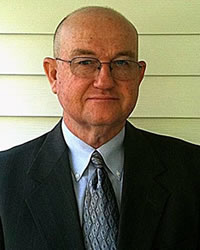
Gary Shepard

God in the Flesh

1 Timothy 3:16
Gary Shepard June, 20 2010 Audio
0 Comments

Sermon Transcript

Auto-generated transcript • May contain errors

100%
Things are bad when the pastor
has to disguise where you're from. But he experienced a senior moment
in the study earlier, so they may be coming closer together.
Hello, Brother Doug. Turn back, if you would, 1 Timothy
chapter 3. The Apostle Paul, if you might remember
here, he describes the church in that 15th verse as the pillar
and ground of the truth. And then he gives us the statement
that makes up that 16th verse. And that is my subject tonight,
and tomorrow, and the next day, and the next, and the next to
Friday. When I began to look at this
verse, I thought, There is an ocean of truth in what we find
here. And then it was like something
said to me, yes, and you have a small boat and a short paddle
to deal with. But let me read it to you one
more time. He says, and without controversy,
great is the mystery of godliness. God was manifest in the flesh,
justified in the spirit, seen of angels, preached unto the
Gentiles, believed on in the world, received up into glory. There are some who believed that
this verse was actually a part of a hymn sung by the early church. If that's the case, would to
God we had more hymns like this one. I don't know about that, but
I do know it is the inspired word of God. I know it is the
core of what Paul called his gospel. He says, without controversy,
or as some say, confessedly, we don't hide this at all, we
confess it, that great is the mystery of godliness. Not great was the mystery, but
great is the mystery. And the word mystery in the scriptures
seems to have something like three definitions. A mystery is that which was not
before revealed or made manifest but is now. Another is that which isn't revealed
to any but a specific group, and then a third, that which
cannot be learned by natural means, but which must be divinely
revealed." And actually, all these definitions,
as they pertain to God's purpose of grace and salvation in Christ,
all these definitions would apply to this great mystery that he
talks about. You see, Christ is the secret
of the Lord. He and his gospel is what makes
up what he himself called the mysteries of the kingdom. And he told those disciples,
he said, it's given to you to know the mysteries of the kingdom,
but it's not given to them. It is literally the mystery of
God. And it is actually the gospel
scheme, the gospel. Because if you look back up in
verse 9 concerning the deacons, he says as he describes how they
are to be, he says, holding the mystery of the faith in a pure
conscience. This is the mystery of the faith,
the mystery of the kingdom, the mystery of godliness. And what we find is that it is
simply the everlasting gospel. It is not new. All we hear in our day is that
someone has got some new revelation. They've got some new word from
God. But I always remember what that
old preacher said when he said, if it's true, it isn't new, and
if it's new, it isn't true. This is that everlasting gospel
that has to do with the everlasting righteousness which Messiah was
to bring in. And so Paul writes in Romans
16 and he says, now to him that is of power to establish you
according to my gospel, and the preaching of Jesus Christ according
to the revelation of the mystery which was kept secret since the
world began." In other words, the whole of salvation in the
crucified Christ is a mystery. And it is actually this mystery
as to how God can be just and yet at the same time justify
sinners. I remember hearing preachers
quote in days past saying that God declared that he is a just
God but a Savior. That's not what it says. It says
that he is a just God and a Savior. And if we are brought to some
measure of understanding how he can be both, then we have
been enabled to have some understanding of this mystery, this mystery
of godliness, which is simply that which is set in contrast
or the very opposite of what he calls the mystery of iniquity. In other words, it has to do
with God's way of salvation, His way of righteousness, which
is equity, in the very opposite of Satan's way, or man's way,
which is inequity, or iniquity. Paul, when he writes to the church
at Corinth, he says, but we speak the wisdom of God in a mystery,
even the hidden wisdom which God ordained before the world
unto our glory. In other words, what was God
doing before he created this world? And what has he been doing
all the while up to the coming of Jesus Christ in this world? It is his hidden wisdom. that he ordained before the world
unto our glory. And as one of those definitions
was that this is something only revealed to a specific group,
he writes to those Corinthians also in chapter 2 and he says,
but as it is written, I hath not seen, nor ear heard, neither
have entered into the heart of man the things which God hath
prepared for them that love him." And that's followed by but. He
says, but God hath revealed them unto us. by his Spirit, for the
Spirit searcheth all things, yea, the deep things of God."
And in many of those epistles that he was used of God to write,
he makes mention of this mystery. And he says to the Colossians
in chapter 1 and verse 26, he says, even the mystery which
hath been hid from ages and from generations, but now is made
manifest to his saints. And as he describes this mystery
of godliness, he begins to state the first fact of the mystery. Like what Brother Richard said
this morning, this gospel has got to do with fact. And while it is that these facts
do produce feelings, Men can very well have feelings without
the facts. I forget which old TV show it
was, maybe it was Dragnet, wasn't it? I'm really dating myself
now. But he would always say, the
facts, just the facts, nothing but the facts. And faith, God-given
faith, lays hold of the facts, the only facts being that which
God says. And this is the first fact. This is the first stated thing
in what might be called the most foundational and essential thing
with regard to his gospel. He says, God was manifest in
the flesh. God was manifest in the flesh. Who was it, Barnard, who said,
ain't nobody but a fool or a Christian believe that. He says, great
is the mystery of godliness, God was manifest in the flesh. Now, all our salvation depends
upon what the man Christ Jesus did in his life and death. But what he did, what he accomplished,
depends on who he was and is. And I'll tell you this, and that
is throughout the ages since his coming, the one fundamental
and most basic truth that has been under assault has to do
with his incarnation. Was he really God manifest in
the flesh? And this is why the deity of
Christ I don't care whether it's 2010 or the first century after
Christ's ascension, this has been under assault and attack
by all the enemies of God, and it is such that if you want a
rule of thumb by which to receive those who come to your doorstep,
or wherever they come, and they want to talk to you about the
Scriptures or they want to discuss religion with you, I always have
one first fundamental question I want to ask them first. Is Jesus Christ God? Well, no. Yes. or no. The Jehovah's Witnesses
used to come to my door. That's my one question, is do
you believe Jesus Christ is God? And if you don't, we ain't got
nothing to talk about. I had two nice, kindly looking
elderly ladies come to my door step one Sunday afternoon. And
they started their little spiel, and I just said to them, you
know, I've got one question for you. Do you believe that Jesus
Christ is God? Well, the Bible never actually
says that. I said, do you believe that Jesus
Christ is God? And I kept pressing on that question. I said, I'll talk to you, you're
going to answer this first question. And the one that was a little
bit older, she just sort of grabbed the post on the doorstep, you
know, and gritted her teeth and eyes bulged out, the veins on
her neck bulged out, and finally the little bit younger one took
her by the arm and said, I think we ought to go. But that's the question. And
this mystery was the subject of the prophecies of many of
the prophets, and Isaiah was one of them. This is what he
says in Isaiah 7. He says, Therefore the Lord himself
shall give you a sign. Behold, a virgin shall conceive
and bear a son, and shall call his name Immanuel. God didn't leave that for Greek
scholars to deal with the way they wanted to or anything else.
He tells us in the New Testament which being interpreted is God
with us. When the angel of the Lord spoke
to Joseph in the dream, he says this in the same likeness of
Isaiah, he says, Behold, a virgin shall be with child, and shall
bring forth a son, and they shall call his name Immanuel, which
being interpreted is God with us. God the Spirit, God Infinite,
God Invisible, God Eternal, God the pre-existent Son was manifest in flesh. That is, he became a man. Isaiah likewise described it
in this way. He said, for unto us a child
is born, and unto us a son is given. Why that distinction there? Because that child that was born
is the eternal Son of God, who was not born, but given. He says, and the government shall
be upon his shoulder, and his name shall be called Wonderful
Counselor, the Mighty God, the Everlasting
Father, the Prince of Peace. Of the increase of his government
and peace there shall be no end upon the throne of David. and upon his kingdom, to order
it and to establish it with judgment and with justice from henceforth
even forever, the zeal of the Lord of hosts will perform this." Turn over to John chapter 1. John chapter 1, and look at that
first verse. He says, "...in the beginning
was the Word, and the Word was with God, and the Word was God."
You say, I don't exactly understand how that can be. Me neither. All I know is that he goes down
through these verses, and when you come to verse 14, he says,
And the Word was made flesh, and dwelt among us, and we beheld
his glory, the glory as of the only begotten of the Father,
full of grace and truth. The Word. was made flesh, and
dwelt among us, and we beheld his glory." And then Paul again
in Colossians 2, he says it in about the most amazing way it
can be said in that second chapter and verse 9, he says, for in
him dwells, continues to dwell, I think that's the linear tense
or something like that with that E-T-H. He says, "...and in him dwelleth all the
fullness of the Godhead bodily." That's amazing. All the fullness
of His sovereign power and authority all the fullness of holiness
and grace and love and mercy, all the fullness of all God has
to give in grace, all spiritual blessings in the man Christ Jesus. And if we'd ever see God, if
we ever find out who He is, Do we ever have any relationship
with Him in saving mercy? It's going to be in this man,
Jesus Christ. He says, No man hath seen God
at any time, the only begotten Son, which is in the bosom of
the Father. He hath, and it actually says,
He hath declared. And I'm told that means something
like this, He hath told him out. All that we would ever know,
all that we would ever be able to comprehend, all that we would
ever be able to receive of God, Jesus Christ. Paul says, for
God who hath commanded the light to shine out of darkness hath
shined in our hearts to give the light of the knowledge of
the glory of God in the face or in the person of Jesus Christ. But why? Why did God have to take on a
body and be manifested in the flesh? If you stop and think about all
that God did and all that God can do from heaven as God eternal, Why did He come in human flesh? You see, He can do everything,
create a world, rule a world. He can do everything, and He
did everything, but the one thing that as sinners we need most
of all to be done for us. He can take you from heaven.
He can lead you from heaven. He can rescue you from all the
ills and things. He can heal you from heaven.
Why must there be in this great mystery and scheme of God, especially
in His grace, why must there be this need that He be manifest
in the flesh? because the thing that's necessary
to save your soul and mine is for him to die. I don't know that I have any
great revelations, but I'm convinced more and more
that in the Old Testament and in the New Testament, In the
Psalms, whatever it is, the central focal thing in that which is
spoken about Jesus Christ is his death. His death. Why? Because the wages of sin is death. Because, as he has said all throughout
this book, and pictured throughout this book, and declared in a
multitude of ways, the soul that sinneth shall surely die. Well, let's go have church and
preachers going to tell us how to live. That's not what I need. I mean, not that I don't need
that. I probably do need that a lot. But I don't need to be told how
to live near so much as I need to be told about his death. You see, if you think about this
mystery, as he states it here, that God was manifest in the
flesh, we have to be careful that we don't fall into the trap
that some have That is, they're trying to contemplate, oh, let's
stop and think about this great mystery. We're just going to
kind of go out on the porch somewhere and we're going to look out at
the sky and we're going to contemplate this mystery and we're going
to think about God becoming a man. We're going to talk about how. And there's one thing I discovered
or was reminded of, trying to study a little bit on this is,
you talk about ignorance amongst commentators. They're going to try to explain
to you the hypostatic union of two natures and how he's God
and how he's man. They just go sailing off into
the abyss of stupidity. And the next thing you know,
they've got this kind of mystical Jesus. They're just kind of talking
about this far out, weird person, we can't explain him, and all
this kind of stuff. But we've got a problem. And
the problem is two-fold in that, first of all, we have no concept
of the infinite, immutable, holiness and perfection of God. Can you think about the infinite
God? Can you think about absolute
holiness of God? And the second thing is, we have
not a clue as to be able to imagine what sinless human flesh is because
we've never seen it. And like those that did, we wouldn't
recognize it if we did. Is that not right? I don't have
any concept of the infinite holy God. I don't have any concept
of perfect sinless humanity. I'm going to give you some good
advice. I can say that because I got it from somebody else. An old fellow, you might have
heard of him, his name is Gil. He said, for though Christ is
certainly and really God as well as man, Yet I'm afraid that our
abstracted ideas of Him as God, of His generation and Sonship,
distinct from Him as Mediator, often lead us into labyrinths
and draw off our minds from the principal things we have in view. God having set bounds around
his inscrutable and incomprehensible deity, as he ordered to be set
about Mount Sinai when he descended on it, that we may not too curiously
gaze upon it and perish." You see, you can just think all you
want to about God. You can think all you want to
about God being manifest in the flesh, you can take tremendous
flights of thought and die in your sin. He said it seems to be His will
that our saving knowledge of Him and converse with Him should
be all in and through Christ the glorious Mediator. You see, that's why God was manifest
in the flesh. If you look back over in 1 Timothy
chapter 2, he tells us in that fifth verse this very thing. He says, For there is one God,
and one mediator between God and men, not that generic man
that includes all our race, but he said between God and men, the man, Christ Jesus. Now, when it says that this great
first fact is that God was manifest in the flesh. You better always
remember this. He was manifested in perfect,
sinless, holy flesh. I am utterly amazed that anybody would ever, with
all the safeguards that I find in this book from the first all
the way to the end of it, I'm amazed that anybody would ever
in any way at any time in his own existence in this world ever
try to speak of him in flesh in any other way. He knew no sin. He is holy, harmless,
undefiled, separate from sinners. He came into this world and the
Spirit of God would say to that earthly mother and all those
involved in what was the revelation of what had taken place to her,
that that which was conceived in her was that holy thing. He made flesh, but not Adamic
flesh. He had no earthly father. And here is this woman, And that
which is conceived of her is of the Holy Ghost, and so when
he comes forth, he comes forth in perfect, holy, sinless flesh,
and he becomes a man in order to redeem his people by the shedding
of his blood. Peter says, in that second chapter,
verse Peter, that he bore our sins in his own body on the tree. Many years ago, I had to conduct the funeral of a little baby that was born.
live just a little while and die. And the only, without coming
forth as I've heard so many preachers do with an extra biblical revelation
about that time concerning such an event, the only comfort I can offer
was in the fact that while some said, why was this baby born
just to die? The only hope was in the one
baby who was born just exactly to do that, to die. God was manifest in the flesh
in this sinless, perfect humanity to die. To die. And that's how he bore our sins
in his own body on the tree. Paul says, but when the fullness
of the time was come, God sent forth his Son made of a woman,
made under the law, to redeem them that were under the law,
that they might receive the adoption of sons. What does that mean, made under
the law? Well, I've read and heard a lot, but primarily and specifically,
made to bear the penalty of that law in order to redeem his people. Somebody said, well, he came
to be obedient to all the precepts of the law. Well, I'll agree
with that as far as that's what was required for him to be that
perfect sinless sacrifice. But what he had to do to save
me was to die. God absolutely considered cannot
die. Men and women just like me and
you, the best that there ever was could die and they couldn't
even save themselves from their sins. They couldn't satisfy the
holy justice of God. When it says that he was made
sin, when it says that he was made under the law, I take that to mean essentially
the same thing that he says in Galatians 3. Turn over to Galatians
3 and look down in verse 13. He says, Christ hath redeemed
us from the curse of the law, being made a curse for us. Now, I just challenge you to
stand with all the Scripture references that God has been
pleased to give us. Stand and look at the Lord Jesus
Christ hanging on that cross. And tell me something, do you ever see Him change? Do you ever see Him reach a point
in this business of being made sin where He gets angry? Or where
there's some display of Him actually becoming sin for us? I see Him praying for those who's
slaying, I see him telling John, behold your mother, I see him
speaking to the father, I see all that stuff, but I don't see
any change. Why? Because he's the same yesterday,
today, and forever. So how do we know? that this
One who is God made manifest in the flesh, how do we know
what it means that He was made sin, or made under the law, or
even as it is here, made a curse for us? He said He redeemed us from the
curse of the law being made a curse for us, for it is written, Cursed
is everyone that hangs on a tree. That's how we know that this
one who is God manifests in the flesh. How that it was that he
was made sin for us. How that he was made under the
law. How it was that he was made a
curse for us in the fact that he died. Why? Because that's the penalty
of sin. That's the glory of hearing him
say, it's finished. That's the wonder of hearing
it said of him that he cried out with the fullness of his
faculties. Even in the last instances of
his earthly life, he cried out in the fullness of his faculties
and strength, and it says that he yielded up the ghost. He laid down his life for the
sheep. And everywhere in this Old Testament,
You hear those descriptions of sacrifices and those descriptions
of offerings and all, and God saying, don't you bring me nothing
broke up or bent. To be accepted, it has to be
perfect. Because the only way he can stand
as our substitute, the only way he can die in my place, The only
way he can satisfy the holy justice of God, the only way he can ratify
the covenant, is that he offers up a perfect,
holy, life, body to God. And God slays him. It says that he has appeared
now once in the end of the world to put away sin by the sacrifice
of himself. For as much then as the children
are partakers of flesh and blood, he also himself likewise took
part of the same, that through death, He might destroy him that
had the power of death, that is, the devil. Now, you think
about this. If God became flesh and He lived,
even under the Mosaic law, He was born a Jew. If He lived under
that law and lived a perfect life and ascended back into glory,
you'd still die in your sins. If He came, if He did all that,
and if He taught all that He taught, if He came and He did
all the healing that He did, and all the great things that
men applaud Him for even in our day, and then He ascended back
to heaven, you and I die in our sins. He had to die. And the only way,
although it was manifested in type and shadow in the offerings
and the people that we read about in the Old Testament, although
it was taught in so many ways, it wasn't until Jesus Christ
came in human flesh that that hidden wisdom of God, He's called
the wisdom of God, But it wasn't until He came in human flesh
and went to that cross and died in the place of His people. It wasn't until then that the
mystery that had been hidden from the ages. I can just see devils and what
have you all kind of hovered around And they're looking, they're
saying, now, God says he's just. He let old Abraham slide. He
claims to be just, but you look at Jacob. He's a wretch and a
vile thing. He ain't no better than us. God
says he's a holy God, and look over there, look at that wicked
lot over there in Sodom, and somebody's calling him righteous.
Why didn't he die with the rest of them? Here's the mystery unveiled.
God was coming in human flesh to do the one thing that he could
not do as God alone in heaven. And that was to lay down his
life, his perfect holy life for his people. Now you want to talk
about love? You want to talk about mercy?
You want to talk about grace? You want to talk about something
that will give you hope and peace? It is to find out, to have revealed
to you, taught to you by the Spirit of God through this very
Word and Gospel of God. Why He came as flesh and dwelt
among us. Well, when it says that we beheld
His glory, full of grace and truth, evidently Pilate didn't
see it. Most of the Jews that were with
him, they didn't see it. Most of the other folks, they
didn't see it. Who sees it? Paul said, but God hath revealed
it to us by His Spirit. He wasn't on a fool's errand.
He wasn't simply coming to be a martyr. He was coming to die
in my place. The death that I could not die. And that's why it's eternal.
Because if I had died, I'd have continued to die for all eternity
because I never satisfied God. God has and will reveal Himself
and His grace, His mercy, His salvation only through the God-man
mediator, which is not simply Jesus Christ, but Jesus Christ
crucified. I'll give you Paul's closing
benediction. in Romans 16. He says, Now to
him that is of power to establish you according to my gospel and
the preaching of Jesus Christ according to the revelation of
the mystery which was kept secret since the world began, but now
is made manifest and by the scriptures of the prophets, according to
the commandment of the everlasting God, made known to all nations
for the obedience of faith. To God, only wise, be glory through
Jesus Christ forever. Amen. The first fact. In this mystery
of godliness, his God was manifest in the flesh. Don't waste your time sitting
around trying to figure all that out. Look to that crucified Christ.
Gary Shepard
About Gary Shepard
Gary Shepard is teacher and pastor of Sovereign Grace Baptist Church in Jacksonville, North Carolina.

Comments

0 / 2000 characters
Comments are moderated before appearing.

Be the first to comment!

Joshua

Joshua

Shall we play a game? Ask me about articles, sermons, or theology from our library. I can also help you navigate the site.