Bootstrap
Mike McInnis

Faith Without Works

James 2
Mike McInnis August, 11 2024 Audio
0 Comments
James Series

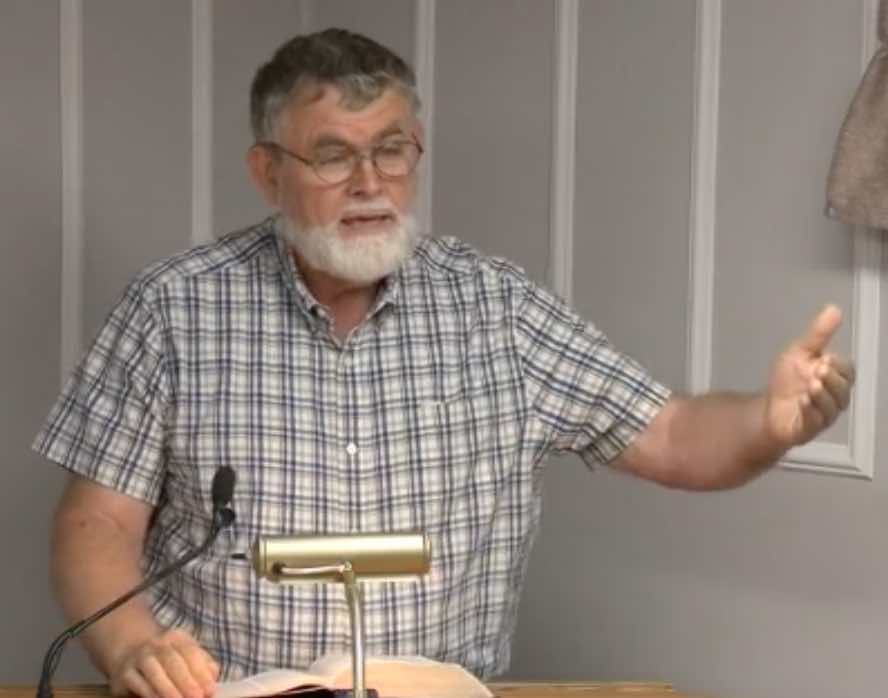
In his sermon “Faith Without Works,” Mike McInnis addresses the theological doctrine of faith and works as articulated in James 2. His key argument is that genuine faith must necessarily produce good works; without these works, faith is dead. McInnis emphasizes the importance of the royal law which commands believers to love their neighbors as themselves while warning against the sin of partiality towards the wealthy. He supports his claims with Scripture references from James 2, particularly highlighting the examples of Abraham and Rahab, who were justified by their works in conjunction with their faith. The practical significance of this message reinforces the Reformed understanding of God's sovereignty in salvation; true faith, given by God, manifests itself in good works as evidence of a transformed life in Christ.

Key Quotes

“Even so faith, if it hath not works, is dead, being alone.”

“A man may say thou hast faith, and I have works. Show me thy faith without thy works, and I will show thee my faith by my works.”

“Man is not justified by works, but yet James said a man is justified by works.”

“If you fulfill the royal law according to the scripture, thou shalt love thy neighbor as thyself, ye do well.”

Sermon Transcript

Auto-generated transcript • May contain errors

100%
Continuing to look here in the
book of James, and we're in the second chapter, James chapter
two. I'm gonna read this chapter,
and then we'll look at a few of these verses. It says, my
brethren, have not the faith of our Lord Jesus Christ, the
Lord of glory, with respect of persons. For if there come into
your assembly a man with a gold ring and goodly apparel, and
there come in also a poor man in vile raiment, and ye have
respect to him that weareth the gay clothing, and say unto him,
Sit thou here in a good place, and say to the poor, Stand thou
there, or sit here under my footstool, are ye not then partial in yourselves,
and are become judges of evil thoughts? Hearken, my beloved
brethren, hath not God chosen the poor of this world, rich
in faith, and heirs of the kingdom, which he hath promised to them
that love him? But ye have despised the poor.
Do not rich men oppress you and draw you before the judgment
seats? Do not they blaspheme that worthy name by the which
you are called? If ye fulfill the royal law according
to the scripture, thou shalt love thy neighbor as thyself,
ye do well. But if ye have respect to persons,
ye commit sin, and are convinced of the law as transgressors.
For whosoever shall keep the whole law, and yet offend in
one point, he is guilty of all. For he that said, Do not commit
adultery, also said, Do not kill. Now if thou commit no adultery,
yet if thou kill, thou art become a transgressor of the law. So
speak ye, and so do as they that shall be judged by the law of
liberty. For he shall have judgment without
mercy that has showed no mercy, and mercy rejoiceth against judgment. What doth it profit, my brethren,
though a man say he hath faith and hath not works? Can faith
save him? If a brother or sister be naked
and destitute of daily food, and one of you say unto them,
depart in peace, be ye warmed and filled, notwithstanding ye
give them not those things which are needful to the body, what
doth it profit? Even so faith, if it hath not
works, is dead, being alone. Yea, a man may say thou hast
faith, and I have works. Show me thy faith without thy
works, and I will show thee my faith by my works. Thou believest
that there is one God, thou doest well. The devils also believe
and tremble. But wilt thou know, O vain man,
that faith without works is dead? Was not Abraham our father justified
by works when he had offered Isaac his son upon the altar?
Seest thou how faith wrought with his works, and by works
was faith made perfect? And the scripture was fulfilled
which saith Abraham believed God, and it was imputed unto
him for righteousness, and he was called the friend of God. You see when how that by works
a man is justified and not by faith also. Likewise also was
not Rahab the harlot justified by works when she had received
the messengers and had sent them out another way. For as the body
without the spirit is dead, so faith without works is dead also. Now men in general are creatures
of extremes and We often see things one way or the other. And quite often that one way
that we see it is not correct. But we persist in that way because
we think that it's right. And of course, you know, this
subject that's the gist of this whole chapter and really much
of what James has to write about is something that's greatly misunderstood
by men because they either want to go one way or they want to
go the other way. And they don't see that the truth
of God encompasses more than one view or more than one that
men can look. The Lord said his ways are above
our ways, and his thoughts are above our thoughts. And because
we can't think of something or we can't imagine how it is, does
not mean that it is not that way. And so as James writes here,
and he says that faith without works is dead. And yet we know and understand
that works, as they stand by themselves, are of no use whatsoever. Man is not justified by works,
but yet James said a man is justified by works. You know, there is an answer
to this. This is not a question that can't
be answered. It's actually very plain as you
go through the scripture and as God gives you spiritual understanding
to know what it is that the Lord saves men for. You see, the Lord
has chosen a people and he has ordained them unto good works. I mean, that's the purpose for
which the Lord has come into the world. That's the reason
why the Spirit of God indwells God's people, not just so that
they might go through life and be able to, you know, stand up
and shout and sing and carry on and call it worship. but that
they are ordained unto good works. Now the good works are not the
things that men define as good work necessarily. Men want to
look at something maybe that they desire to do or whatever
and say, well that was a good work. It may well have been,
but the good works of men, of which James is speaking of here,
is not the works upon which men get glory. but those things which
give glory to God. And what I mean by that is the
Lord said that when you give, he said, let not your right hand
know what your left hand is doing. And so it is that when we go
about to perform good works, we don't do it planning out necessarily
to do good works, but we go about doing the things that we're going
to do because we love Christ. And because the Spirit of Christ
teaches us to have compassion on others for one thing. You
know, a man that has no mercy as he says here, he that has
judgment, or he that has judgment without mercy that shows no mercy. In other words, the man who shows
no mercy, he'll be judged without mercy. Because it is mercy that
we are all made the recipients of. And that's one of the things
I believe that the Spirit of God teaches God's people as He
leads them along the way. As Paul said to the Corinthians,
we have nothing that we have not received. And if we have
received it, why would we glory in it? And so we're not trying
to build men up to these people who are out here saying, well,
look at all the good works we're doing. Now there's plenty of
religious people in the world that go about that manner. They
want you to know what they're doing. See, they got it on display. Well, the good works that the
Lord has called us to do are not on display. They're not on
display to anybody but Him. And we're not seeking to impress
other people or get them to follow our good works. But we're desiring
to do those things that the Lord has called us to do, as the Spirit
of God has taught us to follow in the steps of Jesus Christ. You see, the man that follows
the example of Jesus Christ will of necessity be about the business
of doing good works. Can't be avoided. Because the
Lord Jesus Christ went about doing good. I mean that was his
mission in this world was to do good. And so it is that we've
been called unto the same. So let not a man say that he
has faith if he has not words. There's no such thing as a man
having faith and not having a desire to honor Christ with what he
has and what he is. Those two things go hand in hand. That's kind of the gist of what
he's saying here. And so he begins here, my brethren,
have not the faith of our Lord Jesus Christ, the Lord of glory
with respect to persons. Now that's kind of probably not
how we in our modern thought process would say those words,
but basically what he's saying is the faith of Jesus Christ
is not one that has a respect of persons. And so don't go about
operating in the faith of Christ with that perspective, because
that's not the perspective of Christ. That's not the teaching
of Christ. He said, here, if they're coming to your assembly,
a man with a gold ring and goodly apparel, they're coming in a
poor man in vile raiment, and you have respect to him that
has the gay clothing, and you tell him to sit in a good place,
but to the poor man, you say, well, get over here at the lowest
place, then you have respect of persons, and we're not to
be respecters of persons. Now, it is natural, and you can't
avoid it. because it's by nature we do
exactly what he's saying that we ought not to do. If somebody does something good
for us, we say, man, you know, that's a great guy. If somebody
doesn't do something good for us, we say, eh, you know, no
count. We're not looking at how we look
at people based on how they are, but how we are called in Christ
to look upon men. How we look upon men. We know
that all men are sinners. Now that might seem strange.
To some people that would be a judgmental way of looking at
people. But that's a truthful way of looking at people. We're
all sinners. It doesn't make any difference
if you're a rich man or a poor man or whatever. All men, all
have sinned and come short of the glory of God. And that's
the very basis upon which we cannot stand in that place of
judgment as he's speaking of it here. Now that doesn't mean
that God's people don't use judgment. But it means that we do not rank
people in our mind as to their worth based on what we see in
them or what their views about things are. But rather, we see
men as Christ saw them, sinners, everyone alike. It's natural to think that there
are hierarchies of evil in the world. These people are really
evil. These people are not quite so
bad. And then there's us. You know, we're up here and all
these other people are down there. No, we're all the same. And by
the grace of God, he will bring his people out
of the darkness and into the light. I don't know who the people
of God are, but I know that he's called me to love my neighbor
as myself. Now we do have, even as Jonathan
and David had a special love, God's people have a special love
one for the other. But they don't have that love
for their brethren in such a way that they despise those who are
not their brethren. Because we have an understanding
that the only reason that we embrace the things that we do,
the only reason that we believe the gospel is because he's shown
it to us. He called us out of darkness.
When we didn't know anything, when we were not seeking him,
he sought us. And that's a glorious thing,
dear brethren. And so if a man has a clear and pure understanding
of the place that he is by nature, and the grace of God that has
called him out of that nature, then he cannot help but have
a consideration of compassion towards all men. because all
men are in the same boat. And so we're not to be a partial
people. That does not mean that we're
not discerning people. You know, it is a common thing
to be confronted in the world with people who are seeking money
or help. I mean, you go out here and people
will approach you in the parking lot, you know, and they're asking
for money and they always have some sob story about what it
is. Now, I would rather err on the side of mercy than I had
to on the other. In other words, there's been
plenty of times when I have helped people in those situations. And I thought more likely they
probably, it probably was, you know, just a scam type deal. But if you give it as unto the
Lord, it doesn't make any difference what the person to whom you're
giving that money does with it. You know, you're not giving the
money to the person, you're giving the money as unto the Lord. And
if you give it as unto the Lord, then that's a good thing. Now there again, we have to be
discerning. I mean, you know, if a guy, and
I can't necessarily explain to you how this is, but you know,
if a guy's hungry, feed him. That doesn't mean you necessarily
give him money, go buy him some food, whatever it is. You don't have to give him the
money. Many times I've had people, they didn't want the food, they
wanted the money. Now if somebody says they're
hungry and they want the money instead of the food, a discerning
man would understand that he's not really hungry. because a
hungry man's ready to eat. He's not wanting to eat what
he wants to eat, he's ready to eat what he can get. And so we
are to use discernment. We're not to be fools, but we
are to be as harmless as doves, wise as serpents. And we are
to be those who have a consideration that we could be in the same
situation as this person is except for the grace of God. Hearken,
my beloved brethren, Hath not God chosen the poor of this world,
rich in faith, and heirs of the kingdom, which he hath promised
to them that love him? Now that doesn't mean that because
a man is poor that he's more likely, in this world's goods,
that he's more likely to be following the Lord. That's not what it
means, but blessed are the poor. Blessed are the poor in spirit.
You see, those who are in places of a broken heart, they're those
who are pleasing in the Lord's sight. Those are those whom the
Lord loves. Because He's the one that breaks
a man's heart to know what he is by nature. And the man who's
rich, That man who thinks he's doing good and he's satisfied
before the Lord and he says, well, Lord, look at all I've
done for you. That's a man who's judged of God. So the poor, you
know, the Lord said you have the poor always with you. But
he uses the poor as an illustration of spiritual poverty, that we
might know what it is to be poor. Now see, if you see a man that's
poor in this world's goods, you know that he's standing in need
of something. And those who are spiritually
poor, they're standing in need of something. And we're all spiritually
poor. What a blessed place it is to
be spiritually poor, to know that our help cometh from the
Lord. We don't, we're not rich, you
know, in faith. Now a lot of people boast of
their faith. There's no place for God's people to boast of
faith, because the only faith that we have is that which we've
been given. And so it is. My beloved brethren,
He said, do not rich men oppress you and draw you before the judgment
seats? Do not they blaspheme that worthy
name by which you're called? Why would you be overly enamored
by people in high positions? Of course, in these political
times, that is definitely true, is it not, as we look around
us? I mean, How many of those people are even concerned at
all, really, about anything but their own ends? You know, I don't
know. I don't have the answers to that.
And, you know, may God give us wisdom to know that. But we do
know this. Though governments are ordained
of God, it's also governments of times that are oppressive
to us. So those are not the ones to
whom our trust is given. You know, the Lord raises up
kings and he puts them down according to the good pleasure of his will.
And we're to pray for those who are in places of leadership,
because God put them there, whether we like them or we don't. May
the Lord give us discernment in that as well. If you fulfill the royal law
according to the scripture, thou shalt love thy neighbor as thyself,
ye do well. But if you have respect to persons,
ye commit sin and are convinced of the law as transgressors. Thou shalt love thy neighbor
as thyself. Is that not one of the commands
the Lord gave? He said, The law is found in
these two things. Thou shalt love the Lord thy
God with all thy heart and all thy soul, and thou shalt love
thy neighbors thyself. I mean, that comprises the royal
law. That is the law given to us. Now, some would say, well, that's
pretty simple. Is it? No, I mean, when you boil the
law down to what it is, it shows us how far from keeping the law
that we are. Because who among us can honestly
say we love the Lord our God with all of our heart? Much less
how that we have loved our neighbors as ourself. But that is the command
of God. And if we have respect to persons,
we commit sin and are convinced of the law as transgressors.
Listen to this. For whosoever shall keep the
whole law and yet offend in one point, he is guilty of all. It
doesn't make any difference how high and holy a man may be in
the walk in his life. If he commits one sin, he's in
the same boat as the man who is constantly walking in utter
transgression before Almighty God. And you know this is a very
leveling type exhortation here. And it's only useful to the children
of God. Because you know the children
of God know that what this is saying is true. It's because
they've been given that engrafted word. See, the Lord teaches His
people these truths, and He lays them upon our heart, and we can't
escape them. And we can't go forth into the
world and disregard these things that the Lord has said, because
He gives His people, I believe, compassion and mercy as they
go through life, because of the fact that the Word of God is
operative in them. He works in them, both will and
to do, of His good pleasure. He that said, do not commit adultery,
said also, do not kill. Now thou commit no adultery,
yet if thou kill, thou art become a transgressor of the law. So
speak ye, and so do as they that shall be judged by the law of
liberty. For he shall have judgment without
mercy, that it showed no mercy, and mercy rejoiceth against judgment. What doth it profit my brethren
though a man say hath faith and hath not works? Can faith save
him? Can faith save a man? God-given
faith most certainly is the only measure and standard by which
God is pleased to save men. He gives men faith. And that
faith is in Jesus Christ. Christ is our faith. But what
he's saying here is that that faith is an operation of God. Now, if we think that faith is
an activity of our free will, then a man could say, well, I
believe, and then I'm gonna go and do whatever I want to, and
I'll have respect to persons or do whatever I want. But if faith is operation of
God, which it is, And he brings this to pass, and he has ordained
his people unto good works, and it only follows that those good
works that he has ordained, that they perform, if he's the giver
of faith, that that faith is going to produce those good works.
And so, let not a man say, well, I have faith, but I don't have
any, but works don't make any difference. Works do make a difference,
because God's the one makes the difference. See, he's the one
that's operating in men. Men don't just decide to do good
works. They do good works because the
Spirit of God compels them to it. Because the Spirit of God
works in them. Both the will and to do of his
good pleasure. So what does it profit a man?
Though a man say he has faith and has not works. Can faith
save him? No, because it's a dead faith.
It's his faith. See, the faith that men have
won't do them a bitter good. Because the faith that you have
can fail. I mean, you may believe today
and not believe tomorrow. But see, when God gives a man
faith, he can't help but believe. He can't escape it. He must believe. He may say, Lord, I believe,
help thou mine unbelief, because he knows he can't believe on
his own, but he wants to believe, and he desires to believe, and
he does believe, even when it does not appear to men that he
may believe. the works of the Spirit are those
things that He is doing in His people. Even so, let me see,
I skipped something. If a brother or sister be naked
and destitute of daily food, and one of you say unto them,
Depart in peace, be ye warmed and filled, notwithstanding ye
give them not those things which are needful for the body, what
doth it profit? Now he uses that as an illustration.
We can all understand that. If somebody comes up to your
door and says, I need something to eat, and you say, well, that's
good. Well, go eat. I hope you're blessed. Go and I hope you find some food.
What good was that? I mean, you were confronted with
the need that the person had, but you didn't do anything. And
so he said, that's the same way that faith is, without words. It's destitute. It's of no use. It's just empty. You can say,
oh, well, I love you, brother, but if you don't give him what
he stands in need of, how can you say that you love him? You
can't. And so you can't say that I have
faith and then, but there's no operation of the spirit that's
working in us, both the will and to do of his good pleasure.
See, we're not trying to get people to work up words. and
work up faith. But we're pointing out the fact
that it is God who performs these things through his people and
in his people. And they are real. See, the work
of God in a man is real. It's not just what he's decided
to do. He's not just learning how to do it. But the Spirit
of God's moving in him, even as he moved in David. when he
was confronted with what Goliath said. And he said, who is this
uncircumcised Philistine that he should defy the armies of
God, the God of Israel, that he should speak against him?
And his heart was moved within him. And of course, you know,
we know the Lord ordains men for certain things. He didn't
call everybody that was there to confront Goliath. but he gave
David what he needed to do so. And he does the same thing in
his people and that's why in David we see that he was a man
of faith, was he not? But he was also a man of words
because God moved in him. Now I don't believe that David
was necessarily a good shot. I don't believe David had enough
power as a young man to cause that stone to go into Goliath's
head and knock him out. But God took that stone and he's
the one that caused it to hit the mark. And he's the one that
caused it to fail Goliath because he would demonstrate that faith
without words is dead. Because you see, he's the one
that gives the faith and gives the words. That's a glorious
thing, dear brethren. And we must understand that that's
always the way it is. God's not sitting around waiting
for us to do something. God's working in His people.
He is a very present help in a time of trouble. Oh, what a
glorious God He is. And He gives His people peace
and comfort in resting in Him. Oh, that he might give us that
faith which has works. That he might work in us those
things that bring honor and glory to his name. When David slew
Goliath, the Lord was honored, was he not? Because he calls
David to triumph. And David gave glory to God. Oh, that the Lord might do so
with us.
Mike McInnis
About Mike McInnis
Mike McInnis is an elder at Grace Chapel in O'Brien Florida. He is also editor of the Grace Gazette.
Broadcaster:

Comments

0 / 2000 characters
Comments are moderated before appearing.

Be the first to comment!

Joshua

Joshua

Shall we play a game? Ask me about articles, sermons, or theology from our library. I can also help you navigate the site.