Bootstrap
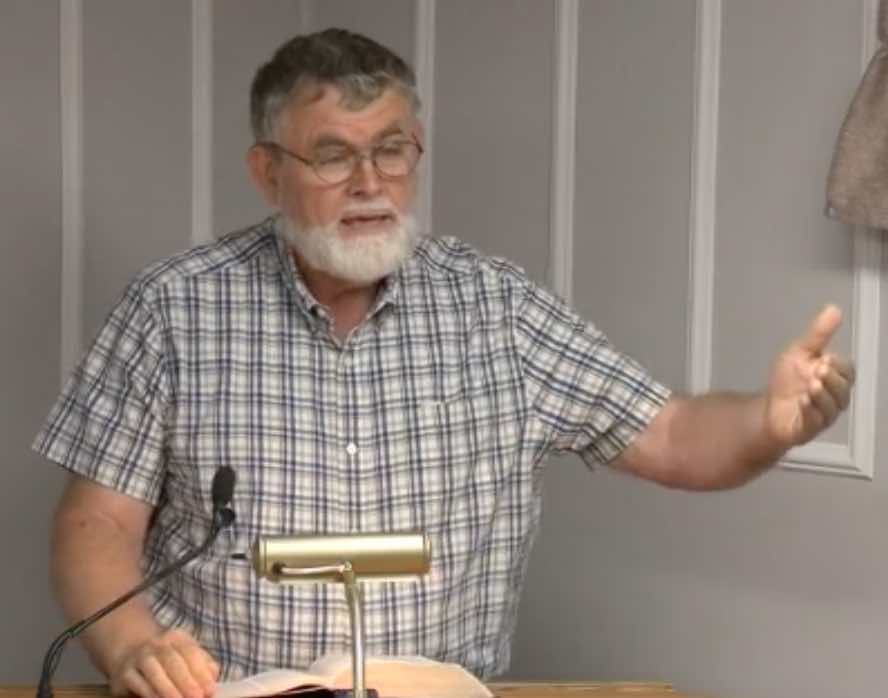
Mike McInnis

Of Whom the World was not Worthy

Hebrews 11
Mike McInnis May, 19 2024 Audio
0 Comments
Hebrews Series

In his sermon "Of Whom the World Was Not Worthy," Mike McInnis addresses the doctrine of faith and its significance in the lives of the Old Testament figures, particularly as exemplified by Joseph and Moses, as recounted in Hebrews 11. He emphasizes the theme that true faith endures hardship and remains focused on God's promises, rather than the temporary pleasures of the world. The preacher draws upon Scripture references such as Hebrews 11:21-22, which describe Joseph's faith in God's deliverance and his command regarding his bones, and Hebrews 11:24-26, which illustrates Moses' rejection of worldly status for the sake of identifying with God's people. The significance of these narratives underscores the Reformed understanding of grace, suggesting that it is through divine mercy that individuals are enabled to recognize the fleeting nature of earthly pursuits and the lasting value of faith in Christ, culminating in the assurance of salvation through Him.

Key Quotes

“It’s only by the grace of God that a man can be brought to the place where he desires to know Jesus Christ, the one who died for sinners.”

“You can scare a man into being baptized. You can scare a man into writing his name on a line and saying that he’s a believer. But only the grace of God can constrain a man's heart to love the Lord Jesus Christ.”

“How did he know? Except the Lord showed it to him. And so he gave commandment concerning his bones.”

“By faith, Moses... chose rather to suffer affliction with the people of God than to enjoy the pleasure of sin for a season.”

Sermon Transcript

Auto-generated transcript • May contain errors

100%
We're in Hebrews again, and in
the 11th chapter, Hebrews 11, and we had looked at verse, down
to about verse 20. Verse 21 says, by faith Jacob,
when he was a dying, blessed both the sons of Joseph and worshiped,
leaning upon the top of his staff. And by faith, Joseph, when he
died, made mention of the departing of the children of Israel and
gave commandment concerning his bones. Now Joseph, of course,
is a interesting character in the scripture. And of course,
as a type of Christ, a deliverer of his people. And yet Joseph,
was a man who was in a strange land of which he had no real
friends. Because even when he was raised
up to a place of honor in the kingdom, he was yet an outsider. And of course his enemies constantly
were looking at ways to get him. And we know what happened to
him, of course, as Pharaoh's wife sought to seduce him and
was unsuccessful in that and, of course, turned her wrath upon
him and accused him wrongly. And Pharaoh committed him to
prison. And of course, that seemed like
a sad ending to Joseph. But yet all of these things,
just like Brother Al brought out this morning about those
asses that were lost, very insignificant. You know, I mean, probably one
of the more lowly animals in the world, I would assume. I mean, if you've ever seen a
donkey, there's very little that would cause you to be attracted
to them. I mean, they're pretty ugly creatures.
Just, you know, not much. I mean, they're not racehorses
by any stretch of the imagination. And yet, it's upon such a one
as that that the Lord Jesus saw fit to ride into Jerusalem upon. Of course, we know in fulfillment
of the prophecy, it was necessary that he do so, because it was
prophesied that he do so. He gave the prophecy. And so,
because he knew what it was, because he would ride in to Jerusalem
upon one which did not give men any reason to have any consideration
of him. And you know, that's the truth
of the gospel, is that there's nothing in it that is attractive
to the natural man. Now, when I say that, what I
mean by that is this. Now, men can naturally hear the
truth of the word of God, have fear that they're going to die
in their sins and go to hell. And they can naturally act upon
that fear and go through religious motions in order to benefit themselves
so that they might not Go to hell. Now you know nobody wants
to go. I never met anybody that was
just looking forward to do that. Most people just don't believe
there is such a place. They wouldn't think that there
is a lake of fire that burns for the destruction of those
that are cast in there. They don't believe that. They
think that's just something somebody made up to scare folks. And unfortunately,
that's what it's used as by many preachers thinking that they
can scare people into believing in Christ. Now you can scare
a man into being baptized. You can scare a man into writing
his name on a line and saying that he's a believer. You can
do that. But only the grace of God can
constrain a man's heart to love the Lord Jesus Christ, to believe
in Him, to have no other alternative. It's not like we select out of
all, we looked at all the religions in the world and we said, well,
which one are we gonna choose? I think we'll settle on this
one. This one seems to be nice. Now, a lot of people do that.
I mean there are many people in the world today that follow
the religion of their mother and father, not because they
have any particular affection for it, but because that's just
the way they were raised and so they carry on the tradition.
and they go and they do that. And there are many people that,
out of tradition, they would attend church and do all of these
things. But again, it's only by the grace
of God that a man can be brought to the place where he desires
to know Jesus Christ, the one who died for sinners, to exalt
and honor him who, though not lifted up by the world, is indeed
exalted in the scriptures. And so Joseph was cast aside
and yet brought back to prominence that he might deliver Jacob and
his family from certain death. And so it is that we see the
Lord Jesus Christ, though he was not received by the multitude,
yet nonetheless a deliverer of his people. Of course, we know
that the Lord ordained Jacob and his family to go into Egypt. I don't know if you've ever thought
about this, but their deliverance soon became their bondage. They were brought out of famine
into Egypt, which for a season they had an enjoyable thing,
but as it is, this picture of the world holds no place of joy
for us. And ultimately they were brought
into bondage and became slaves. And all of this didn't happen
by chance, it happened so that the Lord might once again, He
might demonstrate the deliverance of His people. Because just like
there was one family that came out of the famine and brought
into Egypt, there was one people that were brought out of Egypt,
the Lord's people, he called them. And he provided for them
a salvation, a salvation that was marked by blood, the blood
of a lamb. And so it is, dear brethren,
that God would always manifest the salvation of his people through
the blood of the lamb. Now Joseph died in Egypt. a feeding in for him, we might
say, because after all he was from a youth lived in Egypt. He never knew really much of
what it was to live in the land of Canaan where Jacob was. He didn't, I think he was about
12 years old when he was sold into slavery by his brothers
of all things. But by the grace of God, how
is it that a young man of his age going into a pagan
land like Egypt could arise the power and yet maintain faith
in Christ. except by the grace of God. Because why didn't he take up
the pagan religion of the people around him? I'm sure it was attractive.
I mean, you know, with the many things that natural religion
has to offer to men, it was attractive to him. But when he died, leaning upon his staff and blessing The sons, he said, when you go out of here, he said, this world's not my
home. He said, I was born here, or I wasn't born here, but I
was brought here. I was raised here, I grew up
here. I even had a place of prominence for a season here. but this place
is not my home. And when the Lord has seen fit
in his own time to bring you out of this bondage, don't leave
my bones in this place. That's an incredible thing, really,
when you pause to think about it. How did he know? How did
he know? Except the Lord showed it to
him. And so he gave commandment concerning his bones, and by
the grace of God, when the children of Israel left, the scripture
says that they got his bones. Because, you know, the book of
Genesis, it ends with these words that they, he was embalmed and
put in a coffin in Egypt. That's what we read about, about
Joseph. But you see, the Lord knows them better his. And he
knew exactly where the bones of Joseph were. And he gave knowledge
of that to the children of Israel, because that was a long time.
I mean, you know, several hundred years passed before that time. And I'm sure that they didn't
every day go by and say, well, there's old Joseph's bones, and
one day we're gonna carry them out. But somehow or other, when
the time came, the Lord did exactly what He gave to Joseph, the understanding
that He would not leave him in Egypt. And He brought him out. Now brethren,
some of us will die in this world. But the Lord has given that same
promise. He said, if you die, you will
live again. That's a glorious thing. Now I don't know how much understanding
of that that Joseph had, but I knew, I know he had the understanding
that there was more to life than just what would exist in this
world. He knew there was something beyond
this present time. That's why the apostle tells
us to set our affection on things above, not on things of the earth. May the Lord give us a mind to
do that, even as he did. By faith, Moses, when he was
born, was he had three months of his parents, because they
saw he was a goodly, proper child, and they were not afraid of the
king's commandment. By grace, how did they know?
They didn't know. They could have no knowledge
or any way of understanding that Moses was gonna lead his people
out of Egypt, but by grace, and according to the faith that he
gave to Joseph's mother, that she would raise it, she would
not let this child be slain. She would not acquiesce to the
king. She would do what was necessary to preserve his life You know,
that was a hard thing to do, was it not? To put this child
in this, because they didn't know what was going to happen.
I mean, they didn't put the child in this basket in order that
Pharaoh's daughter might come along and get him. They didn't
have any idea of that. They put the child in there just
to preserve him and put his sister there to watch over him. And
so when night came, they were going to go down and get the
child out. But that was not in the Lord's
purpose. And so we see what happened, Moses was come to years, he refused
to be called the son of Pharaoh's daughter, even though he was
raised by her in their house. But when the time came, when
he came to understanding. Now I'm sure there was a time
in his youth when he didn't have complete understanding of all
of these things, but the Lord gave him understanding just as
he does to all of his people. I don't believe the Lord leaves
his people in complete ignorance of who he is or what he's done
or what the truth of the gospel is, but he brought Moses to that
place where he refused to be called the son of Pharaoh's daughter.
He would not be identified with the world, with Egypt. He desired to be identified with
God's people. And John says that by this we
shall know that we're the Lord's disciples because we have love
to the brethren. Now brethren, I think that's
a work of the Spirit of God. I can't explain how it is that
the Lord gives God's people an affinity for one another. But
whenever we come together or we're around people that praise
the name of the Lord Jesus Christ, that's pleasant to us. And when
we're around people that have no regard to him, that's very
unpleasant to us. We don't have that camaraderie. You know, it's impossible to
have close friendships in the world with those that despise
the name of Christ, that don't recognize him as the Lord of
glory. And so he would not, he chose
rather to suffer affliction with the people of God than to enjoy
the pleasure of sin for a season. He wanted to be identified with
God's people. Esteeming the reproach of Christ
greater riches than the treasures of Egypt, for he had respect
unto the recompense of reward. Now this phrase, the recompense
of reward, that only appears three times in the scriptures
and all of them are in the book of the Hebrews. And of course,
what it means now, you know what, in modern day religion, and in
the religion which I call conditional religion, it's always that when
men speak about a reward, they're talking about something somebody
does in order to earn God's favor, and if you'll just do enough
of it, then God will reward you. I mean, that's the way that they
think of it. In fact, I had a fellow tell me just this week that he
thought that if he did, you know, good things with his family,
he was gonna get a reward in heaven. I didn't have time to
talk to him about it. I didn't tell him he was right.
But anyway, that's the idea. Man, you can't change a man's
mind about that. Only by the grace of God can
a man come to see that all of the reward is that which is given
by the Lord. And the reward is not something
that is coming down the road, but the reward is the present
blessing that we have. See, the blessings of serving
Christ is serving Christ. We don't serve Christ because,
well, you know, one day we're gonna get some stuff if we'll
just be faithful. That's not the thing. We serve
him, what a privilege it is to be called children of God. I
mean, that's the blessing of the sons of God, is to be the
sons of God. I mean, what greater joy can
be given to a man, not the prospect of what he's gonna get, but the
enjoyment of what he has in Christ. There's where the enjoyment of
God's people. And so he had respect unto the recompense of reward. He said, this is a blessing.
I'm gonna be numbered with God's people, not receiving all the
things of Egypt, because these things are not those things that
are precious to me. and he did not look for them.
He received the recompense of reward. By faith he forsook Egypt,
not fearing the wrath of the king, for he endured as seeing
him who is invisible. God is invisible, is he not? He said so, Paul said so. He
said he's immortal, invisible, the only wise God who dwells
in the light to which no man can approach. No man has seen
God at any time. And yet in his mercy and kindness,
in his grace, he has seen fit to appear unto his people in
Jesus Christ. We would never have known God
apart from the revelation of Jesus Christ. He's the one who
has shown us the Father. He hath declared him. By faith
he forsook Egypt. And he endured as seeing him
who was invisible. Through faith he kept the Passover
and the sprinkling of blood lest he that destroyed the firstborn
should touch them. Now wouldn't you think that just
in the natural thinking of men that they would think this was
kind of a rather foolish endeavor to slay a lamb and go out on
the outside of their house and paint on the doorposts and lintels,
paint it with blood. That had to be kind of an odd
thing in their mind. And yet, by grace, the Lord gave
them faith to do that. And they did that according to
the good pleasure of his will. And he said, wherever I see that
blood, I will pass over you. And he killed the firstborn of
every living thing in Egypt on that night. No family was spared
except those whom he loved. And where those whom he loved
were those whom he had told put the blood on the doorposts and
lintels. So that the blood of Christ might
be upon the doorposts and lintels of our house. of our spiritual
house. For there's no other thing that
will cause that angel to pass over us. Lest he that destroyed the firstborn
should touch them. By faith they pass through the
Red Sea as by dry land, which the Egyptians are saying to do
were found. The same The opening of the Red Sea that
was the deliverance of God's people was the destruction of
those who were not. Now, is that not what he said?
He said that he was a great rock, and
he said whoever casts himself on this rock shall be saved,
but he said on whomsoever this rock shall fall. He shall be
ground to power. Now that's the contrast there
between those who belong to the Lord and those who do not. The
Egyptians saw this opening and they said, well, we'll go through
there. But it was that very thing that destroyed them because they
were lacking that one thing that the Lord is pleased with, and
that is faith. They had no faith. By faith,
God's people went through it. They passed through it, which
the Egyptians are saying to do, were drowned. By faith, the walls
of Jericho fell down after they were compassed about seven days. See, the children of Israel just
did what the Lord said. Now you know that must have been
a silly thing in their mind. The Lord said, I don't want you
to go around here. I want you to march around this
city. I want you to do this for seven
days. And on the seventh day, I want
you to do it seven times. And on the last time, you're
gonna shout. And when they did, the walls
came down by faith. Now, they couldn't have worked
that up. I'm sure they probably sat around
the campfires at night saying, you know, this is one of the
dumbest things we've ever done here. I mean, here's this walled
city, and all we're doing is just marching around here. We'll
be so tired at the end of this thing, there's no way we'll be
able to fight these people. But yet God, who's rich in mercy,
He wrought in them, those unbelieving men, He wrought in them faith.
How do we know it? Because He did what He said to
do. See, that's the only way you can ever know that faith
is operable in a person, is they do what the Lord said to do.
You can talk about faith all day long, but if you don't walk
in it, what good is it? James said faith without works
is dead, being alone. There's no faith at all. Faith
is an operable manifestation of the Spirit of God in people. He works in us, both the will
and the do of His good pleasure. So by faith, the walls of Jericho
fell down. By faith, The harlot Rahab perished
not with them that believed not when she had received the spies
with peace. Now Rahab is a remarkable person. She's in the lineage of the Lord
Jesus Christ. Amazing, is it not? You know, people place a lot
of emphasis on morality as well they should. God's people must
be a moral people. We're called to shun the way
of the world, but morality is not necessarily a sign of godliness. Because there's a lot of people
in the world who are moral, like the Pharisees, for instance.
Very moral and upright people. I mean, you would not find a
people more upright and religiously dedicated than the Pharisees. And yet the Lord said to them
that they were of their father the devil. So it's not morality. The harlot Rahab, how would you
like to be known by that title? That's what they, that you were
known as. And yet the Lord loved her. before she ever loved him, before
she ever had any knowledge of him. But you know, by grace,
there in that pagan city of Jericho, somehow or other, the Lord gave
her an understanding that the God of the Hebrews was the true
and living God. And she said, I'm gonna put my
confidence in him. He's the one in whom all my trust
is gonna be found. I delight in Him. And by faith,
she perished not with them that believe not. She was singled
out. Her place was marked by what?
Scarlet thread, scarlet rope hung down the window. Scarlet. The blood, when I see the blood,
I'll pass over you. So you see, it is the same thing
throughout the scripture, from beginning to end. And she received
those spies with peace. What more shall I say, for the
time would fail me to tell of Gideon, of Barak, of Samson,
Jephthah, David, Samuel, and of the prophets. Old Samson's
in there. Probably no bigger rake and just, pardon the term, a hell raiser
that was ever walked upon the earth. And yet, God singled him
out. And he brought him to a sad end
as far as the flesh is concerned. He was brought before the Philistines
and they put his eyes out. And yet somehow or other, God brought in him the gift of
faith. And in the midst of his suffering,
He desired that the name of the Lord might be glorified. And
he called on the name of the Lord that he might give him strength
in that hour. And we know what the thing was.
He pushed the pillars down of the temple and it fell in. And
he was destroyed in the midst of all of that. You know, the
thief on the cross, he died. He died an agonizing death, but
he died calling upon the name of the Lord. What a glorious
end. Dear brethren, only the Lord
can bring such a thing to pass. And Jephthah, remember he was
the one that said whatever comes out of the door of my house,
I'm gonna offer that to the Lord. And his daughter came out. But
he did that which he vowed to do. By faith, David, You know,
David, the script says, man after God's own heart. Most of the
Psalms written by David. David was a wicked man in many
ways. And yet God, who's rich in mercy,
he singled him out. And he gave him that which he
stood in need of. And if David were here, he would
tell you that it was only the Lord that made him differ from
another. Because he should have been destroyed. The Lord in mercy
brought David face to face with his sin. When he thought he had,
you know, everything was good. You know, all the battle was
done. He had Bathsheba. and uh... expecting the child
and uh... you know it just life couldn't
have been better he'd gotten and nobody knew so we thought but the Lord knew and he loved
David and because he loved David he sent a prophet to him and
the prophet said you are the very man that you condemn. And so it is. You know, when
the Lord is pleased in His grace to deal with His people, He sends
a prophet. And they have to look face to
face at themselves. See, that's what the Spirit of
God does when he brings a man to a place of repentance. It
causes him to see what he is by nature. Oh, that the Lord
might work in us such a work as that. In Samuel, I know the
prophets who through faith subdued kingdoms, wrought righteousness,
obtained promises, stopped the mouths of lions, quenched the
violence of fire, escaped the edge of the sword, out of weakness
were made strong, waxed valiant in the fight, turned to flight
the armies of the aliens. Women received their dead raised
to life again, and others were tortured, not accepting deliverance,
that they might obtain a better resurrection. And others had
trial of cruel mockings and scourgings, yea, moreover, of bonds and imprisonment. They were stoned, they were sown
asunder. were tempted, were slain with
the sword. They wandered about in sheepskins
and goatskins, being destitute, afflicted, tormented, of whom
the world was not worthy. And they wandered in deserts
and in mountains and in dens and caves of the earth. And these
all, having obtained a good report through faith, received not the
promise. but they died in faith because
they lived in faith. Now some of that, you know, some
of those moments of living in faith was short. You know, I
don't know what all transpired in the life of Samson except
what we can read. And I don't find too many instances
of what I would consider faith in him throughout the course
of his life, but at the end of his life, I do. The thief on
the cross, same way. I mean, we don't know much about
him in his life, but I doubt that he got on the cross by being
a good fella. But at the end, you see, he died
in the faith. because he lived in faith, even
though it was but for a short moment. He died calling upon
the name of the Lord. And so it is, such a thing as
that is just indicative of the mercy of God, the grace of God. Because how foolish would a man
be if he thought, well, I'll wait till I'm on my deathbed
to call on the name of the Lord. No man knows that. No man can
do that. I mean, you can't anymore call
on the name of the Lord an hour of your death in your own power
than you can right now. It's only the mercy of God, only
the grace of God that gives a man that understanding and that desire
and that ability to call on Him. Now these, you know, this speaks
about many things. I mean, if you look at all the
different things that have happened to God's people down through
time, I mean, many have suffered greatly for the cause of Christ. And it's just, I don't know if
all of y'all have read, I would certainly recommend to you to
get Fox's book of martyrs and read that. It gives you quite
a perspective on some of these things. what it was for people
to die in the faith, to be willing to die painful deaths for the
cause of Christ. Now we may never be called upon
to do so, and I hope that we're not. But on the other hand, I
know this, that the same God who gave them faith to stand
in this hour, if we belong to Him, and He calls us to the same,
he will be with us, even as he was with those Hebrew boys that
were cast into that furnace. And they told the king, he said,
aren't y'all afraid? He said, look, he says, you know,
if we go in there and you cast us in there and we die, so what? But the Lord may deliver us.
We don't know. They didn't have any idea. I
doubt seriously they had any real concept that once they was
thrown into that fire that they were gonna walk around in there
and not be touched any more than Daniel when he was cast into
the lions den had any thought that he would come out of there
in one piece. I mean, why would he think that?
See, that's not natural, is it? It's not a thing you would plan
on. It's not a thing you would know.
But you see, their confidence was not in what they knew. Their confidence was in the one
that they knew. See, they knew that whatever
He ordained was right. Whatever my God ordains is right. Holy His will abideth. I will
be still whatever He doth and follow where He guideth. I mean,
what a glorious God He is. He's the God of faith. You see,
He's the author and finisher of our faith. This is exactly
what, as we read on into And chapter 12 said, these all having
obtained a good report through faith, received not the promise. They died not having seen the
promised land, not having seen the glories that you and I have
been able to see in Christ. They didn't have all of these
clear understandings. And they died short of what they anticipated
and wanted. They receive not the promise,
God, having provided some better thing for us, that they without
us should not be made perfect or complete. See, the Old Testament
saints, as glorious as it was, you know, oftentimes we think
about the miracles and things that happened in the Old Testament.
And think about, you know, like Elijah on Mount Carmel and the
Lord sending down that fire and, you know, just burning up everything
around there and licking up the water out of the trench. And
we think, man, I wish I could have been there. I tell you,
as glorious as that was to be there, we're in a more glorious
place today if we have seen Jesus Christ and Him crucified. We are more greatly blessed people
than those men were there that saw the Lord do that on that
day. They had not received the promise, but we have, and that
they would not be made perfect without us. That is, the story
of God's redemption is not complete until Jesus Christ came into
the world and made manifest the salvation that he would wrought
and bring about by his death on Calvary's cross and his resurrection
from the tomb on the third day. Oh, what a glorious place we're
in. And he says, God, heaven provide some better thing for
us that they without us should not be made perfect. And then
here's the wherefore. Wherefore, if all we read all
of that, Seeing we are compassed about with so great a cloud of
witnesses. Who are the great cloud of witnesses?
All those we just read about. They're the witnesses. I know,
you know, some of these guys, they talk about heaven and, you
know, they talk about this cloud of witnesses as all these people
stand up in heaven looking over the banisters down here at what's
going on. Look, anybody that's with Jesus Christ has no concern
about this world. The former things are passed
away, dear brethren. This world is no thought whatsoever. And so that's ridiculous. They're
not looking over the banner of heaven. There ain't no banner, not banner, the banisters of
heaven. But the cloud of witnesses is
those whom we just spoke of here. These are the cloud of witnesses.
When we look back at the Old Testament, we see these people
who having known not near the knowledge that we do, they died
in faith. The Lord said, there is not arisen
a greater prophet. than John the Baptist. John the
Baptist, the last of the Old Testament prophets. Now some
people say he's the first of the New Testament prophets. He's
not, because there's only one New Testament prophet. God, who at sundry times in divers
manner spake and passed unto the fathers by the prophets,
hath in these last days spoken unto us by his Son. And so John
was the last of the Old Testament prophets. And the Lord said,
there's not more risen a greater prophet than John the Baptist.
But he said, but I tell you, he that is least in the kingdom
of heaven is greater than John the Baptist. And what he meant
was those who have been brought to faith in Jesus Christ with
the knowledge of who he is, said they're by far and away better
than John the Baptist. You see, John the Baptist died
without a knowledge. of either the death of Christ
or his resurrection. He sent word. He said, well,
are you really the one that's gonna come? See, John figured
that when the Messiah came, just like all the Jews figured that
he was just gonna set them free from Rome. And he got to pondering
that. He said, well, you know, things
ain't working out just right about this. I thought you were
the one. Are you really the one? See, the Lord said, greater are
those who have believed. by the faith that he is pleased
to give. Wherefore, seeing also we are
compassed about with so great a cloud of witnesses, let us
lay aside every weight and the sin which doth so easily beset
us, and let us run with patience the race that is set before us. Now this is the conclusion, dear
brethren, to this testimony of faith that God has wrought in
his people. He said if he did that, in the
Old Testament times, and these people, by His grace and according
to the faith that He brought in them, if they, with the limited
amount of understanding and knowledge that they had, and we're compassed
about with them, He said, let us lay aside every weight, that
is, every hindrance, anything that would keep us back. from
walking with Christ. Let us lay it aside. And the
sin which doth so easily beset us. You know, every man that's
been born again and knows himself, what he is by nature, he knows
that sin doth easily beset him. Now some people talk about how
they've overcome their sins and all of this stuff, but I'm telling
you, as the Spirit of God works in a man, he knows that he is
beset by sin. as long as he's breathing in
this world. But let's lay it aside, the sin which doth so
easily beset us, and let us run with patience. Patience, the race that is set
before us. Because this is not a sprint. This is a marathon. You know,
it's easy to say, I believe today, but what about tomorrow? He that
endureth to the end shall be saved. No man having put his
hand to the plow and looking back is fit for the kingdom of
God. Let us run with patience the race that's set before us.
And here it is, this is the faith. Looking unto Jesus, the author
and finisher of our faith. He didn't just begin a work of
faith in his people, but he will carry it through. He's a finisher
of our faith. Who for the joy that was set
before him endured the cross, despising the shame, and is sat
down at the right hand of the throne of God. Therein, dear
brethren, is our faith. We look unto him. We don't look
unto ourself. I know this, left to myself,
I'll depart tomorrow. Left to myself, I'll, no, tell
him what I'll turn into. But thanks be unto God, he's
given me a mind and heart to look unto him. And according
to that same grace, I believe that he is able to keep that
which I have committed unto him against that day. Believing him. I know whom I have believed,
dear Brent. Do you know whom you've believed?
Not if you believe. I'm not interested if you believe.
Because, you know, if, that's a, if's a word, maybe you did,
maybe you didn't. But whom you believe. There ain't
no if's in that. Because he's the only one. He's
the way, the truth, and the life. No man comes to the Father but
by Him. He is our faith. And we look unto Him, the author
and finisher, who for the joy that was set before Him endured
the cross. Oh, what a glorious thing.
Mike McInnis
About Mike McInnis
Mike McInnis is an elder at Grace Chapel in O'Brien Florida. He is also editor of the Grace Gazette.
Broadcaster:

Comments

0 / 2000 characters
Comments are moderated before appearing.

Be the first to comment!

Joshua

Joshua

Shall we play a game? Ask me about articles, sermons, or theology from our library. I can also help you navigate the site.