Bootstrap
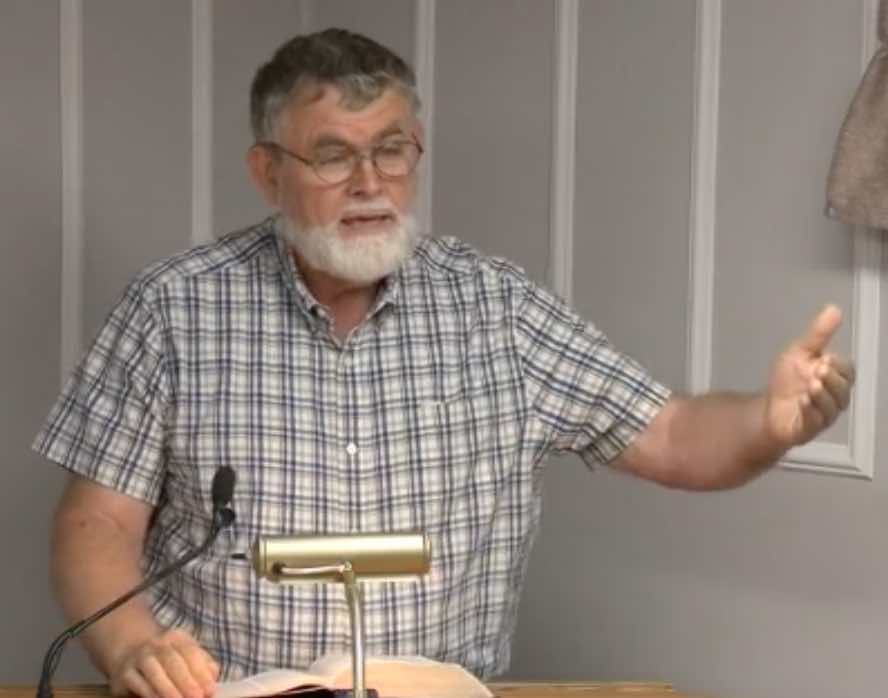
Mike McInnis

Christ was Once Offered

Hebrews 9
Mike McInnis April, 14 2024 Audio
0 Comments

Mike McInnis' sermon titled "Christ was Once Offered" addresses the theological significance of Christ's once-for-all sacrifice, emphasizing its sufficiency in contrast to the repeated offerings of the Old Covenant. The preacher argues that the Levitical priesthood and the sacrificial system of the law manifested God’s glory and underscored human sin yet failed to provide true redemption. Key scripture references from Hebrews 9 illustrate that Christ, as the eternal priest in the order of Melchizedek, entered the heavenly sanctuary with his own blood, obtaining eternal redemption for his people. This doctrine is of practical significance, as it confirms the believer’s assurance in the finished work of Christ, eliminating the need for continual offerings and reinforcing the concept of Christ's mediatorship through his eternal presence before God.

Key Quotes

“The blood of bulls and goats could never take away sin... not one sin was ever taken away.”

“Christ being come and high priest of good things to come by a greater and more perfect tabernacle... entered in once into the holy place, having obtained eternal redemption for us.”

“The blood of Christ will purge your conscience from dead works... Our conscience is purged by the blood of Christ.”

“So Christ was once offered to bear the sins of many, but unto them that look for him shall he appear the second time without sin unto salvation.”

Sermon Transcript

Auto-generated transcript • May contain errors

100%
Joseph Hart, the Lord blessed
him greatly, and setting forth really that which we're looking
at this morning in the ninth chapter of Hebrews. If we looked
at last week, the superiority of Christ over the priesthood of Aaron
in the law of Moses. And while the law of Moses was
given to manifest the glory of Christ and to reveal the sin
of men, and all of those offerings that were designed in the law
were given for one reason, which was to show Jesus Christ. Now, the Jews thought that these
things were such as could take away their
sin because the Lord had not revealed to them clearly what
we see very plainly. And that is that the blood of
bulls and goats could never take away sin. It didn't make any
difference how many offerings they made. It didn't make any
difference how many times the high priest went in to the holy
of holies. Not one sin was ever taken away. Because it was given simply as
a testimony to him who would come. not as an Aaronic priesthood,
but as a priest forever after the order of Melchizedek, who
had neither beginning of days nor ending of life. And it is
because he is an eternal priest, with an eternal priesthood, that
we have hope. If our trust was in some earthly
priest, then we would have a very finite hope. And we would be
always hoping maybe that another one would come along. But we're
not of such a mind as that because the Lord has shown us that the
one priest that he has ordained from before the foundation of
the world is that priest who ever lives to make intercession
for his people. And of course, when we think
of intercession, we think of saying words, but the intercession
of Christ is not with words. He does not go before the throne
of God with prayers of words. Now, he has prayed. He prayed
when he was in the earth, just as we are commanded to pray,
and as we are taught to pray, and as he has given us example
to pray. But the intercession of Christ is his presence at
the throne of God. just like the intercession of
the high priest when he went into the holy of holies and he
put that offering upon the mercy seat sprinkled with blood that
was the intercession was the offering that he made but he
had no power to take away sin and that's what this Ninth chapter
is, it says, this was a figure for the time then present, beginning
reading there in verse nine, was a figure for the time then
present in which were offered both gifts and sacrifices that
could not make him that did the service perfect as pertaining
to the conscience. That is, the priest that offered
the offering, he had to offer the offering for himself as much
as he did for the people. He couldn't even take away his
own sin, let alone anybody else's. And so it could never do it,
and he knew that. And in reality, the people knew
it. How did they know it? Because guess what, next year
they had to do the exact same thing all over again. And you
know, there are many today who think that Christ is being offered
up continually. He's not being offered up continually.
When we take this bread and this wine, we're not offering up the
body of Christ. We're remembering the fact that
he died once and that he lives. And that is what we come today
in this memorial feast which stood only in meats and drinks
and divers washings and carnal ordinances imposed on them till
the time of reformation." Now the reformation, that is when
things have been brought to fullness. They have been shown to be what
they are and Christ has come. We are in the age of reformation. Now, not the Protestant Reformation,
you know, not having to do with that, but this is the Reformation
in the sense that God has revealed to men exactly what He came to
do, completely, absolutely. There's nothing else to come.
Now a lot of people think that there's a lot of things yet to
take place, you know, and all these things that's gonna unfold.
Listen, Christ is the fulfillment of prophecy. Now there may be
some things that's gonna happen in the earth, and there may be
some things that are prophesied in the scripture having to do
with things in the earth, but the spirit of prophecy, Jesus
Christ is the spirit of prophecy. He is the revelation of all prophecy. Now there may be carnal things
that take place in the world that are foretold, but those
things are not specifically prophecies, because all prophecy has to do
with Christ. God who at sundry times in diverse
manners spake in times past by the prophets to the fathers hath
in these last days spoken unto us by his son. The only message
that is pertinent to us in this day is that which Christ came
to perform. And that's the only message that
we preach. Jesus Christ and Him crucified. God forbid that I
should glory save in the cross of Jesus Christ. There is no
place for us to have spend any time or consideration except
in that which Christ has done in our behalf. But Christ being
come and high priest of good things to come by a greater and
more perfect tabernacle not made with hands, that is to say not
of this building. Now a lot of people place a lot
of emphasis on buildings, build great edifices and call them
churches, but the Lord dwells not in temples made with hands,
just like Brother Al pointed out there this morning in the
book of Samuel when those Philistines took that ark, and they thought
that they would have a, you know, like a panel of gods. They'd have the Hebrew god and
their god and they could look at both of them and they'd say,
here they are. Little did they understand that the Lord said
he would have no other gods before him. He will not share his glory. And Dagon could not stand. They
could not understand that. They were fearful. See, oftentimes
men are fearful of God. The devils believe. and tremble. So it's not any sign of godliness
for men to tremble before God or be frightened when they hear
the message of God. That's not anything uncommon. That's actually a common thing.
It ought to be more common. I mean, men ought to fear God.
Men don't fear God as they should. They don't have any understanding
of what it is to fear God, but they do sometimes are fearful
without understanding of who this God is. But this is a greater,
a more perfect tabernacle, a building not made with hands, neither
by the blood of goats and calves, but by his own blood he entered
in once into the holy place, having obtained eternal redemption
for us. There's no clearer verse in all
the scripture. that describes what Jesus Christ
has done. And we talked about last week
about what it means to obtain something. I mean, when you obtain
something, it's yours. When you obtain something, you
specifically have something that belongs to you. And Christ came
to purchase the salvation of his people, and he obtained it. He didn't try to do it. Now that's
the message you hear a lot today. You hear a lot of preachers talking
about what Christ has tried to do. He's hoping that he'll save
some folks. If you'll just let him, if you'll
just say, you know, if you'll give him the okay. That's not
it. Christ purchased the redemption
of his people, absolutely. without question, he obtained
it. For if the blood of bulls and goats and ashes of a heifer,
sprinkling the unclean, sanctify to the purifying of the flesh,
how much more shall the blood of Christ, who through the eternal
spirit offered himself without spot to God, purge your conscience
from dead works to serve the living God? Now what is the dead
works that he's writing to these Hebrews about? It's the law,
keeping the law, thinking that in the keeping of the law, they're
somehow enhancing their standing with God. But you see, the blood
of Christ will purge your conscience from dead works. It leaves all
those things in the dust. We understand that the blood
of Christ is that which takes away the sin that we have. And we have reverence for the
law, but we don't think of the law as something that enhances
our standing with God. We don't look at keeping the
law as something that keeps God off of our back, or it helps
us along the way, or we earn God's favor in some fashion.
Our conscience is purged by the blood of Christ. And for this cause he is the
mediator of a new testament, that by means of death for the
redemption of the transgressions that were under the first testament,
they which are called might receive the promise of eternal inheritance. Now who is it that will receive
the promise of eternal inheritance? Those that are called. The Lord
Jesus Christ said, my sheep hear my voice, I know them and they
follow me. He calls His sheep. Now, they
can't always hear because they're dead in trespasses and sins until
such time as it pleases Him to awaken them. And you hath He
quickened who were dead in trespasses and sins. See, unless the Lord
quickens a man, he can't hear these things. The blood of Christ
doesn't mean anything to him. Oh, he hears about it, he might
even go to church on Easter, you know, and say, oh, you know,
we believe that Christ died on the cross. But it's not a precious
thing to him. It's not a thing that he desires
with all of his heart. Except a man be quickened. The
Lord told Nicodemus, except a man be born again. That's the same
thing. That's what it means. The Spirit
of God opens a man's heart and mind He's born from above. It's not a thing he can do. It's
not something he can even know is going to happen. He can't
explain it. So how can it be that such a
thing could occur? And for this cause he is the
mediator. For where a testament is, there
must also of necessity be the death of a testator for a testament
or a will. Now this is speaking about a
promise. a testament, a will, that is,
that which God has said. He said, where a will is, that
is, where a man makes a will, when you get older, you think
about those things, you know, because these things, all these
earthly possessions that you have, they don't really mean
anything, but you're gonna leave them one day, and where are they
gonna be? What's gonna happen to them?
On the one hand, we don't really care. You know, because it's
not going to really make any difference to us. But there is
such a thing as a will where a man gives those things that
he has to his heirs. Well, Jesus Christ has made a
will. He made a testament. He made
a promise that he would give to his people. And until a will
is not enforced, you can't go, you can be named in a will. But
you can't get one cent out of that will. You can't get one
piece of property or anything else until the person that makes
the will dies. And when that person dies, then
that will can be opened. And it can be, an executor can
see that those things are carried out. We see Christ is not only
the testator, but he's the executor of his will. because he ever
lives. You see, not only has he made
the promise, but he has seen that it is carried out. And he
will not leave his people. Whereupon neither the first testament,
that is the first covenant, was dedicated without blood. Of Moses,
when he had spoken every precept to all the people, according
to the law, he took the blood of calves and goats with water
and scarlet wool, and hyssop, and sprinkled both the book and
all the people." The Word of God sanctified by
the blood of Christ. You see, we wouldn't have any
understanding whatsoever of this book apart from the sanctifying
work of Jesus Christ upon the very word that he has given.
And he sends his spirit to open our ears that we might hear it,
our eyes that we might see it. Remember when the Ethiopian eunuch
is riding along in his chariot, he's reading the Bible, but he
didn't get it. He didn't understand. But the
Lord sent Philip to run alongside this man's chariot. I'd have liked to have been there
and seen just exactly how this happened, but anyhow, he's riding
along in this chariot, and he's looking at the Bible, and all
of a sudden, there's somebody there that tells him exactly
what he needs to know. He said, who is it that's being
spoken of here? And Philip told him that it was
Christ. You see, the Lord opened that
man's mind long before he gave him the answer. And now, you
know, these things can happen simultaneously. I mean, the Lord
can cause a man's understanding to be opened immediately upon
his new birth. He can bring him to life and
give him understanding all in kind of one fell swoop. But we must understand that a
man's eyes must be opened before He can believe. He's got to be
born again. See, being born again has nothing
to do with believing, except insofar as we would definitely
say that if a man is born again, he will believe. But he does
not believe in order to be born again. See, some folks will tell
you how to be born again, but you can't tell somebody how to
be born again. The Lord Jesus Christ did not
tell Nicodemus how to be born again, did he? He said, Nicodemus,
you must be born again. Nicodemus said, well, how in
the world can that happen? He said, the wind blows where
it lives, and now here's the sound thereof, but you can't
not tell from whence it came. So is everyone that is born of
the Spirit of God. It is the work of God. It's a
glorious work. A man can't predict it. A man
can't prevent it. A man can't overturn it. Because
it is the work of God, a glorious work, that he might hear the
gospel. How shall they hear without a
preacher? How did that Ethiopian eunuch
hear the gospel? Except that the Lord sent someone
to tell him, to give him light. to bring the life and immortality
to light through the gospel. Moreover, he sprinkled, and almost
all things are by the law purged with blood, and without the shedding
of blood there is no remission. Now this is a principle that
is taught throughout the word of God. And why is that? Because the scripture plainly
says that the life is in the blood. That's why the Jews were
forbidden to drink blood. Because the life is in the blood.
And yet, here we come, and the Lord told his disciples, he said,
this is the New Testament in my blood. Now think of what must
be going through their minds. They're not supposed to drink
blood. The Lord said, this is my blood, drink ye all of it.
What did he mean? Well, he just meant simply that
it was the blood of Christ that they needed to partake of. They had to have it. And so it
is, by the grace of God, he has given us such. Without the shading
of blood is no remission. There is no taking away of sin
without the shading of blood. Is it because the Lord likes
the looks of blood? No, it's because it is the essence
of life. Remember what the Lord told Adam? He said, Adam, in the day you
eat this, you are going to die. And a man can't be made alive
apart from the blood of Christ. Because it is the blood that
has purchased his redemption. It is the blood that has justified
him before the throne of God. It is the blood that makes him
a candidate for the quickening power of the Spirit of God. I'm
telling you, if the blood of Christ has not cleansed a man
from before the foundation of the world, now it is indeed true
that he came in time to pour out His blood. But in the purpose
of Almighty God, the people of God are clean in Christ from
the beginning. But He came in time to set forth
our cleansing under the law, because He put us under the law,
and He cleansed us in the law. But there never been a time when
God's people hadn't been clean before Him because of Christ.
Now that's a glorious thought. In some people's minds that's
a controversial thought, but the reality is that what Christ
came to do, he came to demonstrate the love of God. When did God
begin to love his people? Did he start loving us when we
were born? No, the scripture says that he
chose us in Christ before the foundation of the world. He loved
us from the beginning. And so his love is not some fickle
thing, but it is eternal. It's necessary that the patterns
of things in the heavens should be purified with these, but the
heavenly things themselves with better sacrifices than these.
Now the Lord would be just and the justifier of those which
believe in Christ. He would justify men. And he
would not overturn his law in order to
do it, but he set forth his law and he made his people subject
under it. And it's by the law that he would
cause them to be made clean through the shedding of the blood. For
Christ is not entered into the holy places made with hands,
which are figures of the true, but into heaven itself, now to
appear in the presence of God for us. Now, the temple and the
tabernacle, all these elements and things, the different furniture
and whatnot, and the utensils that you use, were sprinkled
with blood. I mean, if you think about it,
it was kind of an ugly scene. All this blood sprinkled all
over everything, but it was necessary. Now, if it was necessary for
the priest to do that in earthly things, you see, that temple
not made with hands must be purified by something much more pure.
than the blood of bulls and goats, and it is the blood of Christ.
He's entered into holy places, not entered into holy places
made with hands, but into heaven itself, now to appear in the
presence of God, nor yet that he should offer himself often
as the high priest enters into the holy place every year with
the blood of others. For then must he often have suffered
since the foundation of the world, but now once in the end of the
world hath he appeared to put away sin by the sacrifice of
himself. And as it is appointed unto men
once to die, but after this, the judgment. So Christ was once
offered to bear the sins of many, but unto them that look for him
shall he appear the second time without sin unto salvation. Now I want us to get the picture
of the high priest going in to the Holy of Holies. And he went
in there with the offering. And he made the offering before
God. And the people watched. They couldn't go in there. They
couldn't see what he did. But they were waiting for him
to come out. because they knew that when he
came out, that the offering had been made. And that was their
confidence. That was a poor confidence, was
it not? Because it didn't really accomplish anything, except insofar
as it showed Christ. So they saw the priest go in,
they saw the priest go out. Now I want you to think about
this. Now I know this is not how this passage of scripture
usually is looked at. But I believe if contextually,
if you look at the context of the whole passage of scripture,
this is what it has reference to. It says here, so Christ was
once offered to bear the sins of many, and unto them that look
for him shall he appear the second time without sin unto salvation. Now, usually what is referenced
here when men speak about this passage of scripture is that
Christ is coming again, and those that look for him to come again,
they will be blessed in that. And I'm not discounting that
there is truth in that, that is true, but I don't think contextually
that's what he's talking about here. Now he has indeed entered
into the Holy of Holies in our behalf. But you see, I believe
we see him come out, we have seen him come the second time.
Now I'm not saying he's not coming again. But contextually here,
I believe what he's saying here is it just like the high priest
went in to the Holy of Holies and then when he came out the
second time. In other words, he went in once,
he came out again. When he came again, they knew
the sacrifice was done. Well, when Christ has come forth
from the grave, you see, there's our hope. And
to them that look for him. You see, those that look to the
one who's the resurrected Christ, that is our hope. That is that
which we do here today. This would be foolish if Christ
was still in the ground. I mean, if he had come and died
and all we had was this, just remember, well, you know, he
was a good man, he died and everything. But dear brethren, we rejoice
that not only did he die, because what did he say? He said, do
this until I come again. So we know that he ever lives
to make intercession for us. And we do indeed look for him
to come. But we have seen him come the
second time, I believe, in this context of this passage as he
has come forth as the Savior of sinners. And to them that
look for him, you see those that their eyes are on this Christ
who has died and rose again, therein is our hope made perfect.
and we rejoice, and we shall be, we see him without sin unto
salvation. Because you see, he went to the
cross, did he not, with sin? Just like the high priest went
with the sins of the people. you know, on this goat or bull
or whatever it was that they offered. They went in there with
sin. When they came out, supposedly,
they were without sin. Well, when Christ went to the
cross, he was with sin. When he came out, he was without
it. And those that look for him, dear brethren, those that see
him, those that hope in him, Therein is our love made perfect,
is our hope perfect, because He is the Savior of sinners.
So Christ was once offered to bear the sins of many. Now could He not have said He
was once offered to bear the sins of every man on earth? Could He not have said that?
He could have said that if that was what it was, but you see
Christ didn't do that. He came for the sins of many.
He shall see the travail of his soul and shall be satisfied.
And by his blood, he shall bring many sons to glory. Oh, who can fathom the vastness
of the kingdom of God? I mean, how do we know? How many
thousands and millions of people that Christ paid their sin debt? I couldn't venture a guess. But
I will tell you this, that I could easier believe that he paid the
sins of every man, woman, boy, and girl in the world, and that
all every man, boy, and girl in the world are going to be
brought into the kingdom of God, then I can believe that he paid
the sins for some men, and yet they shall perish. Can't be certain. If Christ died for the sins of
his people, then they shall be saved. He obtained eternal redemption. There's no question about this.
And so it is that without the shedding of blood, there's no
remission and Christ has shed his blood. And if he has shed
his blood, there is remission. The sins which he have seen today,
he shall see no more. Because Christ is that one who's
taken them away. And he's come forth without sin.
Oh, what a glorious thought.
Mike McInnis
About Mike McInnis
Mike McInnis is an elder at Grace Chapel in O'Brien Florida. He is also editor of the Grace Gazette.
Broadcaster:

Comments

0 / 2000 characters
Comments are moderated before appearing.

Be the first to comment!

Joshua

Joshua

Shall we play a game? Ask me about articles, sermons, or theology from our library. I can also help you navigate the site.