Bootstrap
Mike McInnis

Priestly Order King of Salem

Hebrews 7
Mike McInnis March, 24 2024 Audio
0 Comments
Hebrews Series

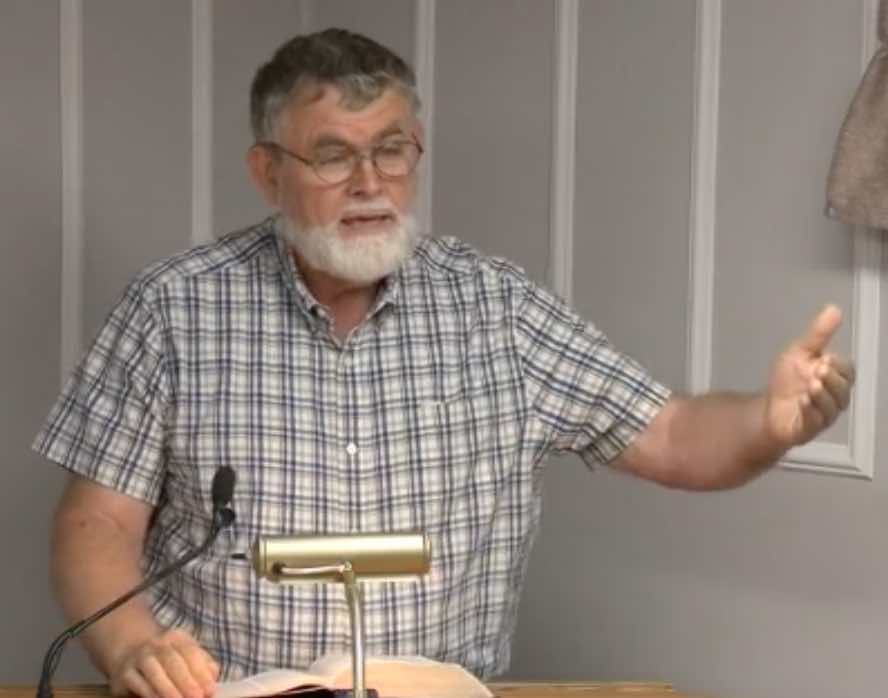
The sermon by Mike McInnis titled "Priestly Order King of Salem" focuses on the theological significance of Christ's priesthood, particularly his role as a high priest in the order of Melchizedek as described in Hebrews 7. McInnis emphasizes that the Levitical priesthood, a fixture in Jewish law, could not bring perfection, and thus, God established Jesus as a high priest forever, without limitations of lineage or mortality, thereby fulfilling the promise of a better hope (Hebrews 7:11-16). He points to various Old Testament references, including the encounter between Melchizedek and Abraham (Genesis 14), to illustrate the uniqueness of Christ’s priestly order, which signifies a transformative shift from the law to grace. The practical significance of this doctrine is profound, as it emphasizes that believers can approach God directly through Christ, who intercedes on their behalf, providing assurance of salvation and eternal life, contrary to the reliance on works under the law.

Key Quotes

“The law made nothing perfect, but the bringing in of a better hope did, by the which we draw nigh to God.”

“He [Jesus] ever liveth to make intercession for them [those that come unto God by him].”

“If therefore perfection were by the Levitical priesthood, what further need was there that another priest should rise after the order of Melchizedek?”

“The truth found in one place is found in Christ and he has satisfied the law and he has paid the tithes and he has rendered the obedience that was necessary for the people of God to come into the presence of God.”

Sermon Transcript

Auto-generated transcript • May contain errors

100%
Hebrews. I'm going to read, begin reading
in verse 16 of chapter 6, but we're going to be looking in
chapter 7. Chapter 6 and verse 16 says,
for men, verily swear by the greater, and an oath for confirmation
is to them an end of all strife. Wherein God, willing more abundantly
to show unto the heirs of promise the immutability of his counsel,
confirmed it by an oath, that by two immutable things, in which
it was impossible for God to lie, we might have strong consolation
who have fled for refuge to lay hold upon the hope set before
us. which hope we have as an anchor of the soul, both sure
and steadfast, and which entereth into that within the veil. Whether the forerunner is for
us entered, even Jesus, made an high priest forever after
the order of Melchizedek. For this Melchizedek, king of
Salem, priest of the most high God, who met Abraham returning
from the slaughter of the kings and blessed him, Of whom also
Abraham gave a tenth part of all, first being by interpretation
king of righteousness, and after that also king of Salem, which
is king of peace. Without father, without mother,
without descent, having neither beginning of days nor end of
life, but made like unto the Son of God, abideth the priest
continually. Now consider how great this man
was unto whom even the patriarch Abraham gave the tenth of the
spoils. And verily, that they are of
the sons of Levi, who received the office of the priesthood,
have a commandment to take tithes of the people according to the
law. That is, of their brethren, though they come out of the loins
of Abraham. But he whose descent is not counted
from them received tithes of Abraham, and blessed him that
had the promises. And without all contradiction,
the less is blessed of the better. And here men that die receiveth
receive tithes, but there he receiveth them of whom it is
witnessed that he liveth. And as I may so say, Levi also
who receiveth tithes paid tithes in Abraham. For he was yet in
the loins of his father when Melchizedek met him. If therefore
perfection were by the Levitical priesthood, For under it the
people received the law. What further need was there that
another priest should rise after the order of Melchizedek, and
not be called after the order of Aaron? For the priesthood
being changed, there is made of necessity a change also of
the law. For he of whom these things are
spoken pertaineth to another tribe, of which no man gave attendance
at the altar. For it is evidence that our Lord
sprang out of Judah, of which tribe Moses spake nothing concerning
priesthood. And yet it is far more evident,
for that after the similitude of Melchizedek there ariseth
another priest, who is made not after the law of a carnal commandment,
but after the power of an endless life. For he testifieth thou
art a priest forever after the order of Melchizedek. For there
is verily a disannulling of the commandment going before for
the weakness and unprofitableness thereof. For the law made nothing
perfect, but the bringing in of a better hope did, by the
which we draw nigh unto God. And inasmuch as not without an
oath, he was made priest. For those priests were made without
an oath, but this with an oath by him that said unto him, the
Lord swear and will not repent. Thou art a priest forever after
the order. of Melchizedek. By so much was
Jesus made a surety of a better testament. And they truly were
many priests, because they were not suffered to continue by reason
of death. But this man, continueth ever,
hath an unchangeable priesthood. Wherefore he is able also to
save to the uttermost that come unto God by him, seeing he ever
liveth to make intercession for them. For such an high priest
became us, or suited to us, who is holy, harmless, undefiled,
separate from sinners, and made higher than the heavens. Who
needeth not daily, as those high priests, to offer up sacrifice,
first for his own sins, and then for the people's. For this he
did once, when he offered up himself. For the law maketh men high priests
which have infirmity, but the word of the oath which was since
the law maketh the son who is consecrated forevermore. What a glorious thing. I mean,
what wonders are discovered here in this chapter. I believe this
is the central chapter in the book of Hebrews. And as you look
at it, And as you think on what it is that the Lord gave to the
writer of Hebrews, whom we believe, or I believe to be the Apostle
Paul, as he wrote this, beginning with the preeminence of Christ,
God, who at sundry times in divers manner spake in times past unto
the fathers by the prophets, hath in these last days spoken
unto us by his Son. Now he would, it's very important
that we understand, and I'm not trying to beat a dead horse,
but I want you to get this in your mind, it's very important
to understand the heritage of the people to whom he has addressed
this letter. Because they've been raised,
each one of them taught from children of the preeminence of
the law of Moses and the glory of it. And well, they should
have been because that's what the Lord committed to them. They
couldn't know anything else. They didn't have the understanding
that's been given to the saints of God in the present time. They
had no way of knowing that. And we have no way of knowing
it either except for the grace of God that has made it apparent
to us. Because He has sent the Lord
Jesus Christ in flesh and blood that we might behold Him. That
we might actually see the salvation of God, not simply hear about
it from the prophets, but actually see it played out before us.
Isaiah probably wrote more about the Messiah and the glories of
the redemption that he would bring in than any of the other
prophets. But Isaiah was completely in
the dark as to who this one was. He didn't know him. He didn't
see him. He couldn't see him. He had no knowledge of it. When
he looked up into the heavens, when the year that King Uzziah
died, he says, I saw the Lord high and lifted up. and his train
filled the temple. And he saw that glorious sight. And in that measure, he did indeed
see the Lord Jesus Christ. Because there is no other vision
that a man can have of God than to see Jesus Christ. And so he
did indeed see Him high and lifted up, even as John saw the same
vision in the book of the Revelation. And but yet John saw something
that Isaiah could not. And that is the fulfillment and
the completion of the redemption that was in Jesus Christ. And
he has been pleased to show that to us in the present time. And
so Paul, writing to these Hebrews, is seeking to press into their
mind the preeminence of Christ and the fact that Christ has
fulfilled the law of Moses. The law of Moses is no longer
that preeminent word from the Lord. It's not that anymore which
is hanging there in front of us, but that which is hanging
in front of us is Jesus Christ. We look at him, we don't look
at the law. Now that's not to say that the
law is not holy, just, and good. Paul points that out over and
over again. We're not seeking to say that
there's no value in the law, but the purpose of the law was
to bring us to Christ. The law was a schoolmaster to
bring us to Christ. And when that which is perfect
is come, that which is in part is done away. And that's what
he's writing to these Hebrews about. And he's pointing out
to them that Christ is that one. And so we see He said here, and
concerning this oath, because he mentions an oath again, he
said, God, willing to show to the heirs of promise the immutability
of his counsel, confirmed it by an oath. Now what he did,
you see, the Lord said, when we say, and I think we said this
last week, but we'll say it again, when men think that it's necessary
to swear upon something, You know, I mean, we say to somebody
that something's true, and maybe they kind of look at us, well,
maybe they don't think, and you say, I swear it's true. I mean,
as if that makes it true. You know, I mean, that adds to
something. I mean, you know, when we was
kids, we was always, I swear on a stack of Bibles. And I never
saw anybody do that, but you know, that's kind of mad. I mean,
you know, not just one Bible, but a stack of them. I mean,
that really means something, doesn't it? And so God, knowing
the weakness of men, not only said that He would bring this
redemption, but He confirmed it by an oath. He said it and
He swore it, that by two immutable things, that He's God who cannot
lie, and He who cannot lie said it, and then turned around and
gave an oath to it. And what is that oath? He said,
and this is the oath. For these priests were made without
an oath, but this with an oath. He says, I swear. The Lord swear. Can you imagine that? The Lord
swore it. He didn't need to, did he? I
mean, the word of God is sure if he never swore it, but he
swore this. He made it just, he drew of a
stake into the ground that can't be pulled out. He said, I swear
that thou art a priest forever after the order of Melchizedek.
There comes no other priest. There's no need for any priest. Now I know there are religions
in the world that they still have priests. And they go about
in their darkness telling men that they can forgive their sins,
but it's a total lie. A man can't forgive another man's
sin unless he too is sinless. And there's only ever been one
who fulfilled that. And it is that one of whom we
speak. And so here, the forerunner is for us entered even Jesus,
made an high priest forever after the order of Melchizedek. He
has become the first fruits of them that slept. He is the forerunner. In other words, he has been raised
from the dead. Do we believe in the resurrection?
Well, if we don't believe in the resurrection of Christ, we
can't possibly believe in the resurrection of the body of sinful
men, can we? But because Christ is risen from
the dead and become the first fruits of them that sleep, we
have hope. that we too shall be raised because
he will not leave his possession in a corrupt state. He will bring
us to total incorruption and immortality. Now most people
think that men have immortality. They believe they're born with
immortality. You hear people talk about it all the time. Well,
he's got an immortal soul that can't die. Well, you know, show
that to me in the scriptures. But there is one that hath immortality. And there is one who gives immortality
to men. And it is Jesus Christ. And it is that one of whom we
speak here, who had neither beginning of days nor end of life, and
that his priesthood continues forever. because he has the power
of an endless life. You see, all those priests that
came before, they were temporary. They couldn't continue. Why? Because they died. But this man,
because he lives forever, he continues forever as our great
high priest. And so the forerunner is for
us entered Even Jesus made a high priest forever after the order
of Melchizedek. Now we've talked a little bit
about this Melchizedek, a very mysterious character, mentioned
several times in the Scriptures, in the Psalms, in Genesis where
he first met Abraham. And I have said that it is my
opinion, it is my thought process, it is how I see it, is that this
Melchizedek is Christ. That he appeared unto Abraham
because of many of the things. Now I know that some don't have
that opinion. They believe that he was another
man who's just a type of Christ. And I'm not gonna argue with
anybody about it because it does not really matter in the overall
scheme of things. But we do know for a fact that
Whether it's the type or it is Christ, that this man is of an
origin that we don't quite, are not quite given the full picture
of, is it? He had neither father nor mother,
beginning of days or ending of life. And so it is. that he is that one who I believe
is Christ. But nonetheless, Christ is likened
unto him as this one, because these Jews would have heard of
Melchizedek, would they not? They would have known of him,
and so he's using that. He's using their knowledge of
this Melchizedek, and he's saying that Christ has come in the order
of Melchizedek, not in the Aaronic priesthood. because he had no
ties to the tribe of Levi. And so it is that he could not
be a priest under the law. Now, of course, you know there,
in the mind of the Jew, that would automatically rule him
out, would it not? But the Lord says, look, it's
necessary that Christ come not under the law, because had he
come as an Aaronic priesthood, then everybody would be saying,
well, we need to continue on with the law. But he said, because
there must be an end of the law, there's a fulfillment of the
law, there is a satisfaction of the law, it's necessary that
the law be changed. Priesthood be changed. And Christ
is that one who came. And verily they that are of the
sons of Levi, who received the office of the priesthood have
a commandment to take tithes of the people through the law.
They have that. But yet he goes on to say that
Levi, who received tithes, also paid tithes. So you see, there's
the weakness of the flesh. Not only does it have, may be
given this position, but it also has an obligation. Now, dear
brethren, Christ has met the obligations of His people. Christ paid our tithe. He never
paid any tithes of His own because He didn't owe any. But He came as a priest and He
paid our tithes and He brought our offerings unto the Lord. Oh, what a glorious thing! If
therefore perfection were by the Levitical priesthood, What
further need was there that another priest should rise? I mean, if
we could have been saved by the law, some people, I've heard,
in fact, when I was growing up, I was taught, or at least this
is how it came into my mind, whether anybody meant to teach
it to me or not. That's the way it came into my
mind. Well, how were people in the Old Testament saved? Well,
they were saved by keeping the law. That's what, you know, as
a kid, at least, I thought. Well, now I realize, well, that'd
be impossible. They couldn't be saved by the
keeping of the law, because by the law is the knowledge of sin.
And every man who would seek to keep the law, when a man comes
to the law and he says, you know, I want to follow this, what's
he gonna learn from it? He's gonna learn pretty quick,
I can't. I can't do it. I can't love the Lord my God
with all my heart, soul, and mind. You know, my mouth is not
pure. My mind is not clean. And so
the law stands as a condemning power. And I owe the debt because
the law demands that I pay it. And so it's impossible, dear
brethren, for any man to ever come into the presence of God
by the deeds of the flesh. And yet religious men live and die in the expectation
and hope that they can do something that will cause them to have
favor with God. I mean, all these health and
wealth preachers are preaching it every day. They say, oh brother,
if you'll be faithful, God will pour out this blessing on you
and he'll give you that and all this kind of stuff. And men thirst
for that. They hunger for it. And we've
got so-called churches full of people today that feed on that
very pablum of lies. And it's not the truth. Because
the truth found in one place is found in Christ and he has
satisfied the law and he has paid the tithes and he has rendered
the obedience that was necessary for the people of God to come
into the presence of God. Oh, what a glorious Savior he
is. For of whom these things are spoken pertaineth to another
tribe of which no man gave attendance. It is evident that our Lord sprang
out of Judah. He is the Lion of the tribe of
Judah. See, it doesn't say that he's
a priest of the tribe of Judah. Now he is a priest, but he's
a priest after the order of Melchizedek. But he is a lion, he is a judge,
he's a king. He's full of glory. And he comes forth as that one
out of the tribe of Judah, triumphant. Not after the law of the carnal
commandment. Nothing in the law ever gave
Christ the right to become a priest. He didn't need it. Because you
see, he was made a priest by the oath of God. The priests
of Levi's order, they're Aaronic priesthood. The Lord never made
an oath to them, did he? He never swore and said, these
are my priests. He just appointed him. He said,
y'all go on, carry this out, because this is temporary. He
said, I'm just doing this for a season. But he said, there
is one who is a priest forever. He's always been our priest.
When were the people, God's people justified? Now that's a question
that's occupied the theological minds of men. for a long time. You know, when were God's people
justified? Now some people think they're justified whenever they
did something. You know, well if you believe,
you'll become justified. Well let me tell you what, the
Lord's people have been justified in Christ from the beginning.
Now indeed, as far as the fulfillment of the law is concerned, when
Christ came into the world and he poured out his blood for the
sins of God's people, they are justified in Christ by what he
did. But they are his from the beginning. He said, thine they were and
thou gavest them to me. And he sees them as he's always
seen them. See, the Lord's never seen us
and despised us. Now, when we look at ourselves
before God, we say, Lord, how could you look on us with anything
other than wrath? We deserve wrath. By nature,
we're the sons of wrath, even as others. But not so in the
appointment of God, because He's not appointed us to wrath. He
never, when He spoke to that woman, that was taken in adultery
and brought before Him. And He said, neither do I condemn
thee. When did He not condemn her? Did He just decide, well, I'm
not going to condemn this woman then? No, He didn't condemn her
because she wasn't condemned. She belonged to Him. And see,
He ordered the steps of her life to bring her down to His feet.
That she might know herself to be a sinner. And that she might
behold a Savior who looked upon her with loving eyes and said,
neither do I condemn thee. Go and sin no more. You think her life might have
changed at that moment in time? You think that her occupation
might have became different? Oh, why? Because the Lord revealed
to her that he did not condemn her. And dear brethren, that's
the gospel that we preach, is that Christ is the great high
priest who has died for sinners. Now there are millions that are
going to perish without that knowledge. There are many who
have no concern whatsoever with it because they don't think themselves
to be a sinner. And you can't convince them.
They think everything's all right, I'm going along all right, I'm
as good as the next guy. And they're right. Dear brother,
when you compare us, we're all the same. I mean, you might not
be guilty of something that this one did, or that one did, or
whatever, and you might have, you know, these little moments
of time when your thoughts are more pure than theirs are. But
when it all boils down to it, all have sinned and come short
of the glory of God. We're all in the same boat. And
it is the mercy of God that brings a man to the place where he sees
himself to be a sinner. And he cries out, O God, be merciful
to me, a sinner. Or like we sang about blind Bartimaeus. He cried out in the light of
the Lord. Jesus, thou Son of David, have mercy on me. See, it's not, I'm concerned
for the souls of others, for sure. But I tell you, the thing
that moves me to seek the Lord is I know I need mercy, more
so than you need mercy. Now, I know that's not the way
to say that, but that's how it is. I mean, a man's gotta know
that he's the one in need, not looking around to see who needs,
well, who needs the Lord? Well, we got all these people
that need the Lord. Well, dear brethren, I need the
Lord. I mean, we need the Lord. And oh, it's a mercy and grace
of God that brings a man to a place where he sees that and understands
it. The law made nothing perfect,
but the bringing in of a better hope did, by the which we draw
nigh to God. Oh, a better hope. A hope that's
not built on the law. A hope that's not built on what
I can do. Hope that's not built on me signing
a card or being baptized or any of the multitude of things that
people think they can do to get themselves right with God. But
a better hope. And the better hope is Christ.
Christ Jesus, a priest forever after the order of Melchizedek.
Christ Jesus, a priest who lives forever. And he ever liveth to
make intercession for who? For those that come unto God
by him. See, that's the only avenue of
approach for a sinner. Oh, the righteous, they have
their own approach. In the book of Pilgrim's Progress,
we see that approach. I don't remember what the fellow's
name was. Who remembers the one that was
in the boat and he got up to the thing and there was a door? in the side of the hill just
before he got to the gates of heaven. And he perished because he went
up there and everything was great in his own mind. But he perished
because there is a door to hell at the gates of heaven. Oh, that
the Lord might teach us that there is but one way. The Lord
Jesus Christ said, I am the door. By me, the sheep go in and out
and find pasture. My sheep hear my voice, I know
them, and they follow me. Oh, that the Lord might give
us ears to hear Him today.
Mike McInnis
About Mike McInnis
Mike McInnis is an elder at Grace Chapel in O'Brien Florida. He is also editor of the Grace Gazette.
Broadcaster:

Comments

0 / 2000 characters
Comments are moderated before appearing.

Be the first to comment!

Joshua

Joshua

Shall we play a game? Ask me about articles, sermons, or theology from our library. I can also help you navigate the site.