Bootstrap
Mike McInnis

Epistle to the Hebrews

Hebrews 1
Mike McInnis December, 31 2023 Audio
0 Comments
Hebrews Series

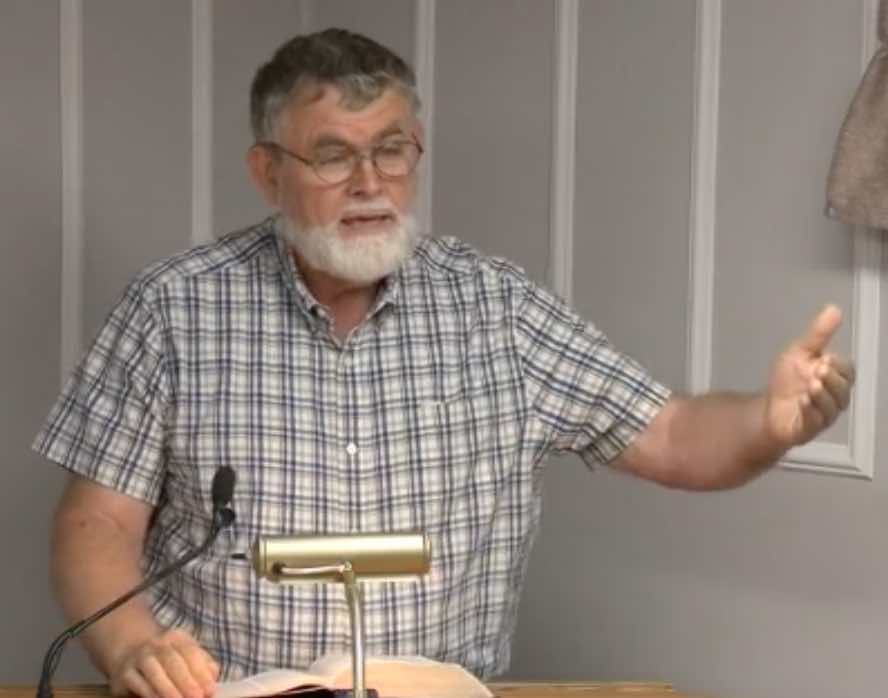
In Mike McInnis' sermon on Hebrews 1, the main theological topic is the supremacy of Christ as the ultimate revelation of God. He argues that God, who spoke through the prophets in the past, now speaks through His Son, Jesus Christ, thereby making a definitive divide between the old covenant and the new covenant. McInnis emphasizes the eternal nature and divine authority of Christ, referencing verses such as Hebrews 1:1-3, which highlights Christ's role as Creator and His relationship with the Father, asserting that He is the "brightness of His glory" and the "express image" of God's person. The sermon underscores the necessity of recognizing Christ's centrality in salvation and revelation, affirming the doctrine of the Trinity while clarifying that Christ is fully God and revealing a more profound understanding of God's sovereignty and purpose. The practical significance is a call to worship and recognize Christ's preeminence, urging believers to live in light of Christ's redemptive work and authority.

Key Quotes

“To misunderstand or to miss the glory that surrounds this passage of Scripture is to miss the gospel.”

“God who at sundry times and in divers manners spake in time past unto the fathers by the prophets, hath in these last days spoken unto us by his Son.”

“He is the brightness of God's glory. And the express image of his person.”

“You can't know God apart from knowing Jesus Christ.”

Sermon Transcript

Auto-generated transcript • May contain errors

100%
book of Hebrews. I believe that
the first chapter of the book of Hebrews is, if not the most
glorious, one of the most glorious chapters in all of Scripture. And to misunderstand or to miss
the glory that surrounds this passage of Scripture is to miss
the gospel. or it's contained here. Hebrews chapter one and verses
one through 14. God, who at sundry times and
in divers manners, that is different manners, spake in time past unto
the fathers by the prophets, hath in these last days spoken
unto us by his son. whom he hath appointed heir of
all things, by whom also he made the worlds, who being the brightness
of his glory, and express image of his person, and upholding
all things by the word of his power, when he had by himself
purged our sins, sat down on the right hand of the majesty
on high, being made so much better than the angels, as he hath by
inheritance obtained a more excellent name than they. For unto which
of the angels said he at any time, thou art my son, this day
have I begotten thee. And again, I will be to him a
father and he shall be to me a son. And again, when he bringeth
in the first begotten into the world, he saith, and let the
angels of God worship him. And of the angels he saith, who
maketh his angel spirits and his ministers a flame of fire.
But unto the son, He saith, thy throne, O God, is forever and
ever. A scepter of righteousness is
the scepter of thy kingdom. Thou hast loved righteousness
and hated iniquity. Therefore God, even thy God,
hath anointed thee with the oil of gladness above thy fellows.
And thou, Lord, in the beginning hast laid the foundation of the
earth and the heavens are the works of thine hands. They shall
perish, but thou remainest and they shall all wax old as doth
a garment. And as a vesture shalt thou fold
them up, and they shall be changed, but thou art the same, and thy
years shall not fail. But to which of the angels said
he at any time, sit thou, sit on my right hand until I make
thine enemies thy footstool? Are they not all ministering
spirits sent forth to minister for them who shall be heirs? of salvation. Now, in order to
get the full understanding of what it is that Paul is writing
about here, we must understand who it is that he's writing to. And of course the book is, and
I say Paul, I believe Paul was the writer of the book of Hebrews. It does not tell us that he was.
And there are those that do not believe that he was, or at least
they doubt that he was. But as I go through the book,
and I've read through this book numerous times, and I've read,
of course, the other writings of Paul, and I see a seamless
transition from one book to the other. What is said here in the
book of Hebrews is, at the very least, exactly consistent with
everything that Paul ever taught. And for sure, I believe that
this is a very important book of the scripture. Now to say
it is the most important, I wouldn't go so far as to say that, but
I would say it is among the most important, if not the most important
book. Because contained in this book
of Hebrews is everything that Christ has done. everything that
Christ is and everything that Christ shall be now when we say
what he is and what he shall be those two things are actually
synonymous because what he is he has always been and what he
is he shall always be he's the same yesterday today and forever
and so there is no changing there's no shadow of turning with him
and so it is that He begins here with a subject that should be
and he felt was in the minds of those Hebrews, those raised
in the tradition of Judaism and taught by the prophets. He says God. Now that is how
the scripture begins, in the beginning God. and it's how he
begins here, God. Now, of course, there are those,
the psalmist said, the fool has said in his heart, there is no
God. Now, if you understand the context
in which he writes there, and you understand humanity, you
realize that there actually is no body that honestly believes
There is no God. They just believe that there
is no God for me. That there is no God for me besides
myself. You know, that's what men do. Because all men, without exception,
believe somebody is in control, whether it's them or whether
it's some random uh... action of the universe or whatever
all men do understand that something is directing things whether they
won't admit it or not but we know by the grace of God those
things which the prophets of old were very clear to present
is that there is a God in heaven there's one God and that he has determined all things to occur
according to the good pleasure of His will. Now in order, there's
no such thing in reality as a non-sovereign God. The very concept that we
have of an absolute God, which is what He is, means that he
is sovereign we don't have to say he's a sovereign God because
that goes with us saying God when he says here God he's not
saying a God some God but he said God the one who said I am
God and there is none else and so he said this God the absolute
God, as they would have known Him by the name of Yahweh, as
we say Jehovah, the Lord. That's how they would know Him.
He said, this God, not some imaginary figure, not some weak figure
that has been hewn out of stone or wood and placed in a temple
made with hands, but the true and living God that dwelleth
not in temples made with hands. That one who is immortal, invisible,
the only wise God. That one who dwells in the light
to which no man can approach. This is he of whom he speaks. He's that one whom Job said,
I have heard of thee by the hearing of the ear. But he said, now
mine eye seeth thee and I repent in dust and ashes. And it is
impossible. for a person to know this God
and not fall upon their face in repentance before him. For
a man to entertain the notion that he has somehow a right or
an ability to argue with God or to influence God or to keep
God from doing something or to have a right to be angry with
God whenever he does something, he's mistaken. Because He's the
true God. He's the living God. He does
all things according to the good pleasure of His will. He said,
I form the light and create the darkness. I make peace and I
create evil. I, the Lord, do all these things. Now, when the Lord is pleased
to show a man who He is, That man has to do, as Job, he puts
his hand upon his mouth and says, Lord, I can't say anything. What
am I gonna say? You know, and for us to pompously
go about as if we can define God, or we can then capture God,
or we can somehow say that he's our God because we made him such,
is foolish. He can't be contained by anything.
See, He contains all things. He's not contained by anything.
He's not limited by anything, but His own purpose and will.
He's God. God who at sundry times, in times
past, who at various times down through the years, spake in time
past unto the fathers by the prophets. Now one thing that
we find in the scripture is that the Lord spoke to the prophets
to one nation. Is that what Paul said? He said what prophet then hath
the Jew? He said much in every way because
it's unto them. Unto them that the Lord sent
the word. It's unto them that the prophet
spoke. And so that's what he says here.
God who at sundry times and in divers manners, different ways,
through different prophets of different stripes and different
capabilities and different usages and in different ages, he spoke
to the nation of Israel. He spoke to the fathers. Time
passed unto the fathers. This is ancient. He spoke to Adam. He spoke to Abraham. He called
Abraham out of pagan darkness. How did Abraham know to follow
the Lord? The Lord appeared to him. The
Lord called him. And so it is that he does so
in the present time. But he spoke to the fathers,
that is, those in times past. Now, we understand this, that
there's a hinge that's in the ages of the earth. There's a
pivot point. There's a place in time where
it pleased God, who spoke in times past, as he separates times
past the last time. See there's the former times
which he spoke to the fathers by the prophets and there's the
latter days in which he has spoken unto us not through those prophets
although we gain benefit from reading them but that's not the
message. See because apart from having
the revelation of Jesus Christ The words of the prophets are
confusing. I mean, we can't expect that
the Jews could have had any understanding of the truth of God completely
apart from a revelation other than the prophets. Because the
Lord would speak to his people directly. God who at sundry times
in diverse manners spake in times past unto the fathers by the
prophets. He said that's how it used to be. Now this is necessary,
you see, for the Jews because the Jews are figuring everything's
gonna keep going on the same and their eyes are blinded even
in the present time that they cannot see these things. The Lord said to the Pharisees,
you will not come to me that you might have life. He said,
search the Scriptures. For in them ye think ye have
eternal life. But he said, they are they which
testify of me. Now that's the thing you see
when the Lord Jesus came into the world that the Jews could
not see. They could see everything that
the prophet said. They could see that there was
going to come a time when a virgin would conceive and would have
a child and he would be born. and he would be the savior, he'd
be the everlasting father of the mighty God, but they had
no understanding of what that meant. There was a veil upon
their eyes, and so that when this very one of whom the scripture
spoke came into the world, they couldn't see him. And Nicodemus, he came to the
Lord and he said, well, Lord, We know that you're a teacher
sent from God. See, he's thinking that he's
just another prophet that's come along the way like Isaiah or
Elijah. He said, we know that you're
a prophet, you know, we know you're a teacher sent from God. And the Lord stopped him. He
didn't get to say anything else. He said, Nicodemus, except a
man be born again. He cannot see the Kingdom of
God. And so you see, that's what Jesus Christ, the Word of God,
has come into the world to make manifest, is that there is a
hinge between that which is old and that which is new. And Jesus
Christ is that hinge. Even the world testifies to it.
They don't like it. They don't like it. They even
some years ago changed the designation of what it was. But for hundreds
of years, the time of the earth was divided by A.D. and B.C. I've got that backwards. B.C. and A.D. And it used to
mean before Christ and in Odomani, which is in the year of our Lord.
And some wise scientists decided, well, you know, that's a little
bit too religious sounding there. We need to change. I forget what
the designations are now, but if you look at calendars or,
you know, dates and stuff now, it's, does anybody know, you
know Thomas exactly? Yeah, some Latin stuff, but they
left Christ out of it, and surely didn't put the year of our Lord.
It's current era, I think, is what it is now. So they attempted
to do that, but you can't change it. And they know that, but nonetheless,
they are as those whom David writes about, there is no God
for me. And men will not admit it, but
nonetheless, We see it here. And the Lord makes the division.
Here's the division between B.C., before Christ, and the year of
our Lord. And this is it. Hath in these
last days. This is the last time. We're
not waiting for another time. See, a lot of people, they say,
well, this must be, we must be coming up on the last time or
the last days. Brethren, we've been in the last
days. These are the last days. There's no other day coming.
This is the day of salvation. Hath in these last days spoken
unto us by his son. Jesus Christ is the spokesman
for God. Because He is God as we go on
to see in this. Now when the Lord came, He said
to the Jews, I and the Father are one. And they took up stones
to stone Him. They said, you being a man, make
yourself to be God. Now, they got it right insofar
as they understood what it was he was saying. See, when he said,
I am the father of one, he was basically saying, I am. I am
God. And they knew it. Their problem
was they believed he was a man who was making himself to be
God. Because that's what they said. He said, he being a man making
himself God, we're going to stone him. What they didn't understand
was they had that wrong. Because he was God who made himself
to be in the likeness of sinful flesh to walk among men. And in these last days, God has
spoken unto us by His Son. Now His Son is no less God. When you speak the name of Jesus
Christ, you have spoken the name of God. That's why it is such
a terrible thing when men would use his name in vain or use it
as an expression or just some expletive or something of that
nature because that is blaspheming the name of God. Taking the name
of God in vain. It ought never to be done. We
ought to be careful when we speak that name. The only time we should
speak that name is in a worshipful manner. hath in these last days spoken
unto us by his Son, whom he hath appointed heir of all things. He is the heir of all things.
And you know a glorious thing if you pause and think about
that for a minute, because what has he made us? By his grace. He's the heir of all things and
he said he has made us heirs and joint heirs with Jesus Christ. Oh by the grace of God we made
heirs of all things along with Him. Now we don't have any claim
to it or right to it except what mercy He has done for us and
made us and put us in that position. He has been appointed heir of
all things by whom also He made the worlds. Who made the world?
Jesus Christ made the world. Now I know there are those that
try to divide all this stuff up, and they try to make these
different persons, and I'm not gonna get into all of that, but
the scripture doesn't ever indicate anything about many persons in
the Godhead. But it does speak about this,
it says, listen to this, who being the brightness of his glory.
Now he didn't say he made him to be the brightness of his glory.
He said who being the brightness of his glory. He is the brightness
of God's glory. And the express image of his
person. Now, I know in some circles this
would be considered to be, you know, a controversial thing,
but I mean, look what the scripture says, as far as I can tell here,
that there's one person being spoken of, and that's the person
of God. And Jesus Christ is the expressed
person of God. You can't know God apart from
knowing Jesus Christ. You can't see God apart from
seeing Jesus Christ. How do we know that? The Lord
told it plainly to Philip, did he not? Philip said, because
Philip being a good Jew, he figured he's still thinking this way.
He's thinking, well, you know, you got God, Jehovah here, the
Father, and here's this man, Jesus here, and he's still thinking
of him in some kind of a like secondary position, which a lot
of people do consider that. I've even read things where people
say he's the second a person. Now, brethren, when I read the
scripture I don't find anything that indicates that. I find that
he is that name, his name is a name which is above all names. That is named. He's the express
image of whose person? God's person. Express image of
what? The Father's person. That's what
it says. Now, you know, I don't have any desire
to be controversial in anything that has to do with theology
and all of those things that people get caught up in. I want
to be true to what Scripture says, and that's what it says. And why is that important? It's
important so that we understand the absolute glory and position
that Jesus Christ has as God. As the true and living God. As
the one God. What a glorious place He has.
He's always had that place. I mean when it says here He created
the world. I mean when it says in the beginning
God created the heavens and the earth, who's it speaking about?
It's speaking about Jesus Christ. He created the world. He spoke
to Adam in the garden. He spoke to Abraham. They didn't
know Him, you see, in the clarity to which we know Him or have
heard Him as He has seen fit to reveal Himself to us in Jesus
Christ. They didn't know those things. What a glorious thing, brethren,
when we consider the privilege that we have as the sons of God
to live in this time when God has seen fit to reveal Himself. unto men. Now he showed himself from time
to time to men in times past. I mean if you'd have been there
on Mount Carmel when Elijah was
there confronting the prophets of Baal and you'd have seen all
that going on there and all of a sudden fire comes down out
of heaven and lights that altar and burns the altar and the water
and everything else up. You'd have been, if God had given
you any insight at all, you'd have been with those people that
were saying, the Lord, he is the God. I mean, there wasn't
any doubt about it. But yet, those people had less
understanding of who the true and living God is at that point in time, having
seen that miraculous thing, than the weakest of the saints. who's
been brought to a place of the knowledge of Jesus Christ. That's
why the Lord said, you know, there's not risen a greater prophet
among men than John the Baptist. He's the greatest prophet, but
John the Baptist was an Old Testament prophet. See, Jesus Christ is
the only New Testament prophet. He's the, The book of Revelation says the
testimony of Jesus is the spirit of prophecy. That which the Lord Jesus has
declared is the prophecy of God. It is that full revelation. that he's given us the privilege
to know. Who being the brightness of his
glory, the express image of his person, and upholding all things
by the word of his power, when he had by himself purged our
sins, sat down on the right hand of the majesty on high. Now we don't have all day, so
we're gonna stop right there. Because that's what I've told
you is a lot. I mean, you know, there's enough
there in those first three verses that you could just spend about
a week just going over those things and looking at all the
different nuances of it. But the glory of it, as the glory
of all things, and most especially the glory of the New Testament,
is that Jesus Christ is the King of Kings, the Lord of Lords.
He's the Alpha and the Omega. He's the beginning and the end,
the first and the last. Apart from Him, there is nothing.
What a glorious thing. I mean, brethren, you know, I
was visiting with some folks this week and one of the brethren,
in fact, Brother Dale, he was telling me that that in a church they had men
in that someone had cautioned, not him, but another fellow that
was teaching that Dale agreed with. And this fellow said, well,
you know, you've got to be careful that you don't exalt Jesus Christ
too highly. As if to say, you know, there's
some limitation. Brethren, you can't exalt Christ
higher than He is. It would be impossible to do
so. Oh, that He might be magnified, that we might see Him as He is. See, that's the glorious thing.
See, we've seen Him as He is in a measure, but we haven't
seen Him as He is. But Scripture says one day, We
shall see him face to face and then we shall see him as he is. And you know when we see him
as he is, we will fall on our faces and worship him as those
did as John sets forth and they cast their crowns at his feet. Oh he's, you know he has blessed
us so greatly But all that we have belongs to Him. And we're glad to give it to
Him. What would a man who loves Christ
withhold from Him? I can't think of anything worth
holding on to other than Him. Paul said, oh, that I might know
Him and the power of His resurrection. I might be conformed to His image.
that the Lord might give us ears to hear it today.
Mike McInnis
About Mike McInnis
Mike McInnis is an elder at Grace Chapel in O'Brien Florida. He is also editor of the Grace Gazette.
Broadcaster:

Comments

0 / 2000 characters
Comments are moderated before appearing.

Be the first to comment!

Joshua

Joshua

Shall we play a game? Ask me about articles, sermons, or theology from our library. I can also help you navigate the site.