Bootstrap
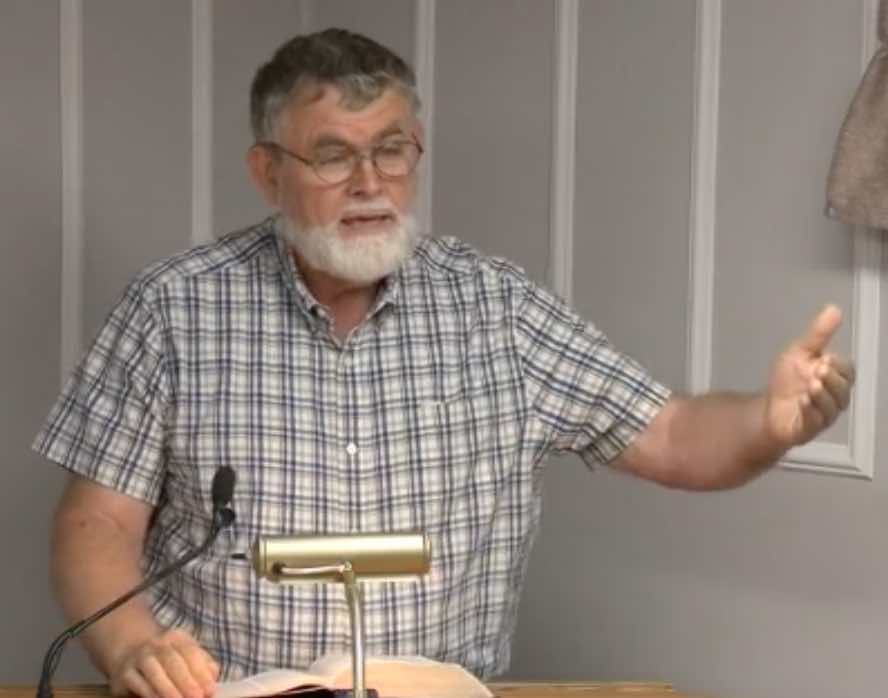
Mike McInnis

Power, Love and Sound Mind

2 Timothy 1:1-7
Mike McInnis July, 30 2023 Audio
0 Comments
Second Timothy Series

In the sermon titled "Power, Love and Sound Mind," Mike McInnis addresses the theological topic of the believer's identity and empowerment in Christ, as articulated in 2 Timothy 1:1-7. He emphasizes that God has not given believers a spirit of fear, but rather a spirit of power, love, and sound mind, thereby illustrating the transformative nature of the gospel. Key arguments include the necessity of drawing strength from God's promises, the importance of using one's spiritual gifts, and the understanding that true life comes through faith in Jesus Christ. McInnis supports his points with Scripture, notably highlighting Paul's affirmation of Timothy's faith and the call to live boldly as a testimony of Christ. The practical significance lies in the believer’s call to reject fear and embrace their God-given identity and purpose, fostering courage in the face of opposition and encouraging mutual support in the Christian community.

Key Quotes

“There's only one way to be right and may the Lord give us grace that we might be found in that one way.”

“God hath not given us the spirit of fear, but of power, and of love, and of a sound mind.”

“The promise of life is not the promise of life as we know it in this world, but it is the promise of true life.”

“A sound mind is that which is set on the things that God has said.”

Sermon Transcript

Auto-generated transcript • May contain errors

100%
Praise the Lord for his mercy
and kindness that brought us together today. And, you know,
as we sang the song by Mr. Hart, Joseph Hart, I could
think of nothing, no stone that he left unturned in that song. And there are dangers on every
side. Men are apt to fall into the
ditch. at all times. There's so many ways to be wrong
and only one way to be right. And may the Lord give us grace
that we might be found in that one way and not be leaning to
the arm of the flesh or looking unto the ways of men nor leaning
upon our own flesh. You know it's one thing to trust
the flesh of others who would guide us. But then it's another
thing as well and equally as dangerous to rely upon our own
flesh and think, well, we can figure it out or we've got it
covered or whatever. May the Lord teach us that, ever
teach us that we know nothing as we ought to know. And we are
constantly in need of being taught by Him in all things. We're gonna go on and look at
2 Timothy. And of course he covers some
of the same things that he does in the first epistle to Timothy,
but I think if it was necessary that he write these things to
Timothy more than once, then it's good for us that we look
at them more than once. So we'll read the chapter there,
Paul, an apostle of Jesus Christ by the will of God according
to the promise of life which is in Christ Jesus. To Timothy,
my dearly beloved son, grace, mercy, and peace from God the
Father and Christ Jesus our Lord. I thank God whom I serve for
my forefathers with pure conscience. that without ceasing I have remembrance
of thee in my prayers night and day, greatly desiring to see
thee, being mindful of thy tears, that I might be filled with joy. When I call to remembrance the
unfeigned faith that is in thee, which dwelt first in thy grandmother
Lois and in thy mother Eunice, and I am persuaded that in thee
also. Wherefore I put thee in remembrance,
that thou stir up the gift of God, which is in thee by the
putting on of my hands. For God hath not given us the
spirit of fear, but of power, and of love, and of a sound mind.
Be not thou therefore ashamed of the testimony of our Lord,
nor of me his prisoner, but be thou partaker of the afflictions
of the gospel according to the power of God, who has saved us
and called us with an holy calling, not according to our works, but
according to his own purpose and grace, which was given us
in Christ Jesus before the world began, but is now made manifest
by the appearing of our Savior, Jesus Christ, who hath abolished
death and hath brought life and immortality to light through
the gospel. whereunto I am appointed a preacher,
and an apostle, and a teacher of the Gentiles. For the which
cause I also suffer these things. Nevertheless, I am not ashamed,
for I know whom I have believed, and am persuaded that he is able
to keep that which I have committed unto him against that day. Hold
fast the form of sound words which thou hast heard of me in
faith and love which is in Christ Jesus, that good thing which
was committed unto thee keep by the Holy Ghost which dwelleth
in us. This thou knowest, that all they
which are in Asia be turned away from me, of whom are Phygelus
and Hermogenes. The Lord give mercy unto the
house of Onesiphorus, for he oft refreshed me, and was not
ashamed of my chain. But when he was in Rome, he sought
me out very diligently and found me. The Lord grant unto him that
he may find mercy of the Lord in that day. And in how many
things he ministered unto me at Ephesus, thou knowest very
well. Paul was a man who was given
to one purpose in his life. Now, we have many things that occupy our thoughts
from day to day. And the Lord calls different
men to different callings, different offices, different talents and
gifts and such things. But we must remember that he set apart his apostles that
they might go into the world with one purpose, and that was
to declare the glory of Christ. And Paul was a man that was given
to that. so much that he thought it not
in any wise out of the way to suffer for Christ's sake and
he did not shrink back from it. I think that is most greatly
typified in his opportunity, if you want to speak of it like
that, to be released from prison when he was taken But he appealed
to Rome. At any time, he could have paid
them some money or got somebody to pay him some money. They'd
have let him go. But it was his determination that the Lord had
called him to go to Rome with the gospel. And that he would
do, even though he had to know in the back of his mind that
it probably would not end well for him. But he was determined.
to go forth. And so here in later years of
his life, as he is already in a Roman prison, that he is writing
to Timothy concerning that which the Lord through him had bestowed
upon Timothy. Now I'm a believer, this is my
consideration that there are but 12 apostles. Now I know that
that is sometimes disputed by some, and I wouldn't get into
any great length of argument with anybody over it, but I believe
in my own feeble understanding that the Lord appointed 12 apostles. Now Judas was indeed appointed
as an apostle, but not in the long term sense. He was appointed
an apostle for a purpose. And that purpose was, as we know,
as the Lord told him, go and do what you gotta do. And he
said, it's better for me, for you that you had not been born. And so he was appointed unto
this end. But there was another, as the
scripture would say, that would take that position. Now the early
apostles thought that it was incumbent upon them to fill that
position. And they, as you recall in the
book of Acts, they went and selected by law, and they were sincere
in what they did. And they chose Matthias to be
the 12th Apostle, as they considered it. Now, the well-meaning ways
of men often are not beneficial. And the Lord demonstrated that,
I believe, because Paul, throughout his life, suffered from a lack
of respect, so to speak, of many who questioned and then there
were some who built upon this and questioned his being an apostle. He had no doubt that the Lord
had called him to be an apostle. He said he was as one born out
of due time. I have no doubt that he's an
apostle. And he says so throughout his
writings. Now unless he's a liar, he is
an apostle. And if there's only 12 apostles,
he had to be the 12th one. And so, you know, that would
be how I would approach that. And I believe that the apostolic,
there was an apostolic age, so to speak, given to the church
as a foundational work that has not been repeated. It is not
being repeated. It was done. As we know, this
word that we hold in our hands is a completed work. We're not
waiting for something to be added to it. Now the Lord in His mercy
and His kindness has sent us men to help us in our understanding
of these things, teachers. leaders, some raised up with
great power to do those things, great understanding. But none
can ever adopt or have the power and calling that was given to
these apostles. And thus, when the apostles died,
those gifts passed from the earth. except insofar as they have bestowed
then their power, those gifts upon others. Now Timothy, according
to what Paul said, had a gift that was put in thee, which is in thee by the putting
on of my hands. And I believe the apostles had
that power to bestow those teaching gifts unto others. Those upon whom they bestowed
those gifts didn't have that power. And thus, in the time
in which it pleased the Lord, those things passed from the
midst of the church. Now, does that mean that the
church is somehow lacking today? No. The church is not lacking
anything because the Lord used that as a foundation. I mean,
where would we be had the apostles not come along and recorded these
words for us in the Gospels? I mean, how would we, what would
we have If this was a continuing thing and as all the ages came
along and different men came and added their two cents worth
in it, we'd have the confusion that we have today because that
is exactly what we have today is men who want to be authorities
beyond what the authority that's already been given. And so if
a man speaks not according to the law and the testimony, it's
because there's no truth in him. And so we're not susceptible,
and when I say not susceptible, we are as we trust in the Lord
insofar as we look at his word. We're not susceptible to the
false prophets that are sent into the world to deceive the
people of God. because we come back to this. Now there are many cults that
have arisen down through time with great men, great leaders.
You always have some central leader, you know, that rises
up, whether it's Mohammed or if it's Joseph Smith or if it's
Charles Russell or any of these people. They raised up, what
did they do? They came up with a better plan.
They were those sent from God, but they weren't sent from God.
Not in the sense in which, now they were ordained of God to
come into the world as what they are and what they did, but they
were not sent by God with the truth of the gospel because there's
only one gospel. And that gospel is centered in
Jesus Christ. And if a man comes preaching
any other message than that which Paul preached, it's not the gospel. And he said, I'm determined to
know nothing among you save Jesus Christ and him crucified. And
so it is, dear brethren, that he writes to Timothy on the cusp
of moving on from this world to remind him of what he is,
that is who Paul was, and who Timothy is, as the Lord has blessed
Timothy through Paul. And he exhorts Timothy unto this
end. So it says Paul, an apostle of
Jesus Christ by the will of God. Now, nothing really needs to
ever be added to something if something's by the will of God.
I mean, what are you gonna say about that? The Lord taught us
to pray, Lord, may thy will be done in the earth as it is in
the heavens. Now, I can assure you that it will be whether you
pray that prayer or not. But the Lord moves in the hearts
of His people to give them a desire to be conformable to His will. And so when we pray, Lord may
Thy will be done, we're not trying to get God to do His will, we're
asking God to make us conformable. conformable to it. That we're
asking God to give us a heart that rejoices in whatever His
will is. And sometimes His will is not
pleasing to our flesh. But nonetheless, He's given us,
or gives His people a desire to walk according to that will.
May He do so in us. According to the promise of life,
which is in Christ Jesus. The promise of life in Christ
Jesus. There is a promise of life in
Christ Jesus. And what is that promise? That
whosoever believeth in him should not perish but have everlasting
life. That's the promise of God. That's
an unrestricted promise. I mean, it's sent out into the
world. We declare it from the house top, it's true. Now can
we cause men to believe? No. Can men by their free will
decide to believe? No. But it is a true thing that
if a man believes, if there is a man who in his heart, in his
mind, in his soul desires to believe in the Lord Jesus Christ,
he shall be received. I believe the scripture plainly
teaches that. There is none that shall be turned
away who call upon the name of the Lord according to the promise
of life which is in Christ Jesus. And it is a promise of life.
You see, we're acquainted with death because it doesn't take
a person long in this world to taste death. They might not taste
death themselves as far as dying themselves, but they see other
people die. They taste it, they see it, they
know what it is. And it is a common occurrence. Doesn't make it any more desirable,
does it? I mean, the flesh hates death
as well it should. I mean, the Lord put that within
us. I mean, a man will gasp for every breath that he can get.
Because the Lord put that work of natural life in a man, and
the man naturally desires to live. Nothing wrong with that. You know, nothing at all wrong
with that. But yet, there is a life that's beyond
that natural life. And the promise of life is not
the promise of life as we know it in this world, but it is the
promise of true life. The Lord said that he would give
us life and he would give us that life more abundantly. Now
I believe that he gives us a foretaste of that abundant life in the
present time as he brings a man out of darkness and into the
light and lets him see some of the glories of Christ. And he
tastes of the good things of the world to come. He looks at
those things and they're precious to him. And he sings the songs
of Zion and he's glad. And he's as Christian and hopeful
as they were on their journey and they could see the celestial
city in the distance. And it was a place they continued
to go to. Now, the natural man, when he
thinks of death, he's running the other way. He's doing everything
in his power to avoid it. But the spiritual man knows that
death is the portal into that realm from which, wherein the
fullness of life is made manifest. Because we're brought into the
presence of him who is life. See, the Lord has given us life,
but he has also taught us that he is life. And so we desire
that life that is in him. To Timothy, my dearly beloved
son, grace, mercy, and peace from God the Father and Christ
Jesus our Lord. And he often calls Timothy his
son, which Timothy was his son in the faith. I mean, he had
heard the gospel from Paul's lips and he had believed. coming from a family of believers
evidently his grandmother and his mother Lois or his grandmother
Lois and his mother Eunice had become believers at some point
in time had heard the gospel and Timothy being raised in their
home and being taught the word of God as they were Jews of course
And they had known the same God that was the God of Paul. They knew him, but yet they came
to believe in the Lord Jesus Christ. And he says, I saw this
unfeigned faith that was in thee, that first dwelt in thy grandmother
and thy mother. And he says, and I am persuaded
in thee also. Now, I've often said this, that I
believe that it's easier often for our brethren to see the work
of Christ in us than it is for us to see the work of Christ
in us. You know, when a man starts telling you how good of a Christian
he is, you can start to doubt whether or not he actually is.
Because the work of Christ in a man is that which is observed
by the brethren. And it sometimes can't be observed
by the one who is the one in whom Christ is working because
he has doubts and fears and he looks at himself and he's well
acquainted with what he is by nature. And he often is overwhelmed
with the unworthiness of his own self, but yet, in other words,
we're taught the word of God, it doesn't have anything to do
with our worthiness. Who maketh thee to differ from
another is the grace of God. And so we do rejoice, but we
do often see that, even as Paul says, I'm persuaded that in thee
also. And so we're given as brethren
the responsibility to be our brother's keeper, to be our brother's
encourager. Now we don't encourage the brethren
because they have done something. We don't encourage the brethren
because they wrote their name on a card, because they've been
baptized or anything else, but we encourage the brethren as
we see them walking in the way of the Lord. And we admonish
them if we see them straying from that. because we are our
brother's keepers. And we do see the grace of God
in our brethren, working in them. As he says, I am persuaded of
thee also. And he desired to see Timothy,
being mindful of thy tears that I may be filled with joy. I don't
know if Timothy made it to Paul before Paul died or not. It was
Paul's great desire. And you know a lot of times it
is our desire to have fellowship with someone, but they may pass
from our presence before we have that opportunity. So we need
to be mindful that as the Lord lays brethren upon our heart
that we minister to them as we can and that we help them as
we can. not to neglect the opportunities
that we have to bless the brethren and to receive blessing from
them in that way. And that's why I think it is
a good thing, as I said, Paul says that, I believe it was Paul,
might have been James, actually, now that I think about it. He
said, pure religion and undefiled is this, to visit the fatherless
and the widows, and to keep oneself unspotted from the world. And
so we do have, and of course, when he's speaking about visiting,
he's not just talking about going to see them, he's talking about
helping them, you know, in whatever way they might need help. And
so he, He said that he prayed for Timothy in his prayers night
and day. Now, you can't pray for everybody.
You know, I know people say, oh, you know, we want to pray
for everybody. Well, you can't pray for everybody.
And the Lord, you know, prayers is the work of God in the hearts
of His people. And He lays people on the brethren's
heart. And when the Lord lays somebody
on your heart, He lays them on your heart for a reason. You
need to pray for them. You know, I mean, sometimes somebody
you might not have thought of in a long time, the Lord may
lay on your heart. Pray for them. I mean, the Lord
gives you that privilege to bear one another's burdens. That's
the only way, really, that God's people can ultimately bear one
another's burdens is in the place of prayer. Now we can help the
brethren, but if we're gonna bear somebody's burden, you see,
a burden is something that is internal. It's something that
is laid upon a person. And no amount of money or whatever
you could give them can solve that problem. But you can bear
their burden by the grace of God in remembering them in the
place of prayer, even as Paul said he did for Timothy. And
it is an encouragement. to the brethren when we tell
them you're in our prayers. And unfortunately, men often
just say these things. I don't put a lot of stock in,
people say, when they might tell me I'm in their prayers. I do place a lot of stock in
with people that I know, respect, and love in Christ. But just
the average person saying that, too many people, they just talk
about prayers if it's just some thing that, People just, it's
like wishing you good luck. You know, somebody says, well,
good luck. Well, what does that mean? You
know, it don't mean anything because there's no such thing
as luck. If they said, you know, may the
Lord go with you. May he guide your steps. That's
a glorious thing that somebody's thinking in those terms, but
just to say have a nice day. I'm not downing anybody that
says tell somebody have a nice day, but that's become such a
commonplace thing that people say it without even thinking
about it. And what good is it? It doesn't help me for somebody
to tell me have a nice day. Well, what's a nice day? You
know, what's a nice day to one person might not be a nice day
to the other person. So may the Lord guide our steps
and help us to pray, one for the other, to bear one another's
burdens. And so he said, I put thee in
remembrance that thou stir up the gift of God which is in thee
by the putting on of my hands. Now what we, he spoke about it
in the first epistle to Timothy, spoke about the gift that he
had and how that he was to use that gift, not neglect it. And
that he stir it up. Now there is a fleshly stirring
up. that he's not talking about.
He's not saying to Paul, go out here and stir yourself up in
the flesh, get excited. That's what a lot of people,
so-called church meetings today are designed to do is get folks
excited. Well, we want everybody to be
excited. Get on your feet, clap your hands, and roll in the floor,
and I mean, we want you to be excited. No, we're not interested
in whether or not somebody's excited. Now, if somebody gets
excited in the Lord and rolls on the floor, I mean, I'm not
gonna tell them don't do it, but I'm not gonna tell them to
do it. You know, I'm not gonna point out what they should do.
But may the Lord cause us to be excited. But he's not, when he says stir
up the gift that's in you, he's merely telling to Timothy, remember
that. which I have put upon you. Don't
neglect it, you know, but use it unto the glory of God, for
the glory of God. It was put in thee by the putting
on of my hands, as I mentioned earlier. I believe this was something
Paul bestowed upon Timothy that I couldn't have bestowed upon
Timothy. You couldn't have bestowed it upon Timothy, but Paul could,
because the Lord gave it to him. Remember, he told his apostles,
he said, whatever you bind in heaven, on earth shall be bound
in heaven and whatsoever otherwise, whatever you lose. I believe
they had that power. I don't know exactly what that
was or how it operated, but I believe it was theirs according to the
purpose of God in that foundational work. For God had not given us
the spirit of fear but of power, and of love, and of a sound mind. Now this is the work of God through
the Spirit in his people. To teach them, he said, they
would lead you into all truth. And perfect love casteth out
fear. And the Lord would teach us.
that perfect love. Perfect love for Him, perfect
love that He has for us, and perfect love to have one to the
other. Now we can't have perfect love
towards one another, nor perfect love towards Him. But He definitely
has perfect love toward us, and He gives us a desire to have
that other perfect love. And in that, as the Spirit works
in us, He manifests that. as the brethren love one another,
help one another. And there's a preciousness that
comes in that. He's not giving us a spirit of
fear. Now, it's natural for men to
have fear. It's a good thing to have fear.
I mean, when you're climbing a ladder and you're 50 foot up
in the air, it's a good thing to have a little bit of fear.
because one wrong step and you can fall off of the thing. So
there is a natural fear that is a good thing. When you get
to the edge of something, and you're high up, you need to have
fear. You don't just go up there and
just like you'd be walking down the street, you take care, you
have fear. So there is a natural fear that's
a good thing, but he's not giving us a spirit of fear. That is,
the Lord has given us the gospel so that we might not fear. but
that our fears might be allayed. He said, my peace I give unto
you. Now he didn't give us the peace
in order that we might be fearful, that we might be fearful of judgment
at every turn. Now we're fearful that the Lord
is the righteous judge, are we not? When thou my righteous judge
shalt come. to take thy ransomed people home,
shall I among them stand? Shall such a worthless worm as
I, who sometimes am afraid to die, be found at thy right hand? And surely we do have that fear,
but the gospel comes, not to stir us up to just dwell upon
that, but to dwell upon the fact that Christ is the Savior. that
he's the giver of life, that he's that one who has snatched
us from the pit and brought us into a place of life, not of
fear, but of power. We can do all things through
Christ, who strengtheneth me. Now, that's often used today. You hear a lot of athletes using
that phrase. I don't know what all necessarily
they mean by that, but a lot of times they mean that they're
gonna go out here and run faster than somebody else because that's
not what is being said. We can do all things through
Christ. but it's through Christ and unto
his glory. It's not our accomplishments.
See, the Lord didn't send us down here to have great accomplishments,
but he has called his people to give glory to him. See, we
don't think about our accomplishments, but we think about his. That's
where our, that's the place where we have the most glory. It's
not what we've been able to do, but what he has done for us. Power and of love, as we said,
and of a sound mind. Now, a sound mind, a man doesn't have
to be a genius to have a sound mind. See, a sound mind doesn't have
anything to do with the amount of gray matter that you have,
how intellectual you may be or your ability to think, but a
sound mind is a mind that is set on the things that God has
said. Now, I might not completely understand
what God has said, But I, and so it's not on the interpretation
of men of what God has said, but a sound mind is that which
trusts in that the Lord has said these things. Whether I grasp
it or not. And I'll trust in him. And the
sound mind is that which is a blessing to God's people that to be not
tossed to and fro. I moved about with every strange
wind of doctrine. but that we rest in him. I think
we'll stop right there, that's a good place to stop.
Mike McInnis
About Mike McInnis
Mike McInnis is an elder at Grace Chapel in O'Brien Florida. He is also editor of the Grace Gazette.
Broadcaster:

Comments

0 / 2000 characters
Comments are moderated before appearing.

Be the first to comment!

Joshua

Joshua

Shall we play a game? Ask me about articles, sermons, or theology from our library. I can also help you navigate the site.