Bootstrap
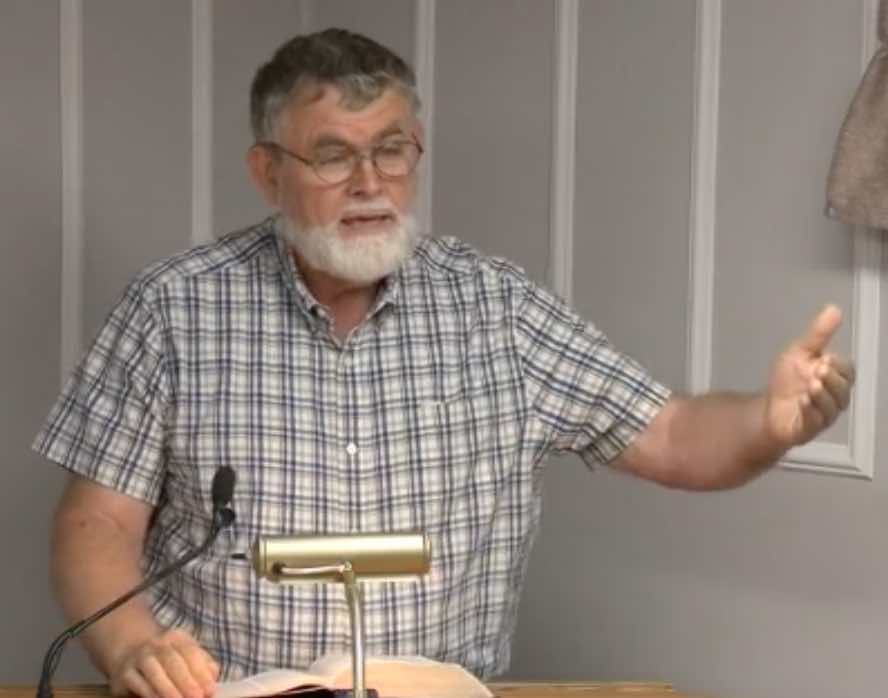
Mike McInnis

The Office and the Mystery

1 Timothy 3
Mike McInnis April, 30 2023 Audio
0 Comments
First Timothy Series

In the sermon titled "The Office and the Mystery," Mike McInnis delves into the qualifications for church leaders outlined in 1 Timothy 3. He emphasizes the gravity and sacred nature of the roles of bishops and deacons, asserting that these positions should not be sought after for personal ambition but should be filled by those genuinely called by God. McInnis discusses specific qualifications, such as being blameless, having a good reputation, and managing one's household effectively; he underscores that these attributes reflect a leader's capacity to shepherd God's people. Scriptural references support his view of divine authority in appointing leaders, particularly the passage's conclusion that articulates the profound mystery of godliness pertaining to Christ. Ultimately, the sermon teaches that while church offices are important, the character and calling of individuals in these roles must align with God's sovereign will and purpose.

Key Quotes

“A bishop then must be blameless. Now, do you know anybody that's blameless in the strictest sense of the word? No, none of us are blameless in that sense, but this is a word here that's only used twice in the scriptures, and it means not arrested.”

“These are the things that make the difference. Not because we like to hear them preach, or anything else, but by what the Lord says here.”

“This is a list of qualifications for all of God's people, is it not? Are we not all called to these things?”

“You can't do it in your own power. But you can know that that is what you need to be.”

Sermon Transcript

Auto-generated transcript • May contain errors

100%
We're looking in the book of
1 Timothy. Chapter 3. I want to read that
chapter and then as the Lord enables us to make a few comments
upon it. This is a true saying. If a man
desire the office of a bishop, he desireth a good work. A bishop then must be blameless,
The husband of one wife, vigilant, sober, of good behavior, given
to hospitality, apt to teach. Not given to wine, no striker,
nor greedy of filthy lucre, but patient, not a brawler, not covetous. One that ruleth well his own
house, having his children in subjection with all gravity.
For if a man know not how to rule his own house, how shall
he take care of the church of God? Not a novice, lest being
lifted up with pride, he fall into the condemnation of the
devil. Moreover, he must have a good report of them which are
without, lest he fall into reproach and a snare of the devil. Likewise
must the deacons be grave, not double-tongued, not given to
much wine, not greedy of filthy lucre, holding the mystery of
the faith in a pure conscience. And let these also first be proved,
then let them use the office of a deacon being found blameless.
Even so must their wives be grave, not slanderers, sober, faithful
in all things. Let the deacons be the husbands
of one wife, ruling their children and their own houses well. For
they that have used the office of a deacon well purchase to
themselves a good degree and great boldness in the faith which
is in Christ Jesus. These things write I unto thee,
hoping to come unto thee shortly. But if I tarry long, that thou
mayest know how thou oughtest to behave thyself in the house
of God, which is the church of the living God, the pillar and
ground of the truth. And without controversy, Great
is the mystery of godliness. God was manifest in the flesh,
justified in the spirit, seen of angels, preached unto the
Gentiles, believed on in the world, received up into glory. Now, as we come to the end of
that chapter, we see the foundation of what it is that Paul has been
writing to Timothy about. because he begins in this book
giving Timothy a charge, as it begins there, he charges him
with certain things. And we know that from reading
in the other, some of the other epistles, that Timothy was one
that was especially close to Paul and Paul was thankful to
have Timothy. He said that there was no other
man that was of like mind of him among all of those, of all
of the brethren. So Timothy occupied a place so
much in Paul's heart, so much that Paul called him his son
in the faith. And he said that the gifts that
he had imparted to him as an apostle, having the ability to
give those gifts that the Lord gave to the apostles. that he
has not given to every one of God's children. Now I know there's
controversy about that, but I believe that scripture would indicate
that the apostles have a special place in the economy of God in
his dealing with his people in the earth. And he selected a
certain number of apostles. And Paul was one of them, even
though he was, as he says, a man born out of due time. Because
we know that the Lord appointed 12 apostles when he appointed
Judas as one of the apostles. And Judas fulfilled the purpose
for which the Lord called him. He didn't turn out bad. He turned out exactly like the
Lord ordained for him to be. Now that's a frightful thing.
In fact, the Lord said it would have been better if this man
had not been born. And so, you know, we tremble
when we consider that our times are in the hand of the Lord.
I mean, we don't, men think they control a lot of things, you
know, they think they're in charge of whatever, but it only takes
the realization of what death is that calls us to realize that
is not the case. You know, I think that sometimes
men think they can take their own life. And sometimes as men
look at it, they do. But you can be sure of this,
that no man has ever been able to take his own life. There's
been plenty of accounts of men who were determined to take their
own life. and they couldn't do it. The
gun didn't work, or the poison didn't work. I remember reading
about a guy, he decided he was gonna take this poison and he
took it, and normally it should have killed anybody. But it just
made him sick as a dog. It didn't kill him. And so, you
know, our times are in the hands of the Lord. And as we look at
those around us, I mean, the scripture says we live our lives
as a tale that is told. Now a tale that's told is in
the past tense, is it not? And so it is, as God sees his
creation, it is as in the past tense. He's not waiting for stuff
to happen. He knows the end from the beginning.
I've often used this illustration. The Lord sees the panorama of
the world's creation like a grand artist looks at a great masterpiece
painting that he's done. He knows where every stroke of
his brush has been. He knows exactly what he wanted
to portray in that picture. And he sees it when it's done,
and he knows everything about it. And that is the way that
the world and our existence is before Almighty God. Now that's
kind of a philosophy lesson, but I believe it's all founded
in the scripture, and it's a true thing. And I didn't say we were
supposed to dwell night and day upon thinking about that. But
we need to know that God is God. He's not trying to do things.
He's not hoping to do things. He's not waiting for you to do
something. But our God is in the heavens, as he revealed to
Nebuchadnezzar. Think about it. A heathen king,
who had no concern whatsoever for the glory of God, brought
down to eat grass like an ox in the field. And he said, at
the end of my days, He said, or at the end of those days,
that my understanding returned to me, and I worshiped and praised
the Most High God, who lives forever. And he said he gives
the kingdoms to whomsoever he will. He puts over the basest
of men, and he reigns in the heavens, and he hath done whatsoever
he hath pleased. And there is none that can stay
his hand or say unto him, what doest thou? So as the Lord raised
up Paul to be an apostle, there again, who can fathom such a
thing as that? I mean, here's Paul, Saul at
that time, Saul of Tarsus, raised up in Jewry and becoming a Pharisee,
being taught the law, having no love for Christ at all. In fact, he had very much hatred
for Christ and his followers, so much so that he delighted
in getting letters from the Sanhedrin to put men to death that were
preaching the gospel of Christ. And yet the Lord, in his sovereign
grace, arrested Saul of Tarsus on the road to Damascus. And I often like to ask those
that tell us about free will, and they talk about men's decisions,
when did Paul make his decision? There was no decision to be made,
was it? I mean, when the Lord met Saul
on the road to Damascus, there wasn't any choice he had. He
said, Who are now? And the Lord in mercy raised
up Saul of Tarsus and he became Paul the apostle. And the Lord
called him and the Lord gave him gifts just like he gave to
the other apostles. He told them that whatsoever
you bind in heaven will be bound, or whatsoever you bind in earth
will be bound in heaven. And what he meant by that was
he gave them great power. that I don't believe was visited
upon the generations to come. They had that power. And he gave
Timothy the gifts that he had. But Timothy couldn't pass them
on because that was not the purpose that the Lord had. Now I know
you've got these men running around out here today that they
claim they can give you all kind of gifts and stuff and all of
these things. And I can't, you know, I'm not
worried about them. I'm not even speaking about them.
But I'm telling you that the only power that can be granted
to a man in this day of salvation is in Christ. That's the only
place a man's power's gonna come. There's nobody that can play
his hands on you and give it to you because he doesn't have
it. to give. It's only by the grace
of God. Now, I don't know how I got off
on all that, but anyway, the Lord raised up Paul, gave him
this charge to give to Timothy as to how he should operate in
the church of God, in the local assembly. Now all of these things
really when he begins there in chapter two he exhorts first
of all that prayers be made. He is speaking about as the brethren
gather together let these prayers be made. And why do I think that?
In verse nine, he says, in like manner, after he's speaking about
men praying, lifting up holy hands without wrath and doubting
in the assembly, he said also in the assembly, here is what
I have ordered for the women. Now, you know, men come along,
women come along in later times and they decide what they're
gonna do. But I'm telling you that God has made an order of
things that men, women, the whole creation is folly to go contrary
to that which God has said. Now, he said there those things. I'm not going to go back over
them. We talked about them last week. But he's going on further
here. and speaking about offices in
the church. Now let me say something about
offices in the church. A church does not have to have
offices in the sense in which these are spoken of here in order
for it to operate as a church. In other words, it's not a church,
it's not not a church because there's not somebody who is set
apart as an elder. It's not not a church because
somebody's not set apart as a deacon. But these are definitely gifts
that are given unto churches, as the Lord told Timothy, or
as Paul told Timothy, to ordain elders in every church. Now notice
that when he did say that, he didn't say to Timothy, ordain
an elder in each church. I do believe the scripture speaks
about if there, you know, that there is those that would be
elders in the assembly, there is a plurality is a recommended
thing. Again, that's not necessarily
always the case, but I believe that it is certainly in the multitude
of counselors there is safety. And so it is, you know, we have
today, we live in the age of primarily these one-man ministries
where people are exalted up as some great spokesman for God,
and everybody bows down before them, you know, and just, I mean,
the Lord can't do any work if he doesn't do it through them.
Well, the Lord doesn't need anybody. I mean, he can speak through
a donkey. which he did. I mean, he can
do whatever he wants to do. So he doesn't need men, but he
has set apart an office, and the office of a bishop. Now,
you know that term there, usually, when you hear somebody talking
about the bishop, and a lot of churches, they like to have the
bishop. Well, he's not an elder, he's a bishop. I mean, he's like
over, He's a higher position, you know, when you're a bishop.
Well, the word, it's all the same word. It's not, there's
no difference in a bishop and an elder. I mean, a bishop is
an elder, an elder's a bishop. These are just words, and men
have made more of them than they ought to be. But he says here,
if a man desire the office of a bishop, he desireth a good
work. Now, he does not say that a man ought to desire this work. He said if a man does, it's a
good thing. You know, he's desiring a good
thing if he does, but he doesn't say go out and desire it, because
there's plenty of folks that desire to be the bishop. There's no shortage of people
that want to be the bishop. I mean, you know, there's people
lining up, they go to schools and stuff to learn to be the
bishop. and then they get out of school and they go try to
find them a place where they can be the bishop. Well, you
know, there's nothing wrong with a man desiring that office, that
place, that station, but a man cannot occupy that office if
he does not have the gift, if he does not have the calling
from Almighty God. I mean, he can be, church can
vote on him or whatever, and they can put him in that position,
but that doesn't make him, and that's what Paul's saying here.
He said, because he said here, he said it's a good thing if
a man desires to perform this for the people of God, but he
said first, he says this, a bishop then must be blameless. Now, do you know anybody that's
blameless in the strictest sense of the word? No, none of us are
blameless in that sense, but this is a word here that's only
used twice in the scriptures, and it means not arrested. It means, now, think about that
for a minute, not arrested. Now, of course, we would think
about that in our way we think of arrested as he hadn't been
put in jail. Well, that ruled out Paul and
Peter and all of them, wouldn't it, because they'd been put in
jail. But what it means is, if a man is blameless, and these
are qualifications, I was thinking of these things as Brother Thomas
was speaking, you know, over there in 1 Timothy, or 1 Peter,
about those things that they were exhorted to do. Now, just
like these qualifications that are here, you see, When a man is born again by the
Spirit of God, he has no idea what he is. I mean, when a man
is brought out of darkness into light, he doesn't know what he
is. Paul, when he was on the road to Damascus, he didn't know
what was going on. But you see, the Lord taught
him. And the Lord teaches his people. He said, you know, we're
to be without God. We're to be without envy. Now,
we don't know that, except that the Spirit of God teaches us. But you see, as the Spirit of
God teaches the people of God, he gives them not only knowledge
as to what they should be, but he gives them a desire after
it. Because see, when a child of God, when we listen, when
we read that that we're not to have guile, that we're not to
have envy. We desire not to have those things,
do we not? I mean, we see that in us. I
mean, when I read all of those things that Brother Thomas read
there a moment ago, I find every one of them in me. And it causes
me great sadness. that I do see these things in
me. So it's not like we just become aware of them, but we
become aware of them and we desire to be free from them. You know,
we want to lay aside all malice. I don't want malice to be in
my heart. I find malice in my heart sometimes. I find unforgiveness in my heart. I don't want it to be there.
And so he said, you're the children of God. Lay these things aside. You know, that's what you are.
Paul said, reckon yourselves to be dead indeed unto sin, but
alive unto God in Christ. See, that's not who we are. We're
not those people. Why would we want to act like
that? He said, don't. And so he says here, a bishop
then must be blameless. Now I believe these characteristics
that he's speaking about here are desired characteristics of
all of God's children. But as the Lord is pleased to
give men differing gifts and different operations of the Spirit
that works in them, the Lord gives to every man a measure
of faith as it pleases him. And he works in his people to
will and to do of his good pleasure. And so it is that I believe all
of these things are desired to be found among God's people.
But he says specifically, that a bishop then must be blameless.
That is, he must have a good report. He's not somebody who
you're just going to see on the police. You know, he's not going
to be, he's going to be an upstanding citizen, so to speak. Now, I
don't mean that in a patriotic sense, but I mean he's going
to go around about in the community and people be saying, well, you
know, this old Scallywag guy down there, he's not, you know,
fit to be anything. So a man's be blameless. Paul
said he was blameless concerning the law. He couldn't be accused.
And so it is that the Lord says the requirement of a man, if
he would be in this position, that he would be blameless. And then he says the husband
of one wife. Now that's pretty good advice
for anybody, is it not? Now keep in mind that there's
something of a culture situation here. And I know that there are
many groups of, or many churches, denominations, or whatever, not
so much anymore, because they'd be hard pressed to find anybody.
But it used to be quite common that a lot of churches looked
at this as being a man could not be divorced and hold this
position. I don't think that's what Paul
meant here. Now remember, we don't in any
wise say that divorce is a good thing. The Lord said for the
hardness of men's hearts that he brought this to pass, or that
he gave that permission to do that. It's not an ideal thing. It's not a thing we're desiring
to have, but that's not what he's talking about here. He's
talking about the husband of one wife at the time. In other
words, not a polygamist. Because how could you stand before
the people of God and speak about the bride of Christ and have
more than one wife? The Lord doesn't have but one
wife. So you can't be honestly teaching people, well, you know,
the Lord has a particular love for a particular bride if you
got more than one. And so I believe that's really
the essence of what he's getting at here. The husband of one wife. That's a thing that I believe,
I mean, polygamy is a thing that was allowed down through the
ages. I mean, there's many great men of God that had more than
one wife. I don't think that that's necessarily
a thing that men should strive for by any means. And most men have good enough
sense to know better. Vigilant. What does that mean? Well, that just means to be intense,
to be watching, to be mindful of what's going on in spiritual
things. In other words, he's not just
happy-go-lucky without any consideration of the necessities of prayer,
of seeking the Lord, of studying the Scriptures. I mean, if a
man's going to teach other men, he's got to be, first, as he
says, apt to teach, but he has to be desiring to teach. He has
to be willing to teach. He has to do the things that
are necessary. and uh... you know we've not
you don't learn the scriptures by osmosis uh... you can't learn the scriptures
through the eyes of another man now it's a needful thing and
the lord has given men to teach the scriptures but the place
that you're going to be blessed and get the benefit of the scriptures
is as you take the scriptures and you look at them. And the
Lord's able to take that word and apply it to your heart. David
said so, did he not? Thy word have I hid in my heart,
that I might not sin against thee. So it is a good thing. Now, not everybody has a great
memory where they can quote scripture, where they've memorized scripture.
I think memorizing scripture is a good thing, and I think
it's especially good for young people while their mind is still
fresh and able to remember stuff, to memorize scripture. So that
when they're old, these things will still be in there. Sometimes
they might have to dig them out, but they'll still have those
things. So that's a good thing to study
the scripture, to be vigilant, to be sober. Now we think of
sobriety as somebody that doesn't... get drunk, and that the picture
is there, but that's not exactly what he's talking about. He's
going to say down here, not given to much wine, which that's going
to cover that, but the sobriety of which he speaks is that somebody
that's serious. Not, you know, we might from
time to time you know, make a joke or we might make, you know, say
things that are intended to convey our lesson through a humorous
statement or whatever, but we don't do so to entertain people. We don't do so to, you know,
for the sake of being a jokester. Now I've known some men who claim
to be preachers and that was basically what they did. I can
think of one guy that's on TV a lot and that's his whole thing.
I mean he thinks that being a comedian is preaching. Listen, the Lord
never called us to be comedians. Now I know that people say, oh
well God's got a sense of humor. Well I don't know, you know,
where you ever find that in the scripture. I mean the Lord does
laugh. Scripture says he shall have
them in derision He shall laugh at their calamity. But that's
not laughter, light-hearted laughter. I mean, the Lord Jesus Christ
was a man of sorrows. He was not light-hearted. And
I'm not saying that he was an unpleasant person. I think he
was a very kind, tender-hearted person whom the disciples loved
to be around. But he was not a jokester. I
mean, he was serious, he was sober, of good behavior. When I was in the first grade,
I remember they used to, on our report card, it had some little
boxes on there, and some of them was like, mine's the teacher.
and doesn't talk in class and stuff like that. And that was
good behavior. Now, as a child, it was pretty
simple to understand what good behavior was, wasn't it? Well,
it doesn't change much as you get older, really. I mean, we
know what good behavior is, don't we? I mean, you know when somebody's
behaving badly. I mean, you can especially see
it in children. But children aren't the only
ones that behave badly. And so he says here that they
are to be of good behavior, given to hospitality. That is, desiring
to minister of those things that the Lord has given them unto
others. Now, there's a lot of mention in the Scriptures, especially
concerning some of the things that the Lord says about women,
that they are to be lovers of hospitality. You know, if somebody's
in need, we need to help them. Somebody needs a place to stay
and we're able, we need to be willing to give them a place
to stay. I'm not saying in a blanket sense, go out here and see some
homeless guy by the side of the road and ask him into your house.
I'm saying if a brother's in need and he needs something,
then to love hospitality is to give him such things as he stands
in need of, apt to teach. And I think that that, you see,
is the, unfortunately, the primary thing that most people think
about when they think about an elder. is that he's apt to teach. Well, not all men are as apt
to teach as others. Some have a greater gift of teaching,
but that doesn't preclude that a man can have many attributes
that are spoken of here and not be the best of teachers. Because
the Lord's the one that's gonna use his word. It doesn't depend
on the ability of the man. But he is to be apt to teach,
that is, he is to be able to teach. Not a complete ignoramus. Not given to wine. Don't need
to say much about that. I mean, why would we want a drunkard
to be guiding us and leading us and teaching us? not given
to wine, doesn't mean he doesn't ever drink wine, it means he's
not given to it. You know, the scripture never
prevents or places restrictions on men as to drinking wine or
other drinks, but he says don't abuse them, don't use them in
an improper fashion. The unfortunate thing is that
These substances often lend themselves to the abuse of them, because
sometimes men with weakness towards them don't know when to quit.
And so it is that a man must not be given to whine in this
way. No striker, that is he's not
ready to fight at the drop of a hat, that's not a brawler,
not greedy, not violent. Not greedy a filthy lucre, but patient, not a brawler, not
covetous. Now I was thinking there as Brother
Thomas was speaking about envy. And envy and covetousness go
hand in hand. They're not identical, but they
are very close. The sin of covetousness, the
sin of envy, is not just wanting something that somebody else
has, but it's wanting to have it instead of them having it.
See, that was, you remember, can't call his name, Abigail's
husband. No, no, no, no, no, not him.
The King Ahab. King Ahab. He wanted the vineyard. and he was pining and worrying
about this vineyard, well his wife came up with a solution.
We'll just kill the old guy that owned the vineyard and then you
can have it. That's pure covetousness there.
They desired it so much that they were willing to take it
from somebody. And that's what covetousness
is. It's not just desiring, say, if somebody has a new car and
saying, you know, I'd like to have a car like that. Nothing
really wrong with that aspect of things, but it's when you
say, yeah, I hope he wrecks. He don't need to have a car like
that, because I don't have one. Why should he have one? And so
those that would lead us must not be of such a mind One that
ruleth well his own house, having his children in subjection with
all gravity. For if a man know not how to
rule his own house, how shall he take care of the church of
God? And so it is that a man demonstrates his capability to
be a bishop and elder in the church by how he is in his family. If a man, you know, has no control
over his children, then how's he gonna lead the people of God?
Can't do it. And then he says, not a novice,
lest being lifted up with pride, he fall into the condemnation
of the devil. Now there's a particular denomination,
or maybe an abomination rather than a denomination, think that they send out these
boys into the world and they call them elders. And they have
these missions that they go on for about two years. And they
go around and you'll see them. They'll have a little tag on.
They'll say elder so and so. He might be 18 years old and
you might be 75, but you're supposed to call him elder. Well, You
know, Paul addressed don't let his youth be an impediment, but
Timothy was not a novice. And so those who are to be called
into these positions of leadership are not to be went behind the
ears. In fact, the term elder As you look at it in the scriptures,
most often used speaking of those who are elder, that is those
who are only in years, those who by reason of use have their
senses exercised to discern good and evil. So that is not to say
that a young man cannot have these qualities, but it's not
likely. And so he says don't, don't set
apart a novice. Doesn't make any difference if
he's a good teacher. Don't set him apart as into this
office as he may be overcome with the snare of the devil.
That is, he might get lifted up with pride. He might think
himself to be something when he's nothing. Now the older that
a man gets by the grace of God as the Lord teaches him Some
things he learns that he doesn't know near as much as he thought
he did. I knew a whole lot more when I was 25 than I do now. I mean, I have grown very ignorant
over the years of things I thought I really knew a lot about. And
I don't know near as much as I thought I did. Yeah, the most
prime time for a man to know things is about 25. I mean, he
knows, you know, he's really at his prime there of knowing
what's going on. He's an expert in all things.
Starting at about 16, usually 16 to 25, a man is at his prime
of knowing you know, dancers, and knowing that it couldn't
possibly be that his daddy could know anything. So anyway, he
says, not a novice. Moreover, he must have a good
report of them that are without, lest he fall into reproach and
the snare of the devil. And so as we look at these qualifications
of the elders, it doesn't mean we need to run out and find us
somebody that meets these qualifications, but it does mean this, that as
the Lord calls men and raises them up, the church recognizes
these traits that are in these men, and as the need arises,
they may fill such an office as that. But they must never
be called on the basis of popularity or on any other basis other than
these qualifications. I mean, these are the things
that make the difference. Not because we like to hear them
preach, you know, or anything else, but by what the Lord says
here. And so we learn from these things
those traits that are admirable in all of God's people. I mean,
he doesn't just say, well, these are going to be the only people
like this. No, all of God's people. Really, this is a list of qualifications
for all of God's people, is it not? I mean, are we not all called
to these things? Are there any of these things
that we can just disregard? and say it doesn't make any difference.
No, we are the children of God. And as such, we need to strive
to be the children of God. Now, we can't do it. You can't
do it in your own power. But you can know that that is
what you need to be. Not disregard it and say, oh,
well, I can cut it. It's all right. I can be greedy,
you know, a filthy lucre. I mean, I can do all these things.
It's all right. No. May the Lord help us. May he lead us and direct us
in all things according to the good pleasure of his will. And
may we be faithful in the things he's called us to do.
Mike McInnis
About Mike McInnis
Mike McInnis is an elder at Grace Chapel in O'Brien Florida. He is also editor of the Grace Gazette.
Broadcaster:

Comments

0 / 2000 characters
Comments are moderated before appearing.

Be the first to comment!

Joshua

Joshua

Shall we play a game? Ask me about articles, sermons, or theology from our library. I can also help you navigate the site.