Bootstrap
Mike McInnis

The Blessed Poor #847

Mike McInnis August, 31 2021 Audio
0 Comments

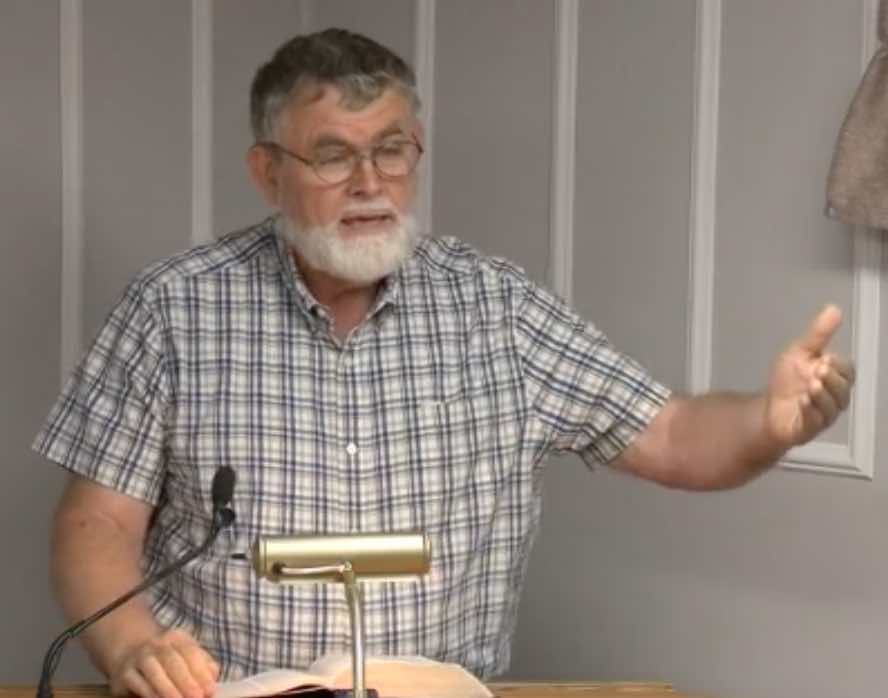
In his sermon titled "The Blessed Poor," Mike McInnis addresses the theological concept of spiritual poverty in relation to the Kingdom of God. He argues that true poverty, as defined biblically, is a state of recognizing one's destitution before God and the futility of self-righteousness. McInnis uses Scripture references such as Matthew 5:3 ("Blessed are the poor in spirit, for theirs is the kingdom of heaven") and Luke 4:18, which emphasizes the mission of Jesus to preach the gospel to the poor. This understanding highlights a significant Reformed doctrine that emphasizes human inability and total depravity while asserting that recognition of one's spiritual poverty leads to dependence on Christ. The practical significance lies in the idea that true blessings and wealth are only understood in light of one's lack, further pointing to the grace of God in providing redemption for the undeserving.

Key Quotes

“The Lord ordains poverty in the earth in order that the blessings of his abundance can be appreciated.”

“The gospel is for the poor. Religion is for the strong.”

“When a man is convinced that he has strength of his own, he is not only deceived, but is at his very weakest state.”

“The Lord did not set His love upon you, nor choose you, because you were more in number than any people.”

Sermon Transcript

Auto-generated transcript • May contain errors

100%
Welcome, friends, to another
broadcast of Morsels for Zion's Poor. The word poor appears in
the New Testament 35 times. Sometimes it is referring to
those who have a lack of money, but it is always referring to
those who are destitute. Strong's Greek Dictionary defines
poor as destitute of wealth, influence, position, and honor.
The natural man considers such a state to be undesirable. But
the Lord Jesus said, Blessed that is happy are the poor in
spirit, for theirs is the kingdom of heaven. In another place he
said, The spirit of the Lord is upon me, because he hath anointed
me to preach the gospel to the poor. So the poor are those to
whom he was sent. This was a startling revelation
to the religious world into which he came. The Pharisees thought
that money, power, earthly happiness, and influence are all a part
of the Kingdom of God. One of the most pervasive and
common messages heard in the religious world today is that
of the promises of the tangible benefits of this world to those
who are the followers of Christ, usually based upon their ability
to perform good deeds or exercise faith in some greater or less
proportion. Poverty is a blessing when a
man is made aware of it and can recognize that he alone is the
cause of his own poverty. There are many who are in reality
poor but who think themselves to be rich. Such is a great deception. Those who drink false doctrine
as water and slate their thirst at wells which send forth a corrupted
stream feel themselves to be doing fine because the preachers
of such doctrine usually encourage that idea. These drinkers are
usually very satisfied with their religious life and find great
fulfillment in attending unto its exercises and seeing its
results. They are those who have a name
to live but are dead. Then there are those who know
themselves to be poor but think that someone else is the cause
of it. They do not own their destitution and they feel that
they are owed something. They make excuses for their sin,
and some even blame God for it. One of the greatest blessings
that God can bestow upon a man is to give him a true understanding
of exactly how poor, destitute, and beggarly he is before the
throne of God. Some seem to think this is but
a temporary state for a true believer. I've heard some speak
of second blessings, praying through and getting the victory,
etc., as if they had moved on beyond this state. However, the
more a man learns of the glory and holiness of Jesus Christ,
the more acquainted with his own poverty he becomes. Instead
of growing richer in his mind, he grows poorer. Instead of reaching
plateaus of blessing, he finds himself more vile as the Lord
pours out His blessing upon him. Isaiah was a man lifted up to
behold the very throne of heaven, yet he was overwhelmed with his
baseness when he saw the Lord. So was Daniel during his vision
and John on the Isle of Patmos. The closer one is to the throne
of God, the more unrighteous he knows himself to be. He can
find no place for boasting or glorying in anything but the
cross of Jesus Christ, because he is convinced of his utter
destitution apart from that which is laid to his account by the
Lord. He cannot find anything in himself of value except that
which is bestowed upon him. For him the motions and emotions
of religion and the exhortations to duty give him no consolation,
but only serve to remind him of how desperately he needs the
advocacy of a Savior. This is the very purpose which
the Lord is accomplishing in his true sons. When a man is
convinced that he has strength of his own, he is not only deceived,
but is at his very weakest state. The Lord ordains poverty in the
earth in order that the blessings of his abundance can be appreciated.
Wealth cannot be valued fully by those who have always possessed
it. But when a man knows how to be abased, then that man can
also be grateful for and value the abundant blessings of the
Lord. The Lord ordains poverty in the earth in order that the
difference between the kingdom of God and the natural realm
can be contrasted. The gospel is for the poor. Religion
is for the strong. The gospel is for those who have
nothing in their hand to bring unto the Lord. Religion is for
those who feel themselves able to seek and serve God. The gospel
is for those who find themselves destitute and unable to even
seek the things of God. Religion is for those who value
their own ability to love and serve God according to their
own desire and will. The Lord ordains poverty in the
earth in order that he may have glory in the redemption of a
people without worth. We who are worthy of destruction
have been chosen to become the sons of God, that the glory of
His redeeming work might be magnified. The Lord did not set His love
upon you, nor choose you, because you were more in number than
any people. For ye were the fewest of all people. Are you poor and
naked before the Lord? For a free CD containing 15 of
these radio broadcasts, send an email to forthepoor at windstream.net.
Mike McInnis
About Mike McInnis
Mike McInnis is an elder at Grace Chapel in O'Brien Florida. He is also editor of the Grace Gazette.
Broadcaster:

Comments

0 / 2000 characters
Comments are moderated before appearing.

Be the first to comment!

Joshua

Joshua

Shall we play a game? Ask me about articles, sermons, or theology from our library. I can also help you navigate the site.