Bootstrap
Mike McInnis

Cheerful Giving or Temple Tax #833

Mike McInnis August, 11 2021 Audio
0 Comments

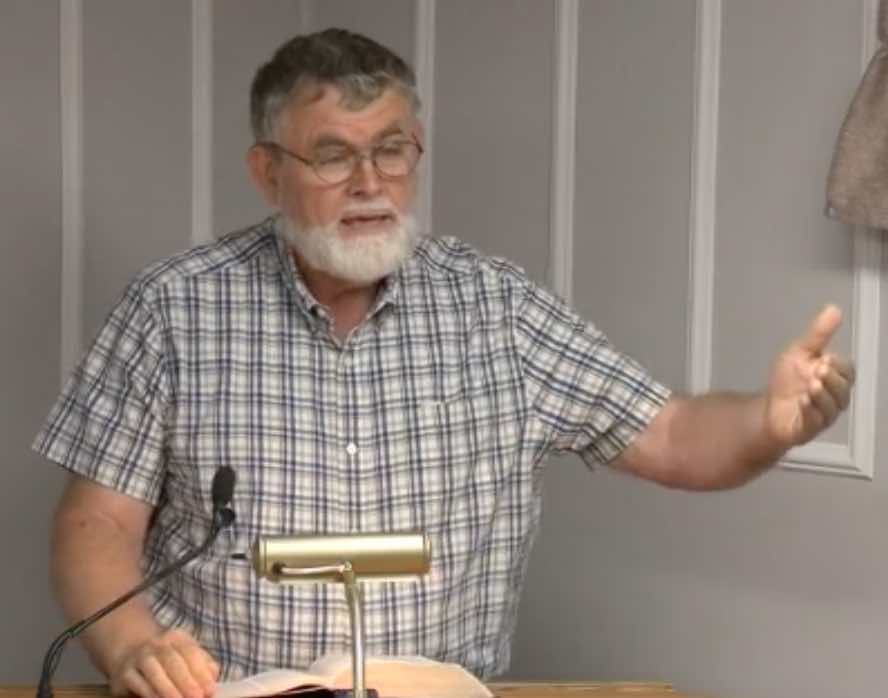
In the sermon "Cheerful Giving or Temple Tax," Mike McInnis addresses the doctrine of Christian giving, contrasting it with legalistic tithing practices often perpetuated by contemporary ministries. He argues that required tithing is not a New Testament mandate, emphasizing that true giving should stem from a heart of gratitude rather than obligation. McInnis cites Matthew 17:24-27, where Jesus instructs Peter about the freedom of the children of the kingdom from such tributes, indicating that believers are released from the burdens of the Old Covenant’s law. He stresses that giving should be a voluntary act of love, echoing 2 Corinthians 9:7, which affirms God loves a cheerful giver. This perspective presents a significant doctrinal shift by promoting the idea that Christian stewardship is about joyful generosity rather than obligatory tithing.

Key Quotes

“Any man who will predicate the blessings of God on the paying of percentages by God's children is a false prophet, or at the very least extremely ignorant of the freedom and subsequent blessings which Jesus Christ has purchased for his own elect sons and daughters.”

“Nowhere in the New Testament can be found any instruction or demand for tithing or the paying of money as a duty or requirement to be laid upon the sons of God.”

“The true sons of God serve Him not out of duty or any obligation except that of love.”

“God loveth a cheerful giver.”

Sermon Transcript

Auto-generated transcript • May contain errors

100%
Welcome, friends, to another
broadcast of Morsels for Zion's Poor. It seems that some ministries
exist for the sole purpose of the extortion of money from the
faithful. I was just listening to a well-known
radio preacher who basically said that if a man did not tithe,
he wasn't a child of God. Others have been known to weep
and plead with men to send in their money in order to keep
the kingdom of God from folding up like a two-dollar suitcase
or laying out outlandish promises of blessing and prosperity for
the man who will sow seed into their ministries, better known
as the deep pockets of deceivers and charlatans. Any man who will
predicate the blessings of God on the paying of percentages
by God's children is a false prophet, or at the very least
extremely ignorant of the freedom and subsequent blessings which
Jesus Christ has purchased for his own elect sons and daughters.
The Lord told Peter that the paying of tributes was not required
of those who had a rightful citizenship in that country. The children
of the kingdom are free from this duty. The Old Testament
law laid the burden of tithing upon the children of Israel,
and they were called thieves if they did not pay every cent
they owed under this law. Jesus Christ has purchased the
complete freedom of his children from the law of sin and death,
delivering them from all requirements and duties that were demanded
by such. Nowhere in the New Testament
can be found any instruction or demand for tithing or the
paying of money as a duty or requirement to be laid upon the
sons of God. The true sons of God serve Him
not out of duty or any obligation except that of love. They are
not bound by external laws, nor is any toll to be exacted from
those whom Jesus Christ has purchased with His own blood. When the
New Covenant mentions the giving of money by the saints of God,
it is always set forth before them as a privilege and an act
which is done from a cheerful heart. The man who gives any
gift without a cheerful disposition has departed from grace and is
treading the laborious path of the deadness of law. There is
no mention of money being collected in the church for anything other
than specific needs of God's people. The concept of continual
gatherings of money or seeking of offerings for anything other
than these specific needs is not even mentioned. Ambitious
building projects often place great burdens upon men. Nowhere
in the New Testament can the support of such projects be found.
If men desire to build buildings to meet in, there is certainly
nothing wrong with that. But to liken contributions to
such projects or their maintenance as being gifts to the Lord is
an invention of men's minds. It is no more a gift unto the
Lord to build a meeting house than it is to build the house
we live in every day. It may be a necessity for brethren
who meet together to share the cost of maintaining the facility
that they meet in, but it most certainly does not in any way
render aid to the kingdom of God. The rise of a professional
clergy, that is, men paid for serving and preaching, has also
necessitated a continual collection of funds. God is able to provide
for those whom he sends to the work of preaching, and he often
does so by moving upon the hearts of his people to be generous
to them out of the abundance with which he has blessed each
one, in proportion to the blessing that those servants are to the
church. But nowhere does the Scripture confer upon any man
the absolute right to demand money from those whom he has
gifted and called to serve. Because a man has this gift or
calling does not excuse him from the responsibility of seeking
to provide for his own needs. Paul was not one whit behind
the chief apostles, yet he forever set the standard for those who
are called and gifted with this ministry. The Lord said, For
where your treasure is, there will your heart be also. Just
as God provided the coin in the fish's mouth, so too does He
provide us with our daily bread. The men of this world regard
their possessions in a different light than the freeborn sons
of God. Those who are acquainted with His grace know that there
is nothing that they have which was not given to them by the
Lord. They are mindful of the fact that they are but stewards
of any earthly treasures He may have placed within their hands.
Whether therefore you eat or drink or whatsoever you do, do
all to the glory of God. Do you pay taxes unto the Lord,
or do you gladly give Him all that you have? God loveth a cheerful
giver. Jesus Christ gladly gave all
that He possessed for His people. Can we do any less? For a free
CD containing 15 of these radio broadcasts, send an email to
forthepoor at windstream.net.
Mike McInnis
About Mike McInnis
Mike McInnis is an elder at Grace Chapel in O'Brien Florida. He is also editor of the Grace Gazette.
Broadcaster:

Comments

0 / 2000 characters
Comments are moderated before appearing.

Be the first to comment!

Joshua

Joshua

Shall we play a game? Ask me about articles, sermons, or theology from our library. I can also help you navigate the site.