Hebrews 9:1 Then verily the first covenant had also ordinances of divine service, and a worldly sanctuary. 2 For there was a tabernacle made; the first, wherein was the candlestick, and the table, and the shewbread; which is called the sanctuary. 3 And after the second veil, the tabernacle which is called the Holiest of all; 4 Which had the golden censer, and the ark of the covenant overlaid round about with gold, wherein was the golden pot that had manna, and Aaron's rod that budded, and the tables of the covenant; 5 And over it the cherubims of glory shadowing the mercyseat; of which we cannot now speak particularly. 6 Now when these things were thus ordained, the priests went always into the first tabernacle, accomplishing the service of God. 7 But into the second went the high priest alone once every year, not without blood, which he offered for himself, and for the errors of the people: 8 The Holy Ghost this signifying, that the way into the holiest of all was not yet made manifest, while as the first tabernacle was yet standing: 9 Which was a figure for the time then present, in which were offered both gifts and sacrifices, that could not make him that did the service perfect, as pertaining to the conscience; 10 Which stood only in meats and drinks, and divers washings, and carnal ordinances, imposed on them until the time of reformation. 11 But Christ being come an high priest of good things to come, by a greater and more perfect tabernacle, not made with hands, that is to say, not of this building; 12 Neither by the blood of goats and calves, but by his own blood he entered in once into the holy place, having obtained eternal redemption for us. 13 For if the blood
Sermon Transcript
Auto-generated transcript • May contain errors
100%
I want to also add my welcome
to everybody. Glad you were able to come out
this morning. Our subject here this morning
has to do with that old covenant that was made and took up so
much of scripture in the Old Testament. And I think that there's
so many misconceptions about the Old Testament, New Testament,
about the Old Covenant, New Covenant. And it's such an important thing
to study, because so many people think in some way that we were
saved one way under the Old Testament, and then you're saved another
way under the New Testament. And that's not the case. But
so many people think like that. I used to before God saved me
and gave me light. But even after God saves a sinner,
we still have to grow in grace and in knowledge. And a part
of that growth is learning things like this as we go forward. This morning, I'm going to mainly
deal with the last four verses here in Hebrews 9. But the message here that we'll
see in this message here this morning is that the Old Covenant
was given to the nation Israel and its particulars. all that that old covenant contained.
They were ordained by God. And the participation in those
laws and all those ordinances in and of itself was not idolatry. And it wasn't dead works either. But the vast majority of the
unbelieving Jews in the nation Israel, not understanding and
seeing the true reasons for these pictures and types, that were
contained within that old covenant. The unbelieving Jews used it
as a system of work salvation. And in that sense, the unbelieving
Jews were committing dead works, just works that were worthless. And they did this not seeing
Christ in that old covenant. and those laws and ordinances.
And the scripture says they stumbled at the stumbling stone, which
was Christ. Someone suggested that this Hebrews
9.14, the last verse there, concerning dead works that it mentions,
is to be limited to just the old covenant law and the sacrifices. Although this is the first application
here. But dead works was not just a
Jewish problem, It's a problem of human nature. First of all,
those things in the old covenant law, they were ordained by God,
but only for a limited time, and not as dead works, but as
a way to worship God in a temporal, in a ceremonial sense, but only
until the Messiah, the Lord Jesus Christ, would come and fulfill
all these types and pictures Although Moses participated in
these laws and ordinances, he wasn't an idolater. These things
were not dead works for Moses or any other true believer under
that system. The law given on Mount Sinai
to Moses and Israel, which included the Ten Commandments and the
ceremonial law, which included the sacrificial system and the
dietary laws, All of this was given to reveal their sinnerhood
and point them ultimately to Christ and to eternal salvation
based on Christ's righteousness alone. Now, God did not save
one way, as I said, in the Old Testament and another way in
the New Testament. God saves sinners in the Old
Testament same way as he does in the New Testament, and that's
by grace. based on the non-imputation of sins and the imputation of
righteousness. That old covenant law's basic
message, it lay in three principal truths. First of all, was the
utter impossibility of any sinner being declared righteous based
on that sinner's character and conduct. This is what the Ten
Commandments declared as it revealed the spiritual nature and depths
of what God's law requires, which is perfect and continual obedience
in thought, word, and deed, not only in outward deed, but in
thought. Secondly, what that old covenant law basic message
was the absolute certainty of salvation, not based on the sinner's
works, but on the finished work of Christ alone. The certainty
of the sinner being saved and being declared righteous before
God based entirely on the righteousness that Christ would establish in
time. All of this is revealed in the
gospel which pictured and typified in, which was pictured and typified
in those old covenant laws. The ceremonial law that was given
on Mount Sinai typified this with his priesthood, the altar,
and the sacrifices. Thirdly, that God requires obedience
and worship motivated strictly by God's goodness and his love,
and all motivated by the absolute certainty of eternal salvation
and final glory based solely upon Christ's righteousness alone. This excludes any legal mercenary
notions that our salvation is in any way conditioned on our
obedience, our personal righteousness, or our perseverance in any way. This was seen that Israel the
nation was to expect no blessing or prosperity from God based
on their own goodness and merit. They were to pin totally upon
and ascribe all blessings temporal and spiritual to the goodness
and mercy of God alone. Now concerning whom all those
old covenant types and pictures represented, the Apostle Paul
wrote in Romans 3 of the absolute necessity and efficacy of the
sacrificial death of Christ, which was to meet every condition
of the salvation of his people. And the accomplishment of this
is to bring an end of an everlasting righteousness of infinite value,
whereby and through which God is just when he justified the
ungodly. I like the word efficacy, which
means that Christ's death, his blood shed on the cross, it actually
produced the desired and intended result, which was the salvation
of his people, his sheep, his elect, The Apostle Paul says
here in Romans 3 in verse 25, whom God hath set forth to be
of propitiation through faith in his blood to declare his righteousness
for the remission of sins that are passed through the forbearance
of God. Every sacrifice made by the high
priest or by those priests in the old covenant was meant to
typify and foreshadow the death of Christ, the blood of Christ,
which is another way of saying Christ's righteousness. This
is perfect satisfaction to God's law and to his justice, and it
is the only ground of eternal salvation. Seeing this is what
establishes our hearts with grace, because upon this ground, we
can be sure and certain of final glory according to God's promise. For eternal salvation and glory,
we're not to look to any earthly tabernacle, priesthood, altar,
or sacrifice, but to Christ alone. He alone is the propitiation,
that is the satisfaction or appeasement toward God. For not only our
sin, but the sins for all those Old Testament saints. who lived
and died before the incarnation and the death of Christ. This
is what is meant by for the remission of sins that are past. By his
death at Calvary, Christ completely satisfied the just demands of
the Holy Father for judgment on sin. Now, let's talk a little
bit about the two different areas here. One, the sacrifice of Christ.
and the sufficiency of Christ's sacrifice. Now, the sacrifice
of Christ in Hebrews 9, 11, 12, in verse 11 begins, but Christ. Christ alone could accomplish
what all those types in the old covenant could never do. In Hebrews
11, is recorded what some call the Hall of Fame of Faith, which
included Abel, Enoch, Noah, Abraham, and so forth. God the Holy Spirit,
he did many marvelous and necessary works of grace in each of those
mentioned here in Hebrews 11. But all of God's working in them
all added up together, from Abel to John the Baptist. did not
contribute in any way to any degree to the source, to the
cause, or the ground of their salvation. God alone is the source
of salvation. His love is the only cause of
salvation. And as far as the ground, Hebrews
9, 12 says, neither by the blood of goats and calves, but by his
own blood he entered in once into the holy place having obtained
eternal redemption for us. Here we are told plainly that
Christ's blood, His atonement, the satisfaction that He alone
made to the law and justice of God, Christ's blood is the only
ground of salvation. Christ obtained eternal redemption. Boy, that's comforting there. He obtained. eternal redemption. Nothing left to be done. He obtained eternal redemption
for all those that the Father gave him. Now, this was for all
those whom he represented as their great high priest. Not
only for believers that came after his blood was shed, but
also for all those Old Testament saints that lived and died before
Christ's sacrifice. Let's look at verse 11 and 12
again. Beginning at the first part of verse 11, it says, being
come in high priest, he has come to discharge the duties of that
old covenant priestly office. And in Hebrews 5.1, it says,
for every high priest taken from among men is ordained for man
in things pertaining to God. that he may offer both gifts
and sacrifices for sin. We're told here that God had
appointed the priest, all those priests in the old covenant,
to represent sinners and to offer sacrifice unto God and to make
satisfaction for all those whom that priest represented. This
was Christ's mission. This was God's design. And it
was all according to that first promise made in Genesis 3.15. where God said, I will put enmity
between thee, speaking to the serpent, and the woman, and between
thy seed and her seed, which is Christ. It shall bruise thy
head, and thou shalt bruise his heel. Christ came to save sinners,
not to make salvation possible upon their meeting certain condition. He came to save, and he obtained
eternal redemption. as the great high priest of the
whole election of grace. His being come signifies the
abolishment by way of fulfillment of all that which was pictured
and prefigured Christ in that old covenant. Christ came by
a tabernacle that was greater and more perfect, and it was
not made with hands. The tabernacle wherein God the
Son performed The duties of his priesthood was his perfect, sinless
humanity, formed in the womb of the Virgin Mary by the Holy
Spirit. In this tabernacle, God the Son discharged the duties
of his priesthood here on earth. In this tabernacle, which is
Christ himself, he entered into the holiest of holies, which
is heaven itself. And he did this after he had
satisfied all the conditions of our salvation. It is in that
glorified tabernacle, in the Holy of Holies, that the Son
of God still makes intercession for his people. Based upon that
one sacrifice of himself, Christ has a more perfect tabernacle
wherein he ministers unto God on behalf of all those he represented. John chapter two beginning verse
19. Jesus answered and said unto
them, destroy this temple and in three days I'll raise it up
again. Then said the Jews, 40 and six years was this temple
in building. And will thou rear it up in three
days? But he, but Christ, spake of
the temple of his body. Also look at Colossians 2.9.
For in him dwelleth all the fullness of the Godhead bodily. Now, the
second thing we'll look at is the sufficiency of Christ's sacrifice. And in Hebrews 9, 13, it says,
for if the blood of bulls and goats and ashes of a heifer sprinkling,
the unclean sanctify to the purifying of the flesh. Now, those priests
entered in an earthly holy of holies, beyond the veil. You
had the holy compartment and you had that veil. And beyond
that veil was the holy of holies. Now, they entered into that holy
of holy only once a year, and only the high priest could do
that. And in that process, he obtained
temporal and temporary cleansing of the conscience of those Jews. But Christ entered the very presence
of God by his own blood once, and this was never to be repeated.
And he obtained eternal redemption. Here we're told plainly that
based on the blood of animals, the high priest of the Old Covenant
obtained temporal and temporary purification for all those whom
he represented in the Old Covenant. That priest, based upon that
sacrifice, did indeed obtain what God had intended and ordained
for it to accomplish. The blood of bull and goats did
accomplish ceremonial purification. Once a year, when the high priest
went into the Holy of Holies with the blood and was accepted
by God, the people knew that they would at least be okay for
another year. It did not accomplish inward
purification for the nation Israel under the old covenant. Only
the blood sacrifice of Christ could accomplish that. This ceremonial
purification was outward, and it only typified what Christ
accomplished by his blood. Also having to do with the sufficiency
of Christ's sacrifice, Hebrews 9.14 says, how much more shall
the blood of Christ, who through the eternal spirit offered himself
without spot to God, purge your conscience from dead works to
serve the living God? How much more then, it says,
should we expect from Christ's sacrifice and based upon his
blood, his blood has indeed obtained eternal redemption for all those
whom he represented, and that the Father had given in that
covenant of grace from eternity. Look at John 6, 37. Here's Christ
speaking. He says, all that the Father
giveth me shall come to me. And him that cometh to me I will
in no wise cast out. You know, it would seem that
sinners in reading these scriptures here, and this one right here
in particular. All that the Father giveth me.
That should cause you to start searching out some things. All
that the Father giveth me. And begin looking into what that
means. All that the Father giveth me.
Christ said the Father giveth him a people. And we know that
it was before the foundation of this earth. God elected the
people and he gave them to Christ for safekeeping. Now, redemption
respects a prior state of bondage and captivity, and we're all
in bondage and captivity by nature, even believers prior to God bringing
us to faith and repentance. Now, with all the particulars
that apply to it having to do with bondage and captivity, Christ
obtained eternal redemption for all whom he represented. That redemption remedies and
answers all the particulars involved in our fallen state and condition
and bondage of sin. By his blood, by his atonement,
Christ married it for his people all grace here and all glory
throughout eternity. Christ married it all of the
work of the Holy Spirit in us. all spiritual blessings. It says
that all spiritual blessings were given to us in Christ before
the foundation of the earth. Now, all these graces and fruit
of the spirit were obtained by the precious blood of Christ
and Christ alone. Hereby, God glorified, Christ
is exalted, and boasting is excluded in the center. Now, Hebrews 9,
14, again, the word eternal here in verse 14 speaks of its duration. It's not temporary. None who
are made partakers of it will ever go back into a state of
bondage and captivity. All whom Christ represented will,
in time, in each successive generation, be partakers of all these spiritual
blessings. Such a glorious design that demanded
such a glorious cause must have a glorious effect, even eternal
redemption. The subject emphasized here in
verse 14 is the blood of Christ. The end or goal assigned to the
blood of Christ is to purge our conscience from dead works. All
of the value to be found in Christ's offices and all of the value
and efficacy contained in his work of mediation is due to the
dignity of his person. Any denial of or insufficiency
placed upon Christ's atonement is a direct reflection upon his
person. It is not how much blood was
shed, but it's whose blood was shed. It's not just an atonement
that was made, but it is whose atonement. Those who deny the
atonement do not know the person who made the atonement. If a
sinner ever sees the glory of Christ's person, he will know
the value and the efficacy of Christ's work of atonement. This
is the blood of him who was promised to be the high priest of the
election of grace. That high priest in the old covenant
was just a picture typified the true high priest. He is the one
by whom we should be justified and glorified. This is the blood
of God the Son incarnate, upon whom God the Father conditioned
the salvation of the whole church. Christ is a priest in his entire
person, which includes both natures, God and man. He carries out the
duties of his office, as he acts as God and man in one glorious
person. These acts can be distinguished,
but they cannot be separated from his entire person. He offered
himself through the eternal spirit. This relates to both natures
in the one person. He offered himself, his whole
human nature, body and soul, through the eternal spirit upon
the altar of his infinite deity. This is, therefore, the act of
his entire person. Acts 20 and verse 28 says, take
heed, therefore, unto yourselves and to all the flock, over the
which the Holy Ghost hath made you overseers, to feed the church
of God, which Christ hath purchased with his own blood. In scripture,
the altar that we're talking about is what separated the sacrifice
and gave it value. The law of Moses given by God
allowed the altar to be made of either earth or unhewn stones,
which signified that man's hand had no part in its design. The
altar of which Christ's sacrifice was offered was upon the deity
of Christ, which gave infinite, everlasting value and efficacy
to the sacrifice of his humanity and enables God to freely give
all grace here and all glory hereafter to all those whom Christ
represented in this sacrifice. His blood is the pledge of all
his obedience and suffering which ended in his actual death. Many,
many times in scripture, all the effects of his suffering
and obedience, the eternal redemption of his sheep, and every particular
contained therein, is attributed toward his blood. It says in
Hebrews 9, the last part of verse 14, purge your conscience from
dead works. The goal assigned to Christ's
blood is to purge the conscience or to remove all fear of punishment
by removing the guilt, the condemning power of sin. It is to remove
it by way of the sinner. seeing the satisfaction of the
law and justice that Christ accomplished. God testified that all works
done prior to this purging are dead works. Now, we're talking
believers prior to coming to faith. All we can do is dead works.
And in my formal religion, all those works that I thought highly
of, and you can Listen, many, many of y'all are familiar with
them. They were dead works, worthless,
but that's what they were. As long as we, in our minds,
owe a debt to God's law, as long as we're doing anything while
thinking that it either recommends us to God or that it removes
God's wrath in any way, As long as we do not rejoice in the satisfaction
rendered by the blood of Christ, as long as we are either ignorant
of or not submitted to the imputed righteousness of Christ alone
as the ground of our salvation, a righteousness that's accounted
or charged to our account, as long as we're there, we can only
perform dead works. Christ's atonement purges our
conscience. of believing sinners from dead works, nothing else
can purge our conscience, because nothing else can render perfect
satisfaction. And we see that once we come
to faith, true godly faith. We see how Christ accomplished
eternal redemption. Now repentance from dead works
is the first evidence that our faith is not merely head knowledge,
Repentance from dead works is when a sinner saved by grace
comes to true faith, and at that time, they forsake their religious
paths and efforts at thinking that something that they did
or something that their God, that God of our imagination,
enabled them to do had something to do with their God saving them
or keeping them safe. Hebrews 11 speaks of this transformation
of sinners that has true faith when it talks about, as I said
earlier, this hall of faith in the Old Testament. In Hebrews
11, begin at verse 13, it says, these all died in the faith,
all these believers, not having received the promises, but having
seen them afar off, and they were persuaded of them and embraced
them, and confessed that they were strangers and pilgrims on
earth. For they that say such things
declare plainly that they seek a country. And truly, if they
had been mindful of that country from which they came out, they
might have opportunity to return. But now they desire a better
country, that is in heavenly, wherefore God's not ashamed to
be called their God. for he hath prepared for them
a city. Now verse 15, 16 gives us a picture
of repentance of all those that are mentioned here in Hebrews
11 that died in the faith. It says here that they were seeking
a country and they were not mindful of that country they come out
of. They left it and they repented
They wasn't fond of it at all. I had mentioned this to somebody
a while back. When thinking about these things,
I thought of Lott as he came out of Sodom and Gomorrah when
God destroyed that area. And he told them, don't look
back toward that city. And those, I'm sure you're familiar
with it, Lots of children and everybody went on up that mountain,
but his wife looked back. And you know what happened to
his wife. Turned into a pill of salt. And
to me, that's kind of a little picture of someone leaving false
religion, but somehow or another, they still think something that
was in that false religion still meant a lot to them. some work
that they did or whatever. But all works before justifying
faith, they're dead works because they were aimed at the ground
of salvation in some degree. When the blood of Christ is applied
to our conscience, that is by faith, we see that the only thing
that will satisfy God's demand and gain God's favor is that
perfect satisfaction. that was rendered in God's law
and justice by Christ, by his obedience and his death, his
very righteousness. God-given faith alone purges
our conscience from legal, self-righteous attempts at gaining or keeping
salvation, which is all dead works, of which we now repent. And the last part of verse 14
says to serve the living God As long as we think that our
efforts recommend us to God in any way, our conscience has not
been purged from dead works. Such thinking denies the blood
of Christ and reveals that we do not know the person whose
blood was shed, nor the only true God. For example, under
the old covenant, those who were legally unclean were excluded
from all access to God until the high priest who represented
them made the appointed sacrifice to God on their behalf. Then
and only then were they made ceremonially holy, based solely
on the sacrifice which enabled them to serve and worship God.
We, like they, by nature and in our conscience, are unclean,
guilty, and excluded from all access to God. And until we're
able to, by faith, lay hold upon the imputed righteousness of
Christ. Dead works are the only thing that we're able to produce. You see, God has reconciled his
elect by the death of Christ. But every one of God's elect
must come to see the true God and the true Christ of scripture
in every generation. And in time, the Holy Spirit,
by the Holy Spirit, will reconcile in our mind toward God, where
we're able to see the true God and Christ of Scripture. We change
gods. We change gods. We change Christ. That Christ that I used to trust
in was not the true Christ. Now, according to 2 Corinthians
5.20, it says, now then, We are ambassadors for Christ.
As though God did beseech you by us, we pray you in Christ's
head, be you reconciled to God. God has said in his word that
he will not share his glory with a false God. In Colossians 1,
beginning verse 20, it says, and having made peace through
the blood of his cross, And by him to reconcile all things unto
himself, by him I say whether they be things in earth and things
in heaven. And you that were sometime alienated
and enemies in your mind by wicked works, yet now hath he reconciled
in the body of his flesh through death to present you holy and
unblameable and reprovable and unreprovable in his sight. Dead
works keep sinners alienated from God. Like I said, we have
a God in our mind and our imagination by nature. And there are as many
gods as there are people. Everybody has their own little
idea of who God is, how he saves sinners. But dead works keep
sinners alienated from God. These are all efforts at religious
reformation and morality aimed at the ground of salvation. Whenever
we expect any blessing that's from God based on anything other
than the blood and righteousness of Christ alone, we expect God's
favor based on dead works. Only the death of Christ, his
blood and righteousness, can establish favor fellowship and
communion between God and sinners. Once God's elect are brought
to believe the gospel, wherein the righteousness of God is revealed,
and to see and understand that Christ's death alone justifies
us before God, we readily repent of all those dead works performed
in false religion. Look at what the Apostle Paul
said of his conversion here in Philippians 3.8. The Apostle Paul said, yea, doubtless,
and I count all things. Now, he had went through a whole
big list of things that he was proud of as a Pharisee. And he
listed all kind of things. But here he says, and I count
all things but loss for the excellency of the knowledge of Christ Jesus
my Lord, for whom I have suffered the loss of all things. prior
to him seeing this, the true Christ. And do count them but
dumb, completely worthless, that I may win Christ. Now Christ
is surely the believer's tabernacle. In the old covenant, you had
all of these pictures and types that pictured and typified Christ,
the true tabernacle. Now, Christ is our tabernacle,
as we look at Hebrews 9, 14 again, the last verse. It says, how
much more shall the blood of Christ, who through the eternal
spirit offered himself without spot to God, purge your conscience
from dead works to serve the living God? Well, Christ, our
tabernacle.
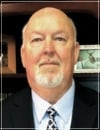
About Jim Casey
Jim was born in Camilla, Georgia in 1947. He moved to Albany, Georgia in 1963 where he attended public schools and Darton College where he completed a Business Management degree. Jim met and married his wife Sylvia in 1968. They have been married for over 41 years and have two children and two grand children. He served 3 years in the Army and retired as Purchasing Director after 31 years of service for the Dougherty County School System. He was delivered from false religion in the early 80’s and his eyes were opened to experience the grace of God and how God saved a sinner based not on the sinners works but on the merits of the righteousness of Christ alone being imputed to the sinner. He has worshiped the true and living God at Eager Avenue Grace Church in Albany since 1984. Along with delivering Gospel messages, Jim now serves his Lord as Deacon and Media Director in the Eager Avenue Grace Church assembly.
Pristine Grace functions as a digital library of preaching and teaching from many different men and ministries. I maintain a broad collection for research, study, and listening, and the presence of any preacher or message here should not be taken as a blanket endorsement of every doctrinal position expressed.
I publish my own convictions openly and without hesitation throughout this site and in my own preaching and writing. This archive is not a denominational clearinghouse. My aim in maintaining it is to preserve historic and contemporary preaching, encourage careful study, and above all direct readers and listeners to the person and work of Christ.
Brandan Kraft
Bible Verse Lookup
Loading today's devotional...
Unable to load devotional.
Select a devotional to begin reading.
Bible Reading Plans
Track your daily Bible reading with a structured plan. Choose from several options and let us keep track of your progress.
Comments
Your comment has been submitted and is awaiting moderation. Once approved, it will appear on this page.
Be the first to comment!