Revelation 5:6 And I beheld, and, lo, in the midst of the throne and of the four beasts, and in the midst of the elders, stood a Lamb as it had been slain, having seven horns and seven eyes, which are the seven Spirits of God sent forth into all the earth.
7 And he came and took the book out of the right hand of him that sat upon the throne.
8 And when he had taken the book, the four beasts and four and twenty elders fell down before the Lamb, having every one of them harps, and golden vials full of odours, which are the prayers of saints.
9 And they sung a new song, saying, Thou art worthy to take the book, and to open the seals thereof: for thou wast slain, and hast redeemed us to God by thy blood out of every kindred, and tongue, and people, and nation;
10 And hast made us unto our God kings and priests: and we shall reign on the earth.
11 And I beheld, and I heard the voice of many angels round about the throne and the beasts and the elders: and the number of them was ten thousand times ten thousand, and thousands of thousands;
12 Saying with a loud voice, Worthy is the Lamb that was slain to receive power, and riches, and wisdom, and strength, and honour, and glory, and blessing.
13 And every creature which is in heaven, and on the earth, and under the earth, and such as are in the sea, and all that are in them, heard I saying, Blessing, and honour, and glory, and power, be unto him that sitteth upon the throne, and unto the Lamb for ever and ever.
14 And the four beasts said, Amen. And the four and twenty elders fell down and worshipped him that liveth for ever and ever.
Sermon Transcript
Auto-generated transcript • May contain errors
100%
This chapter, chapter 5 of Revelation,
as I mentioned last week, is one of the best instructional
passages for worship. And it's worthy as the Lamb. As we continue through this vision,
remember this is the second vision that God gave the Apostle John
on the Isle of Patmos It's a vision of the last days, the last age,
the new covenant age, the gospel age, the church age, those are
all names for this age that we live in, as viewed from the throne
of glory in heaven. And so we see things in a very
positive way. You know, as you went through
the first vision, you went through the seven churches, it wasn't
all positive, was it? because you see churches like
especially lay out a c that was so lukewarm and and uh... there was so much false profession
of of even the truth and religion but we were assured there in
a positive way that christ is victorious even even amidst all
of that negatives that we see in this world as we go through
this age daily we see so many things that that uh... that seem
like they're in opposition to God, but we know that God does
work all things after the counsel of his own will. But here in
this vision, we're seeing a more positive view because it's a
view from the throne. This is how God sees it. And
what he does here, as we've seen last week, we talked about Christ,
verse five, as the lion of the tribe of Judah. the root of David,
there's the conquering king, there's the one who is able to
save to the uttermost them that come unto the father by him.
I know whom I have believed, Paul wrote, and I'm persuaded
that he is able. And that's what the lion of the
tribe of Judah, the king, that's who that is, the root of David. In other words, he is the fulfillment.
Jesus Christ is the fulfillment of the prophecy of this king,
this lion, this root of David. He was made of the seed of David
according to the flesh. But now the focus is going to
turn to Christ the Lamb, the Lamb that was slain. Look at
verse 6. He says, And I beheld and lo in the midst of the throne
and of the four beasts, the four living creatures, the four messengers
who proclaim this glorious message. And in the midst of the elders,
the elders represent the church collectively. It's the same,
the 24 elders we talked about, symbolized in 12 plus 12, 12
patriarchs, 12 apostles, that's a symbol of the church collectively. And so in the midst of these,
then Christ is the center here, he's the heart here. As I said,
you look at him as Christ related to the church, he's the foundation.
He said, upon this rock, I will build my church. He's talking
about himself as the Messiah. as the one who would bring forth
that righteousness whereby uh... or by his obedience unto death
christ is the head of the church he's the head of the body and
christ is the heart of the church he's the life of the church and
so in the midst of this stood a lamb and look a lamb as it
had been slain you know it's amazing sometimes to me what
people who claim to believe the bible and even some who claim
to believe the true gospel get into arguments about. It's amazing
to me. Years and years ago, there was
kind of like a, I'll say, a minor controversy over this issue of
salvation concerning Jesus Christ and people preaching Christ and
I've heard, I've even heard preachers go to the point they'd say, well,
we preach Christ himself, his person, and we believe in Christ. Salvation is in a person, not
even in his work. And that's not true. You can't
preach Christ without preaching his finished work. And this is
one of the passages that I used to go to to prove that. Look,
look who's standing in the midst of the church, a lamb, not just
a lamb though, Not just an unblemished lamb, which he is, but a lamb
as it had been slain. You see, this lamb would do us
no good if it hadn't been slain. Now why is that? It's because
God must be just when he justifies. God must be righteous when he
forgives sin. God can't forgive your sin or
my sin without justice being satisfied. This lamb had to be
slain. And of course you know that the type and picture of
the lamb is so common throughout the Old Testament. You remember
when God established the sacrificial system of worship in Genesis
321, it says He slew an animal. and make coats of skin. And it
doesn't say in that passage that it's a lamb, but I believe that's
what it was. Right after that, we see Abel, the shepherd, bringing
a lamb. A lamb bringing the blood of
a lamb. That's what he brought to God. And all that was a type of Christ.
And then you have the glaring pictures of all the sacrifices
that came out of the Old Covenant. The Passover lamb. You know,
God said, when I see the blood, I'll pass over you. Did you notice
there? He didn't say, when I see the
lamb, I'll pass over you. He said, when I see the blood.
Now, that doesn't exclude the lamb. Yes, when he sees the lamb.
But the lamb had to be slain. Satisfaction to God's law and
justice. The lamb slain is the equivalent
of the righteousness that's imputed to us. The righteousness of God. And so this is what John sees.
He sees Christ the lamb. He's the lion. He's able. He's powerful. He's invincible. But he's also the lamb. And a
lamb is such a perfect picture of Christ. He was led as a lamb
to the slaughter. He opened not his mouth. Why
didn't he open his mouth in defense of himself? Because he had no
defense of himself. Why? Because our sins were imputed
to him. He became guilty. Not by any sense of sin transferred
to him in any other way but by imputation. Charged to him. And
he paid our debt. And so he's the lamb led to the
slaughter. And that's our salvation. He's
able, he's willing, he's appointed. All of this, you see, comes into
play there. To satisfy the justice of God. And so everything that
we have, by way of salvation, by way of blessing, by way of
security, by way of eternal life and glory, is conditioned on
the Lamb, slain. Worthy is the Lamb. And look
here, it says here he had seven horns. Horns represent power. Like the horns of a bull, that's
what that's talking about, power. He's a Lamb, but he's not a weakling. And seven means perfect. That's
what that means. Perfect power. He's the omnipotent
lamb. And then seven eyes. Eyes, that's
what you see. That means he's omniscient. That
means he knows everything. Not because he's a crystal ball
gazer like the fellow that you heard or somebody was telling
me. Yeah, it was you telling me on
the radio, I guess, talking about that, you know, the condition,
you know. No. God didn't look down through
a telescope of time and foresee anything. God determines everything. And I don't know how to explain
that to you. And that's not necessary. The necessary thing is what does
the scripture say. He has perfect knowledge of all
things. He knows the hearts of men. and
women. And so he has seven eyes. And
he says, which are the seven spirits of God sent forth into
all the earth. Now, we've talked about the seven spirits of God
and how that relates back to the Old Testament, which is a
symbolic way of describing the perfect, invincible work of the
Holy Spirit in revealing Christ to his people in the new birth.
And he sends him forth into all the earth, not just to Palestine,
But to America, to Europe, to Africa, all over the world, see?
We're going to see later on how the angels holding back the wind. That's the wrath of God. They're
on the four corners of the earth. You see, this is what the word
world means in scripture. It doesn't mean everybody without
exception. It means that God has a people all over this world.
Now, sometimes the word world is used to describe the unbelieving
world. Where in 1 John 5, for example,
where he says, we are of God and the whole world lieth in
the wicked one. But that's what it's talking about. Here's the
lamb of God slain, bringing forth everlasting righteousness for
his people, and out of that righteousness comes life given by the Holy
Spirit to God's people all over this world. That's what it's
talking about. And so look at verse seven. He
says, and he came and took the book out of the right hand of
him that sat upon the throne. Now this book, remember, is the
book of God's purpose, God's providence, God's plan throughout
this age. And nobody, remember it says
nobody was found on earth or under the earth or in heaven
that was able to break the seals and open this book. We're going
to see that beginning in the next chapter about the seals,
the Lamb opening the seals. So here comes the Lamb who had
been slain. Now think about it this way.
Jesus Christ, the Lamb of God, had right to open this book only
as He's the Lamb slain. Now we know that as God the Son,
the second person of the Trinity, he has all power and all right.
But it's important that we see that his right to open this book
concerning the plan and purpose of God throughout the age up
until his second coming, that his worthiness lies in the fact
that he's the Lamb slain. Is he able? Yes, he's the Lion
of the tribe of Judah. He's the Root of David. Okay? Is he qualified? Yes, he's the
Lamb slain. He did the work. He finished
it. Remember in John chapter 17 when
he's talking about his glorification. He says, Father, glorify thou
me with the glory which we had before the world was. And he's
talking about how giving him power to give eternal life to
as many as he gave him. And he says, I have finished
the work which you gave me to do. He's speaking there in anticipation
of the cross. and satisfying that justice and
bringing forth everlasting righteousness according to God so here he is
and he said so he takes the book in verse 8 says and when he had
taken the book the four beasts now remember that word beast
there is living creatures that's not a wild untamed beast that
comes later when you when you when you go later on when you
read about the beast that comes out of the sea and the beast
that comes out of the earth that are Satan's cohorts Satan's servants
that's a different word That's like a wild, untamed beast. But
this is the living creature, the four living creatures. And
I know I've said this, but as you go through and you see these
symbols, it's good to be reminded, you know, four is the number
of the earth. North, east, south, west. See? And that's what that
means. They're on earth. And they're
covering the whole earth, the four beasts, and four and twenty
elders. That's the number of the completed
church. Twelve is the number of governmental
perfection in the Bible. This is God's government. And
remember what Isaiah 9 says. Isaiah 9, 6, the government will
be upon His shoulder. The government of grace, the
government of God's kingdom, the government of God's people.
And he says, the four and twenty elders fell down before the Lamb,
having every one of them harps. Now harps, that's music. And
what is an emblem of? Worship. Praising God. When we sing hymns, we sing to
the praise and glory of God. That's why we try to do our best
to make sure the hymns that we sing are God-honoring and not
man-honoring. And sometimes, you know, I was
talking to a fellow last night on the phone, and we were talking
about this hymn book. You know, there are a lot of
hymns in this book that aren't God-honoring. You know that. But there are a lot that are.
And so we pick and choose. And he was talking about, well,
you need to get a new hymn book. And I said, well, you find me
one that's perfect, you know. That's, you know, I don't know.
And then there are those who, they'll look at a hymn, And they'll
look at who wrote the hymn, and then they'll go read the biography,
and it just blows their world apart. You know, because this
is a fellow maybe who really didn't believe the gospel. But
the hymn is still good. And I always look at it this
way. You know what Balaam, you remember Balaam back in the book
of Numbers? He was a false preacher. But
I read scriptures where he spoke truth. And so what it says about
Balaam, that's immaterial. And that's the way I look at
these hymns, you know. I mean, if the words of the hymn are
God-honoring, we'll sing them. Well, that's what these harps
represent. This is praising God. So here they are with harps.
It's not teaching that when we die, we're going to be sitting
on a cloud with wings and a halo playing harps at all. It's just an emblem of worship
and praise. We praise God. And notice how they're doing
it. It says, they fell down before the Lamb. That's why we preach
Christ. That's why we worship Him. He
is God in human flesh. He is the door to God. He is our way into the holiest
of all. And then he says, golden vials
full of odors. That odors there, that's incense.
Now you remember in the tabernacle, the altar of incense. that was
in the holy place before the high priest went into the holiest
of all and what did that represent? it represents the prayers of
the saints going up before God through the high priest the Lord
Jesus Christ and so you have that sweet smelling odor that's
what it's talking about in other words God accepts our persons
and our works even our prayers through Jesus Christ you see
when we pray God doesn't accept our prayers because we necessarily
speak a great prayer. Most of our prayers are pretty
feeble, if you want to know the truth about it. Most of our prayers,
we're just groping in the dark, for the most part, as far as,
you know, giving our petitions. And our prayers should be filled
with thanksgiving. But the only way our prayers
are going to be accepted is through the high priest. And you can
read about that in Hebrews chapter 4, where he talks about seeing
them, we have a great high priest who's passed through the heavens,
let us come boldly before the throne of grace. You know, everything
that we have, everything that we are, and everything that we
have that is acceptable before God is acceptable because it's
washed in the blood of Christ. Because we stand in him as the
Lord our righteousness. And that's it. And he tells us
here, he says, the golden vials full of odors, this is verse
eight, which are the prayers of saints. Remember what a saint
is now. That's a sanctified person. That's
a person set apart by the grace of God unto salvation. And so
we are all, all of us who believe in the Lord Jesus Christ are
saints. That's not a special category of some super Christian. No, it's a sinner saved by grace.
The lowest saint, the high side, if we can even say it that way,
we're all saints if we're in Christ. Verse nine, he says they
sung a new song. Now what was the new song? I've
heard people argue about that. Well he tells us right here.
They sang a new song saying, thou art worthy to take the book
and to open the seals thereof. For thou was slain and has redeemed
us to God by thy blood out of every kindred and tongue, language,
and people and nation. That's the new song. It's not
new in the purpose and mind of God. It's an eternal song. It's the gospel song. It speaks
forth of a salvation, as Paul described it in 2 Timothy chapter
1, that was given us in Christ Jesus before the world began.
So it's not new in that sense. It's really not even that new
in time as far as this same song. It's very similar to the song
of Moses that he sang when he praised God. And the truth of
it has always been the truth of it. It's never changed. But
it's new in this sense. It's new in the accomplishment
of it in time because Christ has already come and did the
work. Look at it. This is the new song. Thou art
worthy to take the book and to open the seals thereof, for thou
was slain. Here he is as the lamb slain.
He's already done the work. He's already finished it. He's
already, as Daniel described it, you know, how he was going
to make an end of sin. Well, he's already done. He was
always sure and certain that he would do it. That was never
in question. Else God could not have saved
even the Old Testament saints or justified them if it was in
question. Always. He made an end of sin.
He finished the transgression. He brought in everlasting life.
Well, that's a done deal here. That's already accomplished.
And so it's a new song because it's a song of the new covenant.
Now the new covenant, remember, is the establishment in time
of the everlasting covenant of grace made before time. So in
this time, and then it's new to God's people when he first
brings us to a saving knowledge of Christ. You see, we have an
old song, and the old song would go something like this, worthy
I am. But that song's gone now, we
got a new song, worthy is the lamb. You see the difference?
And that worthy I am song, it comes in a lot of different forms.
And it's all salvation by works, salvation by will, salvation
conditioned on the center. Worthy I am. That's the old song. But when God the Holy Spirit
brings us to a saving knowledge of Christ, it's worthy is the
lamb that was slain. And he says thou was slain and
hast redeemed us. You paid the price. You brought
the redemption price. And what was the price? You redeemed
us to God by thy blood, the blood of Christ, his death, his righteousness. And who did he redeem by his
blood? Those out of every kindred and tongue, and look at it, it
says, out of every kindred and tongue and people and nation.
He didn't redeem every individual without exception. He redeemed
his elect out of every tribe. There's no ethnic barrier here. There's no socioeconomic barrier
here. There's no racial barrier. It's
all who he redeemed. And how do you know if you've
been redeemed? I'll tell you exactly. You're
singing a new song. Your whole life is about worthy
is the lamb that was slain. Not trying to establish a righteousness
of your own, but that which is through the faithfulness of Christ,
submitted to Him as the Lord your righteousness. And look
at verse 10. And has made us unto our God
kings and priests, and we shall reign on earth. We are a kingdom
of priests. Priests in the sense that we
have free access to the Holy of Holies by the blood of Jesus
Christ. Every believer is a priest. That's what that means. That's
the priesthood of the believer. Because he or she has free access
to God, unhindered access to God. You don't have to go through
me. You don't have to pray through
Mary or the saints. You go right to God through Jesus
Christ, period. That's the priesthood. And kings
in the sense that we have the authority of the king of kings
in the preaching of his words. And so we reign on earth not
because we have a piece of property over which we reign as a king,
that's our kingdom, no. We reign on earth as we preach
Christ. Paul said it this way in 2 Corinthians
5, I think it's verse 20, we are ambassadors for Christ. You
know, an ambassador from the United States, when he goes to
a different country, when he speaks, he represents the United
States of America, and he speaks with the authority of the United
States of America. And that's what this is for us,
being kings and priests. We speak with the authority of
Christ when we preach His word. That doesn't mean every word
that comes out of my mouth every day is the word of the King. Because I'm struggling just like
you all, you know, with his flesh and spirit. But when we preach
the word of God, when we preach Christ, when we preach the worthiness
of the Lamb, salvation by Him, we, just like he, have the keys
to the kingdom. Remember he told his disciples,
he said, I'm giving you the keys to the kingdom? That which unlocks
the kingdom and shuts the kingdom? All right. What is that? That's
the preaching of the gospel. And so we know the way of salvation.
And how do I know that? I've got the authority of the
king. And then look at verse 11. He says, and I beheld and
I heard the voice of many angels round about the throne and the
beast and the elders. The number of them was 10,000
times 10,000 and thousands of thousands. Here's that numbers
thing again. Showing us what? Don't get your
calculators out. and figure this math up here,
because that's not what it means. What it means is it cannot be
numbered by anybody but God. Only God knows the number. That's
the Hebrew idiom thousand or thousands. When it's talking
about years, days, people, this is, listen, what are we doing
when we go out to preach the gospel? We're seeking Christ's
sheep. Paul said, All the, you know,
he was telling Timothy, you know, Paul, he'd been persecuted, he'd
been imprisoned, and he wanted to encourage the young evangelist,
Timothy. He didn't want him to be discouraged.
And he said, Timothy, in several passages, but he said, Timothy,
the reason I do what I do is I endure all things for the elect's
sake. Seeking God's elect. Well, who
are they, Paul? Well, we don't know, other than
when we preach the gospel, God brings them into the fold. Is
that right? And that's what he does. And
they sing, they have a new song, Worthy is the Lamb. How many
are there? I don't know. Only God knows. But look here. The number of
them was 10,000 times 10,000 and thousands of thousands. Look
at verse 12. Saying with a loud voice. Now
here's their testimony. Worthy is the lamb that was slain
to receive power. There's that new song. And he
says, and riches and wisdom and strength and honor and glory
and blessing, everything. We're blessed with all spiritual
blessings in heavenly places in Christ Jesus. Nothing left
out. Nothing left out. And that tells
you this, that tells you we don't earn these blessings. Now it's
true, and I know people have a hard time understanding this.
It's true that there are blessings connected with things we do. For example, we come to worship
God on the Lord's Day like we're met together, and I hope and
pray that we're all blessed. And if we don't, we're going
to miss that. But you didn't earn it by coming here. The blessing
that God has for you or for me in knowledge, in worship, in
growth, all of that, He doesn't give it to us because, well,
you know, Walter's here so he earned it today. No, he didn't
earn it. And people have a hard time with that, you know, they
can't understand how you figure that out. No, it's all in Christ
and it's all earned by Him. Again, blessed with all spiritual
blessings in heavenly places in Christ Jesus. Look at verse
13. and every creature which is in heaven and on the earth
and under the earth and such as are in the sea and all that
are in them heard i saying they heard john saying blessing and
honor and glory and power be unto him that sitteth upon the
throne and unto the lamb forever and ever what that's showing
is is that all the whole creation is going to be brought to this
place of where they hear the glory of God in Christ, the lamb
slain. Eventually, there are people
walking around who just don't care. And don't get me wrong,
if God hadn't blessed us with his sovereign grace and mercy,
where would we be? We'd be walking around here not
caring, wouldn't we? That's why Christ said, you must
be born again or you can't see or enter the kingdom of heaven.
So we don't have anything to boast about in ourselves. But
it's coming to a point, what he's saying is that this whole
creation is going to bow to the glory of God in the face of Jesus
Christ. In the end, some will be forced
to bow unto their damnation. But every knee is going to bow
and every tongue is going to confess that Jesus is Lord. And
then look at verse 14. He concludes that this is all
worship now. He says, And the four beasts said, Amen. That's
it. So be it. Can't be any other way. And the
four and twenty elders fell down and worshipped him that liveth
forever and ever. And that's the result of a heart
that has been given by the Spirit of God. We worship God in spirit. We worship God in spirit and
in truth. And that's the result of what
Christ accomplished as the Lamb that was slain. Okay.
About Bill Parker
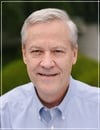
Bill Parker grew up in Kentucky and first heard the Gospel under the preaching of Henry Mahan. He has been preaching the Gospel of God's free and sovereign grace in Christ for over thirty years. After being the pastor of Eager Ave. Grace Church in Albany, Ga. for over 18 years, he accepted a call to preach at Thirteenth Street Baptist Church in Ashland, KY. He was the pastor there for over 11 years and now has returned to pastor at Eager Avenue Grace Church in Albany, GA
Comments
Your comment has been submitted and is awaiting moderation. Once approved, it will appear on this page.
Be the first to comment!