John 17:24 Father, I will that they also, whom thou hast given me, be with me where I am; that they may behold my glory, which thou hast given me: for thou lovedst me before the foundation of the world.
Sermon Transcript
Auto-generated transcript • May contain errors
100%
Every time we sing that hymn,
it seems like that the Lord convinces
me of something in that hymn more and more. It's when we sing, all is vain, unless the spirit of the Holy
One come down. That is surely the case. All
the songs sung, all the words spoken, all the gathering, it's just all in vain unless
the Spirit of God give it life. My prayer is that He will. I would invite you to turn with
me to the Gospel of John this morning, chapter 17. John chapter 17, and we're just
going to basically look at one verse. I've entitled this message, What Jesus Really Wants. And I'll just begin by saying, whatever it is that he wants, that's what he'll get. In verse 24 of John 17, as we're
enabled to eavesdrop on what some have called that great
high priestly prayer of the Lord Jesus. He says, Father, I will that
they also whom thou hast given me, be with me where I am, that
they may behold my glory, which thou hast given me, for thou
lovest me before the foundation of the world. I often hear preachers and people
talking about what Jesus wants, what Jesus wants to do, or what he is trying to do, what God wants to do. And it is a common practice in
our day for religious people and preachers especially to set the desire of God or what
God wants against what He actually accomplishes,
what He actually gets. They say that Jesus wants, and
really that it's God's will, His desire to save all, to save everybody. But what will actually be accomplished,
it depends on the will and the acts of men. They say something
like this, God's done all he can and now it's left up to you. But the problem with that is
that it makes salvation to be ultimately a work of man and
not God. But what we're told in the Bible,
oh, that we could get back to the Bible. We could just be divorced
from all the opinions that we as sinners have. We could get back to what God
says. We would know this. God does all His pleasure. He does all that He wants to
do. And He says that. He tells us
that. He says in Isaiah that He is
this God, declaring the end from the beginning and from ancient
times the things that are not yet done, saying. My counsel shall stand, and I
will do all my pleasure. God does as he pleases. And then in the book of Job,
he tells us this. He says, he is in one mind. It's not yea here and nay there. It's not this way, that way. He's in one mind. Always has
been. Always will be. Because He's
immutable. He's the Lord that changes not. And so He says He is in one mind
and who can turn Him? Who can turn him? And what his soul desires, what
he wants to do, even that he does. That's what he's doing. Nebuchadnezzar had to be brought
to the knowledge of this. He had to learn it the hard way. that Almighty God does what He
will in the armies of heaven and among the inhabitants of
earth, and none can stay His hand or say to Him, What doest
Thou? I read this week in the book
of Ecclesiastes again where it says, where the word of the king
is, There's power, authority. And this word is the word of
the King of Kings. And not only that with regard
to Jesus, with regard to the Godhead, the will of the Father
is the will of the Son. The Father doesn't do one thing
and then the Son desires another thing. Not only that, but what
the Father wants to do, the Son wants to do, and the Spirit wants
to do. And they all want the same thing. And they're all going to get
it. They're all going to get it.
If you look back over in John chapter 6, In John chapter 6 and verse 38, he says, For I came down from
heaven, not to do mine own will, but the will of him that sent
me. Does that mean that there's a difference? No, he's speaking
here as Jehovah's servant. submitting himself to the will
of the Godhead. I came down from heaven not to
do mine own will, but the will of Him that sent me. And this
is the Father's will which has sent me, that of all which He
hath given me, I should lose nothing, but should raise it
up again at the last day. And this is the will of Him that
sent me, that every one which seeth the Son..." Have you seen
the Son? You'll never see the Son until
that One who's described as the Son of Righteousness is made
to arise in your hearts with His healing salvation. You'll
never see the Son until He reveals Himself to you. And this is the
will of Him that sent me, that everyone which seeth the Son
and believeth on Him may have everlasting life, and I'll raise
him up at the last day. That's the will of the Father.
That's the will the Son came to perform. And that's what we find in this
book. Because this, though we're unable
to hear it, is a conversation between the son and the father. You know we do well to quit hiding
under this notion that God can do anything He wants to do. and believe that he has done
what he says he's done. But he begins in this verse,
in this statement, by saying, Father, Father. But you notice, if you read through
this text of Scripture, this relationship does not change
what the Father requires. You say, what do you mean? I
mean, two other times here, He also uses language that describes
His Father. He calls Him, Holy Father. He calls Him, Righteous Father. We talk about God the Father
as if He's some kind of benevolent, old, gray-bearded individual
that doesn't really have a will or a want or a power. No. Our Lord shows us here that it's
not that way. He's Holy Father. The Pope's not the Holy Father.
God's the Holy Father. And not only that, He's a righteous
Father. And so here is the obedient Son
who is the only one who could ever say this. And He that sent me is with me,
the Father hath not left me alone, For I do always those things
that please Him. He always pleased the Father.
In every aspect of His life, in every step of His way, in
every work He did, in every motive, in every thought and deed, He
always pleased the Father. And none of us can ever say this,
but yet that is what God requires. He says things like this in Ecclesiastes,
let us hear the conclusion of the whole matter. Fear God, keep
his commandments, for this is the whole duty of man. Have you
ever done that? I'm afraid if you say you have,
you're lying. You don't know yourself. You
don't know this Holy Father. And also, He says this, that
we're to love God with all your heart and your neighbor as yourself. Somebody said, I live by that
golden rule. No, you die by that rule. You never love God with all your
heart. You love the God you make up.
You love this God that religion in our day portrays, but not
the God of the Bible. Love Him with all your heart.
No, we're too full of self-love. And your neighbor is yourself.
Who would ever be so foolish as to say that there's nobody
I love better than me? That's just a fact. Nobody I do for as much as I
do for myself. But what we have is that the
obedient son, this obedient son has come to this point because
He has done the Father's will. And He tells us that. If you look down in verse 4, He says, I have glorified thee
on earth, I have finished the work which thou gavest me to
do. I've glorified you. I do all to your glory. I have finished the work. What work was that? The work
of righteousness. When did he finish the work?
There's always a debate and a dispute. Did he finish it when he said
on the cross, it is finished? Did he finish it at this point
where he says, I have finished the work? Did he finish it in
old eternity? Yes. There was never a possibility
he couldn't finish it. There was never a possibility
he wouldn't finish it. And he speaks here as the I am. Somebody said that means I am
was, I am is, and I am always will be. That's the Son of God. He said, I finished the work.
I've glorified you. And then in verse 6 he says this,
I've manifested thy name, the Almighty God, Jehovah Emmanuel. I've manifested your name. The
one who's described as always being in the bosom of the Father,
he says, He has told him out. All God has to say to a sinner
in grace, he has in these last days spoken by his son. Thou shall call his name Jesus,
for he shall save his people from their sin. I've manifested
thy name. Verse eight, look at what he
says. I have given them the words. Oh, those words. You say, oh, we've got preachers'
words. Give us crosses and relics and
shrines and things we can see and touch and taste and all these
things. No, we got words. He said, will you go away? Oh,
those disciples said, we can't go away. You've got the words
of eternal life. The words. Why? Because he is the word. The word
that was made flesh and dwelt among us. The one of whom God
said audibly from heaven, this is my well beloved son. You better hear him. He's that prophet. And those
who will not hear that prophet, they're going to die in their
sins. And then in verse 12, he says,
I've kept them in thy name, those that thou gavest me, I have kept. I've kept them. And then in verse 14, He said, I've given them thy
word. I've given them thy word. Somebody
said, I'd like to hear from God. If you ever do, it'll be through
Christ. It'll be through his gospel that
he speaks. You can look for a word from
heaven, as they say, if you want to, but that word's already come. God has sent His Son and said
in His Son and by His Son all He's got to say to this world.
And you'll sit under His silence unless you hear what He says
in His Word. Unless He gives you that hearing ear. He that
hath an ear, let him hear what the Spirit says to the churches.
What does the Spirit of God say? Takes the things of Christ. and
shows them to us. I have. In verse 22, And the
glory which thou gavest me, I have given them, that they may be
one, even as we are one. I've given them something. I've
given them a revelation of something. I've given them a revelation
of your glory and my glory. The glory of His grace, the glory
of His salvation, the glory of His righteousness, the glory
of His intercession, the glory of God in the face of Jesus Christ. You say, I hear all these people
talking about Jesus Christ, but I've never really seen anything
so great about Him. Just another historical figure. Paul said, if you have not beheld
his glory, there's a reason for it. He said, the God of this
world hath blinded your eyes, blinded your understanding so
that you see not, believe not, know not who he is. And the only way you'll ever
know. As if he speaks as he did in creation and says to your
heart, let there be light. Light be and light was. Unless he does that, unless he
comes and reveals himself and opens your eyes and gives you
this revelation through his gospel of who he is, you'll stay blinded. But our Lord said, I've given them this glory. And you know, it's amazing to
me what our Lord says here is exactly the same things, basically,
that we find set in Ezekiel chapter 16, where sinners are pictured as
a blind, dead, aborted, bloody infant laid out in the field. You don't like that picture,
do you? That's the picture God gives of all he saves. Lifeless,
faithless, the blood of their sins on them. Helpless, hopeless,
left to themselves. But then he says this, but I
pass by you. I think there's like 16 or so
eyes in that chapter. I passed by you. I saw you in
your state, dead, bloody. I passed by you and it was a time
of love. I set my affection on you. I picked you up where you were. I gave you life. I washed you. I cleansed you. And I adorned
you, I covered you with those things that are pictures simply
of the righteousness of Christ. I covered you with a garment
and your renown went out throughout all the world for beauty. I did that. That's what our Lord's
saying here. He's saying here, Father, I did
these things and then now based on that obedience, Based on that
relationship. Look at what he says. Father, I will. In other words, he speaks as
the fulfiller of the covenant. He speaks as the savior of his
people. He speaks as the obedient son. He speaks as the intercessor
of his people, as the God of, who is God's sovereign holy king
that he set on that holy hill. He says, I will. With this authority, he demands the salvation, the preservation, and the glorification
of His people. And you know what? He's right to do that. He's just to do that. In other
words, He wouldn't be just not to do that. He wouldn't be right
if that was not required. Because he's speaking not only
in relationship to the Father, but also in relationship to his
people as the one who's done all that's necessary to their
salvation. And he says, Father, I will. That reminds me of when that
leper. came to the Lord Jesus and it
says, there came a leper and he worshipped him saying, Lord,
if thou wilt, thou canst make me clean. Jesus put forth his hand and
touched him saying, I will be thou clean. I will. And this is simply the
covenant God who is in flesh speaking in the manner in which
He's always spoken. A long time ago, the Lord made
me thankful that God talks like God and He acts like God. and he
saves like God. He's not like you and I. He says, but this shall be the
covenant that I will make with the house of Israel. He's not
talking about a nation in the flesh. He's talking about that
Israel that Paul talked about. He that is a Jew is a Jew who's
one inwardly, not outwardly. Circumcision is that of the heart,
not of the flesh. True Israelites are those, Paul
said, who worship God in the spirit. who rejoice in Christ
Jesus and have no confidence in the flesh. That's a true Israelite. He said, After those days, saith
the Lord, I will put my law in their inward parts, and write
it in their hearts, and will be their God, and they shall
be my people, and they shall teach no more every man his neighbor,
and every man his brother, saying, Know the Lord, for they shall
all know me. From the least of them unto the
greatest of them, saith the Lord, for I will forgive their iniquity,
and I will remember their sin no more. He said, I will. You see, every will of God must
become a shall of God to his elect people in time. I will. I will and they shall. And that can be said and will
be seen of every one of His people because He can say, because Christ
can say to the Father, I have, He can thus say also, I will. I'll tell you this. God give
me the I will of Christ rather than the so-called free will
of man. Everybody tries to guard what
they call free agency, free will. The Bible's about God's will.
The gospel is a declaration of God's will. accomplished in the
Lord Jesus Christ. And then he goes on, he says,
I will that they also whom thou hast given me. He's not talking about everybody
here. You can believe in universal failure salvation if you want
to. But that's all it'll ever be, a failure. He's not talking
about every member of Adam's race, but he's talking about
a particular people. And you think for just a minute.
I'm talking about think. If God loved everybody, if Christ died for everybody, If the Spirit of God tried to
save everybody, and as we know by scripture, most will perish,
how would that glorify God? Would it be as someone said years
ago, that hell would be a great monument to the manifest failure
of God? That's not it at all. Heaven
will be an eternal monument to the absolute success of God,
the absolute glory of God's grace, the absolute glory of Jesus Christ,
who, if he doesn't save all his people from their sins, would be the greatest failure
of all time. If he has the surety of his people, as was said to one of Joseph's
brethren who stood for that young baby son of Jacob. He said, I'll stand surety for
him. I'll see that he gets back here
safe and sound, daddy. And if not, I'll bear the blame. Are you saying Christ had to
bear some blame? that he stood as a surety for
every person, and since every person's not going to be saved, he'll be blamed. Think about
that. No, his will is eternally and
lovingly and unchangeably toward a chosen people. Now, you just
might as well You don't love it, just hate
it, but you better believe it, because it's a fact. If you look in this chapter,
in John chapter 17, look back in verse 2. Saying of himself,
as thou hast given him power over all flesh. Now he has power
over all flesh. meaning Jew and Gentile, male
and female, young, old, educated, uneducated. He's the sovereign
over all flesh. That he should give eternal life
to as many as thou hast given him. What does He do with all this
power, all this authority over all flesh? He gives eternal life
to these that the Father has given Him. It doesn't say He offers eternal
life or makes available eternal life. It says He gives eternal
life to as many as the Father has given Him. Look down at verse
6. He says, I have manifested thy
name unto the men which thou gavest me out of the world, thine
they were, and thou gavest them me, and they've kept my word. They are a people given to Christ
out of the world. John saw them in the vision in
the revelation. And they praised the Lamb because
they have been redeemed from among men. That's not particular redemption,
I don't know what it is. And then you look at verse 9.
I pray for them, I pray not for the world, but for them which
thou hast given me, for they are thine. They're given to the Lord Jesus
Christ. Look at verse 11. And now I'm
no more in the world, but these are in the world, and I come
to thee, Holy Father, keep through thine own name those whom thou
hast given me, that they may be one as we are. I will that they also whom thou
hast given me." Now, what does that mean? Well, you have both
sides of the same coin in Scripture. That is, that Christ is spoken
of as the one who is given to his people and the people as
those who are given to Christ. That's what the bride says in
the Song of Solomon. I am my beloved's and he is mine. That's a wonderful thing. He says, I will that they also
whom thou hast given me. They're given to Christ. They're
living in Christ. They're taught of Christ. They
are, as scripture says so many times in the New Testament, in
Christ Jesus. So he says it like this in John
6. All that the Father giveth me. shall come to me, and him that
cometh to me I will in no wise cast out." Those Pharisees rejected him.
That didn't upset him. Some people have this notion
that Christ is all bent out of shape, weeping, wailing, sad.
When they rejected him, he just simply stated this to them, all
that the Father giveth me shall come to me. And when they come to me, I won't
ever cast them out. Somebody said there's like a
triple negative there in the original. I will never, no never,
no never cast them out. Everything given to Christ shall
come to him and all, that means all the glory and all the honor
and all the people, all his bride, all his church, these all that were given to
him in what is called the everlasting covenant. You say, well, God
can't do this. My friend, the Bible says He
already has. He chose them in Christ Jesus
before the foundation of the world. And some people can say,
well, election is defined by this. It's God chooses for you,
the devil chooses against you, and you cast a deciding vote.
There were none of those second parties involved. Were you before the foundation
of the world? Christ said, you've not chosen
me, but I've chosen you. I will. that these whom thou hast given
me, he says, no man can come to me except the Father which
hath sent me draw him, and I'll raise him up at the last day,
as it is written in the prophets, and they shall be all, all of
his people, taught of God. Every man therefore that hath
heard and hath learned of the Father cometh unto me. Why? Because this is not only
the will of the Son and the will of the Father, it's the will
and the work of the Spirit. What does He want? I will. Father,
I will that they also whom Thou hast given me be with me where
I am. Now this is more than being so
geographically. You see what this means is, and
what His prayer is, and what His will is, and therefore what
will be is this. Be with Him in His life. Be with Him in His cross. Be with Him in His resurrection. Be with Him in His ascension. As a matter of fact, Paul describes
the people of God that Christ loved and gave himself for. He
describes them in Ephesians chapter 2, I believe it is, as already
having been seated in the heavenlies in Christ. I don't care much for this cocky,
presumptuous-sounding statements that are often stated. Men just
without qualifying anything, they'll say, well, I'm as good
as in heaven as if I was already there. That's not what the Bible
says. The Bible shows that we are already
in heaven, in Christ, or we won't ever be there. Be with Him in His Word. Be with Him in the worship of
His people. Be with Him in all of our trials
and our troubles and our persecution. Be with Him and on His side in
every controversy. Be with Him even though for a
time they're still in this world. Be with Him in what those old
theologians used to call the grace union. That's where God put His people. in Christ and made them as one
with Christ, joint heirs with Christ before the world began. They were with him when he came
into this world, he as the head They being the body. And when
he went to that cross, they hung there in the hour of his death.
Paul said they died with him. But not only did they die with
him, they died to sin. They died to the law. They died
to that old Adamic connection. And so when he rose from the
dead, they rose in him. They've always been in him. then they'll be with him in eternal
glory. And my friend, the fact is that
this is what heaven is, this is what paradise is, it is to
be with Christ. That's what, you talk about a
man saved by grace, that thief hanging on the cross. Now there's two men besides Christ
hanging on these crosses. Somebody said, one given that
we dare not presume. He perished. He died in his sins. There's another man. He died
to his sins because that one on that middle cross died for
his sins. You know what he was told? He
cried out and he said, Lord, remember me when you come into
your kingdom. I've cried that many a time. Lord, remember me. Save me. Remember me when you
come into your kingdom. I'm no more worthy of your grace
and mercy and salvation than that thief was. I'm less worthy
than him. Remember me. Our Lord, in full
control of His faculties, because He's the only one who's ever
yielded up the ghost. He said today, shalt thou be
with me in paradise." See, that's all paradise is. And oh, what
it is. Heaven is to be with Christ. The Lord himself shall descend
from heaven with a shout, with the voice of the archangel, with
the trump of God, and the dead in Christ shall rise. Then we
which are alive and remain shall be caught up together with them
in the clouds to meet the Lord in the air, and so shall we ever
be with the Lord. Comfort ye one another with these
words. He said to be absent from the
body is to be present with the Lord. He said I go prepare a place
for you and if I go and prepare a place for you I will come again
and receive you unto myself that where I am there you may be also. I will, Father, that these that
you've given me be with me where I am. I'm not so much interested in
streets of gold and mansions described in fleshly terms and
whether or not there's golf or fishing in heaven and all such
foolish drivel as that. But I'm concerned about being
where he is. I will, Father, that these that
you've given me be with me where I am, that they may behold my
glory. Behold my glory. You see, Christ
has an essential glory as God. But here it is said to be a glory
which was given him by the Father. And this glory is His glory as
the mediator. It is His glory in redemption. It's His glory as the Savior,
the successful Savior of His people. John said, And the Word was made
flesh and dwelt among us, and we beheld the glory. The glory
is of the only begotten of the Father, full of grace and truth. Have you seen the glory of Christ,
full of grace and truth? Paul, that self-righteous religionist
as he was, Saul of Tarsus, zealot going about to establish his
own righteousness, persecuting the church of God and thinking
he's doing God a favor on his way to Damascus in order to hail
some of them into prison and have them stoned. And God stopped him in his tracks and revealed his glory. And such was that glory that
the apostle, as he later became, he acknowledged him as Lord before
he ever knew who he was. The light of his glory shone
to such a degree it blinded him. But it's the glory of God in
the face of Jesus Christ. The only way we who are spiritually
blind and blinded by the God of this world, the only way we
behold His glory is when He comes to us by this gospel that gives
to Him all the glory. That's a good test of any doctrine,
of any sermon, of anything. Who ultimately is glorified in
this? But when He, by His gospel, in
the hands of His Spirit, takes the things of Christ and
shows them to us. When He does that for you, you'll
be awestruck for the rest of eternity. Everything in this world will
pale away into comparative utter insignificance. Some people only
see the glory of their loved ones, or the glory of this world's
riches, or the glory of glory in this world, or the glory of
so many things. They're like those shields of
brass that the king put up in the place of shields of gold. They're nothing. He will reveal this to his people
because Christ said, I will. Sometimes I get kind of discouraged
preaching that God doesn't save everybody that I will, but he sure saves everybody that
Christ will. He said, my word will not return
unto me void, but it will accomplish the thing, the purpose, and to
where unto I send it. My sheep will hear my voice and
they follow me. He says, Father, I will that these that you've given
unto me be with me where I am that they may behold my glory. For thou lovest me before the foundation of the
world. That's a wonderful thing because
of what he's just said before. Verse 23, I in them and thou
in me that they may be made perfect in one and that the world may
know that thou hast sent me and hast loved them as thou hast loved me. And you love me before the foundation
of the world. Christ didn't come into this
world to do something to make God love you. He came into this
world as that one scent of God's love. He said, you love them
as you love me, and you love me before the foundation of the
world. That means he loved his people before the foundation
of the world. I've loved you, he says to Jeremiah,
with an everlasting love, therefore with these cords of divine love
and power, I've drawn you. How can the Father love these
sinners as He does His Son? Because He loves them in His
Son. The love of God which is in Christ
Jesus. And no sinner on this earth has
any right at any time to claim the love of God outside of or
apart from the Lord Jesus Christ. As the Father knoweth me, even
so know I the Father. I lay down my life for the sheep,
of the sheep have I, which are not of this fold. Them also I
must bring, and they shall hear my voice, and they shall be one
fold and one shepherd. Therefore doth my Father love
me, because I lay down my life, that I might take it again. Is this your salvation? Is this
your savior? He said his people would be made willing in the
day of his power.
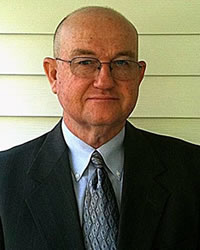
About Gary Shepard
Gary Shepard is teacher and pastor of Sovereign Grace Baptist Church in Jacksonville, North Carolina.
Comments
Your comment has been submitted and is awaiting moderation. Once approved, it will appear on this page.
Be the first to comment!