1 John 1:1 That which was from the beginning, which we have heard, which we have seen with our eyes, which we have looked upon, and our hands have handled, of the Word of life; 2(For the life was manifested, and we have seen it, and bear witness, and show unto you that eternal life, which was with the Father, and was manifested unto us;) 3That which we have seen and heard declare we unto you, that ye also may have fellowship with us: and truly our fellowship is with the Father, and with his Son Jesus Christ. 4And these things write we unto you, that your joy may be full.
5This then is the message which we have heard of him, and declare unto you, that God is light, and in him is no darkness at all. 6If we say that we have fellowship with him, and walk in darkness, we lie, and do not the truth: 7But if we walk in the light, as he is in the light, we have fellowship one with another, and the blood of Jesus Christ his Son cleanseth us from all sin.
8If we say that we have no sin, we deceive ourselves, and the truth is not in us. 9If we confess our sins, he is faithful and just to forgive us our sins, and to cleanse us from all unrighteousness. 10If we say that we have not sinned, we make him a liar, and his word is not in us.
Sermon Transcript
Auto-generated transcript • May contain errors
100%
Turn, if you would, to the epistle
of 1 John. I'm glad to be back here. Sometimes people that know I'm
going to be away, not so much folks in the church, but otherwise,
they ask me where I'm going and I tell them I'm going down to
South Georgia. And the first thing that seems
to come to their mind, obviously, is why would you go all the way
down to South Georgia to preach? And then the second thing that
comes to their mind, I'm sure, is who in South Georgia would
want you to come down and to preach? But if you would look with me
this morning in the epistle of 1 John. John writes, that which was from
the beginning, which we have heard, which we have seen with
our eyes, which we have looked upon, and our hands have handled
of the word of life. For the life was manifested and
we have seen it and bear witness and show unto you that eternal
life which was with the Father manifested unto us. That which
we have seen and heard declare we unto you that ye also may
have fellowship with us, and truly our fellowship is with
the Father and with his Son, Jesus Christ. And these things
write we unto you, that your joy may be full. This then is
the message which we have heard of him, and declare unto you
that God is light, and in him is no darkness at all. If we
say that we have fellowship with him and walk in darkness, we
lie and we do not the truth. But if we walk in the light as
he is in the light, we have fellowship one with another and the blood
of Jesus Christ his son cleanseth us from all sin. We say we have
no sin, we deceive ourselves and the truth is not in us. If
we confess our sins, he is faithful and just to forgive us our sins
and to cleanse us from all unrighteousness. If we say that we have not sinned,
we make him a liar and his word is not in us. Now if you notice in these verses,
John talks about fellowship. And I hear a lot of people in
our day use that word, fellowship. But I'm afraid that what they're
often really talking about is friendship. Because fellowship
here has to do with communion and relationship that is based
on more than friendship. Biblical fellowship is between
God and his people, and it is within and among his believing
people. If you look back at verse three,
I think it states that, he says, that which we have seen and heard
declare we unto you that ye also may have fellowship with us. And truly our fellowship is with
the Father and with his son, Jesus Christ. Now, of course,
this is exactly what Paul talks about when he says to the Corinthians,
God is faithful by whom you were called into the fellowship of
his son, Jesus Christ, our Lord. Now, I would want you to be sure
and know that I love friendship, and I am thankful for friends. But I have friends and friendships
in which there is no fellowship. As a matter of fact, most all
of the friends or friendships that I have, they have not as
a part of them this fellowship that John is talking about. And there's a reason for that,
and it is because fellowship has to do with something commonly
believed, something commonly understood and known and agreed
upon and, of course, also loved. And for that reason, a believer
cannot have fellowship with an unbeliever. And this is especially
true, and I say especially true, that a believer cannot have fellowship
with an unbeliever, especially if they are a follower of a false
religion. He cannot have fellowship with
a false god. the one that is described in
the Old Testament by one of the prophets as a God that cannot
save. Paul says to these Corinthians
in another place, he says, be ye not unequally yoked together
with unbelievers, for what fellowship hath righteousness with unrighteousness,
and what communion hath light with darkness? We may agree on
a favorite sports team. We may agree on a favorite political
candidate. We may agree on a lot of things,
but we cannot agree with their doctrine, and we cannot agree
with a false god. Paul again to the Corinthians
says, but I say that the things which the Gentiles sacrifice,
they sacrifice to devils and not to God. Now that doesn't
simply mean all the animals that might have been sacrificed in
days past, whatever it is. but it is simply the works and
the rituals and the ceremonies and the sacrifices that are made
by false religionists to a false god. He says, and I would not
that you should have fellowship with the devils. Now that is not to say that all
believers must totally agree with each other on every detail. I have heard some quote the prophet
Amos. As a matter of fact, this happened
to me personally. A man was in disagreement with
me on a point that I don't really consider to be a point upon which
to break fellowship. But because I didn't dot the
I with him and cross the T with him, he just simply sent me back
in a note that text from Amos, can two walk together except
they be agreed. Now simply, I just say this,
if in order for two sinners to walk together or to be in fellowship,
they had to agree on every point and detail, there would not be
any fellowship. absolutely would not be. Because two sinners in that sense
have never agreed totally on anything. I mean not anything. But what he's talking about there
is not our walking together in agreement so much as he's talking
mostly about our being in agreement with the living God. Are we in agreement with God? And he, in speaking like that,
says virtually the same thing that the psalmist does in Psalm
94 and verse 20 when he says this, How can we, who you might as
well say sit upon a throne of iniquity, how could we ever be
in agreement with and most especially have fellowship with the throne
of holiness and grace and goodness? But not only do people misrepresent
that, I believe that they very often misrepresent what John
is talking about here in verse seven. When he says, but if we walk
in the light, as he is in the light, we have fellowship one
with another and the blood of Jesus Christ his Son cleanseth
us from all sin. And I would almost guarantee
you that you could gather in your arms ten volumes of ten
different Bible commentators and read what their comments
are on that seventh verse, and almost every one of them will
be in agreement, saying that it has something to do with what
they call the Christian walk. that it has something to do with
our obedience in life, our conduct of life, and that fellowship
with God is based on whether or not we are at any given time
conducting ourselves in such a manner, walking in the light. But again, not only with each
other as like sinners, but most especially with between us and
this thrice holy God, could we imagine for one second that fellowship
with God could ever be based on something we're doing or not
doing? If it is, as scripture says,
that at our best state we are altogether vanity, if even as
believers we still possess this nature of sin, how could it ever
be said that based on our doing or our not doing we could have
fellowship or lose fellowship? with God. I could say for myself,
if I can't speak for anybody else, I'd never have fellowship
with God. Because if it in any way depended
upon me and something in or about me, I could never, ever, ever
have this fellowship with the living God. Well, that being said, what is
it then to walk in the light? Now, that'd make a real good
song title and theme for one of these emotional gospel songwriters. But what does it really mean
to walk in the light. Well, what is represented by
light in the scriptures? The thing that is represented
by light in the scriptures is truth. The truth. And it is also the one who is
himself called the light. In other words, the light has
to do with the truth concerning him who is himself the light. Meaning that we walk in the light
as we believe the truth concerning the Lord Jesus Christ. I could never believe myself,
no matter how much bravado I use in trying to convince people
that I do, I could never have fellowship with God except on
this one basis. That's in the light. That's the
basis that is revealed in the gospel of Christ crucified. You see, what it boils down to
is this. I could never have fellowship
with God, neither can any sinner have fellowship with God, except
in one fellow. One fellow. Turn back over for just a minute
and look in Zechariah and the 13th chapter. Zechariah chapter
13. Because here in Zechariah, God
himself makes reference to the Lord Jesus Christ and does so
in that way that shows him as Christ crucified. Zechariah 13 and verse 7, you're
probably familiar with it. He says, Awake, O sword, against
my shepherd, and against the man that is my fellow. That also means something like
the one that stands beside me. Some define it as the one that
is close to me. He says, saith the Lord of hosts,
smite the shepherd, and the sheep shall be scattered, and I will
turn mine hand upon the little ones." What is he talking about? He's talking about that one act
whereby divine justice rose against Christ as the substitute of his
people, and in doing so, satisfied God, and God calls him my fellow. And in my mind, that really establishes
the basis of all true fellowship. especially with God. You see, one day, God interrupted
and intervened in the life of this sinner, and the one Christ The one Jesus
that I had set my heart against, my mind against, my will against
all my life. He made him to be to me, my fellow. What I'm saying is this, my fellowship
with God, I find myself in agreement with God over this one fellow,
and therefore we have fellowship. We agree. God is pleased with
him, satisfied with him. loves him and I'm pleased with
him, I'm satisfied with him, I love him. It's all about one
fellow. And that which was brought against
him in this matter of righteousness whereby God saves all his people
through his death, I'm pleased with that. I can remember writing down things
in my Bible when I first started to preach and try to tell somebody
other things about God, you know, and I'd find myself writing down
how this proved exactly the opposite of exactly what it was proving. Then something happened one day. Somebody stated clearly, plainly, just what God said he's
pleased with. It was the day of God's power
to my soul because he made me pleased with it. Pleased with this one fellow. pleased with this gospel that
gives to him all the glory. And there was a way by which
this all came to pass. If you notice John's writings,
his purpose in writing, he says that that which we have seen
and heard declare we unto you. You see, all true fellowship
with God and with God's people is based on the gospel. He said that, being an apostle,
speaking of the other apostles who had literally seen the Lord
Jesus Christ and his glory, he says, that which we have both
seen and heard declare we unto you. Why? That you also may have fellowship
with us and truly our fellowship is with the Father and with His
Son, Jesus Christ. Can you imagine if somehow, amazingly, a visible
presence of God were to fill this building this morning. So
that his presence was unmistakable, undeniable. Would there be any ground upon
which you could have fellowship with him? When Uzzah reached out to touch
The Ark of the Covenant where God said he dwelt, he smote him
dead. And it happened over and over
and over again. And yet the apostle is talking
about somebody having fellowship with God, having fellowship with
God through and by one fellow, the Lord Jesus Christ. Well, what does that mean about
our fellowship with one another? Now, I'm just an eastern North
Carolina country boy. You're South Georgians. You're
real smart. I'm real dumb. You're all nice-looking
people. I'm ugly. You have brains. I have something. How could we who have such diversity? You know, that's what always,
always politicians and idealists are always striving for, this
unity that never happens. Do you know why? Because we're all sinners. What's the only ground upon which
we who are so different can ever have fellowship? It's only when we agree on that
same one fellow. Who saved you? That one fellow. Who gets all the glory in your
life? That one fellow. What do you have that you've
received, that grace in that one fellow? That's why in the New Testament,
the Apostle Paul is always calling for the Lord's people to put
away all unimportant differences and look and think about and
glory in that one fellow. I promise you no matter how politically
diverse we might be or whatever it might be, if you know Christ,
if he's your hope, if salvation's in his blood and his righteousness,
if you trust him and only him, we can have fellowship. We can have fellowship with a
person who I might agree with on all these other areas, and
yet I can't have any fellowship with them. Our fellowship is in Christ. Our fellowship is with God. Our fellowship is with his people. He's my fellow. I'm interested
in who he is. I'm interested in what he did. I'm interested in where he is. And when the apostle tells us
in one of the epistles to everything that is good and true and all
these things, when he says to us, think on these things, he's
talking about us thinking on Christ. Because he's the only one that'll
fit that description. And our fellowship is with him
and in his truth. This morning early I was looking
at some things. And John says here, he said,
we declare some things to you. And we declare these things to
you in order that we might have this fellowship. And I thought
about in Acts chapter 2, in that early church, they didn't have a building like
this. There were Jews and Gentiles.
Never a more hostile lot toward each other has ever been. There were rich folks and there
were poor folks. And yet they all described as
that church of the Lord Jesus Christ, and it says, and they
continued steadfastly in the apostles' doctrine. Guess what the next thing is?
And fellowship. They agreed on the apostles doctrine
and on that basis they had fellowship and in breaking of bread and
in prayers. There's only one fellow that
God will have fellowship with you on the basis of. And in reality,
there's only one fellow upon which we can have fellowship
with each other. And that's the Son of God. That's
the Lord, our righteousness. That is Jesus Christ, the righteous. And in Him, God is faithful and
just to forgive our sins. You know, when you study one
thing, we were talking about this a little last night, it's
amazing that when you're studying one thing, all of a sudden you
hit on something that just blows your mind, maybe totally unrelated
in the context in which it was being written or taught. But
the word fellowship here in this first chapter of 1 John, is a Greek word, I'll try to
pronounce it, koinonia. And it is defined by words like
partnership, participation, social intercourse, communion, fellowship. But quite amazingly, if you turn back over to 2 Peter and the first chapter, there is in that fourth verse a word that is very close kin
to the same word in 1 John 1. That word means a sharer, an
associate, a companion, fellowship. You say, what word is that? Well,
in verse four, Chapter 1, 2 Peter. Peter writes and he says, whereby
are given unto us, that is the Lord's people, exceeding great and precious
promises. Where do we get These exceeding great and precious
promises, they're in the word. They're in the gospel of Christ. He says that by these, you might be partakers of the
divine nature. I've heard a lot of people interpret
that in such a way it kind of almost makes us little gods. If he's talking about the Holy
Spirit indwelling us, fine and good. If he's talking about,
as some say, us having something that I don't believe we have
called a new nature, I don't think that applies. But
what it does say is basically the same thing that John says,
that through his exceeding grace, his precious promises that are
yes and amen in Christ, we have fellowship with God. We're partakers, associates with,
companions with, the one that we and ourselves never could
be. We have fellowship with God. We have fellowship in the Lord
Jesus Christ. I can look at myself and I can't
ever see any divine nature. I'm thankful for every, as a
matter of fact, any inclinations to good, any understanding of
truth, any appreciation for God, any love for Christ, it's all
the working of his spirit. But only in the light. Only in the light. Can we have
fellowship with God? I can get so down sometimes I'm
thinking I'm like, I'm like living on the backside of a desert place. I know you don't ever know anything
about this. But I'm so depressed, I'm so low, I'm so cold feeling
of heart and mind. I'm way, I'm way out there as
far from God. as you can imagine. And I'll come back to this book. He'll draw my mind, my heart
back to some promise of this book. He'll remind me that all acceptance
and all salvation and all relationship and all fellowship He has always
based, not on me, but on Christ. I can rejoice. You see, that's where fellowship begins to make an impression on us personally,
is when we can rejoice to remember and that all our salvation is
in and by the Lord Jesus. We have fellowship with God. And we have fellowship with each
other with God in his son, in the one who is our fellow. I'm trusting the same fellow
that God trusted to honor himself and to save me. We agree.
About Gary Shepard
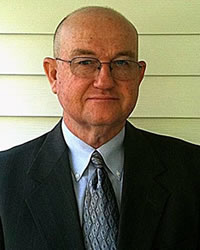
Gary Shepard is teacher and pastor of Sovereign Grace Baptist Church in Jacksonville, North Carolina.
Pristine Grace functions as a digital library of preaching and teaching from many different men and ministries. I maintain a broad collection for research, study, and listening, and the presence of any preacher or message here should not be taken as a blanket endorsement of every doctrinal position expressed.
I publish my own convictions openly and without hesitation throughout this site and in my own preaching and writing. This archive is not a denominational clearinghouse. My aim in maintaining it is to preserve historic and contemporary preaching, encourage careful study, and above all direct readers and listeners to the person and work of Christ.
Brandan Kraft
Joshua
Joshua
Shall we play a game? Ask me about articles, sermons, or theology from our library. I can also help you navigate the site.
Bible Verse Lookup
Loading today's devotional...
Unable to load devotional.
Select a devotional to begin reading.
Bible Reading Plans
Choose from multiple reading plans, track your daily progress, and receive reminders to stay on track — all with a free account.
Multiple plan options Daily progress tracking Email reminders
Comments
Your comment has been submitted and is awaiting moderation. Once approved, it will appear on this page.
Be the first to comment!