Exodus 34:1 And the Lord said unto Moses, Hew thee two tables of stone like unto the first: and I will write upon these tables the words that were in the first tables, which thou brakest. 2 And be ready in the morning, and come up in the morning unto mount Sinai, and present thyself there to me in the top of the mount.3 And no man shall come up with thee, neither let any man be seen throughout all the mount; neither let the flocks nor herds feed before that mount.4 And he hewed two tables of stone like unto the first; and Moses rose up early in the morning, and went up unto mount Sinai, as the Lord had commanded him, and took in his hand the two tables of stone.5 And the Lord descended in the cloud, and stood with him there, and proclaimed the name of the Lord.6 And the Lord passed by before him, and proclaimed, The Lord, The Lord God, merciful and gracious, longsuffering, and abundant in goodness and truth,7 Keeping mercy for thousands, forgiving iniquity and transgression and sin, and that will by no means clear the guilty; visiting the iniquity of the fathers upon the children, and upon the children's children, unto the third and to the fourth generation.8 And Moses made haste, and bowed his head toward the earth, and worshipped.9 And he said, If now I have found grace in thy sight, O Lord, let my Lord, I pray thee, go among us; for it is a stiffnecked people; and pardon our iniquity and our sin, and take us for thine inheritance.
Sermon Transcript
Auto-generated transcript • May contain errors
100%
Thank you, Mark. Let me add my
welcome to Mark. We're glad that you're here this
morning. And I appreciate the prayers that you
lift up to these men who stand in this pulpit every week and
deliver God's word. It's an awesome responsibility.
And who's sufficient for these things? None of us, really. But the Lord gives us grace.
And you pray that he'll continue to do that as we seek to serve
the Lord. We're going to talk a little
bit this morning about our mediator, one mediator. And this is an
awesome subject to even contemplate looking into. And I've studied
it for three or four weeks. And I probably know less now
than I did when I started. But anyway, it's an awesome subject
to be contemplating. Hope I don't confuse you too
much with it this morning. I don't suppose there's a, I
do suppose there's probably not a more noble endeavor than to
be a mediator. Everybody needs somebody sometime
to be a mediator for them. We all have issues that come
up in life and we're not able to mediate to a suitable conclusion
for both parties or however many parties. So we look to someone
who can help us reach that determination. And this is especially true in
spiritual matters. Sinners are at odds with a holy
God who will not clear the guilty. that odds are just God and Savior
to those dead in trespasses and sin. On the one hand, a holy
God who must punish sin, and then there are sinners that he
must bring to glory. Jesus said, I have others. I
must bring them. So the soul that sinneth, it
shall surely die. Yet blessed are they that die
in the Lord. How can ever the twain meet?
There's only one way, that's through a mediator, the Lord
Jesus Christ. We can't have just any mediator
in spiritual matters. We have to have one qualified
to be the communicator and reconciler of God's people to him and to
the holy God. The ungodly have nothing with
which to mediate on our own. And we don't have access to a
holy God but by means of a mediator. And we will never by nature seek
God's mediator. Now we'll seek after a mediator
in spiritual things, but we won't seek God's mediator, not by nature. That's why God has a controversy
with his people. And he tells us in Hosea chapter
12 and verse 2, the Lord also has a controversy with Judah.
Judah remembers the southern kingdom. And he says, I will punish Jacob
according to his ways, according to his doings will he recompense
him. And then in Micah chapter six
in verse two, God says this, here you old mountains of Samaria. Now this is the 10 northern tribes
of Samaria. The Lord's controversy and your
strong foundation of the earth for the Lord had the controversy.
with his people, and he will plead with Israel. How will God
plead with his people? Through a mediator. He says,
come now, let us reason together, saith the Lord, though your sins
be as scarlet, they shall be as white as snow. Though you
be ignorant of it now, I'll send my mediator, and he'll show you
the reality and the remedy for your sin, the reason I have a
controversy with you. So this raises the question this
morning, who is my mediator? Who is God's mediator? Is he
my mediator? Who has mediated for me with a God that has a controversy
with me? We all have one we listen to
and lean on for their expertise in this mediatorial skills. But
is our mediator God's mediator? And I'm sure if I asked you individually,
everyone would say, God, Christ is my mediator. But how can I
be sure? John wrote in the early stages
of the early church, there are many gone out from among us now. There are many antichrists in
the world, and they're mediating for people. So this raises the
question, is God my mediator? Is my mediator the one that God
appointed? Well, look at what God says in
1 Timothy 2.5. He says there's only one mediator
between God and man, and that man is Christ Jesus. Now, this
statement was not, I'm sure, given just as, oh, by the way,
we have a mediator. It's vital because sinners look
to someone to mediate for them, and by nature, none of us look
to the Lord Jesus Christ. Every sinner by nature seeks
a mediator who will speak peace and comfort to him. I know this
from experience. I was in religion for 50 years,
before I discovered that I was following a false mediator. I
wasn't adhering to God's mediator, the Lord Jesus Christ. I was
looking to my own. In fact, I was mediating for
myself. And I had the notion that I could come before God
at any time and mediate my cause to Him. But I can't mediate. I can bring my cause to God and
ask for His cleansing of me, but I need a
mediator, one who can present my side to God and God's side
to me and make me to understand. And I claim 1 Peter 2, 9 is part
of that authority. He said, but you are a chosen
generation, a royal priesthood. And I thought as a royal priesthood
I could have access to God at any time, and I can, but not
to mediate. I can come boldly to the throne
of grace that I might find help in time of trouble, but I still
need a mediator every day of my life to stand between me and
a holy God. And it's through God's mediator
alone that we come boldly to the throne of grace. We who are
justified before God know that man by nature will never come
to this mediator on our own. And proof of this is in God's
testimony alone. He says, you will not come to
me. that you might have life. And coupled with that, there
are many who hear and reject the gospel. We know that sinners
by nature as we wouldn't come to God on our own. Instrumental
in our coming was the mediator. It's the mediator that came to
me and told me the truth, where the mediator that I've been following
was telling me a false truth. Webster defines mediator as one
who occupies a middle position. To mediate is to exhibit indirect
causation between two opposing parties to a mutually agreed
solution. The rights and responsibilities
of each party must be considered and a fair and equitable settlement
sought. Advantage of one over the other
will leave the conflict unresolved. In spiritual matters, the situation
is different. That's why we need a special
mediator. That's why no substitute can get the job done. Sinners
by nature raise this question, why do we need a mediator? Why
not just let everything work itself out? Why fix something
that seems to be all right? I mean, everything's going good
now. Me and Jesus got a good thing going. We got it all worked
out. Remember that song? Well, that's the attitude we
have. Why fix something that seems to be okay? Well, the truth
of the matter is things are not okay. Things are broken. Mainly God's
law is broken. And when that law is broken,
fellowship with God is broken. And that leaves us alienated
and enemies in our mind, ignorant of God's way and going about
to establish a righteousness of our own. And the punishment
for that is eternal death. We don't know that by nature,
but it is. We only have to look to the cross
to see God's extreme hatred for sin. He who spared not his own
son will not spare us either if our sin is not taken care
of. So what's unique about this mediator
that God has appointed? One mediator between God and
man, the Lord Jesus Christ. Well, it's his person. It's who
he is. And it's his work, what he's
done, what he is doing, and what he will yet do. Consider this. What if God had not appointed
a mediator for his people? Where would we be? We can't come
to him on our own. He won't fellowship. He won't
talk to us. He won't address us, except to
condemn us, except through a mediator. So if we didn't have a mediator,
the Lord Jesus Christ, we'd be without hope in this life or
the life to come. Christ can get God's attention.
He has an audience with the Father, and he has the Father's ear,
and he alone can mediate to God for sinners because of who he
is and what he's done. So let's look for just a few
moments this morning at who this mediator is. In Exodus chapter
34, let's read these few verses of scripture. And let me say
this, Recalling your memory to the
last message I preached from here, God told Moses to come
up on Mount Sinai, and he gave him the law. And while he was
up there, the children of Israel fashioned a golden calf and were
worshiping that calf when Moses came down off the mount 30 days
later. So Moses broke the tables of
the law in anger over the children of Israel, and God says, Moses,
you have two more tables and bring them up here to Mount Sinai
again, and I'll write the law on the tables again. So Moses
goes up on Mount Sinai again, and the scripture says in Exodus
34, verse 5, the Lord descended in a cloud and stood with him
there and proclaimed the name of the Lord. And the Lord passed
before him and proclaimed, the Lord, the Lord God, merciful
and gracious, long-suffering and abundant in goodness and
truth, keeping mercy for thousands, forgiving iniquity and transgressions
and sin, and that will in no means clear the guilty, visiting
the iniquity of the fathers upon the children and upon the children's
children unto the third and unto the fourth generations." So this
one mediator between God and man is the Lord, the Lord God. He is Jehovah who saves, that
capital Anytime you see the capital Lord in your Bible that's talking
about Jehovah the God who saves and if this is common throughout
the scripture to look look with me at the Zechariah chapter 2
verse 9 and 10 here here we see this For behold, I will shake
my hands upon them and they shall be a spoil to their servants
and you shall know that the Lord of hosts This is Jehovah the
father has sent me. And in verse 10, sing and rejoice,
O daughter of Zion, for lo, I come, and I will dwell in the midst
of thee, saith the Lord, Jehovah the Son. And in Psalm 110, in
verse 1, the Lord, Jehovah the Father, said unto my Lord, Jehovah
the Son, sit thou at my right hand until I make thine enemies
thy footstool. And in Jeremiah 23 and verse
6, Christ is called the Lord our righteousness, Jehovah Sidcanu. And then one other verse in Numbers
chapter 6 and verse 24, the Lord, this is Jehovah the Father, bless
thee and keep thee. The Lord Jehovah the Son make
his face to shine upon you and be gracious unto you. And in
verse 26, the Lord Jehovah the Holy Spirit lift up his countenance
upon thee and give thee peace. So what qualifies God's appointed
mediator to be so? His person, who he is. Matthew 1, verse 21, the angel
proclaiming, foretelling the birth of Christ said this, behold,
a virgin shall be with child, and shall bring forth a son,
and thou shalt call his name Emmanuel, which being interpreted
is God, or Jehovah, with us. In Colossians 1, verse 16, It
talks about this mediator as the creator, the God of all creation. For by him were all things created
that are in heaven, that are in earth, visible and invisible,
whether they be thrones or dominions or principalities or powers.
All things were created for him, by him, and for him. And he is
before all things, and by him all things consist. So he's qualified
to be our mediator because he is very God, a very God. He is the second person of the
blessed Trinity, God the Son, equal with the Father in every
attribute of his deity, who subordinated himself in office only for the
purpose of redemption, to save his people. Man cannot create,
but Colossians says that he created all things, and by him all things
consist. Man can't create, but this man
who is God did create, and this is attributed, of course, to
his deity. But he's more than deity. He's God-man. He's man. He is the only begotten, which
means there's only one of him. There's not another like him
or ever will be. He's the only begotten Son of God who took
into union with his deity, true, sinless humanity, body and soul. Look at Philippians chapter 2
and verse 6. He is the Lord Jehovah. the son, who, being in the form
of God, thought it not robbery to be equal with God, but made
himself of no reputation, and took upon him the form of a servant,
and was made in the likeness of men, and being found in fashion
as a man, he humbled himself and became obedient unto death,
even the death of the cross." Well, God can't die. But this
man who is God did die. Death can be attributed only
to his humanity. took nothing from the father
when he subordinated himself and took on him the form of a
servant and became man. He said, I and my father are one. And he told Nathaniel, he said,
if you've seen me, Nathaniel, you've seen the father. So look
at Hebrews 4.15. Though he be fully God, he is
fully man. And this describes his humanity. For we have not a high priest,
which cannot be touched with the feelings of our infirmities,
but was in all points tempted like us, like we, yet without
sin. Christ, our mediator, suffered
the same infirmities as we do daily. Every temptation we suffered,
he suffered himself without sin. He did not sin. He did not become
sin. He was not the worst sinner that
ever lived. He was made sin by amputation alone. He is the only
God-man mediator. He is the only mediator to stand
between the holy God and the ungodly sinners to reveal God's
standard of judgment and the merits of his obedient suffering
and death to establish the one righteousness we all need to
stand before God. Christ set up in eternity past
to be our mediator, pleads his very righteousness imputed as
that which satisfies law and justice for all. And he shows
us how that's what God requires in the gospel. He brought the
gospel, and that's what the gospel is. It's the power of God unto
salvation, for therein is that righteousness revealed from face
to face. In the Old Testament, Moses was
a type. He was a type of mediator. He mediated the Mosaic economy,
which was a covenant of works. The anti-type is Christ, mediator
of the new covenant, the better covenant, better because it has
a better altar, a better sacrifice, a better priest. It's a better
covenant, the gospel economy, which is a covenant of grace.
Both of these were appointed by God. Moses, you remember at
the burning bush, God said, I want you to go free my people, Christ
and the everlasting covenant of grace. Both were commissioned
to deliver God's will to his people. Moses, the lawgiver,
Christ, the gospel, our life giver. In John chapter one, verse
17, the apostles said this, the law was given by Moses, but grace
and truth came by Jesus Christ. Moses ministered the law of God
in Israel. This covenant of works was nothing
more than a schoolmaster until Christ's first advent. He couldn't
save anyone. It was not designed to save.
Look at what Romans chapter eight in verse one through four says
about us and our standing in the law. There is therefore now
no condemnation to those which are in Christ Jesus, who walk
not after the flesh, but after the spirit. For the law of the
spirit of life in Christ Jesus has made me free from the law
of sin and death. For what the law could not do,
and what is it the law can't do? Cannot pronounce a sinner
just and holy and righteous, based on anything proceeding
from that sinner. For what the law could not do,
and that it was weak through the flesh. Nothing wrong with
the law. The problem's with the sinner.
Weak through the flesh. God sending his own son, and
if he hadn't, we'd be without hope. But God sent his own son
in the likeness of sin, in our likeness. sinful flesh, and for
sin, condemn sin in the flesh, that the righteousness of the
law might be fulfilled in us who walk not after the flesh,
but after the Spirit. What is it to walk in the flesh,
not after the Spirit? It's to seek salvation based
on something from me and not totally on what Christ did. For
they that are after the flesh do mind the things of the flesh,
but they that are after the Spirit, the things of the Spirit. The
law was never intended as a means of salvation, but given to show
the impossibility of being saved by my obedience and to set me
looking to Christ and his righteousness for all my salvation. The moral
and the civil ceremonial law was given to show Israel in picture
and in type the person and work of the Lord Jesus Christ. as he alone who saves sinners.
Israel missed this revelation. Most today miss this revelation. People are worshiping their God
in synagogues and churches throughout the land today, but they missed
this thing of salvation by grace through the works of the Lord
Jesus Christ. Jesus said to his opponents in
John chapter 5 and verse 45, do not think that I will accuse
you to the Father. There is one that accuses you,
even Moses, whom you trust. For had you believed Moses, you
would have believed me, for he wrote of me." And in Luke chapter
24, when the two on the road to Emmaus are talking about the
resurrection of Christ, and Christ comes beside them and ask them
what they're talking about, and they tell him, and he said, in
Luke chapter 24, and beginning at Moses and all the prophets,
he expounded unto them all the scriptures, the things concerning
him. Remember, the only scriptures that they had then was the Old
Testament. And he said, beginning with Moses and the first five
books of the Bible, and then all the prophets, he expounded
the scriptures concerning him, the whole of scriptures. has
to do with the person and work of the Lord Jesus Christ, and
especially in his mediatorial offices. So what is that work? Christ pleads on our behalf before
the Father. What did he do for us? Well,
look again at Exodus chapter 34. Let's read it again. And the Lord descended in a cloud
and stood with him there and proclaimed the name of the Lord.
And the Lord passed by before him and proclaimed, the Lord,
the Lord God, And notice this, merciful and gracious, long-suffering
and abundant in goodness and truth, keeping mercy for thousands,
forgiving iniquity and transgressions of sin, and will in no wise clear
the guilty, visiting the iniquity of the fathers upon the children
and upon the children's children until the third and fourth generation.
So the Lord God is, first of all, a merciful God. The first
thing a sinner needs is mercy. If we need anything from the
Lord, It's mercy. Christ is the center's mercy
seat. He is our propitiation. In other words, he restored the
fellowship by the blood of his cross, those for whom he died. Mercy there was great and grace
was free. Pardon there was multiplied to
me at Calvary. So God is first of all a merciful
God. Second, he's gracious. He's kind
to men without anything, any merit or desert on their behalf. Think about His grace. You know,
we use the term loosely, the grace of God, saved by the grace
of God. But think about this grace. He
chose a people in love in eternity past. He provided us a Savior. Our Savior worked out a perfect
righteousness, which God freely imputed to us. He pardons our
sins. He accepts us in the beloved.
He called us in regeneration and conversion. And he said,
I will not lose one that you gave me, Father. So he is a gracious
God. And he's a long-suffering God.
How patient is our God? How long did he strive with you?
Long enough to change your mind, as long as it took to convince
us of our sin. He has the time. He keeps and
preserves his elect. He is a long-suffering to us,
not willing that any should perish, but that all should come to repentance. Thank you, Lord, for your long-suffering
to me. And he's abundant in goodness
and grace. Every good and perfect gift is from above, from the
Father of life, in whom is no variableness nor shadow of turning.
and His goodness is seen in giving us the word and the spirit to
interpret that word, the word of truth, the gospel. It is the
truth that sets men free. He is a forgiving God, not only
forgiving, but forgetting. For I will be merciful to their
unrighteousness and their sin and their iniquities will I remember
no more. And in 1 John 2, verse 12, the
apostle writes, I write unto you, little children, because
your sins are forgiven you for his namesake. And last of all,
he's a just God and a savior. He says, I will in no wise clear
the guilty. Hebrews 10, verse 26 says this,
for if we sin willfully after we have received the knowledge
of the truth, there remaineth no more sacrifice for sin. but
a certain fearful looking for of judgment and fiery indignation,
we shall devour the adversary. Those who sin willfully, and
what is that? It's to reject Christ's righteousness
imputed for all of salvation. Those who sin willfully will
perish. Those who reject the accomplished,
finished work of the Lord Jesus Christ and add their own works
will not have a sacrifice for their sins, and they'll face
a holy God without a mediator, and he'll be a consuming fire
to them. That's why we need a mediator. We have nothing of ourselves
whereby we might approach unto a holy God. We have nothing of
ourselves to plead before God. The writer of the old hymn, in
my hand no price I bring, simply to the cross I cling is true.
God forbid that I should glory," Paul wrote, saving the cross
of our Lord Jesus Christ. There's only one mediator. And
what is the response of the mediator by God's people? Well, look at
verse eight again. And Moses made haste and bowed
his head toward the earth and worshiped. Moses the type did
what God's mediator always does. He interceded for and on behalf
of his people. He invoked the Father on behalf
of Israel. Look at his prayer. Listen to
what he said. If I have found grace in thy
sight, O Lord, let my Lord, I pray thee, go among us, for it is
a stiff-necked people, and pardon our iniquities and our sins,
and take us for thine inheritance. Well, that's what Christ prayed.
Listen to his, you can read his prayer in John chapter 17, but
here's just an excerpt from it. Jesus said, I finished the work
you gave me to do, Father. I've glorified thee on earth.
Glorify thou me now with the glory I had with thee before
the world was. He says, I manifested thy name unto the men you gave
me. He says, I pray for them. I pray not for the world. Neither
pray I for these alone, but for them which thou shalt believe
on me through their word. So is Moses the type, so Christ
the anti-type. God calls Moses to behold his
glory. in the face of Jesus Christ,
to see every attribute of God's redemptive glory in the person
and work of the Lord Jesus Christ. Moses was able to see. You remember he said, Lord, show
me your greater glory? Well, that's what God's doing
here. This is his greatest glory, how he saves the sinner. So Christ
in his person displayed these attributes. Moses was able to
see them in the person of the Lord Jesus Christ. displayed
them in his person. They were attributes of himself. And that's what qualified him
to be our mediator and plead his mercies on behalf of his
people. It is his obedience, his suffering,
his death coupled with his living now to make intercession for
us. that God has mercy upon his people. And what are the results?
Look at chapter 34 and verse 10. And God said, behold, I make
a covenant. Before all the people will I
do marvels such as have not been done in all the earth, nor in
the nation, and all the people among whom thou shalt see the
work of the Lord. For it is a terrible thing that
I will do to them. We know of the mighty miracles
brought by the hand of God in Israel. exodus, wilderness journey,
and conquest of Canaan. The plagues that he brought upon
Egypt, the crossing of the Red Sea, the water from the rock,
the pillar of a cloud and fire, and the fall of Jericho. These
truly are marvels of God's awesome power. But an even greater work
is that of justifying the ungodly. How God, a holy and just God,
can remain just and justify an ungodly sinner such as me. He does it in these attributes
that we just mentioned. In each of these, Christ is pictured
in the salvation of his people. Without his successful accomplishment
of the salvation of his people, there would be no need for a
mediator. But God commands he invites sinners
to come. Let us reason together. Though
your sins be as scarlet, they shall be as white as snow. He
has a mediator ever ready to intervene to God on behalf of
the ungodly, and there is none other name unto heaven given
among men whereby we must be saved. Well, God has a controversy. Hear you, O mountains of Samaria,
the Lord's controversy, and your strong foundation of the earth,
for the Lord has a controversy with his people, and he will
plead, mediate, with his people. God has a controversy with spiritual
Israel today. Christ, in his everlasting office
as mediator, stands ready to mediate your cause and my cause
before holy God. He is the one mediator between
God and man. With such a mediator, why seek
another? With such a righteousness, why
plead my own? With such grace, why add my work? With so great salvation, why
look to another? With no promise of tomorrow,
why not today? Behold, I stand at the door,
Christ said, and knock. If any man hear my voice and
open the door, I will come into him and will sup with him and
he with me. Between God and man is one mediator, the God-man. Mark, come and lead us in our
closing hymn.
About Winston Pannell
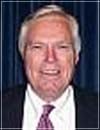
Winston Pannell was born in 1937 in rural Alabama. At the age of fifteen he became interested in religion and was baptized in the Armenian faith, as was Patricia, his wife to be and subsequently their three daughters. In 1985 the Lord confronted him with the true gospel and brought him to faith in God and true repentance from dead works and idolatry. It has been his passion to learn more of a Just God and Savior and his propitiatory work on behalf of his people given him by the Father in the Everlasting Covenant of Grace. The pulpit of Eager Avenue Grace Church in Albany Georgia has afforded him the opportunity to deliver this gospel of God’s free and sovereign grace in Christ, based on his righteousness imputed and received by faith as the whole of the sinner’s salvation. His desire is to deliver this gospel to the hearing of as many as the Lord shall save.
Pristine Grace functions as a digital library of preaching and teaching from many different men and ministries. I maintain a broad collection for research, study, and listening, and the presence of any preacher or message here should not be taken as a blanket endorsement of every doctrinal position expressed.
I publish my own convictions openly and without hesitation throughout this site and in my own preaching and writing. This archive is not a denominational clearinghouse. My aim in maintaining it is to preserve historic and contemporary preaching, encourage careful study, and above all direct readers and listeners to the person and work of Christ.
Brandan Kraft
Bible Verse Lookup
Loading today's devotional...
Unable to load devotional.
Select a devotional to begin reading.
Bible Reading Plans
Track your daily Bible reading with a structured plan. Choose from several options and let us keep track of your progress.
Comments
Your comment has been submitted and is awaiting moderation. Once approved, it will appear on this page.
Be the first to comment!