John 4:1 When therefore the Lord knew how the Pharisees had heard that Jesus made and baptized more disciples than John,
2(Though Jesus himself baptized not, but his disciples,)
3He left Judaea, and departed again into Galilee.
4And he must needs go through Samaria.
5Then cometh he to a city of Samaria, which is called Sychar, near to the parcel of ground that Jacob gave to his son Joseph.
6Now Jacob's well was there. Jesus therefore, being wearied with his journey, sat thus on the well: and it was about the sixth hour.
7There cometh a woman of Samaria to draw water: Jesus saith unto her, Give me to drink.
8(For his disciples were gone away unto the city to buy meat.)
9Then saith the woman of Samaria unto him, How is it that thou, being a Jew, askest drink of me, which am a woman of Samaria? for the Jews have no dealings with the Samaritans.
10Jesus answered and said unto her, If thou knewest the gift of God, and who it is that saith to thee, Give me to drink; thou wouldest have asked of him, and he would have given thee living water.
Sermon Transcript
Auto-generated transcript • May contain errors
100%
Thank you, Mark, and thank you,
Amy, for that music. Let me make one announcement. Next Sunday, Jim Byrd and his
wife, Nancy, will be here from Almonte, Michigan, preaching
for both services. So we invite everybody to come
and bring your friends. And don't forget that they'll
be here next week. And we always enjoy them when
they come. I want to talk to us a few minutes
this morning that we have about the water of life. There's an old proverb, I guess
it's a proverb, it says that you can lead a horse to water,
but you can't make him drink. And that's true. I've tried that.
And it is a truism. Until he's thirsty, water doesn't
interest him. But when he's thirsty, he'll run to that water. You
know, thirst is one of those safety mechanisms that the body
has that protects us. It lets us know when we're beginning
to be dehydrated. And it tells us we need to do
something about it. And since 70% of the body is,
the mass of the body is water, it takes a lot of water. And
we have a billion dollar water business in America trying to
supply enough good clean drinking water for Americans. So it's
an important necessity. Ignoring the body's call for
water can lead to sickness and in some cases even death. and
with plenty of water underfoot. Southwest Georgia is known for
its great water supply. There's little cause for anybody
to become dehydrated, but it happens every year. We hear people
who are locked in cars in the hot summertime, and they succumb
quickly to dehydration. So thirst is a good thing. Man has another thirst, though.
That's what I want to talk about this morning, not drinking water.
I want to talk about the water of life. Man has another thirst. And in an effort to quench that
thirst, many die daily because they're thirsty for what they
think is the water of life. They die because their cistern
is broken. We're going to talk about that
in a little bit. You'll understand what I'm talking about. But their
cistern is broken and will not, the scripture says it cannot
hold the water of life. All of us like Adam, when God
confronted Adam with his sin in the garden, he made fig leaves,
sowed fig leaves to try to cover his nakedness. And we do that,
we drink our water. We drink what we think is water
of life, but in fact it's the water of death. And we fill our
cisterns with polluted water when we could be drinking from
the spring of water of everlasting life. Too late, many will learn
that the water they depended on and trusted in was not living
water, but it's polluted water. And many will die in their sin. So equally true is the proverb
that you can lead a person to spiritual water, but you can't
make them drink. We know that to be true. You can present the
gospel to a man by nature and he will not believe it until
and unless God, the Holy Spirit, in the day of God's power causes
him to do so. And we use that term in the day
of God's power. What does that mean? It's that
time when God overcomes our ignorance and self-righteousness and presents
us with the truth of how God can be just when he justifies
the ungodly. So you present the gospel to
the natural man, and he won't drink that water by nature until
God makes him willing. How does God do this? How does
God make a sinner willing to bow to his will? Well, the Apostle Paul
said it this way in Romans 20, moreover, the law entered. Well,
the law has always been here. What does it mean, the law entered?
The law exposed my sin for what it was. Moreover, the law entered
that the offense might abound. In other words, the offense is
more than just the action. It's the motive behind the action.
And he says, but when sin abounded, when I saw my best efforts to
please God based on my character and conduct was sinful, then
grace did much more abound. I saw that Christ's righteousness,
his work, was all I needed and was all that would meet the demands
of God's holy law and justice for me. In other words, when more with the law entered that
the offense might abound, but where sin abounded, grace did
much more abound. When sin has exhausted its source,
the rivers of grace will still overflow its banks. In other
words, nothing can stay the hand of God. That's the nature of
grace. So Christ invites, He commands,
all who hunger and thirst to come and drink. Look at Isaiah
chapter 55 and verse 11. He says, Ho, everyone that thirsteth,
and all who hunger and thirst, come ye to the waters. And he
that hath no money, come, buy ye, and eat, yea, come buy wine
and milk without person in the scriptures today
that reflects the way God deals with his elect. The woman of
Samaria in John chapter 4 is a type of those whom God calls
to this water, this water of life. And she typifies all by
nature who seek to be satisfied with a water that will not satisfy. Jesus said this in John 4, 13,
whosoever drinks of this water shall thirst again. These daily
must work to attain the water in their cistern in order to
live. But it never gives them everlasting
satisfaction. So from her type, as a lost child
of God, we're given insight into this special grace of the water
of life. And I want us to look at three things this morning
about this water. First of all, the water of life
has its source in God the Father. Secondly, it has its supply in
God the Son. And thirdly, it has its sanctification
in God the Holy Spirit. So let's look for a few moments
at these in John chapter 4. If you would, look at John chapter
4, verses 3 through 6. The scripture says, he, that
being Jesus, left Judea and parted again into Galilee, verse 4,
and he must needs go through Samaria. Then cometh he to a
city of Samaria, which is called Sychar, near to the parcel of
ground that Jacob gave to his son Joseph. Now Jacob's well
was there. Jesus, therefore, being wearied
with his journey, sat thus on the well, and it was about the
sixth hour. Jacob's well was in Samaria.
You remember Jacob? Younger twin brother of Esau,
cheater, supplanter, thief, stole his brother's birthright, You
remember him. Well, he owned a parcel of land
in that land which was called Samaria in Christ's day. That
land where the Assyrians had overcome the ten northern tribes
of Israel and they had intermarried with them and they were home
to the dreaded Samaritans or the people that the true Jew
hated because they intermarried with the Assyrian people. And
in this city called Sychar was a well, Jacob's Well, and apparently
it was the only place of drinking water in the region. So scripture says Jesus needs
go through Samaria. Why? Because he had lost sheep
in need of the water of life. and he had little sheep in need
of being led by the still water. So he began, he being the only
source of this water, he had to go through Samaritan in order
for his sheep to be saved. Look at John chapter four and
verse 10. Jesus said unto the woman, Jesus answered and said
unto her, if thou knewest the gift of God and who it is that
saith unto thee, give me drink, thou wouldest have asked me and
he would have given thee living water. the twin brother of Esau bought
a field that had a well in it. And he gave that well to his
son Joseph. You remember Joseph was his 11th son and his first
son by Rachel. But Jacob had 12 sons and he
gave this field to Joseph. And so it was at this well that
the woman said, Jesus said to the woman, give me drink. And
they came to this well daily for water because their life
depended on it. Jacob was a type. He was a patriarch, and he was
the type of Christ. His well of life is all that,
the only place that they had to drink water at the time. Well,
the parallel to this is God has a field. That field is the world. In Psalm chapter 4 and verse
1, David wrote, the earth is the Lord's and the fullness thereof,
the world, and they that dwell therein. In this field of God,
the world, he has a well. That well is important because
this is the only place in all the world that people can go
and drink the water of life. There's no other place. It's
the only well of life. And it is in his elect, this
well shall be a well of water springing up into everlasting
life. God gave this well to his church, and they sustained life
through this well. Look at Matthew chapter 13 in
verse 44. He talks about this field and
this well. He says, again, the kingdom of
heaven is like unto a treasure hidden in a field, for which
when a man hath found, he hide it, and for joy goeth and selleth
all that he hath, and buyeth that field. The writer of Hebrews
told us this. He said, we look to Jesus, the
author and finisher of our faith, who for the joy that was set
before him endured the cross and despised the shame and is
set down on the right hand of the throne of God. So that field
is the world. And hidden in the field is the
church. Now, most of the world doesn't
recognize the church, but it's there. even those of us who've been
justified by faith. At one time, we looked like the
enemies of the church, and we were going about seeking to establish
a righteousness of our own, but God had other plans for His elect. And though we looked like the
tares, we were wheat among the tares, and we would be brought
out in the day of God's power. And I was like Christ described
the woman of Samaria. I was a blind leader of the blind.
I was a leader in false religion. But God must needs go through
my Samaria because that well of water was mine. It had been
mine all along. I just didn't know it. But he
must needs go through my Samaria to establish a well of water
in me that I really knew nothing of. This well of living water
was established by him who humbled himself and became obedient unto
death, even the death of the cross. In John chapter 4 and
verse 45 he says this, again, the kingdom of heaven is like
unto a merchant man seeking goodly pearls. Verse 46, who when he
hath found one pearl, one of great price, he went and sold
all he had and bought it. Well, that pearl is the church.
Christ bought that church with the blood of his sacrifice. It's
the only church. It's the church in which Christ
bought and paid for by his obedience, suffering, and death. It is to
him, the water of life, that the church looks for all of salvation. There's no other fountain from
which to drink this living water. And you know what? And people,
even though there's only one well, God's people, by nature,
refuse that well, refuse that water. Look with me at Jeremiah
chapter two. in verse 13. God says this about
Israel, and it can be spoken of in spiritual Israel, too.
My people have committed two evils. They have forsaken me,
the fountain of living waters, God is the only source, and hewn
them out cisterns, broken cisterns that cannot hold water. So what's
the problem here? Well, it's twofold. Men in need
of this water have forsaken the fountain, the only place to find
this water. To forsake means to lose affection
for or to neglect, and that's what we did. We lost our affection
for the true God of Israel. Well, my question is this. Can
God's covenant people commit such sin and still remain his
people? Well, I hope so, because if we
can't, then I'm lost. I have no hope, because I'm guilty
of just what Israel did. I forsook the Lord. Our father,
Adam, forsook the Lord in the garden when he chose to listen
to Satan and not to the God who created him. And we did, too.
We were in the loins of Adam, and when he sinned, we sinned. We were sinners by representation
and then sinners by practice. Our father, Adam, in open rebellion
and idolatry, according to Romans chapter one, verse 25, changed
the truth of God into a lie and worshiped and served the creature
who is more than the creator, who is blessed forever. And that's
what God saves sinners from. We took side with Satan against
the one true and living God. And when God says, the soul that
sinnetheth shall die, we, my and Satan's, say, thou shalt
not surely die. But we know that without this
water there is death. The first great evil by man was
that when we forsook the fountain of living water, and that wherein
is the very life of man, and what is the evidence of that?
We built our own cisterns, cisterns that are broken in one whole
water. You know what a cistern is? A cistern is a reservoir,
as it were, to catch and hold water. It's placed in a strategic
location to maximize the effectiveness of catching and holding that
water. When I was a boy in Alabama, we had a cistern in our house.
And it was about six foot by six foot square. It was under
the eve of the house. And it was where a valley brought
two parts of the roof together. It maximized the amount of water
that a good rain shower would put into that cistern. Well,
we used that and we maintained that in my boy. It was located
under the eve of the house to catch that water. But even the
effectiveness of catching that rainwater and holding it was
minimal because they can't hold water for long. They don't have
a foundation in them. And the water they hold is filled
with impurities and insects and dirt and whatever else. So basically
the only thing he used for us was water cattle and washed clothes
or scrub floors or water the garden. Well, this is what God
compares us to. We have forsaken the spring of
living water for a cistern of dirty, polluted, poison water. And we've forsaken the fountain
of living water And Jesus said in John chapter 4 and verses
13 and 14, Jesus said to the woman, whosoever drinketh of
this water, in other words from the cisterns, shall thirst again,
but whosoever shall drink of the water that I shall give him
shall never thirst, but the water that I shall give him shall be
in him a well of water springing up into everlasting life. Why
would any reasonable man choose cistern water over spring water?
Well, reasonable men won't. It's the fool who said in his
heart there is no God. It's the fool that builds broken
cisterns that cannot hold this living water. We're the cistern. We fashion our lives around trying
to please God based on what we do or what we quit doing or some
action that we think God will be pleased with us if we do.
Anything we do in the way of gaining or maintaining salvation
is building a cistern. and it's always broken because
we can't match God's standard. We can't build anything that
will meet God's standard. In fact, everything we build
is broken. The best we can do is broken cisterns. Our cistern
won't meet God's standard of perfection. Jesus answers his
critics with this parable in Matthew 9, verse 17. He says this, neither do men
put wine in old bottles, Else the bottles break and the wine
runneth out and the bottles perish, but they put new wine into new
bottles and both are preserved. What he's talking about here,
new wine being the Holy Spirit, it cannot cohabit with the natural
man. These bottles break and they
perish. In other words, the old man cannot build a cistern that
will hold this living water. His cistern is broken by the
fall and he's beyond ability to fix it. Any attempt will always
leave us short of God's requirement. But if any man be in Christ,
he's a new creature. Not an old cistern repaired,
but a new creature. All things are passed away. Behold,
all things are new. The Holy Spirit in him is a well
of water springing up into everlasting life. He is the sovereign source
of living water. Listen to what the psalmist said
in Psalm 46. He says, there is a river. The
streams whereof shall make glad the city of God. Where is that
city of God? It's the church. That's where
God is. He's in the church. The streams
whereof shall make glad the city of God, the holy place of the
tabernacle of the Most High. God is in the midst of her, the
church. She shall not be moved. God shall
help her. Isn't that right, Early? My question
to you is, is your water supply by cistern or by spring? It's one or the other. It's one
or the other. The water of life has its source
in God the Father. Secondly, it has its supply in
God the Son. What a blessing it is to know
we can go to the sink and get a drink of water anytime, clean
water. Or we can take a bottle that
we bought in the grocery store, clean water. It's good to know
that we have that, that we can draw from. But what a tragedy
to be ignorant of the water of life flowing from the heart of
God. The woman of Samaria came for
water that leaves thirsty those who drink it. She had to draw
her water each day. You don't have to draw water
from a spring. It's ever-flowing. She was ignorant of him who is
the living water. Look at John 4.10 again. Jesus answered and said unto
her, if thou knewest the gift of God, and who it is that saith
unto thee, give me to drink, thou wouldest have asked of him,
and he would have given thee living water. The woman said
unto him, sir, thou hast nothing to draw with, and the well is
deep. From whence then hast thou that living water? Art thou greater
than our father Jacob, which gave us the whale and drank thereof
himself and his children and his cattle? There are several
things here, several truths about what Jesus confronts this woman
with that affects us and is true of us also. He says, first of
all, if you knew the gift, which none of us do by nature, she
didn't know the gift. By nature in spiritual matters,
we don't know a gift is a gift. A gift is given by one and received
by another. A gift can have no merit attached.
If it does, it becomes an obligation. Paul said it this way in Romans
chapter 11, verse 6. If by grace, then it's no more
works. Otherwise, grace is no more grace.
But if it be of works, it's no more grace. Otherwise, works
is no more works. In other words, it's either works
or grace. Eternal life is a gift of grace. without any contribution
from the center. The gift of eternal life in Christ,
the water of life. Ignorance of the true Christ
and what he has provided sets us going about to make his gift
an earned right, something we deserve. We don't know it as
a gift, but something that we earn by nature. Well, do you
have the gift? You can have it. It's free. God
gives it freely to all who thirst. Blessed are they which do hunger
and thirst after righteousness, for they shall be filled. Revelation
chapter 22 and verse 17 says, and the Spirit and the bride
say, come. And let him that heareth say,
come. And let him that is a thirst come. And whosoever will, let
him take the water of life freely. So Jesus said to the woman, if
you knew the gift, which she didn't, and then he said, if
you knew the giver, which none of us do by nature, she said,
thou hast nothing to draw with, and the well is deep. Is there
anything worse than a Christ with nothing to draw from the
well of life, water of life? He cannot access the well of
life. for his people. He's not able
in and of himself to save anyone unless they do their part. That's
what we say by nature. And we knew nothing of a God
who said, and I, if I be lifted up from the earth, I'll draw
all men unto me. That's all I need. I don't need a bucket. I'll draw
them with the spirit of God. If I be lifted up on the cross,
I'll satisfy law and justice for all that God gave to me,
all I represent, the church, if I be lifted up on the cross.
If I be lifted up in the preaching of the gospel, my sheep will
hear my voice, and I'll know them, and they'll follow me,
and I'll give them eternal life, and they shall never perish.
If I be lifted up in the heart of a sinner, I'll send you another
comforter, the Holy Spirit, and he shall be in you, that well
of water springing up into everlasting life. Do you know the giver? More importantly, does he know
you? You remember the ending of the Sermon on the Mount, Jesus
said, many will say to me on that day, Lord, didn't we prophesy
in your name, cast out demons? And then I'll say to them, depart
from me, I never knew you. The woman at the well didn't
know the gift or the giver. And we didn't need it by nature.
And then he said, if you knew the greatest one, in verse 12,
art thou greater than our father Jacob? She thought Jacob was
the greater. Jacob was a great man. His name
is always mentioned in reference to the father. God is the God
of Abraham, Isaac, and Jacob, always stated that way. Jacob
is the type. Christ is the anti-type. The
anti-type is always greater than the type. Moses was a type. He was mediator of the Mosaic
economy. But Jesus is the mediator of
the everlasting covenant of grace. John the Baptist said this of
Christ. He that comes after me is preferred before me, for he
was before me, and I'm not worthy to unloose his shoes. We make
much of the Father's faith in their words, but by nature we
think little. of our Father's God. They knew the gift. They knew
the giver, Abraham, Isaac, and Jacob. They knew the greater,
and they saw the glory. Look at verse 19 and 20 again.
The woman said unto her, Sir, I perceive that thou art a prophet.
Our fathers worshiped in this mountain, and you say that in
Jerusalem is the place where men ought to worship. She had
not seen the glory of God. Israel was still under the Mosaic
economy at this time. Christ had not been offered in
sacrifice. So what he's talking about here,
God made a covenant with Solomon when he built the temple and
God met with him. When the Shekinah glory, the
cloud came and filled that temple and God says, I'll meet Israel
here. This is the only place I'll meet you. But when the kingdom
were divided, the 10 tribes went north and Jeroboam shut up temple
of worship in Bethel and Dan. And that's where this woman worshipped
in Samaria. She said, our fathers say in
this mountain is where you're supposed to worship. You say
it's in Jerusalem. Well, they hadn't seen the glory that God's
people see and there's only one place to worship. It's the point
I'm trying to get to and the point that Christ is making here.
There's only one place to worship God. There's churches on every
corner of this city. but there's only one church of
the true and living God. Where two or three are gathered
together in my name, God says, there am I in the midst of them.
The church of Christ is the one that he's the head of and we
are the body of. It is that place where we behold
the glory of God in the face of Jesus Christ. Now, what does
that mean? It's the only place where the
true gospel is preached uncompromisingly. How God can be just and justify
the ungodly reveals his Shekinah glory, which means that every
attribute of his redemptive character is actively engaged in the salvation
of his people. When he established that one
righteousness of God, which God the Father freely imputes to
his people and sent Christ in time to satisfy all the conditions
of the law against his people. This righteousness imputed ensures
our final glory in heaven based on what Christ did to secure
our salvation, based totally on his accomplishment and nothing
added from us. So God's love is the only source
of our living water. He is the cause of our salvation.
And Christ's finished work is the only supply of that living
water. So the water of life has its
source in God. The Father has its supply in
Christ the Son. Philippians 4 says, But my God
shall supply all your needs according to his riches in glory by Christ
Jesus. And thirdly, the water of life has its sanctification
in God the Holy Spirit. Look at John chapter 4 and verse
21. Jesus said unto the woman, Believe
me, the hour cometh when you shall neither in this mountain
nor yet in Jerusalem worship the Father. You worship you know
not what. If you did, if you knew what
you were worshiping, you'd quit. No man would worship an idol
if he knew he was worshiping an idol. I didn't. But when I
learned that I was, I gave that thing up in a hurry. Of course,
that's all under, that's the day of God's power, when he causes
you to see that by nature we're all idolaters. And we have to
give that up. He said, but the hour cometh
and now is. That's that day of power. That's
when that comes, now is. that when the true worshipper
shall worship the Father in spirit and in truth, for the Father
seeketh such to worship him. God is spirit, and they that
worship him must worship him in spirit and in truth. Well,
vital to the eternal well-being of God's elect is the source
of living water. Of equal importance is him whose
life and death secured a never-ending supply of living water to everyone
for whom he died, for his church. And equally vital is the Spirit
of God in the revelation of this great work to those chosen of
the Father and given to the Son. Paul summed it up in 2 Thessalonians
with these words, but we are bound to give thanks always to
God for you, brethren, beloved of the Lord, because God hath
from the beginning chosen, God did the choosing, you unto salvation,
Christ did the saving, through sanctification of the Spirit,
It's the Spirit that shows us what God had planned for us from
eternity, what Christ has secured from us in eternity past and
at the cross. And that hour when it comes is
when that well of water springs up into us and becomes eternal
life to us. Look at John chapter 4 and verse
23 again. Here Christ is speaking of the
coming of the Holy Spirit in the ascension, after his ascension into glory.
He said, the hour has not come, but it is coming, and it's even
here now. And then he follows that up with
John chapter 7 and verse 37. Look at this. In that last day,
Jesus said, that great day of the feast, Jesus stood and cried,
saying, if any man thirst, let him come unto me and drink. He
that believeth on me, as the scriptures have said, out of
his belly shall flow rivers of living water. By this he spake
of the Spirit, which they that believe on him should receive,
for the Holy Ghost was not yet given, because Jesus was not
yet glorified. It is the Spirit of God sent
by the Son of God to reveal to the sons of God their union with
God by the Christ of God, or in the Christ of God. John chapter
4 verse 24, God is spirit and they that worship him must worship
him in spirit and in truth. We know this from Matthew chapter
13, I mean John chapter 17, it was expedient that Christ must
go away because when he did he promised to send the Holy Spirit
and it's called the spirit of truth to convince the world of
sin. That sin is forsaken the fountain
of living water. Convince us of righteousness,
that righteousnesses are going about seeking to build our own
cistern and forsaking the righteousness that he established by his obedient
suffering and death. And of judgment, because the
prince of this world is judged. In other words, he's rendered
helpless to lay anything to the charge of God's elect, all those
who have their spring of water welling up within them to everlasting
life. Well, is this your gospel? Is
this where you find relief from your thirst? Don't die of dehydration. Don't be like the horse. Drink
evermore of the water of life. Revelation chapter 22 in verse
1, and he showed me a pure river. of water of life, clean, clear
as crystal, proceeding out of the throne of God and of the
Lamb. Do you, by the Spirit, see this
river? Is this river your life? And
the Spirit and the bride say, come. And let him that hears
say, come. And let him that is a thirst
say, come. And whosoever will, let him take
of the water freely. Mark, come and lead us in the
closing hymn.
About Winston Pannell
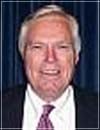
Winston Pannell was born in 1937 in rural Alabama. At the age of fifteen he became interested in religion and was baptized in the Armenian faith, as was Patricia, his wife to be and subsequently their three daughters. In 1985 the Lord confronted him with the true gospel and brought him to faith in God and true repentance from dead works and idolatry. It has been his passion to learn more of a Just God and Savior and his propitiatory work on behalf of his people given him by the Father in the Everlasting Covenant of Grace. The pulpit of Eager Avenue Grace Church in Albany Georgia has afforded him the opportunity to deliver this gospel of God’s free and sovereign grace in Christ, based on his righteousness imputed and received by faith as the whole of the sinner’s salvation. His desire is to deliver this gospel to the hearing of as many as the Lord shall save.
Pristine Grace functions as a digital library of preaching and teaching from many different men and ministries. I maintain a broad collection for research, study, and listening, and the presence of any preacher or message here should not be taken as a blanket endorsement of every doctrinal position expressed.
I publish my own convictions openly and without hesitation throughout this site and in my own preaching and writing. This archive is not a denominational clearinghouse. My aim in maintaining it is to preserve historic and contemporary preaching, encourage careful study, and above all direct readers and listeners to the person and work of Christ.
Brandan Kraft
Bible Verse Lookup
Loading today's devotional...
Unable to load devotional.
Select a devotional to begin reading.
Bible Reading Plans
Track your daily Bible reading with a structured plan. Choose from several options and let us keep track of your progress.
Comments
Your comment has been submitted and is awaiting moderation. Once approved, it will appear on this page.
Be the first to comment!