Bootstrap
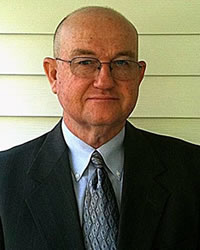
Gary Shepard

The Poster Child for Freewill

John 19:10-11
Gary Shepard March, 11 2012 Video & Audio
0 Comments
Gary Shepard
Gary Shepard March, 11 2012
John 19:10 Then saith Pilate unto him, Speakest thou not unto me? knowest thou not that I have power to crucify thee, and have power to release thee?
11 Jesus answered, Thou couldest have no power at all against me, except it were given thee from above: therefore he that delivered me unto thee hath the greater sin.

Sermon Transcript

Auto-generated transcript • May contain errors

100%
I've entitled this message by a title that just kind of
popped in my head when I read these verses. I call it Pilot, The Poster Child for Free Will. The Poster Child for Free Will. I'm just going to read two verses
that are found in the midst of what has been taking place between
our Lord and this man Pilate. Verse 10 says, Then saith Pilate
unto him, Speakest thou not unto me? Knowest thou not that I have
power to crucify thee, and I have power to release thee?' Jesus answered, Thou couldst
have no power at all against me, except it were given thee
from above. Therefore he that hath delivered
me unto thee hath the greater sin. Now these words of Pilate
are spoken to Christ when he doesn't answer Pilate. He's that lamb that comes before
her shears as dumb, he opened not his mouth. And when you read the words of
this man Pilate in that tenth verse, what a revelation of the ignorance, the blindness, and the pride of heart. of every sinner. He says in Jeremiah, the heart
is deceitful above all things and desperately wicked who can
know it. And more than that, they show
the foolishness of the whole principle of so-called free will. I know sometimes people try to justify man and maybe diminish God by
what they call free agency. They say man is a free agent. Well, the truth is he's not free
and he's not an agent. He's a sinner. And he can never
act outside and beyond or differently from what he is. Pilate imagined that he had power
to choose for Jesus. either life or death. In reality, he couldn't even
choose it for himself. He certainly did not choose when
he would be born, and he certainly did not choose when he would
die. You say, who made that choice
then? God says in Deuteronomy, see
now that I, even I am he, and there is no God with me, I kill
and I make alive. I wound and I heal and neither
is there any that can deliver out of my hand. And if this is the case with
physical life, how much more so is it the case
with spiritual life? A lady in our congregation came
to me the other day and she had to tell me about a church sign
that she had seen. And that sign read in this way,
you have a right to be born and you have a right to be born again. What stupidity. What arrogance. What blindness. No, salvation and spiritual life
is not a matter of right, but a matter of grace. It's a matter of sovereignty.
It's a matter of mercy. You see, the glory of God According
to his own self as he revealed it to Moses is this, I will have
mercy on whom I will have mercy and whom I will I harden. I will be gracious to whom I
will be gracious. And you can mark it down. You
don't learn anything else. You can just mark it down. Sinners
are not left to determine the life or the death of the purpose
and will of God. They will not determine that
God's purpose is either a success or a failure. And more than that,
more than that, they will not ever determine the efficacy and
the success and ultimately the glory of the Lord Jesus Christ. There is no doubt that man has
a will. And will is simply and basically
choice. Not long ago, I was attending
the funeral of my cousin. And the preacher made this statement. He said, I know that the model
prayer says that thy will be done on earth as it is in heaven. He said, but I still believe
man has a choice. Still believe that man has a
choice. And I do too. I do. But I know this according to
these words we find in this book, and that is that man never of
himself chooses Christ. He'll make a lot of choices,
and they'll all be bad choices. He'll make a lot of choices,
And he never will choose Christ because the carnal mind, Paul
says, is enmity against God. Enmity. He said to those Pharisees,
he said, you will not come to me. And that actually says this,
you will not will to come to me that you might have life. And if we look carefully at that,
it reveals the cause and the reason why we won't naturally
is because obviously if we will not will to come to Christ that
we might have life, we must be dead. That's what the Bible says, dead
in trespasses and sins. And like Pilate, man's will will
never choose Christ. Why? He says, the natural man
receives not the things of God. As a matter of fact, if you look
in this book, search the whole New Testament and look up those
two words, nature and natural, with the exception of one place
where it refers to the nature of God, you will find that nature
and natural in every other case refers to the sinful Adamic nature
of every person by birth. You will not come to me that
you might have life. And here is a man who imagines
because of his ignorance and blindness that he can take the
God-man. He's blind to the fact that this
man standing before him is God manifest in the flesh and he
imagines that somehow he can manhandle God, he can take this
man and determine whether he lives or dies. That's the foolishness of free
will. Because that's what every sinner
who rests in this and who's told by all these preachers that this
is the way it is, that you got this choice, your will is free
to act outside of what you really are, and you're going to be able
to either choose Christ or reject him. You're going to be able
to do something whereby his work and his person will either be
diminished or exalted. that the whole purpose of God,
which is described as a purpose of grace to his people, that
you're going to be the one that decides whether or not God is
a failure or a success. I'll tell you another illustration
that our Lord Jesus gave to show us the very stupidity of such
a notion. He said to men who were standing
there before him, he said, which of you by taking thought can
add one cubit to his stature." In other words, he's saying maybe
to us, he said, now, which one of you here in this congregation
this morning can by your thinking or by your deciding or by your
choosing that you can add one inch or two inches or one foot, however
much a cubit was, to your height. And yet you're talking about your will overriding the will
of Almighty God in the matter of His greatest glory. You see, that's what men and
women don't understand. The first cause and the first
reason of God in saving a people is not simply in saving them,
but in glorifying himself. The first reason in preaching
is not so that you'll be saved, but it's that God will be glorified. As a matter of fact, Paul said
this, he said, we manifest the knowledge of Christ in every
place as we preach. And he said, it goes up like
that sweet incense. It's a savor. or a fragrance
of God that goes up to God, and it says that God is pleased with
this preaching of Christ crucified, not only in them that are being
saved, but also in them that perish.
Why? Because the glory of God is in
Christ. The glory of the knowledge of
God, Paul says, is in the face of Jesus Christ. And the truth
of the matter is, the one whose will and whose choice determines
salvation, that's the one who gets the glory.
You understand that? Whoever it is, whatever being
it is, that their will is the one who ultimately and finally
determines lost or safe, that's the one who gets the glory. And since man in his fallen state
has also as a part of him his fallen will left to himself,
he'll never choose Christ. Whose will? determines salvation. I read a statement in an article
recently, and I can't remember exactly what it said. And I'm glad I can't, because
I might try to quote it. But anyway, it amounts to this,
that man's rejection of Christ will somehow determine the whole glory of God, the whole
purpose of God in grace. My friend, all that does is strengthen
a bunch of arrogant, proud sinners in this stronghold that is their
mind that is set against the truth of God. That's all it does. That's all it does. Look over
in Isaiah chapter 46, and maybe I'm on this same vein
now as I was earlier, but I want you to listen to this. I just
think it's a thing in our day that has been so, so emphasized
in the error and the negative and the opposite of what the
Bible says that it comes as a shock to us. Isaiah chapter 46. This is the Almighty God talking
here, and I don't think he can hardly be heard any clearer than
he speaks in Isaiah. But Isaiah 46, he says, remember
the former things of old. Now if there's one thing that
God showed between Genesis and Isaiah, from that day to Isaiah's
day, he showed it again and again that he's God. Remember the former things of
old. For I am God and there is none
else. I am God and there is none like
me. declaring the end from the beginning. And somebody always say, well,
I believe in the foreknowledge of God. I believe that God looked
down from old eternity. Oh, they like to put that. Oh,
I believe God looked down from old eternity. And he saw what
men and women would do. He saw who would choose him and
believe on him and love him. Therefore, he then made his choice. No, he declares the end from
the beginning. And when you see foreknowledge
in the New Testament, it's actually foreordination. He said, declaring
the end from the beginning and from ancient times the things
that are not yet done, saying, my counsel shall stand and I
will do all my pleasure, calling a ravenous bird from
the east. Now this bird, this ravenous
bird with regard to Israel could have been a number of kings and
leaders over the course of history that God raised up, such as Pharaoh,
that he might show his power in them and use them in the judgment
of his people, calling a ravenous bird from the east the man that
executes my counsel from a far country. Yea, I have spoken it. I will also bring it to pass. I have purposed it. I will also
do it. Hearken unto me, ye stout-hearted
that are far from righteousness. I bring near my righteousness. It shall not be far off, and
my salvation shall not tarry, and I will place salvation in
Zion for Israel my glory. He said, I'll do it. And Paul,
he continues in that same vein. He says in Romans 9, so then
it is not of him that willeth. How could we ever miss this?
So then it is not of him that willeth, nor of him that runneth,
but of God that showeth mercy. In other words, if everybody
in this world rejects Christ, their rejecting Christ will never
have determined the success or failure of Christ. He said this, he came unto his
own and his own received him not. His own world, His own nation,
earthly, His own people, even His own elect. You see, God's people in themselves,
they know more naturally receive Christ than anybody else does.
And it would seem like that that was the end of the story, wouldn't
it? And he turns immediately on the
heels of that statement and he says this, but as many as received
him, to them gave he power to become the sons of God. My question is this, how, if
he came unto his own and they received him not, how is it that
any of these are found receiving him? He says it's because of this.
They were born, not of blood, not of the will of the flesh,
nor of the will of man, but of God. They lay there dead in trespasses
and sins, just like all of Adam's race. They lay there of themselves,
just like each and every one, not willing to come to Christ,
not receiving the Lord Jesus Christ, but then experiencing
this birth from above, being begotten of God. They now receive
him. They now receive him. Somebody says this, you know,
they say, well, didn't Pilate commit him to death? Didn't he
exercise his will? Absolutely, he did. Well, that must mean that evidently
he did, as he said, have the power over Christ to give him
either life or death. He willed this to happen, didn't
he? Yes, but his will was not the
determining will. I was telling Sylvia, I believe
it was, between the services, I remember seeing a preacher
on TV years ago, Rex Humbug or whatever his name was, you know,
and this is what he said. He said, if I'd been there when
they were taking Christ and going to raise him up on that cross
and crucify him, I'd have stopped them. I'd have done everything
I could to stop them. How utterly foolish. How utterly
foolish. Because it wasn't Pilate's will. It wasn't the soldier's will.
It wasn't the priest's will. It wasn't these Jews' will of
these things that determined the death of Christ. It was the
will of God. Turn over to Acts chapter 2. Acts chapter 2 and listen. Because
this is one of the first things that Peter preached there on
the day of Pentecost. In other words, when he stood
up to preach, one of the first things that he does, though charging
them at the same time for their own acts of wickedness, is not
for a sinner to be left in his state like this, that God would
say, he has to know this is God. Now listen to what he says in
Acts chapter 2 and verse 22. You men of Israel, hear these
words. Jesus of Nazareth, a man approved
of God among you by miracles and wonders and signs, which
God did by him in the midst of you, as ye yourselves also know. being delivered by the determinate
counsel and foreknowledge of God, you have taken and by wicked
hands have crucified and slain." Now you notice now, He didn't
say first. Now you have taken him and in
your wickedness and by your wicked hands you've taken him and slain
him, but I guess that's all right. God's got a contingency plan
here and therefore it'll ultimately be said that it was the will
of God in this. No. He said this all began in the
will of God. It's all because that of the
fact that he was delivered, not first of all by your wicked hands,
but delivered first of all by the determined or predetermined
counsel and foreknowledge of God. This was God. And then unless we mistake what
is being said there, turn over to Acts chapter 24. Because in Acts 24 and verse
25, he makes reference to something that was said by David many,
many years before. He says, who by the mouth of
thy servant David hath said, why did the heathen rage? And the people imagined vain
things. You think there could be anything
anymore of an imagination of a vain thing than Pilate standing
up there before the Lord Jesus Christ and saying, don't you
know I've got power to let you live or power to kill you? I can tell you this, there's
nothing any more vain than the free will, so-called, of any
sinner who imagines that they're either going to make that work
that Christ did on that cross either positive or negative,
either a failure or a success, either a means of their salvation
or reject it, and it be made of no effect. Listen. He says, the kings of
the earth He didn't say the poor people and the paupers and the
weak ones. He takes the highest authority
on earth. He says, the kings of the earth
stood up and the rulers were gathered together. I mean, here's
a united front against the living God, it seems. power on earth,
and the rulers were gathered together against the Lord and
against his Christ, imagining, as they are led of the devil,
if they can snuff out this light, if they can kill this promised
one, they've got God in a box. He says, continuing, for of a
truth against thy holy child Jesus, whom thou hast anointed
both Herod and Pontius Pilate with the Gentiles and the people
of Israel were gathered together, united in this, they chose to
do this, they will to do this, for to do whatsoever thy hand
and thy counsel determined beforehand to be done." Isn't that something? And free will, men or women are
told that it's all left up to you. It's
all left up to you. It's your choice. If it's all
left to us, my friend, we'll all perish. We'll all perish. But listen to what our Lord says
to him. Verse 11, Jesus answers. He's been silent, but now he
opens his mouth. He's going to answer him now.
Listen to what he says. He says, Jesus answered. Thou couldest
have no power at all against me, except it were given thee
from above. Therefore he that delivered me
unto thee hath the greater sin. He told this wicked ruler who
imagined that he could do with him what he would. He said, you
could have no power whatsoever against me except it were given
you from above. My friend, don't you just imagine. that if it is the will of God
that Christ be taken and by these wicked hands slain and crucified
on that cross. Don't you imagine if it's the
will of God that did this, that it's the will of God that determines
salvation. You see, if you're waiting, if
you imagine that this business of salvation is a matter of what
you decide to do, if you're left in that state of pride and blindness
like Pilate, you will perish. He said you couldn't do anything
if God had not already enabled you, given you power from above
to do these things. So what does that mean? That
means the only power that men and women have is the power God gives them.
That's right. That's the power that God gives
them. And that is true in everything,
but it's nowhere as important as it is in salvation. You see, none have ever any power
for Christ except it is given to them of the Father. Turn over to John chapter 6. If you really want to learn something,
you just go to John chapter 6 and read it. Ask the Lord to give
you understanding. You see, what Christ was saying
here to this man Pilate concerning this act of whether or not he
chooses for him to live or die, what is said concerning that
is true in this matter of salvation, this matter of coming to Christ,
that we might have life. Look down here in John chapter
6 and verse 44. No man, meaning no man, woman,
person, no man can come unto me except the Father which hath
sent me draw him, and I will raise him up at the last day. You see, rather than God stating
to sinners and making sinners aware of a choice that they have,
he shows us our inability, which is true in every way of all things
to save ourselves. I told Randy that his pawn at
Lake Susan that it's a great picture of how man cannot save
himself by his own works. He did everything that was required
and demanded of the people who knew and everything like that.
He did everything and plugged every known hole in all that,
put the water in it. Guess what? She goes draining
out. Why? It's just like God said
of his people in Jeremiah. He said, they have forsaken me,
the fountain of living waters, and have hewn out for themselves
broken cisterns. You've got a broken cistern.
It's a big one. That's the way it is. We can
never buy our wills or our works or our worth in any way. We can
never ever of ourselves even act toward God, choose God, will
that God would save us, will to come to Christ that we might
have life. Look over in verse 65. He says it again. He says, and
therefore said I unto you that no man can come to me except
it were given unto him of my father. You say no man can come to God?
No man can come to Christ? I was not your bright and shining
student, but I do remember my English teacher, probably in
the third grade maybe, making a distinction between can and
may. And we'd run up to her and say,
teacher, can I go out to recess now? Oh, wait just a minute. That word can has to do with
ability, not permission. If you ask him permission, That
has to do with May. May I go out to recess? But no,
he says here, no man can. That is, he has no ability in
himself to come to God through the Lord Jesus Christ. You say, well, that just leaves
us all hopeless, don't it? If it wasn't Pilate's free will
that determined the death of Christ, and you say it's not
our free will supposedly, our will which is really bound, that
chooses life or death or salvation or whatever it is, chooses Christ
or reject, if it's not that, then we're hopeless. See, here's the purpose, one
purpose in the gospel, and that is to stain the pride of man
and to shut him up to whatever God is pleased to do for him. Not what I will, but what he
wills. And what is said here is this,
Christ said, no man can come to me except Is there any, if there's any
hope here, it's in this except, except the father which has sent me draw him. Except
it were given unto him of my father. Here's something glorious. Now
we're going to have to bow. I told you it's God, this has
got to do with God's right to be God. He's the one who says
there to Moses and to us, I will have mercy on whom I will have
mercy. Now that is, that's the sovereignty
of his mercy and grace. But the glory of it is this.
He said, I will. You see that? I will. That's the whole language of
the covenant. He said, I'll be to them a God and they'll be
to me my people. I'll write my laws in their heart. I'll do this. You see, salvation
is not about free will. Salvation has to do with God
saying, I will too. I will. Take a man like Saul of Tarsus.
He stood before God all his days saying, I won't. I won't. I'll
have this God over here of my forefathers in their traditions. I'll have my way. I'll have salvation by what I'm
taught by Gamaliel. I'll do all these things. I'll
have salvation by my zeal. I'll go about trying to establish
my own righteousness. But you see, God had already
said, I will. And this man, Saul of Tarsus,
he continued in his rebellion, in his stubbornness and pride.
He kept saying, I will, or really, I won't, I won't, I won't, I
won't. But God said, I will. And there on the Damascus road, the proud imagined free will
of a rebel sinner came in direct contact with the I will of sovereign
mercy. What happened? God made him willing in the day
of his power. I'm just going to tell you something.
If you're the Lord's, He's going to have you. He's not going to send these
preachers of the gospel on a fool's errand. He's not going to let
your puny so-called free will alter His purpose or make void
the work of Christ if He died in your place. He's going to
have you. I'm so glad it's that way. Because if it hadn't been, I'd
still be lost. And I'd have stayed lost. He has willed everything. He
has predestined everything. He works all things after the
counsel of His will, but nothing in more detail and with more
directness and determination. If we can use those things in
relationship to God, He does none of these things with any
more detail and determination than He does in assuring that
all his people come to the Lord Jesus Christ. I've got family members, I pray
for them every time they come to my mind. I've got family members who are
absolutely uninterested in the gospel. I've got some that absolutely
despise it. And if I were in any way wondering
whether or not they would by free will or by their choice
ever choose Christ, I'd be totally miserable and probably insane
in a little while. He said, you can only do what
the Father gives you power to do. This is a glorious truth,
and that is because God has loved the people with an everlasting
love. And because in that love, he
has chosen them in Christ and determined to bless them. No,
he's not determined to bless them. He's blessed them. in Christ,
and because Christ has come into this world and died in their
place and shed his blood as the payment of their sin, and because
the Holy Spirit is not diminished in power at all, they're going to be saved. They're
not just going to wake up one day and say, well, I believe
I'll be saved. He's going to work everything
in His providence to bring them again and again to a confrontation
with the truth. And because they're beloved of
God, and because He's, from the beginning, chosen them to salvation
through sanctification of the Spirit and belief in the truth,
He's going to call them, Paul says, by our gospel. I love to think of Paul's gospel
in the same way he did our gospel, because it gives all the glory
to God. Look over in verse 37 of John
6. You say, I'm not coming. Well,
listen to what the Lord says. And he says this in the face
of so many right there before him and all around him, not only
not receiving him and not receiving his message, but despising him. He says in verse 37, all that
the Father giveth me, every one of them, every one
of them, shall come to me. And him that cometh to me, they're
coming. He said, when they come, I will
in no wise cast out. The language of this is something
more like, I'll never, no never, cast them out. Why? Because I'm the one that brought
them. I'm the one that brought them. For I came down from heaven,
not to do mine own will, but the will of Him that sent me.
Here's Jehovah's servant in submission to the Father to carry out the
purpose of the Godhead. He says, And this is the Father's
will which hath sent me, that of all which he hath given me
I should lose nothing. He's talking about a people here.
But should raise it up again at the last day. And this is
the will of him that sent me, that everyone which seeth the
Son, the Son, not another Jesus, everyone
that seeth the Son, seeth by faith and believes on him, may
have everlasting life. and I'll raise him up at the
last day." You see, the father's already
made a pledge to his king. He said, thy people, these unwilling
rebels, With such notion of free will and all this other kind
of stuff, he said, nevertheless, thy people shall be willing in
the day of thy power. The good shepherd, he says, will
bring his sheep. Old Brother Richardson used to
say something like this. He saves them willingly against
their will. He makes them willing. He makes
them willing. That is, they're made willing,
they're brought. He gives them faith and he calls
them to leave everything else. That's what repentance is really
about, is leaving everything else. your own righteousness,
your own ideas, your own old professions, your old this, that,
and leave it all. They're made willing to trust
all their salvation and all their hope and all their standing before
God on the basis of Christ's righteousness, on a work that
is not their own but is imputed to them, and on the death of
the perfect Son of God in their place as it was successfully
accomplished. You see, they don't come to decide
that maybe Christ's work was successful. They're brought to see that it
absolutely and unmistakably was successful for them. And they're
justified freely through that redemption that is in Christ. This is their song. This is my
song. "'Tis not that I did choose thee,
for, Lord, that could not be. This heart would still refuse
thee, hadst thou not chosen me. Thou from the sin that stained
me hast cleansed and set me free. Of old thou hast ordained me
that I should live to thee. To a sovereign mercy call me
and taught my opening mind. The world had else enthralled
me to heavenly glories blind. My heart owns none before thee,
for thy rich grace I thirst. This knowing, if I love thee,
thou must have loved me first. That's your song. You see, it's God's free grace,
not man's free will. It's the finished work of Christ,
not our works. It's sovereign grace according
to the will of God. When God says, I will have mercy
on whom I will have mercy. His people are brought to confess
and cry, Lord, have mercy upon me. If you will, you can make
me clean. To which he said, I will be thou
clean. Lord, I'm in your hands. Thy will be done. And I pray it's a will of mercy
to me in Christ. I'm not looking anywhere else,
to anything else, or anybody else, especially not to something
that is such a vain thought as so-called free will is.
Gary Shepard
About Gary Shepard
Gary Shepard is teacher and pastor of Sovereign Grace Baptist Church in Jacksonville, North Carolina.

Comments

0 / 2000 characters
Comments are moderated before appearing.

Be the first to comment!

Joshua

Joshua

Shall we play a game? Ask me about articles, sermons, or theology from our library. I can also help you navigate the site.