Proverbs 25:11 A word fitly spoken is like apples of gold in pictures of silver.
12 As an earring of gold, and an ornament of fine gold, so is a wise reprover upon an obedient ear.
13 As the cold of snow in the time of harvest, so is a faithful messenger to them that send him: for he refresheth the soul of his masters.
Sermon Transcript
Auto-generated transcript • May contain errors
100%
Let me add my welcome to Mark.
It's good to see you here this morning. We're glad that you
chose to worship in the house of the Lord with us. I want to
address your attention this morning to a passage of scripture in
Proverbs chapter 25. And I've titled this message,
A Word Fitly Spoken. And I trust that the Lord will
give us some insight into the importance of his word. that
word spoken, preached, read, written, any way that God sees
fit to get it out, but a word fitly spoken. We've all met that
person that you can talk to until you're blue in the face and it
won't change his mind. We all know such a person, don't
we? No amount of reasoning will display this person that I'm
describing. And we use another idiom to say
of the same person, he's stubborn as a mule. You ever met anybody
like that? Could that possibly be you? Could
that person be you? I suspect it is, all of us, at
one time or another. We all have our opinions and
ideas and heartfelt things that we hold on to, and we have an
unbending conviction about them, and we're quick to defend our
convictions on these things. And this is especially true in
spiritual matters. Everybody has an opinion about
spiritual things. And people say most things to
argue with people about is politics and religion because everybody
has an opinion about them. Well, how many times has the
Lord had reason to say of you and me, you can talk to him until
you're blue in the face and it will get you nowhere? How many times does God declare
something in scripture and we deny it? How many times does
God command something in the scriptures and we disobey that
command? How many times does God's word say salvation is by
grace alone and we insist on having it by works? Of course,
I'm speaking of men by nature. But by nature, we won't have
salvation by grace. We'll have it by works. Well,
if anybody could say of me, he's as stubborn as a mule. You can
talk to him until you're blue in the face. God could have reason
to say that of me. And his word has a name for us,
those of us like that. He tells us this in Acts chapter
7, in verse 51. He says, you stiff-necked and
uncircumcised in heart and ears, you do always resist the Holy
Ghost. You oppose. No man can resist
the Holy Ghost when he moves upon it, but you can oppose him,
and that's what that word resist means. As your fathers did, so
do you. Well, what will change the attitude
of such a person? What will bow that stiff neck?
What will circumcise that heart and ears? One thing, a word fitly
spoken, the gospel, in a nutshell. What is the word fitly spoken?
That word fitly is the word ophon. We get our word often from it.
It means to move in a circle like a wheel, continuously moving
and turning. It means to speak in season,
to speak a timely word in season, as in God's appointed time. Isaiah
said it this way in Isaiah chapter 45. He says, comfort ye, comfort
ye my people. Speaking comfortably to Jerusalem
and crying to her that her warfare is accomplished, that her iniquity
is pardoned, for she hath received of the Lord's hand double for
all our sins. Fitly means effectual, getting
the job done. Look at 2 Timothy chapter 2.
Paul wrote this to his young son in the faith, Timothy. He
said, preach the word, be instant in season. out of season, rebuke,
reprove, rebuke, exhort, with all longsuffering and doctrine. To be instant in season is to
preach the word when God opens the door for us to preach it. That's what we're doing here
this morning, preaching the word in season. God has opened the
door. And when you're not preaching,
rebuke, reprove, and exhort. And notice he says with doctrine.
Don't argue just to be argued. Don't rebuke just to be rebuking,
but do it scripturally. What thus saith the Lord? It's
what we're to base our exhortation and our reproof and our rebuke
upon. It's the true doctrine of Christ. Look at John chapter 6 in verse
63. Here we have an example of this.
As Jesus told in the synagogue in Capernaum, He spoke these
words. It is the spirit that quickeneth.
The flesh profiteth nothing. The words that I speak unto you,
they are spirit and they are life. And this offended some
of his hearers. And the scripture says that some
of his disciples went back and followed him no more. And Jesus
turned to the 12 and said, will you also go away? And Peter said,
Lord, to whom shall we go? Thou hast the words of eternal
life. We have nowhere else to go. The
eternal word. who by his words spoke and the
world was created was made flesh and dwelt among us. And the words
he spoke in creation are magnified by the words that God speaks
even now in Revelation. God the Father spoke and creation
heard and responded in obedience to his voice. God the Father
speaks today in Revelation and his people hear and respond in
obedience to his voice. This question, how can God be
just, remain just, and declare just the ungodly, is revealed
and answered by him who is the word of life in his gospel. He said in John chapter 20 and
verse 31, these things are written that you might believe that Jesus
Christ is the son of God and that believing you might have
life through his name. So how important are words? God
uses words to save his people. First Corinthians 121 says this,
For after that, in the wisdom of God, the world by wisdom knew
not God, it pleased God through the foolishness of preaching
to save them that believe. Well, what about our words? James
says this in James chapter 1, Wherefore, my beloved brethren,
let every man be swift to hear, slow to speak, and slow to wrath. Why? Because Matthew chapter
12 and verse 31, Jesus said this, by thy words thou shalt be justified,
and by thy words thou shalt be condemned. In other words, you
can't hide what's in your heart. What's in here comes out here.
As a man speaketh in his heart, so is he. What did the Lord say
about words? Well, we want to look this morning
at a man of many words. And he said of Solomon that he
wrote over 3,000 proverbs. He wrote the Song of Solomon
and the Book of Proverbs in the scripture. And he says this,
in Proverbs chapter 25, verse 11 and 13, this is where my scripture
comes from this morning, a word fitly spoken. So let's read these
verse 11 through 13 here. A word fitly spoken, writes Solomon,
is like apples of gold and pictures of silver. As an earring of gold
and an ornament of fine gold, so is a wise reprover upon an
obedient ear. As the cold of snow in the time
of harvest, so is a faithful messenger to them that send him,
for he refreshes the soul of his masters. Here God extols
a word fitly spoken, and I want us to look at three things about
this word this morning. First of all, a word fitly spoken
is priceless. It's so priceless, you can't
buy it. Secondly, it's powerful. It's
so powerful, you can't resist it. And thirdly, it's profitable. It's so profitable, it cannot
fail. And in this short proverb here,
God teaches us the value of his word, his gospel. Just look at
verse 11, Proverbs chapter 25, verse 11. A word fit to spoken,
first of all, is priceless. A word fitly spoken is like apples
of gold in pictures of silver. What's the writer talking about
here? We know that apples of gold are
priceless. They are worth much, apart from
their intrinsic value as artifacts, with the price of gold flirting
at $2,000 an ounce. And the uncertainty of world
money markets and currencies today, this price of gold could
become unattainable, No one would have the money to
buy it. It would become so scarce. In
parabolic language, Solomon compares this word, fitly spoken, to a
picture of golden apples and pictures of silver. Well, we
know that a picture is just an image of something. It's a representation
of something. It's not the real thing. It's
a type of the anti-type. What fitly spoken word is priceless? What word must we hear to believe
to have eternal life? What word can compare with apples
of gold? Only the gospel. The gospel of
the word that was made flesh and dwelt among us, Jesus Christ
himself. The gospel is a word, fitly spoken. The word of God, it is God's
word, God's standard of judgment, and it's his means of justification. When you think about the high
cost of sin, which is eternal death. Something of high value
is required to pay that sin's debt. Since sin is against an
infinite God, infinite payment is required of the offender.
But we're finite. Man is finite. He can't render
perfect satisfaction to an infinite God. Only God can satisfy God. Only the God-man meets the qualifications
of God to be the sinner's substitute and surety. That's why the gospel
is so valuable. That's why it's more valuable
than apples of gold. Because therein, in that gospel,
is the righteousness of God revealed from faith to faith. That righteousness
born of the obedience, suffering, and death of the God-man. You'll
find it nowhere else. Only in the scripture is this
gospel. It is this word fitly spoken.
God communicates to his people that which he requires, what
Christ has accomplished, and what that means to those with
an obedient ear. And we'll look at that more in
just a moment. So what does God require for sins payment? Think
about this. Full payment is what he requires. He said to Adam, in the day you
eat thereof, you shall surely die. This must be qualified because an eternity of suffering and
torment for you and me would not pay sin's debt. God will
not owe us anything if we suffered an eternity in hell for the sins
that we've committed because we would have only done what
was required of us. If God should mark iniquity,
In any of us, who could stand? The answer is nobody could. None
of us could stand. But the good news of the gospel
is that God does not charge sin to his people. He's already charged
it to our substitute and surety, the Lord Jesus Christ. That's the blessing of being
in Christ. From eternity past is when he charged our sin to
our surety. When he set up Christ to be our
surety, In that everlasting covenant of grace, he charged our sins
to him. Before we were even born, he
became our surety. God looked to him for our satisfaction. So the legal responsibility for
my sin has been laid on Christ, my surety, and he put it away
at the cross when he died on Calvary. It's not my works, but
his. It's not my faith, but his. It's not my blood, but it's his. You talk about a precious commodity.
His blood is worth more than pictures of gold, apples of gold
and pictures of silver. Read with me 1 Peter 1 18. Peter
talks about how precious this gospel is. For as much as you
know that you were not redeemed with corruptible things as silver
and gold, from your vain conversation, that is your legalistic works
religion, received by tradition from your fathers. Say we received
these false notions of what God requires from our fathers, which
is nothing but legalistic works. And he compared that to gold
and silver, but he said this is much better than gold and
silver. He said, but with the precious blood of Christ as of
a lamb without blemish and without spot. Think about this. The blood of a sinless, suitable
substitute and his righteousness imputed is all that stands between
the sinner and the eternal misery. That's the only thing. So a word
fitly spoken is like a portrait of God the Son. That's why it's
priceless. Priceless here means that you
can't buy it. It's a one-of-a-kind characteristic makes it so priceless.
The richest of the rich cannot buy it. Yet it's so priceless
the poorest of the poor can have it freely in abundance, because
it can only be had as a gift from God. Isaiah wrote this in
chapter 55 in verse 1. He said, Ho, everyone that thirsteth,
come ye to the water. And he that hath no money, come
ye, buy, eat. Buy wine and milk without money
and without price. Only the poor can afford that
which is priceless. Blessed are the poor in spirit,
Jesus said, for theirs is the kingdom of heaven. Who are the
poor in spirit? Those who see their need of Christ's
righteousness for their salvation alone. Only these are the ones
that can have this priceless gift. So a word fitly spoken,
first of all, is priceless. Secondly, it's powerful. A word fitly spoken is powerful.
Look at verse 12 of Proverbs 25. As an earring of gold, the
writer says, and an ornament of fine gold, so is a wise reprover
upon an obedient ear. The fall of man and Adam was
so devastating and so damaging that Man is helpless in himself
to alter his state before holy God. He is so alienated and enemies
in his mind, evidenced by his wicked works, that he doesn't
even know his state before God. And those of you who've been
justified by the blood of Christ know this to be true, that before
God saved me, I didn't know anything about self-righteousness. I thought I was doing the will
of God. I thought I was doing the works of righteousness that
God accepts, but I didn't have an obedient ear. I thought my
meeting God's standard of righteousness was my doing the best I could. Well, we know that to be nothing
more than filthy rags, according to God's testimony. Why was I
in this state? Why were you in that state? It's
because we hadn't heard this word fitly spoken. We hadn't
heard the true gospel. and a man can't be saved until
he hears the gospel. In other words, I didn't have
an obedient ear. He talks about an obedient ear
here and a reprover. I was ignorant of and going about
seeking to establish my own righteousness. I knew nothing of God's righteousness
in Christ Jesus. Now, I had read the word many
times, but I didn't know anything about an imputed righteousness.
I needed to hear and obey the gospel. Why? Because it is the
power of God and salvation. God says that he'll save sinners
by the preaching of the gospel, the foolishness of preaching
to save them that believe. It's the gospel which is living
and powerful and sharper than a two-edged sword. It is these
things written that we might believe that Jesus Christ is
the son of God and that believing we might have life through his
name. In Psalm 110, verse 3, God says, thy people shall be
willing in the day of thy power. When is that day of power? It's
when God sends a wise reprover and speaks to the heart of that
person with an obedient ear that we just read here in verse 12.
This wise reprover is the Holy Spirit of God. You remember what
Jesus said, I must go away? And when I do, I will send you
another comforter and he will reprove the world of sin and
of righteousness and judgment. In other words, he'll take the
things of God and show them unto the sinner. That's what the spirit
does. Well, what things does he show
us, the sinner? First of all, after showing the
sinner his need of a righteousness he cannot produce, he shows us
one already imputed to those who are in Christ. And that from
before we were even born, before we fell, he charged our sin to
the Lord Jesus Christ and put us in Christ and gave us a righteousness
that answers the demands of his law and justice. Before our fall,
which is all our salvation, though we fell in Adam, our position
in Christ did not change. God's elect have always been
sons and daughters of God. Satan deceived us into thinking
that we fell out of Christ and that we needed to do something
to make ourselves right with God. But think about this. If
we could fall out of Christ, in other words, if he couldn't
keep those he saved, if they could lose their salvation, as
we say, there would be no more sacrifice for sin. There's not
another Savior to die. If I could lose my salvation,
there'd be no more sacrifices, because God's already sent the
only savior he has. So if he couldn't keep me, there's
no more sacrifice for me. Look at verse 12 again. Solomon
says, as an earring of gold and an ornament of fine gold, so
is a wise reprover upon an obedient ear. What he's saying here is
simply this, just as golden earrings adorn the ear, So a wise reprover
adorns the obedient ear with the truth of the gospel. And
what is that truth? The good news of the gospel is
that Christ has accomplished the redemption of his people.
Blessed are your ears, Jesus said, if they hear this and believe
it. This wise reprover will not fail
to adorn the ear of every sinner for whom Christ died with the
truth of the gospel, because it is priceless and it's powerful. And thirdly, a word fitly spoken
is profitable. Look at verse 13 of Proverbs
chapter 25. As the cold of snow in the time
of harvest, so is a faithful messenger to them that send him,
for he refreshes the soul of his masters. In this metaphor,
God teaches us the diversity of his word, this word fitly
spoken. Snow is one of those phenomenons
That is both a blessing and a curse. In moderation, it blesses. In
excess, it kills. The word is like that. Hearers
of the word are either blessed or cursed. And that's evidenced
by their reaction to the truth. And like a vessel of snow in
the day of harvest, it either convicts and condemns or it converts
and comforts. Think about this. What would
be the result of snow? in the time of harvest. It would
be devastating. You got a farmer who has planted
his field, he's worked it all year, and he's getting ready
to harvest it, but the snow comes before he can harvest it. And
those plants that are full of sap, they freeze with that snow,
and it kills them. A snowstorm at harvest time would
be the farmer's worst nightmare. But a vessel of snow in the time
of harvest is another matter. The hottest time of the year
is typically June, July, July, August, and September. This is
also the harvest time. And when the temperatures reach
above 100 degrees, a cold drink or a cool breeze is refreshing.
And that's what he's comparing the word fitly spoken to a cool
drink of water or a cool breeze blowing across your hot, sweaty
skin. And where did he come up with
such language as this? Strangely enough, this snow in
the time of harvest was not an uncommon thing in Israel. In those caves on the shady side
of the hill, those Palestinians would pack their cave full of
snow. In the wintertime, their excellent
insulating baggies would hold that snow through until the next
year's harvest. And to the weary, tired, and
hot laborer, these shelters from the heat offered cool temperatures
and cool drink for the thirsty. Well, in this metaphor, God is
teaching us the realities of life and the certainties of judgment.
And the scene is this field, the field of the farmer. And
God is comparing the effects of cool temperatures on the weary
labor to that of a faithful messenger of the gospel to the sin-sick,
weary soul. If you think about the life of
a farmer in Palestine or even in our country, He begins the
day by going about in his fields to plant, to plow and to water
and to take care of that crop, expecting to reap a harvest.
And he knows that the harvest that he's going to reap is what
he's sowing. He's not going to sow corn and
reap peanuts. Well, that's the way we are.
We get up every day in our Christian walk and we We go to the field
and we do our work. We're working to please God. We're planting those things that
we think will please God. And we are building bigger barns
and tearing down our smaller barns. And we spend our days
sowing and watering what God will restore in the harvest time.
Because what we sow and reap by nature is dead works and fruit
unto death. We're planted in that field with
the tares, the wheat among the tares. And by nature, we don't
know that we're tares. And we don't know that all our
sowing and plowing produces is a bumper crop of tares until
we're converted. In our ignorance and idolatry,
we spend our days sowing and watering what God will destroy
in the harvest time. But among the tares, as I mentioned,
God has sown in his field the wheat. The good ground produces
fruit. That sower is Christ. Remember,
it's he that has the words of eternal life. So only he can
sow them. And that seed that he sowed was
his own body. He was buried, and he arose again.
And his seed sprang forth and prospered. He sent his Holy Spirit
after his ascension to reprove, to teach, and convince the wheat
So this Holy Spirit, who is God's wise reprover, came to show us that our fruit
of our labor to be nothing more than dead works and fruit unto
death. And to our surprise, we discovered that everything we
were doing was dead works and fruit unto death. That I was
really the enemy of God in my mind because I was producing
only wicked works. The fruit of my labor revealed
me to be ignorant of God's righteousness and going about to establish
my own righteousness. I was busy in my former religious
life raising a bumper crop of tares. And look at what Paul
wrote to the churches in Galatia concerning this. In chapter six
and verse seven of Galatians, Paul said this, be not deceived.
God is not mauled, for whatsoever a man soweth, that shall he also
reap. For he that soweth to his flesh
shall of the flesh reap corruption, but he that soweth to the Spirit
shall of the Spirit reap life everlasting. All we can harvest
is what we sow. Dead works and fruit unto death
by nature is the fruit of every one of us. But listen to what Paul said
to his letter to the Church at Rome. He says it's God that sows
the good seed. In Romans 7 verse 4, wherefore,
my beloved, you are also become dead to the law. How? By the body of Christ, by the
seed of woman. That you should be married to
another, even to him who is raised from the dead, that you should
bring forth fruit unto God. And Jesus asked his hearers one
day, do men gather grapes of thorns or figs of thistle? No.
You can't get good fruit from a corrupt tree, but you can get
good fruit from a good tree. And the question is for us today
is what will your labor, what will my labor yield today? Will it be fruit unto death or
fruit unto God? Well, the answer lies in the
effects of a faithful messenger, son of God. Read again, let's
read again verse 13 of Proverbs 25. As the cold of snow in the
time of harvest, so a faithful messenger to them that sent him,
for he refreshes the soul of his master. Jesus said this in
Matthew chapter 11, come unto me all you that labor and are
heavy laden and I'll give you rest. This call goes out to the
wheat among the tares in the world, which is the field, to
the wheat God says, I'll give you rest. And it's refreshing. To the tares, it's repulsive,
because they hate the word. Paul said this of the scriptures,
the word in 2 Corinthians chapter 2 and verse 15. He says, for
we are unto God a sweet saver of Christ, to them that are saved
and to them that perish. To the one, we are the saver
of life unto life. To the other, we are the saver
of death unto death. and who is sufficient for these
things. God's faithful messenger brings the message of grace to
those in the broad way that leads to destruction. His mission is
to rescue those threatened by the killing snow of harvest.
It is of these God instructs his disciples in John chapter
four and verse 35, where he says, say not ye, they are yet four
months and then come at the harvest. Behold, I say unto you, lift
up your eyes and look on the fields, for they are white already
to harvest. God has scattered his people,
his elect, to the four winds of the earth. The snow is already
visible. The time of harvest is now, and
the vast majority are like the fields of snow in the time of
harvest. They stand on the brink of destruction, unless somebody
comes and speaks that word fitly spoken unto them. Just as the
snow in harvest destroys, So would God, even God's elect,
did he not send a wise reprover to harvest his wheat out of his
field? The wheat are made to see that
all of their salvation is conditioned not on their labor, but on him,
the labor of him who sent forth a wise reprover to harvest them
before the snow of harvest destroyed them. They are refreshed by his
labor. But those who reject this message
This faithful messenger of the gospel will lose all as the farmer
caught in the time of snow. To them, the word is not fitly
spoken. The means God used to reprove a sinner is rejected
by the tares. Their rejection identifies them
as tares. Is there any way I can tell if
I'm a tare or a wheat? Well, the scripture gives us
abundant resources of information about this. I want to read one
from James chapter 1 in verse 22 and following. And James is
speaking here to those who hear and those who neglect the word
fitly spoken. He says, but be ye doers of the
word and not hearers only, deceiving your own selves. For if any be
a hearer of the word and not a doer, he is like a man beholding
his natural face in a glass or looking in a mirror. For he beholdeth
himself and goeth his way, and straightway forgetteth what manner
of man he was. In other words, the tare looks
into the gospel, the perfect law of liberty that we'll see
in a minute. The tare looks into the gospel
and says, I'm OK. That's what I'm doing. That's
what I believe. And in his carelessness, he neglects
the warning. The snow is coming. Judgment
is coming. And the promise of the gospel
preached, he neglects to give diligence to make his calling
and election sure. But James says in verse 25, but
whoso looketh into the perfect law of liberty, that's that gospel
again, and continues therein. In other words, he hears with
an obedient ear. He being not a forgetful hearer,
but a doer of the work, this man shall be blessed in his deeds.
His soul shall be refreshed. Look again at verse 13. The literal
translation of this verse is this. as a vessel of snow in
a day of harvest, so is a faithful ambassador to those sending him,
and the soul of his masters, he refreshes. Who is a faithful
ambassador? Is it not Christ? Did not God
the Father send him as an ambassador? He sure did. Was not Christ sent
of the Father to deliver his great salvation? The scripture
says in Hebrews chapter two and verse three, which at the first
began to be spoken by the Lord. He came and preached the word
unto his people. And then he said, did not Christ
send the comforter to reprove the world of sin? Are not the
souls of the master of Christ refreshed by his word fitly spoken?
Yes, they are. That word refreshed is the word
shub, which means to turn back. or to return, to resurrect. Christ's masters are those he
turns back, those he regenerates, is what he's talking about. That
sounds like a contradiction. Christ's masters are those he
turns back, those he regenerates. In John chapter 13, Jesus said,
you call me master and Lord, and you say, well, for so I am. But look at what he says in Luke
chapter 22 and verse 27. He says, for whether it's greater,
he that sitteth at meat, or he that serveth, is not he that
sitteth at meat, but I'm among you as him that serveth. A servant
has a master. Christ is a servant to his master. Who is his master? Isaiah chapter
42 in verse one says, behold my servant, whom I uphold, mine
elect, and whom my soul delighteth. This is God speaking of his servant. the Lord Jesus Christ. So his
masters are those he masters. In other words, his people. Christ's
masters are his people, the ones he saved. In his office as prophet,
he served his people by proclaiming the gospel to them. He brought
the word. He came from the Father to declare
his gospel to the weak. In his office as priest, he made
the one sacrifice, a servant again. In his office as king,
he rules and reigns now, serving us in this sense, that he's pleading
our cause before the Father in heaven. The scripture says in
Philippians, I believe it's Philippians 3, he took on him the form of
a servant and was made in the likeness of man. Now he sends
his masters, whom he refreshes into the world with the word
fitly spoken. to those with an obedient ear.
The question is, will the harvesters beat the snow of destruction
for you and me? Will he harvest us out before
the killing snow comes? Many have already succumbed to
the cold of harvest, evidencing that they were not wheat but
tares. What will my works evidence?
Fruit unto death or fruit unto God? Well, only a word fitly
spoken in the hands of a faithful messenger to an obedient ear
can expose the heart. God's masters are ready and willing
to preach night and day till we're blue in the face because
we know that the gospel preached, this word fitly spoken, is God's
only means to the salvation of his elect. And we do so to those
as were like we, who before God made us alive in Christ, stubborn
as mules. Thank God he didn't give up on
me. Thank God he had the power and
the right to make me here and obey. A word fitly spoken is
more precious than gold, than all the gold in the world. Pray
ye the Lord of the harvest that he will send forth labors with
a word fitly spoken. Because it's priceless, it's
powerful, and it's
About Winston Pannell
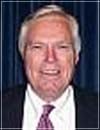
Winston Pannell was born in 1937 in rural Alabama. At the age of fifteen he became interested in religion and was baptized in the Armenian faith, as was Patricia, his wife to be and subsequently their three daughters. In 1985 the Lord confronted him with the true gospel and brought him to faith in God and true repentance from dead works and idolatry. It has been his passion to learn more of a Just God and Savior and his propitiatory work on behalf of his people given him by the Father in the Everlasting Covenant of Grace. The pulpit of Eager Avenue Grace Church in Albany Georgia has afforded him the opportunity to deliver this gospel of God’s free and sovereign grace in Christ, based on his righteousness imputed and received by faith as the whole of the sinner’s salvation. His desire is to deliver this gospel to the hearing of as many as the Lord shall save.
Pristine Grace functions as a digital library of preaching and teaching from many different men and ministries. I maintain a broad collection for research, study, and listening, and the presence of any preacher or message here should not be taken as a blanket endorsement of every doctrinal position expressed.
I publish my own convictions openly and without hesitation throughout this site and in my own preaching and writing. This archive is not a denominational clearinghouse. My aim in maintaining it is to preserve historic and contemporary preaching, encourage careful study, and above all direct readers and listeners to the person and work of Christ.
Brandan Kraft
Bible Verse Lookup
Loading today's devotional...
Unable to load devotional.
Select a devotional to begin reading.
Bible Reading Plans
Track your daily Bible reading with a structured plan. Choose from several options and let us keep track of your progress.
Comments
Your comment has been submitted and is awaiting moderation. Once approved, it will appear on this page.
Be the first to comment!