Hosea 4:1 Hear the word of the LORD, ye children of Israel: for the LORD hath a controversy with the inhabitants of the land, because there is no truth, nor mercy, nor knowledge of God in the land.
2 By swearing, and lying, and killing, and stealing, and committing adultery, they break out, and blood toucheth blood.
3 Therefore shall the land mourn, and every one that dwelleth therein shall languish, with the beasts of the field, and with the fowls of heaven; yea, the fishes of the sea also shall be taken away.
4 Yet let no man strive, nor reprove another: for thy people are as they that strive with the priest.
5 Therefore shalt thou fall in the day, and the prophet also shall fall with thee in the night, and I will destroy thy mother.
6 My people are destroyed for lack of knowledge: because thou hast rejected knowledge, I will also reject thee, that thou shalt be no priest to me: seeing thou hast forgotten the law of thy God, I will also forget thy children.
Sermon Transcript
Auto-generated transcript • May contain errors
100%
Thank you, Mark, and let me welcome
you to our church on this Memorial Day weekend, where we celebrate
and work thankful for all the men and women who sacrificed
themselves that we might enjoy the freedoms that we do in this
country. We're grateful for that. But we have an even greater freedom
by him who died on that cross for us. And we're going to be talking
about him today because he's worthy of our conversation and
prayer. While you're turning to Hosea
chapter four, let me just say this by way of introduction.
The title of my message is God's controversy with sinners. God
has a charge, an indictment against sinners. And we're going to be
looking at that this morning. I don't like to preach negative
sermons and I hope this is not a negative one, but they're There's
some truth and some hard truth that has to be learned, and hopefully
the Lord will teach us that today. God's Controversy with Sinners,
Hosea chapter 4. Bernard Clavier, an 11th century
French writer, is credited with this aphorism, the road to hell
is paved with good intentions. What he meant by that was that
his assertion that all good intentions don't always result in wise decisions
that lead to good conclusions, and that has some merit in it. Men dream dreams. Men see visions. They set lofty goals and go to
great extremes against difficult odds to plan and execute these
dreams, and sometimes the dreams don't work out. Their intentions
don't pan out like they had hoped they would. What looks good to
some and what they intend for good does not always materialize. God's charge against all by nature
in Isaiah chapter 15 verse 25 and verse 20 is they call evil
good and good evil. If this be the case, and it must
be because God said it so, then our so-called good intentions
are really evil intentions. Well, no matter the intentions,
whether good or bad, they cannot thwart the eternal purpose of
God, what he wills shall be and not what men intend to do. In
spiritual matters, intentions have eternal ramifications. And we have many illustrations
of such in the scripture. A couple that come to mind, the
rich young barn builder. You remember he said, I have
so much I don't know what to do with my barns won't hold.
I'll tear down my barns and build bigger barns. And what did God
say to him? Thou fool, your good intentions
won't do you any good. Tonight their soul will be required
of thee. Another is the Pharisees, the proselytizing Pharisees who
compass sea and land to make a proselyte. And Christ said
of them, you make him twofold more the child of hell than you
are yourself. Or what about a young religious
zealous named Saul of Tarsus who called his good intentions
later dung? And then there's King Jeroboam,
the king of the northern tribes, the ten northern tribes of Israel.
who built shrines. He was a shrine builder. And
he had good intentions in doing that, but as we'll see later
on, they didn't work out that way. But the most familiar problem
is found in Matthew 7, verse 21 and following. Let's read
those verses. Jesus says, not everyone that
saith unto me, Lord, Lord, shall enter into the kingdom of heaven,
but he that doeth the will of my Father, which is in heaven.
Many will say to me in that day, Lord, Lord, Have we not prophesied
in thy name? And in thy name have cast out
devils, and in thy name have done many wonderful works. And
then I will profess unto them, I never knew you. Depart from
me, you that work iniquity." Now think about this, these men.
This is the saddest story in the scripture. Here are these
men that gave their life. They were dedicated. They were
zealous. They were sincere. And their
intentions, no doubt, noble. But listen again. to the conclusion
of their so-called good intentions from him who is the judge of
the quick and the dead. Depart from me. I never knew
you, you that work iniquity. What a terrible end to an otherwise
noble intention. Well, we know that nobody intends
to end up like these men did. Nobody would knowingly choose
an eternity of misery and torment if they knew otherwise. But it
is a choice many make. and make it in their pride and
ignorance. The prophecy of Hosea is written to uncover this dark
side of human nature for those whose so-called intentions and
turn them from the certain end of all who would continue in
the way that leads to destruction. Hosea wrote of in the first three
chapters that we've been studying now for maybe six months that
the redemption of God's people through the Lord Jesus Christ.
Look at Hosea chapter 3 and verse 2. Osea says here, so I bought
her to me for 15 pieces of silver and for a homer of barley and
a half homer of barley. And as we studied before, the
significance of this price paid is typical of a specific amount
that it took to redeem the elect of God. And though small, in
respect of monetary value and cheapened even more by those
men who rejected it. Fifteen shekels of silver and
a home of barley is not much monetarily, but to a beggar with
nothing, it's worth everything. Well, we know that Jesus didn't
ransom his church with silver and barley, so what's the meaning
here? Well, we know that exact price
to be the perfect satisfaction to God's law and justice written
by the God-man, Jesus Christ the righteous. With this price,
he bought his wife to himself. And she, like all the elect,
are bought with a price we're not our own. Look at Peter's
assessment of this in 1 Peter 1 and 18 and 19. Peter says, for as much as you
know that you were not redeemed with corruptible things such
as silver and gold from your vain conversation, and that vain
conversation is your dead works religion, received by tradition
and not truth, but by tradition from your fathers." In other
words, Jesus is going to tell us in a little bit, you've heard
it said by them of old. That's the traditions of the
father. But he says, you were not taught by that, but with
the precious blood of Christ as of a lamb without blemish
and without spot. From him who is the truth, you
were taught. So silver is a precious metal. It's purified in the refiner's
furnace. And possession of silver turns
the beggar in to a man of some means. This precious metal is
representative of Christ's person, who he is. Look with me at Proverbs
chapter 25 and verse 4, talking about this precious metal. Take away the dross from the
silver, and there shall come forth a vessel for the finer.
That vessel is a vessel of mercy and grace. That vessel is Christ,
Son of the Father, to redeem his people. So when Christ was
tried and found guilty of sin, and that by imputation only.
He was crucified, but there was no dross to be found in him.
Pilate said of him at his trial, I find no fault in him. Jesus said this of himself in
Luke 69, in Psalm 69, four, they hated me without a cause. There
was nothing in his person or his character and conduct to
disqualify him from the office of substitute, surety, and representative
of his people. He came forth like refined silver,
a pure, sinless, suitable substitute and sacrifice. According to the
writer of Hebrews in chapter five in verse eight, though he
were a son, yet learned he obedience by the things which he suffered.
He endured and overcame the fire of God's wrath because he is
the son of God. Blaspheming his name, sinners
then called him a sinner. Even today, some call him the
greatest sinner that ever lived. But God says he is a lamb without
spot or blemish. So that silver represents his
pure person, who he is. And the barley is the staple
of slaves and beggars, as we've studied before. Slaves and beggars
didn't eat wheat bread. They ate barley. And it's typical
of the bread of life. In its natural state, barley
has no use for the hungry. Until it's made, until it's crushed
by a millstone in the flour, the hungry will remain hungry
because they can't eat it. And the staple of eternal life
is broken, is that bread that was broken by the millstone of
God's wrath, the Lord Jesus Christ. Look at John chapter six in verse
48. Jesus talks about this bread
of life. He says, I am that bread of life. Your fathers did eat
manna in the wilderness and are dead. This is that bread which
cometh down from heaven that a man may eat thereof and not
die. I am the living bread which came
down from heaven. If any man eat of this bread,
he shall live forever. And the bread that I will give
is my flesh, which is given for the life of the world. It took
the sacrifice of his sinless humanity on the altar of his
deity to satisfy the law and holiness and justice of God for
all those he represented and provide that bread of life which
he offers free to those who will come, buy without money and eat. So here in Hosea chapter four
as we begin to look at a different phase of his prophecy, his message
changed from one of mercy and grace to one of judgment as he
charges the nation Israel with crimes against the God who chose
them, called them out of Egypt and conquered the land of Canaan
for them. And their good intentions, though voiced many times in the
scriptures, that they would obey all that God says, many times
their good intentions found them on the road that leads to destruction.
In Exodus chapter 19 in verse 8, Exodus 24 in verse 3, Exodus
24 in verse 7, in Deuteronomy 537, Moses' charge was always
met with this response. All the people answered together
and said all that the lord has spoken we will do And paul wrote
about these same people in in romans chapter 10 in verse 1
through 4 and we'll look at that a little later israel had the
tabernacle they had the Altar, they had the sacrifices. They
had the ceremonies all which pointed them to christ And they
missed They missed it their good intentions found them on that
way to destruction that way of rejecting knowledge. Hosea chapter
four and verse six says this, my people are destroyed for lack
of knowledge because they have rejected knowledge. I will also
reject thee that thou should be no more preached to me. Seeing
thou has forgotten the law of God, I will also forget thy children. So what can we learn from Israel's
rejection of knowledge, Israel's rejection of the truth, Israel's
rejection of Christ, Well, we can learn many things, but I
see three things that I've found in my study this past week. First
of all, destruction is rooted in ignorance. My people perish
for lack of knowledge. Secondly, pride is the offspring
of ignorance, and pride goes before destruction is the third
thing I want us to concentrate on this morning. So let's look
at these three things. First of all, destruction is rooted
in ignorance. In Hosea chapter 4 and verse
6, Jose writes, my people are destroyed for lack of knowledge.
It was the wise man Solomon who said that the fear of the Lord
is the beginning of wisdom and instruction. The first thing
God teaches one of his people is the fear of the Lord. This
reverential respect for the honor of God's redemptive glory and
salvation. It's not a legal mercenary fear
where we do things for God's promise to give us something,
or we do things because God threatens us if we don't. But as I said,
it's that reverential respect for His glory and salvation.
And this fear is achieved in the center when God enables that
center to behold the glory of God in the face of Jesus Christ.
further substantiated by Christ in John chapter 17 verse 3 where
he said this is life eternal that they might know thee the
only true God and Jesus Christ whom thou hast sent. Salvation
is rooted in the knowledge of a just God and a Savior. How
God can be just and justify the ungodly. So look with me in Hosea
chapter 4 verse 1 now. God accuses Israel here of ignorance. Hear the word of the Lord, you
children of Israel, for the Lord has a controversy with the inhabitants
of the land. Why? Because there is no truth,
nor mercy, nor knowledge of God in the land. No truth, no mercy,
no knowledge. What's he talking about here?
Surely there was some truth in Israel. There was people who
showed mercy. But he's talking about a specific
thing here. There is no knowledge of truth and mercy. There is
no knowledge of him who is true. There is no knowledge of God's
mercy in Christ. No one knows how God's truth
and mercy are met together. But the writer of the Psalms
did. In Psalm 85, 10, he says, mercy and truth are met together.
Righteousness and peace have kissed each other or embraced. But how? How is this so? How
can God be just? and justify the ungodly. How
many people do you know who can answer that question today? This question and its answer
was absent in Israel. Jesus Christ, God says, you don't
know anything about mercy and truth. Well, it's absent in Christendom
today. You can speak to anybody almost,
and nobody can answer that question, how God can be just. Ignorance
and or rejection of how this act of grace is accomplished
is tantamount to spiritual death Understanding it is life eternal.
Let's let's read Romans chapter 10 verses 1 through 4 Paul addresses
this issue He says brethren my heart's desire
and prayer to God for Israel is that they might be saved Paul
what are you saying? It might be saved Paul saying
I'm lost For I bear them record that they have a zeal of God,
but not according to knowledge. For they being ignorant of God's
righteousness, and going about to establish their own righteousness,
have not submitted themselves unto the righteousness of God.
One or two things are both. Either ignorant of, or not submitted
to, the righteousness of Christ is to be lost. In verse four
it says, for Christ is the end of the law for righteousness
to everyone that believe it. A holy God cannot dispense His
love at the cost of His justice. He does love, but He only loves
those who are in Christ, and that by election, by predestination,
by calling, by faith, by repentance. And these are they who are justified
in God's sight by His blood and clothed in His righteousness
based on that satisfaction Christ made to law and justice, and
we rest here in that, his doing and his dying. This is the truth
and mercy of which Israel was ignorant. This is the truth and
mercy of which Christendom today is ignorant. Hosea 4.1 says,
in false religion, men don't know this. When I was in false
religion, I knew nothing of a just God. I didn't even know what
the question was, let alone what the answer is. And that's the
way it is in false religion. You will never hear this subject
broached in false religion at Bethel or Dan that we're going
to see in just a minute. To them, this is a mystery still
hidden. To us, the mystery has been revealed
by the Lord Jesus Christ. Remember what Israel's sin was. When Jeroboam assumed the kingship
of the ten northern tribes, they forsook the temple in Jerusalem
and built an altar Instructed his people to go to
Bethel and Dan to worship God But he forgot the vow that God
had made to Solomon When they dedicated the temple and let's
let's read this as a refreshment Because it's vital to our understanding
what the Lord is saying here and in second and second Chronicles
7 and verse 12 begins like this, and the Lord appeared to Solomon
by night and said unto him, I have heard thy prayer. And remember
what Solomon prayed for. God says, I'll give you anything
you ask for. And he said, I pray for wisdom
to lead this people. And I have chosen this place
for myself for a house of sacrifice. Now mine eyes shall be opened
and mine ears attend unto the prayer that is made in this place.
For I, now I have chosen and sanctified this house that my
name may be there forever. and mine eyes and my heart shall
be there perpetually. As for thee, if thou wilt walk
before me as David thy father walked, and do according to all
that I have commanded thee, and shall observe my statutes and
my judgments, then will I establish the throne of thy kingdom according
as I have covenanted with David thy father, saying, thou shalt
not fail to be a man to be ruler in Israel. But if you turn away
and forsake my statutes and my commandments, which I have set
before you, and shall go and serve other gods and worship
them. Then I will pluck them up by the roots out of my land,
which I have given them, and this house, which I have sanctified
for my name, will I cast out of my sight. And I will make
it to be a proverb and a byword among all nations. And this house,
which is high, shall be an astonishment to everyone that passes by it,
so that he shall say, why hath the Lord done this unto this
land and unto this house? And it shall be answered. because
they forsook the Lord God of their fathers which brought them
forth out of the land of Egypt and laid hold on other gods and
worshiped them and served them. Therefore, hath he brought all
this evil upon them. This is God's controversy with
Israel. And this is God's controversy
with sinners today. And what was Jeroboam's reason
for building the altars at Bethel and Dan? He was afraid if his
people went back to Jerusalem to worship on a regular basis,
that their hearts would be turned back to the temple and they would
return back to the southern tribe of Judah and Benjamin. And he
would lose his kingship. So that's the reason he did it. But the worship at Bethel and
Dan meant more than just rejecting God's appointed place of worship,
which was the temple in Jerusalem. This was tantamount to forsaking
Christ, the only way to God. It's turning thumbs down on God's
way and into fellowship and worshiping him. That temple was built, if
you remember, to specific specifications because it pictured in time some
aspect of Christ's person and his word. And the only place
God will meet is where that temple was. That's what he told Solomon.
And the only place we can meet with God today is where Christ,
the Christ, who is that just God and the Savior, is worshiped. Today, people worship their God
in many places. They worship where the truth
is unknown. They worship where the truth is unsolved and it's
untold. And God is not there. He says, I won't meet you there.
I'll meet in the place where Christ is exalted as a just God
and my Savior. Christ is our mercy seat. He
is our altar. Well, the reason for God's controversy
was because of their idolatry. And my question is, can we avoid
Israel's end? Can we avoid God's condemnation
against us as sinners? What is that condemnation? Let's
look at Hosea chapter four and verse two. And of course, we
say we wouldn't follow this way and that we shouldn't because
this defines for us what Israel's particular sin was and what we
can do to avoid it in our own lives. Look at Hosea chapter
four and verse two. Here's what God charges Israel
with. He says, for by swearing and
lying and killing and stealing and committing adultery, they
break out, and blood touches blood. Here God gives us a reason
for his controversy with Israel. Aside from shunning the temple
in Jerusalem, this is what they were doing. First of all, they
were swearing. And that Hebrew word means to curse, but it also
means to bind in an oath. And context tells us here that
he's talking about spiritual things, and he's talking about
specifically the idolatry of Israel. And he's telling us not
to swear. You've heard that it had been
said by them of old, don't do this or do this. But Jesus will
tell us in a minute, don't swear by anything at all. Men swear
oaths to validate their good intentions. They make vows to
authenticate and give them credibility among their peers. And they make
vows to entice people to follow them. And you know what? It works. Men will follow other men who
make vows. So why not swear oaths? Well,
let's read what Jesus said about it in Matthew chapter 5 and verse
33. Again, you have heard that it's
been said by them of old times, thou shalt not forswear thyself,
but shalt perform unto the Lord thine oath. But I say unto you,
swear not at all, neither by heaven, for it is God's throne.
nor by the earth, for it is his footstool, neither by Jerusalem,
for it is the city of the great king. Neither shalt thou swear
by thy head, because I cannot make one hair white or black,
but let your communication be yea, yea, nay, nay, for whatever
is more than these cometh of sin." Making vows implies man's
ability to perform that vow. And men who swear, swear things
that they cannot accomplish. I may tell you I'll do something
for you tomorrow. I might even swear to it, but I have no guarantee,
and you have none from me, that I can do what I say I'll do.
Only God can do that. So making a vow implies that
I have the ability to meet that vow, to perform that vow. And
we do make those vows that we cannot achieve. Our promises
to deliver are beyond our control. That's why we swear by something
greater when we swear. I swear to God. It's swearing
by someone greater than me, and it implies that I'm engaging
God, invoking God in my intention, in my vow, and to make it a sure
success. It's man's attempt to engage
God in something God calls evil. It's like using the Lord's name
in vain. It's like the preachers that
we read about in Matthew chapter seven. Lord, didn't we prophesy
in your name? Jesus said no you and prophesying
in my name they invokes God name God's name to give credibility
to the scheme and in Hosea chapter 4 and verse 15 God commands Judah
not to do what Israel did let's read that verse Hosea 4 15 though
thou Israel play the harlot yet let not Judah offend and come
you not unto Gilgal neither go you up to Bethlehem nor swear
the Lord liveth What is Christ's command concerning us? Read it
again, but let your communication be yea, yea, and nay, nay, for
whatever is more than this cometh of evil. God is already determined
and declared what will be. His word is clear and cannot
be changed. Truth stands on its own and cannot
be altered. It needs no prop to authenticate
itself. Men swear to give authority and
authenticity to the word. Jesus says, let the word stand
on its own. Don't add to it or take away.
Let your yes be yes and your no be no, and that's it. Men
swear to engage God in their schemes, but God has already
determined the outcome of all things, and swearing won't change
a thing. James had a word on this, James
the Apostle in James chapter four and verse 13. He says this. Go to now, ye that say, today
or tomorrow we will go into such a city and continue there for
a year and buy and sell and get gain. Whereas you know not what
shall be on tomorrow, for what is your life? It is even a vapor
that appears for a little time and then vanishes away. For that
you ought to say, if the Lord will, we shall live and do this
or that. But now you rejoice in your boastings,
and all such rejoicing is evil. Men boast in that which God calls
evil. Man's intentions invariably fail
because we lack power and wisdom to perform what we say we'll
do. We cannot undermine God's purpose to glorify himself with
our oath, with our promises to do things. Israel was guilty
of swearing to authenticate their claims to be of God, to be from
God, and to be for God. Swearing itself seeks to exalt
the swearer when you think about it. So he says, don't swear. The second thing he says is don't
lie. Israel was swearing, and they
were lying. Men who tell the truth don't
have to swear. Truth will stand on its own without
a prop. Men who are void of truth, but
void of Christ, who is the truth, the way, and the life. And men
who are in void of mercy, Christ who is our perpetuation, have
nothing to offer but lies. And everything they tell on God
is lies. Liars are of their father, the
devil, who was a liar from the beginning and the father of all
lies. They make so-called truth, which is nothing but a half-truth,
and therefore it's a lie itself. Their mercy makes no provision
for propitiation for sinners. Their mercy only makes a way
for sinners to propitiate for themselves. Their lives deny
the extent of the law of God to judge sinners in strict righteousness
and the sinner's inability to produce that righteousness. Sinners
are in bondage to the law for acceptance with God, and their
message is not. Christ is the end of the law
for righteousness that we read in Romans 10, 4. Christ is not the end of the
law for righteousness to those who believe, but to those who
obey. That's their message. So he says, They're lying, and
thirdly, they're killing. Their doctrine is deadly. That's
how they kill, with their doctrine. It's like rat poison. 99% inert
material, but it's the 1% that's living that's deadly. And there
are those who preach so close to the gospel that if it were
possible, they could deceive the very leg. But there's a lot
of truth that's just half-truth today, which makes it a lie.
And these are soul murderers. who preach salvation by works,
and they reject the knowledge, the truth of Christ, verse six,
of which all by nature are guilty. Both priests and the people,
he says in verse six, will be rejected. My people are destroyed
for lack of knowledge, because thou hast rejected knowledge,
I will also reject thee, that thou shalt be no priest to me,
seeing thou hast forgotten the law of thy God, I will also forget
thy children. And then he says the next thing
is stealing, Hosea chapter four and verse two. Such doctrines
as works religion rob God of his glory and elect of their
joy and salvation. Now we know that those that are
in Christ have always been in Christ and always will be, but
we are all under the spell of Satan by nature until God sees
fit to rescue us and bring us into the truth of the gospel
and show us that truth and until that, Lost religion is steal
from us the joy of our salvation and they robbed God of his glory
in salvation. So this was a stealing that they
were doing in their false religion. And then he says you committed
adultery by swearing and stealing and lying and committing adultery.
This is spiritual adultery he's talking about. And if you think
about it, with no foundation of grace to anchor the soul,
men go from idol to idol. They are those who are tossed
to and fro by every wind of doctrine. They have prostituted themselves
to that great whore, Babylon. And without the truth that sets
men free by the mercies of God, they have no propitiation for
their sin. They are bound by those who say
it in Matthew 24, 33, lo, here's Christ, or lo, there he is. They
follow every gospel that comes along. And then it says they
break out. This simply means that their
sin abounds like an overflowing scourge. Their motivation is
legal and mercenary. They're motivated by fear, and
they go about to establish a righteousness of their own. As Christ said,
they accomplish sea and land to make a proselyte, and they
are unrestrained and unashamed in their idolatry. And the last
one, he says, blood touches blood. That word touches means to strike
at, to strike at. Their bloody sacrifices, what
he's saying, is rivals the blood of Christ. In Romans 3 and verse
15, Paul said this, those, he described them as those whose
feet are swift to shed blood. In other words, they're quick
to make a sacrifice, but they neglect the weightier matters
of the law that Jesus said in Matthew chapter 23. He says,
woe unto you, scribes and Pharisees, hypocrites, for you pay tithes
of mint and anise and cumin. You're particularly about the
smallest detail of the law, but you've omitted the weightier
matters of the law, which is judgment, mercy, and faith. These
ought you have done and not to have left the others undone.
In other words, the works of righteousness which lost sinners
performed are for them more valuable than the work that Christ did
for his people. They were ignorant of and or
not submitted to the righteousness of God in Christ, therefore,
Their destruction was rooted in ignorance. Hosea 4.6, my people
are destroyed for lack of knowledge. The second thing is that pride
is the offspring of ignorance. Hosea 4.6, because they have
rejected knowledge, I will also reject them. Satan is the father
of all lies, as I said before. Ignorance is the mother of idolatry. and pride is the offspring of
their union. Lies and ignorance are inseparable.
Liars oppose the truth, and pride is the culprit. Pride rejects
the truth that sets men free. Israel rejected the knowledge
they heard, they saw, they experienced in a physical way how God can
be just and justify the ungodly in the temple, in the worship,
in the sacrificial system, and they rejected that knowledge.
Man, by nature, will not put away his pride. He will not confess,
I'm an idolater. And that's what God saves sinners
from. In Hosea 4, 6, God charges Israel with forgetting the law.
Look at what he says, the latter part. Because thou hast rejected
knowledge, I will also reject thee, that thou shalt be no more
a priest to me, seeing thou hast forgotten the law of God. Well,
what was the law saying that they forgot? We know it was the
schoolmaster for Israel to lead them to Christ. It pointed in
pictures and shadows and types the person and work of Christ
in the salvation of his people. And sinners who are ignorant
of and not submitted to Christ are lost. Their destruction is
rooted in ignorance, and their enemy, pride, is the offspring
of that ignorance. They reject knowledge of the
grandest story ever told, the gospel of the Lord Jesus Christ.
Therefore, rooted in ignorance, Proud as a peacock, they run
headlong like Judas Iscariot into perdition. And the third
thing is pride goeth before destruction. Seeing thou hast forgotten me,
I will also forget thy children. Well, the history of Israel is
just that. Not only did God abandon the
children, he cursed the land. Look at Hosea chapter four in
verse five. Therefore shalt thou fall in
the day, and the prophet shall also fall within the night, and
I will destroy thy mother. I will destroy the homeland.
Pride does go before destruction, and a haughty spirit before the
fall. Israel rejected Christ and his salvation. They forgot
the law of God, which pointed sinners to Christ for all of
salvation. Well, if your intentions are not motivated by grace, based
on the law satisfied and righteousness imputed, then your intentions
are pavers on the road to hell. If it's the latter, God has a
controversy with you. But sinners don't have to end
up that way. God offers us a choice. We can
go the way of Israel or we can bow to the sovereignty of God
in salvation. God's controversy with sinners. Mark come and lead us.
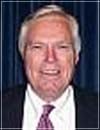
About Winston Pannell
Winston Pannell was born in 1937 in rural Alabama. At the age of fifteen he became interested in religion and was baptized in the Armenian faith, as was Patricia, his wife to be and subsequently their three daughters. In 1985 the Lord confronted him with the true gospel and brought him to faith in God and true repentance from dead works and idolatry. It has been his passion to learn more of a Just God and Savior and his propitiatory work on behalf of his people given him by the Father in the Everlasting Covenant of Grace. The pulpit of Eager Avenue Grace Church in Albany Georgia has afforded him the opportunity to deliver this gospel of God’s free and sovereign grace in Christ, based on his righteousness imputed and received by faith as the whole of the sinner’s salvation. His desire is to deliver this gospel to the hearing of as many as the Lord shall save.
Pristine Grace functions as a digital library of preaching and teaching from many different men and ministries. I maintain a broad collection for research, study, and listening, and the presence of any preacher or message here should not be taken as a blanket endorsement of every doctrinal position expressed.
I publish my own convictions openly and without hesitation throughout this site and in my own preaching and writing. This archive is not a denominational clearinghouse. My aim in maintaining it is to preserve historic and contemporary preaching, encourage careful study, and above all direct readers and listeners to the person and work of Christ.
Brandan Kraft
Bible Verse Lookup
Loading today's devotional...
Unable to load devotional.
Select a devotional to begin reading.
Bible Reading Plans
Track your daily Bible reading with a structured plan. Choose from several options and let us keep track of your progress.
Comments
Your comment has been submitted and is awaiting moderation. Once approved, it will appear on this page.
Be the first to comment!