Hosea 2:1 Say ye unto your brethren, Ammi; and to your sisters, Ruhamah. 2Plead with your mother, plead: for she is not my wife, neither am I her husband: let her therefore put away her whoredoms out of her sight, and her adulteries from between her breasts; 3Lest I strip her naked, and set her as in the day that she was born, and make her as a wilderness, and set her like a dry land, and slay her with thirst. 4And I will not have mercy upon her children; for they be the children of whoredoms. 5For their mother hath played the harlot: she that conceived them hath done shamefully: for she said, I will go after my lovers, that give me my bread and my water, my wool and my flax, mine oil and my drink.
6Therefore, behold, I will hedge up thy way with thorns, and make a wall, that she shall not find her paths. 7And she shall follow after her lovers, but she shall not overtake them; and she shall seek them, but shall not find them: then shall she say, I will go and return to my first husband; for then was it better with me than now. 8For she did not know that I gave her corn, and wine, and oil, and multiplied her silver and gold, which they prepared for Baal. 9Therefore will I return, and take away my corn in the time thereof, and my wine in the season thereof, and will recover my wool and my flax given to cover her nakedness. 10And now will I discover her lewdness in the sight of her lovers, and none shall deliver her out of mine hand. 11I will also cause all her mirth to cease, her feast days, her new moons, and her sabbaths, and all her solemn feasts.
Sermon Transcript
Auto-generated transcript • May contain errors
100%
Well, let me add my welcome to
Mark. It's good to see you here this morning. Pray the Lord will
bless us in the study of his word. And we're going to be studying
from Hosea again this morning. I've delivered several messages
on this prophet and plan on several more. But we're going to be looking
at the second chapter mainly today. And I titled this message,
Contending for the Faith. Jesus made a promise in Matthew
chapter 16. He said, I'll build my church
and the gates of hell shall not prevail against it. And we know
that this promise cannot fail. It's sure to happen. But it comes
at great price and great sacrifice with a warning that Satan would
provide much resistance. to the building of that church.
And he began that resistance with Christ himself. In Zechariah
13 and 7, we read where this prophet wrote 500 years before
Christ, these prophetic words. He said, Awake, O sword, against
my shepherd, and against the man that is my fellow, saith
the Lord of hosts. Smite the shepherd, and the sheep
shall be scattered. and I will turn my hand upon
the little ones. I will build my church." Basically,
it's what God's saying here. From the moment of the birth
of Christ, wicked men, and that includes you and me, sought the
life of Christ. And though we perpetrated it,
we know that it was God's purpose. We meant it for evil, but God
meant it for good. And he brought the hand of mercy
and grace upon the little ones, the little flock, at the death
of Christ. The gates of hell could not take
the shepherd. He said, no man takes my life.
I lay it down of my own free will. And no man could take the
life of one of my little ones. He said, all that the father
giveth me shall come. I will not lose one that thou
hast given me. Hence the need to contend for
the faith. It is by the preaching of this
faith that the elect are born again. In verses three and four
of the epistle, Jude writes these words. Beloved, when I gave all
diligence to write unto you of the common salvation, it was
needful for me to write unto you and exhort you that you should
earnestly contend for the faith. What faith? That common salvation. Common only in the sense that
it's one of a kind. There's not another gospel like
the one we preach here. the only one of a kind which
was once delivered unto the saints. For there are certain men crept
in unawares who were of old ordained to this condemnation, ungodly
men, turning the grace of God into lasciviousness and denying
the only Lord God and our Lord Jesus Christ. And as Brother
Bill mentioned this morning in the Sunday school lesson, to
date, there are over 2,200 known cults, sects, and denominations in religion
with as many gospels, although there are only two gospels. There's
a gospel of grace and a gospel of works. But these 2,200 known
sects and religious cults and denominations, they all have
a gospel. And it's a gospel of works. Paul calls it lasciviousness
here. That means any unlawful desire. They oppose God's common
salvation. Some come with doctrines so subtle
that if it were possible, they could deceive even the very elect. Their so-called grace is nothing
more than a cleverly disguised system of works. Some come with
doctrines so subtle, as I mentioned, they could deceive the elect.
They turn the grace of God into an unlawful desire. They focus on man's unbridled
lust to be saved by words. And that denies the only Lord,
the only God, true God, and Jesus Christ whom he has sent. This
too was once our way. We're ourselves guilty of this. In Christ's prayer in John 17,
three, he defines eternal life this way. He said, this is life
eternal, that they might know thee, the only true God and Jesus
Christ whom thou hast sent. Historical and or carnal knowledge
is not salvation. God's people shall know him in
his redemptive glory as a just God and a savior. In other words,
how he can be just and justify the ungodly as defined in Isaiah
chapter 45. God's people shall know Christ,
the God-man, in his mediatorial offices, prophet, priest, and
king, as he who is the end of the law for righteousness to
them that believe, Romans 10.4. God's people shall know him in
his redemptive glory as the one who came in time and accomplished
redemption for those given him in Christ before the foundation
of the world. So to the elect of God has been
given an unchangeable standing of justification before God and
that before the world began. Although our state before God
changes constantly, our standing in Christ is eternal. It cannot
change. And this common faith, this gospel
that we preach, is the gift of a merciful God to reveal to us
what God, through Christ, has done for us in this state and
this standing. To challenge this truth, Jude
says, certain men creep in unawares and spread their deceptive doctrine
by trying to mix works with grace, which is all the more reason
why we should contend for the faith, earnestly contend for
the faith. Because in it, God is glorified,
Christ is exalted, and the elect's position in Christ is uncovered
through the preaching of this faith. Well, the prophecy of
Hosea deals with this subject along with many others that we'll
be looking at in future messages. But the prophecy of Hosea is
a love story of God for his people. But the love of God for his people
is not demonstrated at the expense of his justice and his holiness.
But it's that love which provides what his justice and holiness
demands. It is the story of a just God
and a savior requiring, demanding, and the sinless substitute providing
the only righteousness that will vindicate a holy God in his declaration
of the justification of his people before time. based on the certainty
of that righteousness being established in time. It is this faith for
which we are to contend. So Hosea offers us several perspectives
on this subject. Today, we'll look at three. First
of all, contending for the faith is authored by the Lord. The scripture says that we are
to look to Jesus, the author and finisher of our faith. He
is the beginning of it. He's the subject of it. and he's
the ending of it. So it is authored by the Lord.
Secondly, contending for the faith is authorized by the Lord.
He gave some apostles, he gave some prophets, he gave some pastors
and teachers for the edifying of the saints according to Ephesians
chapter four. So he authorizes those who will
preach, who will contend for this faith. And thirdly, contending
for the faith is attended by the Lord. He said, you go into
all the world and preach this gospel. And lo, I'm with you
always, even to the end of the world. So let's look at these
for just a few moments. And I don't have any idea that
I can get through all three of these. So what I'm gonna do is
do the first two. And then next time we'll pick
up on the other one. First of all, let's look at contending
for the faith is authored by the Lord. In Jeremiah chapter
31 and verse 34, God through the prophet declares this, And
they shall teach no more every man his neighbor, and every man
his brother, saying, know the Lord. For they shall all know
me from the least of them unto the greatest of them, saith the
Lord. For I will forgive their iniquity, and I will remember
their sin no more." Just as surely as Christ is the author and finisher
of our faith is the fact that everyone for whom he died will
share in this faith, will be brought to a knowledge of it.
John the Apostle wrote this in 1 John 1.3, that which we have
seen and heard declare we unto you, why? That you also may have
fellowship with us and truly our fellowship is with the Father
and with his Son, Jesus Christ. Our faith, our gospel declares
it to be so. Christ's obedience in death ensures
that every elect son and daughter of God will believe Except our
faith, our gospel be authored by the Lord Jesus Christ, we
look to an idol and we have a false gospel. Jesus said, if any man
come preaching another gospel, let him be accursed. So what
is that faith? What is our gospel? Well, it's
that body of doctrine, the truth, the gospel of a finished salvation. accomplished by the obedience,
suffering, and death of the God-man, the Lord Jesus Christ, to satisfy
the demands of a holy God, law, and justice. It is that work
he finished when he brought near his righteousness and freely
imputed it to the elect. That's our gospel in a nutshell.
In Hosea chapter one, verses one through nine, we have in
types the example of faith authored by the Lord. command. And Gomer,
Hosea, is an example of one who had a view of this faith in mind
when he obeyed what the Lord said. So let me just give you
a little background. We went through this before,
but let me just remind you of a few things that we said in
the previous message. At the command of God in verse
2 of Hosea chapter 1, to go take a wife, the scripture says in
verse 3, that Hosea went and took Gomer for his wife. And what follows is God's revelation
in pictures and types of Christ to establish this faith and his
dogmatic contending for this faith. So Hosea, as we said before,
is the type of Christ. And Gomer is the type of Israel.
Gomer was an unfaithful wife. as we'll see in a moment. She was a woman of whoredoms
because she departed from the Lord. Hosea chapter one, verse
two, the last part of that verse says, hath committed great whoredoms
departing from the Lord. That's what whoredom is, it's
departing from the Lord. It's worshiping an idol. So that was the state of Gomer. She departed from the
Lord. The scripture says in chapter
2 in verse 5 that she had many lovers. Look at verse 5. For
their mother hath played the harlot. She that conceiveth them
hath done shambling. For she said, I will go after
my lovers that give me my bread and water, my wool and my flax,
my oil and my drink. To Gomer, who was unfaithful
to the Lord, was born children. that God prophetically warned
Israel through. If you remember, we'll look at
verse three. So Hosea went and took Gomer,
the daughter of Dibliam, which conceived and bear him a son.
And the Lord said unto him, call his name Jezreel for yet a little
while and I will avenge the blood of Jezreel upon the house of
Jehu and will cause to cease the kingdom of the house of Israel. said, call his name Jezreel. And you remember we said that
word meant to scatter. And that's what God did with
the nation Israel. He scattered them all over the
world. And because of their unfaithfulness to them. And he says, I will
cause to cease the kingdom of the house of Israel. And look
at verse six of chapter one. And she conceived again and bear
a daughter. And God said unto him, call her name Lorahama. For I will no more have mercy
upon the house of Israel. but I will utterly take them
away. And then in verse eight, nine, let's read that. Now, when
she had weaned Lo-Ruhamah, she conceived and bear a son, and
God said, call his name Lo-Ammi, for you are not my people and
I will not be your God. And in verse six, the bottom,
the last part of verse six said, I will utterly take them away
because of her unfaithfulness to me. So, so much so did he
take them away that today, One of those Jews couldn't say for
a fact, I know which tribe I'm from. That's how literally God
just scattered them all over the world. And he said in Hosea
chapter two, verse four, I will not have mercy on her children. Why? He said, because her children
are not my children. Her children are children of
the devil. How is this so? They were born of those of her
lovers. Her lovers are the enemies of
grace. Her lovers represent those who
seek justification in life by their obedience to the law of
God and reject the grace of God in Christ. And all that are not
Christ's children are children of the devil. But look at what
it says in Hosea chapter one in verse 10 and 11. Yet, in spite
of all this, God says, I have a people. Out of this vast multitude,
a number that no man can number, I have a remnant. Yet, of this
scattering, wherever it is said in chapter one in verse nine,
you are not my people, it shall be said unto them, this being
the elect, ye are the sons of God, in verse 10, latter part
of verse 10. Out of those scattered to the
four winds of the earth shall God gather together with Judah,
in verse 11, look at one, chapter one in verse 11. then shall the
children of Judah and the children of Israel be gathered together
and appoint themselves one head, and they shall come up out of
the land, for great shall be the day of Jezreel." They appointed
one, and that means, the word appoint means to agree. It doesn't
mean that the people appointed Christ. God appointed Christ,
but they agreed. They accepted Christ is the term
we use today. They made Christ their head.
And that He said, though the nation Israel will be scattered
to the four winds of the world, yet I'm going to have a remnant
out of this people. Turn with me and let's look at
Romans chapter 9. Here is a parallel scripture
on this same subject here. Romans chapter 9, listen with
me as I read, beginning in verse 22. What if God, willing to show
his wrath and to make his power known, endured with much longsuffering
the vessels of wrath fitted to destruction, and that he might
make known the riches of his glory on the vessels of mercy
which he had aforeprepared unto glory, even us, whom he hath
called not of the Jews only, but also of the Gentiles? For
he said also in OC, or Hosea, I will call them my people, which
were not my people, and her beloved which was not beloved. And it
shall come to pass in that place where it was said unto them,
you are not my people, there shall they be called the children
of the living God. Isaiah also cried concerning
Israel, though the number of the children of Israel be as
the sand of the sea, a remnant shall be saved. For he will finish
the work and cut it short in righteousness because a short
work will the Lord make upon the earth. And as Isaiah said
before, except the Lord of Sabaoth had left us a seed, we had been
as Sodom and been as made like unto Gomorrah. Well, what shall
we say then? That the Gentiles, which followed
not after righteousness, have attained to righteousness, even
the righteousness which is of faith. But Israel, which followed
after the law of righteousness, has not attained the law of righteousness.
Why? Because they sought it not by
faith. but as it were by the works of the law. For they stumbled
at that stumbling stone, as it is written, behold, I lay in
Zion, a stumbling block and a rock of offense. And whosoever believeth
on him shall not be ashamed. What a glorious day Jezreel has
been. Jezreel is the day when those
that were scattered are brought back. And God does that in each
generation. He calls out his elect, the scattered. from all over the world and brings
them together under one head, the Lord Jesus Christ. This gathering
from among the scattered by Christ is the reward of his contending
for the faith. He is the author of it. He purposed
it, he planned it, and he perfected it, and he earnestly contended
for it. Luke's gospel said this of Christ,
and it came to pass when the time was come that he should
be received up, he steadfastly set his face to go to Jerusalem
to contend for the faith. What was his mission in Jerusalem? Well, look in this passage I
just read in Romans chapter nine in verse 28. For he will finish
the work and cut it short in righteousness because a short
work will the Lord make upon the earth. He went to Jerusalem
to finish the work. Man continues to work, but Christ
finished his work. He said this to the father, father,
I finished the work that you gave me to do. He satisfied every jot and tittle
of it as to the salvation of sinners by perfect obedience
to every penalty and precept of it. In his short ministry,
the short ministry of Christ, he obeyed the law completely.
He suffered. He bled. He died. He was buried
and rose again the third day and ascended to the right hand
of the Father and sat down as a victorious conqueror. And so
do it. He glorified and vindicated the
Father in the justification of his sheep. Paul wrote about this
in Romans chapter 8 in verse 3 and 4. Let's look at that scripture
just for a moment. For what the law could not do,
Paul wrote, in that it was weak through the flesh, God sending
his own Son in the likeness of sinful flesh and for sin, condemned
sin in the flesh, that is, in Christ's flesh. that the righteousness
of the law might be fulfilled in us who walk not after the
flesh but after the spirit. Christ's one act of obedience
accomplished what hundreds of years under the law could never
accomplish. And what was that? Declare a
sinner righteous based on his obedience to that law. The law
can't do that. The law, after hundreds of years
of careful observance, accomplished nothing toward the sinner's salvation,
except as a schoolmaster to lead them to Christ, to put away their
works and to look to Christ. The righteousness of Christ,
think about this, and I'll let some of you scholars explain
this, though accomplished in time, is an everlasting righteousness. It stands eternally. The scriptures
in Daniel and Psalms talk about this everlasting, eternal righteousness. Christ's work was a short work
on earth, but it has stood and will stand forever as a testimony
of the faith authored by and anchored in the Lord Jesus Christ. Contending for the faith is a
noble endeavor. Jesus said of himself, for this
cause came I into the world, to confirm the faith, to communicate
that faith, and to contend for it. So contending for the faith
is authored by the Lord. He is our faith, the beginning
and the end. Secondly, contending for the
faith is authorized by the Lord. Look at Hosea chapter two in
verse one and two. Say ye unto your brethren, Ammi
and to your sister Ruhamah, plead with your mother, plead for she
is not my wife, neither am I her husband. Let her therefore put
away her hoardings out of her sight and her adulterers from
between her breasts. Christ's last words to his disciples
on the Mount of Olives as he ascended to the Father was this.
All authority is given unto me in heaven and earth. Go ye therefore
and teach all nations, baptizing them in the name of the Father,
the Son, and the Holy Ghost, teaching them to observe all
things whatsoever I have commanded you, And lo, I am with you always,
even unto the end of the earth. Here in this scripture and on
the Mount of Olives, Jesus is authorizing those who are to
contend for the faith. And he identifies them for us
here in Hosea chapter two, verses one and two. They are the brothers
of Ammi and the sisters of Lorahamma. That's who is authorized by God
to contend for the faith. Who is Ammi and Ruhama? They are that remnant of those
scattered that we read in chapter one, verses 10 and 11. They are those that have come
up out of the land, both Jew and Gentile, not just the Jews
anymore. But these are those that are
qualified, been saved by the grace of God to preach the gospel
to Israel. They are those out of that number
as the sands of the sea, where our sovereign God declares righteous
in his sight. They are that remnant out of
Israel, which God swore in Hosea 1.6, I will not have mercy on
you, and you will not be my God, my people, and I will not be
your God. God would no more call Israel his people and would no
more be their God. He called them Lo-Ammi and Lo-Ruhamah. The word lo means no or not. In other words, he said, I would
no more be their God, and they will no more be my people. He
called them Lo-Ammi and Lo-Roma. No more mercy for my people.
But of the nation Israel, some would be called Lo-Ammi and Lo-Roma,
my people. Take the Lo off, and it means
my people. Who are these people? Sinners saved by the grace of
God. Sinners of this faith appointed by God to contend for this faith. Look at Hosea chapter 2 and verse
23. And I will sow her unto me. This is Israel. I will sow her
unto me in the earth, and I will have mercy upon her that had
not obtained mercy, and I will say to them that were not my
people, thou art my people, and they shall say, thou art my God."
These are the ones that are to contend for the faith. Well,
are you a contender for the faith? You are. We all are. We contend
for some faith. The question is, which faith?
And there are a lot of different faiths. Basically two works in
grace, but there are a lot of different variations and we all
contend for a faith. How can you tell? Well, you go
by the message. What is your message? What is
your faith? What is your gospel? For what do we contend? Hosea
chapter two and verse two says, plead with your mother, plead
with Israel. And what did Paul say in Romans
10 one? Brethren, my heart's desire and
prayer to God for Israel is that they might be saved. I'm pleading
with Israel. What is our message? You're not
God's wife and he's not your husband. That's the message we're
to deliver. But was not Israel God's chosen?
Look at what he says in Deuteronomy chapter seven in verse seven
and eight. Moses writing here said, the Lord did not set his
love upon you nor choose you because you were more in number
than any people for you were the fewest of all people, but
because the Lord loved you and because he would keep the oath
which he had sworn unto your fathers as the Lord brought you
out with a mighty hand and redeemed you out of the house of bondman
from the hand of Pharaoh. For hundreds of years after God
delivered Israel from bondage in Egypt, God was long suffering
toward this nation. He swore to their fathers that
Israel would be a great nation, and out of that nation would
be a spiritual nation. And it was for this little flock
that he had set his love upon. He would preserve the tribe of
Judah until the time of Messiah, but Israel's demise was imminent. He would build his church, and
he built it out of Jew and Gentile, spiritual Israel, and the gates
of hell would not prevail against it. But what is the message of
his church for which we are to contend? I'm not Gomer's husband,
he said in verse two, and Gomer is not my wife. You cannot marry
worse in grace. Though chosen of God, the vast
majority of Israel perished in unbelief. Only a remnant would
be saved. To the nation as a whole, they
would reject Christ and seek justification by the works of
the law. These are the lovers Gomer embraced
and pursued. Since no man can serve two masters,
God called idolaters, all who seek justification by the deeds
of the law. Well, is not this the message
that we all reject by nature? That we have all rejected when
we first heard it? When you were first confronted
with the faith, the gospel, which exposed your idolatry, did not
it offend you? It is an offensive message and
it offends all. Is this not one of the first
revelations in salvation? I'm an idolater. No man is saved
from idolatry before he's saved from idolatry until he's saved
from idolatry. That's what Israel and Gomer
claimed. You know, Jesus said, if you
continue in my word, you'll know the truth. And the truth will
set you free. And the religious leaders of his day said, we be
Abraham's seed. We've never been in bondage.
That's what Gomer was saying. That's what we say. That's what
we said. I know it's all grace. I'm not trusting in my works.
But being ignorant of Christ and his work, we automatically,
and we'll see that in a minute. We be Abraham's seed. We're never
in bondage. You and I. And Gomer is a good
example. Look at verse 5b. Gomer proves
her idolatry here. Look at what she says. I will
go after my lovers that give me my bread and my water, my
wool and my flax, mine oil and my drink. I'm an idolater. And what does
God say to Gomer? Look at verse two of chapter
two. Plead with your mother. Tell
her, put away her whoredoms out of her sight. Let her therefore
put away her whoredoms from her sight. Gomer, because your eye
is darkened, because you can't see the truth, everything you
see is darkness. Everything you see, feel, and
do is affected by what you see with the physical eye, and it
is. There is no spiritual discernment in the eye of a natural man. By nature it's dark. Jesus said
this in Matthew chapter 6, but if thine eye be evil, the whole
body shall be full of darkness. If therefore the light in thee
be darkness, how great is that darkness. In other words, we
judge evil good and good evil. The way that seems right to us
is the way of death. Everything we think Our due is,
as it says in chapter two and verse five of the Gomer, shameful,
it is whoredom. It is evident that by nature
we're all in bed with a great whore that John wrote about in
Revelation, fault for religion. And John chapter three and verse
19 is the indictment against all of us by nature. This is
the lie, this is the condemnation. that light is coming to the world,
and men love darkness. What is that darkness? They love
their law keeping. Rather than the light, they reject
Christ's righteousness and purity for their own worth. Why? Because
their deeds are evil. Their eye is dark, and everything
they see and do is only darkness, and the results, what the eye
sees, influences who we are in here. So in Hosea chapter two,
God says, Gomer, put away therefore your adulterers from between
your breasts. What the eye sees, the mind processes,
moves the heart. We know that the heart is the
center of the emotions. It is the mind, the affections,
and the will of man. Therefore, as a man thinketh
in his heart, so is he. And the scripture says that the
heart is deceitful above all things and desperately wicked.
Who can know it? Look at Mark chapter 7 verse
21. Jesus said, far from within, out of the heart of men proceed
evil thoughts, that's the mind, adulteries, fornication, murders,
that's the motives. All we can produce by nature
is dead works and fruit unto death because we're ignorant
of Christ's righteousness and we're going about to establish
our own. Well, where was Gomer's heart? We read it in verse 5,
the same place as every sinner. before regeneration and conversion.
What in reality is Gomer's sin? Is it not her desire to be justified
before God by her law keeping? That's where her heart was. Sinners
motivated by feeling over fact are always motivated by to go
where their evil heart is. They go after their lovers for
those things they hold dear. And their lovers are those 2,200
different denominations who have something for them, give them
what they want. They deliver to what man's evil
heart desires, and that is justification by works apart from the law.
And here's proof. Gomer proves that. Look at what
she said in verse five. I will go after my lovers that
give me my bread. They didn't give her the bread
of life. They give me my water, but they didn't give her the
water of life. They give me my flags. They give me my wool and
my flags. They promote my self-righteousness,
but they don't give me the righteousness of the Lord Jesus Christ, and
they give me my oil and my drink. In other words, they speak peace
to me where there is no peace, leaving me in a false sense of
security. She says, mine, my water, my
bread. These are mine because I earned
them. How did Gomer earn her position? She gave herself to
her lovers. That's what we all do. That's
what I did in false religion. I gave myself to those, the law
keepers, And all the time I was saying, salvation is by grace.
It's grace, grace. I didn't even know the true and
living God. So my supply had to be attributed to an idol.
And God says in Romans 10, 1 through 4, all who do not know God seek
acceptance with God by their law keeping. I was attributing
to an idol those things that God was providing for me, and
I didn't know it. And that's what evidences us
all to be idolaters. Being ignorant of the true and
living God and his righteousness imputed, we automatically attribute
to an idol those things given by God. James 1.17 says this,
every good gift and every perfect gift is from above and cometh
down from the Father of lights with whom is no variable nor
shadow of turning. And we thank our idol for that. And all the time it was God.
Well, when you thank God this morning for your blessings, if
the God of your mind was not that just God and a savior that
our gospel declares, revealed in Isaiah chapter 45, you went
after your lovers, you went after your idol, just as Gomer the
idolater did. What distinguishes the God in
Isaiah from all other gods? Well, he's a just God and a savior.
He demands perfection. found only in his son, the Lord
Jesus Christ. He is pleased only with the work
of his son to secure the salvation of his people by his satisfaction
to law and justice and bringing in that everlasting righteousness,
which is all our salvation. If you think anything but the
imputed righteousness of Christ can recommend you to God, you
are as Gomer. You're still in your idolatry.
Your name has not been changed. It is still Lo-Ammi or Lo-Rehuma. The faith you believe in is not
anchored to grace but to words. Your mind is still darkened and
your heart is wicked and God commands you to put away your
hoardoms. Well, how do you put away your
hoardoms? We need to know how if we're going to do it. Well,
first of all, we put them out from our sight. In other words,
we change our mind about who God is, who Christ is, who we
are by nature. And we change our mind concerning
the God we worship and the Christ we serve. We see that what the
law could not do and that it was weak through our flesh, God
sending his own son in the likeness of sinful flesh and for sin condemned
sin in his flesh. And so we repent of former idolatry
and dead works and looked by faith to him in whose flesh sin
was condemned. Thirdly, we sorrow over ourselves
with godly sorrow without fear of punishment. Our prayer is
that of the psalmist, create within me a clean heart, oh God,
and renew a right spirit in me. And fourthly, we offer sinners
no hope of salvation by God based on anything they do, and we rest
in him for all of our salvation. We desire nothing more. We need
nothing more. And we look by faith for nothing
more. than the righteousness Christ
brought near by his obedience unto death, freely imputed to
us. Well, are you contending for
this faith? Has your name changed? Look at
223 again. Let's read that verse again.
Chapter two and verse 23. And I will sow her unto me in
the earth, and I will have mercy upon her that hath not obtained
mercy. And I will say to them which were not my people, thou
art my people. and they shall say, thou art
my God. Does God own you as his people? Is he your God? If so, he authorizes you to contend
for the faith. Paul wrote to the Philippians,
said it this way, the same thing. He says, only let your conversation
be as it becometh the gospel of Christ, that whether I come
to see you or else be absent, I may hear of your affairs, that
you stand fast in one spirit, with one mind, striving together
for the faith of the gospel. So contending for the faith is
authored by the Lord and it's authorized by the Lord. And we'll
look at this last point at another time. Contending for the faith
is attended by the Lord. We don't go along. The Lord goes
with us. His attendance with us is vital
to our success. For us, his commission to us
and attendance with us as we earnestly contend for this faith
is vital. But it's also necessary for those
that we share this gospel with. Because without the spirit's
work, no one will believe this gospel. Without the spirit's
teaching, no sinner will put away his whoredom from before
his eyes. But the scripture says that thy
people shall be willing in the day of his power. Well, are you
a contender? More so, are you an earnest contender? More so, are you an earnest contender
for the faith? Mark, come and lead us in a closing
hymn.
About Winston Pannell
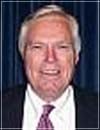
Winston Pannell was born in 1937 in rural Alabama. At the age of fifteen he became interested in religion and was baptized in the Armenian faith, as was Patricia, his wife to be and subsequently their three daughters. In 1985 the Lord confronted him with the true gospel and brought him to faith in God and true repentance from dead works and idolatry. It has been his passion to learn more of a Just God and Savior and his propitiatory work on behalf of his people given him by the Father in the Everlasting Covenant of Grace. The pulpit of Eager Avenue Grace Church in Albany Georgia has afforded him the opportunity to deliver this gospel of God’s free and sovereign grace in Christ, based on his righteousness imputed and received by faith as the whole of the sinner’s salvation. His desire is to deliver this gospel to the hearing of as many as the Lord shall save.
Pristine Grace functions as a digital library of preaching and teaching from many different men and ministries. I maintain a broad collection for research, study, and listening, and the presence of any preacher or message here should not be taken as a blanket endorsement of every doctrinal position expressed.
I publish my own convictions openly and without hesitation throughout this site and in my own preaching and writing. This archive is not a denominational clearinghouse. My aim in maintaining it is to preserve historic and contemporary preaching, encourage careful study, and above all direct readers and listeners to the person and work of Christ.
Brandan Kraft
Bible Verse Lookup
Loading today's devotional...
Unable to load devotional.
Select a devotional to begin reading.
Bible Reading Plans
Track your daily Bible reading with a structured plan. Choose from several options and let us keep track of your progress.
Comments
Your comment has been submitted and is awaiting moderation. Once approved, it will appear on this page.
Be the first to comment!